





































Mastering the ISO 27001:2022 Audit Cycle
Key Components of the ISO 27001:2022 Audit Cycle
The ISO 27001:2022 audit cycle is a meticulous process designed to ensure organizations adhere to the international standard for information security management systems. This cycle comprises three pivotal stages:
-
Preparation: This stage involves a comprehensive review of documentation and identification of key focus areas, ensuring all necessary elements are in place for a successful audit (Clause 7.5).
-
Conducting the Audit: Both internal and external audits are conducted to assess compliance with the standard, with a focus on risk management strategies and control implementation (Clause 9.2).
-
Post-Audit Activities: Addressing nonconformities and implementing corrective actions to enhance the ISMS is crucial at this stage (Clause 10.1).
Ensuring Compliance with ISO 27001
The audit cycle serves as a rigorous compliance check, aligning all aspects of the ISMS with ISO 27001:2022 requirements. By systematically evaluating processes, organizations can identify gaps and implement improvements, thereby strengthening their security posture.
Importance for Compliance Officers
For compliance officers, understanding the audit cycle is essential. It provides a roadmap for maintaining information security standards and ensures organizations are prepared for audits. With over 40,000 organizations worldwide certified to ISO 27001, staying informed about the audit cycle is key to effective compliance management.
Challenges During the Audit Cycle
Organizations may encounter challenges such as evolving security requirements and extensive documentation management. However, platforms like ISMS.online can streamline processes and provide comprehensive support.
Understanding the ISO 27001:2022 audit cycle is fundamental for compliance officers aiming to uphold robust information security standards. As information security requirements evolve, staying ahead of these changes is imperative. Engage with ISMS.online to ensure your organization is audit-ready and compliant.
Book a demoHow to Prepare for an ISO 27001:2022 Audit
Steps for Effective Audit Preparation
Embarking on the ISO 27001:2022 audit journey requires a strategic approach. Start with a Gap Analysis to identify discrepancies between your current practices and the ISO 27001 standard. This analysis is crucial for pinpointing areas needing enhancement, ensuring your organization aligns with compliance requirements.
The Role of Risk Assessments in Audit Readiness
Risk assessments are vital for uncovering potential vulnerabilities within your Information Security Management System (ISMS). By evaluating risks thoroughly, you can prioritize actions and implement effective controls, setting your organization up for audit readiness. This proactive approach not only fortifies your security posture but also ensures alignment with ISO 27001 standards.
Essential Documentation for the Audit Process
Key documentation includes the Statement of Applicability, risk treatment plans, and internal audit reports. These documents provide evidence of your ISMS’s effectiveness and compliance with ISO 27001:2022 (Clause 7.5). Keeping all documentation up-to-date and easily accessible is vital for a seamless audit process.
- Statement of Applicability: Outlines applicable controls and justifications.
- Risk Treatment Plans: Details strategies for managing identified risks.
- Internal Audit Reports: Provides insights into ISMS performance and areas for improvement.
Ensuring Your ISMS Is Audit-Ready
To ensure your ISMS is prepared for an audit, focus on training personnel on ISMS processes. This involves understanding roles, responsibilities, and procedures within the ISMS framework. Regular internal audits (Clause 9.2) and management reviews (Clause 9.3) are also key in maintaining compliance and readiness.
- Training: Equip staff with knowledge of ISMS roles and responsibilities.
- Internal Audits: Conduct regular assessments to ensure ongoing compliance.
- Management Reviews: Evaluate ISMS performance and make necessary adjustments.
By following these steps, your organization can confidently approach the ISO 27001:2022 audit, ensuring compliance and enhancing your information security management system. Engage with ISMS.online to streamline your audit preparation and achieve certification success.
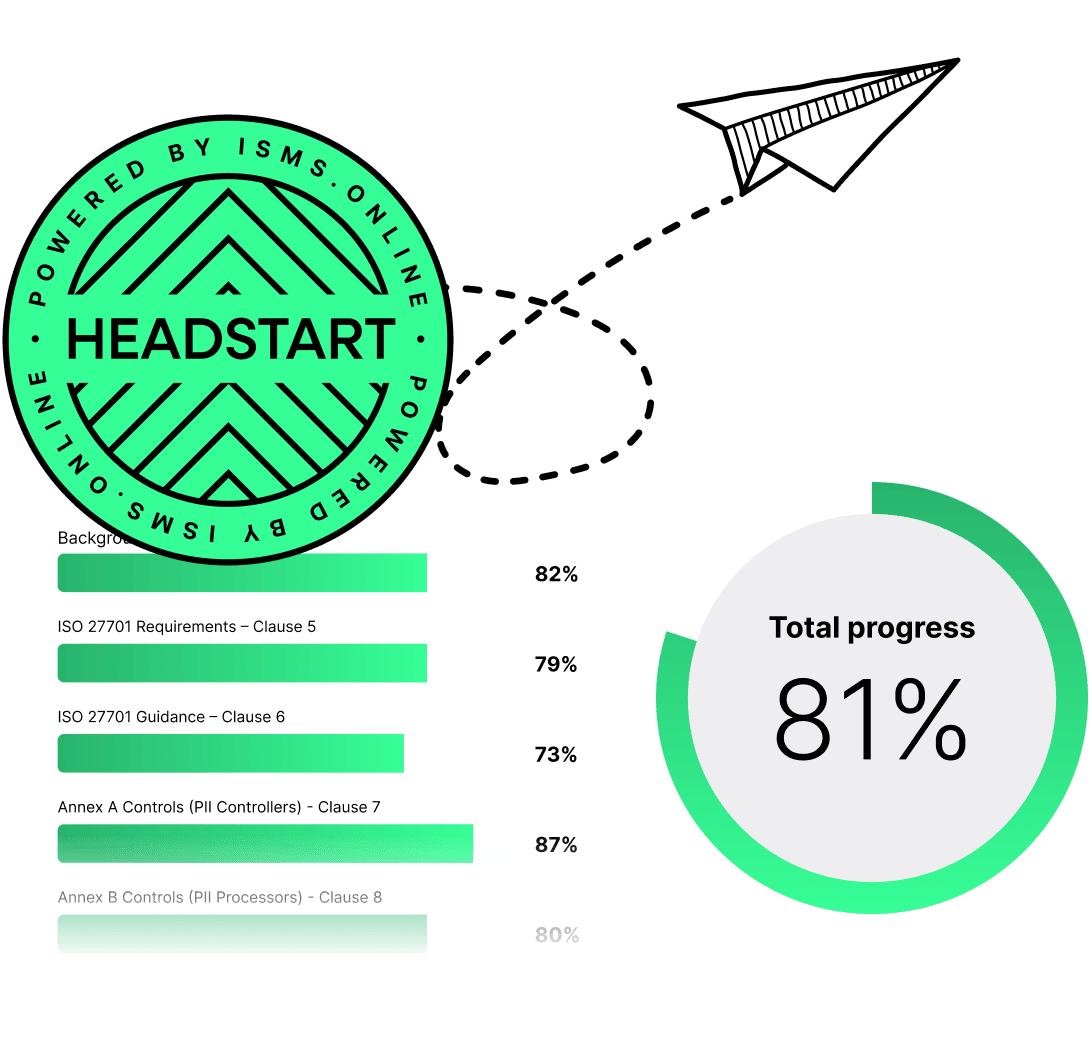
ISO 27001 made easy
An 81% Headstart from day one
We’ve done the hard work for you, giving you an 81% Headstart from the moment you log on. All you have to do is fill in the blanks.
Why Are Internal Audits Integral to the Audit Cycle?
The Role of Internal Audits in ISO 27001:2022
Internal audits are a cornerstone of the ISO 27001:2022 audit cycle, acting as an internal safeguard to ensure your organization’s Information Security Management System (ISMS) meets the standard’s stringent requirements. Unlike external audits conducted by third parties, internal audits focus on scrutinizing internal processes and controls, offering a chance to address issues proactively (Clause 9.2).
Fostering Continuous Improvement Through Internal Audits
By systematically identifying enhancement opportunities, internal audits drive continuous improvement within your ISMS. They reveal potential nonconformities, enabling your organization to implement corrective actions before external audits, thereby minimizing the risk of significant findings. This proactive strategy not only fortifies your security posture but also cultivates a culture of ongoing enhancement (Clause 10.1).
Best Practices for Conducting Internal Audits
To maximize internal audits’ effectiveness, consider these best practices:
- Engage Independent Auditors: Ensure auditors are independent of the processes being audited to maintain objectivity.
- Maintain a Regular Audit Schedule: Consistent audits keep your ISMS aligned with ISO 27001:2022.
- Document Findings Comprehensively: Thorough documentation of findings and corrective actions is crucial for future reference.
Identifying Potential Nonconformities with Internal Audits
Internal audits are instrumental in pinpointing potential nonconformities by thoroughly examining your ISMS against ISO 27001:2022 criteria. This involves reviewing documentation, interviewing staff, and observing processes to identify discrepancies. Addressing these issues early enhances your ISMS’s effectiveness and readiness for external audits.
Our platform, ISMS.online, offers tools to streamline your internal audit process, ensuring your organization remains compliant and audit-ready. Engage with us to enhance your ISMS and achieve certification success.
External Audits for ISO 27001:2022: A Comprehensive Guide
Understanding the Stages of External Audits
External audits for the ISO 27001:2022 standard are essential for verifying your organization’s compliance with the Information Security Management System (ISMS). These audits are conducted in two critical stages:
-
Stage 1: Documentation Review: Auditors meticulously examine your documentation to ensure alignment with ISO 27001 standards, focusing on the completeness and accuracy of your ISMS documentation (Clause 7.5).
-
Stage 2: Implementation Assessment: This stage involves a comprehensive evaluation of your ISMS’s practical application, emphasizing control effectiveness and risk management strategies (Clause 9.2).
Distinguishing External from Internal Audits
External audits, performed by accredited bodies, offer an objective evaluation of your ISMS to confirm adherence to ISO 27001:2022 requirements. In contrast, internal audits are self-assessments conducted by your organization to ensure ongoing compliance.
Criteria for Assessing Compliance
External auditors use specific criteria to evaluate compliance, including:
- Control Effectiveness: Evaluating how well your controls mitigate identified risks.
- Risk Management: Assessing the robustness of your risk management processes.
Strategies for Effective Communication with Auditors
Effective communication is crucial during external audits. Consider these strategies to enhance interactions:
- Organized Documentation: Ensure all documentation is well-organized and easily accessible.
- Prompt Responses: Address auditor queries promptly to demonstrate readiness.
External audits are integral to achieving ISO 27001 certification, affirming your ISMS against international standards. By understanding the audit stages and criteria and fostering effective communication, your organization can navigate the audit process with confidence. Our platform, ISMS.online, offers tools to streamline your audit journey and ensure compliance success.

Free yourself from a mountain of spreadsheets
Embed, expand and scale your compliance, without the mess. IO gives you the resilience and confidence to grow securely.
Addressing Nonconformities in ISO 27001:2022 Audits
Common Nonconformities in ISO 27001:2022 Audits
During ISO 27001:2022 audits, organizations frequently face nonconformities such as insufficient risk assessments and incomplete documentation. These issues can weaken compliance efforts and compromise security posture. Identifying these gaps early is crucial for maintaining an effective Information Security Management System (ISMS) (Clause 9.2).
Developing Effective Corrective Action Plans
To address nonconformities effectively, corrective action plans must target their root causes. Key steps include:
- Root Cause Analysis: Delve into the underlying causes of nonconformities to understand their origins.
- Action Plan Development: Craft a detailed plan with specific steps and timelines for resolution.
- Responsibility Assignment: Designate accountable team members to ensure implementation.
This structured approach not only resolves current issues but also strengthens your ISMS for future audits (Clause 10.1).
Verifying the Effectiveness of Corrective Actions
Verification is essential to confirm that corrective actions are effective. Conduct follow-up audits to ensure nonconformities are resolved. This process involves:
- Reviewing updated documentation to ensure accuracy and completeness.
- Evaluating the effectiveness of newly implemented controls.
Regular verification maintains compliance and demonstrates your commitment to continuous improvement.
Strategies to Prevent Recurrence
Preventing recurring nonconformities requires regular review and updates of ISMS policies and procedures. This proactive strategy involves continuous monitoring and adaptation to emerging security threats. By fostering a culture of vigilance and improvement, your organization can ensure sustained compliance with the ISO 27001:2022 standard.
Our platform, ISMS.online, provides comprehensive tools to streamline the management of nonconformities and enhance your ISMS. Engage with us to ensure your organization remains compliant and audit-ready.
Why Is the Statement of Applicability Essential?
Understanding the Statement of Applicability in ISO 27001:2022
The Statement of Applicability (SoA) is a cornerstone document within the ISO 27001:2022 standard. It serves as a comprehensive guide for implementing security controls, specifying which controls are applicable, their current status, and justifications for any exclusions. This document ensures that your organization’s security measures align with its objectives and the standard’s requirements (Clause 6.1.3).
Guiding Control Implementation with the Statement of Applicability
The SoA acts as a strategic blueprint for your organization’s security framework. By detailing the controls in place and their rationale, it helps align security measures with ISO 27001:2022 requirements. This structured approach facilitates effective risk management and enhances control effectiveness (Clause 8.1).
Key Elements of a Comprehensive Statement of Applicability
To create a robust SoA, include these critical elements:
- Control Objectives: Clearly define the purpose and expected outcomes for each control.
- Implementation Status: Indicate whether controls are implemented, planned, or excluded.
- Justification for Exclusions: Provide transparent reasons for any controls not applied.
Ensuring Your Statement of Applicability Remains Relevant
Regular updates to the SoA are crucial to reflect changes in organizational structure, technology, and risk management strategies. Aligning the SoA with ongoing risk assessments and management reviews (Clause 9.3) ensures it remains a dynamic and effective tool. Our platform, ISMS.online, offers resources to streamline this process, enhancing your ISMS’s adaptability and compliance.
The Statement of Applicability is more than just a document; it’s a strategic asset in the audit cycle. By offering a clear reference for auditors, it facilitates assessments and supports continuous improvement. Engage with ISMS.online to ensure your SoA is comprehensive and aligned with ISO 27001:2022 requirements.

Manage all your compliance, all in one place
ISMS.online supports over 100 standards and regulations, giving you a single platform for all your compliance needs.
How Does Management Review Support the Audit Cycle?
Evaluating ISMS Performance and Strategic Alignment
Management review plays a crucial role in the ISO 27001:2022 audit cycle by ensuring that your organization’s Information Security Management System (ISMS) remains effective and strategically aligned. By assessing performance metrics and audit findings, management reviews provide a comprehensive overview of your ISMS’s health, facilitating informed decision-making and continuous improvement (Clause 9.3).
Enhancing ISMS Effectiveness Through Regular Reviews
Regular management reviews empower your organization to evaluate the effectiveness of its ISMS, pinpointing areas for enhancement and ensuring compliance with ISO 27001:2022. These reviews align ISMS objectives with organizational goals, driving strategic improvements and fostering a proactive security culture.
Key Focus Areas for Management Review Meetings
A successful management review meeting should address:
- Risk Management: Analyze current risks and mitigation strategies.
- Resource Allocation: Evaluate the adequacy of resources dedicated to ISMS.
- Improvement Opportunities: Identify and prioritize areas for enhancement.
Driving Strategic Improvements with Management Review
Aligning ISMS objectives with broader organizational goals through management reviews can drive strategic improvements. This alignment ensures that your ISMS not only meets compliance requirements but also supports your organization’s long-term vision. Regular reviews contribute to continuous improvement, maintaining compliance and enhancing your security posture.
Our platform, ISMS.online, offers tools to streamline management reviews, ensuring your organization remains audit-ready and compliant. Engage with us to enhance your ISMS and achieve certification success.
Further Reading
The Benefits of ISO 27001:2022 Certification
Enhancing Information Security with ISO 27001 Certification
ISO 27001:2022 certification equips your organization with a robust framework to manage information security risks effectively. By implementing systematic risk management strategies, your company can safeguard sensitive data and ensure compliance with international standards (Clause 6.1.3).
Gaining a Competitive Edge Through Certification
Achieving ISO 27001 certification demonstrates your organization’s unwavering commitment to data protection, setting you apart in a competitive market. It signals to clients and partners that your company prioritizes security, enhancing your reputation and unlocking new business opportunities.
Building Stakeholder Trust and Confidence
Certification reassures stakeholders that your organization adheres to stringent security standards, fostering trust and confidence. By aligning with ISO 27001:2022, you showcase transparency and accountability, essential for nurturing enduring relationships with clients and partners.
Long-Term Benefits of Certification
ISO 27001 certification strengthens organizational resilience over time by mitigating the risk of data breaches and fostering continuous improvement. It cultivates a proactive security culture, enabling your organization to adapt to evolving threats and maintain a robust security posture.
Key Benefits of ISO 27001:2022 Certification:
- Enhanced Security: Establishes a structured framework for risk management.
- Competitive Edge: Demonstrates a commitment to data protection.
- Stakeholder Trust: Ensures compliance with international standards.
- Long-Term Resilience: Reduces the risk of data breaches and supports continuous improvement.
By embracing ISO 27001:2022 certification, your organization can achieve enhanced information security, gain a competitive edge, and build stakeholder trust. Our platform, ISMS.online, offers comprehensive tools to streamline your certification journey, ensuring you remain compliant and secure. Discover how we can support your organization in achieving certification success.
Can Technology Streamline the Audit Process?
Enhancing Audit Efficiency with Technology
Incorporating technology into the ISO 27001 audit process revolutionizes how organizations manage documentation and control assessments. ISMS.online integrates with existing systems, facilitating a seamless transition and efficient audit preparation. By automating routine tasks, companies can shift focus to strategic enhancements, reducing manual workload and increasing accuracy.
Tools for Streamlined Audit Documentation
Several tools are available to optimize audit documentation management. AuditBoard’s CrossComply, for instance, integrates with various tech stacks to streamline IT risk and compliance workflows. Similarly, ISMS.online offers a centralized hub for all audit documentation needs, ensuring your organization remains audit-ready and compliant.
Automation’s Role in Improving Audit Accuracy
Automation plays a crucial role in enhancing audit efficiency by minimizing human error and improving accuracy. By automating data collection and analysis, organizations can concentrate on critical audit aspects, saving time and ensuring precision. This approach aligns with ISO 27001:2022 requirements, fostering a robust security posture.
Continuous Compliance Monitoring Through Technology
Technology is indispensable for ongoing compliance monitoring, providing real-time data analysis and insights. Our platform enables continuous monitoring of compliance metrics, ensuring alignment with ISO 27001:2022. This proactive strategy allows for timely adjustments, maintaining a strong security framework.
- Real-Time Data Analysis: Offers insights for immediate compliance adjustments.
- Continuous Monitoring: Ensures adherence to ISO 27001:2022.
Embrace technology to revolutionize your audit process and enhance compliance. With tools like ISMS.online, your organization can remain audit-ready and secure, poised for long-term success in information security management.
Strategies for Continuous Improvement in Your ISMS
How Can You Foster Continuous Improvement?
Continuous improvement is the backbone of a resilient Information Security Management System (ISMS). To achieve this, consider the following strategies:
- Conduct Regular Audits: Frequent audits are essential for maintaining compliance and uncovering opportunities for enhancement (ISO 27001:2022 Clause 9.2).
- Integrate Feedback Loops: Utilize insights from audits and incidents to refine processes and address vulnerabilities.
- Establish Performance Metrics: Clear metrics are vital for measuring ISMS effectiveness and guiding improvement efforts.
How Do Audit Findings Drive Improvement?
Audit findings serve as a critical tool for identifying weaknesses within your ISMS. By implementing corrective actions based on these insights, you can fortify your security posture. Monitoring the effectiveness of these actions ensures sustained improvements over time.
What Role Do Feedback Loops Play?
Feedback loops are indispensable for continuous improvement. They facilitate learning from past incidents and audits, enabling proactive enhancement. Regularly reviewing and updating ISMS policies helps adapt to evolving security threats and maintain a robust security posture.
How Does ISMS.online Enhance Continuous Improvement?
Our platform, ISMS.online, is designed to support continuous improvement by offering tools for monitoring and managing ISMS activities. With features like real-time data analysis and compliance tracking, we empower your organization to maintain alignment with ISO 27001:2022 and drive ongoing enhancements.
Adopt these strategies to ensure your ISMS remains resilient and adaptive. With ISMS.online’s support, your organization can achieve continuous improvement and maintain a robust security framework.
Contact ISMS.online for More Information
Elevate Your Compliance Strategy
Navigating the ISO 27001:2022 audit cycle demands precision and foresight. Our platform, ISMS.online, offers a robust suite of tools designed to streamline your audit preparation and execution. By aligning with international standards, we ensure your organization is audit-ready, enhancing your compliance efforts and security posture.
Tailored Services for Compliance Officers
Our services cater specifically to compliance officers, providing:
- Expert Audit Support: Access resources and guidance to simplify the audit process.
- Advanced Risk Management Tools: Develop strategies to efficiently identify and mitigate risks.
- Efficient Documentation Management: Streamline your documentation processes for seamless audits.
Connect with ISMS.online for Expert Guidance
Reaching out to us is straightforward. Visit our website or contact our support team for personalized assistance. Our experts are ready to guide you through the ISO 27001:2022 audit cycle with confidence.
Expand Your Compliance Resources
Beyond audit support, ISMS.online offers a wealth of resources to bolster your compliance journey:
- Comprehensive Training Modules: Equip your team with the knowledge needed to maintain compliance.
- Interactive Webinars and Workshops: Stay informed about the latest trends and best practices in information security.
- Engaging Community Forums: Connect with peers and industry experts to exchange insights and experiences.
By choosing ISMS.online, your organization can remain compliant and secure. Discover how our platform can support your audit needs and enhance your information security management system today.
Understanding the ISO 27001 Audit Cycle
Key Stages of the ISO 27001 Audit Cycle
The ISO 27001 audit cycle is a structured process that ensures your organization meets international information security standards. It consists of several stages, each vital for maintaining compliance and strengthening your security framework.
Interconnection of Audit Cycle Stages
-
Preparation: This initial stage involves reviewing documentation, pinpointing key focus areas, and ensuring audit readiness. It aligns your ISMS with ISO 27001 requirements, laying the groundwork for a successful audit (Clause 7.5).
-
Conducting the Audit: Both internal and external audits are conducted to evaluate compliance with the standard. Internal audits focus on assessing internal processes, while external audits provide an objective evaluation by accredited bodies (Clause 9.2).
-
Post-Audit Activities: Addressing nonconformities and implementing corrective actions are essential for enhancing your ISMS. This stage ensures ongoing improvement and alignment with ISO 27001 standards (Clause 10.1).
Importance of Each Stage for Compliance
Each stage of the audit cycle is essential for ensuring compliance. The preparation stage sets the foundation, the audit stage assesses adherence to standards, and post-audit activities drive continuous improvement. Together, they form a comprehensive framework for maintaining information security.
Effective Preparation for Each Stage
- Documentation Management: Ensure all necessary documents are current and accessible.
- Training and Awareness: Equip your team with knowledge of ISMS processes and responsibilities.
- Regular Audits: Conduct frequent internal audits to identify areas for improvement.
Challenges During the Audit Cycle
Organizations may face challenges such as evolving security requirements and extensive documentation management. However, using platforms like ISMS.online can streamline processes and provide comprehensive support.
By thoroughly understanding and managing the ISO 27001 audit cycle, your organization can achieve compliance and strengthen its information security management system. Engage with ISMS.online to ensure your organization is audit-ready and compliant.
Book a demoFrequently Asked Questions
Preparing for an ISO 27001 Audit: Key Steps and Strategies
Strategic Steps for Audit Preparation
Embarking on an ISO 27001 audit requires a strategic approach to ensure compliance and readiness. Begin with a Gap Analysis to identify discrepancies between your current practices and the ISO 27001 standard. This analysis is crucial for pinpointing areas needing improvement, laying the groundwork for a successful audit.
Enhancing Audit Readiness Through Risk Assessment
Risk assessment is foundational to audit preparation, revealing potential vulnerabilities within your Information Security Management System (ISMS). By evaluating risks, you can prioritize actions and implement effective controls, ensuring alignment with ISO 27001 requirements. This proactive strategy not only strengthens your security posture but also ensures audit readiness.
Essential Documentation for the Audit Process
Having the right documentation is key to demonstrating the compliance and effectiveness of your ISMS. Essential documents include:
- Statement of Applicability: Details applicable controls and their justifications.
- Risk Treatment Plans: Outlines strategies for managing identified risks.
- Internal Audit Reports: Offers insights into ISMS performance and areas for improvement.
Ensuring these documents are current and easily accessible is vital for a seamless audit process (Clause 7.5).
Ensuring ISMS Compliance and Readiness
To maintain compliance, focus on training personnel in ISMS processes, understanding roles, responsibilities, and procedures. Regular internal audits (Clause 9.2) and management reviews (Clause 9.3) are crucial for sustaining compliance and readiness. Our platform, ISMS.online, provides comprehensive tools to streamline these processes, ensuring your organization remains audit-ready and compliant.
By following these steps, your organization can confidently approach the ISO 27001 audit, ensuring compliance and enhancing your information security management system. Engage with ISMS.online to streamline your audit preparation and achieve certification success.
The Role of Internal Audits in ISO 27001:2022
Understanding Internal Audits
Internal audits are a vital component of maintaining the integrity of your Information Security Management System (ISMS) under the ISO 27001:2022 standard. They function as an internal checkpoint, ensuring adherence to the standard’s requirements and identifying areas for enhancement (Clause 9.2).
Supporting Continuous Improvement
By systematically evaluating processes and controls, internal audits foster a culture of ongoing enhancement. They help uncover potential nonconformities, allowing your organization to implement corrective actions proactively. This approach not only fortifies your security posture but also reduces the risk of significant findings during external audits (Clause 10.1).
Best Practices for Conducting Internal Audits
To maximize the effectiveness of internal audits, consider these best practices:
- Engage Independent Auditors: Ensure auditors are independent of the processes being audited to maintain objectivity.
- Maintain a Regular Audit Schedule: Consistent audits keep your ISMS aligned with ISO 27001:2022.
- Document Findings Comprehensively: Thorough documentation of findings and corrective actions is crucial for future reference.
Identifying Potential Nonconformities
Internal audits are instrumental in pinpointing potential nonconformities by thoroughly examining your ISMS against ISO 27001:2022 criteria. This process involves reviewing documentation, interviewing staff, and observing processes to identify discrepancies. Addressing these issues early enhances your ISMS’s effectiveness and readiness for external audits.
Differentiating Internal and External Audits
While internal audits focus on evaluating internal processes and controls, external audits provide an objective assessment conducted by accredited bodies. Internal audits offer a proactive approach to identifying and addressing issues before they become significant findings in external audits.
Our platform, ISMS.online, offers tools to streamline your internal audit process, ensuring your organization remains compliant and audit-ready. Engage with us to enhance your ISMS and achieve certification success.
How Do External Audits Assess ISO 27001 Compliance?
Criteria for External Audit Assessment
External auditors play a crucial role in evaluating your organization’s compliance with the ISO 27001 standard. Their assessment focuses on several key areas:
- Control Implementation: Auditors examine how effectively your controls mitigate identified risks, ensuring they align with ISO 27001 requirements.
- Risk Management: The robustness of your risk management strategies is scrutinized to confirm they adequately address potential vulnerabilities (Clause 6.1.3).
- Documentation: Auditors verify that all necessary documents are current and accessible, reflecting the organization’s adherence to the standard (Clause 7.5).
Effective Communication with Auditors
Clear and precise communication with auditors is essential for a successful audit. To enhance interactions:
- Organize Documentation: Ensure all documents are systematically arranged and readily available for review.
- Provide Clear Responses: Address auditor queries with precision and clarity, demonstrating a thorough understanding of your ISMS.
- Exhibit Readiness: Show preparedness through comprehensive documentation and a deep understanding of your organization’s security framework.
Stages of an External Audit
External audits typically proceed through two main stages:
- Stage 1: Documentation Review: Auditors meticulously examine your documentation to confirm alignment with ISO 27001 standards.
- Stage 2: Implementation Assessment: This stage involves a comprehensive evaluation of your ISMS’s practical application, focusing on the effectiveness of controls and risk management strategies (Clause 9.2).
Contribution of External Audits to Certification
External audits are instrumental in securing ISO 27001 certification. They provide an impartial evaluation of your ISMS, ensuring it meets the standard’s stringent requirements. Successfully completing external audits demonstrates your organization’s commitment to information security and positions you for certification.
Understanding the criteria and stages of external audits enables your organization to effectively manage the audit process and achieve ISO 27001 certification. Our platform, ISMS.online, offers robust tools to streamline your audit journey, ensuring compliance and strengthening your information security management system.
The Importance of the Statement of Applicability
Guiding Control Implementation with Precision
The Statement of Applicability (SoA) is a cornerstone of aligning your organization’s security measures with the ISO 27001:2022 standard. It acts as a strategic blueprint, detailing which controls are implemented and justifying any exclusions (Clause 6.1.3). This clarity ensures your security strategy is comprehensive and tailored to specific risks.
Essential Elements for an Effective SoA
To craft a robust SoA, include:
- Control Objectives: Clearly define the purpose and expected outcomes of each control.
- Implementation Status: Specify whether controls are implemented, planned, or excluded.
- Justification for Exclusions: Provide transparent reasons for any controls not applied.
Ensuring a Comprehensive and Dynamic SoA
A comprehensive SoA requires regular updates to reflect changes in organizational structure, technology, and risk management strategies. Aligning the SoA with ongoing risk assessments and management reviews (Clause 9.3) ensures it remains relevant and effective. Our platform, ISMS.online, offers tools to streamline this process, enhancing your ISMS’s adaptability and compliance.
The SoA’s Integral Role in the Audit Cycle
The SoA is more than a document; it is a strategic tool that plays a significant role in the audit cycle. By providing a clear reference for auditors, it facilitates assessments and supports continuous improvement. Engage with ISMS.online to ensure your SoA is comprehensive and aligned with ISO 27001:2022 requirements.
Enhancing the ISO 27001 Audit Process with Technology
Streamlining Audit Documentation with Advanced Tools
Efficient management of audit documentation is crucial for ISO 27001 compliance. Our platform, ISMS.online, offers a centralized solution that organizes and provides easy access to essential documents, ensuring they remain current and readily retrievable. This approach simplifies the audit process, significantly reducing the risk of errors and omissions.
Boosting Audit Efficiency and Precision Through Automation
Automation plays a pivotal role in enhancing audit efficiency by streamlining routine tasks such as data collection and analysis. This allows your organization to focus on strategic improvements, saving time and enhancing precision by minimizing human error. By automating these processes, you can ensure your ISMS aligns seamlessly with ISO 27001:2022 requirements.
Continuous Compliance Monitoring with Technological Integration
Technology is integral to ongoing compliance monitoring, offering real-time insights into compliance metrics. Our platform supports continuous oversight, ensuring your ISMS remains aligned with ISO 27001:2022 requirements. This proactive approach facilitates timely adjustments, maintaining a robust security posture.
Revolutionizing the ISO 27001 Audit Process with Technology
Technology transforms the ISO 27001 audit process by seamlessly integrating with existing systems, ensuring a smooth transition and efficient audit preparation. By utilizing advanced tools, organizations can reduce manual tasks and focus on strategic enhancements, ensuring they remain audit-ready and compliant.
- Real-Time Data Analysis: Provides insights for immediate compliance adjustments.
- Continuous Monitoring: Maintains alignment with ISO 27001:2022 requirements.
Harness the power of technology to revolutionize your audit process and enhance compliance. With tools like ISMS.online, your organization can be audit-ready and positioned for long-term success in information security management.






