





































Grasp the Essentials of ISO 27001:2022
Discover the Key Components and Changes
ISO 27001:2022 serves as a cornerstone in developing robust information security frameworks, providing a structured methodology to protect data. With over 40,000 organizations globally certified, its widespread adoption highlights its critical role. The 2022 revision introduces 11 new controls, including cloud security and threat intelligence, addressing contemporary digital challenges.
Key Components of ISO 27001:2022
- Risk-Based Thinking: Aligns security measures with business objectives, emphasizing proactive risk management (Clause 6.1).
- Updated Controls: Incorporates new measures for cloud security and threat intelligence, tackling modern challenges (Annex A.5).
- Compliance Framework: Offers a comprehensive structure for managing information security, ensuring confidentiality, integrity, and availability (Clause 8).
Differences from Previous Versions
The 2022 update enhances the standard by integrating risk-based thinking, shifting from prescriptive measures to a more flexible, adaptive approach. This change empowers organizations to tailor their security strategies to specific needs, fostering a more resilient security posture.
Importance for Information Security
Adhering to ISO 27001:2022 is crucial for maintaining robust information security. Non-compliance can lead to increased vulnerability to data breaches and a loss of stakeholder trust. By prioritizing compliance, organizations not only protect their data but also enhance their reputation and competitive edge.
How ISMS.online Can Help
Our platform streamlines the ISO 27001:2022 audit and certification preparation process, offering tools for risk assessments, documentation, and compliance tracking. For Compliance Officers, Chief Information Security Officers, and CEOs, booking a demo with ISMS.online is the first step towards achieving certification and strengthening your organization's security framework.
Book a demoPreparing for an ISO 27001 Audit
Strategic Steps for ISO 27001 Audit Preparation
Achieving ISO 27001 certification demands a strategic approach, beginning with the formation of a dedicated team to manage the audit process. Each member should clearly understand their roles and responsibilities. Establish a timeline with key milestones, such as completing documentation reviews and risk assessments, to ensure a smooth progression.
The Backbone of Documentation
Documentation is the cornerstone of a successful audit. Essential documents include the Information Security Management System (ISMS) policy and comprehensive risk assessment reports. These not only demonstrate compliance but also provide a structured framework for managing information security. Regular updates and reviews are crucial to ensure they reflect current practices and risks (ISO 27001:2022 Clause 7.5).
The Critical Role of Risk Assessment
Risk assessments are indispensable for identifying potential threats and vulnerabilities within your organization. By systematically evaluating these risks, you can implement appropriate controls to mitigate them. This proactive approach not only enhances security but also contributes to a significant reduction in security incidents post-certification. Regular risk assessments ensure your organization remains resilient against evolving threats (ISO 27001:2022 Clause 6.1).
Achieving Audit Readiness
Audit readiness requires a comprehensive strategy. Conduct regular internal audits to identify non-conformities and address them before the certification audit. Automation tools can streamline this process, reducing manual effort and minimizing errors. By maintaining a state of continuous readiness, your organization can confidently approach the certification audit, knowing that all aspects of the ISMS are in order.
Streamlining the Audit Preparation Process
Streamlining audit preparation involves utilizing technology to automate routine tasks, allowing your team to focus on strategic initiatives. Implementing a centralized platform for documentation and risk management can significantly reduce the time and effort required to prepare for an audit. This approach not only enhances efficiency but also ensures that your organization is well-prepared for any challenges that may arise during the audit process.
ISO 27001 made easy
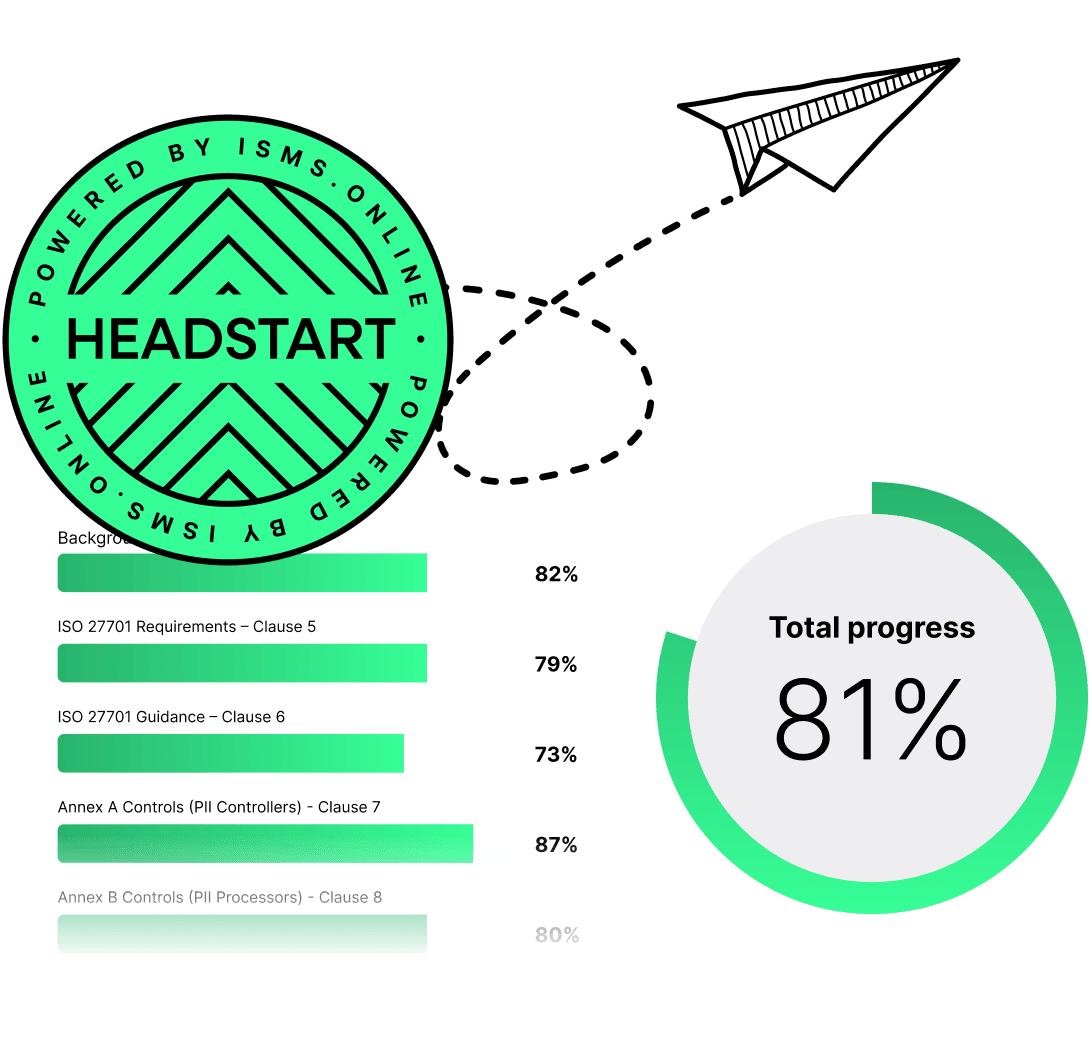
An 81% Headstart from day one
We’ve done the hard work for you, giving you an 81% Headstart from the moment you log on. All you have to do is fill in the blanks.
Overcoming Certification Challenges
Navigating ISO 27001 Certification Hurdles
Achieving ISO 27001 certification requires strategic resource allocation and overcoming resistance to change. Organizations often struggle with distributing resources efficiently, making leadership support essential to ensure critical tasks receive the necessary focus. This support allows teams to concentrate on vital activities without feeling overwhelmed.
Strategic Resource Allocation for Certification
Effective resource allocation is crucial for a seamless certification journey. By breaking down the certification process into manageable steps, organizations can alleviate resource strain and ensure each phase is thoroughly addressed. Prioritizing tasks and setting clear milestones help maintain momentum and prevent bottlenecks.
- Step-by-Step Approach: Dividing the process into smaller tasks eases resource allocation.
- Leadership Support: Securing backing from leadership ensures resources are directed appropriately.
Overcoming Resistance to Change
Resistance to change is a common barrier in achieving certification. Cultivating a culture of continuous improvement can significantly mitigate this challenge. By fostering open communication and involving employees in the change process, organizations can build a more adaptable workforce. Continuous improvement not only aids in overcoming certification challenges but also ensures ongoing compliance and adaptation to new threats.
- Foster Open Communication: Engage employees in the change process to reduce resistance.
- Promote Continuous Improvement: Encourage a culture that embraces ongoing development and adaptation.
Continuous Improvement and Certification Success
Continuous improvement is vital for maintaining compliance and adapting to evolving security threats. Regularly reviewing and updating processes allows organizations to identify areas for enhancement and ensure alignment with the latest standards. This proactive approach not only supports certification efforts but also strengthens the organization’s overall security posture.
Addressing these challenges with strategic planning and a focus on continuous improvement can significantly enhance the certification process. By doing so, organizations not only achieve certification but also lay the groundwork for sustained security and compliance.
Why Pursue ISO 27001 Certification?
Strengthening Your Security Framework
ISO 27001 certification fortifies your organization’s security framework by implementing robust controls that significantly reduce data breach risks. This proactive strategy not only safeguards sensitive information but also nurtures a culture of continuous improvement, ensuring your security measures evolve with emerging threats (ISO 27001:2022 Clause 6.1).
Building Trust and Competitive Advantage
Certification distinguishes your organization in the marketplace, showcasing a commitment to security and compliance. This differentiation builds trust and credibility, attracting new opportunities and fostering enduring relationships. Many organizations report a 30% reduction in security incidents post-certification, enhancing operational efficiency and reputation.
Simplifying Regulatory Compliance
Aligning with ISO 27001 streamlines compliance with international security standards, reducing the complexity of managing multiple frameworks. This alignment minimizes non-compliance risks and penalties, demonstrating a commitment to high security standards and reinforcing stakeholder confidence (ISO 27001:2022 Clause 8).
Long-Term Strategic Benefits
Beyond immediate security enhancements, ISO 27001 certification supports sustained business growth by improving regulatory compliance and fostering a culture of security awareness. This foundation not only protects your organization but also positions it for future success in a competitive environment.
Mastering these aspects of ISO 27001 certification enhances your organization’s security posture and lays the groundwork for sustained growth and compliance excellence.

Free yourself from a mountain of spreadsheets
Embed, expand and scale your compliance, without the mess. IO gives you the resilience and confidence to grow securely.
How Does Technology Facilitate ISO 27001 Certification?
Tools for ISO 27001 Compliance
Technology streamlines ISO 27001 certification by centralizing compliance efforts. Platforms like ISMS.online offer dashboards that simplify task management and documentation. These tools facilitate risk assessments, document management, and audit preparation, ensuring your organization meets the standard’s requirements efficiently.
Enhancing Audit Readiness Through Automation
Automation enhances audit readiness by maintaining up-to-date documentation and reducing errors. This provides a clear view of your organization’s compliance status, ensuring continuous readiness for audits. Automated systems allow your organization to approach audits with confidence, knowing that all documentation is current and accessible.
Balancing Technology and Human Oversight
While technology offers significant advantages, it’s essential to balance its use with human oversight. Over-reliance on technology can overlook unique organizational needs and essential human insights. Integrating technology with human expertise ensures a comprehensive approach to certification, aligning with ISO 27001:2022 requirements.
Achieving Optimal Results with Technology and Human Expertise
To achieve optimal results, organizations should combine technology’s efficiency with human judgment. This involves using technology for routine tasks while relying on human expertise for strategic decision-making. By harnessing the strengths of both, your organization can navigate the certification process effectively, ensuring compliance and security.
Our platform, ISMS.online, supports your certification journey with comprehensive compliance tools and expert guidance.
Aligning with ISO 27001:2022 Standards
Why Align with the Latest ISO 27001:2022 Standards?
Aligning with ISO 27001:2022 is pivotal for organizations aiming to maintain robust security frameworks and gain a competitive edge. The 2022 updates emphasize integration with other management systems, such as GDPR, ensuring comprehensive compliance and enhanced security measures. This alignment not only fortifies your organization’s security posture but also demonstrates a commitment to continuous improvement and adaptability.
Key Changes Introduced in ISO 27001:2022
The 2022 revision introduces significant changes, including a heightened focus on cloud security and data leakage prevention. These updates reflect the evolving challenges in digital security, necessitating a proactive approach to risk management. By incorporating these new controls, organizations can better safeguard sensitive information and mitigate potential vulnerabilities.
Impact of 2022 Updates on Certification
The updates in ISO 27001:2022 impact the certification process by requiring organizations to demonstrate compliance with the latest standards. This involves updating existing policies and procedures to align with new requirements, such as those outlined in Annex A. Staying current with these changes is crucial for maintaining certification and ensuring ongoing compliance with international security standards.
Staying Updated with New Standards
To stay updated with new standards, organizations should implement a systematic approach to monitoring changes in the ISO 27001 framework. This includes regular reviews of industry publications, participation in relevant forums, and leveraging automation tools to streamline compliance efforts. By staying informed, organizations can proactively adapt to changes and maintain their competitive edge.
Aligning with the latest ISO 27001:2022 standards ensures that organizations remain secure and competitive in an ever-evolving digital environment. By embracing these updates, your organization can enhance its security posture and demonstrate a commitment to excellence in information security management.

Manage all your compliance, all in one place
ISMS.online supports over 100 standards and regulations, giving you a single platform for all your compliance needs.
Conducting Internal and External Audits
How to Conduct Effective Internal and External Audits
Conducting audits is crucial for ISO 27001 compliance. Internal audits are pivotal in identifying non-conformities and preparing for external evaluations. They involve a systematic review of your ISMS to ensure alignment with ISO requirements. Regular internal audits allow organizations to proactively address issues, enhancing readiness for external scrutiny.
Preparing for External Audits
Preparation for external audits demands meticulous planning and documentation. Unlike internal audits, external audits provide an objective evaluation of your ISMS’s effectiveness. To prepare, ensure all documentation is current and reflective of practices. This includes risk assessments, security policies, and evidence of continuous improvement. Engaging with external auditors early can provide valuable insights into potential areas of concern.
Differences Between Internal and External Audits
The primary differences between internal and external audits lie in their scope and frequency. Internal audits occur more frequently and focus on identifying areas for improvement. In contrast, external audits are less frequent but provide an independent assessment of compliance, often required for certification. Understanding these differences is essential for leveraging each audit type to strengthen your ISMS.
Using Audit Findings to Improve ISMS
Audit findings are invaluable for enhancing your ISMS. They provide insights into potential vulnerabilities and areas for improvement. By systematically addressing these findings, organizations can bolster their security posture and ensure ongoing compliance with ISO 27001. This proactive approach not only mitigates risks but also demonstrates a commitment to continuous improvement and security excellence.
Further Reading
Essential Documentation for ISO 27001 Audit
Key Documents for ISO 27001 Audit Success
For a successful ISO 27001 audit, essential documentation forms the backbone of your Information Security Management System (ISMS). The Statement of Applicability (SoA) and security procedure records are critical, ensuring all security measures align with your business objectives. These documents provide a clear framework for compliance, demonstrating your organization’s commitment to maintaining a secure environment.
Organizing and Presenting Documentation Effectively
Effective organization and presentation of documentation are crucial for audit success. Begin by categorizing documents into logical sections, such as risk assessment reports and audit logs. Regular updates and reviews ensure that documentation reflects current practices and risks, simplifying the audit process and enhancing transparency and accountability (ISO 27001:2022 Clause 7.5).
Demonstrating Compliance with Robust Evidence
To demonstrate compliance, robust evidence is required, including detailed risk assessment reports and comprehensive audit logs. These documents serve as tangible proof of your organization’s dedication to maintaining a secure environment. By systematically documenting compliance efforts, you can effectively showcase adherence to ISO 27001 standards, reinforcing your commitment to information security.
Supporting Continuous Improvement Through Documentation
Documentation plays a vital role in supporting continuous improvement by providing a historical record of compliance efforts. This record enables organizations to identify trends, assess the effectiveness of security measures, and make informed decisions about future improvements. By using documentation as a tool for continuous improvement, organizations can enhance their security posture and ensure ongoing compliance with evolving standards.
Proper documentation is not just a requirement for ISO 27001 audits; it’s a strategic asset that drives continuous improvement and strengthens your organization’s security framework. Building on this foundation, organizations can confidently navigate the complexities of ISO 27001 certification, ensuring robust security measures and compliance.
Enhancing Security Posture with ISO 27001 Certification
Strengthening Security Through Certification
ISO 27001 certification transforms your organization’s security posture by implementing a structured framework that systematically identifies and mitigates risks. This alignment with business objectives ensures that security measures are not only robust but also strategically integrated. By fostering a culture of continuous improvement, certification enhances the confidentiality, integrity, and availability of critical information, aligning with ISO 27001:2022 Clause 6.1.
Long-Term Benefits of Certification
Maintaining ISO 27001 certification offers profound long-term benefits, including ongoing compliance with international security standards. This commitment significantly reduces the risk of data breaches and enhances risk management practices, leading to a more resilient security framework. By focusing on security, your organization not only protects its assets but also supports business growth by instilling confidence in stakeholders.
Building Stakeholder Trust
Certification plays a crucial role in building stakeholder trust and confidence. By demonstrating a commitment to stringent security standards, your organization reassures clients and partners of its dedication to safeguarding information. This trust is vital in a competitive market, where security breaches can severely damage reputations. ISO 27001 certification serves as a testament to your organization’s reliability and integrity, fostering stronger relationships with stakeholders.
Certification’s Role in Risk Management
ISO 27001 certification is integral to effective risk management, providing a comprehensive framework for identifying, assessing, and mitigating risks. By maintaining certification, your organization can continuously refine its risk management strategies, adapting to new challenges and maintaining a robust security posture. This dynamic approach not only enhances security but also aligns with broader compliance and governance objectives.
Leveraging these insights, your organization can use ISO 27001 certification to enhance its security posture, drive long-term success, and build stakeholder confidence.
Best Practices for Achieving ISO 27001 Certification
Strategic Management Support and Regular Audits
Achieving ISO 27001 certification requires strategic management support and regular internal audits. Management’s commitment provides the necessary resources and direction, ensuring the certification process is effectively driven. Regular audits are essential for identifying non-conformities and maintaining alignment with the standard (ISO 27001:2022 Clause 9.2).
Maintaining Compliance Post-Certification
To maintain compliance post-certification, organizations must adopt a proactive approach to monitoring and improvement. Continuous monitoring of security measures and regular updates to policies are crucial for adapting to evolving threats. This vigilance not only safeguards compliance but also enhances your organization’s overall security posture (ISO 27001:2022 Clause 10.2).
Lessons from Successful Certifications
Successful certifications highlight the importance of thorough documentation and comprehensive training. Proper documentation serves as a foundation for demonstrating compliance and facilitating audits. Training ensures all employees understand their roles in maintaining security, fostering a culture of awareness and responsibility.
Fostering a Culture of Continuous Improvement
Fostering a culture of continuous improvement is key to sustaining compliance and security. Encouraging open communication and feedback allows organizations to identify areas for enhancement and implement necessary changes. This culture supports ongoing compliance and drives innovation and resilience in the face of new challenges.
By implementing these best practices, organizations can confidently navigate the complexities of ISO 27001 certification, ensuring robust security measures and sustained compliance. This approach strengthens your organization’s security framework and positions it for long-term success.
How ISMS.online Facilitates ISO 27001 Certification
Simplifying Certification with ISMS.online
ISMS.online revolutionizes the ISO 27001 certification process by centralizing essential tasks within intuitive dashboards. This strategic approach not only streamlines compliance management but ensures documentation remains audit-ready. By automating routine tasks, our platform significantly reduces the time and effort required for certification preparation, allowing your organization to focus on strategic initiatives.
Enhancing Audit Readiness with Advanced Features
Our platform is equipped with robust tools designed to enhance audit readiness. By automating documentation and compliance tasks, ISMS.online ensures that all necessary records are accurate and up-to-date. This automation minimizes manual errors and provides a clear overview of your compliance status, enabling you to approach audits with confidence.
- Centralized Dashboards: Simplify task management and documentation.
- Automated Compliance Tasks: Keep records current and error-free.
Supporting Ongoing Compliance and Adaptation
Beyond initial certification, ISMS.online offers continuous support for maintaining compliance. Our tools facilitate ongoing risk management and monitoring, ensuring that your organization adapts to evolving security requirements. This proactive approach not only sustains compliance but also strengthens your overall security posture.
- Risk Management Tools: Facilitate continuous monitoring and adaptation.
- Compliance Monitoring: Ensure alignment with evolving standards.
Choosing ISMS.online for your certification journey means embracing a comprehensive solution that simplifies processes, enhances audit readiness, and supports ongoing compliance efforts. Elevate your organization’s security framework with our expert guidance and innovative tools.
Book a Demo with ISMS.online
Why ISMS.online is Your Ideal Certification Partner
ISMS.online revolutionizes your ISO 27001 certification journey by offering a tailored experience that aligns with your organization’s unique needs. Our platform integrates comprehensive tools to streamline the certification process, ensuring efficiency and compliance with ease.
Tailored Solutions for Your Challenges
Our demos are crafted to address your specific challenges, providing insights into how ISMS.online can simplify your certification journey. Experience firsthand how our platform adapts to your organizational requirements, offering a seamless experience that aligns with your goals.
- Customized Experience: Each demo is tailored to meet your unique challenges, showcasing our platform’s adaptability.
- Expert Guidance: Benefit from our team’s expertise, guiding you through the certification process with precision.
Streamline Your Certification Process
ISMS.online empowers you to navigate the complexities of ISO 27001 with confidence. Our platform’s intuitive design and automation capabilities reduce manual effort, allowing you to focus on strategic initiatives. By choosing ISMS.online, you gain access to a suite of tools that enhance audit readiness and compliance.
- Efficient Compliance: Automate routine tasks and maintain audit-ready documentation effortlessly.
- Comprehensive Tools: Access features that support continuous improvement and risk management.
Take the Next Step
Embark on your certification journey with ISMS.online and unlock the full potential of your organization's security framework. Book a demo today to explore how our platform can transform your approach to ISO 27001 certification, ensuring sustained success and compliance excellence.
Book a demoFrequently Asked Questions
Understanding ISO 27001:2022
Key Components of ISO 27001:2022
ISO 27001:2022 stands as a foundational framework for information security management, offering a structured approach to safeguarding data integrity and confidentiality. Its core components include:
- Risk Management: A systematic approach to identifying and mitigating potential threats, ensuring security measures align with business objectives (ISO 27001:2022 Clause 6.1).
- Security Controls: Updated controls, including cloud security and threat intelligence, address contemporary challenges and enhance protection.
- Compliance Framework: Provides a robust structure for managing information security, ensuring confidentiality, integrity, and availability.
Enhancing Information Security with ISO 27001:2022
By integrating risk-based thinking, ISO 27001:2022 empowers organizations to tailor security strategies to specific needs, fostering resilience. This adaptive approach fortifies defenses and aligns security measures with evolving threats, ensuring a proactive stance against potential vulnerabilities.
Prioritizing ISO 27001:2022 Compliance
Compliance with ISO 27001:2022 is essential for maintaining a robust security posture. Non-compliance can lead to increased vulnerability to data breaches, resulting in financial losses and damage to reputation. Adhering to the standard demonstrates a commitment to security excellence, enhancing stakeholder trust and competitive advantage.
Risks of Non-Compliance with ISO 27001:2022
Failure to comply with ISO 27001:2022 exposes organizations to significant risks, including data breaches and regulatory penalties. These risks can undermine business operations and erode stakeholder confidence. Prioritizing compliance mitigates these risks and ensures sustained security and compliance.
Understanding and implementing ISO 27001:2022 is crucial for organizations seeking to enhance their security framework and maintain compliance with international standards. This proactive approach protects critical information and supports long-term business success.
Preparing for an ISO 27001 Audit
Initial Steps for ISO 27001 Audit Preparation
Embarking on the journey to ISO 27001 audit readiness demands a structured and strategic approach. Begin by assembling a dedicated team to oversee the process, ensuring each member understands their specific roles and responsibilities. Establish a timeline with key milestones, such as documentation review and risk assessment completion, to maintain momentum and focus.
The Crucial Role of Documentation
Documentation forms the backbone of a successful audit. Essential documents, including the Information Security Management System (ISMS) policy and comprehensive risk assessment reports, not only demonstrate compliance but also provide a framework for managing information security. Regular updates and reviews ensure these documents reflect current practices and risks, aligning with ISO 27001:2022 Clause 7.5.
Risk Assessment’s Contribution to Audit Preparation
Risk assessments are indispensable for identifying potential threats and vulnerabilities. By systematically evaluating these risks, your organization can implement appropriate controls to mitigate them. This proactive approach enhances security and contributes to audit readiness, ensuring resilience against evolving threats as outlined in ISO 27001:2022 Clause 6.1.
Best Practices for Ensuring Audit Readiness
Achieving audit readiness requires a comprehensive strategy. Conduct regular internal audits to identify non-conformities and address them before the certification audit. Automation tools can streamline this process, reducing manual effort and minimizing errors. By maintaining a state of continuous readiness, your organization can confidently approach the certification audit, knowing that all aspects of the ISMS are in order.
Streamlining the Audit Preparation Process
Streamlining audit preparation involves utilizing technology to automate routine tasks, allowing your team to focus on strategic initiatives. Implementing a centralized platform for documentation and risk management can significantly reduce the time and effort required to prepare for an audit. This approach not only enhances efficiency but also ensures that your organization is well-prepared for any challenges that may arise during the audit process.
By following these steps, your organization can effectively prepare for an ISO 27001 audit, ensuring compliance and strengthening its security framework.
Navigating ISO 27001 Certification Challenges
Overcoming Certification Hurdles
Embarking on ISO 27001 certification can present several hurdles, primarily in resource allocation and managing change. Organizations often find themselves balancing priorities, where strategic planning becomes essential. Securing management support is crucial, as it empowers teams to focus on critical activities without feeling overwhelmed.
Effective Resource Allocation for Certification
Efficient resource allocation is vital for a seamless certification journey. By breaking down the process into manageable steps, organizations can alleviate resource strain and ensure each phase is thoroughly addressed. Prioritizing tasks and setting clear milestones help maintain momentum and prevent bottlenecks.
- Strategic Planning: Develop a detailed plan outlining each step of the certification process.
- Resource Prioritization: Allocate resources based on task criticality and potential impact on the certification timeline.
Strategies to Overcome Resistance to Change
Resistance to change is a common barrier in achieving certification. Cultivating a culture of continuous improvement can significantly mitigate this challenge. By fostering open communication and involving employees in the change process, organizations can build a more adaptable workforce. Continuous improvement not only aids in overcoming certification challenges but also ensures ongoing compliance and adaptation to new threats.
- Inclusive Communication: Engage employees in discussions about the benefits and goals of certification.
- Continuous Improvement Initiatives: Implement programs that encourage ongoing development and adaptation.
Continuous Improvement’s Role in Certification Success
Continuous improvement is vital for maintaining compliance and adapting to evolving security threats. Regularly reviewing and updating processes allows organizations to identify areas for enhancement and ensure alignment with the latest standards. This proactive approach not only supports certification efforts but also strengthens the organization’s overall security posture.
Addressing these challenges with strategic planning and a focus on continuous improvement can significantly enhance the certification process. By doing so, organizations not only achieve certification but also lay the groundwork for sustained security and compliance.
Benefits of ISO 27001 Certification
Enhancing Security Posture
ISO 27001 certification fortifies your organization’s security framework by implementing a structured risk management approach. This proactive strategy not only mitigates potential threats but also aligns security measures with business objectives (ISO 27001:2022 Clause 6.1). By safeguarding sensitive information, your organization reduces the risk of data breaches and fosters a culture of continuous improvement.
Gaining a Competitive Edge
Certification under ISO 27001 distinguishes your organization by demonstrating a commitment to stringent security standards. This differentiation builds trust and credibility with clients and partners, attracting new opportunities and fostering long-term relationships. By showcasing a dedication to safeguarding information, your organization enhances its market reputation and gains a competitive advantage.
Streamlining Regulatory Compliance
Aligning with ISO 27001 simplifies compliance with international security standards, reducing the complexity of managing multiple frameworks. This alignment streamlines processes and minimizes the risk of non-compliance penalties, reinforcing stakeholder confidence. Organizations that achieve certification often report a smoother path to regulatory compliance, as the framework provides a comprehensive structure for managing information security (ISO 27001:2022 Clause 8).
Long-Term Strategic Benefits
The long-term benefits of ISO 27001 certification extend beyond immediate security enhancements. Certification supports sustained business growth by improving regulatory compliance and fostering a culture of security awareness. This foundation not only protects your organization but also positions it for future success in a competitive landscape. By prioritizing ISO 27001 certification, your organization ensures ongoing compliance and security excellence, laying the groundwork for long-term success.
How Technology Aids in ISO 27001 Certification
Streamlining Certification with Technology
Technology transforms the ISO 27001 certification process by enhancing both efficiency and accuracy. Automation allows organizations to focus on strategic initiatives, ensuring compliance with ISO 27001:2022 requirements. This includes managing complex documentation and conducting thorough risk assessments, tasks that are often time-consuming when performed manually.
Harnessing AI for Compliance
Artificial intelligence (AI) plays a crucial role in modern compliance efforts. By analyzing vast amounts of data, AI tools can identify patterns and anomalies that might be missed by human auditors. This capability not only enhances audit readiness but also ensures that your organization remains compliant with evolving standards.
Automation’s Impact on Audit Readiness
Automation significantly boosts audit readiness by maintaining current and accessible documentation. Automated systems reduce the likelihood of errors and discrepancies during audits, providing a clear and accurate representation of your organization’s compliance status. This streamlined approach facilitates a more efficient audit process.
Balancing Technology with Human Expertise
While technology offers numerous benefits, it is essential to balance its use with human oversight. Human expertise is crucial for interpreting data and making strategic decisions that technology alone cannot address. By combining the strengths of both, organizations can navigate the certification process effectively, ensuring compliance and security.
Case Studies in Technology Integration
Several organizations have successfully integrated technology into their compliance processes. These case studies highlight the importance of a balanced approach, where technology handles routine tasks, and human oversight ensures strategic alignment with business objectives.
By embracing technology, your organization can streamline the ISO 27001 certification process, enhancing audit readiness and compliance. However, it is crucial to balance this with human oversight to ensure a comprehensive approach to certification.
How ISMS.online Supports ISO 27001 Certification
Streamlining Certification with ISMS.online
ISMS.online revolutionizes the ISO 27001 certification process by centralizing essential tasks within an intuitive platform. Our tools optimize preparation, ensuring your organization is audit-ready and compliant with the latest standards. By automating routine tasks, we reduce the time and effort required, allowing you to focus on strategic initiatives.
Features That Enhance Compliance
Our platform offers a suite of features designed to enhance audit readiness and compliance:
- Centralized Dashboards: Simplify task management and documentation, providing a clear overview of your compliance status.
- Automated Compliance Tasks: Keep records current and error-free, minimizing manual errors and ensuring accuracy.
- Risk Management Tools: Facilitate continuous monitoring and adaptation to evolving security requirements.
Documentation and Audit Readiness Support
ISMS.online ensures that all necessary documentation is accurate and up-to-date, providing robust support for audit preparation. Our platform’s automation capabilities reduce the likelihood of errors, offering a clear and accurate view of your organization’s compliance status. This streamlined approach enhances efficiency and confidence during audits.
Additional Compliance Support
Beyond initial certification, ISMS.online offers ongoing support to maintain compliance. Our tools facilitate continuous risk management and monitoring, ensuring that your organization adapts to evolving security requirements. This proactive approach not only sustains compliance but also strengthens your overall security posture.
Why Choose ISMS.online for Your Certification Journey?
Choosing ISMS.online means embracing a comprehensive solution that simplifies processes, enhances audit readiness, and supports ongoing compliance efforts. Our expert guidance and innovative tools empower your organization to navigate the complexities of ISO 27001 certification with confidence. Elevate your security framework and ensure sustained success by booking a demo with ISMS.online today.






