





































Understand the Essentials of ISO 27001:2022 Risk Assessment Documentation
The Imperative of Documenting Risk Assessments
Documenting risk assessments is essential for aligning with ISO 27001:2022 compliance and ensuring your organisation is audit-ready. This structured process involves identifying, evaluating, and mitigating risks, directly supporting the standard’s requirements (ISO 27001:2022 Clause 6.1). Effective documentation not only facilitates compliance but also empowers your organisation to approach audits with confidence.
Documentation as a Pillar of Compliance
Comprehensive documentation acts as concrete evidence of your organisation’s dedication to information security. By maintaining detailed records, you demonstrate adherence to ISO 27001 guidelines, a critical factor for audit success. Many organisations have reported enhanced efficiency through automated compliance processes, highlighting the value of structured documentation.
Documentation’s Role in Audit Preparedness
Documentation is foundational to audit preparation. It allows auditors to verify your organisation’s compliance with the ISO 27001 standard, ensuring a seamless audit process. With ISO 27001 certification becoming increasingly prevalent, maintaining comprehensive documentation is more important than ever.
Advantages of Comprehensive Documentation
- Proof of Compliance: Demonstrates adherence to ISO 27001.
- Enhanced Risk Management: Supports effective risk identification and mitigation.
- Audit Preparedness: Boosts readiness and confidence during audits.
Influence of Documentation on Audit Results
A meticulously documented risk assessment process significantly impacts audit outcomes. It highlights your organisation's proactive stance on risk management and compliance, fostering a risk-aware culture that experts deem crucial for achieving compliance.
Consider how our platform, ISMS.online, can streamline your documentation process, ensuring your organisation is audit-ready and compliant with ISO 27001. Embrace the benefits of thorough documentation and elevate your compliance efforts today.
Book a demoWhy is Risk Assessment Documentation Essential for ISO 27001 Compliance?
Elevating Security Through Documentation
Risk assessment documentation is a cornerstone of ISO 27001 compliance, offering a structured approach to managing information security risks. This documentation not only aligns with the standard’s requirements but also fortifies your organisation’s security posture by proactively identifying and mitigating threats (ISO 27001:2022 Clause 6.1).
Benefits of Detailed Documentation
Comprehensive documentation is vital for effective risk management and audit success. It provides:
- Consistent Risk Management: Ensures systematic identification and evaluation of risks.
- Proactive Security Measures: Facilitates early threat detection and mitigation.
- Streamlined Audit Process: Offers clear evidence of compliance, simplifying audits.
Enhancing Risk Management
Documentation serves as a transparent record of identified risks and mitigation strategies, supporting informed decision-making and compliance with ISO 27001 standards.
Strengthening Security Posture
By maintaining thorough documentation, organisations can enhance their security posture, ensuring prompt identification and resolution of potential threats. This proactive stance supports compliance and fosters a culture of security awareness.
Centralised Compliance Management
Utilising centralised platforms like ISMS.online can streamline compliance management. Our platform simplifies the documentation process, ensuring your organisation remains audit-ready and compliant with ISO 27001.
Embrace the advantages of comprehensive documentation to bolster your compliance efforts and fortify your security posture. Engage with our platform to streamline your risk assessment documentation process today.
ISO 27001 made easy
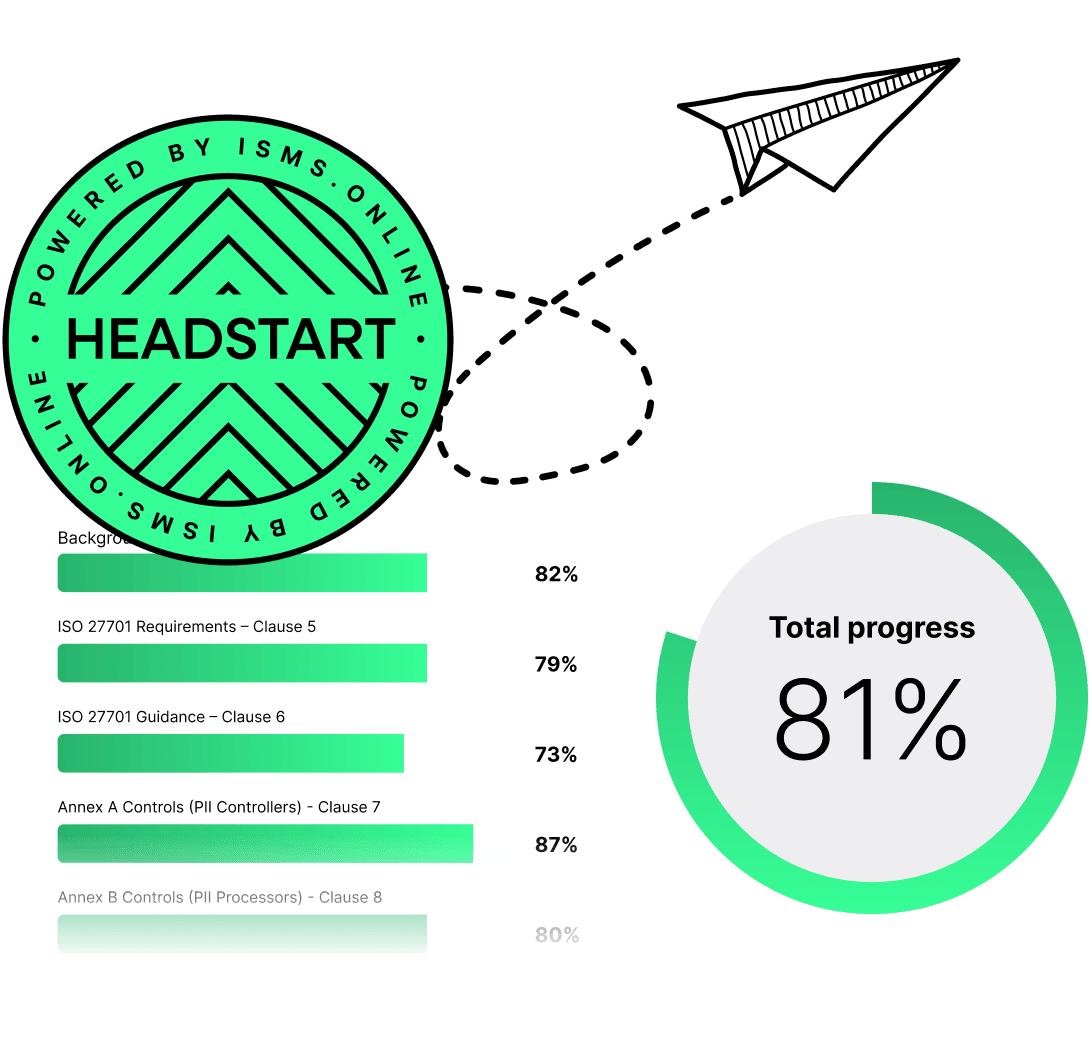
An 81% Headstart from day one
We’ve done the hard work for you, giving you an 81% Headstart from the moment you log on. All you have to do is fill in the blanks.
What Are the Key Components of a Risk Assessment?
Essential Elements of a Risk Assessment
Crafting a robust risk assessment for ISO 27001:2022 involves several critical elements:
- Asset Identification: Pinpoint the resources and information vital to your organisation.
- Threat and Vulnerability Assessment: Scrutinise potential threats and vulnerabilities that could impact these assets.
- Risk Impact and Likelihood Evaluation: Gauge potential consequences and prioritise actions accordingly (ISO 27001:2022 Clause 6.1).
Structuring a Comprehensive Risk Assessment
A well-structured risk assessment ensures thoroughness and accuracy. Begin by identifying all relevant components, ensuring no aspect of your organisation’s risk profile is overlooked. Regular updates and reviews are essential to maintain accuracy and relevance, adapting to any changes in the organisational environment.
Importance of Completeness in Risk Assessment
Including all relevant components is vital for a holistic understanding of organisational risks. This completeness ensures that no potential threat goes unnoticed, enabling proactive measures to mitigate risks effectively. A well-documented risk assessment not only supports adherence to standards but also strengthens your organisation’s security posture.
Ensuring Thoroughness in Your Risk Assessment
Thoroughness in risk assessment documentation is crucial for maintaining a robust Information Security Management System (ISMS). Regular updates and reviews help keep the assessment current, reflecting any changes in the risk environment. Our platform, ISMS.online, offers tools to streamline this process, ensuring your organisation remains compliant and audit-ready.
By integrating these components into your risk assessment, you can enhance your organisation’s ability to manage risks effectively and maintain compliance with ISO 27001:2022. Embrace a proactive approach to risk management and utilise our platform to simplify your documentation process today.
How to Effectively Identify and Evaluate Risks
Identifying Risks: Methods and Approaches
Identifying risks is crucial for safeguarding your organisation’s information security. Effective methods include:
- Asset Inventory: Catalogue critical resources and information to understand what needs protection.
- Threat Modelling: Analyse potential threats that could impact these assets, considering both internal and external factors.
- Vulnerability Assessments: Evaluate weaknesses that could be exploited, ensuring a comprehensive view of potential threats.
These techniques ensure that no significant threats are overlooked, providing a robust foundation for risk management.
Evaluating Risk Impact and Likelihood
Evaluating risks involves assessing both their impact and likelihood. This process uses:
- Qualitative Assessments: Subjective evaluations based on expert judgement, providing insights into potential consequences.
- Quantitative Assessments: Numerical analysis to determine severity and probability, offering a data-driven approach to risk prioritisation.
Understanding these factors allows organisations to prioritise risks effectively, focusing resources on the most pressing threats (ISO 27001:2022 Clause 6.1).
The Importance of Risk Prioritisation
Prioritising risks based on evaluation results is essential for informed decision-making. By ranking risks according to their potential impact and likelihood, organisations can allocate resources efficiently, ensuring that significant risks are addressed promptly. This strategic approach enhances risk management and supports adherence to ISO 27001 standards.
Informing Risk Treatment Strategies Through Evaluation
Risk evaluation plays a crucial role in shaping risk treatment strategies. By understanding the nature and severity of risks, organisations can develop targeted mitigation plans that align with their risk appetite and business objectives. Regular risk evaluation is vital for adapting to new threats and maintaining compliance, ensuring that your organisation remains resilient in the face of evolving challenges.
Our platform, ISMS.online, streamlines the risk assessment process, providing tools and resources to help your organisation identify, evaluate, and prioritise risks effectively. Embrace a proactive approach to risk management and enhance your compliance efforts today.

Free yourself from a mountain of spreadsheets
Embed, expand and scale your compliance, without the mess. IO gives you the resilience and confidence to grow securely.
Why Is Documentation Essential for ISO 27001 Compliance?
How Documentation Strengthens Compliance
Documentation is a cornerstone of ISO 27001 compliance, serving as concrete evidence of your organisation’s commitment to robust information security practices. By meticulously recording risk assessments and control measures, you not only demonstrate adherence to the standard’s requirements but also enhance communication with auditors. This transparency is crucial, as it provides clear evidence of your organisation’s security posture and readiness for audits.
Demonstrating Compliance Through Documentation
Accurate documentation is vital in showcasing compliance with ISO 27001. It offers a comprehensive record of risk management activities, detailing how risks are identified, evaluated, and mitigated. This transparency allows auditors to verify that your organisation meets the necessary standards and controls, ensuring a smooth audit process. Regular updates and reviews of documentation reflect your organisation’s current risk environment and control measures, supporting continuous improvement in information security management.
Maintaining Accurate and Current Documentation
Keeping documentation precise and up-to-date is essential for ongoing compliance and audit readiness. Regular reviews ensure that your records accurately reflect the current risk environment and control measures. This proactive approach not only supports compliance but also demonstrates your organisation’s dedication to continuous improvement in information security management.
Facilitating Auditor Communication Through Documentation
Documentation acts as a bridge between your organisation and auditors, streamlining the audit process. By providing detailed records of risk assessments and control implementations, you can effectively communicate your compliance efforts. This clarity fosters trust and confidence, making it easier for auditors to assess your adherence to ISO 27001 standards.
Our platform, ISMS.online, offers tools to streamline your documentation process, ensuring your organisation remains compliant and audit-ready. Embrace the benefits of thorough documentation and enhance your compliance efforts today.
When is it Necessary to Update Risk Assessment Documentation?
Frequency of Documentation Reviews
To maintain alignment with the ISO 27001 standard, regularly reviewing your risk assessment documentation is crucial. We recommend updating this documentation at least annually or whenever significant changes occur within your organisation. This practice ensures that your risk management strategies remain effective and relevant.
Triggers for Documentation Updates
Several factors can prompt the need for updates:
- Organisational Changes: Events like mergers, acquisitions, or restructuring can alter your risk profile.
- Technological Advancements: New technologies may introduce fresh vulnerabilities that require attention.
- Regulatory Requirements: Changes in laws or standards necessitate compliance updates to stay current.
Importance of Keeping Documentation Current
Maintaining up-to-date documentation is vital for effective risk management and compliance. Current records reflect your organisation’s risk environment, enabling proactive responses to emerging threats. This not only supports compliance but also demonstrates a commitment to robust information security practices.
Enhancing Compliance and Risk Management Through Regular Updates
Regular updates improve your organisation’s ability to respond to new threats and vulnerabilities, ensuring that risk management strategies align with current realities. This proactive approach fosters a risk-aware culture, essential for achieving compliance and maintaining a strong security posture.
Our platform, ISMS.online, streamlines the documentation process, making it easier for your organisation to stay audit-ready and compliant with ISO 27001. Embrace the benefits of regular updates to enhance your compliance efforts and strengthen your risk management strategies today.

Manage all your compliance, all in one place
ISMS.online supports over 100 standards and regulations, giving you a single platform for all your compliance needs.
Where Can You Find Templates and Tools for Documentation?
Uncovering Resources for Risk Assessment Documentation
Navigating ISO 27001:2022 compliance demands efficient documentation processes. Standardised templates and tools are invaluable, ensuring consistency and completeness in your risk assessment documentation. These resources not only enhance efficiency but also align with the standard’s requirements, providing a robust foundation for compliance.
Advantages of Standardised Templates
Standardised templates offer several benefits:
- Uniformity: Ensures consistent documentation, reducing errors and omissions.
- Efficiency: Streamlines the documentation process, allowing your team to focus on critical tasks.
- Compliance: Aligns with ISO 27001:2022, offering a structured approach to risk assessment.
How ISMS.online Enhances Your Documentation
Our platform, ISMS.online, provides a comprehensive suite of tools and templates designed to simplify your documentation process. By integrating with existing systems, these tools enhance accuracy and efficiency, ensuring your organisation remains audit-ready and compliant. Our resources support the maintenance of a robust Information Security Management System (ISMS).
The Case for Documentation Tools
Incorporating tools into your documentation process offers several advantages:
- Integration: Seamlessly connects with existing systems, enhancing data accuracy.
- Automation: Reduces manual effort, allowing your team to focus on strategic initiatives.
- Scalability: Adapts to your organisation’s growing needs, ensuring continued compliance.
By utilising these resources, your organisation can streamline its documentation process, ensuring compliance with ISO 27001:2022 and enhancing overall efficiency. Discover how our platform can support your documentation efforts and elevate your compliance strategy today.
Further Reading
How Can Automation Improve Your Documentation Process?
Integrating automation into your documentation workflow revolutionises efficiency and accuracy. By reducing manual tasks, automation minimises errors and ensures real-time updates, crucial for maintaining precise records. This approach not only streamlines operations but also aligns with ISO 27001:2022 compliance requirements.
Benefits of Automated Documentation Tools
Automated tools transform documentation by:
- Accelerating Processes: Automation speeds up tasks, allowing your team to focus on strategic goals.
- Ensuring Precision: Real-time updates keep records accurate and current.
- Maintaining Consistency: Automated systems standardise documentation, reducing errors.
The Role of Automation in Compliance
As compliance demands grow, automation becomes indispensable. It manages complex information security requirements, ensuring documentation aligns with evolving standards. This proactive stance supports compliance and enhances audit readiness.
ISMS.online’s Automated Solutions
Our platform, ISMS.online, offers automated features that streamline your documentation process. By integrating with existing systems, these tools enhance accuracy and efficiency, ensuring your organisation remains audit-ready and compliant. Our resources support a robust Information Security Management System (ISMS).
Embrace automation to elevate your documentation process and strengthen compliance efforts. Discover how our platform can transform your approach, ensuring efficiency and accuracy at every step.
How to Align Documentation with Business Objectives
Strategic Alignment for Enhanced Compliance
Aligning your documentation with business objectives is not just about compliance; it’s about ensuring that your risk management efforts are strategically integrated into your organisation’s broader goals. This alignment transforms documentation from a mere compliance task into a strategic asset, enhancing its relevance and effectiveness in supporting your business strategy (ISO 27001:2022 Clause 6.1).
Effective Strategies for Alignment
To achieve this alignment, consider implementing the following strategies:
- Conduct Regular Reviews: Periodically review your documentation to ensure it aligns with evolving business goals and remains relevant.
- Engage Stakeholders: Involve key stakeholders in the documentation process to ensure it reflects organisational priorities and strategic direction.
- Integrate with Business Strategy: Embed documentation efforts within your broader business strategy to maximise their impact and relevance.
Supporting Organisational Objectives
By aligning documentation with your business goals, you not only support compliance but also strengthen your organisation’s overall risk management framework. This integration ensures that risk management efforts are proactive and aligned with your organisation’s long-term objectives, fostering a culture of continuous improvement and strategic foresight.
How ISMS.online Facilitates Alignment
Our platform, ISMS.online, provides comprehensive support for aligning documentation with business objectives. With tools designed to streamline the documentation process, our platform ensures your organisation remains audit-ready and compliant. By integrating with existing systems, ISMS.online enhances accuracy and efficiency, allowing you to focus on strategic initiatives.
Embrace the power of alignment to enhance your documentation efforts and support your organisation’s strategic goals. Discover how ISMS.online can transform your approach to documentation and elevate your compliance strategy today.
What Are Common Pitfalls in Risk Assessment Documentation?
Recognising Frequent Mistakes
Navigating ISO 27001 compliance requires meticulous documentation, yet organisations often stumble upon common pitfalls:
- Incomplete Records: Omitting crucial details can create gaps in risk management, undermining compliance efforts.
- Infrequent Updates: Without regular updates, documentation becomes outdated, diminishing its effectiveness.
- Lack of Business Integration: Failing to align documentation with business processes can reduce its relevance and utility.
Strategies to Overcome Challenges
To avoid these pitfalls, a systematic approach is essential:
- Regular Reviews: Schedule periodic reviews to ensure documentation remains current and comprehensive, aligning with ISO 27001:2022 Clause 6.1.
- Business Process Alignment: Integrate documentation efforts with business processes to enhance relevance and effectiveness.
- Structured Methodology: Implement a structured approach to capture all necessary details and maintain accuracy.
Importance of Addressing Documentation Challenges
Addressing documentation challenges is vital for maintaining compliance and effective risk management. Incomplete or outdated documentation can lead to gaps in risk management, exposing organisations to potential threats. By proactively addressing these challenges, organisations can enhance their security posture and demonstrate their commitment to ISO 27001 compliance.
How ISMS.online Supports Mitigation
Our platform, ISMS.online, offers comprehensive support to mitigate common documentation challenges. With tools designed to streamline the documentation process, ISMS.online ensures that your organisation remains audit-ready and compliant. By integrating with existing systems, our platform enhances accuracy and efficiency, allowing you to focus on strategic initiatives.
Embrace the power of thorough documentation to enhance your compliance efforts and strengthen your risk management strategies. Discover how ISMS.online can transform your approach to documentation and elevate your compliance strategy today.
How to Ensure Continuous Improvement in Documentation Practices
Key Practices for Ongoing Enhancement
Integrating continuous improvement into your documentation practices is essential for maintaining ISO 27001 compliance. This involves:
- Regular Evaluations: Conduct assessments to ensure documentation remains relevant and precise.
- Stakeholder Feedback: Actively gather input from key personnel to identify areas for refinement.
- Engagement: Involve stakeholders to align documentation with organisational priorities.
Enhancing Quality Through Feedback
Feedback mechanisms are crucial for refining documentation quality. By collecting insights from various stakeholders, your organisation can implement changes that enhance clarity and accuracy. This iterative process ensures documentation evolves with organisational needs and industry standards, maintaining its relevance over time.
Importance of Regular Assessment
Regular assessment of documentation practices is vital for adapting to changing security requirements. Evaluating your documentation periodically allows you to identify gaps and areas for enhancement, ensuring that your risk management strategies remain effective and aligned with ISO 27001 requirements (Clause 9.1).
How ISMS.online Facilitates Improvement
Our platform, ISMS.online, provides tools and resources that support ongoing enhancement in documentation practices. By offering automated features and integration capabilities, ISMS.online ensures regular updates, keeping your organisation audit-ready and compliant. Our platform empowers you to maintain a robust Information Security Management System (ISMS) that adapts to evolving challenges.
Embrace the power of ongoing enhancement to elevate your documentation practices and strengthen your compliance efforts. Discover how ISMS.online can transform your approach to documentation, ensuring efficiency and accuracy at every step.
Experience ISMS.online: Book Your Demo Today
Discover the Power of ISMS.online
Navigating ISO 27001 compliance can be intricate, but ISMS.online simplifies this journey with a robust suite of tools. Our platform enhances your risk assessment documentation, ensuring your organisation stays audit-ready and compliant.
Explore Our Platform’s Capabilities
Booking a demo with ISMS.online offers a firsthand look at our platform’s capabilities. Our intuitive interface and automated features streamline documentation, reducing manual effort and boosting accuracy. Seamless integration with existing systems provides a unified compliance management approach.
Elevate Your Documentation Process
Our platform is tailored to support risk assessment documentation:
- Automated Workflows: Ensure consistency and precision with streamlined processes.
- Real-Time Updates: Keep documentation current with updates reflecting the latest compliance requirements (ISO 27001:2022 Clause 6.1).
- Comprehensive Templates: Utilise standardised templates that align with ISO 27001, ensuring thorough documentation.
Address Your Unique Needs
Every organisation has distinct documentation needs, and our platform is designed to meet them. Whether enhancing risk management strategies or streamlining compliance efforts, ISMS.online offers the flexibility and support you need. Our demo provides insights into how our tools can be tailored to your specific requirements.
Step Towards Compliance Excellence
Harness ISMS.online to transform your documentation process and elevate your compliance strategy. Book a demo today and discover how our platform supports your organisation's journey towards ISO 27001 compliance. With our expert guidance and innovative tools, achieving compliance excellence is within reach.
Book a demoFrequently Asked Questions
How Do I Start Documenting My Risk Assessment?
Establishing a Solid Foundation
To effectively document your risk assessment for ISO 27001:2022, start by defining the scope and objectives. This alignment with your organisation’s security goals (ISO 27001:2022 Clause 6.1) lays the groundwork for a comprehensive process.
Engaging Key Stakeholders
Identifying and involving the right stakeholders is crucial. Engage IT managers, compliance officers, and risk management professionals who can provide valuable insights and resources. Their expertise ensures a well-rounded documentation process.
Gathering Essential Information
Collecting the right information is vital for successful documentation. Key elements include:
- Asset Inventory: Catalogue all critical assets requiring protection.
- Threat Analysis: Identify potential risks impacting these assets.
- Risk Evaluation Criteria: Develop criteria for assessing risk impact and likelihood.
This data forms the backbone of your risk assessment, ensuring thorough consideration of all aspects.
Streamlining the Documentation Process
To ensure a smooth start, establish clear objectives and timelines. Utilise tools and templates from ISMS.online to enhance accuracy and efficiency. By integrating these resources, your organisation can maintain consistency and compliance with ISO 27001.
Embrace a proactive approach to risk assessment documentation with our platform, simplifying and enhancing your process. With ISMS.online, achieving compliance excellence is within reach.
Which Tools Can Streamline the Documentation Process?
Navigating Compliance with Precision
Achieving ISO 27001:2022 compliance demands precision in documentation. Platforms like ISMS.online offer tailored features that simplify risk assessment documentation, enhancing both accuracy and consistency. These tools are essential for maintaining compliance and ensuring your organisation is audit-ready.
Advantages of Specialised Software
Specialised software provides distinct benefits:
- Efficiency: Automates repetitive tasks, freeing your team to focus on strategic initiatives.
- Accuracy: Minimises human error, ensuring precise documentation.
- Consistency: Maintains uniformity across documentation efforts, crucial for compliance.
Enhancing Accuracy and Efficiency
Integrating documentation tools into your workflow significantly boosts accuracy and efficiency. These tools offer real-time updates and automated processes, ensuring your documentation remains current and precise. By reducing manual tasks, you can concentrate on strategic risk management efforts.
Seamless Integration with Existing Systems
Effective documentation tools integrate seamlessly with existing systems, enhancing data accuracy and aligning with your organisation’s broader information security strategy. For instance, ISMS.online provides integration capabilities that support a unified approach to compliance management.
Selecting the Right Tools for Your Needs
Choosing the right tools requires evaluating your organisation’s specific requirements. Consider factors such as:
- Scalability: Can the tool grow with your organisation?
- User-Friendliness: Is the interface intuitive and easy to navigate?
- Support and Training: Does the provider offer comprehensive support and training resources?
By addressing these considerations, you can select tools that align with your documentation needs and enhance your compliance efforts.
Harness the power of specialised software to streamline your documentation process and elevate your compliance strategy. Discover how ISMS.online can support your organisation’s journey towards ISO 27001 compliance today.
When to Review and Update Risk Assessment Documentation
Timing for Documentation Reviews
Ensuring your risk assessment documentation remains current is crucial for ISO 27001 compliance. Conduct reviews annually or after significant organisational changes to maintain effective risk management strategies (ISO 27001:2022 Clause 6.1).
Triggers for Documentation Updates
Several factors necessitate updates:
- Structural Adjustments: Mergers or acquisitions can alter risk profiles.
- Technological Innovations: New technologies may introduce unforeseen vulnerabilities.
- Regulatory Changes: Modifications in laws or standards require compliance updates.
Importance of Current Documentation
Up-to-date documentation is vital for effective risk management and compliance. Accurate records reflect your organisation’s risk environment, enabling proactive responses to emerging threats. This approach not only supports compliance but also underscores a commitment to robust information security practices.
Enhancing Compliance Through Regular Updates
Consistent updates strengthen your organisation’s ability to address new threats and vulnerabilities, ensuring risk management strategies align with current realities. This proactive approach fosters a risk-aware culture, essential for achieving compliance and maintaining a strong security posture.
Our platform, ISMS.online, simplifies the documentation process, making it easier for your organisation to stay audit-ready and compliant with ISO 27001. Embrace the benefits of regular updates to enhance your compliance efforts and strengthen your risk management strategies today.
The Benefits of Comprehensive Risk Assessment Documentation
Why Detailed Documentation Matters
Maintaining thorough documentation is crucial for bolstering compliance, enhancing risk management, and ensuring seamless communication with auditors. This practice aligns with ISO 27001:2022 requirements, reinforcing your organisation’s security posture.
Supporting Compliance Efforts
Comprehensive documentation serves as tangible proof of adherence to ISO 27001 standards, showcasing your organisation’s commitment to information security. By meticulously recording risk assessments and control measures, you ensure transparency and verifiability, streamlining the audit process.
Enhancing Risk Management
Detailed records are vital for effective risk management, providing a clear account of identified risks and mitigation strategies. This transparency supports informed decision-making and proactive responses to emerging threats, ensuring resilience and compliance.
Facilitating Auditor Communication
Documentation acts as a conduit between your organisation and auditors, offering clear evidence of compliance efforts. By maintaining accurate and current records, you facilitate smoother communication and verification processes, enhancing audit outcomes and fostering trust.
Improving Organisational Security Posture
A well-documented risk assessment process significantly boosts your organisation’s security posture. It demonstrates a proactive approach to risk management, fostering a culture of security awareness and continuous improvement. This commitment not only supports compliance but also strengthens overall resilience.
- Evidence of Compliance: Demonstrates adherence to ISO 27001 standards.
- Risk Management: Provides a transparent record of risks and mitigation strategies.
- Audit Facilitation: Enhances communication and verification with auditors.
- Security Posture: Strengthens organisational resilience and awareness.
Our platform, ISMS.online, offers tools and resources to streamline your documentation process, ensuring your organisation remains audit-ready and compliant with ISO 27001. Embrace the benefits of comprehensive documentation to enhance your compliance efforts and strengthen your risk management strategies today.
How Can ISMS.online Support Your Documentation Efforts?
Enhancing Documentation with ISMS.online
ISMS.online revolutionises your documentation process by offering a suite of features tailored to streamline efficiency and precision. Our platform provides templates and workflows that align seamlessly with ISO 27001 requirements, ensuring compliance is both manageable and effective.
Boosting Efficiency with Automation
By automating routine tasks, ISMS.online empowers your team to focus on strategic initiatives. Real-time updates keep your documentation current and precise, enhancing both accuracy and audit readiness.
Advantages of Using ISMS.online
Utilising ISMS.online offers distinct benefits:
- Consistency in Documentation: Our templates ensure a uniform approach, minimising errors.
- Seamless Integration: Our platform integrates effortlessly with existing systems, enhancing data accuracy and aligning with your organisation’s security strategy.
- Scalability: Designed to grow with your organisation, our tools ensure continued compliance as your needs evolve.
Tailoring to Your Documentation Needs
Every organisation has unique requirements, and ISMS.online is designed to meet them. Whether enhancing risk management strategies or streamlining compliance efforts, our platform offers the flexibility and support you need. By integrating with existing systems, ISMS.online ensures a unified approach to compliance management.
Embrace the capabilities of ISMS.online to transform your documentation process and elevate your compliance strategy. Discover how our platform can support your organisation’s journey towards ISO 27001 compliance today.
How Can I Ensure My Documentation Aligns with ISO 27001 Standards?
Steps to Ensure Compliance with ISO 27001
Aligning your documentation with ISO 27001 standards is crucial for demonstrating your organisation’s commitment to information security. Begin by understanding the core requirements, such as:
- Risk Assessment: Identify and evaluate risks in accordance with Clause 6.1.
- Control Implementation: Apply controls from Annex A to mitigate identified risks.
Achieving Accurate and Complete Documentation
To achieve compliance, your documentation must be both accurate and complete. This involves:
- Detailing Risk Assessments: Clearly outline identified risks and mitigation strategies.
- Maintaining a Risk Register: Track identified risks and actions taken, ensuring a comprehensive view of your risk management efforts.
The Role of Documentation in Compliance
Documentation serves as tangible evidence of your organisation’s adherence to ISO 27001 standards. By maintaining detailed records, you demonstrate compliance, facilitating smoother audits and fostering trust with auditors.
Demonstrating Compliance Through Documentation
Showcasing your organisation’s proactive approach to risk management involves:
- Maintaining Up-to-Date Documentation: Reflect current risks and mitigation strategies.
- Regular Reviews and Updates: Ensure your documentation remains relevant and aligned with ISO 27001 standards.
Our platform, ISMS.online, offers tools to streamline your documentation process, ensuring your organisation remains audit-ready and compliant. Embrace the benefits of thorough documentation and enhance your compliance efforts today.







