





































Understanding ISO 27001:2022 Risk Management
ISO 27001:2022 is a cornerstone in information security, guiding organisations in effectively managing risks. With over 40,000 certifications globally, its adoption underscores its critical role in data protection. The standard’s risk-based approach aligns with contemporary security challenges, including cloud integration and remote work policies.
What is ISO 27001:2022?
ISO 27001:2022 offers a robust framework for identifying, assessing, and mitigating risks. It empowers organisations to maintain a strong security posture, enhancing stakeholder trust through effective risk management processes.
How Does ISO 27001:2022 Impact Risk Management?
By adopting a risk-based methodology, ISO 27001:2022 enables organisations to allocate resources strategically, focusing on risk assessment and treatment. This approach strengthens defences, ensuring compliance and resilience against cyber threats.
Core Objectives and Goals
- Risk Assessment: Identify and evaluate potential risks to information assets.
- Risk Treatment: Implement controls to mitigate identified risks.
- Continuous Improvement: Regularly review and update security measures to adapt to emerging threats.
Evolution and Updates of the Standard
The 2022 update addresses emerging security challenges, emphasising cloud security and remote work. These updates ensure the standard remains relevant and effective in addressing today’s security landscape.
How Can ISMS.online Help?
Our platform streamlines ISO 27001:2022 implementation, offering tools for risk assessment, documentation, and compliance management. We empower Compliance Officers, Chief Information Security Officers, and CEOs to strengthen their security posture. Discover how ISMS.online can support your organisation's compliance journey.
Book a demoKey Components of ISO 27001:2022 Explained
Understanding the core elements of ISO 27001:2022 is vital for organisations striving to enhance their security posture and achieve compliance. This standard offers a comprehensive framework for managing information security, emphasising policies, controls, and processes crucial for risk management.
What Are the Main Components?
-
Information Security Policies: These policies form the backbone of the ISO 27001:2022 standard, establishing guidelines and procedures to protect information assets. They ensure that all stakeholders understand their roles and responsibilities, fostering a culture of security awareness and compliance (Clause 5.2).
-
Risk Assessment and Treatment: Risk management is a central component, involving systematic risk assessment and treatment processes. Organisations must identify potential risks, evaluate their impact, and implement controls to mitigate them. This proactive approach helps maintain the confidentiality, integrity, and availability of information, aligning with the CIA Triad principles (Clause 6.1).
-
Asset Management: Effective asset management is crucial for safeguarding information assets. ISO 27001:2022 emphasises maintaining an inventory of assets, classifying them based on their value and risk, and implementing appropriate controls to protect them (Annex A 5.9).
-
Human Resource Security: This component ensures that employees understand their security responsibilities and are equipped to handle sensitive information. It includes background checks, training programmes, and clear guidelines for handling information securely (Annex A 6.1).
How Do These Components Integrate?
Integrating these components into your organisation’s existing framework requires a strategic approach. By aligning with other standards like GDPR and NIST, you can streamline compliance efforts and enhance your overall security posture. This comprehensive approach to information security fosters trust and resilience, positioning your organisation for success in an increasingly complex digital environment.
ISO 27001 made easy
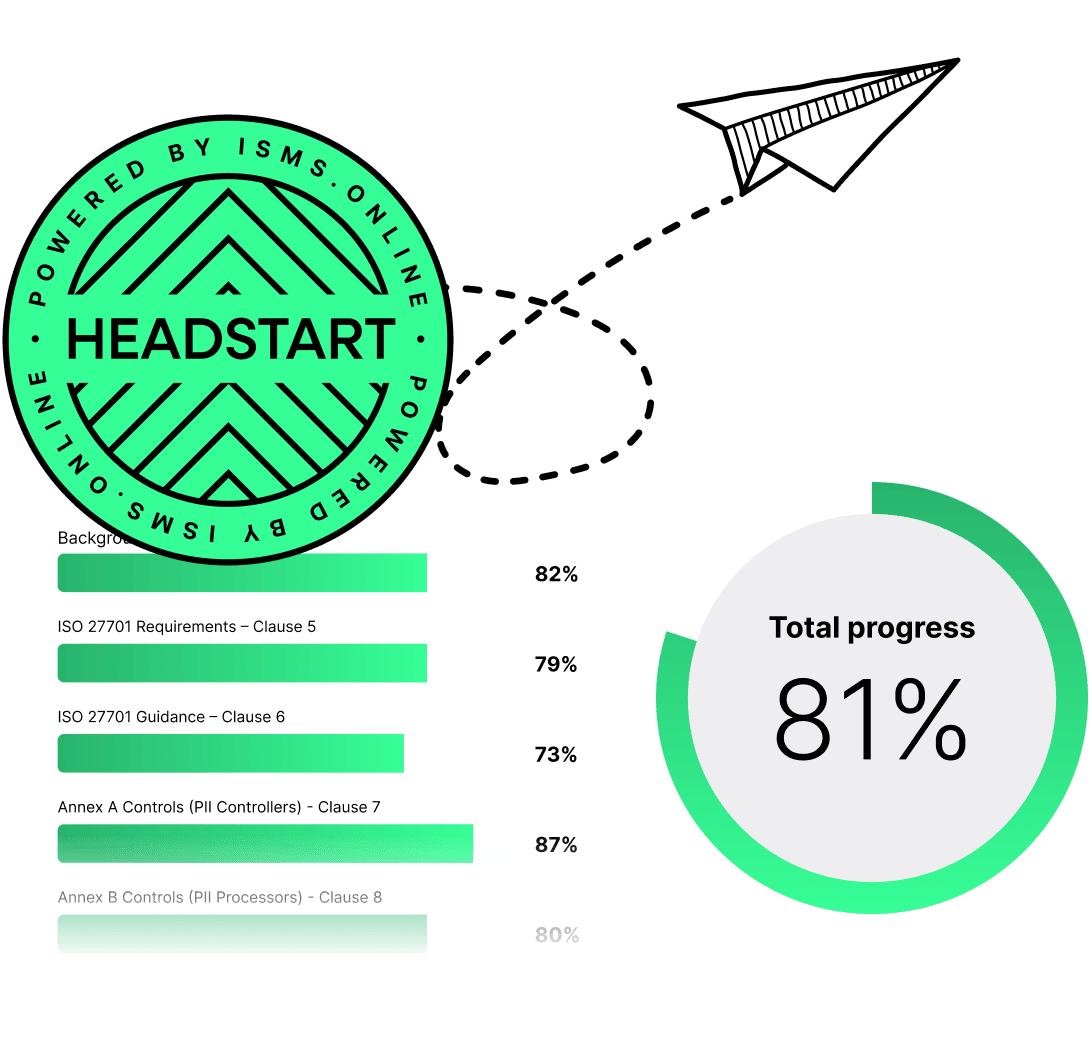
An 81% Headstart from day one
We’ve done the hard work for you, giving you an 81% Headstart from the moment you log on. All you have to do is fill in the blanks.
Implementing Risk Management Processes in ISO 27001:2022
Implementing risk management processes under the ISO 27001:2022 standard requires a methodical approach to ensure thorough coverage and compliance. This guide offers practical steps to establish and maintain effective risk management, addressing common challenges and best practices.
Conducting a Risk Assessment
To achieve consistent results, adopt a uniform risk assessment methodology across your organisation. Begin by identifying your information assets and potential threats, then evaluate the impact and likelihood of these threats. This prioritisation process enables effective resource allocation, ensuring a robust security posture (ISO 27001:2022 Clause 6.1).
Steps for Risk Treatment and Management
Risk treatment involves selecting controls to mitigate identified risks. Develop a risk treatment plan detailing chosen controls, implementation timelines, and responsibilities. Monitor and review regularly to ensure these controls remain effective and aligned with your organisational objectives (ISO 27001:2022 Clause 5.5).
Ensuring Continuous Improvement in Risk Management
Continuous improvement is crucial for effective risk management. Regularly review and update risk assessments and treatment plans to adapt to emerging threats and business environment changes. This proactive approach fosters resilience and ensures ongoing compliance with the ISO 27001:2022 standard (ISO 27001:2022 Clause 10.2).
Overcoming Implementation Challenges
Implementing risk management processes can present challenges, such as resource constraints and resistance to change. Engage stakeholders early, provide training and awareness programmes, and use technology to streamline risk management activities. Organisations report a 30% reduction in security incidents post-ISO 27001 certification, highlighting the effectiveness of a well-implemented risk management framework.
By addressing these key areas, your organisation can establish a robust risk management process that enhances security and compliance. This foundation sets the stage for exploring the strategic benefits of ISO 27001:2022 certification and aligning with other standards like GDPR and NIST.
The Importance of Documentation in ISO 27001:2022 Compliance
In the realm of ISO 27001:2022 compliance, documentation is the backbone of audit readiness and verification. Accurate records of risk assessments and treatments are not mere formalities; they are strategic necessities. This documentation supports compliance demonstration during audits, providing tangible evidence of adherence to the standard’s requirements.
Why is Documentation Essential for ISO 27001:2022 Compliance?
Documentation ensures that all aspects of risk management are systematically recorded and accessible. This transparency is vital for audits, where demonstrating compliance hinges on comprehensive records. Accurate documentation also facilitates continuous improvement by allowing organisations to track changes and adaptations in their risk management strategies.
What Types of Documentation Are Required?
Organisations must maintain several types of documentation to meet ISO 27001:2022 standards:
- Risk Assessments: Detailed evaluations of potential threats and vulnerabilities.
- Risk Treatment Plans: Strategies for mitigating identified risks.
- Policies and Procedures: Guidelines governing information security practices.
- Audit Logs: Records of audit activities and findings.
How Does Documentation Support Audit Processes?
During audits, documentation acts as the primary evidence of compliance. Auditors rely on these records to assess whether an organisation adheres to ISO 27001:2022 requirements. Comprehensive documentation not only facilitates smoother audits but also enhances organisational transparency and accountability.
Streamlining Documentation Processes
To streamline documentation processes, organisations should:
- Standardise Formats: Use consistent templates for all documents.
- Regular Updates: Keep records current to reflect changes in the risk landscape.
- Centralised Storage: Maintain a single repository for easy access and management.
- Access Controls: Implement security measures to protect sensitive information.
By maintaining meticulous documentation, organisations not only meet ISO 27001:2022 standards but also strengthen their security posture, paving the way for successful audits and sustained compliance.

Free yourself from a mountain of spreadsheets
Embed, expand and scale your compliance, without the mess. IO gives you the resilience and confidence to grow securely.
Best Practices for Risk Assessment in ISO 27001:2022
Recommended Risk Assessment Methodologies
ISO 27001:2022 champions a dual approach to risk assessment, blending qualitative and quantitative methods. Qualitative assessments rely on subjective evaluations, using scales to measure risk severity and likelihood. Meanwhile, quantitative assessments use numerical values for precise calculations. This framework empowers organisations to address potential threats with accuracy (Clause 6.1).
Prioritising Risks Effectively
Effective prioritisation involves evaluating both the severity and likelihood of potential threats. This ensures efficient resource allocation, focusing on high-impact vulnerabilities first. Aligning risk management with business objectives enhances security posture and facilitates compliance.
Tools and Techniques for Enhanced Risk Assessment
Robust tools and techniques are essential for effective risk assessment. Solutions like ISMS.online offer features such as risk registers and assessment templates, streamlining systematic risk identification and evaluation. These tools ensure alignment with organisational goals, bolstering risk management processes.
Aligning Risk Assessments with Business Objectives
Integrating risk management into strategic planning ensures security measures support organisational goals, fostering a proactive approach to risk mitigation. By embedding risk management into decision-making, organisations can enhance resilience and maintain compliance with the ISO 27001:2022 standard.
Incorporating these best practices into your risk management strategy fortifies your organisation’s security framework, positioning you for successful ISO 27001:2022 certification. Discover how ISMS.online can support your compliance journey and elevate your security posture.
Aligning ISO 27001:2022 with GDPR and Other Standards
How Does ISO 27001:2022 Align with GDPR?
Integrating ISO 27001:2022 with GDPR establishes a comprehensive framework for managing information security risks, ensuring compliance with GDPR’s rigorous data protection standards. This alignment empowers your organisation to efficiently allocate resources, address vulnerabilities, and protect personal data, thereby enhancing stakeholder trust.
Benefits of Integrating Multiple Standards
By combining ISO 27001:2022, GDPR, and NIST, organisations can streamline compliance processes and minimise redundancy. This integration fosters a cohesive security strategy that meets diverse regulatory requirements, ensuring compliance across jurisdictions. Simplifying audit processes reduces administrative burdens and enhances operational efficiency.
Managing Overlapping Requirements
Navigating overlapping requirements is a key challenge when integrating multiple standards. Organisations must identify commonalities and differences to ensure comprehensive compliance. Our platform, ISMS.online, simplifies this process by offering centralised compliance management, enabling effective tracking and reporting.
Challenges and Solutions
Resource allocation and maintaining consistency across compliance frameworks are common challenges. To address these, organisations should implement regular training and awareness programmes. Automating compliance processes with technology can significantly reduce human error and ensure consistent adherence to standards.
Integrating ISO 27001:2022 with other standards not only enhances compliance but also fortifies your organisation’s security posture. By addressing challenges and leveraging the benefits of multiple standards, you can achieve a more resilient and efficient compliance framework.

Manage all your compliance, all in one place
ISMS.online supports over 100 standards and regulations, giving you a single platform for all your compliance needs.
Overcoming Challenges in ISO 27001:2022 Documentation
Navigating Documentation Challenges
Ensuring documentation precision and comprehensiveness is vital for ISO 27001 compliance. Organisations frequently grapple with keeping records up-to-date amidst shifting security threats and regulatory demands. Such complexities can result in inconsistencies that jeopardise compliance efforts.
Ensuring Precision and Completeness
Implementing standardised templates and processes is essential for maintaining documentation accuracy. Regular audits and reviews are indispensable for identifying gaps, ensuring records remain pertinent and exhaustive. Employing version control systems is crucial for tracking changes and preserving historical records.
Utilising Technology for Documentation Management
Technology is pivotal in overcoming documentation challenges. Tools that offer centralised document management, automated updates, and real-time collaboration significantly enhance documentation accuracy and efficiency. These solutions streamline the documentation process and cultivate a compliance culture by simplifying adherence to established protocols.
Cultivating a Compliance Culture
Fostering a robust compliance culture is key to maintaining accurate documentation. Organisations should invest in training and awareness programmes that underscore the importance of documentation in achieving ISO 27001 compliance. Encouraging a proactive approach to compliance leads to more diligent record-keeping and a deeper understanding of the standard’s requirements.
Addressing these challenges is crucial for maintaining ISO 27001 compliance and ensuring documentation effectively supports risk management efforts. By integrating technology and fostering a compliance culture, organisations can enhance their documentation processes and strengthen their overall security posture.
Further Reading
Leveraging Technology for ISO 27001:2022 Compliance
Enhancing Compliance Processes
In the realm of ISO 27001:2022 compliance, technology serves as a cornerstone for advancing risk management practices. Automated platforms offer systematic solutions for identifying, assessing, and mitigating risks, ensuring consistency and efficiency. These tools align with the standard’s requirements, bolstering overall compliance (ISO 27001:2022 Clause 6.1).
Available Compliance Tools
A diverse array of tools supports ISO 27001 compliance, including real-time monitoring systems, alert mechanisms, and detailed reporting tools. These technologies are indispensable for maintaining compliance and preparing for audits, ensuring processes are well-documented and easily accessible.
Improving Audit Readiness
Automation plays a pivotal role in enhancing audit readiness by streamlining documentation and reporting processes. This reduces the risk of human error, ensuring organisations are always prepared for audits. By facilitating smoother audits, technology builds trust with stakeholders, demonstrating a commitment to compliance and transparency.
Balancing Technology Reliance
While technology offers numerous benefits, over-reliance poses potential risks. Dependence on automated systems can lead to complacency, where organisations may overlook the need for human oversight and critical thinking. Additionally, technological failures or cyber threats could compromise compliance efforts, highlighting the importance of maintaining a balanced approach that combines technology with human expertise.
Incorporating technology into compliance strategies enhances efficiency and audit readiness, but it’s essential to remain vigilant about its limitations. By understanding these dynamics, organisations can optimise their compliance processes and strengthen their security posture.
Why Choose ISMS.online for ISO 27001 Implementation?
Unmatched Advantages of ISMS.online
ISMS.online offers a comprehensive suite of features that streamline your ISO 27001:2022 compliance journey. By automating risk assessments, documentation, and compliance tasks, our platform reduces administrative burdens and enhances operational efficiency, allowing your team to focus on strategic initiatives.
Streamlining Your Compliance Efforts
Our platform excels in automating compliance tasks with tools like risk assessment templates, centralised documentation management, and real-time monitoring. These features ensure consistency and accuracy in your compliance efforts, aligning with ISO 27001:2022 requirements. This automation not only saves time but also empowers your team to focus on strategic initiatives.
Continuous Support and Competitive Edge
ISMS.online is committed to providing ongoing support, offering continuous updates and expert guidance to help your organisation navigate evolving cybersecurity threats and regulatory changes. Our platform includes training modules and compliance checklists, empowering your team to maintain a proactive approach to risk management. Compared to other compliance platforms, ISMS.online offers a user-friendly interface and customizable solutions tailored to your specific needs.
The Ideal Choice for ISO 27001 Implementation
Our focus on user experience and adaptability makes ISMS.online the ideal choice for ISO 27001:2022 implementation. We offer seamless integration with existing systems and a comprehensive feature set that supports your organisation’s compliance journey. Embrace the future of compliance with ISMS.online and elevate your organisation’s security framework. Discover how our platform can transform your approach to ISO 27001:2022, ensuring compliance and peace of mind.
Strategic Benefits of ISO 27001:2022 Certification
Enhancing Security
Through ISO 27001:2022 certification, your organisation fortifies its security framework by adopting a risk-based approach. This ensures robust measures are in place to reduce vulnerabilities and enhance resilience against cyber threats (ISO 27001:2022 Clause 6.1).
Impact on Reputation
By achieving certification, your organisation demonstrates its commitment to information security, thereby boosting client trust and unlocking new opportunities (ISO 27001:2022 Clause 5.2).
Supporting Business Growth
Certification fuels growth by streamlining risk management and reducing compliance costs, positioning your organisation as an industry leader (ISO 27001:2022 Clause 5.5).
Competitive Advantage
In a competitive market, ISO 27001:2022 certification differentiates your organisation by showcasing a proactive approach to security, elevating your market position (ISO 27001:2022 Clause 8.1).
Preparing for an ISO 27001 Audit
To achieve a successful ISO 27001 audit, meticulous preparation is essential. Start by verifying all documentation for accuracy and completeness, which forms the bedrock of audit readiness. Conducting internal audits and management reviews helps identify gaps and areas for improvement, aligning with ISO 27001:2022 requirements (Clause 9.2).
Key Steps in the Audit Process
- Internal Audits: Regularly perform internal audits to assess compliance with ISO 27001 standards. These audits help identify non-conformities and areas needing attention.
- Management Reviews: Conduct management reviews to evaluate the effectiveness of your ISMS and ensure alignment with organisational goals (Clause 9.3).
- Documentation Review: Ensure all documentation, including risk assessments and treatment plans, is up-to-date and accurately reflects your security posture.
Ensuring Audit Readiness
Equip your team with the knowledge and skills needed to support audit processes. Regular training sessions can enhance understanding and compliance. Embrace a culture of continuous improvement by regularly updating your ISMS to adapt to emerging threats and changes in the business environment (Clause 10.2).
Common Pitfalls to Avoid
Avoid common pitfalls by ensuring documentation is complete and easily accessible. Over-reliance on automated systems without human oversight can lead to overlooked errors. Regularly review and update your compliance processes to maintain audit readiness.
By following these strategies, your organisation can confidently navigate the ISO 27001 audit process, ensuring compliance and enhancing your security framework. Embrace the future of compliance with ISMS.online, where our platform supports your journey toward successful ISO 27001:2022 certification.
Book a Demo with ISMS.online
Discover the Power of Streamlined Compliance
Unlock the potential of ISMS.online to revolutionise your compliance strategy. Our platform simplifies the complexities of ISO 27001:2022, offering a comprehensive suite of tools designed to enhance your organisation’s security posture.
-
Streamline Your Compliance Process: Automate risk assessments, documentation management, and ongoing compliance tasks with our platform. By centralising these processes, ISMS.online reduces administrative burdens, allowing your team to focus on strategic initiatives.
-
Experience Comprehensive Benefits: With features like real-time monitoring and detailed reporting, our platform provides the insights needed to maintain compliance and prepare for audits. This proactive approach not only enhances security but also builds trust with stakeholders.
-
Support Ongoing Compliance Efforts: ISMS.online offers continuous updates and expert guidance to help your organisation adapt to evolving security threats and regulatory changes. Our training modules and compliance checklists empower your team to maintain a proactive approach to risk management.
Book a Demo Today
See ISMS.online in action and discover how our platform can transform your compliance journey. Schedule a demo to explore our user-friendly interface and customizable solutions tailored to your specific needs. Elevate your organisation's security framework and embrace the future of compliance with ISMS.online.
Book a demoFrequently Asked Questions
Understanding Risk Management in ISO 27001:2022
Risk management is a cornerstone of the ISO 27001:2022 standard, offering a structured approach to safeguarding information assets. By identifying, assessing, and treating risks, organisations can bolster their security framework and ensure compliance with regulatory requirements.
Importance of Risk Management
Effective risk management is vital for maintaining a resilient security framework. It empowers organisations to proactively tackle potential threats, minimising vulnerabilities and fostering stakeholder trust by demonstrating a commitment to security.
Key Components of Risk Management
-
Risk Assessment: Identify potential risks to information assets and evaluate their impact. Understanding the severity and likelihood of risks allows organisations to prioritise mitigation efforts (ISO 27001:2022 Clause 6.1).
-
Risk Treatment: Implement controls to mitigate identified risks. Develop a risk treatment plan detailing chosen controls and their implementation timelines (ISO 27001:2022 Clause 5.5).
Role in Compliance
Risk management ensures compliance by aligning with the ISO 27001:2022 standard’s requirements. Systematic documentation of risk assessments and treatments provides tangible evidence of compliance during audits.
Integrating Risk Management into Business Processes
To integrate risk management effectively into business processes, align strategies with overall business objectives. Embed risk management into decision-making processes, ensuring security measures support organisational goals.
By prioritising risk management, organisations can achieve a comprehensive security posture that supports compliance and fosters trust with stakeholders. This strategic approach not only protects information assets but also positions organisations for long-term success in an increasingly complex security environment.
Enhancing Security with ISO 27001:2022
How Does ISO 27001:2022 Enhance Security?
ISO 27001:2022 fortifies organisational security by establishing a comprehensive framework for risk management. This standard mandates a risk-based approach, enabling organisations to identify, assess, and mitigate potential threats effectively. By adopting this proactive stance, organisations safeguard information assets and foster resilience against cyber threats, ensuring a robust security posture.
What Impact Does ISO 27001 Have on Data Protection?
Data protection is a cornerstone of ISO 27001:2022, emphasising the confidentiality, integrity, and availability of information. Implementing stringent controls and regular audits prevents unauthorised access and data breaches. This standard aligns with global data protection regulations, enhancing compliance and trust among stakeholders.
Supporting Business Continuity
ISO 27001:2022 plays a vital role in supporting business continuity by integrating risk management into strategic planning. It ensures organisations are prepared for disruptions, minimising downtime and maintaining operational efficiency. By embedding security measures into business processes, companies can swiftly recover from incidents, safeguarding their reputation and customer trust.
Integration into Existing Security Frameworks
Integrating ISO 27001:2022 into existing security frameworks enhances overall security posture. It complements other standards and regulations, such as GDPR and NIST, providing a unified approach to compliance. This integration streamlines processes, reduces redundancy, and ensures comprehensive coverage of security requirements.
By embracing ISO 27001:2022, organisations achieve a holistic security framework that not only protects information assets but also supports business continuity and compliance. This strategic investment in security fosters trust and positions organisations for long-term success in an increasingly complex digital environment.
ISO 27001:2022 Documentation Requirements
Comprehensive Documentation for Compliance
Aligning with the ISO 27001:2022 standard requires your organisation to maintain meticulous documentation that supports its information security management system. Essential documents include:
- Risk Assessments: These evaluations pinpoint potential threats and vulnerabilities, forming the foundation for effective risk management.
- Risk Treatment Plans: Detailed strategies that outline how identified risks will be mitigated, ensuring robust control implementation.
- Information Security Policies: Protocols that establish guidelines to protect information assets, fostering a culture of security awareness.
- Audit Logs: Records that capture audit activities and findings, providing tangible evidence of compliance during audits.
Documentation’s Role in Compliance
Documentation is indispensable for compliance, offering a structured approach to risk management. It ensures all aspects are systematically recorded and accessible, facilitating transparency and accountability. This is crucial for audits, where demonstrating compliance hinges on comprehensive records (Clause 7.5).
Documentation in Audits
During audits, documentation serves as the primary evidence of compliance. Auditors rely on these records to assess adherence to ISO 27001:2022 requirements. Comprehensive documentation not only facilitates smoother audits but also enhances organisational transparency and accountability.
Streamlining Documentation Practices
Streamlining documentation involves standardising formats, regularly updating records, and maintaining centralised storage. Implementing access controls ensures sensitive information is protected. By adopting these practices, organisations can enhance efficiency and ensure documentation remains relevant and comprehensive.
Incorporating these documentation practices not only supports ISO 27001:2022 compliance but also strengthens your organisation’s security posture, paving the way for successful audits and sustained compliance.
Conducting Risk Assessments in ISO 27001:2022
Recommended Methodologies for Risk Assessment
In the pursuit of ISO 27001:2022 compliance, employing a blend of qualitative and quantitative risk assessment methodologies is indispensable. Qualitative methods rely on subjective evaluations, using scales to gauge risk severity and likelihood. Conversely, quantitative methods employ numerical values for precise calculations, offering a comprehensive view of potential threats (Clause 6.1).
Prioritising Risks Effectively
Effective risk prioritisation is crucial for efficient resource allocation. Start by assessing the severity and likelihood of identified risks. This ensures that high-impact risks are addressed promptly, aligning with business objectives and enhancing your organisation’s security posture. By focusing on the most significant threats, you can mitigate vulnerabilities and maintain compliance with the ISO 27001:2022 standard.
Tools and Techniques for Enhanced Risk Assessment
Harnessing robust tools and techniques is vital for effective risk assessment. Solutions like risk registers and assessment templates facilitate systematic risk identification and evaluation. These tools ensure alignment with organisational goals and enhance risk management processes, ultimately supporting a proactive approach to security.
Aligning Risk Assessments with Business Objectives
Aligning risk assessments with business objectives involves integrating risk management into strategic planning. This ensures that security measures support organisational goals, fostering a proactive approach to risk mitigation. By embedding risk management into decision-making, organisations can enhance resilience and maintain compliance with the ISO 27001:2022 standard.
By incorporating these methodologies and tools into your risk management strategy, your organisation can strengthen its security framework and achieve a comprehensive security posture that supports long-term success.
Benefits of ISO 27001:2022 Certification
Strategic Advantages
ISO 27001:2022 certification integrates a proactive, risk-based approach into your organisation’s framework, ensuring robust and adaptable security measures. By prioritising risk management, your organisation can efficiently allocate resources, enhancing its overall security posture and aligning with Clause 6.1 of the standard.
Enhancing Security
This certification establishes a comprehensive framework for identifying, assessing, and mitigating risks. By addressing potential threats promptly, it safeguards information assets and fosters resilience against cyber threats. Implementing stringent controls and regular audits helps prevent unauthorised access and data breaches, aligning with global data protection regulations.
Impact on Reputation
Achieving ISO 27001:2022 certification underscores your organisation’s commitment to information security and compliance. This certification instils confidence in clients and stakeholders, enhancing your reputation and credibility in the industry. As organisations demonstrate their dedication to safeguarding data, they strengthen business relationships and open doors to new opportunities.
Supporting Business Growth
Certification not only fortifies security but also supports business growth by streamlining risk management processes and reducing compliance costs. Organisations can allocate resources more efficiently, driving innovation and expansion. This strategic advantage positions your organisation as a leader in the industry, attracting new clients and fostering long-term growth.
By embracing ISO 27001:2022 certification, your organisation can achieve a comprehensive security posture, bolster its reputation, and drive sustainable growth. This strategic investment in information security sets the foundation for long-term success and resilience.
Aligning ISO 27001:2022 with GDPR and Other Standards
How Does ISO 27001 Integrate with GDPR?
ISO 27001:2022 seamlessly integrates with GDPR, forming a robust framework for managing information security risks. This synergy ensures compliance with GDPR’s stringent data protection requirements while fortifying your organisation’s security posture. By adopting a risk-based approach, you can efficiently allocate resources to address vulnerabilities, safeguarding personal data and enhancing stakeholder trust.
Benefits of Multiple Standards
Integrating ISO 27001:2022, GDPR, and NIST streamlines compliance processes, reducing redundancy. This comprehensive strategy addresses various regulatory requirements, ensuring compliance across jurisdictions. It simplifies audits by providing a unified framework, reducing administrative burdens and enhancing operational efficiency.
Managing Overlapping Requirements
Mapping commonalities and differences between standards ensures comprehensive compliance. Our platform, ISMS.online, facilitates this process by offering centralised management of compliance activities, enabling effective tracking and reporting.
Challenges and Solutions
Aligning different standards presents challenges such as resource allocation and maintaining consistency. Overcome these hurdles by adopting a strategic approach, including regular training and awareness programmes. Automating compliance processes with technology significantly reduces human error and ensures consistent adherence to standards.






