





































Understanding ISO 27001:2022 for Effective Incident Response
The Role of ISO 27001:2022 in Strengthening Security
ISO 27001:2022 serves as a cornerstone for organisations aiming to fortify their information security management systems. By aligning with this standard, your organisation not only enhances its security posture but also adheres to industry best practices, ensuring robust risk management and compliance. This alignment fosters stakeholder trust, a crucial element in maintaining a competitive edge.
Advantages of ISO 27001:2022 Compliance
- Structured Risk Management: ISO 27001:2022 offers a comprehensive framework for identifying and mitigating risks, preparing your organisation to effectively manage security incidents (Clause 5.3).
- Global Compliance Assurance: Adhering to this standard ensures alignment with international security norms, minimising the risk of non-compliance penalties.
- Boosted Stakeholder Trust: Demonstrating a commitment to security through ISO 27001:2022 enhances trust among clients and partners.
Debunking Myths About ISO 27001:2022
Contrary to the belief that ISO 27001:2022 is merely a compliance checkbox, it provides a strategic approach to proactive risk management. Implementing its guidelines enables organisations to shift from reactive to proactive incident response, addressing threats before they escalate.
Enhancing Information Security Management with ISO 27001:2022
The standard’s updates address evolving security challenges, making it an indispensable tool for incident response. Organisations integrating its principles report significant improvements in security posture, underscoring its effectiveness in real-world scenarios.
Discover the Potential of ISO 27001:2022
Explore how ISO 27001:2022 can revolutionise your organisation's security strategy. With our platform, ISMS.online, you can seamlessly integrate these standards, ensuring your incident response plan is both comprehensive and compliant. Elevate your organisation's resilience and embrace the future of security management today.
Book a demoUnderstanding Risk-Driven Incident Response
Defining a Risk-Driven Incident Response Plan
A risk-driven incident response plan focuses on prioritising risks based on their potential impact, allowing organisations to manage incidents effectively and minimise disruptions. This strategic approach integrates risk management with incident response, enhancing decision-making and resilience.
Integrating Risk Management with Incident Response
Integrating risk management with incident response involves identifying and analysing potential risks, then implementing strategies to mitigate them. This ensures efficient resource allocation during incidents, allowing organisations to respond swiftly and effectively. Aligning with the ISO 27001 standard, companies can establish a robust framework for managing security incidents (ISO 27001:2022 Clause 6.1).
The Necessity of a Risk-Driven Approach
A risk-driven approach is crucial for effective incident management as it focuses on prioritising risks that could have the most significant impact on operations. This prioritisation enables organisations to allocate resources efficiently, ensuring that major incidents are addressed promptly. Additionally, it enhances the organisation’s ability to recover from disruptions, maintaining business continuity and protecting stakeholder interests.
Prioritising Risks in Incident Response Plans
Organisations can prioritise risks in their incident response plans by conducting comprehensive risk assessments. These assessments identify potential threats and vulnerabilities, allowing for the development of targeted response strategies. By utilising ISMS.online’s platform, companies can streamline this process, ensuring alignment with ISO 27001:2022 and enhancing their overall security posture.
- Key Benefits of a Risk-Driven Approach:
- Improved Decision-Making: Prioritises risks based on potential impact.
- Enhanced Resilience: Integrates risk management with incident response.
- Efficient Resource Allocation: Ensures resources are directed where needed most.
Embrace a risk-driven approach to incident response and safeguard your organisation’s future. Discover how ISMS.online can support your journey towards ISO 27001:2022 compliance and resilience.
ISO 27001 made easy
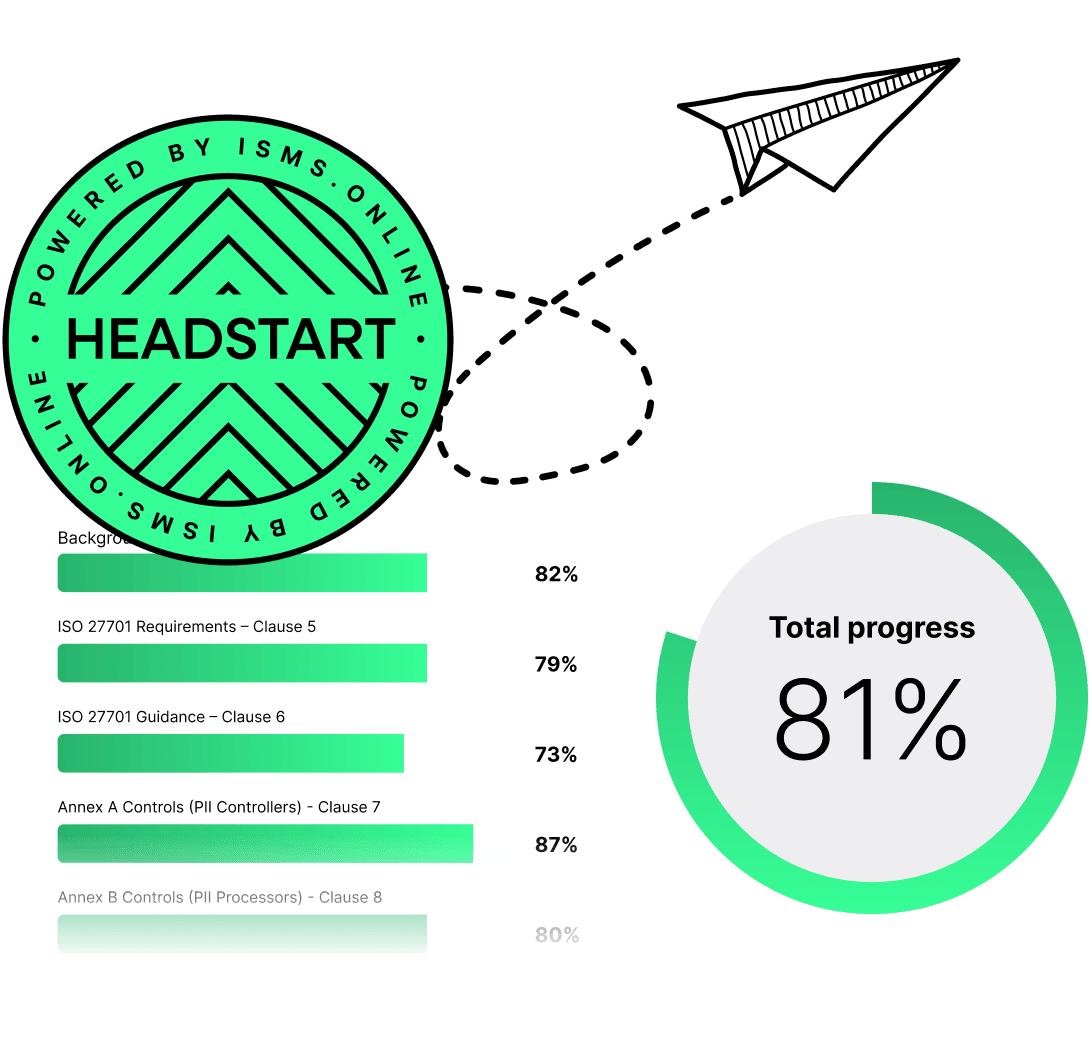
An 81% Headstart from day one
We’ve done the hard work for you, giving you an 81% Headstart from the moment you log on. All you have to do is fill in the blanks.
Key Components of an Incident Response Plan
Essential Elements for Effective Incident Response
Crafting a robust incident response plan requires integrating several indispensable elements, each aligning with ISO 27001:2022 requirements. These components ensure a structured and efficient response to security incidents.
-
Risk Assessment: Identifying potential threats and vulnerabilities is foundational. Prioritise risks based on their potential impact to allocate resources effectively (ISO 27001:2022 Clause 6.1).
-
Incident Detection: Swift identification of incidents is crucial. Implement robust monitoring systems and establish clear criteria for incident identification to reduce response times.
-
Response Procedures: Clearly defined procedures guide organisational actions during an incident. Regularly review and update these procedures to reflect changes in the threat environment and organisational structure.
-
Communication Strategies: Effective communication is essential during an incident. Establish clear lines of communication to ensure all stakeholders are informed and coordinated, reducing confusion and enhancing response efforts.
Alignment with ISO 27001:2022 Requirements
Aligning your incident response plan with ISO 27001:2022 ensures comprehensive incident management. This standard provides a structured framework for risk management, incident detection, and response, enhancing your organisation’s security posture and compliance.
Importance of a Structured Incident Response Plan
A structured incident response plan is vital for reducing response times and minimising the impact of security incidents. By ensuring all essential components are included, organisations can respond swiftly and effectively, maintaining business continuity and protecting stakeholder interests.
Ensuring Inclusion of Essential Components
Organisations can ensure all essential components are included by conducting regular reviews and updates of their incident response plans. Utilising platforms like ISMS.online can streamline this process, providing tools and resources to align with ISO 27001:2022 and enhance overall security posture.
By integrating these essential elements into your incident response plan, you can enhance your organisation’s resilience and readiness to handle security incidents effectively. Embrace a structured approach to incident response and safeguard your organisation’s future.
Aligning Your Incident Response Plan with ISO 27001:2022
Strategic Alignment with ISO 27001:2022
Aligning with ISO 27001:2022 is a strategic decision that fortifies your organisation’s security framework and ensures compliance with global standards. This alignment involves methodical steps that integrate risk management and incident response, enhancing operational efficiency and resilience.
Steps to Achieve ISO 27001:2022 Alignment
-
Conduct Comprehensive Risk Assessments: Begin by identifying potential threats and vulnerabilities within your organisation. This foundational step prioritises risks and allocates resources effectively (ISO 27001:2022 Clause 6.1).
-
Develop Robust Incident Response Procedures: Establish clear protocols for detecting, responding to, and recovering from incidents. Regularly review and update these procedures to adapt to evolving threats.
-
Implement Comprehensive Security Controls: Deploy both technical and administrative controls to mitigate identified risks. Ensure these controls align with ISO 27001:2022 requirements to strengthen your security framework.
-
Enhance Training and Awareness Programmes: Educate your team on incident response protocols and the importance of compliance. Regular training sessions improve readiness and response times.
-
Establish Continuous Monitoring and Improvement: Implement a feedback loop to evaluate the effectiveness of your incident response plan. Use insights gained to refine processes and enhance security measures.
Benefits of ISO 27001:2022 Alignment
- Strengthened Compliance: Adhering to ISO 27001:2022 ensures your organisation meets international security standards, reducing the risk of non-compliance penalties.
- Elevated Security Posture: A structured approach to incident response enhances your organisation’s resilience against threats.
- Optimised Operational Efficiency: Streamlined processes and clear protocols improve response times and resource allocation.
As a CISO noted, “Aligning incident response with ISO 27001 enhances both compliance and operational efficiency.” By following these steps, your organisation can achieve ISO 27001:2022 alignment, ensuring a robust security posture and improved incident response capabilities. Embrace the future of security management with ISMS.online and elevate your organisation’s resilience today.

Free yourself from a mountain of spreadsheets
Embed, expand and scale your compliance, without the mess. IO gives you the resilience and confidence to grow securely.
Conducting a Comprehensive Risk Assessment
Understanding the ISO 27001:2022 Risk Assessment Process
Embarking on a risk assessment under ISO 27001:2022 involves a methodical approach to identifying and prioritising risks, crucial for effective incident response planning. Begin by pinpointing potential threats and vulnerabilities within your organisation. Evaluate their potential impact and likelihood to prioritise risks and allocate resources efficiently, ensuring a robust incident management strategy (Clause 5.3).
The Role of Risk Assessment in Incident Response Planning
Risk assessments are foundational in incident response planning, providing a clear view of potential threats and their impact. By identifying and prioritising risks, you can develop targeted response strategies that bolster your organisation’s resilience and readiness to handle incidents. This proactive stance minimises disruptions and ensures business continuity, safeguarding stakeholder interests.
Effective Risk Identification and Prioritisation
To identify and prioritise risks effectively, conduct regular risk assessments and update your response plans accordingly. Utilising tools like ISMS.online streamlines this process, offering a comprehensive framework for systematic risk identification and management. This alignment with ISO 27001:2022 enhances your organisation’s overall security posture.
- Key Steps in Risk Assessment:
- Identify Potential Threats: Recognise vulnerabilities and potential risks within your organisation.
- Analyse Impact and Likelihood: Evaluate the potential impact and likelihood of identified risks.
- Prioritise Risks: Determine which risks require immediate attention and resources.
- Develop Response Strategies: Create targeted strategies to address prioritised risks.
By conducting comprehensive risk assessments, your organisation can effectively manage and mitigate risks, ensuring a robust incident response plan aligned with ISO 27001:2022. Embrace a proactive approach to risk management and safeguard your organisation’s future with ISMS.online.
Developing Effective Incident Response Procedures
Crafting Robust Incident Response Procedures
Identifying potential threats and vulnerabilities is the first step in crafting effective incident response procedures. This foundational step ensures that response strategies are tailored to address specific risks, enhancing your organisation’s resilience.
The Backbone of Incident Response Planning
Procedures are the backbone of incident response planning, offering a structured approach to managing incidents. They ensure all team members understand their roles and responsibilities, facilitating swift and coordinated responses. Aligning these procedures with the ISO 27001:2022 standard ensures compliance with international standards, bolstering security posture and reducing non-compliance risks (Clause 6.1).
The Importance of Well-Defined Procedures
Well-defined procedures enable organisations to respond quickly and efficiently to security incidents. By establishing clear protocols, organisations can minimise incident impact, maintain business continuity, and protect stakeholder interests. Regular reviews and updates are necessary to reflect changes in the threat environment and organisational structure.
Aligning Procedures with ISO 27001:2022
Aligning procedures with the ISO 27001:2022 standard involves integrating risk management principles into your incident response plan. This alignment ensures procedures are comprehensive and compliant with global security norms. Utilising platforms like ISMS.online can streamline this process, providing tools and resources to enhance your organisation’s security posture and readiness.
- Key Benefits of Aligned Procedures:
- Quick and Efficient Response: Well-defined procedures ensure rapid incident management.
- Compliance Assurance: Aligning with the ISO 27001:2022 standard guarantees adherence to international standards.
- Structured Incident Response: Effective procedures contribute to a cohesive incident management plan.
Developing effective incident response procedures enhances your organisation’s resilience and readiness to handle security incidents. Embrace a structured approach to incident response and safeguard your organisation’s future with ISMS.online.

Manage all your compliance, all in one place
ISMS.online supports over 100 standards and regulations, giving you a single platform for all your compliance needs.
Implementing Security Controls for Effective Incident Response
Key Security Controls for Incident Response
Establishing robust security controls is essential for efficiently managing incidents and safeguarding your organisation’s assets. These controls, aligned with the ISO 27001:2022 standard, form the backbone of a structured incident response plan, ensuring comprehensive protection against potential threats.
Aligning Security Controls with ISO 27001:2022
To ensure compliance and enhance incident management, security controls must align with the ISO 27001:2022 standard. This alignment involves integrating both technical and administrative measures, such as access controls, encryption, and incident detection systems, into your organisation’s security framework (Clause 6.1). By doing so, you create a resilient infrastructure capable of withstanding security challenges.
The Importance of Security Controls in Incident Management
Implementing security controls is crucial for incident management as it provides a proactive approach to identifying and mitigating risks. These controls enable organisations to respond swiftly to incidents, minimising potential damage and ensuring business continuity. By utilising our platform, ISMS.online, you can streamline the implementation process, ensuring your controls are effective and compliant.
- Key Security Controls for Incident Response:
- Access Controls: Restrict unauthorised access to sensitive information.
- Encryption: Protect data integrity and confidentiality.
- Incident Detection Systems: Enable swift identification of security breaches.
Ensuring Effectiveness and Compliance of Security Controls
To ensure controls are effective and compliant, organisations should conduct regular audits and reviews, updating their security measures as needed. Utilising tools like ISMS.online can facilitate this process, providing a comprehensive framework for managing and monitoring security controls. This proactive approach not only enhances compliance but also strengthens your organisation’s security posture.
Implementing security controls aligned with the ISO 27001:2022 standard is a strategic move towards effective incident management. By prioritising these measures, you can protect your organisation’s assets and ensure a structured response to potential threats. Embrace the future of security management with ISMS.online and elevate your organisation’s resilience today.
Further Reading
Enhancing Training and Awareness for Incident Response
Elevating Your Incident Response Capabilities
To effectively manage incidents, prioritise training and awareness. A well-prepared team is crucial for swiftly addressing security challenges. Aligning training programmes with the ISO 27001:2022 standard enhances both security posture and compliance (Clause 7.2).
The Power of a Well-Trained Team
- Efficiency: Teams quickly identify and respond to incidents, minimising damage.
- Resilience: Continuous training equips teams to handle evolving threats, strengthening organisational resilience.
- Compliance: Training aligned with ISO 27001:2022 ensures adherence to international standards, reducing non-compliance risks.
The Imperative of Training and Awareness
Training and awareness equip team members with the skills necessary for swift and effective incident response. Regular sessions maintain readiness, enabling organisations to manage incidents confidently.
Aligning Training with ISO 27001:2022
To align training with ISO 27001:2022, develop comprehensive programmes covering all aspects of incident response. This includes understanding risk management principles, implementing security controls, and conducting regular drills to test readiness. Our platform, ISMS.online, streamlines this process, offering tools and resources to enhance training and awareness efforts.
Prioritising training and awareness enables your organisation to build a robust incident response plan aligned with ISO 27001:2022. This proactive approach not only enhances compliance but also strengthens your organisation’s security posture, ensuring a swift and effective response to potential threats. Embrace the future of security management with ISMS.online and elevate your organisation’s resilience today.
Continuous Improvement and Monitoring in Incident Response
Implementing Continuous Improvement in Incident Response
Organisations must integrate continuous improvement into their incident response strategies to stay ahead of evolving threats. This involves regularly evaluating and refining response processes to ensure they remain effective and aligned with the ISO 27001:2022 standard. By adopting a proactive approach, your organisation can strengthen its defences and enhance resilience.
Monitoring’s Role in Incident Response
Effective monitoring is essential for maintaining a robust incident response plan. It requires constant vigilance to detect anomalies and potential threats early. Implementing advanced monitoring systems enables swift identification and resolution of incidents, minimising their impact. This proactive stance is vital for maintaining compliance and fortifying your security posture.
Utilising Feedback for Improved Incident Response
Feedback from past incidents is invaluable for refining response strategies. By analysing outcomes and identifying areas for improvement, organisations can develop more effective plans. This iterative process fosters a culture of learning and adaptation, ensuring that incident response strategies evolve alongside emerging threats.
- Benefits of Continuous Improvement:
- Compliance Assurance: Regular updates ensure alignment with ISO 27001:2022 requirements.
- Enhanced Response Effectiveness: Feedback-driven refinements boost incident management capabilities.
- Increased Resilience: Adaptive strategies enhance organisational resilience against threats.
Maintaining Compliance Through Continuous Improvement
Continuous improvement is crucial for maintaining compliance with industry standards. By regularly reviewing and updating incident response procedures, organisations can ensure alignment with ISO 27001:2022 requirements, reducing the risk of non-compliance penalties. This commitment to continuous improvement demonstrates a proactive approach to security management, building trust with stakeholders and enhancing organisational resilience.
Embrace continuous improvement and monitoring to elevate your incident response capabilities. Our platform, ISMS.online, offers the tools and resources needed to streamline this process, ensuring your organisation remains compliant and resilient in the face of security challenges.
How Can Technology and Automation Enhance Incident Response?
The Transformative Role of Technology
Incorporating technology into incident response strategies revolutionises how organisations manage security threats. Automation tools streamline processes, enabling rapid detection and management of incidents. By automating routine tasks, organisations can allocate resources more strategically, focusing on significant threats and reducing response times.
Benefits of Automation Integration
Automation significantly boosts incident response efficiency. It facilitates real-time monitoring and rapid decision-making, ensuring incidents are addressed promptly. For instance, 60% of companies now utilise automated tools for compliance management, highlighting the advantages of improved accuracy, reduced human error, and enhanced compliance with standards like ISO 27001:2022.
Aligning Technology with ISO 27001:2022
Aligning technology with ISO 27001:2022 involves integrating both technical and administrative controls. This includes implementing robust security measures such as access controls and encryption, which are vital for maintaining compliance and protecting sensitive data. Our platform, ISMS.online, provides the tools necessary to achieve this alignment, ensuring a structured and effective incident response plan.
Building a Structured Incident Response Plan
A structured incident response plan is essential for maintaining business continuity and minimising disruption. By integrating technology and automation, organisations can create a resilient framework that adapts to evolving threats. This proactive approach not only enhances security posture but also builds trust with stakeholders, demonstrating a commitment to safeguarding their interests.
Harness the power of technology and automation to elevate your incident response capabilities. With ISMS.online, you can streamline your processes, ensuring compliance with ISO 27001:2022 and enhancing your organisation’s resilience against potential threats. Take the next step in fortifying your security posture today.
Navigating Common Challenges in Incident Response Planning
Identifying Challenges in Incident Response Implementation
Organisations often encounter significant hurdles when implementing an incident response plan. These challenges, such as resource constraints and the dynamic nature of threats, can impede effective incident management. Addressing these issues requires strategic solutions and a proactive mindset.
Overcoming Challenges with Strategic Solutions
To effectively tackle these obstacles, organisations should adopt a proactive approach, emphasising best practices. Regular risk assessments are crucial for identifying potential threats and vulnerabilities, ensuring efficient resource allocation. A structured incident response plan, aligned with the ISO 27001:2022 standard, provides a robust framework for managing incidents (Clause 6.1).
The Importance of Proactive Challenge Management
Proactively managing challenges is essential for maintaining an effective incident response plan. By anticipating potential issues and implementing preventive measures, organisations can minimise incident impacts and ensure business continuity. This proactive stance not only enhances resilience but also builds trust with stakeholders, showcasing a commitment to safeguarding their interests.
Leveraging Best Practices to Mitigate Challenges
Integrating best practices involves embedding risk management principles into the incident response plan. Key strategies include:
- Establishing Clear Communication Channels: Ensures all stakeholders are informed and coordinated.
- Conducting Regular Training Sessions: Keeps teams prepared for evolving threats.
- Utilising Technology for Automation: Streamlines routine tasks, enhancing efficiency.
Our platform, ISMS.online, provides tools and resources to support these efforts, ensuring alignment with ISO 27001:2022 and bolstering your organisation’s security posture.
By addressing these common challenges and implementing best practices, your organisation can develop a resilient incident response plan that effectively mitigates risks and ensures compliance with international standards. Strengthen your security posture with ISMS.online and take decisive action today.
Book a Demo with ISMS.online
Why Choose ISMS.online for Your Incident Response Planning?
Aligning your incident response plan with the ISO 27001:2022 standard is crucial for fortifying your security framework. Our platform, ISMS.online, simplifies this alignment, equipping your organisation to handle security incidents with confidence. By booking a demo, you can explore how our platform enhances your incident response capabilities, offering the tools and resources necessary for compliance and a strengthened security posture.
Discover the Benefits of ISMS.online for ISO 27001:2022 Alignment
- Streamlined Compliance: ISMS.online simplifies the alignment process with the ISO 27001:2022 standard, ensuring your organisation meets international security benchmarks.
- Enhanced Security Posture: Implement robust security controls and incident response procedures with our platform, bolstering your organisation’s resilience against threats.
- Efficient Risk Management: Our tools facilitate comprehensive risk assessments and threat prioritisation, promoting a proactive approach to incident management.
How ISMS.online Supports Compliance Officers
Navigating complex regulatory landscapes can be daunting for compliance officers. ISMS.online offers an intuitive interface and expert guidance, easing the management of compliance efforts and alignment with the ISO 27001:2022 standard. Our platform provides the insights and resources needed to streamline processes and enhance your organisation’s security framework.
Elevate Your Security Posture with ISMS.online
Booking a demo with ISMS.online grants you access to a suite of resources designed to elevate your incident response planning. Our platform supports risk management, compliance, and security initiatives, transforming your organisation's approach to incident response and ensuring alignment with the ISO 27001:2022 standard.
Take the next step in fortifying your security posture by booking a demo with ISMS.online today. Our platform is crafted to support your organisation's compliance efforts and enhance your incident response capabilities, ensuring a robust security framework that protects your assets and stakeholders.
Book a demoFrequently Asked Questions
Crafting a Risk-Driven Incident Response Plan Aligned with ISO 27001:2022
Strategic Guidance from ISO 27001:2022
ISO 27001:2022 offers a comprehensive framework for developing a risk-driven incident response plan. By focusing on identifying, assessing, and managing risks, your organisation can prepare effectively for security incidents.
Key Steps in Developing a Risk-Driven Incident Response Plan
-
Conduct a Thorough Risk Assessment: Identify potential threats and vulnerabilities within your organisation. Prioritise these risks based on their potential impact, ensuring resources are allocated effectively (ISO 27001:2022 Clause 6.1).
-
Develop Detailed Response Procedures: Establish clear protocols for detecting, responding to, and recovering from incidents. Regularly review and update these procedures to adapt to evolving threats.
-
Implement Robust Security Controls: Integrate both technical and administrative controls, such as access controls and encryption, to mitigate identified risks. This alignment with ISO 27001:2022 fortifies your security framework.
Importance of Aligning with ISO 27001:2022
Aligning your incident response plan with ISO 27001:2022 is crucial for maintaining compliance with international security standards. This alignment not only enhances your organisation’s security posture but also builds trust with stakeholders, demonstrating a commitment to safeguarding their interests.
Benefits of a Risk-Driven Approach in Incident Management
A risk-driven approach prioritises risks that could have the most significant impact on operations, enabling efficient resource allocation and swift response to incidents. This proactive stance enhances organisational resilience, ensuring business continuity and protecting stakeholder interests.
Ensuring Alignment with ISO 27001:2022
To ensure alignment with ISO 27001:2022, conduct regular audits and reviews, updating your incident response plans as needed. Utilising platforms like ISMS.online can streamline this process, providing tools and resources to enhance compliance and security posture.
By following these steps, your organisation can develop a comprehensive incident response plan that aligns with ISO 27001:2022, ensuring a robust security framework and improved incident management capabilities. Embrace the future of security management with ISMS.online and elevate your organisation’s resilience today.
Enhancing Information Security Management with ISO 27001:2022
Benefits of Aligning with ISO 27001:2022 for Incident Response
Aligning with the ISO 27001:2022 standard fortifies your incident response capabilities by establishing a structured framework for managing risks and incidents. This alignment ensures your organisation is equipped to handle security incidents effectively, minimising disruptions and safeguarding critical assets.
Improving Organisational Risk Management with ISO 27001:2022
The ISO 27001:2022 standard offers a comprehensive approach to risk management, enabling organisations to identify, assess, and mitigate risks efficiently. By implementing this standard, your organisation can prioritise risks based on their potential impact, ensuring resources are allocated to address the most pressing threats (Clause 6.1).
Importance of Compliance with ISO 27001:2022 for Security Posture
Compliance with the ISO 27001:2022 standard is crucial for maintaining a robust security posture. It demonstrates your organisation’s commitment to international security standards, enhancing stakeholder confidence and reducing the risk of non-compliance penalties. This proactive approach not only strengthens your security framework but also builds trust with clients and partners.
Utilising ISO 27001:2022 for Continuous Improvement
The ISO 27001:2022 standard encourages continuous improvement by integrating feedback loops and regular reviews into your security management processes. This iterative approach ensures your incident response plan remains effective and aligned with evolving threats. Our platform, ISMS.online, streamlines this process, providing tools and resources to enhance your organisation’s resilience and compliance efforts.
By aligning with the ISO 27001:2022 standard, your organisation can enhance its information security management, improve risk management, and ensure compliance with international standards. Embrace this opportunity to fortify your security posture and protect your organisation’s future with ISMS.online.
Overcoming Challenges in Incident Response Planning
Identifying Common Challenges
Organisations often face significant hurdles when implementing an incident response plan. These include resource constraints, rapidly evolving threats, and coordination difficulties. Such obstacles can impede effective management, necessitating strategic solutions to ensure robust capabilities.
Strategies to Overcome Challenges
Addressing these challenges requires a proactive approach, emphasising best practices. Regular risk assessments are crucial for identifying potential threats and vulnerabilities, ensuring resources are allocated efficiently. A structured incident response plan aligned with the ISO 27001:2022 standard provides a robust framework for managing incidents (Clause 6.1).
The Role of ISO 27001:2022
ISO 27001:2022 offers a comprehensive framework for managing information security risks, ensuring organisations are well-prepared to handle incidents. Aligning incident response plans with this standard enhances security posture and ensures compliance with international norms. This alignment not only strengthens management capabilities but also builds trust with stakeholders.
Best Practices for Mitigating Challenges
Integrating best practices involves embedding risk management principles into the incident response plan. Key strategies include:
- Promoting Transparent Communication: Ensures stakeholders remain informed and coordinated.
- Boosting Team Preparedness: Regular training equips teams to tackle evolving threats.
- Optimising Processes with Technology: Automating routine tasks enhances efficiency.
Our platform, ISMS.online, provides tools and resources to support these efforts, ensuring alignment with ISO 27001:2022 and bolstering your organisation’s security posture.
By addressing these common challenges and implementing best practices, your organisation can develop a resilient incident response plan that effectively mitigates risks and ensures compliance with international standards. Strengthen your security posture with ISMS.online and take decisive action today.
Enhancing Incident Response with Technology and Automation
Leveraging Automation for Incident Management
Automation transforms incident management by streamlining processes and enhancing response times. It enables real-time monitoring and swift decision-making, allowing your organisation to focus on significant threats. By automating routine tasks, resources are allocated more strategically, improving efficiency and reducing human error.
Aligning Technology with ISO 27001:2022
Incorporating technology into your incident response strategy is essential for maintaining compliance with the ISO 27001:2022 standard. This involves integrating both technical and administrative controls, such as access controls and encryption, to protect sensitive data. Our platform, ISMS.online, provides the tools necessary to achieve this alignment, ensuring a structured and effective incident response plan.
Enhancing Incident Response with Technology
Technology plays a vital role in incident response planning, offering a proactive approach to managing risks. By utilising advanced tools and automation, organisations can swiftly detect and address incidents, minimising potential damage and ensuring business continuity. This proactive stance not only enhances security posture but also builds trust with stakeholders, demonstrating a commitment to safeguarding their interests.
- Key Benefits of Technology Integration:
- Real-Time Monitoring: Enables rapid detection and response.
- Resource Optimization: Allocates resources efficiently.
- Enhanced Compliance: Aligns with ISO 27001:2022.
Harness the power of technology and automation to elevate your incident response capabilities. With ISMS.online, you can streamline your processes, ensuring compliance with ISO 27001:2022 and enhancing your organisation’s resilience against potential threats. Take the next step in fortifying your security posture today.
Ensuring Continuous Improvement in Incident Response
Monitoring: The Backbone of Incident Response
Monitoring is crucial for early threat detection, acting as the backbone of a robust incident response strategy. By maintaining constant vigilance, organisations can swiftly identify and address potential issues, aligning with ISO 27001:2022 (Clause 9.1). This proactive stance not only mitigates risks but also fortifies the overall security posture.
Feedback: A Catalyst for Strategic Enhancement
Feedback serves as a powerful catalyst for refining incident response strategies. By analysing past incidents and gathering insights from stakeholders, organisations can pinpoint areas for enhancement. This iterative process fosters a culture of learning and adaptation, ensuring that response strategies evolve alongside emerging threats. Our platform, ISMS.online, offers tools to streamline feedback integration, bolstering your organisation’s resilience.
- Advantages of Feedback Utilisation:
- Elevated Response Precision: Continuous refinement enhances incident management capabilities.
- Strengthened Organisational Resilience: Adaptive strategies bolster defences against threats.
Sustaining Compliance Through Continuous Improvement
Continuous improvement is essential for maintaining compliance with international standards. Regular updates to incident response plans ensure alignment with ISO 27001:2022, reducing the risk of non-compliance penalties. This commitment to enhancement not only fortifies your security posture but also builds trust with stakeholders, showcasing a proactive approach to safeguarding their interests.
To achieve continuous improvement, organisations should implement a structured feedback loop, regularly reviewing and updating their incident response plans. Utilising platforms like ISMS.online can streamline this process, providing comprehensive tools for monitoring, feedback integration, and compliance management. By embracing continuous improvement, your organisation can enhance its incident response capabilities, ensuring a robust security framework that adapts to evolving threats.
Elevate your incident response strategy with ISMS.online and enhance your organisation’s resilience today.
How Can ISMS.online Support Incident Response Planning?
Strategic Alignment with ISO 27001:2022
ISMS.online offers a streamlined approach to aligning your incident response plan with the ISO 27001:2022 standard. Our platform integrates essential requirements, ensuring your organisation is prepared to manage security incidents effectively and maintain compliance.
Strengthening Security Frameworks
By utilising ISMS.online, your organisation can enhance its security framework through comprehensive risk management and incident response planning. Our tools facilitate thorough risk assessments, develop detailed response procedures, and implement robust security controls, all aligned with ISO 27001:2022 (Clause 6.1).
Key Features of ISMS.online
- Risk Assessment Tools: Identify and prioritise potential threats, ensuring effective resource allocation.
- Incident Response Planning: Maintain clear protocols for detecting, responding to, and recovering from incidents.
- Security Controls Implementation: Integrate technical and administrative measures, such as access controls and encryption, to mitigate identified risks.
Empowering Compliance Officers
ISMS.online is designed to assist compliance officers in navigating complex regulatory requirements. Our user-friendly interface and expert guidance simplify the alignment process with ISO 27001:2022, providing insights and resources to enhance your organisation’s security framework.
Building Trust and Resilience
Organisations can use ISMS.online to conduct regular audits and reviews, ensuring their incident response plans remain effective and compliant. This proactive approach not only enhances compliance but also builds trust with stakeholders, demonstrating a commitment to safeguarding their interests.
Embrace the future of security management with ISMS.online and elevate your organisation’s resilience today.







