





































Understanding the Role of Risk Treatment Plans in ISO 27001 Compliance
Risk treatment plans are integral to achieving ISO 27001 compliance, serving as a foundation for robust risk management. These plans not only mitigate risks but also enhance your organisation’s security and resilience. Over 70% of organisations recognise compliance as a strategic driver, underscoring the value of these plans.
Purpose of Risk Treatment Plans
Risk treatment plans systematically manage and mitigate risks, ensuring your organisation meets the stringent requirements of the ISO 27001 standard (Clause 5.5). By identifying potential threats and vulnerabilities, these plans provide a structured approach to safeguarding assets and maintaining compliance.
Enhancing Security Through Risk Treatment Plans
Effective risk treatment plans significantly bolster organisational security. By addressing identified risks through tailored strategies—such as avoidance, reduction, and transfer—you can fortify defences against cyber threats. This proactive approach not only protects critical assets but also fosters a culture of security awareness and preparedness.
Essential for Compliance and Strategic Alignment
Compliance with ISO 27001 transcends mere box-ticking; it involves integrating risk management with business strategy for sustainable success. Aligning risk management with business objectives ensures that compliance efforts are both effective and efficient. This alignment enhances organisational resilience, enabling your company to adapt to evolving threats and maintain a competitive edge.
Building Resilience Through Dynamic Planning
Risk treatment plans are more than compliance tools; they are strategic assets that enhance organisational resilience. By continuously monitoring and reviewing these plans, your organisation can adapt to changing risk scenarios and ensure ongoing compliance. This dynamic approach to risk management strengthens security and supports long-term business objectives.
Consider the strategic importance of risk treatment plans in your compliance efforts. Partner with ISMS.online to develop robust plans that deliver results and enhance your organisation's security posture.
Book a demoKey Components of Effective Risk Treatment Plans
Crafting a Robust Risk Treatment Plan
A robust risk treatment plan is essential for aligning with the ISO 27001 standard, ensuring your organisation effectively manages risks. Key components include:
-
Risk Assessment and Control Selection: Identify potential threats and vulnerabilities. Evaluate risks and select controls to mitigate them, aligning with ISO 27001 standards (Clause 5.5).
-
Comprehensive Documentation: Documentation ensures transparency and accountability. It records all risk treatment activities, providing a clear trail for audits and reviews.
-
Continuous Monitoring and Improvement: Maintain effectiveness through ongoing monitoring and improvement. Regularly review risk treatment plans to adapt to new threats and ensure compliance.
Aligning with ISO 27001 Standards
Aligning risk treatment plans with ISO 27001 ensures they are comprehensive and effective. The standard provides a framework for identifying risks, selecting controls, and maintaining documentation, all essential for compliance and security.
The Role of Documentation in Risk Treatment Plans
Documentation serves as the backbone of risk treatment plans. It records actions taken and justifies control selection, ensuring transparency and accountability. This is crucial for audits and maintaining compliance with ISO 27001.
By integrating these components into your risk treatment plans, you can enhance your organisation’s security posture and ensure compliance with ISO 27001. Our platform, ISMS.online, offers tools and resources to streamline this process, helping you achieve your compliance goals efficiently.
ISO 27001 made easy
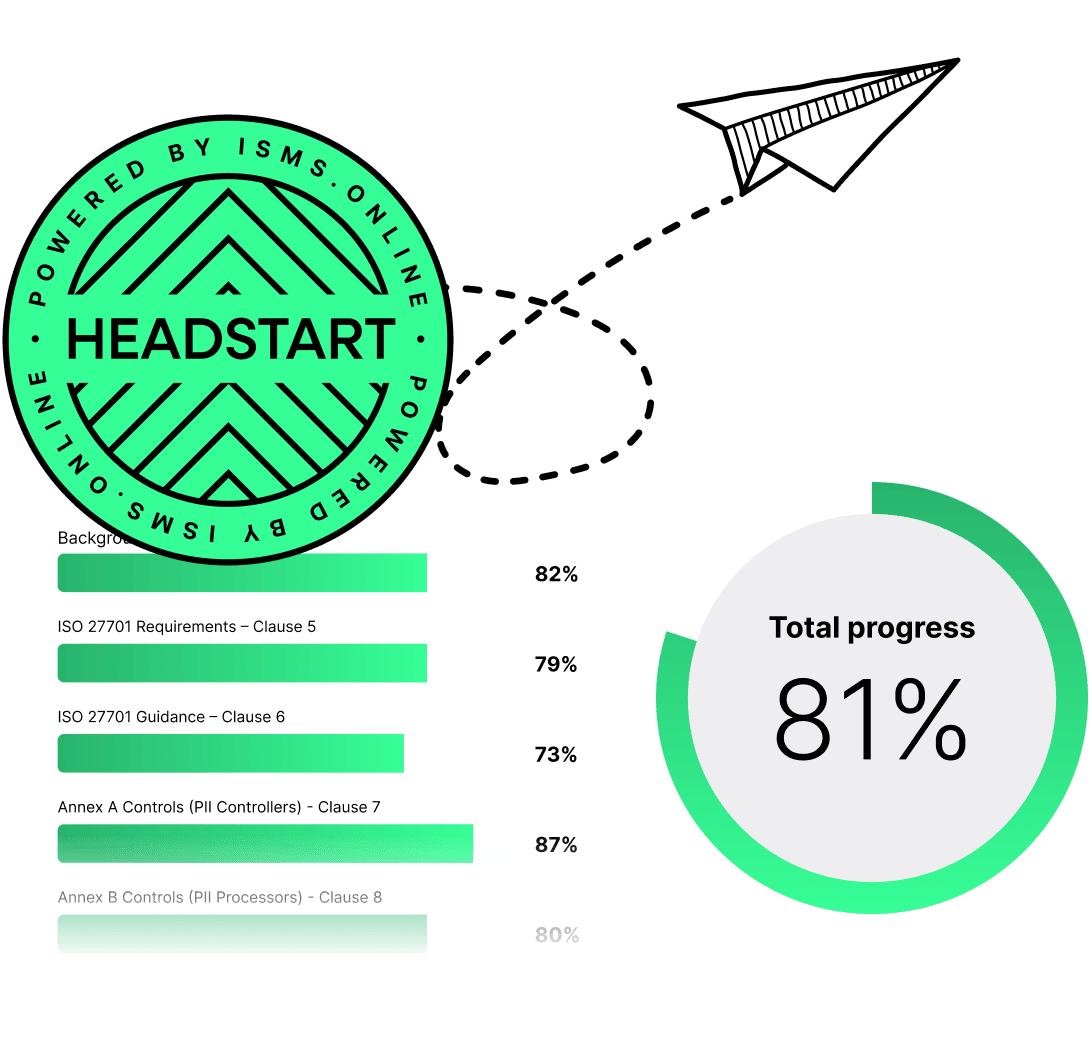
An 81% Headstart from day one
We’ve done the hard work for you, giving you an 81% Headstart from the moment you log on. All you have to do is fill in the blanks.
Aligning Risk Treatment Plans with ISO 27001 Standards
Ensuring Compliance with ISO 27001 Requirements
Aligning your risk treatment plans with the ISO 27001 standard is crucial for maintaining compliance and effective risk management. This involves a thorough understanding of key requirements, such as risk assessment, control selection, and comprehensive documentation (ISO 27001:2022 Clause 5.5). These elements form the backbone of a robust risk management strategy, ensuring your organisation meets the stringent demands of the standard.
The Strategic Importance of ISO 27001 Alignment
Aligning with ISO 27001 is not merely a compliance exercise; it integrates risk management into your business strategy, enhancing resilience and adaptability. This alignment ensures that compliance efforts are both effective and efficient, allowing your organisation to respond to evolving threats while maintaining a competitive edge.
Best Practices for Ensuring Alignment
To ensure your risk treatment plans align with ISO 27001, consider these best practices:
- Conduct Regular Audits: Regular audits help assess the effectiveness of your risk treatment plans and identify areas for improvement.
- Update Plans Continuously: Keep your plans up-to-date to reflect changes in the threat environment and organisational priorities.
- Maintain Detailed Documentation: Comprehensive documentation provides a clear trail for audits and reviews, ensuring transparency and accountability.
Sustaining Compliance with ISO 27001 Standards
Ongoing compliance requires continuous monitoring and review of risk treatment plans. This proactive approach allows organisations to adapt to new threats and ensure their plans remain effective. By utilising technology, such as our platform at ISMS.online, you can streamline this process, ensuring that your compliance efforts are always current and aligned with ISO 27001 standards.
By following these guidelines, your organisation can develop risk treatment plans that not only meet ISO 27001 requirements but also enhance your overall security posture. Embrace these strategies to ensure your compliance efforts deliver tangible results and support your long-term business objectives.
Steps to Develop Risk Treatment Plans
Crafting an Effective Risk Treatment Plan
Creating a robust risk treatment plan involves strategic steps that align with the ISO 27001 standard. Here’s how to ensure your organisation is well-prepared:
-
Assess and Prioritise Risks: Start by identifying potential threats and vulnerabilities within your organisation. Evaluate these risks based on their impact and likelihood, prioritising those that pose the greatest threat. This step is crucial for focusing resources on significant risks (ISO 27001:2022 Clause 5.3).
-
Select and Implement Controls: Choose appropriate controls to mitigate identified risks. Select measures that align with ISO 27001 requirements, ensuring they effectively address prioritised risks. Implement these controls systematically to enhance your organisation’s security posture.
-
Monitor and Review: Regularly assess the effectiveness of implemented controls. This ongoing process ensures your risk treatment plan remains relevant and effective in addressing emerging threats. Regular reviews help maintain compliance and adapt to changes in the threat environment (ISO 27001:2022 Clause 9.1).
-
Ensure Effectiveness and Compliance: Continuously evaluate the effectiveness of your risk treatment plan. Assess whether controls achieve their intended outcomes and make necessary adjustments to improve efficacy. Compliance with ISO 27001 standards is maintained through diligent monitoring and adaptation.
By following these steps, your organisation can develop risk treatment plans that not only meet ISO 27001 standards but also enhance overall security and resilience. Our platform at ISMS.online provides the tools and resources needed to streamline this process, ensuring your compliance efforts are both efficient and effective.

Free yourself from a mountain of spreadsheets
Embed, expand and scale your compliance, without the mess. IO gives you the resilience and confidence to grow securely.
Navigating Challenges in Risk Treatment Plan Development
Overcoming Common Obstacles
Organisations often encounter resource and expertise limitations when crafting risk treatment plans. These challenges can impede the development of comprehensive strategies, leaving vulnerabilities exposed.
Strategies for Success
To address these challenges, consider implementing the following strategies:
- Phased Integration: Gradually incorporate risk management strategies to optimise resource allocation.
- Expert Guidance: Engage certified professionals to ensure adherence to best practices and enhance plan effectiveness.
- Technological Solutions: Utilise platforms like ISMS.online to streamline plan development and management, boosting efficiency and compliance.
Engaging Stakeholders
Involving stakeholders is crucial for overcoming challenges and ensuring the success of risk treatment plans. Engaging key personnel fosters collaboration and accountability, aligning risk management with business objectives and strengthening security.
Commitment to Continuous Improvement
Continuous improvement is essential for effective risk management. Regular monitoring and review processes enable organisations to adapt to emerging threats and evolving standards. By integrating feedback and lessons learned, strategies can be refined to ensure ongoing compliance with the ISO 27001 standard.
Incorporating these strategies into your risk management efforts can significantly enhance your organisation’s resilience and security. Our platform at ISMS.online provides the tools and resources needed to support these initiatives, ensuring your compliance journey is both efficient and effective.
How Can Automation Enhance Risk Management and Compliance?
Elevating Risk Management with Automation
Automation fundamentally reshapes risk management by enhancing both efficiency and precision. By automating routine tasks, organisations can redirect resources towards strategic initiatives, reducing human error and accelerating response times. This proactive stance ensures a robust approach to risk management, aligning with ISO 27001:2022’s emphasis on continuous improvement (Clause 9.1).
Streamlining Compliance and Operational Efficiency
Integrating automation into compliance processes guarantees consistent adherence to ISO 27001 standards (Clause 5.5). Automated systems offer real-time monitoring and reporting, alleviating manual burdens and enhancing transparency. This approach simplifies audits and ensures ongoing compliance, reinforcing your organisation’s security posture.
Enhancing Risk Assessment and Monitoring
Automation enriches risk assessment by providing comprehensive data analysis and predictive insights. Automated monitoring systems swiftly detect anomalies and potential threats, allowing for immediate intervention. This proactive approach fortifies your organisation’s defences, aligning with ISO 27001’s commitment to continuous improvement.
Effective Implementation Strategies
To successfully implement automation, it is crucial to integrate systems with existing processes for seamless operation. Regular updates and staff training are vital to maximising the benefits of automation. By fostering a culture of continuous learning, your organisation can adapt to evolving threats and maintain compliance.
- Integration: Ensure seamless integration with existing systems.
- Training: Conduct regular staff training to maximise benefits.
- Updates: Implement frequent updates to keep systems current.
Our platform at ISMS.online provides the tools and resources necessary to automate risk management processes, ensuring your organisation remains compliant and secure. Embrace automation to enhance your risk management strategy and achieve sustainable compliance.

Manage all your compliance, all in one place
ISMS.online supports over 100 standards and regulations, giving you a single platform for all your compliance needs.
Why Is Continuous Improvement Essential for Audit Readiness?
Continuous improvement is essential for maintaining audit readiness and ensuring compliance with the ISO 27001 standard. By regularly refining risk treatment plans, organisations can align with evolving compliance requirements and demonstrate a steadfast commitment to information security. This proactive approach not only enhances audit readiness but also strengthens risk management strategies.
Strategies for Ensuring Continuous Improvement
To achieve continuous improvement, organisations should focus on:
- Regular Reviews: Conduct periodic assessments of risk treatment plans to identify areas for enhancement. This ensures alignment with ISO 27001:2022 requirements and adapts to new threats.
- Feedback Integration: Utilise insights from audits and incident reports to refine risk management processes, ensuring they remain effective and relevant.
- Staff Training: Keep employees updated on the latest security practices and compliance requirements to maintain a knowledgeable and prepared workforce.
The Role of Audit Readiness in Compliance
Audit readiness is crucial for demonstrating compliance with ISO 27001. It involves maintaining comprehensive documentation and evidence of risk management activities, which auditors can review to assess compliance. This readiness not only satisfies regulatory requirements but also builds trust with stakeholders by showcasing a transparent and accountable security posture.
Enhancing Risk Management Through Continuous Improvement
Continuous improvement transcends mere compliance; it’s a strategic tool for enhancing risk management and organisational resilience. By consistently refining processes and controls, organisations can better anticipate and mitigate risks, ensuring a robust defence against potential threats. This dynamic approach aligns with the ISO 27001 standard’s emphasis on continuous improvement and adaptation (Clause 10.2).
Our platform at ISMS.online provides the tools and resources needed to streamline these processes, ensuring your organisation remains compliant and secure. Embrace continuous improvement to enhance your risk management strategy and achieve sustainable compliance.
Further Reading
How to Align Risk Treatment Plans with Business Objectives
Aligning risk treatment plans with business objectives is crucial for strategic coherence and effective risk management. This alignment ensures that risk management efforts not only comply with ISO 27001 but also advance your organisation’s goals, enhancing both security and performance.
Importance of Strategic Alignment
Integrating risk treatment plans with business objectives ensures that risk management strategies support achieving organisational goals. This integration fosters a proactive approach, embedding risk management within the business strategy.
Tactics for Effective Alignment
To achieve strategic alignment, organisations should:
- Engage Stakeholders: Actively involve stakeholders to ensure alignment with business priorities.
- Foster Collaboration: Encourage collaboration between risk management teams and business units to ensure that risk treatment plans support organisational goals.
- Embed Risk Management: Integrate risk management into strategic planning processes to ensure alignment with business objectives.
Role of Stakeholder Engagement
Engaging stakeholders is vital for aligning risk treatment plans with business objectives. By involving key stakeholders in the planning process, organisations can ensure that risk management efforts align with business priorities and receive the necessary support for implementation.
Continuous Monitoring and Adaptation
Ongoing alignment and monitoring are crucial to ensure that risk treatment plans remain relevant and effective. Regular reviews and updates to the plans help organisations adapt to changing business objectives and emerging risks, maintaining alignment with ISO 27001 standards (Clause 9.1).
By integrating these strategies, organisations can enhance their risk management efforts and ensure that they support business objectives. Our platform at ISMS.online provides the tools and resources needed to streamline this process, ensuring your compliance journey is both efficient and effective.
Why Is Stakeholder Engagement Essential for Effective Risk Management?
Engaging stakeholders is crucial for aligning risk management strategies with organisational goals, enhancing compliance with the ISO 27001 standard (Clause 5.2). By involving diverse perspectives, organisations can conduct comprehensive risk assessments and develop robust treatment plans.
Importance of Stakeholder Engagement
Involving stakeholders ensures that all relevant parties are informed and actively participate in decision-making, leading to more effective risk management strategies. This collaborative approach not only enhances compliance but also builds trust and accountability within the organisation.
Strategies for Effective Engagement and Communication
To ensure effective stakeholder engagement, organisations should implement the following strategies:
- Regular Updates: Keep participants informed with consistent updates on risk management activities and progress.
- Feedback Sessions: Facilitate open communication through regular feedback sessions, allowing stakeholders to voice concerns and suggestions.
- Collaborative Platforms: Utilise tools like ISMS.online to streamline communication and collaboration, ensuring all stakeholders are aligned with the organisation’s risk management objectives.
Role of Communication in Risk Treatment Plan Development
Clear and consistent communication ensures that all stakeholders understand the risks, the chosen treatment strategies, and their roles in the process. This transparency is crucial for maintaining compliance and achieving successful outcomes.
Enhancing Risk Management Through Stakeholder Engagement
By engaging stakeholders, organisations can enhance their risk management processes and ensure successful compliance efforts. Engaged stakeholders are more likely to support and participate in risk management initiatives, leading to more effective and sustainable outcomes.
Our platform at ISMS.online offers the tools and resources needed to facilitate effective stakeholder engagement and communication, ensuring your organisation remains compliant and secure. Embrace these strategies to enhance your risk management efforts and achieve sustainable compliance.
How to Effectively Monitor and Review Risk Treatment Plans
Ensuring the effectiveness of risk treatment plans is crucial for maintaining compliance with the ISO 27001 standard. This involves regular evaluation and adaptation to align with evolving threats and organisational priorities.
The Importance of Monitoring and Review
Regular monitoring and review of risk treatment plans are essential to identify gaps and make necessary adjustments. This proactive approach not only ensures compliance but also enhances your organisation’s security posture by addressing emerging threats.
Key Elements of a Robust Process
An effective monitoring and review process should include:
- Scheduled Evaluations: Establish a routine for assessing the effectiveness of risk treatment strategies, identifying areas for improvement.
- Adaptive Updates: Modify plans to reflect changes in threats and business objectives, ensuring they remain relevant and effective.
- Detailed Records: Maintain comprehensive documentation to provide a clear trail for audits and reviews, supporting transparency and accountability.
Sustaining Compliance
Ongoing compliance is vital for maintaining the effectiveness of risk treatment plans. By regularly reviewing and updating these plans, organisations can ensure alignment with ISO 27001 standards and adapt to evolving threats. This dynamic approach fosters a culture of continuous improvement and resilience.
Strategies for Effective Monitoring and Review
Implementing technology and automation can streamline monitoring and review processes, enhancing efficiency and accuracy. Automated systems provide real-time insights and alerts, allowing organisations to respond swiftly to potential risks. Our platform at ISMS.online offers the tools and resources needed to automate these processes, ensuring your organisation remains compliant and secure.
By embracing these strategies, you can enhance your risk management efforts and ensure that your risk treatment plans deliver tangible results. Take the next step towards achieving sustainable compliance and strengthening your organisation’s security posture.
How Can Technology Enhance Compliance and Risk Management?
Harnessing technology in compliance and risk management processes revolutionises efficiency and effectiveness, offering a strategic edge. By automating routine tasks, your organisation can allocate resources more effectively, minimising human error and accelerating response times. This shift ensures continuous alignment with ISO 27001’s evolving requirements.
Advantages of Technology in Compliance
Integrating technology provides numerous benefits, including enhanced risk assessment and monitoring capabilities. Automated systems deliver real-time insights, enabling swift intervention and proactive risk management. This approach not only ensures adherence but also strengthens your organisation’s security posture.
Boosting Efficiency and Effectiveness
Incorporating technology into compliance processes streamlines operations, reducing manual burdens and enhancing transparency. Automated monitoring systems detect anomalies in real-time, facilitating quick responses to potential threats. This proactive stance aligns with ISO 27001’s emphasis on continuous improvement and adaptation (Clause 10.2).
Implementation Strategies and Best Practices
To effectively implement technology, focus on integrating it with existing systems and processes. Regular updates and comprehensive training for staff are essential to maximise benefits and ensure effective use. By fostering a culture of continuous learning, your organisation can adapt to evolving threats and maintain compliance.
- Seamless Integration: Ensure technology aligns smoothly with current systems.
- Comprehensive Training: Equip staff with the knowledge to utilise technology effectively.
- Consistent Updates: Keep systems current to maintain optimal performance.
Our platform at ISMS.online provides the tools and resources needed to automate risk management processes, ensuring your organisation remains compliant and secure. Embrace technology to enhance your risk management strategy and achieve sustainable compliance.
Discover the Power of ISMS.online
Unlock unparalleled efficiency in your compliance and risk management processes with ISMS.online. Our platform is engineered to streamline your efforts, ensuring ISO 27001 compliance while fortifying your organisation’s security posture.
Streamlining Compliance with ISMS.online
ISMS.online offers a robust suite of tools designed to simplify compliance management. By automating routine tasks, you can focus on strategic initiatives that propel your organisation forward. This efficiency reduces human error and accelerates response times, keeping your compliance efforts consistently aligned with ISO 27001 standards (Clause 5.5).
- Automation and Technology: Harness the power of automation to elevate your risk management strategy. Our platform delivers real-time insights and alerts, enabling proactive threat mitigation and sustained compliance with ISO 27001.
Why ISMS.online is Your Ideal Partner for Risk Treatment Plans
ISMS.online stands as your trusted ally in crafting effective risk treatment plans. Our platform provides tailored solutions that align with your organisation’s unique needs, ensuring your risk management efforts are both efficient and impactful. By integrating technology with existing processes, you can enhance your organisation’s resilience and security.
- Enhanced Risk Treatment Plans: Transform your risk management strategy with our platform’s tools, designed to streamline plan development and implementation. Achieve sustainable compliance and bolster your organisation’s security posture.
Experience ISMS.online Firsthand
Witness the transformative power of ISMS.online by scheduling a demo today. Discover how our platform can revolutionise your compliance and risk management processes, equipping you with the tools and resources necessary for success. Seize this opportunity to fortify your organisation's security and resilience.
Book a demoFrequently Asked Questions
Key Components of a Risk Treatment Plan
Crafting an Effective Risk Treatment Plan
Developing a robust risk treatment plan is essential for aligning with the ISO 27001 standard. Key elements include:
-
Risk Assessment and Control Selection: Identify potential threats and vulnerabilities. Evaluate these risks to determine their impact and likelihood, and select appropriate controls to mitigate them. This ensures your organisation effectively addresses prioritised risks, aligning with ISO 27001 requirements (Clause 5.5).
-
Significance of Documentation: Documentation is crucial for risk treatment plans. It records actions taken and justifies control selection, ensuring transparency and accountability. This is vital for audits and maintaining compliance with ISO 27001.
-
Ongoing Evaluation and Adaptation: Continuous evaluation and adaptation are necessary to maintain effectiveness. Regularly review risk treatment plans to adapt to new threats and ensure compliance. This proactive approach aligns with ISO 27001’s emphasis on continuous improvement (Clause 10.2).
Aligning with ISO 27001 Standards
Aligning risk treatment plans with ISO 27001 ensures they are comprehensive and effective. The standard provides a framework for identifying risks, selecting controls, and maintaining documentation, all essential for compliance and security.
The Role of Documentation in Risk Treatment Plans
Documentation serves as the backbone of risk treatment plans. It not only records the actions taken but also justifies the selection of controls, ensuring transparency and accountability. This is crucial for audits and maintaining compliance with ISO 27001.
By integrating these components into your risk treatment plans, you can enhance your organisation’s security posture and ensure compliance with ISO 27001. Our platform, ISMS.online, offers tools and resources to streamline this process, helping you achieve your compliance goals efficiently.
Aligning Risk Treatment Plans with ISO 27001: Achieving Compliance and Beyond
Ensuring ISO 27001 Compliance Through Strategic Risk Treatment
Aligning risk treatment plans with ISO 27001 standards is crucial for effective risk management and compliance. This process involves a deep understanding of key elements such as risk assessment, control selection, and comprehensive documentation (ISO 27001:2022 Clause 5.5). These components form the backbone of a robust risk management strategy.
The Strategic Imperative of ISO 27001 Alignment
ISO 27001 alignment transcends mere compliance; it integrates risk management into your business strategy, enhancing resilience and adaptability. This alignment ensures that compliance efforts are effective and efficient, allowing your organisation to respond to evolving threats while maintaining a competitive edge.
Best Practices for Ensuring Alignment
To ensure your risk treatment plans align with ISO 27001, consider these best practices:
- Conduct Thorough Evaluations: Regularly assess the effectiveness of your risk treatment plans to identify improvement areas.
- Revise Plans Proactively: Modify your strategies to address changes in the threat environment and organisational priorities.
- Maintain Detailed Records: Ensure comprehensive documentation to provide a clear audit trail.
Sustaining Compliance with ISO 27001 Standards
Ongoing compliance requires continuous monitoring and review of risk treatment plans. This proactive approach allows organisations to adapt to new threats and ensure their plans remain effective. By using technology, such as our platform at ISMS.online, you can streamline this process, ensuring that your compliance efforts are always up-to-date and aligned with ISO 27001 standards.
By following these guidelines, your organisation can develop risk treatment plans that not only meet ISO 27001 requirements but also enhance your overall security posture. Embrace these strategies to ensure your compliance efforts deliver tangible results and support your long-term business objectives.
Steps to Develop a Risk Treatment Plan
Prioritising Risks with Precision
To effectively manage risks, start with a thorough assessment. Identify potential threats and vulnerabilities within your organisation. Evaluate these risks based on their impact and likelihood, focusing on those that pose the greatest threat. This targeted approach ensures resources are allocated efficiently, addressing the most significant risks first (ISO 27001:2022 Clause 5.3).
Implementing Strategic Controls
Selecting the right controls is crucial in risk treatment. Choose measures that align with ISO 27001 requirements, ensuring they effectively mitigate prioritised risks. Implement these controls systematically to enhance your organisation’s security posture. This strategic selection not only addresses current threats but also prepares your organisation for future challenges.
Monitoring and Reviewing for Continuous Improvement
Regular monitoring and review are vital to ensure the ongoing effectiveness of your risk treatment plan. Establish a routine for evaluating the performance of implemented controls, identifying areas for improvement. This dynamic process allows for adaptation to emerging threats and changing business objectives, maintaining alignment with ISO 27001 standards (ISO 27001:2022 Clause 9.1).
Ensuring Effectiveness and Compliance
To maintain compliance and effectiveness, continuously evaluate your risk treatment plan. Assess whether the controls are achieving their intended outcomes and make necessary adjustments to improve their efficacy. This proactive approach ensures that your organisation remains resilient against evolving threats, aligning with ISO 27001’s emphasis on continuous improvement.
By following these steps, organisations can develop risk treatment plans that not only meet ISO 27001 standards but also enhance their overall security and resilience. Our platform at ISMS.online provides the tools and resources needed to streamline this process, ensuring your compliance efforts are both efficient and effective.
Overcoming Challenges in Risk Treatment Plan Development
Navigating Common Obstacles
Crafting effective risk treatment plans often involves overcoming significant hurdles, such as resource constraints and evolving compliance requirements. These challenges can impede the development of comprehensive strategies, leaving potential vulnerabilities exposed.
Strategies for Success
To address these challenges, organisations should consider the following approaches:
- Phased Strategy Implementation: Deploy risk management strategies incrementally to optimise resource allocation and manage workloads effectively.
- Expert Collaboration: Engage certified professionals to provide guidance and ensure adherence to best practices.
- Technological Integration: Utilise platforms like ISMS.online to streamline plan development and management, enhancing both efficiency and compliance.
Engaging Stakeholders for Success
Involving stakeholders is crucial for overcoming challenges and ensuring the success of risk treatment plans. By engaging key personnel in planning, organisations foster collaboration and accountability, aligning risk management with business objectives and fortifying security.
Commitment to Continuous Improvement
Continuous improvement is essential for effective risk management. Regular monitoring and review processes enable organisations to adapt to emerging threats and evolving standards. By integrating feedback and lessons learned, strategies can be refined to ensure ongoing compliance with the ISO 27001 standard (Clause 10.2).
Incorporating these strategies into your risk management efforts can significantly enhance your organisation’s resilience and security. Our platform at ISMS.online provides the tools and resources needed to support these initiatives, ensuring your compliance journey is both efficient and effective.
How Can Automation Enhance Risk Management and Compliance?
Transformative Power of Automation
Automation fundamentally reshapes risk management by refining processes and enhancing precision. By automating routine tasks, your organisation can redirect resources towards strategic initiatives, minimising human error and accelerating response times. This shift not only boosts operational efficiency but also strengthens compliance efforts, ensuring consistent adherence to the ISO 27001 standard (Clause 5.5).
Real-Time Monitoring and Strategic Advantages
Incorporating automation into compliance processes offers real-time monitoring and reporting capabilities, reducing manual burdens and enhancing transparency. Automated systems swiftly detect anomalies, allowing for proactive intervention and ensuring continuous compliance. This approach simplifies audits and supports dynamic adaptation to evolving threats.
Elevating Risk Assessment and Monitoring
Automation elevates risk assessment by providing comprehensive data analysis and predictive insights. Automated monitoring systems identify potential threats in real-time, enabling swift responses and strengthening your organisation’s security posture. This proactive stance aligns with ISO 27001’s emphasis on continuous improvement and adaptation (Clause 10.2).
Effective Implementation Strategies
To effectively implement automation, integrate systems with existing processes to ensure seamless operation. Regular updates and staff training are essential to maximise automation benefits. By fostering a culture of continuous learning, your organisation can adapt to evolving threats and maintain compliance.
- System Integration: Ensure automation tools are cohesively aligned with existing processes.
- Ongoing Education: Develop your team’s proficiency in utilising automation effectively.
- Routine Enhancements: Regularly update systems to sustain peak performance.
Our platform at ISMS.online provides the tools and resources needed to automate risk management processes, ensuring your organisation remains compliant and secure. Embrace automation to enhance your risk management strategy and achieve sustainable compliance.
Why Is Continuous Improvement Essential for Audit Readiness?
Continuous improvement is a critical component in maintaining audit readiness and ensuring compliance with the ISO 27001 standard. By consistently refining risk treatment plans, organisations align with evolving compliance requirements and demonstrate a steadfast commitment to information security. This proactive approach not only enhances audit readiness but also strengthens risk management strategies.
Strategies for Continuous Improvement
Achieving continuous improvement requires a strategic focus on several key areas:
- Routine Evaluations: Regularly assess risk treatment plans to identify areas for enhancement, ensuring they remain effective and relevant.
- Incorporating Feedback: Utilise insights from audits and incident reports to refine processes, fostering a culture of learning and adaptation.
- Ongoing Training: Equip your team with the latest security practices and compliance updates to maintain a knowledgeable workforce.
Audit Readiness and Compliance
Audit readiness is vital for demonstrating compliance with ISO 27001. It involves maintaining comprehensive documentation and evidence of risk management activities, which auditors can review to assess compliance. This readiness not only satisfies regulatory requirements but also builds trust with stakeholders by showcasing a transparent and accountable security posture.
Enhancing Risk Management Through Continuous Improvement
Continuous improvement transcends mere compliance; it’s a strategic tool for enhancing risk management and organisational resilience. By consistently refining processes and controls, organisations can better anticipate and mitigate risks, ensuring a robust defence against potential threats. This dynamic approach aligns with the ISO 27001 standard’s emphasis on continuous improvement and adaptation (Clause 10.2).
Our platform at ISMS.online provides the tools and resources needed to streamline these processes, ensuring your organisation remains compliant and secure. Embrace continuous improvement to enhance your risk management strategy and achieve sustainable compliance.







