





































Understanding the Core of Risk Management in ISO 27001:2022
What is Risk Management in ISO 27001:2022?
Risk management in the ISO 27001:2022 standard is a strategic approach to safeguarding your organisation’s information assets. By identifying, assessing, and mitigating potential threats, it ensures compliance with international standards and aligns with global best practices for information security management (ISO 27001:2022 Clause 6.1).
Why is Risk Management Essential?
Effective risk management is vital for maintaining robust information security and regulatory compliance. It empowers organisations to anticipate and address potential threats, thereby enhancing their security posture. A recent survey revealed that 85% of organisations reported improved security after implementing the ISO 27001 standard.
How Does Risk Management Fit into the Broader Framework?
The ISO 27001:2022 standard integrates risk management as a core component, offering a structured approach to managing risks. This framework enables organisations to adapt to evolving threats and maintain compliance by focusing on risk assessment, risk treatment, and continuous improvement (ISO 27001:2022 Clause 8.2).
How Can ISMS.online Assist?
Our platform provides comprehensive tools and resources to support your organisation's risk management efforts. From risk assessment to compliance tracking, ISMS.online offers a seamless solution to enhance your information security management system. We invite Compliance Officers, Chief Information Security Officers, and CEOs to explore our platform and discover how we can help you achieve your security goals.
Unlock the full potential of your information security strategy with ISMS.online. Embrace a proactive approach to risk management and ensure your organisation's resilience in the face of emerging threats.
Book a demoWhy is Risk Management Essential for Information Security?
Risk management is indispensable in protecting your organisation’s information assets. By identifying and mitigating threats, you can significantly reduce the likelihood of data breaches, enhancing your security posture. Industry reports suggest that effective risk management can lower breach risks by up to 70%.
Strengthening Organisational Resilience
A robust risk management framework is essential for business continuity. Organisations with comprehensive strategies are 50% more likely to withstand cyber incidents, ensuring operational stability. This resilience is critical as threats continue to evolve.
The Cost of Neglecting Risk Management
Ignoring risk management can lead to severe consequences, including hefty fines. Under GDPR, penalties can reach up to €20 million or 4% of annual turnover, highlighting the need for a comprehensive strategy.
Aligning with Regulatory Compliance
Compliance with the ISO 27001 standard goes beyond ticking boxes; it enhances organisational resilience. A significant 78% of certified companies report improved resilience, showcasing the standard’s effectiveness in fortifying security frameworks. Aligning with ISO 27001 helps navigate complex regulatory landscapes confidently.
Integrating risk management into your security framework is vital for asset protection, compliance, and business continuity. As we delve deeper into these practices, it becomes evident that effective risk management is not just necessary but a strategic advantage.
ISO 27001 made easy
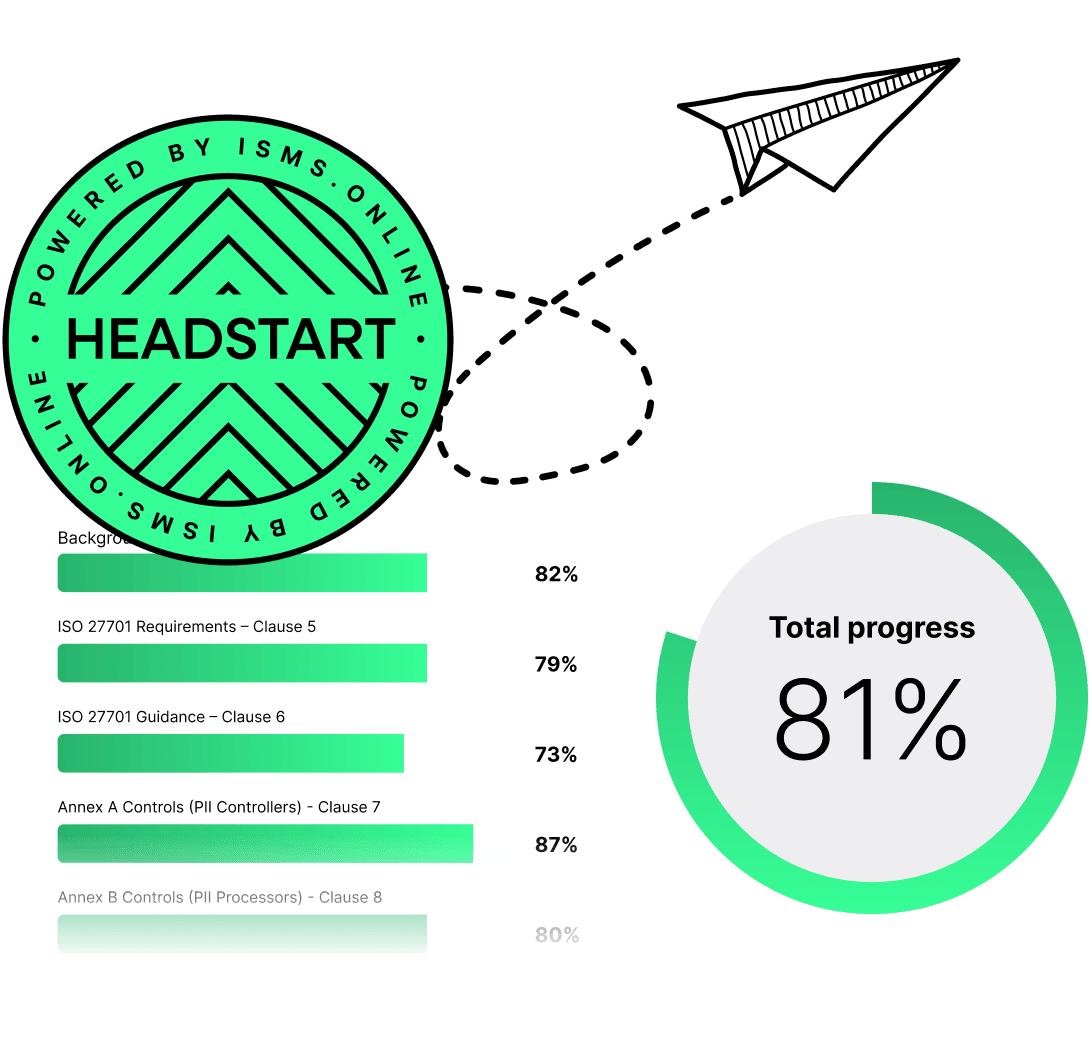
An 81% Headstart from day one
We’ve done the hard work for you, giving you an 81% Headstart from the moment you log on. All you have to do is fill in the blanks.
How Risk Management is Implemented in ISO 27001:2022
Steps in Risk Management
Implementing risk management within the ISO 27001:2022 framework requires a methodical approach to safeguarding information assets. The process begins with risk assessment, where potential threats are identified and evaluated based on their impact and likelihood (ISO 27001:2022 Clause 6.1). Following this, risk treatment involves selecting and implementing measures to mitigate identified risks. Finally, risk monitoring ensures ongoing oversight and adaptation to evolving threats, aligning with ISO 27001 requirements for consistency and effectiveness.
Aligning Risk Management with ISO 27001
Risk management is integral to the ISO 27001 standard, offering a systematic approach to managing information security risks. By aligning risk management practices with ISO 27001, organisations ensure their strategies are consistent with international standards and best practices. This alignment enhances security and facilitates compliance with regulatory requirements, reducing the likelihood of data breaches and associated penalties (ISO 27001:2022 Clause 8.2).
Tools and Methodologies
A variety of tools and methodologies streamline the risk management process. Risk assessment matrices are commonly used to evaluate and prioritise risks based on severity and likelihood. Additionally, software solutions can automate risk assessment and monitoring, providing real-time insights and facilitating proactive risk management. Regular risk assessments and updates to the Information Security Management System (ISMS) are best practices to adapt to new threats.
Ensuring Effective Risk Management
To ensure effective risk management, organisations should adopt a proactive approach, regularly reviewing and updating their strategies. This involves continuous monitoring and improvement, as well as utilising technology to enhance efficiency and accuracy. By doing so, organisations can maintain a robust security posture and effectively safeguard their information assets.
Building on these foundations, exploring tools and methodologies further illuminates the path to effective risk management implementation, underscoring the necessity of adapting these principles to changing circumstances.
Key Components of Risk Management in ISO 27001:2022
Core Elements of Risk Management
Risk management within the ISO 27001:2022 standard is a structured process designed to protect your organisation’s information assets. It comprises several critical components:
-
Risk Assessment: Identify and evaluate risks to your information assets, forming the basis for informed decision-making (ISO 27001:2022 Clause 6.1).
-
Risk Treatment: Implement controls to mitigate identified risks, aligning with your organisation’s risk tolerance as outlined in Annex A.
-
Risk Monitoring and Review: Continuous oversight adapts to new threats, maintaining the integrity of your strategy.
Interplay of Components
These components interact to form a cohesive risk management strategy. Risk assessment identifies potential threats, informing the risk treatment process. Monitoring and review ensure alignment with organisational objectives and adaptation to new challenges.
Role of Risk Assessment
Risk assessment is crucial, providing the basis for selecting risk treatment measures. By evaluating the likelihood and impact of potential risks, you can allocate resources effectively to mitigate threats.
Integration of Risk Treatment
Risk treatment integrates seamlessly into your overall risk management strategy. By aligning controls with identified risks, you enhance your security posture.
Integrating these components into a holistic strategy enhances overall information security. Understanding the interplay between assessment, treatment, and monitoring enables you to safeguard your information assets effectively and maintain compliance with ISO 27001:2022. This comprehensive approach not only protects against current threats but also prepares your organisation for future challenges, ensuring resilience and adaptability.

Free yourself from a mountain of spreadsheets
Embed, expand and scale your compliance, without the mess. IO gives you the resilience and confidence to grow securely.
Benefits of Effective Risk Management in ISO 27001:2022
What are the Benefits of Effective Risk Management?
Implementing effective risk management within the ISO 27001:2022 framework offers transformative advantages that extend beyond mere compliance. By refining decision-making processes, organisations can achieve enhanced strategic planning, with 90% of executives citing better outcomes. This proactive approach not only boosts organisational performance but also fosters a culture of continuous improvement and risk awareness.
How Does Risk Management Improve Decision-Making Processes?
Risk management provides a structured methodology for identifying and assessing potential threats, enabling informed decision-making. By understanding the risks, organisations can prioritise actions that align with their strategic goals, leading to more effective resource allocation and improved outcomes. This clarity in decision-making is crucial for navigating complex environments and ensuring long-term success (ISO 27001:2022 Clause 6.1).
What Impact Does Risk Management Have on Organisational Performance?
Organisations with robust risk management frameworks report a 30% increase in stakeholder confidence. This confidence stems from the organisation’s ability to anticipate and mitigate risks, thereby enhancing operational stability. Proactive threat mitigation and risk visibility are key components that drive enhanced performance, ensuring that organisations remain resilient in the face of challenges.
How Does Risk Management Enhance Stakeholder Confidence?
Stakeholders, including investors, customers, and partners, place significant value on an organisation’s ability to manage risks effectively. By demonstrating a commitment to risk management, organisations can build trust and credibility, which are essential for fostering strong relationships. This trust not only enhances stakeholder confidence but also supports long-term sustainability by promoting a culture of transparency and accountability.
Incorporating these elements into your organisation’s risk management strategy can lead to significant improvements in performance and stakeholder engagement. By utilising the tools and resources available through our platform, ISMS.online, you can enhance your information security management system and ensure your organisation’s resilience in an ever-changing environment. Take the next step towards a more secure future by exploring our comprehensive solutions today.
Navigating Challenges in Risk Management Implementation
Overcoming Implementation Challenges
Implementing risk management under the ISO 27001 framework presents several challenges, including resource constraints and resistance to change. These obstacles can hinder the establishment of a robust strategy, potentially exposing information security vulnerabilities.
To overcome these hurdles, organisations should cultivate a risk-aware culture, encouraging employees to prioritise security in their daily activities. Utilising technology, such as automated risk assessment tools, enhances efficiency and accuracy, streamlining the risk management process.
The Role of Organisational Culture
Organisational culture significantly influences the successful implementation of risk management. A culture that values security and transparency fosters an environment where risk management practices are embraced and integrated into everyday operations. This cultural shift requires commitment from leadership and active participation from all employees.
Leveraging Technology for Risk Management
Technology plays a crucial role in overcoming risk management challenges. Automated tools simplify complex processes, providing real-time insights and facilitating data-driven decision-making. By integrating technology into their risk management strategies, organisations can enhance their security posture and ensure compliance with ISO 27001 standards.
Addressing these challenges requires a multifaceted approach that combines cultural transformation with technological innovation. Prioritising risk management and utilising the right tools enable organisations to safeguard their information assets and maintain compliance with international standards. This progression underscores the necessity of adapting these principles to changing circumstances.

Manage all your compliance, all in one place
ISMS.online supports over 100 standards and regulations, giving you a single platform for all your compliance needs.
Continuous Improvement in Risk Management
Why Continuous Improvement Matters
Continuous improvement is vital for adapting to new threats and maintaining effective risk management practices. By fostering a culture of improvement, your organisation can enhance resilience and ensure compliance with the ISO 27001:2022 standard.
Establishing a Culture of Improvement
Cultivating a culture of continuous improvement involves several key elements:
- Regular Audits: Conduct periodic audits to identify areas for enhancement and ensure alignment with organisational goals.
- Feedback Loops: Implement feedback mechanisms for real-time adjustments, encouraging proactive risk management.
- Employee Training: Provide ongoing training to equip staff with the necessary knowledge and skills for continuous improvement.
Metrics for Measuring Effectiveness
To measure the effectiveness of risk management strategies, focus on specific metrics:
- Incident Response Times: Evaluate how quickly incidents are addressed to highlight areas for improvement.
- Reduction in Security Breaches: Monitor the frequency and severity of breaches to gain insights into the effectiveness of risk management practices.
Long-Term Success and Sustainability
Achieving long-term success in risk management requires ongoing evaluation and refinement of strategies. By consistently assessing and updating practices, your organisation can build a resilient security posture that withstands evolving challenges. This commitment to continuous improvement not only safeguards information assets but also supports sustainable growth and operational stability.
Incorporating these principles into your risk management framework ensures preparedness for future challenges. As we explore the nuances of risk management, the importance of continuous improvement becomes increasingly apparent, highlighting its role in achieving sustained success and security.
Further Reading
The Role of Compliance Officers in Risk Management
Responsibilities of Compliance Officers
Compliance officers are crucial in aligning organisations with the ISO 27001 standard, ensuring regulatory compliance, and safeguarding information assets. Their responsibilities include:
- Risk Assessment: Identifying and evaluating potential threats to information security, as outlined in ISO 27001:2022 Clause 6.1.
- Policy Development: Crafting robust policies to mitigate risks and enhance security.
- Communication: Facilitating effective communication across departments to foster a risk-aware culture.
Ensuring Alignment with ISO 27001
To align with ISO 27001, compliance officers must integrate risk management practices into the organisation’s security framework. This involves:
- Conducting regular audits and continuous monitoring, as emphasised in ISO 27001:2022 Clause 9.2.
- Updating policies to address evolving threats.
- Promoting a culture of compliance and risk awareness.
Essential Skills and Competencies
Essential skills for compliance officers include:
- Risk Assessment Expertise: Ability to identify and evaluate risks effectively.
- Policy Development: Crafting comprehensive policies that align with organisational goals.
- Communication: Facilitating cross-departmental communication to ensure a unified approach to risk management.
Driving Risk Management Initiatives
Compliance officers play a strategic role in driving risk management initiatives by:
- Fostering a risk-aware culture and promoting best practices.
- Monitoring compliance and facilitating continuous improvement.
- Guiding organisations toward achieving security objectives and maintaining compliance with international standards.
By understanding these responsibilities, compliance officers can effectively safeguard information assets and enhance organisational resilience. This strategic role is crucial in navigating the complexities of information security and maintaining a robust security posture.
Tools and Resources for Risk Management
Navigating Risk Management Tools
Navigating risk management within the ISO 27001:2022 framework requires specialised tools and resources. Our platform, ISMS.online, offers a comprehensive solution tailored to your organisation’s needs, including risk assessment software and compliance management platforms. By utilising these tools, you can streamline risk management processes and ensure compliance with international standards.
Selecting the Right Tools for Your Organisation
Choosing the right tools involves evaluating your organisation’s specific needs and existing systems. Consider factors such as scalability, integration capabilities, and user-friendliness. It’s essential to select solutions that align with your risk management objectives and enhance your overall security posture. Our platform provides seamless integration, ensuring compatibility with your existing infrastructure.
Technology’s Role in Enhancing Risk Management
Technology plays a crucial role in modern risk management practices. Through automation and data analysis, organisations gain real-time insights into potential threats and vulnerabilities. This proactive approach enhances decision-making and reduces the likelihood of data breaches. By incorporating advanced technologies, such as those offered by ISMS.online, your organisation can stay ahead of emerging threats and maintain a robust security framework.
Supporting Your Risk Management Efforts with ISMS.online
At ISMS.online, we understand the complexities of risk management and offer tailored solutions to support your efforts. Our platform provides comprehensive tools for risk assessment, compliance tracking, and continuous improvement, all designed to enhance your information security management system. By partnering with us, you can confidently navigate the challenges of risk management and ensure your organisation’s resilience in an ever-changing environment.
Common Misconceptions About Risk Management in ISO 27001:2022
What are the Common Misconceptions About Risk Management?
Many mistakenly believe that risk management is solely about compliance, neglecting its role as a proactive strategy for threat mitigation. This limited perspective can result in inadequate practices, leaving organisations vulnerable to security threats. Effective risk management requires a dynamic approach to identifying, assessing, and mitigating risks, as outlined in ISO 27001:2022 Clause 6.1.
How Can These Misconceptions Be Addressed and Corrected?
To correct these misconceptions, it’s crucial to educate stakeholders on the strategic value of risk management. Clear communication and targeted training initiatives can shift the focus from compliance to a comprehensive risk management strategy. By fostering a culture of continuous learning, organisations can strengthen their security posture and resilience.
What Impact Do Misconceptions Have on Risk Management Practices?
Misunderstandings about risk management can lead to ineffective practices, exposing organisations to potential threats. Treating risk management as a mere checkbox exercise undermines the strategic approach needed to protect information assets, increasing susceptibility to data breaches and resulting in non-compliance with ISO 27001:2022.
How Can Organisations Promote Accurate Understanding of Risk Management?
Promoting an accurate understanding involves integrating risk management into the organisational culture. Regular training sessions, workshops, and clear documentation are essential to highlight the importance of proactive risk management. By emphasising strategic benefits, organisations can align their practices with ISO 27001:2022, ensuring robust information security management.
Incorporating these insights into your organisation’s risk management framework can lead to a more informed approach, enhancing both security and compliance. This progression underscores the necessity of adapting these principles to changing circumstances, ensuring resilience in an ever-changing security environment.
Future Trends in Risk Management
What are the Emerging Trends in Risk Management?
The integration of artificial intelligence (AI) and machine learning is reshaping risk management by enabling predictive analysis. These technologies empower organisations to foresee threats with greater precision, facilitating proactive and sophisticated threat detection. Staying informed about these advancements is crucial for maintaining a robust security posture.
How Can Organisations Prepare for Future Challenges?
To tackle future challenges, organisations must remain agile and informed. This involves continuous learning and adopting cutting-edge technologies that bolster risk management capabilities. By fostering a culture of innovation and adaptability, organisations can better anticipate and respond to emerging threats, ensuring resilience in a rapidly evolving environment.
What Role Will Technology Play in Shaping the Future of Risk Management?
Technology will be pivotal in the evolution of risk management. Advanced tools and platforms will enable real-time threat detection and response, allowing organisations to stay ahead of potential risks. By leveraging these technologies, organisations can enhance their security frameworks and maintain compliance with international standards, such as ISO 27001:2022 (Clause 6.1).
How Can ISMS.online Help Organisations Stay Ahead of Risk Management Trends?
Our platform, ISMS.online, offers comprehensive tools and resources designed to keep your organisation at the forefront of risk management. By integrating AI-driven solutions and providing real-time insights, we empower you to navigate future challenges with confidence. Our commitment to innovation ensures that you have the support needed to maintain a robust and compliant security posture.
Embrace the future of risk management with ISMS.online and equip your organisation with the tools to thrive in a rapidly changing security environment.
Discover the Benefits of Booking a Demo with ISMS.online
Why Book a Demo with ISMS.online?
Experiencing a demo with ISMS.online offers a firsthand look at how our platform can transform your organisation’s risk management strategy. This interactive session allows you to explore our solutions, aligning with the ISO 27001:2022 standard to enhance your information security management system (ISMS). By witnessing our tools in action, you’ll see how they streamline compliance and strengthen your security framework.
What Value Does ISMS.online Provide?
Our platform simplifies complex processes, making risk management more accessible and efficient. During the demo, you’ll discover how ISMS.online integrates seamlessly with your existing systems, offering real-time insights and automated compliance tracking. This demonstration underscores our commitment to innovation and our ability to adapt to your organisation’s unique needs.
What Features and Capabilities Will Be Showcased?
In the demo, we highlight a range of features that set ISMS.online apart:
- Automated Risk Assessment: See how our platform identifies and evaluates risks, providing actionable insights.
- Compliance Management: Explore tools that simplify adherence to ISO 27001:2022, ensuring your organisation meets all regulatory requirements.
- User-Friendly Interface: Navigate our intuitive platform designed for ease of use and accessibility.
How Can You Schedule a Demo?
Scheduling a demo with ISMS.online is straightforward. Visit our website and select a convenient time for your session. Our team is ready to guide you through the process, ensuring you gain the most from your experience. By taking this step, you position your organisation to utilise cutting-edge solutions that enhance security and compliance.
Experience the transformative power of ISMS.online and elevate your risk management strategy today. Embrace the future of information security with a platform designed to meet your evolving needs.
Book a demoFrequently Asked Questions
The Role of Risk Management in ISO 27001:2022
How Does Risk Management Enhance Compliance?
Risk management is integral to the ISO 27001:2022 standard, providing a structured approach to safeguarding your organisation’s information assets. By actively identifying, assessing, and mitigating risks, your organisation aligns with international standards, thereby strengthening its security posture. This strategy ensures compliance while fostering continuous improvement and adaptability (Clause 6.1).
Why is Risk Management Essential for Information Security?
Effective risk management is crucial for maintaining robust information security. It empowers organisations to anticipate potential threats and implement measures to mitigate them, significantly reducing the risk of data breaches. This approach safeguards sensitive information and fortifies your organisation’s resilience against evolving cyber threats.
What are the Key Components of Risk Management in ISO 27001?
The ISO 27001 framework outlines several essential components of risk management:
- Risk Assessment: Identify and evaluate risks based on their impact and likelihood.
- Risk Treatment: Implement controls to mitigate identified risks, as detailed in Annex A.
- Risk Monitoring: Continuously review and adapt risk management practices to address emerging threats.
How Can Organisations Gain a Competitive Edge?
By effectively integrating risk management into your security framework, your organisation can gain a competitive edge. Demonstrating a commitment to information security builds trust with stakeholders and enhances your reputation. This approach ensures compliance while supporting long-term sustainability and growth.
Incorporating these elements into your organisation’s risk management strategy can lead to significant improvements in security and compliance. By understanding the role of risk management in ISO 27001:2022, organisations can effectively safeguard their information assets and maintain a robust security posture.
Implementing Risk Management in ISO 27001:2022
Steps for Effective Implementation
Implementing risk management within the ISO 27001:2022 framework requires a methodical approach. Begin with a Risk Assessment to identify potential threats and evaluate their impact and likelihood, forming the basis for informed decision-making (ISO 27001:2022 Clause 6.1).
Next, proceed to Risk Treatment, where you select and implement measures to mitigate identified risks. Align these controls with your organisation’s risk tolerance and objectives to ensure effectiveness.
Finally, engage in Risk Monitoring and Review. This involves continuously adapting your risk management practices to maintain their relevance and effectiveness, thereby preserving the integrity of your strategy.
Aligning Risk Management with ISO 27001
Risk management is a cornerstone of the ISO 27001 standard, providing a structured approach to managing information security risks. By aligning your practices with ISO 27001, you ensure consistency with international standards and best practices. This alignment not only enhances security but also facilitates compliance with regulatory requirements, reducing the likelihood of data breaches.
Tools and Methodologies
To streamline the risk management process, employ a variety of tools and methodologies:
- Risk Assessment Matrices: These tools help evaluate and prioritise risks based on severity and likelihood.
- Software Solutions: Automate risk assessment and monitoring to gain real-time insights, enabling proactive management.
- Best Practices: Regularly update your ISMS to adapt to new threats, ensuring your strategies remain current.
Ensuring Effective Practices
To maintain effective risk management, adopt a proactive approach. Regularly adapt and update your strategies to ensure they remain effective. Continuous monitoring and improvement, coupled with the use of technology, enhance efficiency and accuracy, helping you maintain a robust security posture.
Why is Risk Management Beneficial for Organisations?
Risk management within the ISO 27001:2022 framework offers transformative advantages that extend beyond compliance. By refining decision-making processes, organisations can achieve strategic planning improvements. This proactive approach boosts performance and fosters a culture of continuous improvement.
How Does Risk Management Improve Decision-Making?
Risk management provides a structured methodology for identifying and assessing potential threats, enabling informed decision-making. Understanding risks allows organisations to prioritise actions aligned with strategic goals, leading to effective resource allocation and improved outcomes. This clarity is crucial for navigating complex environments and ensuring long-term success.
How Does Risk Management Enhance Stakeholder Confidence?
Organisations with robust risk management frameworks report increased stakeholder confidence. This confidence stems from the ability to anticipate and mitigate risks, enhancing operational stability. Proactive threat mitigation and risk visibility drive enhanced performance, ensuring resilience in the face of challenges.
How Can Risk Management Drive Long-Term Organisational Success?
Stakeholders, including investors, customers, and partners, value an organisation’s ability to manage risks effectively. Demonstrating a commitment to risk management builds trust and credibility, fostering strong relationships. This trust enhances stakeholder confidence and supports long-term sustainability by promoting transparency and accountability.
Incorporating these elements into your organisation’s risk management strategy can lead to significant improvements in performance and stakeholder engagement. By utilising the tools and resources available through ISMS.online, you can enhance your information security management system and ensure resilience in a changing environment.
Navigating Challenges in Risk Management
Overcoming Common Challenges
Organisations often encounter hurdles such as resource constraints and resistance to change when implementing risk management strategies. These challenges can impede the development of a robust framework, potentially exposing vulnerabilities in information security. To address these issues, a proactive approach is crucial.
- Resource Allocation: Allocate sufficient resources to risk management initiatives to ensure their success.
- Process Simplification: Break down complex processes into manageable steps, facilitating smoother implementation.
- Change Management: Foster an environment that embraces change through effective communication and training.
The Influence of Organisational Culture
The success of risk management implementation is heavily influenced by organisational culture. A culture that values security and transparency creates an environment where risk management practices are embraced and integrated into daily operations. This cultural shift requires leadership commitment and active employee participation.
Leveraging Technology for Risk Management
Technology plays a transformative role in overcoming risk management challenges. Automated tools simplify complex processes, providing real-time insights and facilitating data-driven decision-making. By integrating technology into their strategies, organisations can enhance their security posture and ensure compliance with ISO 27001 standards.
Addressing these challenges requires a multifaceted approach that combines cultural transformation with technological innovation. Prioritising risk management and utilising the right tools enable organisations to safeguard their information assets and maintain compliance with international standards. This progression underscores the necessity of adapting these principles to changing circumstances.
Achieving Continuous Improvement in Risk Management
Why Continuous Improvement Matters
Continuous improvement is crucial for maintaining effective risk management strategies, ensuring they remain robust against emerging threats. By fostering a culture of enhancement, organisations not only comply with the ISO 27001:2022 standard but also strengthen their security posture and operational resilience.
Cultivating a Culture of Improvement
To embed continuous improvement, organisations should focus on:
- Regular Audits: Conduct periodic assessments to identify opportunities for enhancement and ensure alignment with organisational goals (ISO 27001:2022 Clause 9.2).
- Feedback Mechanisms: Implement systems for real-time adjustments, encouraging proactive risk management.
- Ongoing Training: Equip staff with the necessary skills to support continuous improvement and adaptation.
Metrics for Measuring Effectiveness
Evaluating risk management effectiveness requires specific metrics:
- Response Times: Assess how swiftly incidents are addressed to highlight areas for enhancement.
- Security Breach Reduction: Monitor breach frequency and severity to gain insights into strategy effectiveness.
Contribution to Long-Term Success
Continuous improvement contributes to long-term success by consistently refining strategies. This approach builds a resilient security posture capable of withstanding evolving challenges, safeguarding information assets, and supporting sustainable growth.
Incorporating these principles into your risk management framework ensures preparedness for future challenges. As we delve deeper into risk management, the significance of continuous improvement becomes increasingly evident, underscoring its role in achieving sustained success and security.
Tools and Resources for Risk Management
Navigating Risk Management Tools
Navigating the complexities of risk management requires specialised tools and resources. Our platform, ISMS.online, offers a comprehensive solution tailored to your organisation’s needs, including automated risk assessment software and compliance management platforms. By utilising these tools, you can streamline your risk management processes and ensure alignment with international standards (ISO 27001:2022 Clause 6.1).
Selecting the Right Tools for Your Organisation
Choosing the right tools involves evaluating your organisation’s specific needs and existing systems. Consider factors such as scalability, integration capabilities, and user-friendliness. It’s essential to select solutions that align with your risk management objectives and enhance your overall security posture. Our platform provides seamless integration, ensuring compatibility with your existing infrastructure.
The Role of Technology in Enhancing Risk Management
Technology plays a crucial role in modern risk management practices. Through automation and data analysis, organisations gain real-time insights into potential threats and vulnerabilities. This proactive approach enhances decision-making and reduces the likelihood of data breaches. By incorporating advanced technologies, such as those offered by ISMS.online, your organisation can stay ahead of emerging threats and maintain a robust security framework.
Supporting Your Risk Management Efforts with ISMS.online
At ISMS.online, we understand the complexities of risk management and offer tailored solutions to support your efforts. Our platform provides comprehensive tools for risk assessment, compliance tracking, and continuous improvement, all designed to enhance your information security management system. By partnering with us, you can confidently navigate the challenges of risk management and ensure your organisation’s resilience in an ever-changing environment.






