





































From Patchwork Permissions to Regulated‑Grade Access Control
ISO 27001 access control in gaming and trading means replacing ad‑hoc permissions with a governed, evidence‑backed model you can explain and defend. It turns “who can touch what” from a guess into something you can describe in a page and prove in a click. Information here is general and does not constitute legal, regulatory or investment advice; you should always confirm specifics with your own advisers.
Clarity about access often reveals risks nobody realised were there.
In many high‑frequency trading desks and online gaming platforms, access has grown organically. Shared admin accounts still exist for legacy tools, emergency changes get made out of hours, and test credentials sometimes work in production. That patchwork is hard for new staff to understand and almost impossible to defend under investigation or audit.
ISO 27001 gives you a way to reorder that chaos. At a high level it asks you to:
- Define which systems, data and environments are in scope.
- Document how access should work in policies and procedures.
- Implement controls that enforce those rules in practice.
- Maintain evidence that those controls operate as intended.
For access control, that means you know exactly which real people and service identities can change odds, move customer funds, alter risk limits or adjust game economies, and why they have that power.
Why patchwork access breaks under audit
Patchwork access fails audits because nobody can clearly show who has which rights, why they have them, and what evidence proves that. It relies on memory and spreadsheets instead of clear rules, systems and records. An auditor or regulator does not see your estate the way engineers do; they start from questions about risk, accountability and proof. When answers rely on ad‑hoc reports or last‑minute exports, auditors quickly lose confidence and start writing findings. In ISO 27001 terms, that means your risk and operational controls cannot be trusted because they are undocumented and unreproducible.
They will ask who can change a trading algorithm’s parameters, who can credit or debit a player’s wallet manually, and who can turn off surveillance or anti‑cheat checks. If the answers depend on tribal knowledge, improvised reports or hurried exports from identity systems, confidence drops fast and findings multiply. Under ISO 27001 clauses 6 and 8, that weakens both your risk treatment storey and your operational control.
The same weaknesses show up in day‑to‑day access hygiene. When someone changes role, you may not know all the tools they used. When a contractor leaves, it may take weeks to close every door. That lag is exactly where insider fraud, market abuse and large‑scale bonus abuse tend to live, and it is the kind of weakness investigators look for when they reconstruct events.
What regulated‑grade access control really means
Regulated‑grade access control means you can prove, at any moment, which people and systems hold powerful rights, why they have them, and how those rights are reviewed. In practice that means access is deliberate, limited, regularly reviewed and traceable at any point in time. In ISO 27001 terms, your access control policy, access rights management and privileged access controls in Annex A all work together so regulators and auditors can follow them without guesswork or delay.
Practically, you:
- Set clear principles such as least privilege and segregation of duties.
- Apply consistent joiner, mover and leaver processes to every identity.
- Require approvals for high‑risk roles and time‑bound exceptions.
- Record and review activity on powerful accounts in a structured way.
For gaming and trading, that usually means named accounts for all staff, clearly defined roles for traders, risk, compliance, game masters and support, strong authentication for high‑risk functions, periodic access reviews, and detailed logs for privileged actions. A platform such as ISMS.online can help you keep those policies, role catalogues and review records in one place so they are manageable day‑to‑day and straightforward to present during audits or investigations.
Book a demoWhy Gaming & Trading Access Control Fails Under Real‑World Pressure
Access control in gaming and trading often fails when real‑world pressure from performance, fraud and regulation exposes gaps that looked acceptable on paper. Exceptions become permanent, teams bypass controls to protect latency or KPIs, and investigations expose weaknesses that policies alone cannot cover. The combination of speed, money and complex workflows quickly finds every weak point, especially where access has drifted far beyond what anyone intended. ISO 27001 helps by forcing you to surface these drifts, rank them by risk and decide which are acceptable and which are not.
One recurring problem is “temporary” or “exception” access that quietly becomes permanent. A developer receives production database access to fix a serious incident and never fully loses it. A support manager gets elevated permissions during a promotion campaign and keeps them when the campaign ends. Over time, the set of people who could move markets, adjust odds or change limits drifts far beyond what anyone intended, which is exactly what Annex A’s access rights management controls aim to prevent.
To reduce this drift, you need to treat every exception as a risk event, with clear ownership, explicit end dates and retrospective review. Without that discipline, even well‑written policies will be undermined by day‑to‑day shortcuts.
Operational and latency pressures
Operational and latency pressures mean controls that look fine in a design workshop can be bypassed in production if they are perceived as slowing the business down. High‑frequency trading platforms are built around determinism and microsecond latency, and real‑time gaming platforms are judged on concurrency and player experience. If security adds delay to matching engines or login flows, engineers are tempted to flatten networks, reuse privileged sessions or bypass identity providers, creating hidden gaps that ISO 27001 expects you to identify and control.
The result can be flat network segments around matching engines, weak isolation between environments, or privileged sessions that bypass central controls to avoid added hops. In practice, teams may quietly route around identity providers or break‑glass processes to keep trades flowing, even if that conflicts with your ISO 27001 control set.
Gaming platforms feel similar pressure, but from a different angle: concurrency and player experience. Operations teams are understandably wary of anything that might slow log‑ins, matchmaking or purchases. That can delay roll‑out of stronger authentication, step‑up verification for risky actions or stricter session controls because nobody wants to be blamed for friction.
The lesson is not that security and performance are incompatible; it is that access control has to be designed with these constraints in mind. Separating the ultra‑fast data plane from slower, well‑governed control paths allows you to protect critical decisions without touching every packet.
Regulatory, fraud and abuse pressures
Regulatory, fraud and abuse pressures make access control a board‑level concern rather than a back‑office chore. Trading desks face expectations around market integrity, fair access and the ability to reconstruct events, and regulators want to know who could change algorithms, bypass risk controls or suppress alerts at any point in time. If your access model cannot answer those questions quickly, you will struggle to satisfy both ISO 27001 and sector‑specific rules.
Online gaming operators face similarly demanding obligations in different language: preventing under‑age play, enforcing self‑exclusion, protecting player balances, and demonstrating that game outcomes and economies are fair. That means proving exactly who can adjust jackpots, grant or remove in‑game currency, override loss limits or view sensitive player data, and showing that you review those powers regularly.
A simple comparison highlights how the focus shifts across environments:
| Environment | Primary access risks | Access‑control focus |
|---|---|---|
| High‑frequency trading | Market abuse, algorithm tampering, control bypass | Algorithm, risk and alert change control |
| Online gaming | Bonus abuse, wallet manipulation, unfair play | Wallet, economy and moderation permissions |
| Generic corporate | Data leakage, fraud, unauthorised changes | Business‑app roles and data‑access hygiene |
In all three, attackers-whether external or insider-take advantage of the same gaps: unmanaged privileged accounts, weak segregation of duties, and incomplete logs. ISO 27001 does not remove these pressures, but its risk‑based planning and operational clauses help you surface and close the most dangerous gaps first, rather than treating access as a generic IT housekeeping task.
ISO 27001 made easy
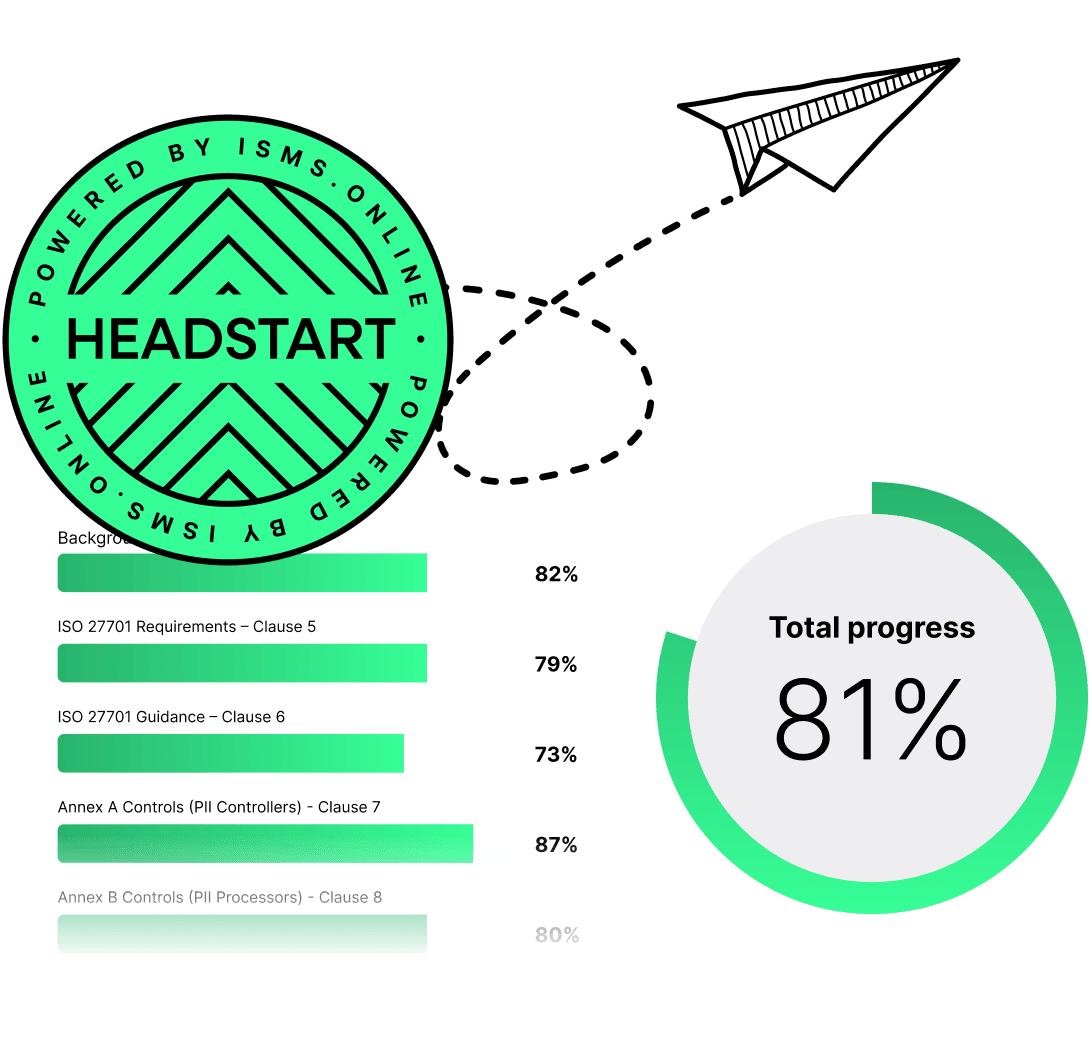
An 81% Headstart from day one
We’ve done the hard work for you, giving you an 81% Headstart from the moment you log on. All you have to do is fill in the blanks.
ISO 27001 Access Control Essentials for High‑Velocity Platforms
For high‑velocity gaming and trading platforms, ISO 27001 access control boils down to who sets the rules, how rights change over time and how powerful accounts are safeguarded. If you can answer those three points clearly, you are a long way toward both compliance and real risk reduction. The standard then packages these questions into policies, lifecycle processes and privileged‑access safeguards that you can operate and evidence every day.
Annex A groups access‑related controls into themes that map neatly onto that picture. Access control policies define principles and overall direction. Access rights management covers how you approve, grant, change, review and revoke rights in practice. Privileged access management recognises that administrator and other powerful roles are a special case needing tighter safeguards and oversight.
Three anchor controls for access governance
Three anchor controls make ISO 27001 access governance workable in fast‑moving environments: a clear access control policy, disciplined lifecycle management and focused oversight of privileged accounts. Together they translate principles like least privilege and separation of duties into concrete roles, approvals and reviews that business owners and auditors can follow.
Governance of access starts with an access control policy endorsed by leadership. That policy should capture principles like least privilege, need‑to‑know and separation of duties, and should state that access must support business and regulatory needs, not just convenience.
You then translate that policy into concrete mechanisms:
- Access control policy: – sets principles and responsibilities at organisation level.
- Access lifecycle management: – standard joiner, mover and leaver processes for every identity.
- Privileged access management: – stricter rules for accounts that can change systems or balances.
The lifecycle element is where many organisations struggle. Every person and non‑human identity should go through a consistent joiner, mover and leaver process. Requests for new roles, higher privileges or access to particularly sensitive systems-like order management, payout tools or game configuration-should be formally approved, time‑bounded where possible, and recorded so you can reconstruct who changed what, when.
Privileged access then deserves special treatment. ISO 27001 expects you to identify privileged accounts, restrict their use, apply stronger authentication, monitor their activity closely and review their necessity frequently. In gaming and trading, that includes system administrators, database owners, risk parameter owners, game masters and anyone who can directly affect customer balances or core logic.
The design–enforce–evidence loop
The design–enforce–evidence loop is a practical way to run ISO 27001’s risk‑based approach without drowning in theory. You design roles, rules and segregation patterns based on risk; you enforce them through systems and processes; and you collect evidence that they are working as intended.
Design work includes mapping business functions to roles, defining which roles can perform which actions on which systems, and documenting how you will handle conflicts of interest. Enforcement means configuring identity providers, directories, applications and platforms so those roles and rules are real, not just written intent.
You can think of it as three repeating steps:
Step 1 – Design based on risk
Define roles, segregation‑of‑duties rules and access patterns that reflect how trading and gaming actually work, and link them to ISO 27001 controls and risk assessments.
Step 2 – Enforce in systems and workflows
Configure identity, application and infrastructure platforms so they grant, change and remove access only through controlled paths, with approvals and time limits where needed.
Step 3 – Evidence and review
Collect and review access logs, approvals and periodic reviews so you can show auditors, regulators and your own leadership that controls are operating effectively.
Evidence is what auditors and regulators ultimately see: access review records, approval logs, change tickets for high‑risk entitlements, and event logs linking user identities to sensitive actions. Using an ISMS platform such as ISMS.online to tie design, enforcement and evidence together saves you from hunting across dozens of systems when the next audit or investigation arrives, and makes your ISO 27001 storey much easier to tell.
Applying ISO 27001 in High‑Frequency Trading Stacks
In high‑frequency trading, ISO 27001‑aligned access control means strictly limiting who and what can alter the order book, risk engines and reference data, while preserving low latency. It focuses on strong segregation, well‑defined roles and high‑fidelity logging around algorithm and risk changes so you can explain every significant action after the fact. Done well, it lets you demonstrate to regulators and auditors that your most sensitive controls are deliberate, justified and traceable.
A practical first step is to list every component that can influence orders and market data: order and execution management, market gateways, pricing and analytics, risk engines, surveillance, settlement and reference data. For each, you then ask who really needs access, what they need to do, and how those actions will be authenticated, authorised and recorded. That ties directly back to ISO 27001’s requirements to identify assets, assess risks and select appropriate controls.
Scoping access around the order book
Scoping access around the order book means treating anything that can change how orders are handled as highly sensitive and subject to tighter controls than routine monitoring. You concentrate scarce governance energy on roles and systems that can influence instruments, risk limits, routing logic or algorithms, because those are the levers that move markets and create regulatory exposure.
Access that can affect the order book directly-such as enabling or disabling instruments, modifying risk limits, changing routing logic or deploying new algorithms-should sit behind tighter controls than routine monitoring or reporting.
Only clearly identified roles, like specific traders, risk officers or platform engineers, should be able to initiate such changes, and even then under strict conditions. Typical safeguards include change tickets, dual approvals, strong authentication and out‑of‑band confirmation for the most critical operations.
Segregation of duties is critical in this context. The person designing an algorithm should not be the one approving it for production use. The person setting global risk limits should not be the one able to override them intraday. ISO 27001’s access control and change management controls expect you to identify such conflicts and either separate them or put compensating controls and close monitoring in place.
From a technical perspective, you can keep latency low while maintaining tight access control by separating fast data paths from slower control paths. Matching engines and gateways handle orders and quotes at speed; administrative and configuration changes happen through secondary channels protected by strong authentication, bastion hosts, just‑in‑time access and full session recording. That way you preserve performance while giving auditors clear evidence about who changed what.
Privileged access and emergency fixes
Privileged access and emergency fixes are inevitable in trading environments, so your goal is to make them safe, rare and well documented rather than to pretend they will never happen. ISO 27001 does not forbid emergency access, but it expects you to define who may invoke emergency rights, under which conditions, and how those sessions are authorised, monitored and reviewed so they do not become a hidden back door into production trading systems.
In practice, you can:
- Pre‑define who may invoke emergency privileges and for which scenarios.
- Require strong authentication and explicit approval for emergency sessions.
- Tie every emergency change to an incident or change record.
- Time‑limit and rapidly revoke elevated access once the issue is resolved.
Privileged access to production trading systems should be rare, time‑bounded and traceable. Sessions should be tied to named individuals, require strong authentication and be fully logged. Any change to algorithms, risk parameters or key configuration items during such a session should be linked to a ticket or incident reference so that investigations do not rely on memory.
Afterwards, a second line-risk, compliance or an independent technical authority-should review what happened, confirm that actions were justified and safe, and ensure any “temporary” permissions were revoked. That combination of clear rules, secure mechanisms and independent review is exactly what regulators and ISO 27001 auditors expect to see when they examine your incident and change records.

Free yourself from a mountain of spreadsheets
Embed, expand and scale your compliance, without the mess. IO gives you the resilience and confidence to grow securely.
Applying ISO 27001 in Online Gaming Platforms
ISO 27001 access control for online gaming is about protecting player identities, balances and virtual economies while still letting live‑ops teams run events, support players and manage content without friction. It has to cover players, staff, automation and suppliers across web, mobile, console and back‑office environments. Done well, it shows regulators and partners that you understand who can affect money, game outcomes and sensitive data, and that those powers are deliberately constrained.
The first step is to separate player access from staff and vendor access. Players log in through public channels; staff and vendors use restricted consoles and administration tools. These worlds should not share accounts, credentials or interfaces. Each domain then gets its own access rules, lifecycle processes and monitoring priorities, all under the umbrella of the same ISMS and the same Annex A access controls.
Players, staff and vendors: distinct access domains
Treating players, staff and vendors as distinct access domains helps you apply the right controls in the right places. Players mainly need protection from account takeover, fraud, cheating and misuse of real‑money or high‑value virtual items. Staff need clear, bounded powers that match their role. Vendors need constrained, monitored access that cannot quietly expand over time.
For players, the main concerns are account takeover, fraud, cheating and misuse of real‑money or high‑value virtual items. ISO 27001‑aligned controls here include secure authentication, optional or risk‑based multi‑factor authentication, sensible session management and anomaly detection for suspicious log‑ins or transactions.
For staff, you need clear roles for support, game masters, economy designers, payments, marketing and analytics. Each role should have only the minimum permissions needed. For example:
- Support staff see limited player details and trigger predefined recovery flows, not arbitrary credits.
- Economy designers configure drop rates and rewards, not individual wallets.
- Payments staff manage withdrawals and refunds, not moderation powers.
Vendors add another dimension. Anti‑cheat providers, payment processors, marketing partners and cloud hosts may all have some level of access to your data or systems. ISO 27001 expects you to define, agree and monitor that access, ensure it follows your policies, and integrate it into your overall risk and incident‑management processes rather than treating it as “outside IT”.
Stronger authentication without breaking the game
Stronger authentication is essential for protecting valuable accounts, but heavy friction will drive players away, so you need a tiered approach. A good pattern is to keep log‑ins smooth, then step up verification for high‑risk actions such as withdrawals, trading rare items or changing security settings. Session hygiene and good logging then close many of the remaining gaps.
Many operators adopt a model where baseline authentication covers standard log‑ins, with stronger measures wrapped around sensitive actions. That can mean encouraging-but not always requiring-multi‑factor authentication, then enforcing it when players perform high‑risk operations such as withdrawals, trading rare items, changing security settings or accessing parental‑control features. Device recognition and behavioural analytics can further refine when to challenge the user again without interrupting normal play.
Session management matters just as much. Short‑lived tokens, idle timeouts, re‑authentication before especially sensitive actions, and robust logout and revocation all reduce the window of opportunity for attackers. Combined with good logging that links player IDs, staff IDs and actions on accounts or inventories, you build a clear, defensible picture of who did what and when. That in turn supports both ISO 27001’s monitoring controls and gambling or games‑of‑chance regulations.
Designing RBAC and Segregation of Duties for Traders and Gaming Operators
Effective RBAC and segregation of duties start by mapping what people must do and, more importantly, what they must never be able to do, then encoding that into roles, approvals and reviews. When you capture these boundaries clearly, it becomes far easier to configure systems, explain your model to auditors and spot dangerous combinations before they cause harm.
Designing role‑based access control and segregation of duties is where ISO 27001 theory becomes day‑to‑day reality in your trading and gaming operations. The challenge is to express complex, sometimes overlapping responsibilities in a way that both systems and auditors understand, while still letting teams move quickly.
A good design starts with business functions, not systems. You identify what traders, quants, risk officers, compliance officers, game masters, support agents, fraud analysts, SREs and DBAs actually do, and more importantly, what they should never be able to do. Those “never” statements are often the most powerful drivers of your access model and feed directly into Annex A’s role and SoD controls.
Turn business functions into roles
Turning business functions into roles means grouping permissions in a way that aligns with how people work. The goal is to create role definitions that make sense to business owners and engineers, and that auditors can easily review against your risk assessments and SoD rules.
Once you know what each function does and must not do, you can group permissions into roles that are understandable to both engineers and auditors.
For example, a “Trader – Equities” role might allow placing and cancelling orders, viewing positions and reading certain market data, but never changing risk parameters. A “Risk Officer – Intraday” role might adjust limits within agreed ranges, but never trade. These constraints support both operational safety and your ISO 27001 risk‑treatment storey.
In gaming, you might define a “Customer Support – Tier 1” role that can see player identifiers and recent activity and trigger scripted compensations, but not directly manipulate wallet balances or items. A “Game Master – Live Ops” role might trigger events, ban or mute players and inspect logs, but not access payment card details or backend settlement tools.
Roles then become the unit for approvals, reviews and revocations, greatly simplifying lifecycle management. ISO 27001 expects you to document these roles, assign owners to them and keep them under review as the business and risk context evolve, rather than letting them accrete permissions over time.
Segregation of duties that actually works
Segregation of duties that actually works balances ideal separation with operational reality. In theory, you want no single person able to initiate and approve the same high‑risk action. In practice, small teams, shift patterns and incident scenarios mean you often need thoughtful compromises.
There are certain combinations you should never allow in one role:
- Designing and deploying trading algorithms into production.
- Setting global risk limits and overriding them intraday.
- Granting high‑value in‑game items and approving compensations.
In small or around‑the‑clock teams, rigid separation is not always possible, so you design compensating controls instead. These can include dual control (two people required for specific tasks), rotation of duties, stricter monitoring of certain combinations of roles and rapid, independent review of any exceptions.
ISO 27001 does not dictate your exact SoD model, but it does require you to think about conflicts, document how you handle them and monitor that your design is working. Doing this with the help of an ISMS platform lets you turn role catalogues, SoD matrices and review workflows into living artefacts rather than static spreadsheets, and makes it easier to show auditors that your controls match your documented intent.

Manage all your compliance, all in one place
ISMS.online supports over 100 standards and regulations, giving you a single platform for all your compliance needs.
Reference Architectures for Low‑Latency, High‑Availability Access Control
Reference architectures for access control in gaming and trading separate fast data flows from slower, well‑governed control paths. Done well, they let you enforce ISO 27001 access controls without harming performance. They show where identity, policy, logging and monitoring sit relative to trading flows and gameplay traffic, and how evidence is collected by default rather than bolted on later.
A common success pattern separates the control plane from the data plane. The control plane includes identity providers, access‑management systems, policy engines, logging and monitoring. The data plane includes trading flows, gameplay, payments and other high‑volume transactions. The aim is to make sure control decisions are authoritative and consistent, without forcing every packet through a heavyweight bottleneck that would hurt performance.
Control plane vs data plane
Separating the control plane from the data plane means centralising policy while distributing enforcement. You define roles, policies and SoD rules once, then push them into gateways, services and applications that enforce them close to the action without adding unnecessary latency.
In a modern stack, identity and authorisation decisions are often centralised in an identity provider or policy service, but enforcement happens in gateways, services and applications.
For trading, that might mean gateways and risk engines check entitlements and limits based on a central model, then execute orders at speed without repeatedly calling back. For gaming, it might mean internal services rely on signed tokens that reflect the player’s and staff member’s rights, while back‑office tools enforce finer‑grained controls and logging where latency is less critical.
Designing the control plane this way also makes it much easier to plug into an ISMS. You can show how policies are defined, how they are pushed into enforcement points, and how events and logs flow back into monitoring and audit functions. That narrative aligns cleanly with ISO 27001’s expectations around operational control, monitoring and continual improvement.
Designing for evidence by default
Designing for evidence by default means building logging, approvals and review into the architecture from the start rather than bolting them on later. ISO 27001 implicitly argues for this mindset: if a control matters, it should naturally produce the records needed to show it is working.
In practice, that means approvals for high‑risk access changes are recorded in durable systems; logs for sensitive actions are timestamped, tamper‑evident and retained; and exceptions are explicitly requested, justified and reviewed. It also means you have clear procedures for collecting and analysing this data when something goes wrong, so investigations are disciplined rather than improvised.
When you know in advance which questions regulators, auditors and internal governance bodies are likely to ask, you can design architecture and processes so the answers are readily available. A well‑implemented ISMS platform such as ISMS.online can then act as the clearing‑house for approvals, logs, risk assessments and corrective actions, linking them back to specific ISO 27001 controls and giving CISOs, trading technologists and compliance teams a shared view of reality.
Book a Demo With ISMS.online Today
ISMS.online gives you a practical way to turn ISO 27001 access‑control requirements into clear roles, workflows and evidence that fit gaming and trading operations. A demo lets you test those workflows end to end in your own context, so you can see whether the platform fits your business by taking a real, high‑risk journey-such as changing risk limits on a desk or granting items in a live game-and watching how roles, approvals, logs and reviews flow together.
What you can explore in a demo
A demo works best when you test it against a workflow that already worries you. During a session, you can take one high‑risk process-such as changing risk limits on a trading desk or granting items in a live game-and model it end‑to‑end. You will see how roles, approvals, logs and reviews can be linked to that workflow, and how Annex A controls like access rights management and privileged access map onto the steps your teams already take.
You can also explore how ISO 27001 clauses on risk, monitoring and continual improvement show up in practice. That might mean walking through a joiner–mover–leaver flow, stepping through a periodic access review, or checking how an incident involving privileged access would be recorded and followed up. The aim is not to impress you with features, but to let you judge whether the approach fits the way your organisation already works.
A short session like this often gives you enough insight to refine your own access‑control design, even before you commit to any tooling. It turns structured ideas about ISO 27001 into something you can see on screens and trace across systems.
Who gets most value from a session
Senior security leaders such as CISOs, trading technology heads and platform owners can use a demo to turn ISO 27001 from an abstract standard into an architecture and dashboard they can show to the board. It helps you explain how policies, segregation‑of‑duties rules and reviews actually work in the context of your trading stacks or gaming platforms.
Risk and compliance teams see how access policies, SoD matrices, reviews and incident records can be structured so regulator and auditor questions can be answered calmly and quickly. You can test whether the workflows match your current responsibilities and how easily you can evidence Annex A controls.
Operations and engineering managers can focus on whether the platform helps or hinders day‑to‑day work. You can ask how it handles emergency access, how it integrates with identity systems, and how much of the manual chasing for approvals and reviews can be removed.
If you are responsible for security, engineering or compliance in a gaming or trading business and you recognise the risks of patchwork access, unmanaged privileges and patchy evidence, taking time to see ISMS.online in action is a sensible next step. The platform will not remove your responsibility for good design and oversight, but it will give you a structured environment for turning those responsibilities into clear rules, repeatable workflows and convincing proof that access really is under control.
Book a demoFrequently Asked Questions
How does ISO 27001‑level access control really protect trading and gaming platforms?
ISO 27001‑level access control means you can demonstrate, at any time, who can change money, markets or game economies – and on what authority. Instead of scattered permissions and heroic forensics, you run a single, documented model that ties roles, authentication, privileged access, lifecycle and monitoring back to ISO 27001 Annex A.
What this looks like on a trading platform
On trading platforms, control needs to cover anything that can change exposures, prices or surveillance coverage:
- Clear roles around risk‑bearing activities:
Traders, quants, risk, compliance, settlements, operations, SREs and DBAs all have published roles with explicit “can” and “must never” actions. For example, a trader may adjust desk‑level limits but can never approve their own exceptions or change surveillance rules.
- Segregated change powers for code and parameters:
It becomes structurally impossible for one person to design, test, approve and deploy anything that touches live order flow. Build, approval and release sit in different hands, supported by tickets, change records and deployment logs.
- Hardened privileged access:
Administrative access to matching engines, risk engines, gateways and surveillance tooling goes through bastion hosts, is time‑limited, and fully recorded. Every elevated session links back to a ticket, incident or emergency break‑glass request.
- High‑impact actions you can replay:
Limit changes, parameter edits, rule toggles and surveillance state changes are logged with identity, time, purpose and reference. When an exchange or regulator asks “Who could lower this limit last Wednesday?”, you answer from evidence, not memory.
In an information security management system (ISMS), this access design, the associated risks and the evidence all live together. ISMS.online helps you keep your Annex A controls, role models and logs aligned, so you are ready when an auditor or venue wants to drill into a specific trade, limit change or incident.
What this looks like on a gaming platform
For gaming platforms, the same discipline protects player trust and in‑game economies:
- Separation between players and staff tools:
Player accounts and internal consoles operate in separate domains. Every support agent, game master and economy designer has their own identity; legacy “admin/admin” logins disappear. Production access is exceptional, approved and recorded.
- Risk‑based authentication where value moves:
Casual play stays smooth, but withdrawals, high‑value trades, rare item grants, parental controls and sensitive profile changes require stronger checks such as multi‑factor authentication or step‑up verification.
- No “god mode” roles:
Staff capabilities are bounded so that no single person can both grant value and approve their own grants, alter odds and settle bets, or ban and unban without oversight. Toxic combinations are identified and blocked.
- Every manual action leaves a trail:
Wallet corrections, item grants, bans, escalations and exception handling are logged with who, what, when and why. Higher‑risk operations receive extra review or alerting.
When you can open your ISMS and show a live access policy, a curated role catalogue, recent reviews and supporting logs for a high‑risk scenario, it is far easier to satisfy questions from auditors, payment providers, app stores or regulators. ISMS.online gives you one place to design, run and evidence this model instead of stitching together screenshots and exports under pressure.
How should we design RBAC and segregation of duties for ISO 27001 in trading and gaming?
You design RBAC and segregation of duties (SoD) for ISO 27001 by starting from business responsibilities and dangerous combinations of power, then ensuring that design is enforced through IAM, HR and change processes. The goal is simple: nobody should be able to create, approve and hide a high‑risk action on their own.
Turning responsibilities into roles that make sense to auditors
Rather than building roles from permissions lists, work top‑down:
- Map functions and critical systems:
In trading, include trading desks, quant, risk, compliance, settlements, operations, SREs and DBAs. In gaming, capture support, game masters, economy designers, fraud, payments and platform engineers. For each, list the systems they genuinely need.
- Write “can” and “must never” lists per function:
For each role, capture what it must be able to do and what it must never be able to do. Typical “never” items include: approving one’s own limit changes, granting unrestricted wallet credits, disabling surveillance, changing odds and settling bets in the same flow.
- Build roles around these guard‑rails:
Translate the lists into IAM roles aligned with responsibilities and “never” conditions. Keep powerful composite roles rare and tightly governed. Record role purpose, owner and assignment rules in an access‑control standard mapped to ISO 27001 Annex A.
When this design sits in your ISMS, rather than just inside your identity platform, non‑technical reviewers can follow the logic from risk, to role, to control.
Making segregation of duties enforceable and demonstrable
ISO 27001 expects you to show that your SoD design is more than a slide:
- Conflict matrix as a living artefact:
Maintain a matrix of roles on both axes with incompatible combinations highlighted. Examples: designing and deploying trading algorithms; setting and overriding risk limits; initiating and approving payout changes; operating as both game master and payments admin.
- Joiner–mover–leaver built around SoD:
HR and IT processes for new starters, internal moves and leavers reference the SoD matrix. High‑risk combinations require extra approval; deprecated access is removed automatically when responsibilities change.
- Regular, structured access reviews:
Business owners periodically attest that assigned roles are still appropriate, and that conflicts or unused access have been removed. Decisions and resulting changes become ISMS records, evidencing ongoing control.
ISMS.online lets you keep RBAC definitions, SoD rules, workflows and review outputs together. That makes it much easier to answer “who can do what, where, and why?” for a given trading or gaming scenario and to prove to ISO 27001 auditors that your segregation rules shape live access, not just diagrams.
Which ISO 27001 access controls are most important against insider fraud and market abuse in trading?
The ISO 27001 access controls that matter most against insider fraud and market abuse are those that limit quiet rule‑changes and provide forensic visibility: entitlements and SoD (A.5.x), privileged access management (A.8.x) and logging plus monitoring (A.8.15–A.8.16). The standard gives you the structure; you apply it to scenarios where someone could profit from changing how markets behave or how alerts fire.
Where to focus in trading environments
Three areas consistently reduce the scope for insider abuse:
- Entitlements and SoD around exposure and surveillance:
Access to trading tools, risk engines and surveillance systems is separated so that nobody can both set the rules and bypass them. The person who configures alert thresholds cannot deploy them alone; the person who sets risk limits cannot approve overrides in their own book. Any exception is logged, time‑limited and reviewed.
- Tightly controlled privileged access to engines and data:
Administrative access to matching engines, price feeds, gateways and trade stores is rare and deliberate. Elevation requires a request tied to a change or incident, multi‑level approval, time limits and full session recording. ISO 27001’s controls around privileged utilities and system administration help you standardise this pattern.
- High‑fidelity logging and cross‑channel correlation:
Orders, cancellations, configuration edits, limit changes, alert suppressions and relevant system events are logged with enough detail to reconstruct a storey. Those logs serve both trade‑surveillance and security operations. Someone trying to manipulate markets has to hide from more than one monitoring lens at once.
When you manage these elements inside your ISMS, you can answer questions like “Who could have switched off alerts on this instrument?” or “Who had write access to this parameter set on that date?” with confidence. ISMS.online helps trading firms map ISO 27001 Annex A controls to specific abuse scenarios, supporting a clear storey for compliance, internal audit and regulators.
How can gaming platforms strengthen authentication and sessions without frustrating players?
Gaming platforms can strengthen authentication and sessions by applying stronger controls only where money, rare items or identity are truly at risk, while keeping day‑to‑day play fast. ISO 27001 supports this risk‑based approach, so long as you can explain why certain actions trigger tougher checks.
Designing a risk‑aware authentication and session model
A practical model usually includes:
- A robust, familiar base layer:
Use industry‑standard login flows, TLS, reasonable password policies, device binding and rate‑limiting. This secures most accounts in a way players recognise from other services.
- Step‑up checks for sensitive actions:
Require multi‑factor authentication or a quick re‑login before withdrawals, payout changes, trades or gifts involving high‑value assets, edits to security or privacy settings, and changes to parental controls. When you frame this as “protecting your progress and purchases”, players typically accept the extra step.
- Context‑aware risk signals:
Watch for patterns like logins from unusual locations, first‑time devices, rapid account hopping or sudden spikes in high‑value transfers. Use these as triggers for additional checks, temporary limits or review queues instead of blunt blocking.
- Disciplined session management and observability:
Short‑lived tokens, idle timeouts, re‑authentication before the most sensitive actions and reliable token revocation all reduce the damage from compromised sessions. Central logging of authentication and session events allows fraud, security and support teams to work from the same evidence when investigating suspicious activity.
When you document the rationale and design of this model in your ISMS, it becomes easier to explain to internal stakeholders and regulators why your controls are proportionate to the risks of account‑takeover and fraud. ISMS.online gives you a structured home for your risk assessments, chosen controls, change history and incident data, so improvements are grounded in evidence rather than driven by individual incidents or vocal complaints.
How should trading and gaming firms organise access‑control evidence for ISO 27001 audits and regulators?
Trading and gaming firms should organise access‑control evidence so that reviewers can follow a clear chain from ISO 27001 controls to real behaviour in production systems. Instead of sending disconnected reports, you present a package that links policy, design, lifecycle and monitoring.
What a compelling access‑control evidence set includes
A strong evidence pack typically covers:
- Policy and scope:
An access‑control policy aligned with ISO 27001 that explains which trading or gaming systems, data sets, environments and third‑party services are in scope, and how roles and authentication are governed.
- Roles and SoD documentation:
Human‑readable descriptions of roles such as traders, risk officers, game masters, support staff, operations, engineers and DBAs, along with a segregation‑of‑duties matrix that marks incompatible combinations. This shows you have thought through toxic pairings.
- Lifecycle and approval records:
Samples of joiner–mover–leaver workflows, requests for high‑risk access, approvals, removals and periodic access reviews. Artefacts showing that unused or inappropriate access is removed are as important as examples of grants.
- Privileged access and configuration‑change logs:
Evidence connecting privileged sessions and configuration changes to specific individuals, tickets and approvals. In trading, that might mean changes to limits, pricing models or surveillance rules; in gaming, odds tables, jackpot settings or wallet handling. Being able to step through a small sample in detail builds credibility.
- Detection, investigation and improvement:
Records where unusual access or suspect staff actions were spotted, investigated and led to corrective measures such as role redesign, enhanced monitoring or disciplinary action. This shows your controls are active and evolving rather than static.
When you manage this material in an ISMS, each Annex A access control can point to relevant risks, policies, procedures and records. ISMS.online helps you assemble and maintain this structure so you can reuse it for multiple audits and regulatory enquiries instead of starting from scratch every time someone asks, “Show me how you control who can move value here.”
When is the right time to move from informal access control to an ISO 27001‑backed ISMS platform?
It is time to move from informal access control to an ISO 27001‑backed ISMS platform when spreadsheet‑ and email‑based coordination starts to hide risk, slow decisions or shake stakeholder confidence. In trading and gaming, where value moves quickly and failures are public, that point usually arrives sooner than teams expect.
Practical signs you have outgrown ad‑hoc access control
You are likely ready for a structured ISMS when you see patterns like:
- New, sharper questions from external stakeholders:
Major customers, exchanges, payment partners, app stores or regulators begin asking for ISO 27001‑style evidence packs, detailed control descriptions or certification as part of due diligence.
- Simple access questions demand big investigations:
Requests such as “Who can change this risk parameter?”, “Who can credit this wallet type?” or “Who can disable this monitoring rule?” require multiple teams to pull logs and query systems, rather than a quick check in one trusted place.
- Access reviews feel noisy and inconclusive:
Quarterly or annual access reviews generate long lists of anomalies because roles are unclear, exceptions have piled up and nobody owns a clean‑up plan. The same issues reappear with each cycle.
- Incidents tie back to structural access weaknesses:
Near‑misses or real issues involve dormant admin accounts, permanent debug access, shared credentials or powerful internal tools with no clear ownership, approval workflow or monitoring. Each incident is treated as a one‑off, not as a symptom of the model.
Moving these controls into an ISMS is less about extra paperwork and more about giving your organisation a single way to design, enforce and evidence access control. A platform like ISMS.online lets you capture your access policies, RBAC and SoD models, lifecycle workflows, reviews and monitoring artefacts in one environment mapped to ISO 27001. If you recognise the signs above in your trading or gaming organisation, taking that step now usually reduces operational risk, calms demanding stakeholders and turns future audits into predictable, repeatable exercises instead of stressful fire drills.






