





































From Hyper-Growth to High-Stakes Scrutiny in Online Gaming
A combined ISO 27001 and ISO 27701 stack gives your gaming business one recognised way to prove disciplined security and privacy across your platforms. Instead of scrambling for ad‑hoc answers and evidence every time a regulator, bank, licence body or B2B partner asks how you control player data, payments and game integrity, you point to a single management system that joins licences, data‑protection law and commercial demands together.
Security and privacy frameworks now decide whether your gaming brand keeps licences, wins B2B deals and retains player trust. Regulators, banks and platform partners increasingly expect evidence that you manage player data, game integrity and payments with the same discipline as a financial institution.
Online gaming and betting grew up in a “ship fast, optimise later” world. You focused on uptime, odds, bonuses and new titles, while controls grew organically around KYC, AML and fraud. Now you operate in a high‑stakes environment where player data, telemetry and payments run at financial‑services scale, under gambling regulators, financial‑crime rules and data‑protection law.
A single mismanaged incident-a VIP account takeover, a cross‑border data leak, a licence breach involving vulnerable players-can trigger investigations across multiple regimes at once. The real cost is rarely just the fine; it is remediation projects, delayed launches and lost commercial opportunities while you “prove control” to regulators and partners.
Strong privacy and security become a competitive edge, not just a compliance cost.
A management‑system approach changes the game. ISO 27001 gives you a formal information security management system (ISMS): a way to define scope, identify risks, select and operate controls, and demonstrate improvement. ISO 27701 extends that system into a privacy information management system (PIMS), turning scattered privacy efforts into a structured programme.
Instead of answering each regulator or partner with bespoke spreadsheets and one‑off fixes, you frame everything through one storey: “Here is how we run security and privacy for player accounts, games, payments, KYC/AML and analytics.” That is why many serious operators treat a combined ISO 27001 + 27701 “privacy stack” as commercial infrastructure, not just compliance.
Information in this article is general and does not constitute legal or regulatory advice; you should always seek guidance from qualified professionals for your specific situation.
Why “good enough” has quietly moved
“Good enough” security and privacy for gaming now means running a consistent, auditable system rather than scattered controls and heroic fire‑drills. Regulators and payment providers now look for a joined‑up system, not isolated fixes, when they assess how seriously you take security and privacy. A 27001 + 27701 privacy stack shows that you understand your risks, run coherent controls across brands and regions and can demonstrate learning from incidents, rather than relying on one‑off point fixes.
A few years ago, passing technical testing and showing basic security policies was often sufficient. Today, gambling commissions, payment providers and enterprise customers look for:
- Evidence that information risks are identified, owned and treated.
- Consistent controls across brands and regions, not just one flagship site.
- Governance over how behavioural data, profiling and cross‑border flows are used.
- Demonstrable learning from past incidents and regulator findings.
A combined ISO 27001 + 27701 stack gives you a recognised way to meet those expectations. It does not replace local law or licence conditions, but it becomes the backbone that joins them together.
A simple comparison of operating models
Most gaming providers sit somewhere between ad‑hoc compliance and a fully integrated privacy stack; being honest about where you are today makes it easier to explain why a combined ISMS/PIMS is worth the effort. Seeing your current model side by side with a systemised approach helps you make the case for change internally.
This table summarises three common patterns.
| Scenario | How governance works today | What a 27001 + 27701 privacy stack changes |
|---|---|---|
| Ad‑hoc compliance | Each team keeps its own policies and evidence; audits trigger fire‑drills. | One ISMS/PIMS defines risks, controls and evidence across the organisation. |
| Security‑only focus (27001‑like) | Strong technical controls, but privacy is handled via ad‑hoc notices. | Privacy roles, records and rights processes are built into the same system. |
| Regulator‑only remediation | Big projects after findings, weak reuse across brands/regions. | Lessons feed into controls, risk logs and reviews, showing continual improvement. |
A centralised ISMS/PIMS workspace, for example through ISMS.online, makes that integrated model practical by giving you one place for risks, controls, documents and evidence instead of scattering them across folders and tickets. You do not need to be a framework expert; you need a structure that reuses the work you already do for regulators.
Book a demoWhy Gaming Privacy Is Different: Profiling, Telemetry and Cross-Border Play
Gaming privacy is harder than generic B2C privacy because you handle deep behavioural, financial and sometimes sensitive data at scale. You constantly analyse how people play, spend and respond to offers across borders and devices, and that behavioural picture is what attracts regulators’ attention and creates sharper expectations than in many other consumer sectors.
Gaming data goes far beyond names, emails and card numbers; it exposes how, when and why people play, spend and sometimes struggle. That depth of telemetry makes gaming privacy risks sharper than many other consumer sectors and demands more than generic controls.
Modern games and betting platforms track session length, stake patterns, markets played, in‑game movements, chat content, device fingerprints and social connections. Combined, this allows you to infer traits such as risk tolerance, likely income band, sleep patterns and susceptibility to time‑limited offers. For vulnerable players, those inferences can intersect with responsible gambling obligations.
Loot boxes, microtransactions and live‑operations offers depend on constant A/B testing and segmentation. Without clear limits and oversight, it becomes easy to slide from “helpful personalisation” into designs that are hard to justify to regulators, the media or your own conscience. ISO 27701 does not ban such features, but it expects you to define purposes, lawful bases, safeguards and retention for this kind of processing.
Anti‑cheat and fraud systems add another layer. They legitimately correlate device identifiers, network attributes, behavioural fingerprints and account histories to catch cheaters and money launderers. The same power that finds adversaries also amplifies surveillance risk if you do not apply strict necessity, access control and logging.
Cross‑border play complicates everything. Global tournaments, multi‑region servers and shared wallets mean personal data constantly moves across jurisdictions with different rules on localisation, consent and regulatory access. You need a consistent way to decide where processing is allowed, how transfers are justified and which contracts and controls apply.
When you see the whole player journey as data, privacy stops being abstract and becomes operational.
Why gaming privacy feels harder than other sectors
Gaming privacy feels harder than other sectors because you combine payments, behavioural analytics and sensitive topics like addiction in a single environment. That mix attracts closer scrutiny from regulators and banks than a typical retail or media business and increases the number of places where your data practices may be challenged by players, partners or authorities.
You also tend to run fast release cycles, test new features in live environments and operate across multiple territories at once. Without a clear privacy framework, each new initiative risks introducing small inconsistencies that build into bigger problems over time. ISO 27701 helps you turn those moving parts into a coherent set of purposes, safeguards and records.
Unique questions gaming operators must answer
Gaming providers must answer specific privacy questions that ISO 27001 alone cannot address clearly. These questions sit around profiling, high‑risk analytics and the fine line between legitimate integrity controls and intrusive surveillance. Several recurring questions in gaming are not well answered by ISO 27001 alone:
- How much behavioural telemetry is genuinely necessary for integrity and user experience?
- When does profiling cross the line into high‑risk processing needing a formal impact assessment?
- How do you explain data use in plain language without undermining fraud and anti‑cheat models?
- How do you handle rights such as access, deletion and objection without breaking core controls?
- How do you prove that cross‑border data flows and tournament infrastructures respect localisation and transfer rules?
ISO 27701 addresses exactly these questions by extending the management‑system logic of ISO 27001 to privacy: the same ideas of scope, risk, controls, roles, metrics and continual improvement, but focused on how you process personal data rather than only how you protect it.
ISO 27001 made easy
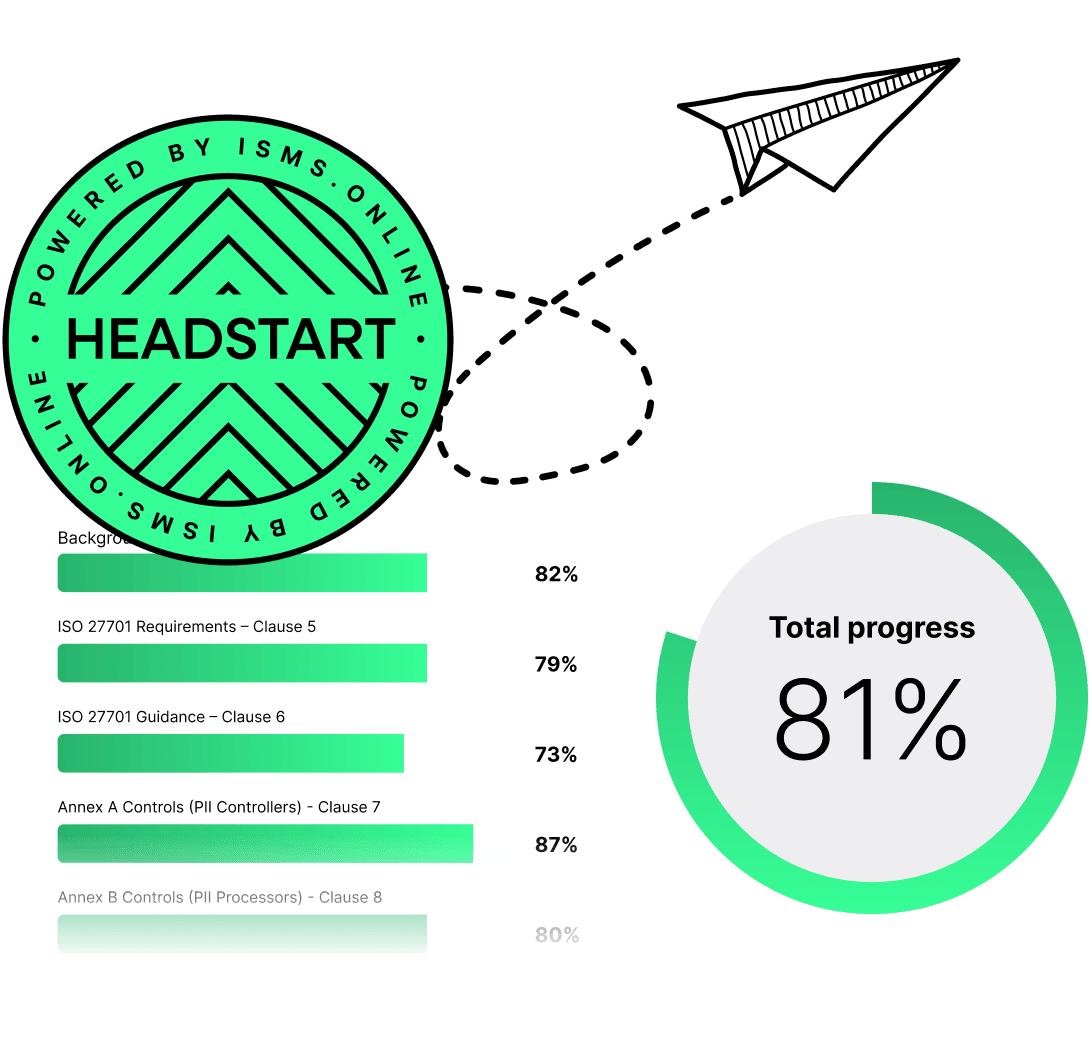
An 81% Headstart from day one
We’ve done the hard work for you, giving you an 81% Headstart from the moment you log on. All you have to do is fill in the blanks.
The ISO 27001 Foundation for Secure Gaming Platforms
ISO 27001 gives you a structured way to define scope, understand risks and select controls for your gaming platforms. For gaming providers, it is the foundation that turns fragmented security practices into a single ISMS that regulators, partners and auditors recognise and can test against.
In a gaming context, that scope typically includes:
- Player authentication, wallets and payment processing.
- Game servers, random number generators and odds engines.
- KYC/AML systems and fraud‑monitoring tools.
- Back‑office systems for customer support, VIP, risk and trading.
- Hosting, cloud services and key third parties.
Within that scope, you build a risk register that reflects gaming realities: account takeover, bonus abuse, payment fraud, cheating, DDoS, data leakage, insider threats, regulator findings and more. You then select and implement Annex A controls to treat those risks.
The 2022 revision of ISO 27001 groups controls into organisational, people, physical and technological categories. For gaming operators, some themes quickly stand out as high‑impact:
- Governance and policies that are actually used by operations.
- Identity and access management for staff, partners and admins.
- Secure development and change management for platform features.
- Logging, monitoring and incident response across games and services.
- Supplier security for game studios, payment providers and KYC partners.
- Business continuity and disaster recovery for platforms and data.
These themes only matter if they change how people work day‑to‑day, not just how documents look on a shared drive. A centralised ISMS platform such as ISMS.online helps you manage these elements in one place instead of juggling them across multiple tools and folders.
Key ISO 27001 focus areas for gaming
For gaming operators, ISO 27001 matters less as a badge and more as a shared way to make security decisions. It clarifies who owns which systems, how you approve changes and how you respond when something goes wrong, so that investigations, audits and partner reviews feel controlled rather than chaotic.
Regulators and enterprise partners are increasingly familiar with ISO 27001 and often ask about it directly. Being able to show a clear scope, risk register, Statement of Applicability and audit cycle gives you a common language to explain how you protect player data, game integrity and supporting services.
How an ISMS changes day‑to‑day work
A living ISMS changes day‑to‑day work by turning security from ad‑hoc reactions into structured, owned decisions across games, brands and regions. It makes security actions visible, repeatable and easier to explain when regulators, banks or partners examine what you do.
In practical terms:
- Changes become explicit risk decisions.: New games, promotions or feeds include simple risk questions and approvals before launch, not just post‑incident reviews.
- Evidence is captured as you go.: Approvals, test results and reviews are stored in structured form instead of buried in inboxes and chat threads.
- Ownership becomes clear.: Each key system, asset and control has an identified owner who is accountable for effectiveness.
- Existing work is reused.: Where you already meet licence or PCI DSS requirements, you reference that work as part of your ISO control set.
For many operators, the main benefit is not the certificate itself but having one shared language for security expectations. Product managers, platform engineers, risk, support and compliance teams all see how their tasks contribute to keeping the ISMS effective. A centralised ISMS workspace, such as ISMS.online, helps by giving you one place where risks, controls, actions and evidence live in the same structure your auditor will recognise.
Once that security foundation exists, the missing half is how you govern the way you use personal data, not just how you protect it-which is where ISO 27701 fits.
How ISO 27701 Extends 27001 into a Privacy Information Management System
ISO 27701 extends your existing ISO 27001 ISMS into a privacy information management system so you can govern how you use personal data with the same discipline you apply to security. It turns your security management system into a combined ISMS/PIMS that covers lawful processing, records, rights and impact assessments in a single framework.
At the structural level, ISO 27701 adjusts familiar clauses:
- Context and scope: now include categories of personal data, data subjects, jurisdictions and roles (controller, processor) alongside assets and systems.
- Leadership: explicitly covers responsibility for privacy, not just information security.
- Planning and risk: extend to privacy risks and impact, not only confidentiality, integrity and availability.
- Operations: require processes for data subject rights, consent, purpose limitation, retention and international transfers.
- Performance evaluation: expects privacy metrics and audits.
- Improvement: covers learning from privacy incidents and regulatory findings.
On top of that, ISO 27701 introduces annexes with requirements for organisations acting as personal data controllers and/or processors. In a gaming context:
- Your operating company is usually the controller for player accounts, KYC/AML, gameplay telemetry, marketing and responsible gambling processing.
- Cloud hosts, KYC providers, payment processors, studios and some analytics vendors act as processors, handling data on your behalf.
- Affiliates and some partners may be separate controllers with whom you share data under specific arrangements.
ISO 27701 expects you to identify these roles clearly, define purposes and lawful bases for each major processing activity, maintain records of processing, undertake and document privacy impact assessments where risk is high, and embed rights‑handling into operations. A record of processing for VIP segmentation, for example, would spell out which behavioural data you use, why you use it, your lawful basis, retention period and who you share it with.
What ISO 27701 adds to your existing ISMS
For a gaming provider that already has an ISMS, ISO 27701 adds the missing half of the picture: how and why you process personal data, not just how you secure it. It connects your existing risk, control and audit cycles to RoPA, DPIAs, notices and rights handling so that privacy questions are answered by the same system you already trust for security.
In practice, this means your existing governance meetings, internal audits and improvement plans now cover privacy as well as security. Instead of separate, ad‑hoc privacy checklists, you have one calendar, one set of reviews and one set of metrics that can be shown to regulators and partners.
Why this matters for gaming specifically
For gaming providers, ISO 27701 brings several concrete advantages that speak directly to the way you operate: fast releases, cross‑border data flows, heavy profiling and regulatory scrutiny. It helps you turn those realities into structured, defensible records and controls.
For gaming providers, ISO 27701 brings several concrete advantages:
- It gives your DPO and compliance team structure.: RoPA, DPIAs, notices, consent and rights handling sit inside the same governance cycle as security, instead of living in isolated spreadsheets.
- It connects profiling to explicit controls.: High‑risk analytics-VIP segmentation, addiction‑risk scoring, fraud models-are linked to impact assessments, safeguards, retention decisions and rights processes, so they are defensible if challenged.
- It harmonises privacy obligations across markets.: While law still differs by country, having one PIMS that maps local obligations onto common processes and records reduces complexity as you enter new jurisdictions.
- It makes privacy operational, not just legal text.: Privacy becomes work people do-with roles, tasks, metrics and improvement loops-instead of a static policy that nobody feels responsible for.
If ISO 27001 is your answer to “how do we keep information secure?”, ISO 27701 is your answer to “how do we use personal data fairly, lawfully and transparently, and prove it?” Designing a combined 27001 + 27701 stack is how you turn that answer into one practical system for gaming operators.

Free yourself from a mountain of spreadsheets
Embed, expand and scale your compliance, without the mess. IO gives you the resilience and confidence to grow securely.
Designing the Combined ISO 27001+27701 Privacy Stack for Gaming Operators
A combined ISO 27001 and ISO 27701 privacy stack gives you one integrated control and evidence system that covers both how you protect information and how you use personal data. For a gaming provider, that means one architecture that spans platforms, brands, jurisdictions and partners, instead of separate security and privacy projects that never quite meet.
At the heart of that architecture is a shared control catalogue. For each risk and obligation-whether it arises from gambling rules, AML directives, GDPR, payment schemes or platform contracts-you decide:
- Which ISO 27001 controls apply (for example, access control, logging, supplier management).
- Which ISO 27701 controls apply (for example, records of processing, DPIA, consent, retention, rights).
- What concrete policy, process, technical measure and record you rely on to show they are in place.
Around that catalogue, four layers emerge:
- Policies. High‑level rules on information security, privacy, acceptable use, data retention, supplier management and incident response that teams can realistically follow.
- Procedures and playbooks. Step‑by‑step guides for onboarding, KYC/AML checks, payments, gameplay logging, self‑exclusion, complaints, incident response and change management that embed both security and privacy expectations.
- Registers and records. Risk registers, Statements of Applicability, Records of Processing Activities, DPIAs, incident logs, vendor registers, data‑subject request logs and training records.
- Tooling. The systems you use to run and evidence the above: ticketing, logging, monitoring, document management, training platforms and your ISMS/PIMS workspace.
If you support non‑specialist owners, this layered view helps them see where their current work already fits, instead of feeling that ISO demands a completely new world.
A central ISMS/PIMS workspace, such as ISMS.online, can sit at the centre of these layers. It gives you a single, structured place to store and link policies, procedures, registers and evidence, so you can show auditors and regulators how everything fits together without trawling through multiple systems.
Integrating third parties and ecosystems
Integrating third parties into your ISO 27001 and 27701 stack means treating studios, platforms, payment providers and KYC vendors as part of your control architecture, not as black boxes. Clear roles, requirements and evidence for each partner make your privacy stack much more convincing to regulators and banks.
Gaming businesses rely heavily on others: studios, managed platforms, payment providers, identity verification, analytics, marketing and affiliates. A robust privacy stack:
- Classifies each partner’s role (controller vs processor) and risk level.
- Defines minimum security and privacy requirements in contracts and onboarding.
- Specifies technical expectations-encryption, logging, data minimisation, segregation.
- Requires demonstrable controls such as certifications, audit reports or test results, scaled to risk.
A centralised governance hub, again using a platform such as ISMS.online, lets you record vendors, map them to processing activities, link them to risks and controls and attach evidence. That stops third‑party governance from living only in isolated spreadsheets and email threads.
Keeping the stack alive as you grow
A combined privacy stack only delivers value if it evolves with your roadmap, not just at audit time. New games, markets and models need to feed predictable checkpoints for scope, risk, records and training, so your stack remains aligned with how you actually operate and how your risk profile changes over time.
The design only works if it evolves with your roadmap. New games, new jurisdictions, new data‑science models and new partnerships must feed into:
- Scope and context reviews.
- Risk and impact assessments (security and privacy).
- Control updates and exceptions.
- Changes to records of processing and retention.
- Training and awareness needs.
Building these checkpoints into existing processes-product discovery, change boards, go‑live reviews-keeps the privacy stack aligned with your real business rather than frozen in the year of initial certification. It often helps to sketch this as a layered view: policies on top, then procedures, then registers and tooling, all connected by a shared control catalogue and your key third parties.
The next step is to map that architecture onto real KYC, AML and player journeys so people can see how it works in practice.
Mapping KYC, AML, Player Journeys and High-Risk Processing into the Stack
Mapping real player and account journeys into your ISO 27001 and 27701 stack is where the system becomes concrete. Instead of thinking about clauses in isolation, you show how security and privacy controls support registration, KYC, gameplay, responsible gambling and account closure from end to end so colleagues and regulators can see how the system works in practice.
Once the architecture is clear, you translate it into concrete player journeys and operations. The goal is not to rebuild KYC/AML and account processes from scratch, but to map what you already do into ISO language, then add overlays where gaps are real.
A typical lifecycle mapping for a regulated operator covers:
- Registration and age verification.: What information you collect, which checks you perform, how you keep evidence and how you secure documents and images.
- KYC and due diligence.: How you handle standard and enhanced checks, additional documents, source‑of‑funds requests and ongoing monitoring.
- Deposits and withdrawals.: How payment data flows, how you flag unusual patterns and how you protect both funds and data.
- Gameplay and telemetry.: What you log, why, how long you retain it and who can access it.
- Responsible gambling and self‑exclusion.: How you detect cues, intervene and record decisions.
- Account closure and retention.: When and how you close accounts, anonymise or delete data, and retain records required for law or disputes.
You can picture this as a simple end‑to‑end player‑journey diagram, with specific security and privacy controls supporting each step and feeding common registers and logs.
For each step, you ask: which ISO 27001 controls already support this, which ISO 27701 privacy controls apply, what evidence do you have today, and what simple additions would make it ISO‑ready?
Why mapping journeys matters
Journey‑level mapping matters because it connects the framework language to the way your teams already think about players, accounts and games. It is much easier for colleagues to engage with a concrete “KYC to account closure” storey than with lists of clause numbers and control IDs.
This journey‑level mapping is often what convinces sceptical colleagues that ISO 27001 and 27701 are practical tools rather than abstract checklists. It shows, for example, how a single change to KYC flows affects risk, controls, records and rights handling in one place, instead of creating separate to‑do lists for each team.
It also makes it easier to brief regulators and banking partners. Rather than describing individual controls in isolation, you can walk them through a journey and show where you identify risks, apply safeguards, retain evidence and learn from incidents.
Turning existing work into ISO-ready evidence
Turning existing work into ISO‑ready evidence often involves light structuring and cross‑referencing rather than wholesale reinvention. Many documents and artefacts you already use-policies, case files, training materials-become powerful evidence once they are linked to risks, controls and owners.
In practice, many operators find that they already have a lot of what an ISO auditor or regulator wants, just not in a structured, joined‑up way. Useful artefacts often include:
- KYC/AML policy and procedure documents.
- Training materials for frontline staff.
- Sample case files for AML alerts or responsible gambling interventions.
- Exports or screenshots from monitoring tools.
- Incident reports and post‑incident reviews.
- Regulator correspondence and action plans.
By adding risk ratings, control owners, review dates and cross‑references to ISO controls, these become part of your ISMS/PIMS evidence base. Instead of creating new documents to satisfy ISO, you curate and enrich what you already use to run the business.
High‑risk processing-such as VIP profiling, affordability scoring and device fingerprinting-deserves special attention. Here, you connect:
- A clear description of the processing and its purpose.: Everyone involved can explain what the model does in plain language.
- Legal analysis and lawful basis decisions.: You document which legal grounds you rely on and why they are appropriate.
- Technical safeguards such as minimisation, pseudonymisation and access control.: These reduce the impact if data is misused or breached.
- Organisational safeguards such as approvals, training, oversight and rights‑handling.: People understand limits, escalation paths and how to respond to requests.
- DPIAs and their conclusions.: High‑risk models have documented impact assessments, decisions and follow‑up actions.
- Monitoring and periodic reviews.: You check performance, bias, false‑positive rates and continued necessity on a regular schedule.
Treating high-risk processing with extra discipline
Treating high‑risk processing with extra discipline shows regulators and partners that powerful analytics are balanced by strong governance. By linking models to impact assessments, safeguards and scheduled reviews, you can innovate without creating uncontrolled risks around profiling, fairness or bias.
High‑risk processing is often where regulators, media and partners focus first, especially in gaming. Using ISO 27701, you can show that the same models which support VIP and fraud decisions are backed by documented impact assessments, sign‑offs, retention limits and regular reviews, rather than informal “expert judgement”. For certain inferences, such as addiction‑risk scores or affordability ratings, regulators are likely to expect formal DPIAs and enhanced governance, not just basic controls.
This extra discipline does not stop you innovating. It simply means that new models and journeys move through a standard set of privacy and security checkpoints, so you can explain and defend them later if challenged.
Once you have these journeys mapped, it becomes far easier to plan a realistic 6–18 month path to certification and alignment.

Manage all your compliance, all in one place
ISMS.online supports over 100 standards and regulations, giving you a single platform for all your compliance needs.
A 6–18 Month Roadmap to ISO 27001 then ISO 27701 for Mid-Sized Gaming Providers
A realistic 6–18 month roadmap lets you show executives, regulators and practitioners how you will reach ISO 27001 and then ISO 27701 in manageable steps. Most mid‑sized gaming providers succeed when they treat ISO 27001 and 27701 as a phased programme rather than a single leap: build a solid ISO 27001 ISMS over six to twelve months, then extend it into ISO 27701 privacy alignment in the following three to six months once the security baseline is stable.
For ISO 27001, a typical sequence over 6–12 months looks like:
- Initiation and sponsorship (two to four weeks). Confirm business drivers, secure executive backing, appoint an ISMS lead and agree budget.
- Context, scope and gap analysis (four to eight weeks). Define what is in scope, identify interested parties and obligations and review current controls.
- Risk assessment and control design (four to eight weeks). Build a risk register focused on gaming realities and choose appropriate Annex A controls.
- Implementation (three to six months, often overlapping with step three). Roll out policies and procedures, update configurations, integrate security into change and release processes and train staff.
- Internal audit and corrective actions (four to eight weeks). Test the system, fix issues and refine documentation and controls.
- Certification audit (timing driven by your chosen body). Undergo Stage 1 (document review) and Stage 2 (implementation) audits with a certification body.
For many operators, 27001 certification for a well‑defined scope can be achieved in nine to twelve months if the project has clear ownership and avoids over‑scoping in the first round.
ISO 27701 then rides on top. You can start privacy groundwork once the ISMS is taking shape-updating data inventories, identifying high‑risk processing and sketching records of processing and DPIA approaches. Many mid‑sized operators find that formal ISO 27701 alignment adds around three to six months once the ISMS is stable, particularly if you already run GDPR programmes.
You can picture this as a simple two‑wave timeline: the first wave builds and certifies ISO 27001 for a sensible scope; the second wave extends the same management system into privacy, using ISO 27701 to formalise roles, records and impact assessments.
Typical path from 27001 to 27701
The typical path from ISO 27001 to ISO 27701 starts with securing platforms, then shifts to governing how personal data flows through those platforms. That sequence reassures boards and regulators that you are not stretching your organisation too thin and that each step builds on a stable foundation.
In practice, many gaming providers take a similar journey: concentrate first on scoping and certifying ISO 27001 around core platforms and brands, then, after one cycle of internal audits and external certification, extend the same ISMS to cover ISO 27701 roles, records and impact assessments.
This approach reassures boards and regulators that you are not trying to do everything at once. You can show clear progress from “secure platforms” to “secure and accountable use of personal data”, with each milestone backed by audit evidence and management reviews.
Governance, milestones and smart phasing
Smart governance and phasing keep your roadmap realistic for both senior leaders and operational teams. When each phase is tied to recognisable events and metrics, people see why the timing matters and what success looks like.
To keep the programme on track and sustainable:
- Create a joint steering group.: Include the CISO, DPO, MLRO, platform and product leads and key operational managers so decisions balance risk, delivery and commercial needs.
- Align with real events.: Tie milestones to licence renewals, market entries, major platform migrations or flagship partner tenders.
- Start with a manageable scope.: Consider piloting on one brand, region or platform segment, then widening the certified scope in later years.
- Measure what matters.: Track metrics such as audit findings, time to respond to security questionnaires, incident trends, completion of risk actions and update cycles for key registers.
A specialist ISO platform, such as ISMS.online, can reduce friction by providing pre‑built control frameworks, risk models, registers and workflows tailored to ISO 27001 and 27701. Your teams work in a structured workspace that mirrors the management‑system logic and makes audits and reviews more predictable, instead of manually assembling documents and evidence in shared drives and spreadsheets.
If you want stakeholders to see this roadmap as achievable rather than aspirational, linking phases to real regulatory or commercial dates-such as licence renewals or new market launches-helps them visualise why timing matters. If you then choose to align with ISO 27701, you can show that the additional work is a focused extension of the same system, not a second, unrelated project.
Once you have that roadmap in mind, the natural next question is what the combined ISMS/PIMS looks like in practice for a gaming provider like yours.
Book a Demo With ISMS.online Today
ISMS.online gives you a practical way to run ISO 27001 and ISO 27701 as a single privacy stack for your gaming business, rather than a one‑off certification exercise. By bringing risks, policies, controls, records and evidence into one workspace, it helps you treat privacy and security as part of your commercial infrastructure rather than recurring fire‑drills across brands, products and regions.
If you want to reuse your existing regulator artefacts instead of starting with a blank page, you can begin with a short discovery session. Your current KYC/AML procedures, responsible gambling flows, incident reports and licence action plans can be mapped into an ISO‑aligned structure and turned into living registers and workflows.
Technical and platform teams can then see how the workspace integrates with tools they already use-issue trackers, cloud platforms and logging systems-so audit evidence and DPIA inputs flow from normal pipelines, rather than from manual document hunts just before an inspection.
Executives gain dashboards and reports that turn security and privacy activity into clear metrics: risk status, incident trends, control coverage, audit progress and privacy‑impact work. Those views make it easier to brief boards, investors and regulators with confidence.
If you are unsure where to start, you can scope a pilot around a single brand, market or platform slice, using pre‑built templates and roadmaps to demonstrate early value. A simple self‑assessment against governance, journey coverage and evidence maturity can highlight where that first pilot will have the most impact, and how it can scale into full ISO 27001 and 27701 certification over time.
What you see in an ISMS.online demo
A gaming‑focused demo lets you see how an integrated ISMS/PIMS actually works with familiar journeys, not generic examples. You can walk through sample risks, controls, registers and workflows mapped to registration, KYC, gameplay and responsible gambling use cases, then discuss how your own environment would fit into the same structure.
That concrete view often unlocks useful internal conversations. Non‑specialist owners can see where they contribute, practitioners can see where automation reduces their workload, and leaders can see how progress will be reported to boards and regulators.
Choosing a sensible starting scope
Choosing a sensible starting scope helps you show quick wins to sponsors while keeping risk and workload under control. Beginning with one platform, brand or region lets you refine the model before you extend it across the full group.
You do not have to transform your entire organisation at once. Many gaming providers start by certifying a single platform, region or flagship brand, then expand the scope once they have one full cycle of audits and improvements behind them.
When you are ready to see how a combined ISMS/PIMS works in a real gaming context, booking a demo with ISMS.online is a straightforward next step. You stay in control of scope and pace, while gaining a clear view of what a practical privacy stack looks like when it is fully operational inside an online gaming or betting provider, so you can treat privacy and security as commercial infrastructure, not recurring fire‑drills.
Book a demoFrequently Asked Questions
How does a combined ISO 27001 and ISO 27701 system actually operate inside an online gaming or betting business?
A combined ISO 27001 and ISO 27701 system runs security and privacy as one management engine across your gaming estate, instead of as separate, competing projects.
How does a single joined‑up scope follow real player and platform data?
In practice you define one shared scope that follows the way data actually moves through your operation, not the way your org chart happens to be drawn. For most online gaming and betting businesses, that scope typically covers player registration and login, KYC/AML onboarding and monitoring, payments and wallets, game platforms and risk engines, fraud and anti‑cheat tools, marketing and CRM, customer support, and the key third parties that process or store player or staff data.
Because all of this sits under one scope, you can show how platform security, player privacy and responsible‑gambling duties are governed together, not as fragmented initiatives with different owners, spreadsheets and narratives.
This is where a combined Information Security Management System (ISMS) and Privacy Information Management System (PIMS) earns its place. Instead of running a security project for ISO 27001 and a privacy project for ISO 27701, you are running one management system that speaks a common language across brands, platforms and markets.
How do shared risks and controls work across security and privacy?
You maintain a single risk register that holds both security and privacy risks that are real for online gaming: account takeover, DDoS during tournaments, jackpot fraud, collusion, insider access and supplier failures on the security side; intrusive profiling, over‑retention of player histories, weak cross‑border safeguards and mishandling of vulnerable players or minors on the privacy side.
ISO 27001 guides how you select and operate controls around identity and access, encryption and key management, logging and monitoring, secure development and change management, supplier security, backup and continuity. ISO 27701 builds on that with privacy‑specific expectations: records of processing for KYC, gameplay and marketing; lawful bases and purposes for AML checks, behavioural scoring and responsible‑gambling analytics; DPIAs for high‑risk models; retention rules for KYC, telemetry and complaints; subject‑rights handling; and governance of international transfers and shared infrastructures.
The same teams, workflows and systems run both layers, so you are not asking the business to juggle two overlapping compliance programmes that demand similar evidence in different formats.
How does joint governance look in a busy operator environment?
Governance becomes one integrated calendar rather than a string of unrelated meetings and deadlines. Internal audits, management reviews, KPI reporting, incident reviews and supplier checks are planned so they explicitly cover both information security and privacy.
A single management‑review session can look at fraud incidents and disputed transactions, platform availability and SLA breaches, subject‑access requests and complaints, DPIA results for new analytics or game features, responsible‑gambling interventions, and the status of high‑risk suppliers and cloud dependencies. A combined ISO 27001 + ISO 27701 system helps you evaluate these in context instead of in isolation.
ISMS.online supports this by giving you one structured workspace where policies, risks, controls, the Statement of Applicability, records of processing, DPIAs and evidence all live together. That makes it much easier to brief regulators, banks and payment providers with a consistent storey about how you run platforms and protect player data.
If you want that combined security‑and‑privacy storey to be something you can stand behind in every licence review or banking conversation, seeing your own brands and journeys mapped into a joined‑up ISMS and PIMS is usually the most convincing first step.
How can you align existing KYC, AML and player‑account processes to ISO 27001 and ISO 27701 without rebuilding them?
You treat ISO alignment as a mapping and evidence exercise, not a wholesale redesign of journeys that already work for licencing, AML and responsible‑gambling obligations.
How do you decide which ISO requirements actually touch KYC, AML and player accounts?
You start by fixing scope and control coverage so nobody assumes certification means throwing away working KYC and AML flows. For ISO 27001, you identify Annex A controls that interact with onboarding, age and identity checks, politically exposed person screening, sanctions lists, ongoing transaction monitoring, behavioural review, responsible‑gambling interventions, account changes and closures. You usually land on access management, secure document handling, logging and monitoring, incident management, backup and recovery, and supplier management.
For ISO 27701, you focus on privacy‑specific expectations: purposes and lawful bases for each KYC and AML activity, records of processing for onboarding and monitoring, profiling and affordability scoring, retention of KYC evidence and case notes, routes for players to exercise rights even where AML duties apply, and handling of cross‑border transfers within group structures or to third‑party providers.
The output is a clear checklist of what needs to be demonstrated, without implying that your underlying logic for detecting fraud or harm is wrong.
How do you turn real workflows into ISO‑ready evidence?
The most efficient route is to catalogue what you already do well, then connect it to ISO requirements. In practice you gather current procedures and work instructions for onboarding, ongoing due diligence, sanctions screening and monitoring; pull real examples such as ticket histories, case files, screenshots from KYC tools, alert flows, escalation paths, responsible‑gambling actions and closure records; and map concrete steps to ISO controls and privacy duties.
That mapping typically covers how access to the KYC platform is granted, reviewed and removed, where logs and audit trails are stored and who can see them, how documents and records are encrypted and backed up, how retention periods are applied, and where players can exercise rights and how you respond in practice.
Where you find gaps, you add lightweight overlays rather than tearing up working processes: explicit risk entries for KYC and AML flows, named control owners, review dates, privacy notes in procedures, or DPIAs for advanced profiling and affordability models. Maintaining a simple “requirement ↔ process ↔ evidence” matrix then gives auditors and regulators a clean line of sight without forcing your teams to relearn their jobs.
How does ISMS.online help you do this without losing momentum?
ISMS.online lets you link existing operational material directly into a structured ISMS and PIMS: procedures, playbooks, tickets, screenshots, system logs, reports, risk registers and control narratives. You keep your KYC, AML and player‑account tools where they are; the platform adds an ISO‑friendly layer that shows how those tools satisfy security and privacy requirements.
Over time you can standardise and refine processes inside that environment, rather than trying to synchronise versions in email threads and shared folders. Many gaming providers find that audit preparation shifts from a rushed search for files to a structured review of work they already trust, which is when ISO 27001 and ISO 27701 start to be seen as helpful structure, not extra bureaucracy. If you want your teams to feel that shift, a short working session where you map one end‑to‑end journey into ISMS.online is usually enough to show what “ISO‑ready” really looks like in your context.
Which privacy risks are unique to online gaming, and how does ISO 27701 help you keep them under control?
Online gaming sits at the intersection of money, behaviour and potential harm, so some privacy risks hit much harder than in other consumer sectors, even when your security controls are mature.
Where do privacy risks concentrate in gaming telemetry and player behaviour?
You typically process a deep, continuous stream of behavioural, technical and financial data: session length, stake patterns, bet timing and preferred games; in‑game events and chat content; device fingerprints, IP addresses, geolocation hints and network attributes; and reactions to bonuses, campaigns and reactivation attempts.
Those signals support legitimate objectives such as fraud and collusion prevention, anti‑money‑laundering and unusual‑activity detection, bonus eligibility and abuse prevention, and early‑intervention for potential problem gambling. At the same time they can reveal sensitive patterns about financial stability and income rhythms, risk appetite and behavioural biases, possible health issues or vulnerability, and social or work patterns inferred from play behaviour.
The risk increases further when you add higher‑risk analytics such as VIP or high‑value segmentation, behavioural scoring for affordability or addiction risk, anti‑cheat models that use cross‑platform or device linkages, and real‑time nudging or offer selection based on predicted behaviour. If you run these analytics without clear boundaries, players and regulators can fairly feel that “the house” is watching everything without safeguards, which erodes trust and can breach data‑protection law.
How does ISO 27701 turn this complex picture into something you can govern?
ISO 27701 expects you to treat intensive analytics as structured, accountable processing, not ad‑hoc experiments that live only in data‑science notebooks. Each profiling activity and telemetry stream should have documented purposes and lawful bases that align with licencing, AML and privacy law. High‑risk analytics go through DPIAs so someone senior has weighed benefits, risks and mitigations before models go live.
Retention periods for detailed histories, scores and derived attributes are defined, justified and implemented so you can explain why you hold what you hold, or prove deletion when data is no longer needed. Subject‑rights processes work even when complex models are involved: you can explain in plain language what a behavioural score represents, respond appropriately to objections, and respect rights while still meeting AML and responsible‑gambling expectations.
International transfers and shared data platforms between brands or regions are backed by explicit agreements and risk assessments, so cross‑border tournaments or pooled liquidity are not governed purely by informal assumptions. Combined with ISO 27001’s security controls, this lets you show regulators and partners that powerful analytics and telemetry sit inside clear guardrails.
A structured PIMS makes it much easier for product, data and compliance teams to answer hard questions such as “Why do you keep this score for three years?” or “How do you stop VIP analytics from exploiting addiction?” with evidence rather than improvisation. If you want those conversations to feel predictable rather than defensive, building ISO 27701 on top of your existing ISMS is often the simplest way to get there.
What does a realistic 6–18 month journey from ISO 27001 to ISO 27701 look like for a mid‑sized gaming provider?
Most mid‑sized operators do best when they treat security and privacy as two reinforcing waves of work, not one huge project that tries to land both standards on the same day.
How does the first 6–12 months usually unfold to reach ISO 27001?
The first wave establishes a stable information‑security backbone you can build on. You secure visible leadership sponsorship and make one person clearly accountable for the ISMS, then define scope across brands, markets, platforms, shared services and key suppliers, including cloud and managed services. A gap analysis and early risk register focus on real gaming threats such as account takeover, collusion, bonus abuse, data theft, tournament disruption, payment fraud and major incidents.
You design and implement the most important controls first: access management and privileged‑access oversight; strong authentication and session management for players and staff; secure development, change control and release processes; logging, monitoring and alerting for platforms and back office; supplier security and change management; and backup, recovery and continuity for critical systems. Management reviews and internal audits then help you tune controls before Stage 1 and Stage 2 audits with your chosen certification body.
By the time you achieve ISO 27001, teams generally understand the rhythm of risk assessments, control operation, evidence gathering and audit cycles. That rhythm is what makes the privacy extension manageable rather than overwhelming.
How do you add ISO 27701 over the following 3–6 months without losing momentum?
The second wave builds a privacy layer on the existing ISMS. You extend scope to cover personal‑data types (KYC, gameplay telemetry, payments, marketing), data subjects (players, staff, partners) and jurisdictions. You then build or refine records of processing, DPIAs for high‑risk analytics, lawful‑basis documentation and retention schedules for operational, risk and marketing data.
Support scripts, back‑office procedures and case workflows are updated so subject‑access requests, objections and complaints are handled consistently and logged as part of the system. Controller/processor roles in your ecosystem are clarified, with tighter contracts and due‑diligence for platform vendors, payment providers, analytics partners and group entities. Privacy KPIs and internal audits are folded into the same management‑review calendar you already use for ISO 27001.
With ISMS.online you can reuse much of the work from the first wave: risk structures, control libraries, responsibility assignments, audit plans and workflows. For a typical mid‑sized provider, a 12‑ to 18‑month path from initial ISO 27001 gap analysis to combined ISO 27001/27701 certification is achievable if you keep the scope realistic and avoid trying to perfect every control on day one. If you would like a sanity check on your timeline, walking through your brands, licences and platform stack with an ISO 27001/27701 specialist is often time well spent.
How does a combined ISO 27001 and ISO 27701 system support GDPR and gambling‑sector obligations at the same time?
The combined system does not replace legal advice or licence conditions, but it gives you a coherent, repeatable way to show how you meet them, instead of rewriting your storey for every regulator, bank or payment partner.
How do ISO 27001 and ISO 27701 map onto GDPR for a gaming operator?
ISO 27001 aligns closely with GDPR’s requirement to keep personal data secure. For a gaming operator that usually means strong identity and access management, multi‑factor authentication and least‑privilege access for staff and suppliers; encryption, key management and secure configuration for KYC systems, payment data and logs; logging, monitoring and incident response for security and fraud events; supplier security, due diligence, contracts and ongoing oversight; and backup, recovery and continuity arrangements for game and account systems.
ISO 27701 adds the accountability layer supervisors expect to see: defined purposes and lawful bases for KYC, AML, fraud detection, bonus evaluation and responsible‑gambling analytics; records of processing that show how data flows between brands, platforms and partners; DPIAs for higher‑risk analytics or new processing, with documented mitigations; retention rules and disposal practices for identity documents, transaction histories and telemetry; subject‑rights processes that work at scale; and transparency measures such as clear privacy notices and in‑product messages around profiling and affordability checks.
Running both standards together means GDPR duties are expressed as concrete controls, workflows and evidence. Instead of scrambling for a few examples under time pressure, you can show regulators that security and privacy are run as part of a living management system.
How does the same system reinforce licence and AML compliance?
Gambling licences and AML rules expect you to run KYC, ongoing monitoring, incident reporting, responsible‑gambling checks, record‑keeping and cooperation with authorities in a structured, auditable way. A combined ISO 27001/27701 system helps you treat those duties as part of one engine: KYC, AML and responsible‑gambling flows appear in your risk register and control set with owners, frequencies and review dates; case files, reports and system logs are treated as evidence for both regulators and ISO auditors; and reporting obligations are backed by defined triggers, escalation paths and communication templates.
Because many of the same records and controls support licencing, AML and GDPR, you can reuse evidence for different audiences with consistent messaging. That reduces overhead and makes it easier to show banks, card schemes and partners that you run your operation to recognised standards, not just to the minimum licence text. If you want your next licence review, bank onboarding or scheme assessment to feel less like a one‑off scramble, building that bridge through a combined ISMS and PIMS is one of the most reliable ways to get there.
Why is a platform like ISMS.online often a better fit for gaming providers than spreadsheets and shared drives?
You can reach ISO 27001 and ISO 27701 with office tools, but as brands, markets and regulators multiply, the overhead and risk of scattered information become very hard to defend.
What everyday differences does a purpose‑built ISMS and PIMS platform give you?
A dedicated platform gives you one structured source of truth for risks, controls, the Statement of Applicability, records of processing, DPIAs, incidents, vendor assessments and supporting evidence. It lets you plug in existing KYC and AML procedures, responsible‑gambling flows, incident reports and development practices rather than recreating them elsewhere.
Workflows track actions, approvals, reminders and review dates, so you can show what changed, when and who approved it. Clear views by brand, region, platform or supplier help you manage different scopes, licences and reporting lines without losing the bigger picture.
That combination makes it easier to keep your system live in day‑to‑day work, not just during audits or licence reviews, and it reduces key‑person risk because knowledge lives in the system rather than personal folders and inboxes.
How does ISMS.online support audits, partner expectations and future growth?
When evidence is already linked to risks and controls inside ISMS.online, audit preparation becomes a matter of strengthening what is there, not hunting for files across teams and time zones. You can show auditors, banks and regulators the same coherent view of how you govern security and privacy across your gaming estate.
As you add new brands, markets or product lines, you can copy proven patterns and extend scope within the same environment: duplicate risk models and control sets for similar platforms, reuse DPIA templates for new games or markets, and apply the same approval and review flows to new suppliers and payment methods. That lets you grow without constantly reinventing your compliance model.
For organisations that want to be seen as responsible, scalable operators, taking a short discovery session to see your own KYC, AML, gameplay and responsible‑gambling journeys mapped into a structured ISMS and PIMS is often the point where teams agree, “This is how we should run the business, not just how we pass the next audit.”






