





































What does player data protection really mean for modern gaming platforms?
Player data protection means keeping every part of a player’s digital life in your game safe: their identity, money, progress, reputation and enjoyment. It turns security from a set of technical add‑ons into a promise that people can play, compete and spend without fearing that an account takeover, leak or exploit will wipe out what they have invested.
This information is general and does not constitute legal or security advice; complex decisions should always involve qualified professionals.
The types of player data you actually hold
Player data in gaming and esports environments covers far more than email addresses and passwords, and you only protect it properly when you see the full picture. You typically handle several categories of data that matter directly to security, privacy and player trust, so you need a structured view of what you collect and why it matters.
In practice you hold identity data such as user IDs, usernames, email addresses, phone numbers and sometimes real names and age information. You also manage access data like hashed passwords, authentication tokens, device identifiers and platform logins from console networks or PC launchers. Around this core you collect telemetry and behavioural data: match history, rankings, session metrics, clickstreams, loadouts, heatmaps and analytics events. Finally, you process value‑bearing data such as payment details handled via payment gateways, in‑game currencies, item inventories, skins, battle passes and rewards.
Protecting this data has several dimensions. Confidentiality means preventing leaks, doxxing, harassment and exposure of minors’ data. Integrity means preventing exploits, item duplication, ranking manipulation and economy corruption. Availability means keeping logins, matchmaking, purchases and inventories reliable so players do not lose access to what they have earned or bought.
Players feel secure when security is invisible in the moment and obvious in hindsight.
When you frame protection in terms of player harm, problems like cheating, fraud, doxxing, harassment and targeted abuse all become security and governance issues, not just “community problems”. That is the mindset ISO 27001 expects: identify the information you hold, understand how its compromise would hurt people and the business, and then manage those risks systematically.
Why attackers, regulators and players all care
For popular online and mobile titles, player data sits at the intersection of cybercrime, regulation and community trust. That combination makes it a prime target and a major responsibility for any serious gaming or esports platform.
Attackers are drawn to account takeover opportunities that let them resell accounts, liquidate inventories or launder stolen payment methods. They target support queues with social engineering, API endpoints with credential stuffing and clients with malware and phishing. Misconfigurations in cloud platforms, unsecured admin tools and unmonitored test environments are frequent entry points that attackers repeatedly probe.
Regulators care because gaming platforms increasingly handle personal data at scale, often for minors and across many jurisdictions. If you operate in regions covered by GDPR, COPPA, LGPD, CCPA or similar laws, you must be able to explain where personal data flows, how long you retain it and how you secure and govern it. Breaches, opaque data practices or unsafe handling of childrens data can trigger investigations, corrective actions and financial penalties.
Players and partners care because their time, money and reputation live inside your game. A single high‑profile incident of stolen accounts, leaked chat logs or corrupted rankings can erode years of goodwill. Sponsors, esports organisers and payment providers increasingly expect concrete proof of information security maturity, not just a promise that you take security seriously.
ISO 27001 gives you a way to treat all of this as one coherent risk and control landscape rather than a set of disconnected firefights. Instead of reacting only when something breaks, you can show that you understand the threats, have chosen proportionate controls and review them regularly.
Book a demoHow does ISO 27001 give you a workable blueprint for securing player data?
ISO 27001 is a management standard that turns ad‑hoc security work into a structured system for protecting player data. It gives you a clear way to decide what to protect, which risks matter most and which controls you will use, so player data protection stops being a series of urgent fixes and becomes a managed, repeatable process, and instead of reacting to each exploit or breach in isolation, you build an Information Security Management System (ISMS) that governs how you secure identities, payments, telemetry and in‑game assets over time.
From scattered controls to an Information Security Management System
At its core, ISO 27001 is a management standard for information security that tells you to define scope, understand risk, choose appropriate controls and keep improving them. It does not replace your anti‑cheat engine, but it does shape the decisions surrounding it and the expectations placed on teams.
The standard expects you to:
- Define the scope of your ISMS so it clearly covers the systems that process or store player and operational data.
- Perform risk assessments that consider threats such as account takeover, payment fraud, cheating, harassment, data leakage, abuse of admin tools and infrastructure compromise.
- Select and implement controls from Annex A that address those risks, including access control, cryptography, secure development, logging, monitoring, incident response and supplier management.
- Establish governance processes such as policies, defined roles, management reviews, internal audits and continual improvement activities.
Together these activities turn a loose collection of practices into an operating model. In a live‑ops game environment, that means security becomes part of release planning, economy design, community moderation and incident response, not just a final penetration test before launch. Day‑to‑day decisions about new features, promotions or moderation tools are made with a clear view of risk and control.
A platform such as ISMS.online is designed to help you structure this model so that risks, controls, evidence and improvements live in one environment rather than across spreadsheets and chat threads. That makes it much easier to show, at any time, which risks to player data you have identified and how you are managing them, and to keep that view current as your games evolve.
Why a certifiable standard matters to players and partners
ISO 27001 certification is a way to demonstrate that your security practices have been independently assessed against a recognised international benchmark. For players, it becomes a trust signal that you manage their data in a disciplined way. For partners and regulators, it is evidence that you follow structured processes rather than relying on good intentions or informal practice.
From a business perspective, certification can:
- Reduce friction when you negotiate with payment providers, platform owners and sponsors.
- Help you meet regulatory expectations by aligning risk management and control selection with recognised practice.
- Provide a common language for security and business teams by anchoring discussions in risks and controls rather than ad‑hoc checklists.
These benefits make security feel less like a cost and more like a foundation for growth and partnership. Most importantly, ISO 27001 encourages you to treat protecting player data as an ongoing cycle: assess, implement, monitor, improve. That cyclical approach is one of the realistic ways to keep up with new cheats, new monetisation models and evolving regulations in gaming. When you review risks and controls on a defined schedule, you are less likely to be surprised by an issue that was visible but unmanaged.
ISO 27001 made easy
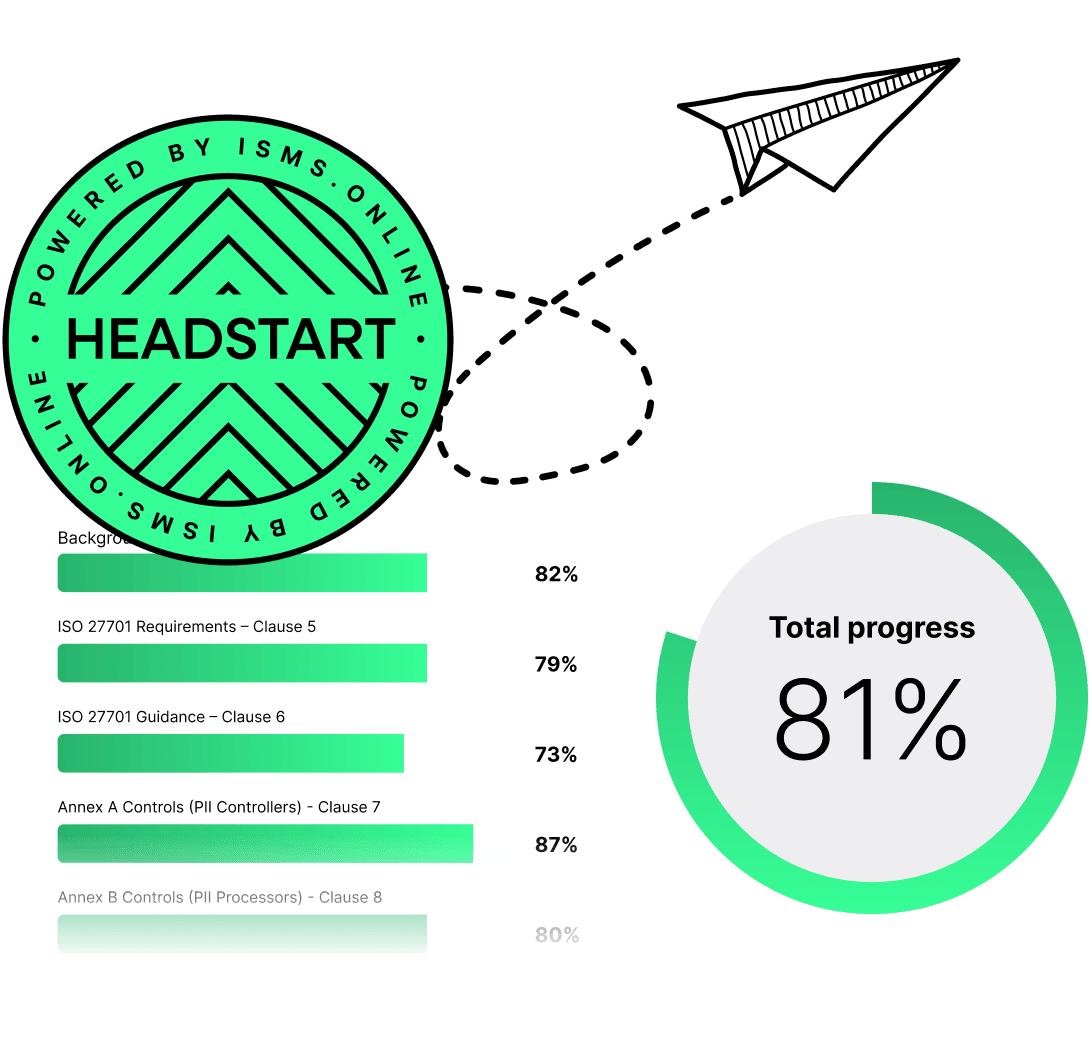
An 81% Headstart from day one
We’ve done the hard work for you, giving you an 81% Headstart from the moment you log on. All you have to do is fill in the blanks.
What should be in scope when you design an ISMS for games, accounts and in‑game assets?
An effective ISMS for gaming includes every system, team and process that could meaningfully affect player accounts, in‑game assets and personal data, not just the obvious servers and databases. If you scope too narrowly, you create blind spots where attackers, fraudsters or careless changes can still cause serious harm even though you believe you are “covered”.
Scoping around real game flows, not just servers
When you define scope for ISO 27001, it helps to start from player journeys, not infrastructure diagrams. You follow a player from discovery and sign‑up, through daily play, social interactions and purchases, to account closure, and note where data is created, stored and changed at each step.
For a typical online or mobile title, you may decide to include:
- Game clients: across platforms, with emphasis on update channels and integrity protections.
- Identity systems: that handle registration, login, session management and account recovery.
- Multi‑factor and social or platform logins: from console networks, mobile platforms or PC launchers.
- Core game backends: including matchmaking, leaderboards, inventories, progression, events and live‑ops tooling.
- Payment flows: covering app stores, payment gateways and wallet providers.
- Communication features: such as chat, voice, clans, friends lists, reporting tools and moderation systems.
- Analytics and telemetry: pipelines, warehousing, dashboards and experimentation platforms.
- Administrative tooling: such as game master consoles, economy editors, ban systems, analytics access, release management and configuration systems.
- Supporting business functions: like customer support, community management, marketing automation and content management where they handle player data.
Each of these surfaces can leak or corrupt data if they are not properly governed. For example, a misconfigured analytics bucket can leak personal data, a rushed economy update can accidentally duplicate items and a compromised admin tool can give attackers near‑total control of accounts. Industry experience with major incidents shows that problems often start in these “supporting” systems rather than in the main game server.
Visual: imagine a player journey diagram from discovery to account closure, showing which systems handle data at each stage and where risk increases.
Using an ISMS platform such as ISMS.online to document this scope can help you keep track of which systems are in and out, where ownership sits and how evidence links back to assets. That reduces the risk that critical systems are left “off the map” during audits or design discussions, and it gives you a shared view that engineers, security teams and leadership can all understand.
Classifying player accounts and in‑game assets as critical information assets
ISO 27001 asks you to identify and classify information assets based on their importance. In gaming, that means recognising that virtual properties can be as sensitive as traditional financial records because they map to real‑world value and reputation.
You might define asset categories such as:
- Player identity and access: usernames, identifiers, identity provider tokens and any personal details required to meet legal or platform obligations.
- Economic state: in‑game currency balances, premium items, skins, unlocks, battle passes and marketplace listings.
- Social graph and communications: friends lists, clan memberships, chat logs, voice snippets and reports.
- Gameplay state: rankings, match histories, statistics, achievements and unlock progress.
- Operational secrets: anti‑cheat rules, detection thresholds, economy tuning scripts and unreleased content.
Once classified, you can assign protection requirements. For example, economic state and identity information may be treated as “critical” and require strong access control, encryption and tight change‑management controls. Gameplay telemetry might be considered “important”, with different retention and privacy obligations that still need clear governance.
A clear classification model helps you focus scarce engineering and security resources where they most reduce player harm and business risk. It also underpins your selection of Annex A controls and your justification for why particular measures are proportionate in your specific environment. When auditors or partners ask why you protect some systems differently from others, you can point back to this structured view of what matters most.
Which ISO 27001:2022 Annex A controls matter most for protecting player data?
The Annex A controls in ISO 27001:2022 are all potentially relevant, but some directly address the risks that matter most for online and mobile games: account takeover, payment fraud, cheating, harassment and data leakage. Prioritising these controls helps you make near‑term improvements while building a more complete programme over time.
Controls that defend accounts, payments and personal data
Many high‑impact incidents in gaming start with weak identity and access management, incomplete secure development practices or limited monitoring. Strengthening a focused subset of Annex A controls can significantly reduce those risks without overwhelming your teams.
In many gaming environments, priority controls will include:
- Access control and identity management: to enforce strong authentication, secure session management, least privilege and careful handling of admin roles and game master powers.
- Cryptography: to encrypt sensitive data at rest and in transit, including credentials, tokens and payment‑related information handled via providers.
- Secure development and change management: so security requirements are built into game and backend design, with code review, security testing, secure configuration and controlled release processes.
- Logging and monitoring: for account activity, trades, purchases, sign‑ins, escalated privileges and admin actions, with tuned alerts for anomalies.
- Incident response: with playbooks for account compromise, payment fraud bursts, item‑duping incidents, economy exploits and large‑scale data breaches.
- Supplier and third‑party security: through due diligence and ongoing oversight of payment providers, cloud platforms, anti‑cheat vendors, login providers and analytics SDKs.
Taken together, these controls form a defensive spine for your player data. A simple example makes this concrete. If you log elevated admin actions and unusual inventory changes in one place, you can spot a compromised game master account that is silently granting high‑value items. Without those logs and alerts, the first sign may be angry players and a destabilised economy, which is much harder to recover from quickly and fairly.
To make these controls effective, policies need to be understandable for engineers and game teams. Overly generic documents that simply repeat standard text often fail at the crucial moment because staff do not see how they apply to everyday work. Clear linkage between risks, controls and practical behaviours makes adoption much more likely.
Controls that stabilise game integrity, anti‑cheat and operations
Beyond basic confidentiality and access control, your ISMS must protect the integrity of the game world and economy. Cheating and exploits are not just fairness issues; they are integrity problems that can erode trust in progression, rankings and rewards and can damage esports ecosystems.
Certain controls are particularly relevant here:
- Operations security: to harden production environments, segregate environments (development, test, staging, production) and manage capacity and resilience so that scaling events do not create security shortcuts.
- System acquisition, development and maintenance: to integrate threat modelling, security testing and risk assessment into game features, anti‑cheat components and economy systems.
- Business continuity and disaster recovery: to restore account and inventory state, roll back fraudulent transactions and recover from infrastructure failures without destabilising economies.
- Physical and environmental security: , where relevant, to protect on‑premises build farms, consoles used for moderation or broadcast and any hardware that holds sensitive data or keys.
The table below offers a compact mapping between common gaming risks and Annex A control families that can address them. It should be treated as a starting point, not a complete prescription.
| Gaming risk | Annex A focus | Practical emphasis |
|---|---|---|
| Account takeover | Access control, secure auth, logging | MFA, rate limiting, login monitoring |
| Payment fraud | Supplier security, operations, logging | Gateway due diligence, anomaly detection |
| Item duplication and exploits | Secure dev, change, monitoring | Code review, economy checks, rollback plans |
| Cheating via client tampering | Secure dev, operations, continuity | Integrity checks, secure updates, isolation |
| Doxxing and data leaks | Cryptography, access control, privacy | Data minimisation, encryption, least privilege |
Visual: picture a simple matrix with gaming risks on one axis and control families on the other, highlighting where attention should focus first.
This mapping is not exhaustive, but it illustrates how ISO 27001 lets you trace a line from a player‑facing harm to specific governance and control decisions. In practice you will extend or adapt it to suit your titles, platforms and risk appetite, ideally with input from experienced security and legal professionals who understand both technology and regulation.

Free yourself from a mountain of spreadsheets
Embed, expand and scale your compliance, without the mess. IO gives you the resilience and confidence to grow securely.
How do you turn ISO 27001 into concrete protection for accounts and in‑game assets?
Turning ISO 27001 into real protection means designing processes, systems and responsibilities that actively resist account takeover, fraud and exploits in the way you build and operate your games. It is less about writing policies and more about changing how teams authenticate, code, test, monitor and respond when something goes wrong.
Designing identity and access management for players and internal staff
A large proportion of gaming incidents involve weakness in identity and access management (IAM), either for players or for staff with elevated powers. ISO 27001 gives you a framework for deciding how strong those controls should be and how you will keep them effective over time.
For players, secure IAM usually includes:
- Strong credential handling with secure password storage and sensible password policies.
- Clear encouragement and support for multi‑factor authentication where the platform allows it.
- Protection against automated attacks through rate limiting, captchas where appropriate and behaviour‑based throttling for login and sensitive actions.
- Secure session management with careful handling of tokens, clear session expiry rules and protections against session fixation or replay.
- Safe integrations that use platform identities from console networks, mobile platforms or PC launchers with consistent revocation and termination behaviours.
For staff, particularly game masters, developers and operations engineers, IAM becomes even more critical. Privileged roles should use strictly enforced multi‑factor authentication, restricted networks or devices and separation of duties so that no single account can both design and deploy critical changes to economies or matchmaking rules.
In ISO 27001 terms, this often means:
- Documented access control policies that distinguish clearly between player access, standard staff access and privileged or emergency access.
- Defined joiner‑mover‑leaver processes so access rights change promptly with roles and departures.
- Clear approval and review workflows for any assignment of elevated permissions or access to sensitive back‑end tools.
A realistic pattern might be that a game master account can apply bans and restore items, but cannot change economy scripts. A separate operations account can deploy code but cannot grant rewards. When those rules are clear and consistently enforced, players see fair and consistent handling of incidents, and regulators see that privileges are constrained and monitored rather than left to informal arrangements.
Building logging, monitoring and incident response for game‑specific incidents
Strong logging and monitoring are central to detecting and resolving incidents that harm players, from mass account takeovers to invisible economy corruption. ISO 27001 encourages you to define what you log, how long you keep it, who can see it and how you use it when things go wrong.
In a gaming environment, effective monitoring might include:
- Authentication events such as successful and failed logins, password changes, multi‑factor enrolments and suspicious patterns by IP, device or geography.
- Economic events such as purchases, trades, gifts, refunds, inventory changes and unusual concentrations of valuable items or currency.
- Gameplay anomalies such as impossible match statistics, extreme win/loss streaks, suspicious kill/death ratios or consistently abnormal latencies or packet patterns.
- Admin and tooling actions such as ban decisions, economy adjustments, item grants, test flags and configuration changes.
These logs feed into detection rules and dashboards that support practical decisions. They allow you to define clear incident types, such as “co‑ordinated account takeover”, “economy exploit” or “payment fraud cluster”, and to give game operations, support and security teams concrete playbooks for each. For example, when login failure spikes for a region and a set of related IP ranges, you can automatically throttle attempts and alert support teams before players flood social channels with complaints.
Incident response for gaming needs to cover more than traditional breach notification. It often includes:
- Rapidly securing affected accounts while minimising disruption for unaffected players.
- Carefully rolling back fraudulent trades or item grants without accidentally punishing victims.
- Communicating clearly and calmly with players about what happened, what you have done and what they can do next.
ISO 27001 expects you to test these procedures, review incidents after the fact and use those lessons to refine your controls and development practices. Over time, that cycle reduces the frequency and impact of incidents and builds a culture where people expect problems to be handled transparently and thoughtfully. Using an ISMS platform to link incidents, root‑cause analysis, remedial actions and policy updates makes this learning visible and auditable.
How do you connect ISO 27001 with privacy laws and ISO 27701 for player data?
Security and privacy are tightly linked in gaming: many of the same systems that keep accounts safe also determine how fairly and lawfully you handle personal data. ISO 27001 provides the security governance backbone, while privacy laws and standards like ISO 27701 extend it into data protection obligations.
Aligning your ISMS with GDPR, COPPA and other rules
Most gaming platforms operate across borders, which means your player base spans multiple regulatory regimes. Rather than treating each law as a separate project, it is often more effective to build a single governance layer and tune it for regional requirements, so you are not constantly reinventing your approach.
Key activities typically include:
- Understanding what personal data you collect, for which purposes and on what legal bases in each territory where you operate.
- Defining retention rules for different categories of data, such as login credentials, telemetry, chat logs, payment records and moderation histories.
- Ensuring that your technical controls support privacy principles such as data minimisation, purpose limitation and access restriction.
- Implementing processes for data subject rights such as access requests, deletion, objection and restriction, with special handling for children where required.
An ISMS helps by giving you a risk management and control selection framework that already expects you to document data flows, access rules and business processes. You can then layer privacy‑specific risk assessments and decisions on top, instead of trying to retrofit security thinking onto a separate privacy structure.
For example, a risk assessment focused on chat logs may surface threats like harassment, doxxing, unwanted data sharing and regulatory exposure. Controls might then include stronger access control on moderation tools, clearer consent and community guidelines, and defined retention and deletion schedules so that you do not hold sensitive logs longer than necessary.
Clear governance makes privacy choices feel deliberate rather than reactive.
Using ISO 27701 to extend security into privacy governance
ISO 27701 builds on ISO 27001 to provide a privacy information management system (PIMS). It adds privacy‑specific roles, processes and controls, and can be particularly useful when you want to demonstrate mature handling of personal data beyond pure security.
For gaming organisations, ISO 27701 can help you to:
- Clarify accountability between security, legal, product, marketing and community teams for different aspects of personal data.
- Formalise how you assess the privacy impact of new features such as cross‑game identity linking, new analytics pipelines or user‑generated content systems.
- Integrate children’s data protection considerations into your mainstream governance, rather than leaving them as one‑off legal reviews.
- Provide structured documentation and evidence when regulators or partners ask how you protect and govern player data.
If you already have an ISO 27001‑aligned ISMS, extending it with ISO 27701 is often less work than building a new privacy framework from scratch. You can reuse many of the same governance activities-management reviews, internal audits and risk assessments-and focus on tightening how you handle consent, transparency, data subject rights and cross‑border transfers.
A platform such as ISMS.online can help by giving you a single environment to manage both security and privacy work, map controls between standards and track evidence. For fast‑moving game studios, that unified approach keeps governance effort proportionate while still satisfying regulators, partners and players who expect serious, joined‑up data protection.

Manage all your compliance, all in one place
ISMS.online supports over 100 standards and regulations, giving you a single platform for all your compliance needs.
What is a realistic ISO 27001 roadmap for a cloud‑first gaming studio or platform?
A realistic roadmap for ISO 27001 in gaming starts small, focuses on the highest player harms and builds maturity over time rather than attempting a perfect, all‑framework transformation in one pass. Cloud‑first studios can lean heavily on the security capabilities of their providers while still taking clear ownership of risks and controls that only they can manage.
Phase 1: Baseline and risk assessment focused on player harm
Phase 1 is about understanding where you stand today and which risks to players and the business most deserve attention. You do not need to rewrite everything; you need a current, honest picture and a way to prioritise limited effort.
A practical sequence often looks like this and should be adapted to your context:
- Define a sensible, bounded scope, for example your flagship title and its supporting services, or your core account system and payment flows.
- Compile an asset inventory focused on player identities, in‑game assets, payment data, social data and sensitive operational secrets.
- Conduct a structured risk assessment: identify threats such as account takeover campaigns, economy exploits, chat abuse, infrastructure compromise, insider misuse of tools and misconfigured cloud services.
- Map existing controls to these risks, noting what you already do for authentication, secure coding, monitoring, incident response, supplier management and staff training.
- Identify gaps and quick wins: places where simple changes, such as enforcing multi‑factor authentication for admins or tightening storage permissions, deliver significant risk reduction.
During this phase you also start assembling basic governance documents: security policy, risk management procedure, access control policy and incident response procedure. The point is not to have perfect wording, but to make real practices visible and repeatable so you can improve them consistently and explain them to auditors and partners.
Many teams use an ISMS platform such as ISMS.online at this stage to model risks, controls and evidence in one workspace rather than across ad‑hoc documents. That can reduce the overhead of documentation while helping you see where you have implicit controls but no consistent record, which is a common weakness in growing studios.
Phase 2 and beyond: Embedding security into live operations and development
Phase 2 focuses on embedding security into how you ship and operate games every day, turning your baseline into everyday behaviour. The details will vary between organisations, but some themes are common and can be phased in.
Typical efforts include:
- Integrating secure development practices into your pipelines: threat modelling at feature design, standard secure coding patterns, mandatory code review, automated testing and security checks for high‑risk changes.
- Formalising change management for production systems: clear approval flows, testing requirements, rollback plans and communication expectations for changes that affect progression, economy or identity systems.
- Building out monitoring, detection and response: defining playbooks for key incident types, setting thresholds and alerts, and practising your responses with simulations.
- Enhancing training and awareness: tailored training for engineers, designers, community managers and support staff that uses real game examples, not generic corporate scenarios.
- Extending scope to cover more titles, regions and frameworks as you grow, always tying new work back to clear risks and controls rather than compliance checklists alone.
Visual: imagine a three‑phase timeline showing baseline, embedding and expansion across titles and standards, with each phase adding depth rather than restarting from zero.
Over time, ISO 27001 becomes less about preparing for the next audit and more about how your teams think. Decisions about new monetisation features or social tools naturally include questions about security and privacy impact because your processes and culture encourage that. When you review incidents and proposed changes through the same risk lens, improvements compound instead of remaining isolated fixes.
At this stage, a structured ISMS platform reduces friction. It lets you link each new control or change back to risks, evidence and standards, and reuse that work when you extend into ISO 27701 or other sector‑specific requirements. For fast‑iterating gaming businesses, that reuse often determines whether governance is sustainable or brittle.
Book a Demo With ISMS.online Today
ISMS.online helps you reduce the risk of account takeovers, economy exploits and regulatory pressure by turning ISO 27001 into a clear, practical system that fits how your games and teams actually work. It gives you one environment where risks, controls, policies, audits and improvements work together instead of being scattered across unconnected files and tools.
Why ISMS.online fits gaming and esports teams
Gaming and esports organisations face a distinctive mix of security, privacy and integrity challenges: account takeovers running alongside payment fraud, in‑game economies sitting next to personal data and global player bases that include children and competitive professionals. You need structure without losing the agility that makes your games successful, and you need proof that your approach stands up to scrutiny.
A platform such as ISMS.online is well suited to that balance because it:
- Lets you model your ISMS around real player journeys, economies and operations rather than forcing you into a generic corporate template.
- Supports multiple standards and frameworks, so you can align ISO 27001 work with privacy expectations and, where relevant, extend into ISO 27701 or other requirements.
- Provides linked workspaces where risks, controls, policies, audits, incidents and improvement actions stay connected and traceable.
- Helps you show management, partners and auditors how your controls address the specific risks of gaming environments.
By putting governance, documentation and improvement cycles in one place, you free your teams to focus on building and running secure, enjoyable games while still having the structure and evidence that ISO 27001 expects. That combination of clarity and practicality is often what separates studios that pass a single audit from those that build lasting trust with players and partners.
What you can expect from a first conversation
A first conversation about ISMS.online is an opportunity to map your current reality against where you want to be with player data protection and certification. You can explore, for example:
- Which titles, services and markets you want in scope first, and how to phase additional coverage.
- How your existing security and privacy practices translate into ISO 27001 language and where the real gaps lie.
- How to use the platform to track risks, controls, audits and incidents without overburdening engineers or game operations teams.
- What a realistic timeline might look like for your organisation to design, implement and certify an ISMS that genuinely protects players.
If you are ready to reduce the risk of account takeovers, fraud, cheating and data leaks while building trust with players, partners and regulators, exploring ISMS.online as your ISO 27001 platform can be a practical next step. A demo gives you a concrete view of how your current approach maps to a structured ISMS, so you can decide with confidence how you want to move forwards and which improvements will matter most for your games and your community.
Book a demoFrequently Asked Questions
How should a game studio define “player data” when aligning with ISO 27001?
Player data for ISO 27001 purposes covers anything that identifies a player, changes their in‑game position or value, or exposes system behaviours an attacker could exploit. You treat each type as a defined information asset with an owner, a classification and specific controls, not just as undifferentiated “game data.”
How can you turn messy game data into clear, ISO‑ready asset groups?
Start by grouping what you already store into categories your teams actually use day to day:
- Identity and access data: – usernames, platform IDs, email addresses, age markers, hashed passwords, authentication tokens, linked launcher or console accounts.
- Economic state: – balances of soft and premium currencies, items and cosmetics, passes, marketplace listings, entitlement flags and gifting history.
- Gameplay and progression: – match histories, rankings/MMR, achievements, unlocks, restrictions, penalties and session telemetry that still links back to a person.
- Social, safety and community data: – friends lists, parties, clans/guilds, chat logs, voice clips, player reports, moderation notes and sanction history.
- Operational secrets: – anti‑cheat heuristics, detection thresholds, server‑side configuration, tuning scripts, admin tools and unreleased content or events.
Once you have these buckets, ISO 27001 pushes you to ask a simple question for each: what happens if confidentiality, integrity or availability is lost? Credentials, payment‑linked identifiers and high‑value inventories usually fall into your strictest class; anonymised or aggregated telemetry usually sits lower. That classification then informs:
- Which roles and services can access each category.
- Where you require encryption in transit and at rest.
- How you approach backup, restore and deletion.
- What logging you need to reconstruct incidents.
Documenting this structure inside an information security management system (ISMS) or wider Annex L integrated management system (IMS) turns a brittle spreadsheet into a living asset register. It anchors risk assessment, supplier reviews and incident handling, and it makes it much easier to show auditors and platform partners exactly what you protect and how.
If you want that register to stay accurate as you ship new seasons, events and titles, a platform such as ISMS.online helps you keep identities, inventories and operational secrets tied to named owners, classifications and controls instead of disappearing into ad‑hoc data dumps.
How does ISO 27001 help reduce account takeovers, fraud and in‑game exploits in practice?
ISO 27001 reduces these problems by forcing you to manage them as specific, owned risks with defined controls and evidence, rather than as emergencies tackled from scratch every time. You move from reacting to incidents to deliberately designing and improving the flows attackers target most.
Which ISO 27001 practices move the needle fastest on common gaming threats?
For account takeovers and payment abuse, three clusters usually deliver early wins:
- Identity and access management: – robust handling of passwords and tokens, sensible lockout and rate‑limit thresholds, multi‑factor authentication where it makes sense, and least‑privilege access for support and admin tools.
- Secure development and controlled change: – peer review, testing and approval for login flows, payment APIs, entitlement logic and session management, so simple mistakes are caught before they hit production and are easier to trace when they do.
- Logging and detection: – consolidated logs across logins, devices, trades, chargebacks and refunds, with clear rules or models to highlight suspicious patterns before they turn into large‑scale abuse.
For cheating, botting and economy exploits, ISO 27001 does not replace your anti‑cheat stack, but it determines how you govern it:
- Who can change detection rules and thresholds.
- How you test new signatures or heuristics before rollout.
- How you secure telemetry and signatures themselves.
- How you feed incident learnings back into design and process.
That governance helps cut preventable vulnerabilities and insider misuse that purely technical tools can miss. It also makes it easier to answer hard questions from platforms or partners after a high‑profile incident.
If today your controls are scattered across teams, scripts and SaaS dashboards, an ISMS such as ISMS.online lets you link concrete risks – “credential‑stuffing against legacy login,” “currency duplication via trade bug” – to Annex A controls, named owners and specific evidence. Weak spots become visible, improvement work becomes trackable, and you build a structured path from your current reality to a certifiable state without gambling on a full backend rewrite.
Which ISO 27001:2022 Annex A control families should a game studio prioritise first?
You are not expected to implement every Annex A control on day one. Game teams usually get the fastest and most visible benefits by focusing first on control families that align with the real ways players get hurt and titles fail in the wild.
Where should your first ISO 27001 implementation sprints go?
For live service, mobile or cross‑platform games, the following areas typically deliver early impact:
- Access control and identity management (A.5, A.8): – clear joiner‑mover‑leaver processes, role‑based access to accounts, inventories, matchmaking and economy scripts, and tight control over admin tooling.
- Cryptography (A.8.24 and related controls): – encryption for credentials, tokens and personal data in transit and at rest, including logs, crash dumps and analytics pipelines that quietly hold identifiers or secrets.
- Secure development and change management (A.8.25–A.8.29, A.8.32): – structured review and testing for authentication, matchmaking, loot tables, anti‑cheat rules and admin consoles before they reach production.
- Logging, monitoring and incident handling (A.8.15–A.8.16, A.5.24–A.5.28): – enough detail and retention to reconstruct what happened when accounts move, items change hands or admins intervene, plus agreed playbooks for triage and response.
- Operations security and environment segregation (A.7, A.8.31): – clean separation between development, test, analytics and production, so side systems do not become the easiest bridge into live data.
- Supplier and cloud security (A.5.19–A.5.23): – risk assessment, contracts and ongoing checks for payment processors, platform logins, analytics SDKs, anti‑cheat vendors and cloud hosts.
A practical way to prioritise is to write down three or four plausible “worst weeks” for your studio – for example, a credential‑stuffing wave against multiple titles, an item duplication method spreading through social channels or a leak of anti‑cheat signatures. Then mark which Annex A families would meaningfully reduce likelihood or impact. That shortlist becomes your first implementation roadmap.
With an ISMS platform like ISMS.online you can then:
- Record which of those controls already exist and how strong they are.
- Capture specific improvement actions with owners and due dates.
- Show leadership and partners a clear line from risk to control to evidence.
How can you scope your ISMS around real player journeys rather than just servers and diagrams?
If you draw your ISMS boundary purely around environments, VPCs and system diagrams, you often miss the exact points where players create, change or expose sensitive data. Scoping around player journeys anchors your security work in moments players notice and scenarios auditors, platforms and publishers actually ask about.
What does a journey‑centred ISMS scope look like for a typical game?
A useful approach is to walk a player’s lifecycle step by step and attach systems, tools and vendors at each stage:
- Discovery and acquisition – marketing sites, platform listings, app stores and landing pages that collect identifiers or behavioural data, plus download and update channels.
- Account creation and login – registration flows, age checks, identity proofing, social or platform sign‑ins, multi‑factor options and device registration or linking.
- Core play – matchmaking, lobbies, progression systems, inventories, leaderboards, cross‑play, text and voice chat, parties, clubs, clans and guilds.
- Spending and rewards – storefronts, pricing, discounts, entitlements, refunds, bonus drops, battle passes, marketplace trades and third‑party monetisation integrations.
- Support, safety and enforcement – ticketing systems, in‑game reporting, trust and safety tooling, moderation consoles, sanctions and appeals.
- Leaving and lifecycle end – account closure, retention periods, archival, anonymisation and deletion paths.
For each stage you list:
- The services, SDKs and admin tools in play.
- The teams that operate them.
- The data created or changed.
- The suppliers involved.
Those elements become in‑scope assets, processes and third parties for your ISMS. Risks, controls and evidence can then be described in concrete terms – “ranked matchmaking MMR updates,” “store refunds,” “chat and friends moderation” – rather than in abstract system labels only architects recognise.
Managing this structure in ISMS.online lets you keep scope, assets, linked work and audit artefacts together, assign ownership and show how one control supports multiple journey stages. It reduces the risk that a forgotten analytics feed, admin panel or integration sits outside your security posture and turns into the path attackers, griefers or regulators discover first.
How can ISO 27001 protect in‑game economies and virtual items on a day‑to‑day basis?
Virtual currencies, items, passes and cosmetics feel like real assets to players, even when there is no official cash trading. Aligning your economy and LiveOps work with ISO 27001 means treating these as high‑value systems with tight control over who can influence them, how you monitor changes and how you repair harm when issues occur.
Which control patterns work best for economies and virtual items?
Effective protection for in‑game economies usually combines role design, disciplined processes and technical safeguards that align with Annex A:
- Ownership and separation of duties: – economy designers, server engineers, LiveOps, analytics and support have distinct roles with least‑privilege access to tools and configuration. No single person can both design, deploy and grant high‑value items unchecked.
- Governed changes to scripts and configuration: – drop rates, pricing, reward tables, tuning scripts and marketplace rules are raised as tracked changes, peer‑reviewed, tested in safe environments and formally approved before deployment.
- End‑to‑end logging of economic events: – grants, purchases, trades, refunds, rollbacks, admin actions and promotional drops are logged with enough context to support investigations, dispute resolution and rollback decisions.
- Anomaly detection tuned to your game: – rules or models highlight impossible gains, dense trade clusters between a few accounts, sudden spikes in rare items or unusual pricing patterns across regions or platforms.
- Rehearsed recovery and communication playbooks: – clear steps for isolating exploits, freezing affected features, reversing fraudulent gains where possible, compensating legitimate players and stabilising the economy so trust recovers quickly.
These patterns draw directly on Annex A domains such as access control, secure development, operations, logging and incident management. The key is to phrase them in the language your economy and LiveOps teams already use – “who can run this console,” “who can edit this script,” “what we log when a legendary drops,” “how we unwind bad grants” – and to keep them visible in your ISMS instead of scattered across chats and wikis.
When you capture economy‑related risks, controls, incidents and post‑mortems in one place – for example, inside ISMS.online – each serious exploit becomes a driver for measured improvement rather than just another late‑night fire drill that quietly repeats a few seasons later.
How do ISO 27001 and ISO 27701 work together to meet global player privacy expectations?
Players increasingly expect you to keep their data secure, use it fairly, be transparent and respect regional rules. ISO 27001 gives you the security backbone; ISO 27701 and privacy regulations add structure around collection, use, retention and rights for personal information across territories.
What changes when your security governance expands to cover privacy as well?
The same loop of assets, risks, controls and evidence remains, but your questions and artefacts broaden:
- Map personal data flows end to end: – identify what you collect (identifiers, telemetry, chat, voice, behavioural data), why you collect it, how long you keep it, where it moves between regions, clouds and partners, and who is controller or processor at each step.
- Bake in privacy principles early: – data minimisation, purpose limitation, transparency and retention limits become part of design decisions for telemetry pipelines, matchmaking, social features, targeted offers and anti‑cheat – not just line items in a policy.
- Design for player rights from the start: – access, correction, deletion and objection requests need clear, documented routes through support tooling and internal systems, with roles and KPIs so teams can respond within local timelines.
- Address minors and vulnerable users explicitly: – if you attract children or run youth esports, you implement and document age‑appropriate safeguards, parental controls, consent management and reporting channels that line up with local expectations.
ISO 27701 extends ISO 27001 with additional roles, requirements and documentation for privacy, including:
- Responsibilities for controllers and processors.
- Records of processing activities.
- Contract and notice expectations.
- Additional control guidance for personal data handling.
For a cloud‑first studio shipping globally, building ISO 27001 and ISO 27701 into a single Annex L integrated management system is a practical way to show regulators, platform partners and publishers that security and privacy share one coherent governance structure rather than competing checklists.
If you already run ISO 27001 work inside ISMS.online, extending into ISO 27701 usually means:
- Adding privacy‑specific risks, controls and records of processing to the same structure.
- Linking them to the same assets and player journeys.
- Reusing the same audit programme and management review cadence.
That integrated view makes it easier to see how decisions such as extending chat retention, adding cross‑platform identity linking or expanding telemetry affect both security and privacy obligations. It also simplifies conversations with platform security teams and regulators, because you can pull consistent, cross‑referenced evidence from one environment instead of juggling separate spreadsheets and point tools. Where questions touch on specific laws or high‑risk processing, you can then bring in specialist legal advice on top of a well‑governed foundation.






