














What Should a Supplier Risk Management Platform Actually Do?
A supplier risk management platform should help you answer three questions—fast:
- Who are our suppliers and what do they touch?
- What risks do they introduce — and how are we controlling them?
- Can we prove it (to auditors, customers, and leadership) without “email archaeology”?
In practice, that means a single place to: maintain a supplier register, standardise due diligence, track issues and actions, schedule reviews and renewals, and connect everything into a defensible evidence chain (risk → decision → action → outcome).
A common failure mode is treating supplier risk as a once-a-year questionnaire. The better model is a living workflow: onboarding gates + contract checks + periodic reviews + tracked actions + clear ownership.
A Simple Supplier Risk Lifecycle and Where It Lives in the Platform
| Stage | What you need to do | How you can run it in ISMS.online |
|---|---|---|
| Build your supplier register | Keep supplier records consistent and searchable | Use Accounts to store supplier details as a structured record. |
| Capture obligations | Track contracts, renewals, and key commitments | Use Contracts to hold contract info and set up prompts for contractual reviews and renewals. |
| Assess + track supplier risk | Record findings, decisions, outcomes | Use Tracks and Track Items with configurable statuses/outcomes/categories and due dates. |
| Assign actions | Turn findings into work, with owners and deadlines | Use To-dos to assign tasks (individual/team), set due dates, and trigger email notifications; switch to calendar view when managing lots of deadlines. |
| Keep it connected | Avoid “orphan” risks, actions, and evidence | Use Linked Work to connect supplier-related items to the rest of the system (projects, risks, contracts, contacts, track items). |
| Prove it quickly | Show relationships and status at a glance | Use ISMS Overview to see linked relationships in a table view (e.g., controls/risks/assets linked, owners, latest notes). |
Where Should Supplier Records Live?
Most supplier programmes break down at the starting line: the “supplier list” lives in multiple places, gets outdated quickly, and doesn’t reflect who owns the relationship or what the supplier actually supports.
A platform approach helps you centralise supplier records and keep them useful — not just stored.
In ISMS.online, you can use Accounts as the structured place to keep supplier details, alongside the notes, documents, tasks and discussions that accumulate over the lifecycle of the relationship. That matters because supplier risk management is rarely a single document; it’s a trail of decisions and follow-through.
You can also categorise Accounts to make it easier to group suppliers (for example: “critical”, “personal data”, “IT hosting”, “professional services”) and filter reporting around those categories.
Benefits: instead of “find the latest version” and “who owns this?”, you get supplier records that stay current, owned, and searchable — which reduces prep time every time someone asks “who are your key suppliers and how do you manage them?”.
ISO 27001 made easy
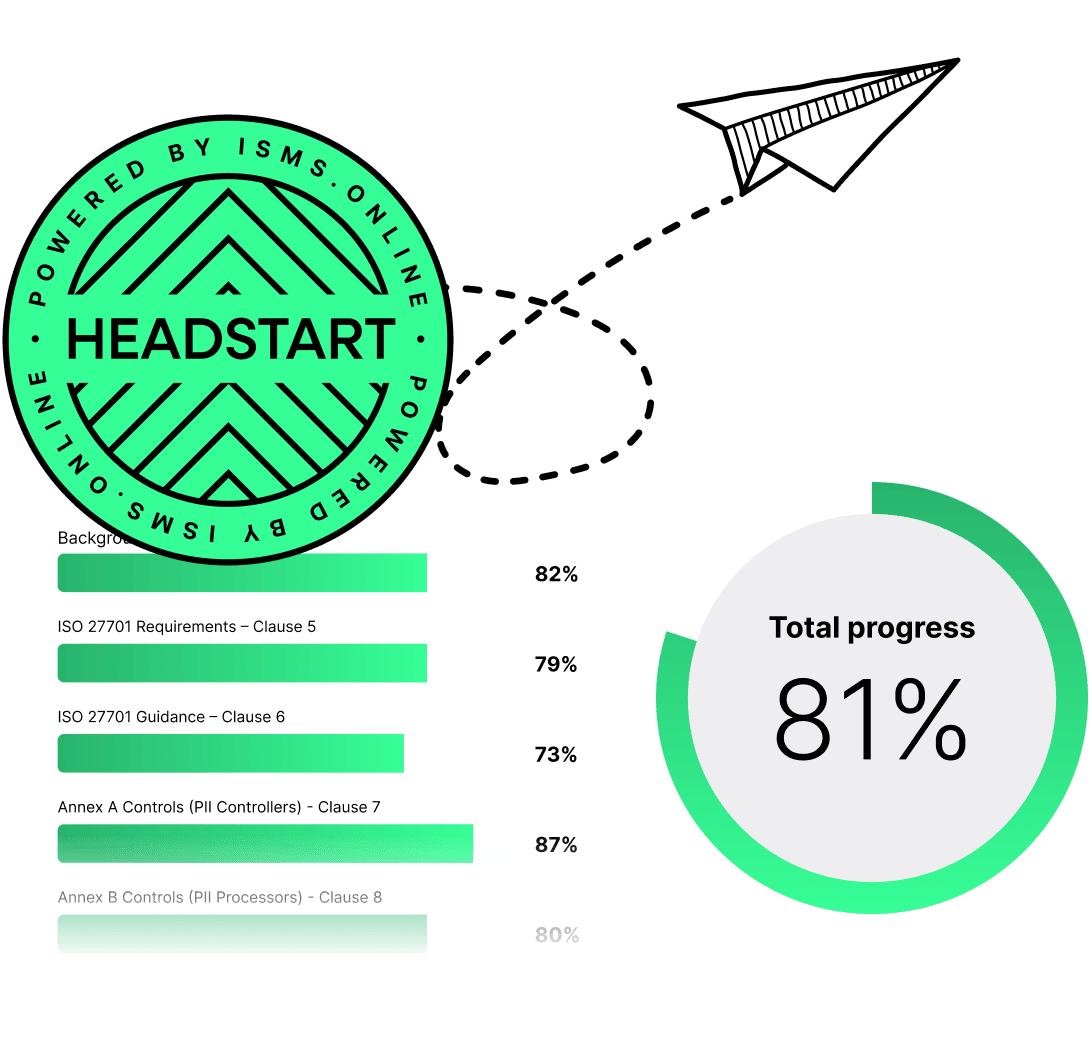
An 81% Headstart from day one
We’ve done the hard work for you, giving you an 81% Headstart from the moment you log on. All you have to do is fill in the blanks.
How Do You Make Onboarding and Due Diligence Consistent?
Supplier onboarding should feel like a repeatable workflow, not a bespoke project that changes depending on who’s doing it.
A strong platform approach helps you:
- capture what you asked (and what they answered),
- make the decision process visible,
- and ensure that actions (security requirements, evidence requests, remediation tasks) don’t fall through gaps.
ISMS.online supports building that repeatability using Contracts and connected work. You can add contract records and set prompts that support contractual reviews, renewals, and supplier questionnaires — helping you bring “supplier due diligence” and “supplier contract oversight” into the same motion.
When onboarding creates follow-up work (e.g., “update DPIA”, “confirm sub-processor list”, “review security addendum”), you can assign tasks via To-dos to an individual or team, set due dates and notes, and automatically notify the assignees by email.
Benefits: you move from “we think we did the checks” to “here’s the trail, who owned it, and what happened next.”
Why Link Supplier Risk to Assets, Controls, and Risk Treatment?
Supplier risk becomes manageable when it’s connected to what it actually affects: the assets they touch, the controls you rely on, and the treatments you’ve chosen.
In ISMS.online, the Information Asset Inventory is designed to make that mapping practical. It includes categories that can directly support supplier oversight — for example:
- Type includes “Supply Chain” (and other asset types)
- Legal Owner includes “Supplier” (alongside company/employee/customer)
- and you can filter and customise these categories as needed
Crucially, the platform supports linking asset records into other areas — including ISMS controls, supply chain, and the risk treatment plan — so supplier risk doesn’t sit in a separate universe from the ISMS you’re operating day to day.
Benefits: when someone asks “why is this supplier high risk?” you can answer with context: what they support, which assets are involved, what controls apply, and what mitigations/actions exist — all connected.
How Do You Keep Supplier Reviews From Slipping?
Supplier risk isn’t static. Services change. Data access expands. A supplier gets acquired. Your risk posture shifts. The platform you choose should make it easy to keep supplier oversight current — without a mountain of manual chasing.
ISMS.online supports this “keep it alive” motion in a few practical ways:
- To-dos as your operational heartbeat: Create tasks, assign them, add due dates, and track everything centrally. Overdue work is highlighted, and you can filter your To-do list across tasks, activities, and track items assigned to you.
- Calendar view for review cycles: Switch to weekly/monthly calendar view and drag-and-drop To-dos to change due dates when priorities shift.
- Notification management that respects humans: Users can choose to receive a daily or weekly notification digest of platform activity relevant to them, reducing inbox noise while still keeping oversight tight.
Benefits: supplier reviews become an owned cadence, not a last-minute scramble.

Free yourself from a mountain of spreadsheets
Embed, expand and scale your compliance, without the mess. IO gives you the resilience and confidence to grow securely.
Where Do Actions, Exceptions, and Decisions Get Managed?
Supplier risk management creates ongoing work: remediation actions, exception handling, security incidents, follow-up evidence requests, and internal sign-offs.
A platform should let you manage that work with the same discipline as any other operational queue — statuses, owners, due dates, outcomes, and reporting.
ISMS.online uses Tracks for this kind of workflow. Tracks support:
- statuses (with “To-do” and “Resolved” as anchors)
- outcomes
- categories for filtering/reporting
- optional due dates (with visual triggers if overdue)
- lifecycle options like archiving when appropriate
Tracks also provide Stats views for visibility — including creations/resolutions per day, average resolution time, overdue analysis, and category spread, with the ability to drill into the underlying items and export stats.
Benefits: you can demonstrate that supplier risk isn’t just “documented” — it’s actively managed, measured, and improving.
How Do You Make Supplier Evidence Audit-Ready?
When auditors (or customers) ask about supplier risk, they usually want proof across multiple layers:
- the supplier record,
- the contract and key obligations,
- the risk assessment and treatment actions,
- and evidence of reviews and follow-through.
This is where platform structure matters.
ISMS.online supports Linked Work so you can connect supplier-related work across the system (projects, track items, risks, contracts, contacts). You can link to existing work or create new work areas and automatically link them, keeping context intact.
For visibility, ISMS Overview provides a table view of links across your ISMS (including fields like owners, what’s linked, and latest notes), helping you move from “we have it somewhere” to “here’s the connected story.”
And when evidence is document-based, it’s important not to lose version history. The platform supports document version handling such as check out/check in and showing previous versions.
Benefits: supplier risk evidence becomes traceable and defensible — without rebuilding the narrative every time.
How Does This Fit With the Tools Your Teams Already Use?
Supplier risk management doesn’t happen in a vacuum. Security, procurement, legal, IT, and operations all touch it — and work often starts in other systems (tickets, chats, service management).
ISMS.online offers native Track integrations with Jira, Slack, and ServiceNow to help simplify workflows by connecting platform work areas with the tools teams already use.
Even without changing how teams communicate day to day, you can keep supplier risk work “auditable by design” by anchoring outcomes in Tracks, assigning actions in To-dos, and connecting the dots with Linked Work.
Benefits: less duplication, fewer dropped actions, and a clearer view of supplier risk across the business.
FAQs
What is a supplier risk management platform?
A system for managing supplier onboarding, risk assessment, actions, reviews, and evidence — in one consistent workflow.
Do I need a platform if I already have questionnaires?
Questionnaires help, but platforms help you track decisions, actions, and ongoing oversight — not just collect answers.
How do you keep supplier reviews from being forgotten?
Use tasks with owners, due dates, and reminders — and make reviews part of a repeatable cadence.
Can I connect supplier work to risks and controls?
Yes — Linked Work and ISMS Overview are designed to show connections across work areas.
How do you handle evidence versioning?
Documents can be checked out/in and previous versions can be shown, helping you preserve audit trails for changes.