















What Problem Does Vendor Risk Management Software Solve?
Vendor risk isn’t just “do we trust them?” It’s a moving set of relationships, obligations, and proof: who owns the vendor, where the contract sits, what the current status is, what evidence backs your decision, and when you’re due to review again.
Most teams don’t fail because they don’t care — they fail because the process is split across tools. Procurement has the contract, security has the questionnaire, legal has the DPA, and the “audit trail” is a trail of email threads. The result is predictable: late reviews, duplicated work, and no single place to answer simple questions like “Are we comfortable renewing?”
Vendor risk management software works when it makes the “normal way of working” also the “auditable way of working”.
What Should You Look for When You’re Comparing VRM Tools?
When buyers compare VRM tools, they often get stuck on features. The better filter is: will this help us run vendor oversight reliably, with evidence, across teams? The essentials usually come down to:
- One home per vendor (contacts, contracts, docs, discussions).
- Review/renewal discipline (prompts, reminders, visibility).
- Action tracking (tasks and KPIs so nothing stalls).
- Governance (approvals, comments, timestamps).
- Outputs (exports/reporting for audits and stakeholders).
Here’s a practical “fit check”:
| What you need from VRM software | How ISMS.online supports it |
|---|---|
| Central record per vendor | Accounts include Documents, Discussions, Tools and KPIs plus vendor-specific Contacts and Contracts. |
| Shared context and continuity | Notes on contacts can log interactions, pick interaction types, and notify team members. |
| Contract lifecycle control | Contracts capture details in a standard way and can prompt reviews or renewal planning. |
| Due diligence evidence in the same place | Upload supporting documents such as supplier questionnaires to the contract record. |
| Follow-through and performance tracking | Manage contract performance with KPIs and tasks, with progress updates via notes. |
| Decision traceability | Submit activities for approval; approvers can approve/decline with comments and timestamps. |
| Audit-friendly reporting | Export Activities/Tasks as CSV and choose which fields are included. |
ISO 27001 made easy
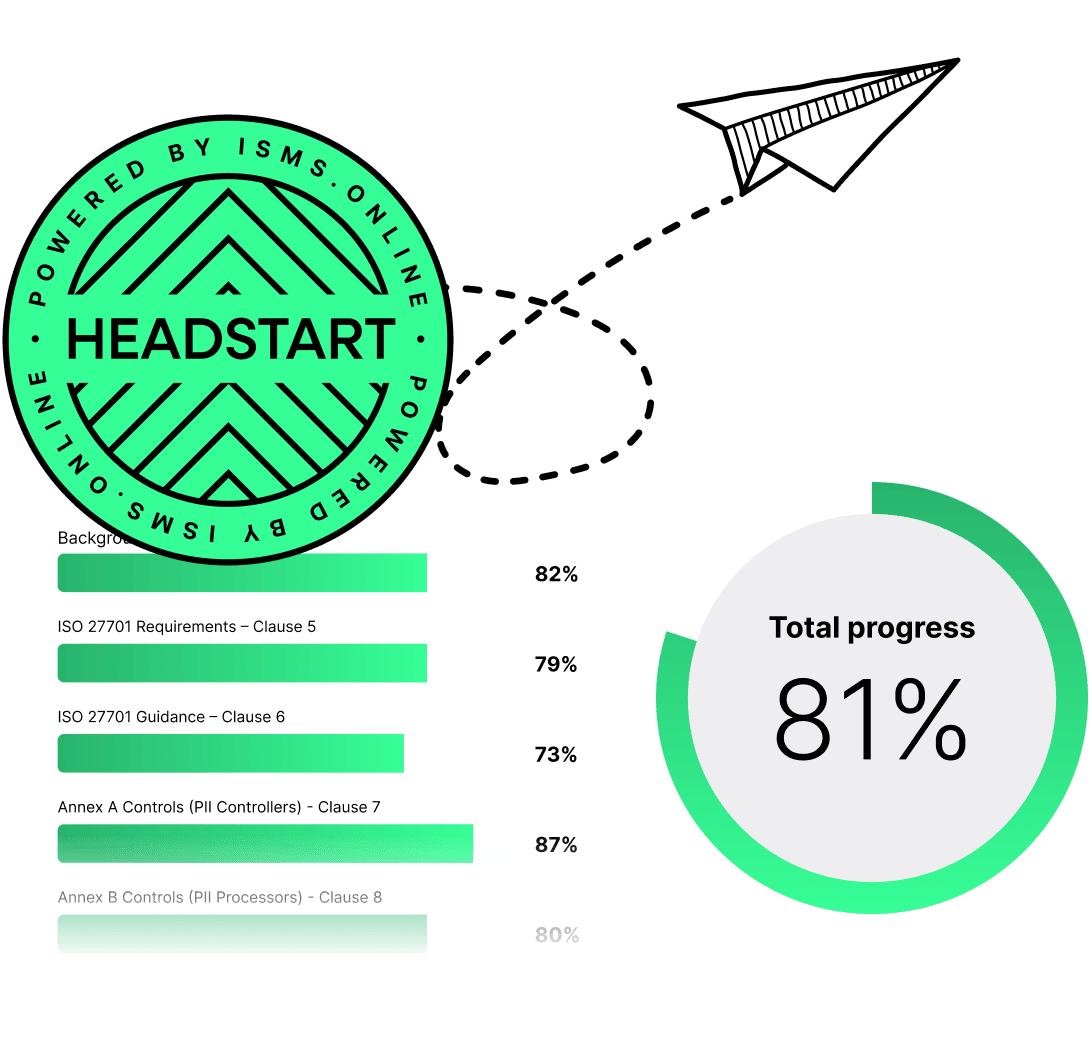
An 81% Headstart from day one
We’ve done the hard work for you, giving you an 81% Headstart from the moment you log on. All you have to do is fill in the blanks.
Where Do You Keep Vendor Information So It Doesn’t Sprawl?
In ISMS.online, you can manage suppliers and partners using Accounts — so each vendor gets a dedicated workspace instead of being spread across folders and inboxes. Accounts show standard areas like Documents, Discussions, Tools and KPIs, and add vendor relationship features like Contacts and Contracts.
This creates a practical benefit: when someone asks “where is everything for Vendor X?”, you don’t have to coordinate across teams — you open the vendor’s Account and the relationship context is already there.
Creating an Account is simple: go to Work → Accounts → Create New Account, add details as needed, and save. As your vendor list grows, Account settings can be configured so the list stays manageable and consistent.
How Do You Capture Due Diligence Without Losing the Thread?
Due diligence gets simpler when you can keep the “story” of a vendor in one place. ISMS.online supports this by letting teams collaborate around supplier relationships using Documents, Discussions and Tasks in the Account.
For individuals at supplier organisations, Contacts let you keep details and log interaction history. The guide specifically describes using the Notes area to record interactions, choose interaction types, notify team members, paste emails for a more efficient audit trail, and capture call notes without duplicating work elsewhere.
Benefit: less repeated due diligence, fewer lost handovers, and cleaner evidence when you need to justify a decision.
How Do You Stop Contracts and Renewals Slipping Through the Cracks?
Contracts are where vendor risk becomes operational: renewal windows, notice periods, responsibilities, and what you can enforce when risk becomes real. ISMS.online’s Contracts feature is designed to keep that operational — rather than a PDF that only gets opened when something goes wrong.
Within each vendor Account, Contracts can:
- Capture details in a standard way.
- Prompt users to undertake contractual reviews or plan renewals.
- Store supporting documents such as supplier questionnaires.
- Track performance using KPIs and tasks, with progress updates via notes.
When creating a contract, you can set start/end dates, notice period, and assess importance and risk — so teams can prioritise oversight where it matters.
How Do You Make Sure Actions Actually Get Done?
VRM breaks down in the gap between “we collected information” and “we acted on it”. ISMS.online supports follow-through by enabling tasks and KPIs around contract management and ongoing oversight.
For broader work, Projects help you see what’s moving and what isn’t. In the Project progress view, you can filter activities by team member and status (overdue, incomplete, etc.) to focus on what needs attention.
When something changes, fast edits let users update activities efficiently while notifying relevant parties after saving — helpful for keeping reviews moving without relying solely on chasing.

Free yourself from a mountain of spreadsheets
Embed, expand and scale your compliance, without the mess. IO gives you the resilience and confidence to grow securely.
How Do You Prove Decisions Were Reviewed and Approved?
When vendor risk is challenged — by auditors, customers, leadership, or incident response — being able to show a structured review trail matters.
ISMS.online supports an approval workflow inside Projects: users can submit activities for approval, moving them into “Awaiting approval” and notifying users with approval rights.
Approvers can approve or decline (with comments), and approved items prompt a future review reminder, creating a task for the assignee. The platform also shows who submitted, who approved, and the date/time, giving you a clear decision trail.
How Do You Share Updates Without Over-Permissioning (And Export What People Need)?
Vendor risk management spans teams, so access control needs to be practical. ISMS.online work areas support membership levels such as Read-only, Contribute, Administer, and Approval — so people can participate without everyone needing full control.
Accounts also support team/role management (including assigning an Account Lead) to keep ownership clear.
When it’s time to report, you can export Activities or Tasks as a CSV, choosing which fields to include for audit requests, customer security questionnaires, or stakeholder packs. You can also copy project contents into a word processor when you need a narrative report.
FAQs: Vendor Risk Management Software
Is VRM the same as third-party risk management (TPRM)?
Often — many teams use the terms interchangeably.
Can ISMS.online prompt contract reviews and renewals?
Yes — Contracts can prompt users to undertake reviews or plan renewals.
Can we store supplier questionnaires with the contract?
Yes — supporting documents (including supplier questionnaires) can be uploaded to the contract record.
Can we show who approved a decision and when?
Yes — approvals show who submitted, who approved, plus date/time.
Can different teams collaborate without full access?
Yes — work area roles include Read-only, Contribute, Administer and Approval, so access can be tailored.
Can we export oversight data for audits?
Yes — you can export Activities/Tasks to CSV and choose the fields to include.