





































Why Supplier Security Ranks High: What Lurks Beneath the Surface?
In today’s hyperconnected world, every organisation is only as secure as its digital supply chain. That hard-won IT perimeter is only the beginning; the most devastating breaches of recent years trace back not to internal systems, but to the overlooked vendor quietly holding the keys to your critical data. Over half of all major incidents from the last five years have involved a third-party supplier, and these events rarely offer early warning-they erupt with costly speed, blindsiding even experienced security teams.
The weakest link in your security often exists outside your line of sight-one supplier vulnerability can unravel months of work.
Regulators and auditors have noticed. No longer satisfied with annual checklists, they demand continuous scrutiny and evidence of live management. Incidents like the SolarWinds breach starkly demonstrated the aftermath of incomplete supplier diligence, with organisations suffering downstream risks far beyond the original point of failure. Yet, fewer than half of companies keep robust, real-time supplier risk registers in place. In many boardrooms, supplier oversight is still seen as a tick-box-until an incident forces a reckoning.
Letting these blind spots persist is more than a compliance hazard-it risks everything from regulatory fines to operational meltdown. A recent global study found that more than 50% of companies postpone or downplay remediation of supplier audit findings, leaving themselves exposed to repeated and more damaging incidents. The ability to surface, escalate, and mitigate issues with speed is no longer a luxury; it’s demanded in every boardroom and audit.
Today, supplier security is the proving ground for your whole risk posture. Managing it isn’t just a regulatory obligation-it’s reputational armour and a true test of your organisation’s resilience.
How Can You Map the Real Risks Within Your Digital Supply Chain?
Without accurate visibility, attempts to control supplier risk are built on guesswork. Modern IT environments-heavy with SaaS, automation, and third-party integrations-allow sensitive data to flow far beyond the systems you directly govern. Relying on an “approved vendor” list maintained by procurement is a recipe for disaster. True oversight requires a living supplier map covering not only direct partners, but also SaaS providers, logistics vendors, and sub-processors who handle your data by proxy (digital-strategy.ec.europa.eu).
The rise of “Shadow IT” has compounded this challenge. Studies show that nearly two-thirds of technology spending now slips outside central IT’s oversight as empowered business units buy their own tools and subscriptions. Consequently, key SaaS relationships and data exchange points are left unnamed and unmonitored.
One unmanaged SaaS licence can quietly unravel your entire compliance programme.
The most acute risk surfaces at integration points, where APIs, remote access, and automated workflows give suppliers an easy path into your environment. The best-run organisations use risk-based onboarding and continually refreshed supplier mapping, which, according to Deloitte, leads to a substantial drop in incident rates. The perpetual challenge is assigning and maintaining ownership-ensuring someone is always updating the map as business, legal, or regulatory conditions shift.
Supplier Mapping Table
Before you can control risk, use this maturity matrix to benchmark your approach:
| Maturity Level | Mapping Scope | Frequency |
|---|---|---|
| Basic | Approved IT only | Annual or uncertain |
| Intermediate | All formal suppliers + SaaS | Quarterly |
| Mature | All suppliers & sub-processors | Ongoing/live alerts |
Supplier mapping isn’t a static exercise. To be reliable under audit, this living asset must drive every risk review and contract negotiation. Ownership, regular review, and board-level sponsorship transform it from an afterthought into a competitive advantage.
ISO 27001 made easy
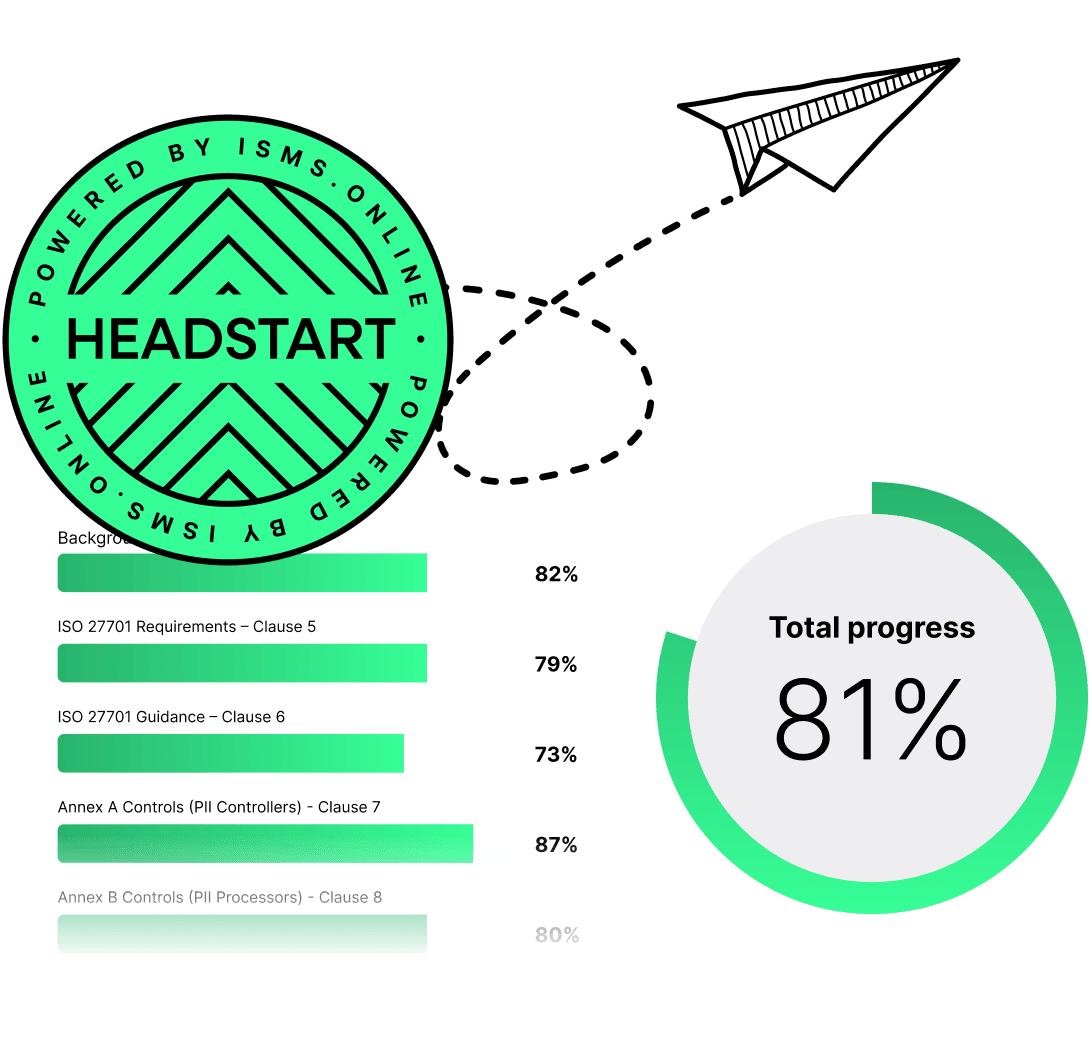
An 81% Headstart from day one
We’ve done the hard work for you, giving you an 81% Headstart from the moment you log on. All you have to do is fill in the blanks.
What Does ISO 27001:2022 Annex A 5.19 Really Require-and How Do You Satisfy It?
Annex A 5.19 is a step change from past compliance controls. It’s not enough to merely have a supplier policy on file: organisations must show robust, risk-based supplier selection, write tailored contracts with enforceable security and privacy measures, and demonstrate ongoing, methodical review of every relationship. Auditors expect to see a “living” supply chain risk lifecycle tied to changes in threat landscape, regulation, or business activity.
Good intentions don’t satisfy auditors-only consistently up-to-date, actionable evidence does.
A common pitfall is assuming a signature is enough. In reality, most audit failures stem from outdated risk categorisations, static contract terms, or contracts that fail to reference current data protection and incident response expectations. To truly meet ISO 27001’s bar, you must:
- Classify suppliers by their data and operational risk: -not just expenditure or contract length.
- Customise contracts and SLAs: , ensuring explicit language for security controls, privacy, breach reporting, and remediation obligations.
- Establish an active monitoring process: , with routine checks for certification, security posture, and contractual accuracy.
For “high-risk” suppliers-those with privileged access or business criticality-elevate your game. Implement more frequent due diligence, sustained assurance activities, and executive sign-off (bsi.group).
Key Insight:
Satisfying Annex A 5.19 demands a continuous process uniting supplier risk assessment, up-to-date contract clauses, and verifiable review routines. The absence of any link will trigger audit findings and regulatory scrutiny in regulated environments.
Which Suppliers Deserve the Most Scrutiny-And How Do You Focus Resources?
It’s easy to fall into the trap of spending the most time on your highest-spend vendors, but genuine risk is determined by access-not invoices. Segmenting suppliers according to the risk they pose, not only the volume of business, is your first line of defence. The most dangerous supplier may be a small subcontractor with access to sensitive information or critical systems.
Supplier risk is a function of your dependence and their access-not their billing.
Supplier Monitoring Quick Reference
| Risk/Scenario | Impact | Priority Control |
|---|---|---|
| Shadow/Unmapped Supplier | Breach, compliance fail | Map, assign owner, review contract |
| Outdated/Missing Clauses | Regulator fines, failed audit | Update clauses, confirm annually |
| Lax Ongoing Review | Missed evolving risk, audit gaps | Enforce periodic live reviews |
| High-Criticality Vendors | Business continuity or data breach | Deep due diligence, senior sign-off, audit trails |
Routine review frequency should correlate directly to risk-high-impact suppliers see more oversight, with rapid escalation for incidents or legislative changes. Relying solely on supplier “self-attestations” is rarely sufficient; periodic third-party audits and independent certifications provide the assurance needed for confident compliance.
Don’t overlook the “exit plan”: the most dangerous gaps can occur at contract end or disengagement, especially if offboarding responsibilities are poorly defined. Make contract suspension and supplier removal an intentional, documented workflow.

Free yourself from a mountain of spreadsheets
Embed, expand and scale your compliance, without the mess. IO gives you the resilience and confidence to grow securely.
Are Your Contracts and SLAs Ready for Audit-and Crisis?
If a data breach occurs tomorrow, will your supplier contracts hold up? Too often, templated or outdated contracts lack the specifics auditors and regulators now expect. ISO 27001:2022 requires that supplier agreements clearly describe mutual responsibilities, notification windows, audit rights, review cycles, and contract exit protocols-all with enough precision to withstand regulatory challenge.
Contracts that are audit-ready explicitly address risks, notification windows, and the right to review-anything less is a future incident waiting to happen.
Critical Contract Attributes Checklist
- Diligence up front: Conduct risk review before contract negotiation.
- Custom clauses: Include language on data security, privacy, breach reporting (with specific timeframes), escalation, and exit triggers.
- Approvals and signatures: Maintain management signoff and preserve all version history.
- Operationalisation: Track adherence, KPIs, and incident response as live obligations, not static paperwork.
- Update and disengage: Manage amendments, reviews, and terminations with traceability and accountability.
A common audit failure is the presence of “vague” breach notification clauses (“as soon as possible”) or missing escalation contacts-neither helps during an incident. Keeping contract versions in check and embedding lessons learned from incidents is what separates audit-ready organisations from those rushing through last-minute revisions.
Contract Maturity Table
| Clause | Generic | Enhanced | Audit-Grade/Best Practice |
|---|---|---|---|
| Data Security | High-level only | Specific, technical | ISO/sector aligned, auditable |
| Breach Reporting | “Promptly” vague | Concrete timelines/contacts | Explicit hours, rehearsed |
| Review/Audit | Optional/absent | Annual/milestone-based | Right to audit, log reviews |
| Version Control | Unmanaged | Admin tracked | Live audit log, automated |
Updating contracts as living documents-versioned, reviewed, and responsive to business/regulatory change-is the foundation of true compliance.
What Does Elite Supplier Review Look Like in Practice?
Top-performing organisations treat supplier oversight as a continuous improvement process, not a static list. Every review, contract change, and audit finding is documented; reminders and action-tracking are built into daily workflow. At any moment, you should be able to see which suppliers are actively being monitored, which contracts are approaching review, and where gaps or incidents have occurred. When ownership is ambiguous, evidence gets lost and audits fail.
Performance indicators-not checkboxes-keep your supplier reviews effective and future-proof.
Supplier Review Maturity Comparison
| Level | Review Rhythm | Triggers | KPIs Setup |
|---|---|---|---|
| Reactive | Post-incident-only | After breach | Incident closure rate |
| Structured | Scheduled/periodic | Dates/contracts | % Reviews completed on time |
| Proactive | Live dashboards/alerts | Risk, law, events | SLA/adherence, metrics alive |
Testing your internal readiness via simulated audits or incident response dry-runs can halve investigation time and impress regulators and auditors. Centralised dashboards and digital audit trails set the standard for resilient supplier management.

Manage all your compliance, all in one place
ISMS.online supports over 100 standards and regulations, giving you a single platform for all your compliance needs.
How Do You Leap from Reactive Fixes to Lasting Resilience?
For many businesses, supplier risk is addressed only after a painful breach or regulatory scolding. ISO 27001:2022 raises the bar, setting clear resilience expectations: can your organisation learn fast from every incident and adapt before the next shock arrives? Research confirms that evolving, documented supplier management policies cut risk and audit failures in half. Resilient organisations don’t just “patch”-they embed improvements, run scenario drills, and ensure lessons are built into policies, contracts, and reviews.
Resilience is not how quickly you can respond after the fact-but how effectively you adapt so it doesn’t happen again.
Embedding a learning cycle via scenario exercises, post-incident debriefs, and executive oversight speeds up response and locks in new standards. Board-level sponsors who demand transparency and regular updates build cultures of readiness, not complacency.
Process Evolution Table
| Approach | Incident Response | Learning Loop | Documentation/Evidence |
|---|---|---|---|
| Reactive | Patch & move on | Lessons lost | Outdated, scattered |
| Adaptive | Faster fixes | Lessons captured/reviewed | Owner assigned, tracked |
| Resilient | Prevention focus | Built into process & loop | Live dashboards, audit logs |
Every surprise, if systematised, becomes competitive advantage. A resilience loop-incident triggers response, then policy adaptation, then process improvement-ensures your supply chain isn’t just compliant, but robust to the next unforeseen threat.
How ISMS.online Streamlines Supplier Oversight-And Wins You Time and Trust
If you’re spending late nights buried in contract folders and update reminders to “get audit-ready,” you’re not alone. ISMS.online provides a living platform that collects every supplier risk review, contract update, and control record in one audit-ready location (isms.online). No more wrestling with scattered spreadsheets or waiting until review cycles generate panic.
ISMS.online enabled us to export ISO 27001 supplier evidence in minutes-well ahead of the auditor, with every review and contract traceable live.
With templates, checklists, and reporting hooks mapped to ISO 27001, ISO 27701, and sector extensions, the platform lets your team shift from reactive firefighting to methodical improvement. Everything is versioned-every action, approval, and evidence update creates a persistent audit trail. Routine reviews, reminders, and rapid contract updates are automated, not dependent on memory or email chains. As standards and regulations evolve, your supplier management keeps pace by design, not by chance.
ISMS.online’s onboarding team ensures your configuration matches best practice from first day-avoiding the pitfalls that most manual supplier programmes never overcome. In practice, that means:
- All supplier evidence, risks, controls, and reviews in one place-no confusion.
- Automatic reminders, review scheduling, and clause updates.
- Instant, audit-level exports for any stakeholder at any time.
- Sleep for legal and compliance teams-no more “where is the audit trail?” stress.
Everything linked-contracts, reviews, approvals, all there. For the first time, our team was ahead of the auditor and board questions. We stopped missing deadlines, and audit time plummeted.
Disclaimer: This article is intended for informational purposes and does not constitute legal or regulatory advice. Always consult legal counsel or an ISO 27001-accredited auditor to determine the specific practices required for your organisation.
If “audit panic” and supplier risk are draining time and confidence, ISMS.online offers a living safety net. Move from fraught evidence chases to always-on, audit-ready trust-making supplier resilience your new baseline.
Frequently Asked Questions
Why is supplier security now a core vulnerability in ISO 27001:2022 Annex A?
Supplier security has become the new blind spot in information security because most modern attacks flow not through your own defences, but through the weakest partner in your supply chain. The digital world has connected your business to a latticework of SaaS vendors, consultants, cloud platforms, and service providers-each expanding your “attack surface” far beyond your immediate control. A single supplier with lax controls can trigger costly breaches: after the SolarWinds attack, over 18,000 organisations-including major governments-felt the domino impact of a trusted supplier compromise ((https://www.bbc.com/news/technology-55299958)).
ISO 27001:2022, especially Annex A control 5.19, doesn’t just encourage, but now expects you to monitor, segment, and prove ongoing oversight for every vendor. Traditional “set-and-forget” onboarding is dead; attackers and auditors focus on hidden dependencies and gaps that slip through static checks. Notably, the British Assessment Bureau found that 53% of equivalent breaches now start through suppliers, even as only 43% of companies systematically monitor third parties ((https://www.ponemon.org/research/ponemon-library/security-vendor-assessment-study.html); (https://www.britishassessment.co.uk/insight/blog/how-to-manage-supplier-risk-in-your-iso-27001-information-security-management-system/)). Risk now comes from your “trusted” network-meaning discipline, not paperwork, defines defence.
Supply chain risk rarely announces itself. It creeps quietly through relationships you assume are safe.
How should you map, segment, and maintain your digital supply chain for ISO 27001?
A reliable digital supply chain inventory must go beyond a basic vendor list. Begin by documenting every service, integration, and tool with access to your data or systems-including SaaS platforms, managed IT, cloud providers, freelancers, and “shadow IT” deployed without explicit approval ((https://www.gartner.com/en/newsroom/press-releases/2023-01-23-gartner-says-67-percent-of-business-unit-it-spending-is-outside-central-it)). Each entry isn’t just a name; track their service scope, data access level, business impact, and risk tier.
For robust ISO 27001 compliance:
- Risk-tier every supplier: Assign criticality based on data handled, integration depth, and service continuity impact. A small payment processor may be riskier than a large facilities vendor.
- Assign relationship ownership: Document who inside your business “owns” the risk for each supplier so responsibility is never ambiguous.
- Log onboarding steps: Capture not just approval, but assessment criteria, evidence checked, and any conditions applied at start.
- Use dynamic registers: Update status with every contract renewal, service expansion, incident, or remediation step.
- Centralise and automate: Integrate alerts and reminders so regular reviews aren’t skipped or lost when staff move on.
Fragmented, manual supplier governance leaves dangerous visibility gaps and fails during audits ((https://www2.deloitte.com/us/en/pages/risk/articles/third-party-risk-management.html)). Modern compliance means layered registers, embedded reminders, and cross-department accountability-especially between procurement, IT security, and legal. When you can instantly show how every digital touchpoint is risk-managed, you shift from scrambling at audit time to continuous, culture-driven discipline.
What does ISO 27001:2022 Annex A 5.19 demand in daily supplier management?
Annex A 5.19 transforms supplier management from a static contract requirement into a lived, ongoing operational process. Here’s what day-to-day compliance looks like:
Criteria for Selection and Onboarding
For every supplier:
- Define and document clear security requirements tailored to their risk tier-don’t copy-paste generic controls.
- Require independent certifications (ISO, SOC 2), evidence of tests, or baseline policies.
- Record onboarding approvals, responsible staff, and risk acceptance rationale.
Contractual and Policy Obligations
Your supplier contracts must:
- Specify breach notifications (how quick, who to tell, evidence required).
- Reference applicable standards, privacy laws (GDPR), and required practices.
- Define service levels, including escalation and termination clauses if standards aren’t met ((https://www.nationalcrimeagency.gov.uk/news/cyber-attack-third-party-supplier)).
Ongoing Monitoring and Documentation
- Schedule regular reviews-critical suppliers at least quarterly, others annually.
- Log every review outcome, incident, and remediation step, building an auditable trail.
- Update risk tiers and controls as either your business or the supplier’s services evolve ((https://knowledge.adoptech.co.uk/5.19-information-security-in-supplier-relationships?utm_source=openai), (https://www.lexology.com/library/detail.aspx?g=78c2a887-35cf-4ae2-8ff2-8c0c95abac9e)).
Suppliers move, grow, and shift risk constantly. The companies consistently passing audits are those who treat supplier oversight as a core discipline-not just a box to tick at onboarding.
How do you monitor, assess, and escalate supplier risk for resilient compliance?
Continuous, structured assessment is the backbone of resilient supplier management. Don’t confuse “biggest vendor” with “biggest risk”-segment by sensitivity, privilege, and integration, not contract value ((https://advisory.kpmg.us/articles/2022/third-party-risk-management.html)). Assign risk at onboarding and update it dynamically as scope changes.
Key steps for ongoing oversight:
- Critical suppliers: Quarterly re-assessment, requiring evidence (third-party cert, pen test, recent incident report). All other suppliers, annual review or after a significant change ((https://businessinsights.bitdefender.com/reducing-third-party-risk-by-regular-supplier-assessments)).
- Trigger-based escalation: When reviews show delays, failures, or incidents, use pre-defined escalation paths with clear accountability-this can include contract renegotiation, increased monitoring, or exit ((https://www.crowdstrike.com/cybersecurity-101/supply-chain-attacks/)).
- Automate where possible: Risk findings or incidents should automatically update supplier status and trigger further scrutiny ((https://www.onetrust.com/products/vendor-risk-management/)).
A third of supply chain breaches would be blocked if issues were escalated and acted on promptly. By tightening your critical supplier reviews, automating risk triggers, and defining clear actions for failures, you create a culture where small warnings are handled before they become disasters.
Proactive escalation transforms audit day-no more scrambling, just calm retrieval of what you already know.
What contract and SLA components are essential for ISO 27001 audit success?
Truly audit-ready contracts clarify and enforce supplier accountability at every stage. Every agreement should contain:
- Referenced standards: ISO 27001, GDPR, and sector rules are specifically cited.
- Breach notification detail: Names, deadlines, contact methods, and sample forms.
- Access and data security controls: Permission lists, minimum technical requirements, approved integrations.
- Renewal and review conditions: Schedule for performance reviews and triggers for re-verification.
- Change mechanisms: Updates required if regulatory environment shifts (NIS 2, GDPR evolution), avoiding “legal debt” ((https://www.contractworks.com/blog/how-contract-management-software-helps-with-iso-certifications)).
Don’t lock your contracts in PDFs-use digital contract management tools to track, version, and update effortlessly. In regulated sectors, overlay local law requirements without rewriting base contracts, and rehearse both supplier and internal responses with table-top exercises ((https://iapp.org/news/a/deciphering-gdpr-supplier-breach-notification-requirements/)).
Routine contract review is the best prophylactic: 47% of third-party breaches in the UK trace directly to gaps or obsolete terms (NCA). Well-run businesses use annual, risk-tiered contract audits to stay ahead of shifting threats.
How can monitoring, KPIs, and evidence management prove supplier oversight?
Supplier oversight in ISO 27001 today means being able to demonstrate-at any time-precisely how suppliers are screened, monitored, and managed. Move from annual checklists to automated, evidence-rich dashboards that:
- Link every supplier to KPIs: e.g., number of critical incidents, review completion % on time, average breach response time ((https://www.navex.com/en-us/blog/article/third-party-risk-key-performance-indicators/)).
- Store and timestamp every onboarding, review, incident, and contract update for instant retrieval ((https://www.tripwire.com/state-of-security/security-data-protection/vendors-third-parties/third-party-cyber-risk-due-diligence/)).
- Feed audits: Be able to present, in minutes, every supplier’s documentation, relationship history, and findings to the auditor ((https://www.auditboard.com/blog/third-party-risk-assessment-checklist/)).
- Simulate audits-internally and with suppliers-so you can spot gaps, train your team, and turn regulatory visits from sweated scrambles into smooth proof of competence ((https://www.mitre.org/publications/technical-papers/lessons-learned-for-third-party-risk-management)).
After each incident or near miss, update your onboarding questions and escalation flows. Continuous learning hardens your response to the next third-party vulnerability and steadies your hand under real audit pressure. In the world of Annex A 5.19, living compliance leaves no room for supplier surprises-a documented, well-drilled team becomes your best defence and your clearest message to customers and regulators alike.






