





































Why Incident Response Fails Without Daily Discipline-And How to Break the Pattern
You know the storey: teams assemble “perfect” incident response plans, meet compliance deadlines, and secure the signatures-but a single, real-world event reveals chaos lurking beneath the checklist. When the stakes rise and every action is visible to auditors, execs, and customers, it’s not malware that causes the greatest harm-it’s hesitation, confusion, and fragmentation. This is where most teams fail: the plan is a shelf artefact, never a muscle memory.
In the heat of an incident, your true preparation shows not in paperwork, but in purposeful, practised action and leadership.
Every missed step-unclear role, a delayed escalation, a hidden communication gap-exponentially increases risk and business impact. Boards and regulators no longer accept “compliant” intent; only audit-ready demonstration of live, working incident response earns trust (enisa.europa.eu; ncsc.gov.uk).
What Audit-Proof Incident Response Looks Like
A robust system weaves together detection, escalation, communication, and continuous improvement-not just in theory, but in visible, trackable operations. Controls arent decoration: each one expects you to evidence not only that you know what to do, but that you do it, habitually, and can show exactly how and when. This is the standard set by Annex A Control 5.26 of ISO 27001:2022.
Curiosity Hinge: How well could your organisation weather a surprise incident-tomorrow? If every step had to be shown to an auditor or a customer, would you feel calm or exposed?
Book a demoWhere Do Most Incident Response Plans Break Down-And Why Is This Still Common?
The difference between compliance on paper and resilience in reality is brutally simple: practice, ownership, adaptation. Organisational scar tissue forms when a plan is left untouched or assumed “good enough” until the moment of crisis. Blame, confusion, and invisible gaps become liabilities.
Compliance documents don’t fight fires, people do. Only lived procedures and shared understanding withstand real stress.
The Dangers of “Fire Drill Amnesia” and False Ownership
ENISA’s research repeatedly links failed real-world responses to three causes: (1) plans written but never drilled; (2) roles assigned but not owned; (3) review cycles skipped or hollow (enisa.europa.eu). Assigning an Incident Response Lead is not tokenism-teams with obvious, trained owners cut incident resolution time in half (ncsc.gov.uk, Indeed UK). Yet, many fail to clarify who leads actions at each stage or to rehearse cross-team response, and so when time is short, everyone waits for “someone” to act.
Trust and Transparency: The Only Engines of Improvement
A punitive or secretive culture breeds under-reporting; without visible lessons learned, old mistakes return. The best teams normalise reporting-even of mistakes-review each event, and continuously adapt guidance for newcomers and veterans alike.
Empathy Bridge: You cannot build resilience by collecting signatures. You build it when every team member feels safe reporting, rehearsed in their role, and part of a known improvement loop.
ISO 27001 made easy
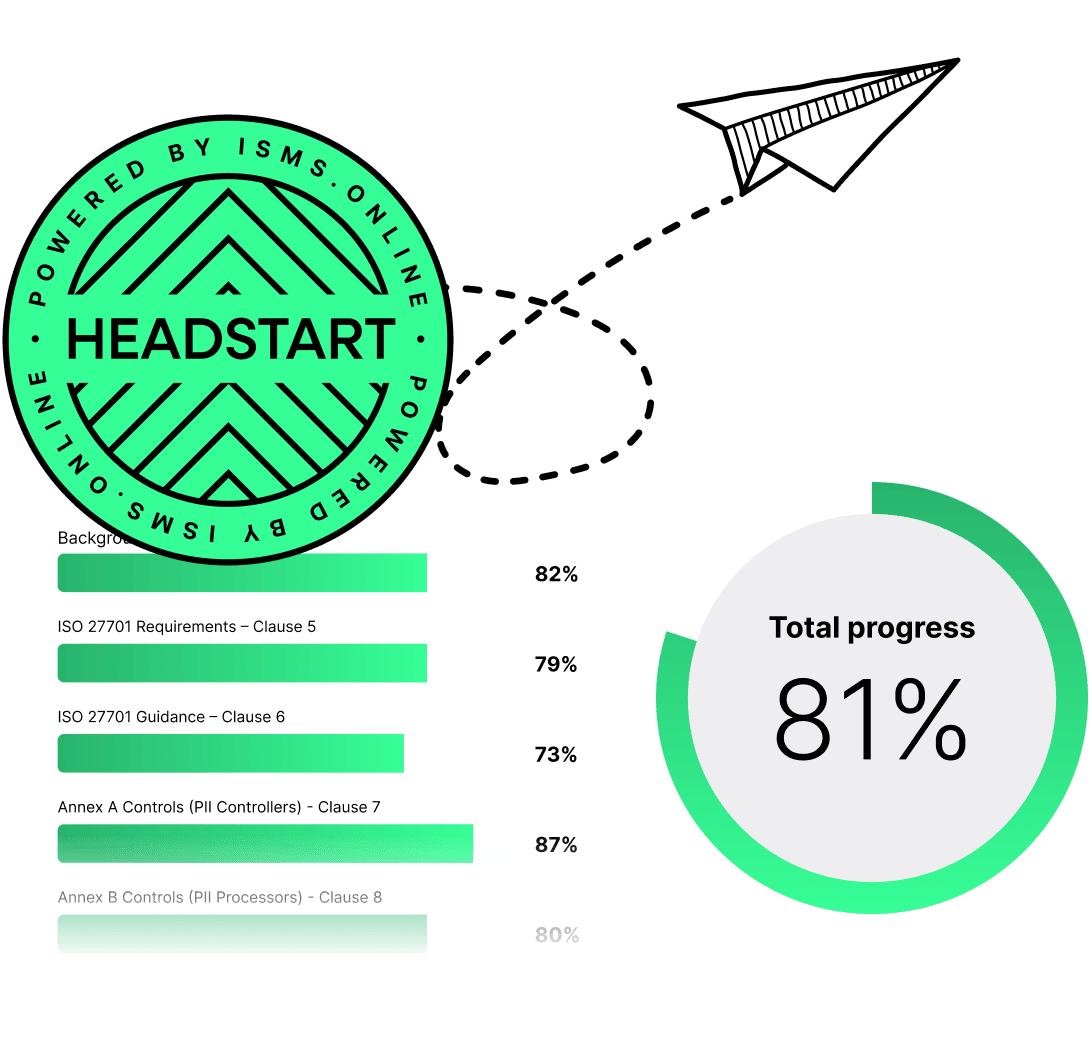
An 81% Headstart from day one
We’ve done the hard work for you, giving you an 81% Headstart from the moment you log on. All you have to do is fill in the blanks.
How Do High-Performing Teams Instil Calm and Discipline in Every Incident?
Confidence is not charisma-it’s repeatable discipline. Teams who drill, debrief, and update their processes build a kind of collective muscle: they know what action looks and feels like, and even when the unexpected strikes, they respond rather than react.
Drills are oxygen for your incident response-they make the first, hard hour routine rather than chaotic.
Making Practice the Default, Not the Exception
Auditors want to see real rehearsal logs, not just document dates. Frequent table-tops, red team exercises, and scenario walk-throughs make playbooks truly operational (advisera.com, grcmana.io). These practices catch blind spots, build cross-role trust, and raise both speed and effectiveness during actual response.
Leadership Buy-In Translates to Success
Crisis performance is set at the top: when executives allocate time and attention to incident preparation, every team follows-and budget, tools, and authority flow accordingly. Executive commitment reflects in the real system’s readiness-and in audit outcomes.
A Learning Loop Prevents Old Mistakes
A “lessons learned” session after each event, even a minor one, creates compound improvement. Organisations that review every incident cut repeat failures by up to forty percent. Embed these reviews, assign follow-ups, and log their closure visibly-others will follow.
What Does ISO 27001:2022 Annex A Control 5.26 Demand-Beyond Documentation?
This control isn’t satisfied with “have a plan.” It expects a living system-actions clearly mapped, roles owned, and a feedback loop that visibly improves each cycle. When evidence is requested, you must produce logs, change history, and proof of both practice and adaptation (degrandson.com, enisa.europa.eu).
The gap between ready and exposed is visible in the logs: every incident, owner, and outcome captured, linked, and reviewed.
What Are the Required Capabilities?
- Detection: Everyone must know how to spot and flag suspicious activity.
- Assessment: Triage must be quick, systematic, and logged.
- Containment: Clear, role-assigned actions to limit escalation.
- Eradication: Permanent fix-not just stopping, but identifying and blocking root causes.
- Recovery: Full restoration, signed off by multiple stakeholders.
- Lessons Learned: Embedded review, plan revision, and visible training improvement.
Table: Maturity from Paper Plan to Operational Resilience
| Stage | Common Gaps | Maturity Signal |
|---|---|---|
| Paper | Outdated, never drilled | Regular logs, up-to-date, rehearsed |
| Siloed | Only IT, others absent | Organisation-wide drills, mapped roles |
| Superficial | No learning loop, repeats | Lessons learned tracked, assigned owners |
| Robust | All roles, real change | Audit logs, version control, improvement |
Authority Bridge: If you can surface exactly who did what, when, and why-both in simulations and incidents-your audit will pass, and your team will thrive.

Free yourself from a mountain of spreadsheets
Embed, expand and scale your compliance, without the mess. IO gives you the resilience and confidence to grow securely.
What Concrete Steps Land You in the “Robust” Incident Response Category?
Effective incident management is a linear, logical progression-detection to review, no skipped steps, no role confusion. Each phase must produce unique, timestamped, and role-attributed evidence.
Resilience means making the exceptional routine-through daily action, not rare heroics.
The Five-Stage Cycle-Concrete, Measurable, Auditable
- Detect: All alerts or suspicions are logged with source, time, and owner; entry points must be clear (reporting portal, hotline, ticket system).
- Contain: Escalation matrix invoked, affected systems isolated, communications pre-scripted for stakeholders.
- Eradicate: Forensic analysis run, root causes assigned and actioned, tools validated or updated.
- Recover: Infrastructure, processes, and users returned to trusted state; sign-off requires multi-role validation and captured evidence.
- Document & Learn: Post-mortem run, improvements assigned and completed, updated into training and process guides.
Workflows That Deliver Evidence-and Improvement
Every phase must map back to a named control owner, with dashboards and immutable logs. Peer reviews, live dashboard stats (time-to-containment, drill participation), and performance metrics unlock a transparent improvement and compliance loop.
Curiosity Hinge: Would your last incident pass a full trace-with every evidence request returned in minutes, not days?
How Do You Make Evidence and Improvement Routine, Not Painful?
Audit-readiness is not about preparing for “gotcha” reviews-it’s about making improvement and evidence part of the operating system. That means:
Real compliance lives in observed logs, drill reports, and closure of action items-not just annual reviews.
Central Log as Backbone-and Early Warning
A robust central log-immutable, readable by all stakeholders, and protected-means even new employees can see the playbook in action. It also accelerates root cause analysis and external regulatory audit.
Automation Is the Compliance Accelerator
Scheduling reminders for drills, automating checklists for each incident, and using dashboards for ownership statistics reduce the burden and close the improvement gap. Technology is not a crutch-it’s a force-multiplier for integrity and preparedness (enisa.europa.eu; knowledge.adoptech.co.uk).
Review Culture Is the Key to Lasting Change
Templates for reviews, peer recognition, assigning clear improvement owners, and reporting status regularly are central to driving change from the inside.
Empathy Bridge: If you’re still relying on email reminders and untracked spreadsheets, or you scramble every time a regulator calls, it’s time to automate and anchor improvement in real systems.

Manage all your compliance, all in one place
ISMS.online supports over 100 standards and regulations, giving you a single platform for all your compliance needs.
What Predictable Pitfalls Stall Even the Best Incident Response Programmes?
Even mature teams can fall prey to role drift, “checkbox” fatigue, or siloed approaches that unravel under real pressure. The solution: expose anti-patterns, rotate roles, and always close the loop.
The costliest failure isn’t technical, but missing last year’s lessons-leaving the back door open a second time.
Table: Pitfalls, Impacts, and Solutions
| Pitfall | Impact | Solution |
|---|---|---|
| Unclear roles | Slow, scattered response | Rotate and review ownership; make logs transparent |
| Review fatigue | Checklist apathy, missed issues | Variety in drills, involve non-IT roles |
| Siloed engagement | Weak cross-team coverage | Company-wide IR engagement, not just IT |
| Incomplete closure | Recurring mistakes | Track action item closure, assign owners visibly |
| Passive signals | Missed early warning | Automated alerts, regular logging, visible ownership |
Practical tactics: Use red-team/blue-team drills; assign incident logs and improvements; celebrate and publish follow-through publicly.
Consequence Trigger: Don’t let future audits discover a hidden gap. Embed closure, accountability, and improvement as routine, not exception.
How Do You Future-Proof Your Incident Response for an Evolving Threat and Compliance Landscape?
Resilience means real, system-level integration-technology, people, and governance all working as one. Modern IR is dynamic, visual, and continuous.
When compliance is a living, visible process, teams stay prepared and risk is minimised-no matter how your threat landscape evolves.
Dynamic Playbooks and Real-Time Dashboards
Live dashboards keep your plans current, show active participation, and highlight pace and gaps for execs and anywhere regulatory outliers need review (enisa.europa.eu). Role logging, automated stats, and peer rotation future-proof engagement.
Quality Analytics Win Budget, Elevate Board Trust
Track mean closure times, drill participation, trending incidents: these metrics win budget and credibility, not just with IT, but at the board and regulator levels.
Connecting the Compliance Loop: ISO 27001, GDPR, NIS 2, AI
Incident response is rapidly becoming the backbone of cross-framework compliance-from ISO 27001 through GDPR, to NIS 2 and future AI regulations. A single, robust platform that captures action, evidence, review, and improvement delivers not only audit readiness, but integrated business resilience.
Where Do You Go Now? Audit-Ready Resilience with ISMS.online
Imagine a state where you no longer scramble for logs, worry about role confusion, or fear the next regulatory audit. Audit-defensible, living resilience becomes a business advantage-not just an IT win. This is the ISMS.online offering:
When evidence, automation, and role-based participation are unified in your platform, you future-proof both security and trust.
ISMS.online delivers real-time dashboards, role-based action logs, and transparent reviews mapped to ISO 27001, GDPR, NIS 2-right out of the box:
- Actionable trails for every incident; immutable logs and assigned improvements equip you for any audit, at any time.
- As regulations and risks evolve, ISMS.online evolves with you-embedding best practices from privacy, business continuity, and the frontiers of AI governance.
- Move your programme from compliance obligation to elite business differentiator, ready for whatever-and whoever-comes next.
Discover how audit confidence and operational resilience can be your new standard. Book an ISMS.online demo and see the living response loop in action.
Frequently Asked Questions
Who is ultimately responsible for ISO 27001:2022 Annex A Control 5.26, and how should organisations assemble a resilient incident response team?
Responsibility for Annex A Control 5.26-Response to Information Security Incidents-falls on a formally nominated, cross-functional Incident Response Team (IRT). This team must span IT, HR, Legal, Communications, and key business units, with every member’s role clearly defined for detection, escalation, containment, eradication, recovery, and the review phase. Real-world resilience demands a living RACI matrix (Responsible, Accountable, Consulted, Informed), updated quarterly, mapping each role and alternate by name-not just a title. Deputy coverage isn’t optional: organisations with distributed sites or shift work need explicit backup and escalation protocols to guarantee coverage any hour, any day (ENISA, 2021).
A resilient response system is measured by who shows up, not who’s named-single-point dependency breeds silent failure.
Designing an IRT for action and assurance
- Quarterly roster reviews: Confirm contact details and deputies.
- Scenario-based drills: Assign and rehearse all roles-including alternates and out-of-hours leads.
- Handover protocols: Documented steps for staff changes or planned absences.
- Accessible RACI matrix: Kept live in your ISMS for clarity, audit, and reference.
Relying on a single specialist-even if highly skilled-exposes your organisation to unnecessary risk. A resilient team is ready for 3am incidents and personnel turnover, ensuring no critical response step is ever missed due to absence or confusion.
What documentation and evidence must you present to auditors to prove ISO 27001:2022 Control 5.26 is truly operational?
Auditors require up-to-date, actionable records that demonstrate your incident response process operates in daily practice-not just as a written policy. Expect requests for:
- Incident Response Procedures: Current, version-controlled policies outlining each incident phase.
- Incident Logs: Immutable records with timestamps, personnel, actions taken, and status.
- Incident Reports: Root cause analyses, remediation actions, results, and closure documentation post-incident.
- Drill & Training Records: Evidence of role-specific exercises, participation logs, and after-action reviews.
- Roster & Handover Evidence: Documented team member assignments, changes, backups, and onboarding/offboarding checklists.
| Evidence Type | Auditor Focus | Recommended Format |
|---|---|---|
| Response procedure | Completeness; mapped to phases/roles | Policy PDF, ISMS entry |
| Incident log | Timeliness; completeness; immutability | ISMS or secured digital log |
| Incident reports | Depth of analysis, closure, outcomes | Ticket, form, report archive |
| Drill/training record | Regularity; team engagement | Attendance logs, reviews |
| Roster/handover docs | Coverage, documentation of changes | Versioned, access-restricted |
Platforms like ISMS.online reinforce compliance by centralising and securing these records, creating a verifiable chain from policy to action (deGRANDSON, 2024). To pass your audit, show real records and continuous improvements-not just templates or static policies.
How do you craft an incident response plan that genuinely fulfils, rather than just imitates, Annex A 5.26 requirements?
A compliant IRP breaks the incident lifecycle into five practical phases-Detection, Containment, Eradication, Recovery, and Lessons Learned-assigning a named owner (with backup) for each step. Every phase must cover not only the “what” but the “who,” including alternates for night/weekend coverage. Regulatory triggers-such as notifying data authorities within 72 hours for GDPR events-must be baked in as explicit tasks, not left to informal escalation. Your IRP should use checklists and forms embedded in your ISMS, generating logs and evidence automatically ((https://www.bsigroup.com/en-GB/iso-27001-information-security/)).
Audit- and crisis-proof IRP essentials
- Named, backed-up roles: Explicitly mapped to each workflow stage.
- Live workflows & forms: Steps operationalized with automated tracking.
- Scenario integration: Drills test regulatory and business-critical communication.
- Digital evidence: Chain of custody and legal hold processes accessible and documented.
Building an overcomplicated or siloed IRP is a common failure. Consider the “2am test”: would a back-up responder know exactly what to do if the primary lead was absent and an incident triggered out of hours?
What are the most common errors organisations make with Control 5.26, and how do you build in robustness to avoid them?
Pitfalls include over-reliance on one person (leaving you vulnerable if they’re absent), insufficient role backups, poorly maintained logs or flat-file evidence (risking tampering or loss), and neglecting cross-functional involvement (like HR or legal). Skipping drills or storing “evidence” in emails or scattered file shares means most teams discover gaps only when they fail an audit or face a real breach ((https://www.hypersecure.in/community/question/what-are-the-common-pitfalls-in-implementing-security-controls/?utm_source=openai)).
| Error | Business Impact | Remediation |
|---|---|---|
| No alternates mapped | Delayed/failed response | Assign and rotate backups |
| Patchy evidence trail | Audit failures, lost learnings | Automate, centralise records |
| Siloed team (e.g. IT) | Missed legal/HR consequences | Cross-functional drills |
| Unsecured evidence | Regulator/audit challenges | ISMS-backed, versioned logs |
Incident response resilience is not born of lone ‘heroes’ but from well-drilled teams and auditable evidence chains.
To defend against these errors, schedule red-team simulations, rotate lead roles, require multi-department participation, and keep all evidence in a secure, role-restricted digital ISMS. Test your readiness periodically by simulating out-of-hours incidents with alternative leads.
In what ways does automation transform compliance and real-world crisis response for ISO 27001:2022 5.26?
Automation replaces slow, error-prone manual processes with a unified, adaptable workflow. Quality ISMS platforms log every incident in real-time, assign or escalate roles automatically, timestamp every action, and maintain immutable audit trails. Drill planning, notification, attendance tracking, and evidence exports become seamless. By linking incident management with ongoing policy updates and reviews, platforms like ISMS.online reinforce compliance as a continuous, living process ((https://www.ncsc.gov.uk/collection/incident-management); (https://www.splunk.com/en_us/blog/security/incident-response-plan-in-action.html)).
Automation features that raise the bar
- Immediate role & escalation visibility: Central dashboards highlight ownership, backups, and overdue tasks.
- Immutable, time-stamped logs: Every step in the workflow is traceable, tamper-proof, and access-controlled.
- Automated drill reminders: Regular scenarios ensure every team member is engaged and measured.
- Dynamic evidence reporting: On-demand exports to auditors and management, driving transparency.
Ultimately, automation breaks the cycle of human error, shrinking gaps between incident detection and response, and providing assurance to auditors and leadership alike.
Which metrics and continuous improvement cycles actually demonstrate mature incident response under Annex A 5.26?
Maturity is seen in visible, data-driven cycles-mean time to detect (MTTD), contain (MTTC), and resolve (MTTR) all trending downward; high drill participation/completion; consistent closure of lessons learned; and evidence that review-planned improvements are actioned. Boards and auditors look beyond static policies for this “living” system of resilience (GRCMana.io, 2024).
| Maturity Metric | Signals… | How Used in Management |
|---|---|---|
| MTTD, MTTC, MTTR | Agility, preparedness | Resource planning |
| Drill completion % | Team engagement | Board/trust signals |
| Lessons learned closed | Continuous learning | Audit/kpi improvement |
| Corrective actions | Closure rate, focus | Defence vs. repeat risk |
A mature response programme isn’t just one that passes audit-it’s one where every incident, error, or miss closes a feedback loop and makes you stronger.
Use these metrics not only to pass audits but to demonstrate improvement to leadership and risk committees. Platforms like ISMS.online bring these feedback cycles into practical, report-ready focus-turning policy into operational strength, visible to all who need assurance.






