





































Have You Outgrown the “Spreadsheet Era” of Asset Inventories-Or Is Your Next Audit Waiting to Catch You Out?
When the questions start from a major customer, auditor, or regulator-“Can you prove exactly where your sensitive data lives, and who’s responsible for it?”-a surprising share of teams still scramble for answers. That’s not just a technical gap; it’s a trust problem. The silent killer of audit success in 2024 is rarely an advanced hack or rogue insider. It’s nearly always the inventory itself-outdated, incomplete, or hidden in a forest of abandoned files and ignored drives.
Most compliance disasters begin below the surface-with forgotten databases, orphaned laptops, or SaaS apps no one’s declared.
You might expect this to be an issue just for sprawling enterprises, but even a 50-person SaaS firm can quickly “grow” an invisible forest of unmanaged devices, cloud credentials, and third-party integrations. Peer-reviewed research puts it baldly: over half of all information security risks come from assets that were never formally inventoried or lost track of as people and systems changed. If your inventory consists of last year’s spreadsheet and a few ad hoc checklists, you’re not only missing regulatory targets-you’re leaving your team exposed to real operational risk.
A living inventory is not about ticking boxes, but about building the foundation for resilience. More boards and customers demand a visible storey: “Show us, anytime, who owns what, where it is, and how it’s protected.” When you treat your inventory as a pulse, not a paperwork chore, audit anxiety gives way to a competitive advantage few peers can claim.
Why “Nobody Owns It” Is the Hidden Breach in Your Security Armour
It’s one thing to log every asset; it’s another to make sure each one has a responsible owner. Auditor after auditor discovers that the point of failure isn’t the forgotten router itself-it’s the lack of a named, accountable owner watching it. The root cause of over 60% of all security incidents? Orphaned assets: those that drift through mergers, departures, and reorganisations, no longer explicitly watched or owned.
When reviews flag an asset as simply “owned by IT” or “Operations group”, the result is more than audit drama-it’s an open invitation for critical slip-ups. In the wake of the 2022 ISO 27001 update, the bar was raised. Today, you must be able to point to a real person (or, at the very least, a documented role) behind each information asset, with a signature or logged sign-off trail.
In the eyes of modern auditors, an ownerless asset is not a technical gap-it’s a system-wide red flag.
One real-world case: A UK consultancy’s data breach crisis started with an outdated server “owned” by an employee who left 10 months earlier. The asset sat unnoticed-until it was too late. When the same team retooled with a platform that enforced digital sign-offs and automated reminders for every asset owner, audit prep stopped being a firefight. Now, gaps are caught in advance-turning risk into a fast fix, not a last-minute panic.
ISO 27001 made easy
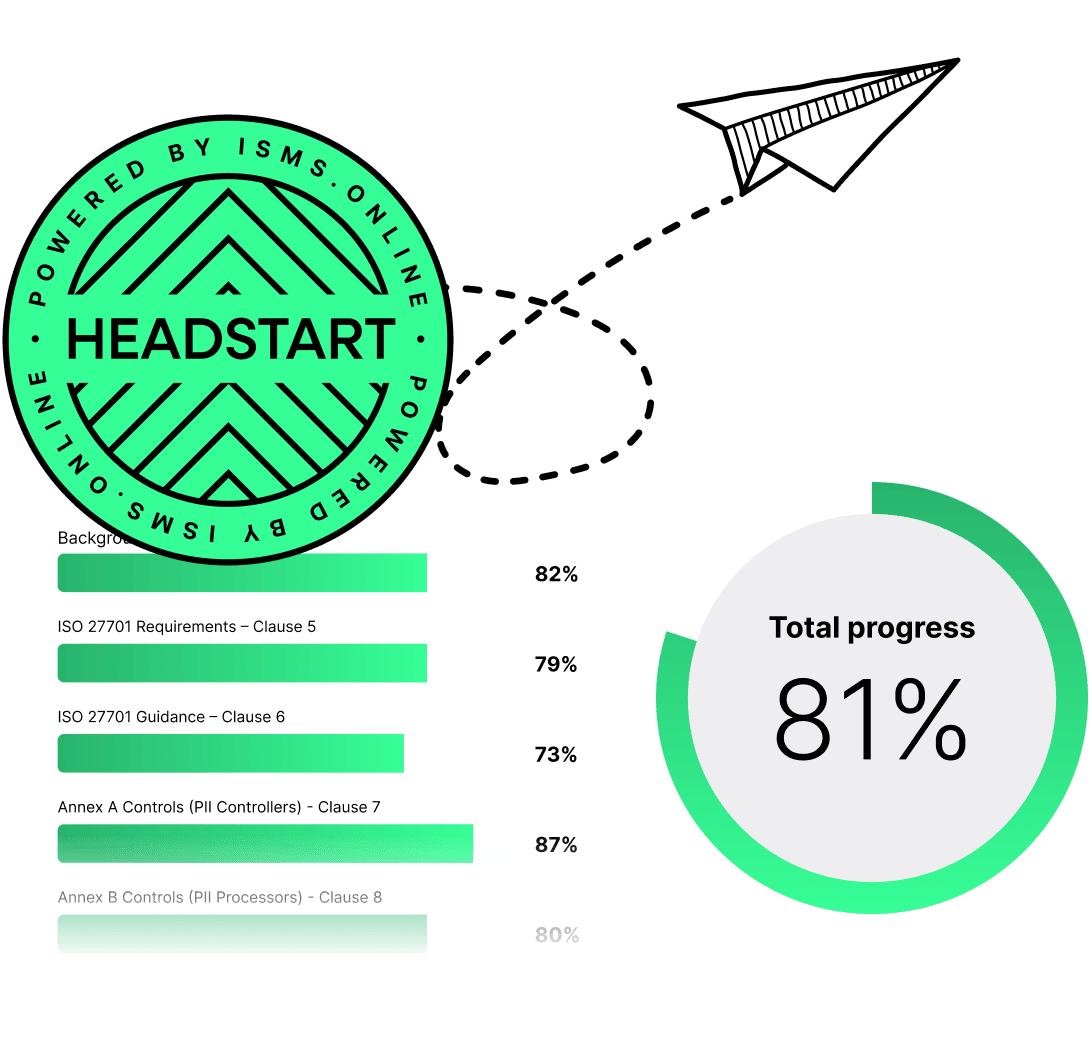
An 81% Headstart from day one
We’ve done the hard work for you, giving you an 81% Headstart from the moment you log on. All you have to do is fill in the blanks.
What’s the Cost of Leaving Assets Untracked? Audit, Legal, and Financial Risks Amplified
Look beneath the pain of every failed audit or penalty, and you’ll find one constant: a decayed or static asset register. Auditors now expect that every asset-no matter how “minor”-has a living, updated record with its history, owner, and risk classification. Gone are the days where an Excel list or a “final_final_v5” document cuts it (isec.pl). ISO 27001:2022 formalised this expectation: inventories must be regularly reviewed, owner-attested, and layered by actual business risk-not just device category.
An inventory as a list of names feels safe-until pressure hits, and it instantly reveals your hidden vulnerabilities.
Auditors look for three things:
- Living reviews (is it current to this quarter or just before audit?),
- Owner-attestation (did the right person confirm?),
- And risk-based classification (can you quickly see what’s critical, where, and why?).
The absence of any of these turns a routine review into a painful, expensive investigation. Worse, if you’re juggling SaaS, cloud, and hybrid assets, static processes lag behind by months-a perfect storm for non-conformities and missed business opportunities.
A SaaS midmarket storey: A company with a growing remote team failed audit when several laptops used by customer support weren’t in the asset register. Regulatory suspension followed, as did costly hand-audits and remediation. Their pivot? An integrated, cloud-based asset management platform-owner-linked, reviewed live, visible to stakeholders-which turned subsequent audits from panic to routine proof.
You can’t build trust-or unblock deals-if you’re scrambling for answers on basic asset ownership.
What Changes When Laws and Board Expectations Collide? The Strategic Power of Asset Transparency
The regulatory picture has grown sharper each year. GDPR, NIS 2, and frameworks like CMMC no longer make asset inventory a “nice-to-have”-they make it an explicit legal duty (gdpr.eu). At the same time, boards and partners have raised the bar: approval cycles and visibility aren’t “admin questions”-they’re embedded in trust and growth. Missing or vague asset evidence is now a boardroom issue, not just a technical one.
Leading organisations treat their live inventory as strategic trust capital. Dashboards surface overdue reviews, owner gaps, and risk ratings in real time, not in end-of-year audits. When procurement teams or regulators knock, evidence exports are delivered with a click-not a scramble.
Trust is now measured by visibility-not by claims. If you can show living dashboards at a moment’s notice, you command the conversation.
A living dashboard at Management Review Board: Owners, status, last review dates, and a visible risk map-green for attested, yellow for overdue, red for orphaned. When your compliance storey is told by numbers, the right evidence signals resilience to customers, boards, and regulators alike.

Free yourself from a mountain of spreadsheets
Embed, expand and scale your compliance, without the mess. IO gives you the resilience and confidence to grow securely.
Model Wars: Which Asset Ownership Structures Survive the 2022–2024 Audit Gauntlet?
Your asset register is only as solid as its ownership model. Picking the right approach isn’t just about audit anymore-it shapes operational speed, breach response, and confidence across teams. Consider these three models:
| Asset Ownership Model | Audit Readiness | Breach Risk | Workload Impact |
|---|---|---|---|
| **Central IT (No Owners)** | Fails-no accountability | High orphan, delayed fixes | High-manual updates |
| **Distributed, No Attestation** | Fails-owners drift, gaps | Gaps after role changes | Simple but brittle |
| **Distributed, Owner-Attested** | Pass-auditor favourite | Fast response, traceable | Moderate-workflow |
What’s clear? “Surface-level” passes-where IT alone “owns” everything-get torpedoed by real-world churn. Distributed, sign-off-enforced inventories survive the hardest audits and bounce back fastest from incident alerts.
When an incident hits, the ability to trace asset owners straight away isn’t just audit gold-it’s front-line risk management.
How to Translate Annex A Control 5.9 into Systematic, Resilient Practice (and Banish Spreadsheet Hell)
Implementing Control 5.9 is less about technology and more about process design. The best teams empower owners, automate reviews, and close the ownership gap so nothing falls through the cracks.
Assign assets to named individuals or defined roles-not vague job titles or departments.
Automate attestation
Use tooling (platform or in-house) to send periodic reminders. Owners must digitally confirm their list; missed deadlines escalate for follow-up.
Prioritise outcome metrics
Monitor KPIs: % assets reviewed, % with overdue sign-off, asset-to-owner coverage. Aim for 100% review-readiness, zero overdue, every quarter.
Review cadence by asset risk
High-value assets get monthly reviews; lower-risk items are checked quarterly or on change. Map every asset-including “invisible” SaaS and cloud instances.
Build asset review into onboarding and offboarding
Refreshing the register every time people or assets change saves time, demonstrates control-and impresses auditors with a living change log.
Each onboarding, offboarding, or procurement event is a chance to catch gaps-don’t let change events become weak spots.
Quick step recipe:
- Start with inventory import; map data, devices, accounts.
- Assign owners; enable sign-off.
- Automate reminders; escalate gaps.
- Share dashboards with the board, regulators, and key stakeholders.

Manage all your compliance, all in one place
ISMS.online supports over 100 standards and regulations, giving you a single platform for all your compliance needs.
Breaking the Silo: Asset Inventory as a Value Engine for Board and Practitioner Alike
The old divide-IT maintains lists, compliance checks them yearly, and the board hears nothing until audit-is the slow lane. Asset registers become value-creation tools when surfaced across the business.
| KPI Metric | Target | Ownership |
|---|---|---|
| Asset review attested | 100% | Security/Compliance |
| Overdue sign-offs | 0 | Operations/Asset Owners |
| SaaS/cloud assets mapped | 100% | IT/Procurement |
| Board inventory review freq | Quarterly | Compliance/Board |
When your practitioner team shows live dashboards to the board, they aren’t just ticking boxes-they’re winning credibility, trust, and budget for smarter security. The storey shifts from “keeping the lights on” to enabling business growth, closing deals faster, and cutting investigation cycles by more than half.
Dashboards turn effort into evidence-proving your compliance leadership to every stakeholder, every time.
Where Trust, Speed, and Audit Victory Intersect: Why ISMS.online Makes Asset Inventory a Leadership Moment
Leaving compliance on manual pilot invites avoidable pain. Moving to a system where ownership, review, and evidence are automated puts your team several steps ahead-of both attacks and audits.
ISMS.online leads this transformation by embedding compliance into your workflow, not as a burden, but as an always-on capability.
- Every asset gets an owner, every owner gets a prompt, and every management review sees live data.
- Audit prep time can drop by as much as 80%, while internal stress declines even more.
- Crucially, it’s not just compliance “passed”-it’s trust built visibly, and value multiplied.
Deploying ISMS.online means your team shifts from last-minute squabbles over outdated sheets to celebrating compliance wins, with dashboards that make you the auditor’s (and board’s) favourite partner.
Your asset inventory is more than a regulatory tick-box-it’s the heartbeat of business trust, reputation, and resilience.
Let your next audit be the moment your team moves from quietly worried to confidently recognised. Make asset inventory your advantage. With ISMS.online, every audit becomes proof of your leadership. Step up and take the credit.
Frequently Asked Questions
Who is ultimately responsible for asset ownership in ISO 27001:2022 Control 5.9, and what happens if you get this wrong?
Asset ownership under ISO 27001:2022 Control 5.9 must be assigned to a specific, named individual for every information asset-whether that’s company data, laptops, cloud accounts, or software licences. Leaving ownership as “the IT department” or forgetting to update after role moves puts your company at significant risk. Studies like the Verizon DBIR (2023) consistently show that more than half of data breaches can be traced back to missing or ambiguous accountability for critical assets. When each asset has a documented owner, that person is accountable for making sure information stays accurate, reviews don’t lapse, and nothing gets orphaned after staff changes. If you allow assets to drift without clear stewardship, you create blind spots that auditors, threat actors, and regulators can easily exploit. Assigning, documenting, and regularly updating asset ownership transforms your register from a paper exercise into an active defence and audit assurance tool.
Ownership isn’t a checkbox-it’s a shield against hidden liabilities and costly surprises.
What are asset owners actually accountable for?
Asset owners are personally responsible for the completeness and accuracy of records, proper risk classification, tracking changes, ensuring controls are in place, and signing off on scheduled reviews. If roles or staff change, ownership is formally reassigned, maintaining a living register that evolves with your business and keeps pace with compliance.
How does a “living” asset inventory outperform spreadsheets and manual lists for compliance and security?
A living asset inventory, as required by ISO 27001:2022, is a dynamic, constantly updated system that links each asset to a named owner, tracks review cycles, flags overdue check-ins, and maintains an audit trail at every step. With solutions like ISMS.online, reminders prompt owners to review and update asset data, dashboards highlight gaps, and every change is captured for due diligence and audit purposes. By contrast, spreadsheets are frequently out-of-date, miss assets that slip in after staff churn, and result in frantic scrambling when an audit approaches. A workflow-driven inventory provides real-time visibility and a defensible trail for every asset in the business.
| Inventory Aspect | Spreadsheets & Lists | Living Inventory (ISMS.online) |
|---|---|---|
| Owner Assignment | Generic or missing | Always named, kept up to date |
| Reviews | Manual, often missed | Automated prompts, tracked centrally |
| Audit Trail | None or patchy | Full, time-stamped, instantly exportable |
| Risk Visibility | Infrequent or absent | Continuous, real-time, colour-coded |
| Reporting | Time-consuming | One-click, always audit-ready |
Asset security is proactive: real-time dashboards provide the clarity and assurance audits demand-spreadsheets can’t.
How frequently should asset reviews and updates occur, and who gets to decide the right schedule?
ISO 27001:2022 leaves “regular review” frequency open, but the right cadence depends on the asset’s value, risk, and rate of change. Modern best practice, particularly for critical systems, sensitive data, or remote endpoints, is monthly review or after any significant change. Less sensitive assets may be checked quarterly or after big events (ISACA, 2023). SaaS-driven, fast-growing, or remote-heavy businesses should favour shorter review cycles. The asset owner decides the baseline with input from compliance or security leadership and must adjust the timing as your organisation evolves. Platforms like ISMS.online automate review reminders, make overdue checks visible, and link reviews into onboarding and offboarding to keep the register always current.
| Asset Class | Review Frequency | Responsibility |
|---|---|---|
| Business-critical systems | Monthly | Owner + Compliance/Security |
| End-user devices | Monthly/Quarterly | Owner + IT |
| SaaS/Cloud subscriptions | Quarterly or on change | Owner + IT/Procurement |
| Archived/legacy assets | Annual | Owner |
A missed review reveals a gap-auditors and boards will see it immediately, and so can attackers.
Which fields must every asset record contain for full ISO 27001 compliance, and what does a robust entry look like?
Every asset record for ISO 27001 must include, at minimum:
- Clear, unique name or identifier (e.g., “Finance-Laptop-12”)
- Explicit function or description
- Named, individual owner (not a department or group)
- Classification (confidential, critical, public, etc.)
- Location (physical, cloud, or virtual service)
- Date and outcome of last review
- Complete audit trail (who edited, what changed, when)
To go beyond compliance and ensure true resilience, also document lifecycle status, known risks, controls in place, and key regulatory applicability (GDPR, HIPAA). Auditors increasingly check how fresh your records are and whether the coverage is complete (SecurityScorecard, 2024). A missing owner or skipped review immediately flags a compliance gap-and elevates your cyber and regulatory risk.
| Mandatory Field | Example | Purpose |
|---|---|---|
| Name/ID | “HR-Laptop-32” | Unambiguous reference |
| Description | “Remote HR onboarding kit” | Functional context |
| Owner | “Jane Doe” | Accountability |
| Classification | “Confidential” | Security controls and access |
| Location | “AWS eu-west-2a” | Recovery, audit, regulatory response |
| Last review | “2024-05-31” | Assurance of compliance (and freshness) |
| Audit/sign-off | “Reviewed 2024-05-31” | Evidence for auditors |
| Regulatory tag | “GDPR” | Proves scope for regulators & customers |
Complete fields don’t just satisfy auditors-they protect you from the costs of a missing weak link.
What are the most common mistakes when moving from spreadsheets to fully compliant, living inventories-and how do you avoid them?
Teams stumble not on technology, but on process and people. Shadow IT-from SaaS adoption by business units to cloud resources spun up for one-off projects-often slips through spreadsheets. Orphaned assets build up after promotions, departures, or reorganisation. Shared or default assignments (“IT,” “Procurement”) dilute accountability and encourage complacency. If checks happen only before an audit, gaps linger for months, exposing organisations to risk and compliance breaches. Avoid these traps by enforcing owner assignments, automating reminders, rediscovering “shadow” assets through scans, and monitoring coverage on dashboards rather than relying on memory or email trails. ISMS.online embeds these controls so nothing slips out of view.
| Mistake | Source | How to Solve |
|---|---|---|
| Orphaned assets | Turnover, role changes | Auto-assign new owner; prompt on personnel updates |
| Shadow IT/SaaS | Untracked sign-ups | Integrate discovery, automate scans and updates |
| Missed reviews | Spreadsheet fatigue | Calendarized, visible reminders in dashboards |
| Generic “IT” owner | No personal accountability | Enforce unique owner per asset |
A register you check only at audit time isn’t protecting anyone-it’s just waiting for trouble.
How does adopting ISMS.online change audit outcomes, board confidence, and daily risk management?
Switching to ISMS.online for asset management replaces administrative firefighting with real-time confidence. Organisations using structured, workflow-based inventories with live owner mapping and automated reminders cut audit prep time by up to 80%, according to Thales Group (2024). ISMS.online imports assets automatically, tracks and enforces ownership, connects reviews to business changes, and presents export-ready audit documentation with a click. Dashboards let leadership see gaps and strengths instantly, making audits less about catching up and more about proving continuous trust. The result: compliance becomes routine, risk becomes visible and manageable, and boards trust that security isn’t just “on paper”-it’s operational and resilient.
Routine audit-readiness frees your team to focus on growth, not last-minute fixes-and elevates your organisation’s standing with both clients and regulators.
Real-World Impacts
- Audit efficiency: Instant access to evidence; hassle-free responses to investigator questions.
- Continuous trust: No surprise gaps-owners, records, and reviews are always live and audited.
- IT/compliance relief: Automated workflow means less chasing colleagues and fewer fire drills.
- Competitive edge: Visibility and reliability become selling points for customers and partners.
Making asset management “living” isn’t just compliance for compliance’s sake-it’s the groundwork for true business resilience and ongoing trust in an unpredictable digital world.






