





































Why Is Screening the First Test of Real Information Security?
Screening decisions shape your entire risk landscape long before a firewall is deployed or an access control is coded. When you face ISO 27001:2022 Annex A 6.1 (“Screening”), the standard is testing whether you embed security into every person you trust-not just every system you buy. One weak link or missed check can invite board-level risk, unravel certifications, or cost you hard-won customer contracts.
Every strong security foundation is laid the first time you decide who’s allowed through the door-and proven every time you have to show it.
Many organisations believe informal practices are enough, but audits expose these soft spots mercilessly. Compliance is not about “always doing the right thing”-it’s about being able to prove every check, escalation, and exception in a way that’s instantly credible to an auditor (isms.online). If your screening leaves a trail of email chains and ad-hoc notes, you’re not protected-you’re exposed.
Why Informality Is a Silent Threat
Almost every audit finding in Annex A 6.1 comes from the basics done inconsistently. When HR relies on memory, when checklists live in Slack, or exceptions are handled on the fly, risk snowballs. Fast hires, contractor onboarding, or policy exceptions are exactly where things fail. If your process cant survive a tough question-Show us your evidence for every new join, internal promotion, or short-term contractor for the last 12 months-then neither can your certification defence.
- Key vulnerabilities:
- Lost or unlogged screening documents
- Rushed exception handling (urgent onboard)
- Unclear process for non-permanent roles
- Vague ownership of the end-to-end screening chain
Every skipped step hands risk a free pass-and every audit will find it.
Book a demoWhat Does “Risk-Based” Screening Look Like in Action?
Effective screening is not one-size-fits-all paperwork. ISO 27001 expects proportionality: strong process for high-stakes roles (system admins, cloud keys, finance), streamlined checks for low-impact, time-limited access. The question is always: How much trust are you extending, and to whom?
Compliance rewards the system that weighs risk intelligently, not the one that does more for the sake of optics.
Auditors and stakeholders-from your board to your regulators-want to see that you have mapped screening effort to tangible data or business risk. This means:
- Building a tiered matrix: who gets what checks and why.
- Updating procedures when role profiles, business models, legislation, or threat context shift.
- Defining exceptions tightly and always recording business justification.
Build Your Review Pulse Now-Not When the Audit Hits
Your audit defence is only as good as your update cadence. If screening policies, evidence trails, or risk definitions are only reviewed in a crisis, you set yourself up for scramble, missed nonconformities, and loss of stakeholder trust. Schedule routine refreshes triggered by real changes-new roles, regulations, or hires.
Audit resilience is built one routine check at a time-not in a last-minute flurry for compliance.
Use a dashboard that automatically prompts review when: regulations shift, roles change, or new types of access are created. Alerting breaks the informal dependency on memory.
ISO 27001 made easy
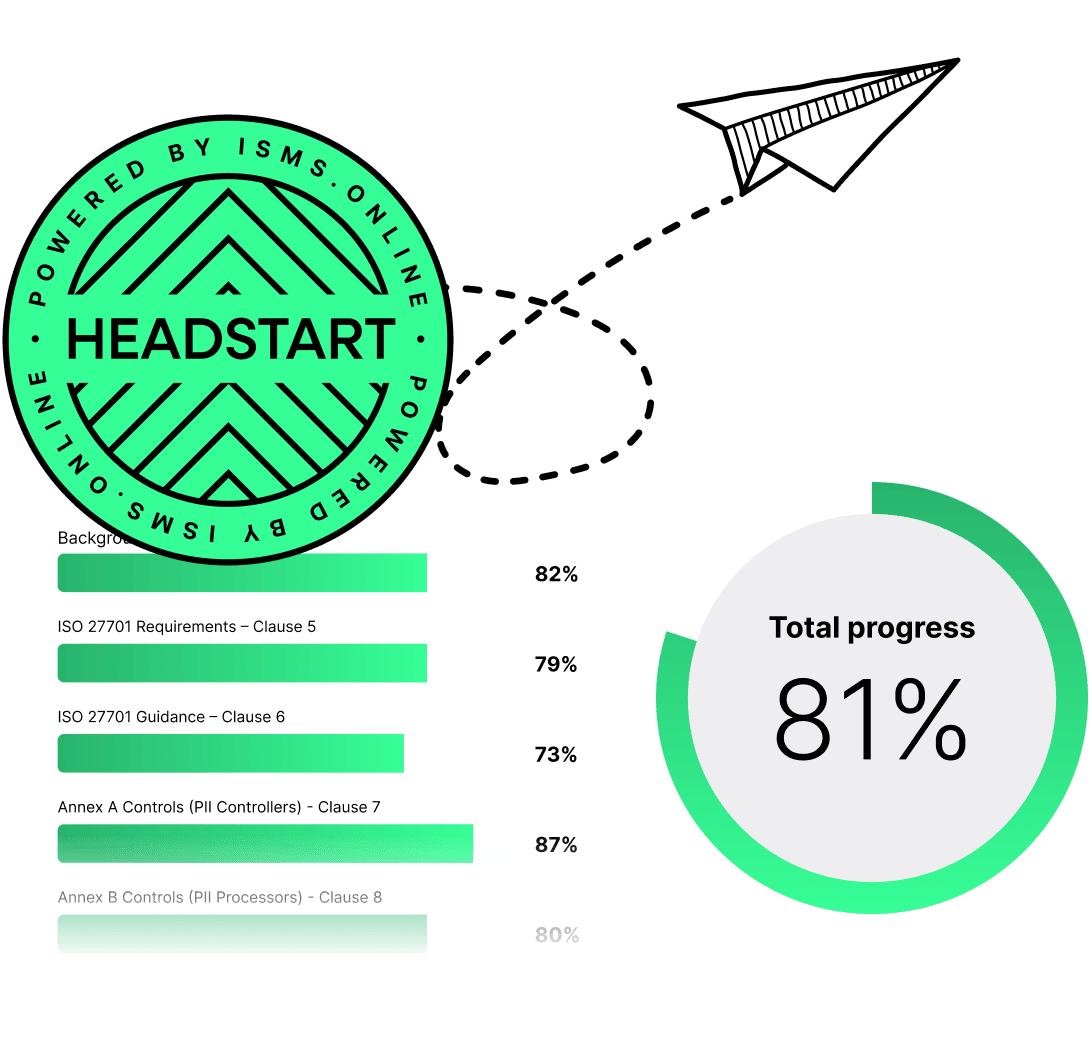
An 81% Headstart from day one
We’ve done the hard work for you, giving you an 81% Headstart from the moment you log on. All you have to do is fill in the blanks.
What Are the Most Frequent Screening Failures-and How Can You Outpace Them?
Screening rarely fails in the obvious places. ISO audit history is full of missed checks for short-term staff, partners, or promoted employees. The audit’s job is not to find your perfect process-it’s to surface the edge cases where details slip and risk enters undetected.
The once-off exception becomes the audit headline.
Common Failures:
- Contractors and Temporary Staff – Onboarded via “trusted” recruiters or fast-tracked, skipping documented checks.
- Internal Moves and Promotions – Internal candidates change risk tier but bypass new screening because they’re “already known.”
- Vendors and Consultants – Granted credentials or physical access without full vetting protocols, especially during high-pressure projects.
Audit friction spikes when you can’t retrieve who was checked and when, for every joiner, mover, and contractor.
Table: Where Screening Gaps Multiply Risk
| Area | Common Misstep | Consequence |
|---|---|---|
| Contractors | Fast-tracked, minimal vetting | Unproven trust in privileged roles |
| Internal Transfers | No new screening at risk elevation | Privilege creep, undefined responsibility |
| Evidence Retention | Scattered/checks outside HR system | No proof in audit, regulatory exposure |
| Risk Tiers | Everyone screened the same | Over/under-screening, wasted resources |
When evidence is decentralised, the best intentions lose out to audit reality.
Process Overlay:
Diagram your onboarding flow-highlight red flags wherever manual exceptions interrupt the automated, auditable chain. Make sure at every “yes-bypass” there’s a logged reason and a digital signature.
How Do You Stay Legal, Regulatory, and Customer-Compliant-Every Time?
Screening isn’t just an HR policy-regulations (GDPR, sector statutes, local law) and ISO itself tie you to clear rules. Consent must be captured and stored, evidence must be deleted on schedule, and any subject must be able to contest a decision. Auditors are coached to detect anywhere you fall short of these layered duties.
Regulatory alignment is non-negotiable; missed consent, slack retention, or accessibility gaps bring legal exposure and reputational risk.
Audit-ready means more than “we did the check”-it means:
- Consent: Every background, reference, or credit check must have explicit, stored permission.
- Retention: You delete *just in time*-not too early, not too late (as per policy and law).
- Access & Subject Rights: Individuals see and challenge their data or outcomes as mandated.
- Evidence: Complete, auditable trail, signed and timestamped, for every check.
The smallest omission-a missing approval, over-retained check, or accidental access-can result in fines, lost contracts, or regulator intervention.
Compliance Tracker Mock-Up:
Dashboard flags: green = all consent current, yellow = retention pending, red = subject rights unanswered.

Free yourself from a mountain of spreadsheets
Embed, expand and scale your compliance, without the mess. IO gives you the resilience and confidence to grow securely.
How Do You Layer Screening for Roles, Risk, and Resource Reality?
ISO 27001 expects role-based tiering: don’t just check everyone the same way-map screening to the risk. This is where legal, audit, and operational logic lock in:
| Role Tier | Example Checks | Review Cycle |
|---|---|---|
| High-Risk | Credit, references, criminal, direct interview | Annually & pre-hire |
| Medium-Risk | References, ID, NDA | Pre-hire, then as needed |
| Low-Risk | Basic ID only | Visitor or temp access |
A well-calibrated risk matrix ensures:
- Critical controls are never skipped for high-impact staff.
- Resources aren’t wasted over-vetting for low-risk, non-permanent access.
- You can prove to auditors and regulators that every exception has a rational basis.
Tiering makes compliance sustainable: intensive where risk is high, efficient where it isn’t.
Remember to refresh this logic after any significant role, business, or regulatory changes-a static matrix rapidly turns into a liability.
What Does “Audit-Ready” Screening Evidence Look Like?
Audit-ready screening transforms onboarding from a box-ticking exercise to a legal-grade, business-defensible asset. For every candidate, joiner, or contractor, you can instantly produce:
- Signed, time-stamped consents
- Logged evidence of every completed check, with associated reviewer and date
- Data access logs showing who viewed or changed evidence, when and why
- Retention schedule matched to policy and law
It’s not just about having data available-it’s about having it immediately accessible, understandably presented, and robust against legal or auditor scrutiny.
Defensive onboarding is record-rich and panic-poor-ready for any question, any time.
Retention Rules in Practice:
Retention is a risk, not just a process step-over-keep, and you’re exposed as much as if you lost essential proofs early. Review cycles and auto-reminders prevent both over-retention and accidental deletion of crucial records.

Manage all your compliance, all in one place
ISMS.online supports over 100 standards and regulations, giving you a single platform for all your compliance needs.
How Can Automation Make Screening Bulletproof with Less Work?
Manual screening collapses under volume, speed, or staff turnover. As compliance needs intensify and hybrid work becomes universal, you need onboarding and vetting flows that accelerate trust-without introducing manual error. Automation enforces process even through staff change and remote growth.
Automated Workflow Highlights:
- Onboarding templates matching ISO 27001 requirements-pre-loaded in ISMS.online and customisable
- Policy-driven To-dos, auto-deployed and tracked for HR, IT, and managers
- Centralised evidence storage: every check, sign-off, escalation, and note captured in one location, with instant, role-based retrieval
- Automated expiry and review alerts: never worry about a check’s shelf-life or missing update
| Step | Manual Weakness | Automated Strength |
|---|---|---|
| Process Distribution | Relies on emails, often skipped | Policy-compliant, auto-assigned |
| Evidence Retrieval | Scattered, lost in staff turnover | Access-logged, instantly recalled |
| Exception Management | Managed “off system”, risky | Tracked, escalated, always reviewed |
| Retention | Forgotten over time | Matches policy, auto-purged or held |
A digital, workflow-driven approach is now audit minimum-manual chaos stands out fast under scrutiny.
Centralised dashboard with “green” status signals for compliant, “yellow” for pending review, and “red” for missing data, visible to all authorised stakeholders-with click-through into evidence.
How Will You Ensure Screening Is Resilient-Not Just Compliant?
Screening is only defensible when it evolves with your organisation. The best teams embed live dashboards, role-based alerts, and cross-disciplinary reviews-so process strengthens each month, not just each audit. HR, IT, Compliance, and Legal must all see onboarding status and controls in real time. You can’t rely on post-hoc data fixing.
- Map onboarding review to any role, business, or regulation change.
- Automate evidence trails for every action-from request through approval to deletion.
- Establish annual, cross-team review of all screening logic, evidence, and roles-embed compliance muscle memory.
True resilience is baked in, not bolted on-make screening a daily competency, not a performative audit sprint.
When you leverage ISMS.online, every onboarding is an opportunity to prove process, trust, and operational sharpness-not just tick a compliance box. Routine embedding turns screening (and its evidence) from a risk into an advantage.
Ready to Raise Your Screening Standard? ISMS.online Makes It Stick
Screening isn’t just an audit hurdle-it’s a core pillar of your operational integrity and market trust. With ISMS.online, you unlock onboarding automation, approval trails, real-time dashboards, and evidence libraries trusted by security teams and auditors globally. What once created audit headaches now becomes a visible confidence asset.
If you want to erase last-minute panic, prove compliance with every onboarding, and show measurable risk reduction to regulators and clients, explore how ISMS.online can transform screening from a chore to a strategic strength-for your people, your board, and your brand.
Frequently Asked Questions
Where do most ISO 27001:2022 Annex A 6.1 screening failures occur-and what habits keep you audit-proof?
Most ISO 27001:2022 6.1 screening failures happen in the grey zone between intention and execution-not in outright neglect, but in missed steps: onboarding contractors in haste, failing to refresh screening when staff change roles, or treating temporary workers as “out of scope.” Auditors pay little attention to your stated policy; what matters is unbroken, time-stamped evidence tracing every screening event to a documented decision and explicit consent. If a single record is absent, an otherwise solid audit can unravel.
High-performing organisations treat screening as a live control: every check, exception, and approval is digitally tracked, access-controlled, and routinely reviewed. Automated reminders prompt managers to complete outstanding steps. Central dashboards grant HR, IT, and compliance leads real-time visibility, ensuring no new joiner or mover falls through the cracks-even as projects scale or teams change shape.
True compliance is built on invisible habits, not headline policies.
Resilient screening systems: what to avoid and what to enforce
- Avoid treating temporary and contract staff as exceptions-every role requires the same scrutiny.
- Don’t scatter evidence across email, HR folders, and spreadsheets; centralise in a permissioned ISMS.
- Shift from a “one-off” screening mindset to a continual process, with periodic internal spot-checks.
How is ISO 27001 risk-based screening different from typical background checks?
ISO 27001 Annex A 6.1 makes risk-based screening an obligation-not a nice-to-have. This means you must assess every role for the sensitivity of information it can access and calibrate checks accordingly. In contrast, generic background checks apply a flat process, screening every role-finance director or temp-at the same level, which either wastes resources or leaves gaps.
With ISO 27001, you need a living risk matrix that maps each job function to the information, systems, or customer data it touches. For high-risk or privileged roles, enhanced vetting-such as criminal record, credit, and reference checks-is expected. Lower-risk or entry-level positions may only need identity verification. This mapping should be a dynamic artefact in your ISMS, reviewed after organisational or regulatory changes and always ready for an auditor’s inspection ((https://advisera.com/iso27001/control-6-1-screening/)).
How to implement a defensible risk-tiered model
- Maintain a live inventory of roles and assign each to a risk tier.
- Define which checks apply per tier, and record your rationale.
- Review and adjust your model when business, legal, or team changes arise.
What evidence demonstrates ISO 27001 6.1 screening compliance to auditors?
Auditors are proof-driven: they want a complete digital audit trail for every “joiner, mover, or leaver.” Be ready to produce signed consent forms (with clear timestamps), logs of which checks were performed by whom, evidence of exceptions (and documented approval rationale), and strict records showing who can access screening data-and for how long it’s retained before deletion. Maintaining these records in a dedicated ISMS platform makes access, permissioning, and reporting simple.
Modern organisations rely on automated reminders for soon-to-expire documents or renewed consent, so compliance is maintained day-to-day-not just for audit season ((https://isms.online/iso-27001/annex-a/6-1-screening-2022/)). When evidence is one click away and up to date, audits become routine rather than high-drama.
Auditor priorities: what will they ask?
- Where is your signed evidence of candidate or employee consent for sensitive background checks?
- Who reviewed and approved any exceptions, and is that documented?
- By what method do you control and eventually delete sensitive screening records in line with policy?
How do leading organisations navigate global legal, privacy, and contractual screening demands?
Top organisations view screening as a three-way intersection: security controls, privacy obligations, and regulatory or contractual demands. They collect and time-stamp explicit consent for every check; segment and retain records according to jurisdiction or contract requirements; and enforce automated deletion in line with policy and privacy regulations (like GDPR). Subject access rights-your team’s ability to review or challenge their screening data-are central, not an afterthought.
When operating across borders or under strict client contracts, annual jurisdictional reviews ensure every role’s vetting is valid. Dashboards flag region-specific or role-specific requirements. Contractual obligations referencing ISO 27001 demand you prove screening has occurred. With permissioned logs and visual status tracking, you can offer real-time proof-while staying in line with every legal, security, and privacy line drawn ((https://riskassociates.com/12-mistakes-to-avoid-during-iso-iec-27001-audits/)).
Integrating compliance across domains
- Automate consent collection and securely file each record.
- Set and enforce country-by-country retention policies in your ISMS.
- Use dashboards to segment status by geography, contract, or role-ready for client, board, or regulator review.
What automations turn screening compliance from a stressor to a strategic strength?
With a robust ISMS platform like ISMS.online, screening stops being a scramble and becomes part of your business’s operational edge. Pre-built, policy-driven templates guide HR and hiring managers through every vetting step; To-dos are pre-assigned and progress-tracked automatically; uploads are logged the moment consent, references, or background checks complete; automated expiry alerts prevent forgotten renewals.
Dashboards offer real-time clarity: who’s new, who’s pending, who’s out of compliance. Evidence logs are audit-ready-no more manual chasing for missing files on deadline day. As regulations or hiring practices evolve, workflows can be updated centrally, ensuring no blind spots emerge.
By the time someone asks, you already have the answer.
Core outcomes of automation
- Human error and policy drift are minimised across both central and remote teams.
- Audit and board reporting shifts from last-minute panic to continuous readiness.
- Compliance confidence ripples outward-internal teams and external partners see your diligence consistently.
How does ISMS.online ensure ISO 27001 6.1 screening is scalable, future-ready, and audit-secure?
ISMS.online embeds screening into your business DNA-turning complex policy and proof into guided digital workflows, complete with user-level evidence logs and strict, role-based access. Every onboarding, mover, or contract event is mapped, recorded, and instantly auditable. Dynamic reminders surface risks-like expiring or missing documents-long before an audit triggers panic. Data privacy is fully automated: consent forms, retention, subject access, and deletion all follow policy by default, not only when someone remembers.
Whether scaling up for rapid growth or pivoting to meet new regulations/standards, ISMS.online evolves in pace with your business. Crisp dashboards, automated workflows, and integrated audit logs make your compliance transparent to all stakeholders, reducing audit prep from “heroics” to everyday routine. In the eyes of clients, regulators, and partners, your screening protocol becomes a signature of integrity and resilience-evidence of a culture built on trust, not just compliance.
Future-proofing compliance investment
- Workflows adapt instantly to law, contract, or standard changes-no patchwork fixes.
- Every manager, auditor, or regulator can view real-time screening status by role or geography.
- Compliance is visible, sustainable, and woven straight into your growth model.






