





































Can Your Organisation Spot Invisible Risks Before They Escalate?
No organisation is immune to security surprises-what matters is how quickly and universally you recognise the early warning signs. Most teams encounter a steady stream of minor glitches, system alerts, or unexplained access attempts every day. The real challenge? Over 80% of major breaches began as seemingly minor, overlooked “events” (Verizon DBIR). The organisations best positioned to avoid disaster are those turning these whispers into meaningful action by empowering every individual to report-not just react.
Security strength depends on hearing what most teams dismiss as background noise.
When staff assume “that’s probably nothing” or fear “bothering IT,” critical clues remain buried. ISO 27001:2022 Annex A Control 6.8 sets a clear expectation: everyone in your organisation should be empowered-and encouraged-to report any actual or suspected event affecting your information security (Advisera). This is not bureaucracy for bureaucracy’s sake. Organisations where issues are caught early create a safety net that stops mistakes or attacks in their tracks.
A culture of open, guilt-free reporting is a proven competitive advantage. Teams that engage everyone in “see it, say it” habits consistently demonstrate faster risk containment, reduced legal exposure, and higher trust from executives and regulators (IBM Data Breach Report). Security isn’t a department-it’s a discipline of collective vigilance.
What’s the Real Difference Between an Event, Incident, Near-Miss, and Compliance Gap?
Many organisations get trapped by semantics-treating everything as either “nothing” or “a crisis.” This confusion leads directly to critical oversights or endless firefighting, especially when staff aren’t certain what, when, or how to report. The result? Missed warning signs and complicated, frustrating audits.
When only egregious issues are reported, small but significant threats remain hidden. Get definitions right and staff will report with confidence; blur terms and you’ll either be chasing “alert fatigue” or failing to notice what matters (ISEO Blue).
Comparing Common Reporting Terms: Which Events Belong on Your Radar?
Organisations need clarity-here’s a simple baseline for training and audit consistency:
| Term | ISO 27001 Definition / Context | Example |
|---|---|---|
| **Event** | Any unusual activity affecting information security | Employee sees a strange login |
| **Incident** | Proven breakdown: confidentiality, integrity, availability | Malware disables payroll |
| **Near-miss** | Risk almost materialises, is narrowly avoided | Staff nearly clicks phishing link |
| **Compliance Gap** | Failure to meet a policy or control requirement | Policy deadline missed, unsigned doc |
A clear table like this demystifies reporting and builds audit confidence across your entire team.
The line between a minor event and a crisis is just one unreported signal.
Trust and awareness must replace confusion. Set thresholds low: “If in doubt, report.” That’s how you convert passing worries into managed risks-and erase audit ambiguities permanently.
ISO 27001 made easy
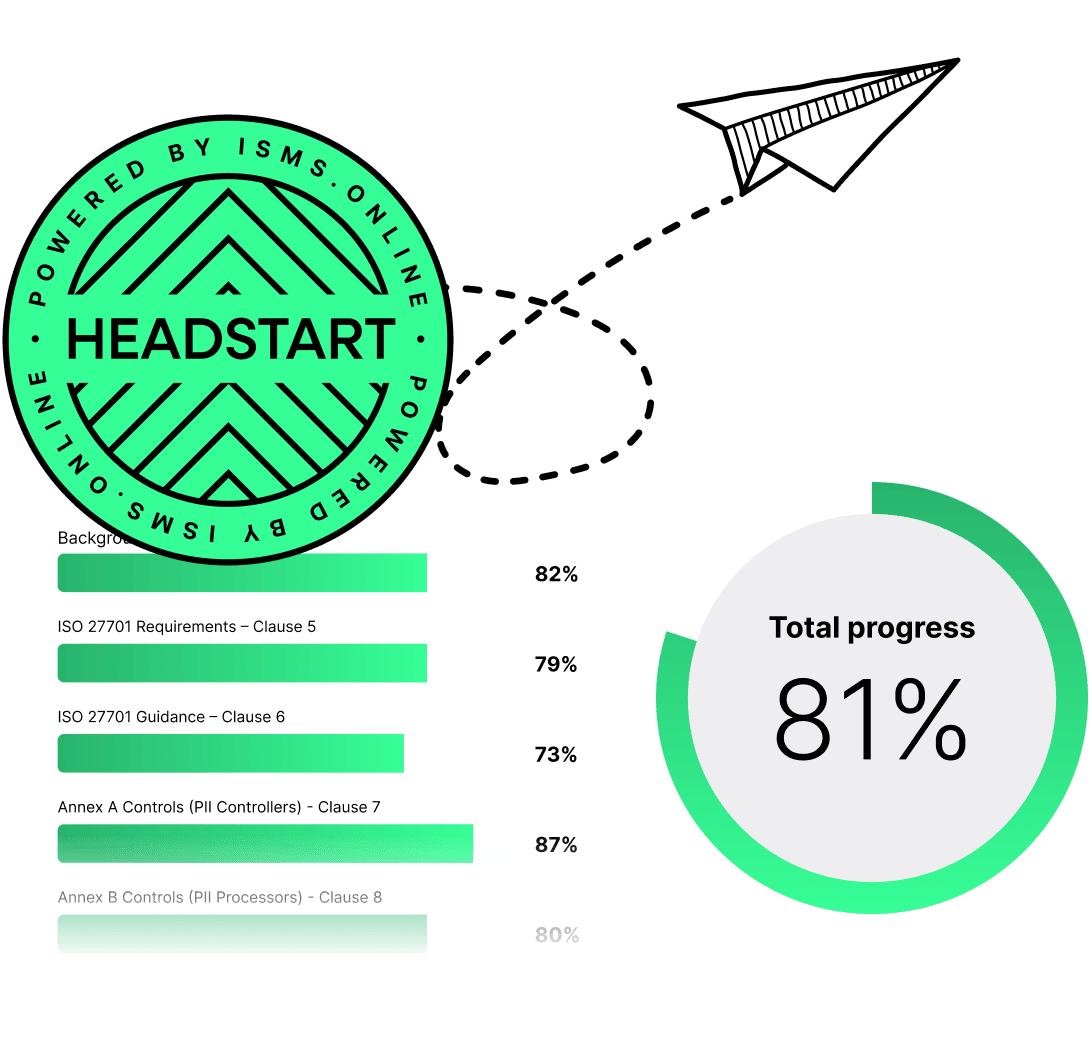
An 81% Headstart from day one
We’ve done the hard work for you, giving you an 81% Headstart from the moment you log on. All you have to do is fill in the blanks.
Do Your Teams Respond Fast Enough to Prevent Loss, Not Just Record It?
A reporting culture is only as strong as its speed and responsiveness. There’s little value documenting an issue if months go by before action. The median time to detect a breach clocks in at over 200 days for many organisations (Ponemon Institute). This means a window of vulnerability wide enough for catastrophic loss.
Speed of response, not just meticulous records, is how you convert risks into resilience.
To ensure event reporting achieves outcomes:
- Define triggers and responsibilities.: Everyone should know exactly *who* to tell, *when*, and *how*-no guesswork.
- Keep logs complete and verifiable.: Memories fade; digital records don’t. Create signed, immutable trails that stand up to scrutiny.
- Test traceability regularly.: Could you, today, re-construct the timeline of a past event from report to closure for an auditor?
Companies with rigorous reporting and escalation procedures consistently achieve faster containment, lower fines, and more favourable insurance positions (Insurance Journal). Regulators, too, increasingly expect transparent, time-stamped evidence, not just piecemeal intentions (ENISA).
Are Manual Reporting Methods Sabotaging Your Security and Staff Morale?
Legacy event reporting-whether on paper, clunky forms, or shared inboxes-invites errors, omissions, and fatigue. Missed or duplicated reports, lost submissions, and burned-out staff are inevitable. Gartner reports over 40% of security events are missed when organisations rely on manual tracking (Gartner).
Frictionless, digital reporting isn’t a nice-to-have-it’s now the cost of resilience.
Excessive manual steps often breed resignation (“why bother?”), especially when acknowledgement is slow or follow-up is unclear. IT teams quickly drown in low-value responses, pushing true risks into the background (ISACA).
How high-performing organisations avoid these traps:
- Instant acknowledgement: Every report is greeted-staff see their vigilance is valued.
- Automatic assignment: Incidents are routed to the right people-no lost tickets.
- Feedback loop: Originators are updated on outcomes-transparency sustains engagement.
Digital, closed-loop platforms that deliver these features can reduce recurring risk rates and transform reporting from chore to pride (Splunk). Smarter reporting is not just technical efficiency-it’s staff empowerment and cultural buy-in.

Free yourself from a mountain of spreadsheets
Embed, expand and scale your compliance, without the mess. IO gives you the resilience and confidence to grow securely.
How Can You Actually Prove Your Reporting Works in Practice?
Auditors, regulators, and insurers are sceptical of claims unsupported by robust evidence. Policies alone are never enough-“can you show the log?” is the new universal audit question. If reporting trails are patchy, subjective, or open to editing, expect intense scrutiny and possible compliance failures.
Your credibility depends on evidence, not just procedure.
The leading practices include:
- Notification speed benchmarking: Regulations such as NIS 2 and GDPR mandate strict timelines for reporting to customers and authorities.
- Immutable, audit-ready logs: Secure digital records that are timestamped and tamper-evident, always accessible for reviewers.
- Independent validation: Third-party certification and digital logging systems prevent audits from devolving into “he-said, she-said” disputes.
Quick Comparison: Audit-Ready Reporting Methods
This table clarifies why moving beyond spreadsheets is now a compliance necessity:
| Method | Audit Risk | Board/Regulator Value |
|---|---|---|
| Manual (paper/email) | Very high | No verifiable trail |
| Spreadsheets | High | Easy to alter, data gaps |
| Secure digital logs | Low | Immutable, searchable, audit-fast |
In modern audits, manual and spreadsheet-based methods regularly fail due to forgery or error risk. Equip your team with this table-the justification for modernising your approach quickly becomes clear.
If you’re unable to map an event’s full journey, you aren’t controlling security-you’re accumulating liabilities and crossing your fingers.
Is Automation and Integration Turning Your Event Reporting into a Competitive Advantage?
Advanced event reporting is as much about automation and integration as digitisation. The more frictionlessly your system captures and routes events, the quicker risks can be mitigated and lessons learned. Disconnected tools, data silos, and manual processes breed duplicative efforts, blind spots, and staff disengagement.
Ideal systems now:
- Escalate alerts in real time: to the appropriate responder and stakeholder.
- Integrate with SIEM (Security Information and Event Management) tools: and other security solutions, minimising false alarms and surfacing genuine threats.
- Correlate events against staff training, active policy, and evolving feedback: , supporting regulatory compliance without guesswork.
Automating intake and analysis not only boosts staff morale by eliminating repetitive drudgery, but supports high-velocity learning at the organisation level (Splunk). When reporting data supports multiple regulatory requirements from one platform, audit prep time falls and rework is minimised (TechTarget).
Sharing these improvements with the board and wider team signals a forward-leaning security culture-one that inspires trust from clients, partners, and authorities alike.

Manage all your compliance, all in one place
ISMS.online supports over 100 standards and regulations, giving you a single platform for all your compliance needs.
What Steps Make Frictionless Security Event Reporting an Everyday Habit?
Sustainable reporting practices emerge from design, not chance. When every workflow, onboarding, and daily rhythm reinforces reporting, even “non-IT” staff become active participants in your security net. Research repeatedly finds reporting habits triple when reporting is routine, visible, and acknowledged (Aviso Consultancy).
Blueprint for Everyday Event Reporting
- Integrate reporting into daily workflows: Make it available via intranet, chat, ticketing, and team portals.
- Deliver training with practical, relatable examples, reinforcing the “if ever in doubt, report” reflex.
- Acknowledge every report and always close the loop-reporters learn their input matters, even when issues turn out to be benign.
- Regularly monitor closure rates, engagement, and improvement metrics-and share these at all-hands or safety briefings to build momentum.
- Tweak your approach: Run monthly or quarterly reviews; refine triggers, retrain where needed, respond quickly to changing threats or staff feedback.
When reporting is easy and feedback is real, vigilance becomes a shared habit-not a compliance box ticked in a rush.
Organisations that reward even “false alarms” quickly build a culture where staff report without hesitation, multiplying your early-warning capacity for new and evolving threats.
How Can Reporting Maturity and Adaptability Futureproof Your Organisation?
A totally “quiet” reporting log looks good to the untrained eye, but experienced auditors call it what it is-a silent failure. The healthiest security cultures show a steady or increasing volume of reported events and managed incidents (Verizon DBIR).
- Run pulse surveys: Go beyond event counts-regular staff surveys keep reporting mindsets sharp and highlight gaps (Ponemon Institute).
- Deploy real-time analytics: Identifying where risks recurrently crop up allows for rapid intervention before issues escalate enterprise-wide.
- Feed lessons directly into policy and training cycles: Reporting data should guide real change, not pile up in forgotten logs (TechTarget).
Maturity Ladder: Advancing Event Reporting
Chart your progress against this visual roadmap:
| Level | Common Practice | Audit/Business Outcome |
|---|---|---|
| **Ad Hoc** | Scattered, informal reporting | High risk, non-compliance |
| **Reactive** | Manual forms/emails | Many missed incidents, heavy admin |
| **Process-driven** | Defined steps, basic training | Better awareness, some bottlenecks |
| **Automated/Closed-loop** | Full digitisation, integration | Audit-ready, continuous learning |
Regularly sharing this ladder brings self-awareness and motivation to move up a level each quarter.
The most secure organisations treat every event as both a risk and a lesson. Audit readiness and resilience go hand in hand.
The real transformation comes when insights from event logs actively shape new controls, staff training, and risk management-turning compliance from a rigid checklist into a vibrant, adaptive system.
Unlock Resilience: Implement ISMS.online Today
A robust, living approach to event reporting is now the price of admission for resilient, audit-ready business. With automated dashboards, digital logs, and process-rich workflows, ISMS.online has enabled thousands of teams to replace uncertainty, endless spreadsheets, and fragmented tracking with proactive, transparent, and actionable security disciplines (ISMS.online Solutions).
Every step, from daily reporting to annual management review, becomes easier and more defensible-with the result that compliance anxiety fades and genuine readiness takes root (ISMS.online Customers). Automated evidence gathering and universal process integration embed a culture where teams, boards, and auditors see one reliable storey: vigilance by design, resilience in practice.
If you’re ready to move beyond wishful thinking and compliance headaches, let your next audit (and every stakeholder) see: transparent logs, engaged teams, and a platform that ensures event reporting is more than policy-it’s your signature of trust, clarity, and continual improvement.
Frequently Asked Questions
Who is responsible-and how should responsibilities be assigned-when reporting information security events under ISO 27001:2022 clause 6.8?
While your CEO, board, or designated information security lead holds final responsibility for information security event reporting, every employee, contractor, and extended team member becomes your “first radar.” Effective reporting hinges on clear, role-tailored responsibility: leadership must set policy and expectations, managers operationalise accountability through team training and positive reinforcement, and IT/security teams handle triage, escalation, and lessons learned. Crucially, an audit-ready ISMS explicitly documents these assignments-no grey areas, no “I thought that was someone else’s job.” Outside the executive circle, staff must not only be able to recite “who to tell, how, and when,” but also feel confident their input matters and won’t backfire. Auditors seek evidence of clarity in roles and active engagement, not just a policy file. If your event reporting plan stops at top management, exposure remains; resilience is built when every team member is empowered and trained as a sentinel.
Defining and demonstrating real accountability
- Top management: Sets the policy, reviews KPIs, funds system improvements.
- Managers/leads: Reinforce, embed, and monitor accountability in the team.
- Security/IT: Custodians of operational workflows, triage, and closure.
- All staff: Vigilant detection, timely reporting, following known channels.
- Auditors: Look for clear RACI (Responsible, Accountable, Consulted, Informed) assignments and real-world reporting logs.
Security culture becomes real when frontline staff trust their report will be handled seriously, not passed over or punished.
What evidence and documentation prove compliance with ISO 27001:2022 6.8 in the real world?
Auditors expect proof both on paper and in action. Documentation must spell out reporting structures (RACI charts, policies, role descriptions), procedures (step-by-step guides, escalation flowcharts), and staff training or communications (records of awareness sessions, sample FAQs, acknowledgements). Operational evidence is even more vital: live or historical incident logs (including false alarms and near-misses), clear escalation trails with timestamps, feedback and closure notes, and records of regular reviews or drills. Spot-checking random events or asking staff to describe the process is common practice. Your ISMS must show that reporting is lived as a routine-not a formality reserved for annual review.
| Evidence Type | Audit Examples | Value to Auditors |
|---|---|---|
| Policy/process docs | RACI, swimlane diagrams, SOPs, reporting policy | Proves assignment and clarity |
| Operational records | Incident/event logs, escalation forms | Demonstrates active reporting |
| Training engagement | Attendance, acknowledgements, quizzes | Staff readiness and buy-in |
| Closure & feedback | Evidence of response/outcome, lessons learned | Shows real loop closure |
If staff and records can’t explain or show the process, the paper documentation fails the test.
How do you define “event” versus “incident,” and does everything get reported?
A security event is any observable occurrence involving information assets-including anything that could compromise confidentiality, integrity, or availability. Most events are not actual “incidents.” An incident is a confirmed breach or attempted breach. The key is that all potential events should be reported-even if unlikely, ambiguous, or seemingly minor. This over-reporting approach uncovers underlying weaknesses and allows for trend/trouble-spot analysis. Example: a lost USB drive (event) is reported and later found; if it’s discovered the drive had customer data, it escalates to an incident; if no data, it’s closed as a non-incident but still logged for awareness and process improvement. Your ISMS should encourage reporting up the chain from “odd behaviour” to confirmed breach, not just high-profile incidents.
Event versus incident-practical distinctions
- Event: Unusual login attempt, a file attachment that won’t open, lost badge-even if quickly recovered.
- Incident: Malware infection, unauthorised access, sensitive data sent externally.
A robust system teaches: “Report first, let security classify it.”
How do automation and SIEM tools transform event reporting for ISO 27001:2022 6.8?
Automation elevates event reporting from a manual, error-prone channel to a systematic, auditable process. Modern organisations use tools like SIEM (Security Information and Event Management) or integrated ticketing systems to ensure:
- Continuous capture: Events are logged 24/7; nothing falls through schedule or awareness gaps.
- Real-time escalation: Alerts automatically trigger action or investigation-removing lag between event and response.
- Traceability: Digital logs with immutable timestamps make audits seamless and rapid.
- Closed communication loops: Staff get updates or closure feedback, boosting trust and ongoing engagement.
- Noise reduction: Smart filtering detects patterns and isolates events worth human escalation, so genuine issues aren’t drowned out by false positives.
For auditors-and your leadership-this means no hunting through emails, ad-hoc spreadsheets, or memory. Reporting is structured, searchable, and remains audit-ready at all times.
Policy in practice: Manual vs. automated
| Method | Weaknesses Addressed | Audit Advantages |
|---|---|---|
| Manual (email, phone) | Risk of missed events, bottlenecks | Harder to prove traceability |
| Automated (SIEM, tickets) | Consistent, rapid action, lower human error | Instantly auditable, real-time dashboards |
How should staff report events to ensure both compliance and psychological safety?
Your ISMS is only as strong as the willingness of staff to use it. Build a “safe to report” culture by:
- Clear, simple channels: Platforms, hotlines, or apps with stepwise prompts, not email chains.
- Immediate reporting: Don’t question severity; err on the side of logging-let experts assess after.
- No penalty for error: Reward or thank those who report, even if false alarms; discourage blaming, shaming, or ridicule.
- Feedback as standard: Everyone receives an update or outcome (“thank you, here’s what happened next”).
- Ongoing reminders: Reinforce with regular stories, alerts, or quick team debriefs: “This was caught because it was reported early.”
Failures aren’t born from over-reporting; they thrive in cultures where silence is safer than action.
Leaders must be visible in praising reporting, not just expecting it. Anonymous reporting mechanisms and whistleblower protections further cement trust in the process.
What KPIs and metrics matter most to prove your event reporting system works-and evolves?
Modern compliance demands data-driven proof of effectiveness-not just event counts. Key metrics include:
- Event volume: An increasing or steady stream indicates healthy vigilance; zero events typically signals a broken or fearful culture.
- Detection-to-notification time: Fast reporting means alert, empowered teams and timely response.
- Issue closure rate: Proportion of logged events resolved (ideally >90% closure) denotes process maturity.
- Near-misses and repeats: Tracking these shows learning-adapting processes to prevent reoccurrence.
- Training coverage: Percentage of staff engaged in awareness activities, tracked quarterly or annually.
| KPI | What It Measures | What It Signals |
|---|---|---|
| Number of events reported | Reporting culture, engagement | Silence ≠ safety, vigilance >0 |
| Detection-to-report timing | Awareness, speed of escalation | Gaps = risk |
| Issue closure / resolution | Management follow-through | High = effective, Low = bottleneck |
| Repeat events/near-misses | Lessons learned vs. recurring mistakes | Improving = adaptive, Flat = blind spot |
| Training participation | Inclusion, staff reach | Engagement is lived, not claimed |
Well-chosen KPIs become your dashboard to resilience-and provide the proof leadership, customers, and auditors now expect. If you see dips, investigate early and course-correct: a reporting system’s silence is your loudest warning sign.
Your reporting programme isn’t just about passing an audit. It’s the nervous system that keeps your information assets defended and your entire business credible-internally, to regulators, and the customers you serve.






