





































Why Is Separating Your Environments the Bedrock of Real Security?
No modern security programme is credible if development, test, and production environments blur together-even briefly. Separation is the keystone that stands between your business and the headlines nobody wants. One careless overlap, a test script poking a live data stream, or a developer’s “just for now” access in production can unravel months of diligent work. Customers, auditors, and your own board demand proof of airtight boundaries-not hopeful intentions.
Stakeholder trust is anchored more by invisible safeguards than by visible promises.
When regulatory bodies like the UK ICO penalise firms for neglected boundaries-and news of such lapses surfaces instantly-environmental separation becomes more than an IT checklist: it’s an operational necessity and a reputational firewall. Hard evidence shows: where clear separation is real, security incidents are rare, audit findings are few, and trust capital remains intact. Treating ISO 27001:2022 Annex A 8.31 as a compliance “suggestion” is a shortcut to risk; mature orgs accept it as the new due diligence baseline ([Splunk]; [Lawfare]; [ICO 2022]).
How Does Meticulous Documentation Turn Boundary Risk Into Operational Control?
Clarity is your frontline defence-both for people and for systems. It’s not enough to declare environments “separate”; you must show how, where, and by whom. For every environment, there should be living documentation: naming conventions, tagging standards, access maps, and boundary diagrams that make trust visible and exceptions traceable.
When a new engineer joins, or an auditor makes a spot check, the absence of clear, up-to-date documentation translates instantly into suspicion-and often actual risk. Handover confusion, undocumented configs, and hidden “shadow IT” emerge where documentation lapses, not just where technology falters ([Azure]; [Pluralsight]; [TechRepublic]).
What you can’t see, you can’t protect-and auditors won’t trust.
Strong organisations treat their environment documentation as a dashboard, not a static PDF. Visible boundary maps and real-time tagging mean people and systems always “know where they stand.” This is your antidote to accidental cross-contamination-turning the invisible into the accountable.
ISO 27001 made easy
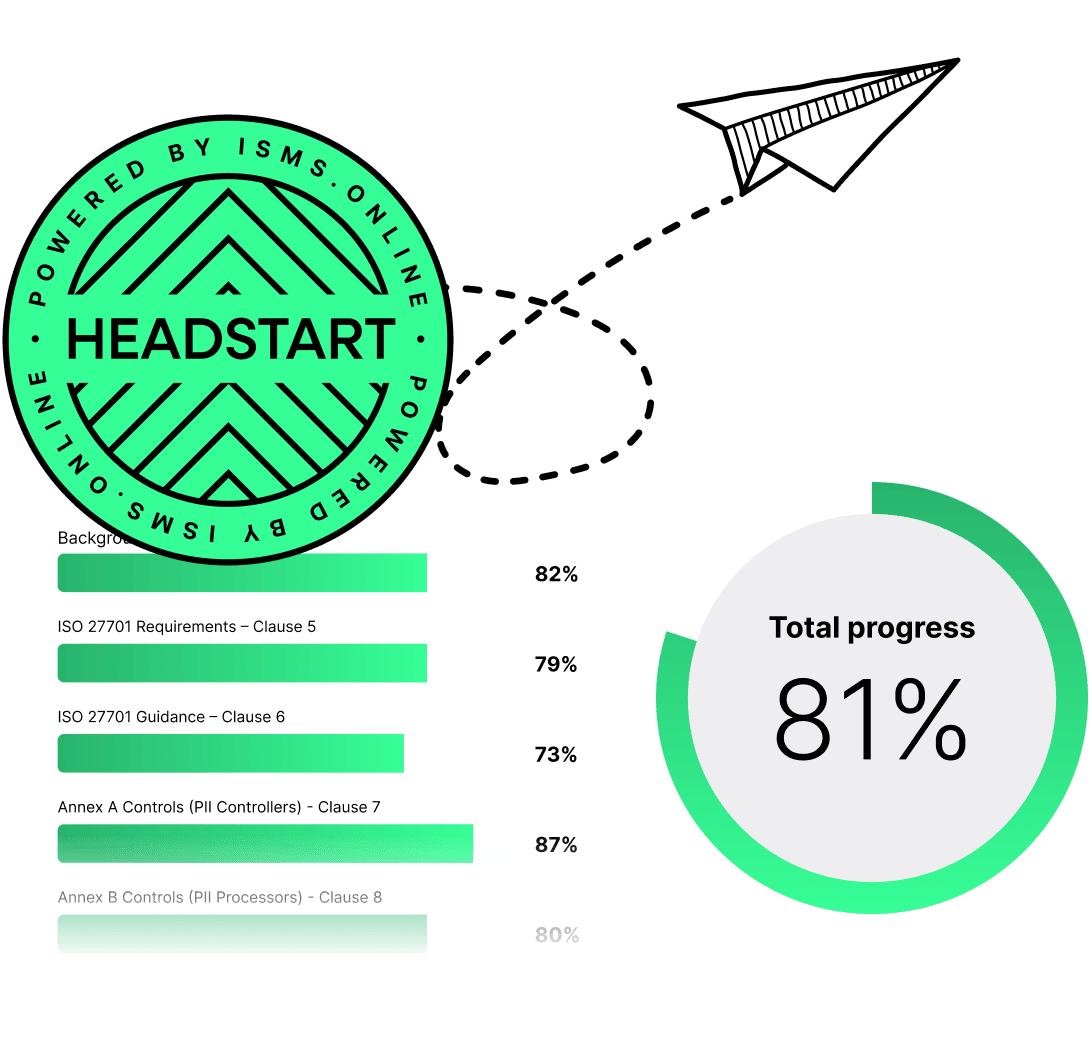
An 81% Headstart from day one
We’ve done the hard work for you, giving you an 81% Headstart from the moment you log on. All you have to do is fill in the blanks.
How Do the Smallest Boundary Lapses Trigger Costly Breaches?
Minor exceptions snowball into headline-making failure. Security is rarely lost in dramatic fashion; it’s eroded by small lapses: real data copied into tests, credentials shared for a “quick fix,” or manual migrations skipping reviews. Regulators now flag the individuals responsible and fines are immediate, not hypothetical ([ICO]; [Accountancy Daily]).
Table: How Separation Lapses Drive Real-World Breaches
| Scenario | Control Failure | Fallout |
|---|---|---|
| Live data in test | No anonymization | Data breach, regulatory fine |
| Shared credentials | Weak/no RBAC, reuse | Sabotage, lateral movement |
| Unreviewed migrations | No sign-off, poor tracking | Service outage, compliance gap |
| Shadow environments | Not inventoried | Hidden risk, audit finding |
| Collapsed env boundaries | No technical barriers | Cross-impact, customer loss |
Patterns from major post-mortems show the “first domino” is almost always invisible at the moment-a shortcut, exception, or manual override that breaks the separation policy in practice ([Forrester]). You protect your reputation not by policy alone, but by neutralising these small, daily risks before they escalate.
How Can You Detect and Halt Boundary Drift in Real Time?
Separation is eroded gradually, not overnight. Exceptions become norms, monitoring falls out of sync, and “temporary” permissions never get revoked. If you don’t track configuration drift, privilege escalation, and policy exceptions in real time, invisible risk quietly accumulates.
Proactive teams deploy automation: scripts and tooling that surface every unexpected change, deviation, or merge ([Rapid7]; [BMC]). Weekly access reviews and auto-alerts on privilege changes replace manual spot checks. Metrics-privileged actions, exception rate per environment, configuration drift incidents-turn guesswork into actionable triggers ([Dataversity]).
If you’re not measuring the drift, your environment is already merging.
Executives and DevOps leaders alike gain peace of mind only when drift is flagged, trended, and remediated before an auditor or attacker finds it. Control isn’t static; it’s a living, measurable discipline.

Free yourself from a mountain of spreadsheets
Embed, expand and scale your compliance, without the mess. IO gives you the resilience and confidence to grow securely.
Who Really Owns Each Environment, and How Do You Embed That Accountability?
Accountability means named ownership. If “everyone” is responsible, then no one truly is. When your ISMS maps each environment to a specific role-with permissions, review cadence, and incident response duty codified-confusion and finger-pointing fade. Mature organisations make this visible in dashboards and logs, not just policy documents ([TechTarget]; [CIO.com]).
| Role | Dev | Test | Production |
|---|---|---|---|
| Developers | Full (own code/config) | Limited (no prod data) | No direct access |
| QA/Testers | Test data only | Full (no production linkage) | Logs/errors (read-only) |
| IT/SecOps | Infrastructure, security | Deploys, config | Firewalls/modules, controls |
| App Owners | Policy input, support | Review before release | Monitor, escalate |
By aligning people, process, and technology, you convert separation from a theoretical line into a daily operational habit-faster, more resilient, and easier to prove to regulators.
What Moves a Team From “Good Enough” to Resilient Separation?
Manual controls hit their limit fast. In the world of scale, turnover, cloud acceleration, and constant deployment, a reliance on “email sign-offs” and periodic manual review can’t keep up. Resilient teams embrace automation for tagging, access review, exception tracking, and audit logging ([CloudAcademy]).
| Control Area | Manual (Legacy) | Automated (Resilience-Mature) |
|---|---|---|
| Tagging | Staff-entered, error-prone | IaC-driven, proof-exported |
| Access reviews | Annual or ad hoc, reactive | Scheduled, logged, exception-tracked |
| Segregation | Policy-driven (hopeful) | Pipeline-embedded, enforced by CI/CD |
| Audit trail | Human logging, scattered | Unified, always export-ready |
| Exceptions | Email/meetings off record | Workflow-flagged, escalation mapped |
Case studies show: even elite DevOps orgs have failed audits when “just this once” production access wasn’t captured by the automation layer. Resilience means all exceptions, merges, and overrides are flagged, approved, and reversible. The less you rely on staff to “get it right every time,” the more certainty you build.

Manage all your compliance, all in one place
ISMS.online supports over 100 standards and regulations, giving you a single platform for all your compliance needs.
What Metrics Actually Prove Effective Separation to Stakeholders?
Metrics are your living evidence-scanned daily, exportable on demand, and legible for both operators and auditors. Having real KPIs, tied to actionable roles, transforms separation from “words in a policy” to an operational contract ([Protiviti]; [Tableau]). Common separation KPIs include:
| KPI Metric | Demonstrates |
|---|---|
| Unplanned merges (quarterly) | Policy operational in reality |
| % completed access reviews | Consistency, diligence |
| Drift incidents (count/time) | Real-time management |
| Tracked exceptions | Automation covers reality |
| Staff policy ack (quarterly) | Engagement & readiness |
Peer teams feature these on live dashboards. It is not enough to pass an audit once; you must show controls working, consistently, across turnover, platform changes, or M&A. Boards and regulators now expect daily proof-not ad hoc “evidence hunts.”
How Do You Gather and Present Audit-Grade Evidence-Without Scrambling?
Audit confidence is built every day, not in a single desperate push. The ability to demonstrate, at a moment’s notice, how separation is actually maintained-every exception, review, and approval traceable-is now expected ([NCSC]; [Darktrace]; [ISO.org]).
ISMS.online brings this process alive. Automated logs, dashboards, and structured exports-aligned specifically to the 8.31 control-ensure that when an auditor or board reviewer asks for proof, your team presents clarity, not chaos.
The most audit-ready teams are relaxed-because their evidence builds itself with every action, not in a single scramble.
Quarterly sign-offs, real-time environment change logs, tracked exceptions, and acknowledgment receipts are all visible and exportable. This shifts separation from compliance theory into a reputation asset-confidence for boards, trust for clients, credibility for auditors.
Build Separation Maturity and Make Compliance a Source of Confidence
Security doesn’t rest on hope, custom, or heroic vigilance. It’s a discipline-rooted in explicit boundaries, measurable habits, and systematised evidence. With ISMS.online, every change, acknowledgment, and environment policy becomes part of a living, real-time storey. No more last-minute sprints; every control proves itself, every day. As audits and client expectations rise, this platform’s embedded separation functions set a new standard for operational maturity.
When you’re ready to swap anxiety for confidence-and want to show stakeholders your compliance is more than a checkbox-our platform turns invisible controls into visible trust. Experience ISMS.online and put separation at the core of your reputation, resilience, and growth storey.
Frequently Asked Questions
Why do organisations under ISO 27001:2022 8.31 need strict separation between development, test, and production environments-and who is most impacted if they don’t?
Strict separation of environments is mission-critical for any organisation where speed, regulatory scrutiny, or customer trust define success-think SaaS providers deploying weekly, finance or healthcare teams governed by GDPR or NIS2, or enterprises answering RFPs that spotlight environment controls. Under ISO 27001:2022 8.31, these boundaries aren’t “nice to have”-they’re operational insurance: they block accidental code pushes, prevent test data from leaking PII, and ensure outages in pre-prod never threaten live customers. When lines blur, risks multiply-regulators like the ICO penalise firms whose environment slippage exposes personal data, and clients may withhold contracts if you can’t demonstrate clear separation. For trust-driven, compliance-focused, or fast-growing organisations, robust environment segmentation is a business enabler, not overhead; it turns a potential audit weakness into a proven asset (see (https://ico.org.uk/about-the-ico/news-and-events/news-and-blogs/2022/06/failure-to-separate-test-and-production-leads-to-fine/)).
The way you police your environments is the way clients and auditors judge your reliability.
Who is most impacted?
- SaaS companies pushing frequent updates across cloud or hybrid stacks.
- Financial services or healthcare teams under heavy regulatory oversight.
- Any business where RFPs, vendor onboarding, or board review demand evidence of tech discipline.
- Organisations with distributed DevOps, where rapid changes risk accidental crossover.
What invisible shortcuts sabotage genuine environment boundaries-especially in agile or cloud-native DevOps teams?
Most breaches of environment separation grow from habitual shortcuts and cultural drift. In agile, containerized, or cloud-native teams, the most dangerous moves tend to look innocuous at first: reusing credentials across environments (“just for now”), letting real customer data populate test environments, or fast-tracking production fixes without mirroring them in dev/test. These choices steadily erode boundaries, creating blind spots that remain hidden until a breach or compliance failure erupts-a pattern seen in recent sector reports and post-mortems ((https://containerjournal.com/topics/container-security/the-dangers-of-merging-dev-and-prod-via-containers/)).
Subtle mistakes that undermine environment separation:
- Devs or testers with untracked, broad access to production.
- Cloud security groups or VPCs that mesh multiple environments.
- “Temporary” test accounts or exceptions that never get cleaned up.
- Unlogged hotfixes pushed directly to production.
- Staff not retrained as tools or business lines shift; knowledge gaps widen.
Teams often realise too late: One small exception is all an attacker-or an auditor-needs.
How does configuration drift quietly destroy environment boundaries, and what repeatable practices prevent it?
Configuration drift-where once-identical environments diverge as tweaks, patches, or permission changes accumulate-creates the illusion of separation while masking misalignment. Drift arises from untracked fixes, manual interventions, or skipping automation in a “one-off crisis.” The outcome is a growing mismatch: dev/test and production no longer behave alike, and boundary controls become unreliable. Over time, this makes risk invisible until a compliance incident, audit fail, or real-world breach exposes the differences.
Practical ways to control drift:
- Use version-controlled infrastructure templates (IaC, GitOps) so every change is reviewed, logged, and mirrored.
- Automate regular config comparisons (key settings, permission matrices, application versions) across all environments.
- Set automated alerts for any “drift” beyond defined baselines-platforms like AWS, Azure, or third-party tools can provide real-time signalling ((https://www.cloudbees.com/blog/six-ways-to-prevent-configuration-drift-in-devops/)).
- Enforce peer review for every environment-altering change, with live logging.
- Run scheduled, cross-functional reviews and require closure of every open exception or drift alert.
“Cattle, not pets” captures the best philosophy-tear down and rebuild from template, never patch ad-hoc.
Which artefacts and evidence streams actually satisfy auditors, regulators, and client security teams that real separation exists?
Auditors and regulators increasingly reject “static policy” and want proof-in-practice-evidence that’s continuous, role-mapped, and reflective of daily operations. This means up-to-date environment diagrams, automated logs tracking every change (who, when, why), registers showing approvals or exceptions (with closure history), and dashboards surfacing open issues or drift in real time. Stakeholders want assurance that regulated data-especially PII-never leaks from production to lower environments, and that only approved staff, with documented exceptions, can access production data or systems.
Artefacts that pass scrutiny:
- Live environment maps with network segmentation overlays, updated for every architecture change.
- Automated logs and dashboards (not spreadsheets) showing drift, access, approval, and exceptions.
- Status-tracked exception registers, with timestamps and reason codes.
- Staff training results and policy acknowledgment rates.
- Mapping of environments to regulator, client, or internal framework demands.
- Quarterly dashboard snapshots for board/executive reporting (number of drift incidents, closure rates, access reviews).
Consistency and live evidence are the gold standard-if you scramble to reconstruct data before audit day, you’re signalling underlying fragility.
Who owns the health of each environment, and what governance structures prevent accountability gaps as organisations scale?
Ownership of environment separation isn’t a shared sentiment-it must be explicit, assigned, and reviewable. Best practice is to designate individual owners (not just “IT”), responsible for approvals, change reviews, drift response, and incident management for their environment segment. Governance involves scheduled reviews (quarterly, per sprint, before major releases), clear handovers upon team turnover, and automated alerts that route to the named owner whenever boundaries are altered or exceptions are raised (see (https://www.techtarget.com/searchsecurity/tip/Separating-test-and-production-environments-for-ISO-27001)). Board and executive teams expect review of “environment health” as part of regular risk and compliance updates-a standing item, not an annual exercise.
Key governance safeguards:
- Published owner map for each environment (and backup/responsibility ladder).
- Regular, cross-team environment health reviews (business, compliance, tech).
- Automated boundary alerts and drift notifications routed directly to owners.
- Board and exec-level dashboards showing trend metrics and escalation paths.
- Logged, documented handover/escalation on every role shift.
Shared accountability is where boundary failures multiply; ownership is the foundation upon which resilience and auditor trust are built.
How does ISMS.online operationalize continuous, automated environment separation-keeping your compliance always audit-ready and business growth-proof?
ISMS.online embeds environment separation as a living, automated layer within your compliance operations-not as static manuals or one-off spreadsheets. Guided onboarding clarifies boundary requirements; automated workflows capture every change, exception, and policy acknowledgment; and real-time dashboards give you, auditors, clients, and execs instant clarity on environment health. Audit trails, approval registers, and exception logs are surfaced not only for ISO 27001:2022 8.31, but for cross-mapped frameworks (GDPR, NIS2, DORA) and evolving best practices. This approach minimises last-minute scrambles and builds readiness as a daily rhythm-evidence is always current, staff are kept aware, and both technical and business leaders maintain control as scale, regulation, or opportunity demands.
Dashboards, health metrics, and access maps become business accelerators. ISMS.online’s backbone ensures that every audit, deal, or strategic pivot is underpinned by enforced, reviewable, and evolving environment controls-turning compliance from a technical barrier into a growth asset. As regulations shift and your org evolves, you’ll never be caught unprepared; instead, you showcase resilience, operational maturity, and a commitment to trust that competitors must scramble to match.






