





































Why Does Audit Testing Introduce Risks-and What’s At Stake for Modern Organisations?
Audit testing is supposed to strengthen your information security-but if it’s handled without care, it exposes the very risks you’re meant to avoid. Each audit, whether run by an internal team or invited external experts, involves privileged access, probing, or simulated attacks on live systems. Without robust controls, a “routine” audit becomes the spark for disruption, data leakage, or even systemic breaches. Many organisations focus on passing audits and overlook how disruptive audit actions-uncoordinated scans, privilege escalation, restoration from backups, temporary configurations-can ripple across business processes in ways that only become visible when something fails in production.
Every audit shines a light, but it’s the hidden corners that trip you first.
Consider the mounting pressures: rapid shifts to cloud, expanded regulatory demands (ISO 27001:2022, NIS2, GDPR), and highly integrated supply chains. An ill-planned audit, run as a series of tactical checks, can inadvertently halt payroll, block customer transactions, corrupt business data, or reveal legally protected information. Reputation damage, missed SLAs, lost revenue-these are the real-world costs when audit protection is an afterthought.
Worse yet, unclear ownership blurs lines of accountability. Is IT at fault for an outage caused by a sanctioned test? Or is compliance to blame? Such confusion leads to finger-pointing instead of systematic root-cause improvement.
Key point: Audit testing doesn’t just seek weaknesses-it creates the potential for real business-impacting events. Treating audit protection as a strategic discipline is the only way to consistently build operational confidence.
What Hidden Hazards Lurk in Audit Testing-and How Do Organisations Overlook Them?
Audit-induced failures rarely result from obvious technical gaps; more often, it’s the small cracks in communication and handover that cause the most damage. In the push to execute audits on time, organisations cut corners-“quick” admin access for the auditor, skipped notifications, informal test scripts-each a tiny exception that can snowball.
Common Oversights-Where Danger Emerges
- Silent privilege escalation: Temporary test accounts or admin access often linger long past the audit, giving attackers a door left ajar and bypassing zero trust principles.
- Inadequate communications: Teams aren’t notified of planned tests, so business-critical cycles are interrupted-payroll processing, inventory restocking, or customer billing, leading to real operational harm.
- Undefined rollbacks: A failed test corrupts production data, but no quick rollback process exists, leading to data loss or prolonged downtime.
- Third-party blindness: Vendors, partners, or clients affected by outages during audits may be left in the dark, risking contract non-compliance and fractured trust.
- No lessons logged: Near-misses aren’t formally recorded or reviewed, so teams stumble into the same traps every cycle.
Most audit hazards start in the details: missed signals, unclear ownership, and process bypassed for short-term convenience.
Action step: Chart out where, in recent audits, communication broke down, privilege hung around, or incidents nearly occurred. These become your risk “hot spots”-the high-impact focus areas for your next compliance improvement sprint.
ISO 27001 made easy
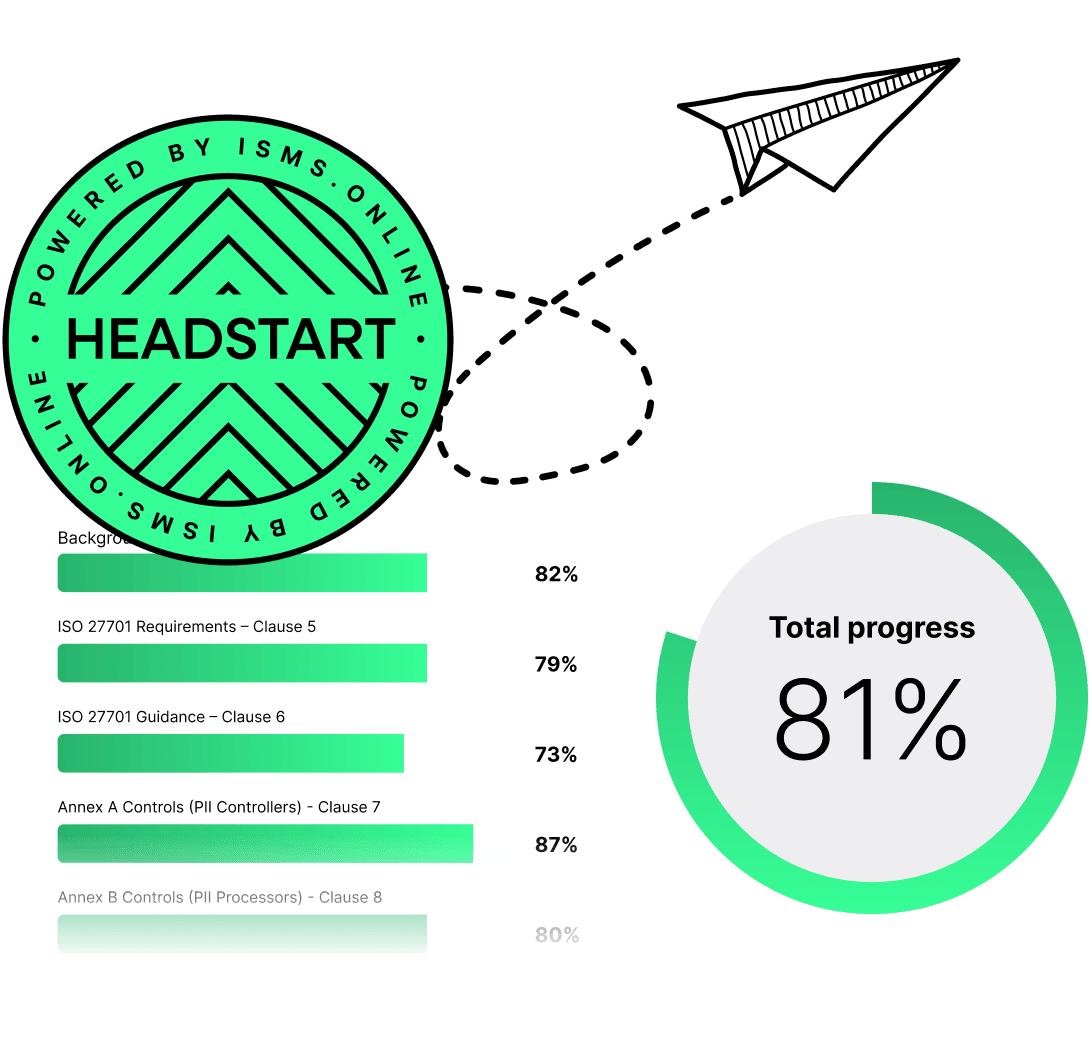
An 81% Headstart from day one
We’ve done the hard work for you, giving you an 81% Headstart from the moment you log on. All you have to do is fill in the blanks.
How Can You Systematically Identify and Preempt Audit-Related Risks?
A mature approach means mapping the field before each audit-documenting what could go wrong before trouble strikes. This is the shift from “audit as test” to “audit as resilience drill.” Leading organisations build a living “audit risk matrix,” translating each scenario (unplanned downtime, data leakage, extended privileges) to a tested, enforced control-with responsibility and fallback plans written in.
It’s not the test itself, but how you defend the system that defines your maturity.
Audit Risk Control Matrix
Here’s a diagnostic table to help your team visualise risk and plan controls:
| Scenario | Weak Approach | Strong Control Action |
|---|---|---|
| Pen test causes downtime | No risk pre-assessment | Plan rollback, instant failover capability |
| Production data exposed | Test data = real data | Data masking, fence off test environments |
| Auditor gains admin access | Unlogged escalation | Time-bound, documented approval-reviewed post |
| Automation misfires | Only fix, no learnings | Log all exceptions, mandate lessons review |
| Ownership blurred | No tracking of who did what | End-to-end logging and activity monitoring |
Audit controls are strongest where the organisation (1) documents every access and action, (2) time-limits every privilege, (3) socialises exceptions/incidents, and (4) practices fast failover or rollback.
Checklist for audit risk ownership:
- Are audit plans reviewed by owners in IT, risk, and business lines-*before* execution begins?
- Is every admin/test account time-limited and individually assigned?
- Are exceptions/near misses captured, discussed, and mapped to updated controls?
- Has your lessons-learned cycle shortened in each successive audit round?
Continuous risk mapping turns every audit into a forward step in resilience-not just a tick-box exercise.
How Do You Harmonise ISO 27001 Audit Controls with Other Standards?
Audit protection isn’t unique to ISO 27001:2022; it echoes across NIST 800-53, COBIT, and more. The core themes are always the same: strict authorization, action logging, oversight, and the ability to roll back or step down risky changes.
| Framework | Authorization | Logging Required | Improvement Loop |
|---|---|---|---|
| ISO 27001 | Management sign-off | All actions logged | Review after each audit |
| NIST 800-53 | Segregate audit roles | Tamper-evident | Update controls regularly |
| COBIT | Role separation | Scheduled log reviews | Audit feedback mapped |
By mapping Annex A.8.34 controls to these frameworks, organisations often satisfy multiple regulatory requirements with a single, integrated process. A unified control dashboard-showing pre-approvals, exceptions, and lessons-learned rate-lets auditors see control maturity across all standards.
Aligning audit controls crafts a compliance foundation that scales with your ambitions-supporting certifications, supplier audits, and cross-border trust at once.

Free yourself from a mountain of spreadsheets
Embed, expand and scale your compliance, without the mess. IO gives you the resilience and confidence to grow securely.
What Step-by-Step Actions Fulfil Annex A.8.34 Requirements in Practice?
Annex A.8.34 is more than a “policy”-it mandates a living process across every audit phase.
1. Strategic Pre-Authorization
Explicit, manager-level sign-off for every test. Document the who, what, and when, with named roles (auditor, test owner, business lead).
2. Access Control Discipline
Audit accounts begin with lowest privilege (read-only or masked data). Any escalations follow formal, time-limited change management procedures. Distinct accounts for audit/test, not reused production IDs.
3. Real-time Logging and Monitoring
Actions-access, config changes, data exports-are logged in real time, with logs shielded from the accounts being used to conduct the audit.
4. Incident and Exception Handling
Unscripted actions are logged immediately, escalated via pre-agreed protocol, and remediated before audit signoff. Every exception is reviewed post-audit and mapped to a corrective action.
5. Lessons-Learned and Process Improvement
After each audit: conduct a structured debrief (across IT, business, audit). Identify successes, failures, and near-misses, locking in concrete improvements with deadlines and owners.
Visuals to consider: a privileges matrix (who can request/access/approve/escalate), and a calendar mapping each control step from initial request to post-mortem.
A living policy means the process runs itself-approval, access, evidence, and feedback embedded in workflows, not trapped in static documents.
How Do You Transform Paper Policies into Living, Automated Controls?
Effective audit controls are not templates stashed in SharePoint or buried in emails-they must become live routines, automated wherever possible.
- Automated workflows: Approval, access grant, and evidence logs flow through your ticketing or compliance platforms. Every action leaves a digital footprint that’s queryable at a moment’s notice.
- Collaborative scripting: Business, IT, and audit co-create test procedures, with built-in pauses or rollbacks if production risk is detected.
- Sandbox-first execution: Tests and tools are tried in non-production settings, with complete logging before introduction to the live environment.
- Live dashboards: Stakeholder views of who has access, running audit permissions, exception tickets, and open lessons-learned-visible at every level up to the board.
- Mandatory debriefs: Every audit includes a review cycle, linking findings to updated controls, training, and next round plans.
When your audit protection lives inside your daily workflow, controls become an asset-not an afterthought.
Want your audits to end with progress, not panic? Automate a feedback loop-so audit findings always set the stage for a stronger future round.

Manage all your compliance, all in one place
ISMS.online supports over 100 standards and regulations, giving you a single platform for all your compliance needs.
What Metrics Prove Audit Testing Controls Are Delivering Value?
You can’t improve what you don’t measure. The right KPIs draw a line between “compliance box-ticking” and genuine resilience.
| KPI | Basic Practice | Embedded Best Practice |
|---|---|---|
| % audit access pre-approved | 50% | 95–100% |
| Audit incident logging completeness | 75% | 99%+ |
| Privileged access expiry rate | Ad-hoc | 100% automated/reviewed |
| Lessons-to-update cycle (days) | 60+ | <14 (post-audit debrief) |
| Real-time dashboard adoption | Occasional | Continuous/stakeholder-wide |
These KPIs are most valuable when tracked quarter by quarter-demonstrating progress, exposing new risk clusters, or highlighting process drift. Automated dashboarding brings instant transparency, moving compliance from the IT back office to executive and board level.
Real-world resilience shows up in repeatable wins: fewer incidents, faster recovery, and more engaged (not just compliant) teams.
How Can Audit Controls Become a Source of Advantage-Not Just Assurance?
When Annex A.8.34 is operationalized, audits become a driver of business trust and visible improvement-not just a tick-box for the regulator. A proactive platform like ISMS.online streamlines the path: workflows for approvals, evidence collation, and lessons-tracking mean audit windows pass without drama, stakeholders see visible value, and proof is always at hand for both auditor and business owner (isms.online).
A resilient compliance function isn’t a badge-it’s a living asset: monitoring, improving, and outperforming expectations.
Teams that embed audit protection controls benefit far beyond lower risk:
- Reduced audit prep/remediation costs.
- Higher SLA consistency.
- Stronger client and partner trust.
- Better staff morale (less firefighting, more recognition).
Are you ready to make audit protection the engine of your business reliability and reputation? With the right controls, every audit builds momentum-creating a culture of continual improvement that outpaces old checklists.
Ready to Move From Audit Anxiety to Resilience Capital with ISMS.online?
Audit protections built on paper are a start. Audit protection woven into your ISMS means compliance isn’t just maintained-it’s an engine for trust, learning, and business growth. As you align with ISO 27001:2022 Annex A.8.34, remember: real value comes when every test, access, and lesson is captured, surfaced, and improved.
Let your next audit be the point at which compliance graduates from a checkbox to a virtuous loop. By choosing systems and workflows that embed living controls, you show auditors, regulators, and your executive team that compliance is not just a mandate but a competitive advantage-one that builds resilience, earns trust, and keeps your business out in front.
Resilience isn’t a finish line. It’s a feedback loop-anchored in every audit action, every piece of evidence, and every lesson learned.
Frequently Asked Questions
Why is ISO 27001:2022 Annex A Control 8.34 critical for safe audit and test activities?
Annex A Control 8.34 protects your information systems during audits and testing by mandating strict scope definition, explicit authorization, and robust monitoring-ensuring that even trusted testing doesn’t inadvertently create new risks or business disruptions. This control requires every audit or test to be planned, approved by accountable management, and implemented using the principle of least privilege (with read-only access whenever feasible), supported by real-time monitoring and a post-activity review. Audit and testing processes are thus transformed from a source of anxiety into a structured opportunity for learning and operational strengthening, building trust among stakeholders and demonstrating an organisation’s maturity in security management (TechTarget, 2023).
How does this reshape your audit culture?
When 8.34 is ingrained, audits and tests become routine, prepared well in advance, and their potential for disruption is minimised. Technical, operations, and leadership teams feel empowered rather than exposed, with each testing cycle fueling tangible improvements rather than recurring risk.
How do you operationalize ISO 27001 8.34 to prove compliance and maintain security?
Making 8.34 a living part of daily operations starts with formally documenting and approving every audit and test. Each event should have a business owner, clear objectives, defined scope, and specified personnel, all recorded in your ISMS (Information Security Management System), ticketing tool, or structured workflow. Enforce the lowest necessary privilege-read-only or temporary access-with automatic expiry dates and real-time logging. Rigorous risk assessment before the audit or test must define what will happen, how to revert changes, and what backups are needed in case of unexpected impacts (Advisera, 2022). Afterwards, analyse logs, conduct incident reviews, capture lessons learned, and update documentation and staff training. This approach weaves audit activities tightly into your organisation’s security fabric-demonstrating not just compliance, but a proactive, resilient culture.
Strong audit processes turn uncertainty into continuous improvement-and form the backbone of real business resilience.
Which day-to-day routines keep your audits secure and efficient under 8.34?
Effective organisations adopt clear, repeatable workflows that embed 8.34 safeguards throughout the audit lifecycle:
Documented approvals and access controls
- All audit/test activities require formal management sign-off, ideally captured within your central compliance platform for traceability.
- Auditors and testers are allocated strictly necessary access only, with time-limited, read-only permissions by default.
Safe-by-design environments and real-time oversight
- Perform tests in non-production environments whenever possible; where unavoidable, production audits are tightly scheduled and protected with up-to-date backups.
- Use tamper-evident logs and live dashboards to track every action, flag anomalies, and prove to regulators and clients that monitoring is robust (BSI Group, 2023).
Proactive reviews and communication
- After each activity, promptly review incidents, collect “lessons learned,” and update procedures to avoid repeating errors (Crowe, 2022).
- Communicate with stakeholders-especially if testing could affect clients, partners, or key business operations-so surprises and reputational risks are avoided.
These routines help minimise threats, reduce audit-related downtime, and create a habit of continual improvement and operational calm.
Where do organisations most commonly fail on 8.34, and how can you avoid those pitfalls?
Frequently observed compliance gaps include:
- Granting excessive privileges: for expediency, exposing sensitive systems to unnecessary risk.
- Launching tests without notification: , resulting in avoidable outages or business confusion (Compliance Week, 2023).
- Neglecting to close out temporary or exception accounts: , leaving “backdoors” for future breaches.
- Skipping or rushing post-audit reviews: , failing to address root causes or recurring process gaps (Security Magazine, 2023).
- Siloed communications: between audit, IT, and business units, resulting in unaddressed dependencies or duplicated effort.
Robust compliance means building visible, enforceable controls into daily workflows, and treating audits as opportunities for improvement-not just as annual hurdles.
How can you harmonise ISO 27001 8.34 with NIST 800-53, COBIT, and other frameworks for unified compliance?
Alignment starts by mapping common requirements across frameworks: authorization, access control, monitoring, and post-event review. Developing a crosswalk matrix enables a “single source of control,” where evidence generated for ISO 27001 8.34 is automatically leveraged for NIST (e.g. AU-2, AC-6), COBIT (DSS05, DSS06), or other standards (Cloud Security Alliance, 2022).
Table: Cross-Framework Audit/Test Control Alignment
| Control Aspect | ISO 27001 8.34 | NIST 800-53 | COBIT |
|---|---|---|---|
| Management Approval | ✓ | ✓ | ✓ |
| Least Privilege | ✓ | ✓ | ✓ |
| Logging/Monitoring | ✓ | ✓ | ✓ |
| Post-Activity Review | ✓ | ✓ | ✓ |
This approach not only streamlines compliance efforts, but also creates a scalable audit infrastructure that auditors and regulators trust.
Which KPIs and real-world evidence demonstrate that 8.34 controls work?
To show that your 8.34 processes are active drivers of security and compliance, track these live metrics:
- Pre-approval rate: % of audits/tests logged and authorised before execution (target: 95%+).
- Temporary access expiry compliance: Ratio of privileges automatically revoked after use.
- Time to incident detection and response: Shorter time indicates effective monitoring and alerting.
- Frequency and speed of post-activity reviews: Are process improvements regularly captured and implemented?
- Audit and test impact on business KPIs: Is there a reduction in unplanned downtime and audit findings?
- Leadership oversight: Inclusion of these KPIs in management or board reporting closes the assurance loop (KPMG, 2023).
Teams using ISMS platforms like ISMS.online can automate collection, analysis, and reporting of these indicators-demonstrating “living” compliance with real operational value.
What does best-in-class, platform-driven 8.34 look like in practice?
Leading organisations use systems like ISMS.online to automate the end-to-end audit/testing lifecycle: pre-approvals are enforced and tracked, access is provisioned and automatically revoked, all actions are logged with real-time visibility, incident reviews are scheduled, and leadership receives dashboard reporting across all facets of 8.34 compliance (ISMS.online, 2023). This turns compliance from a burden into a competitive advantage-audits become calm, transparent, and useful, supporting business reliability and stakeholder confidence.
When audit and test control is embedded in your platform, compliance anxiety drops and every test moves you forward-even under the toughest scrutiny.






