















How can you turn a flood of vulnerabilities into resilience-not just pass audits?
Technical vulnerabilities won’t wait for audit season. They’re multiplying across every cloud app, endpoint, and forgotten device in your organisation, each one a potential doorway for attackers and a new source of boardroom anxiety. ISO 27002:2022 defines these weaknesses as “gaps in assets or controls” open to exploitation, but as any experienced CISO or IT manager knows, the true problem isn’t just finding them-it’s the daily race to triage, prioritise, and close them before the business suffers.
Too often, vulnerability management is treated as a compliance checkbox: run a scan, patch a handful of systems, file the report, and repeat. That mindset leaves organisations open to the all-too-familiar breach headline-because attackers focus on what teams ignore or can’t address in time. In fact, over half of breaches stem from vulnerabilities already known to the defender. With over 25,000 new CVEs logged last year, manual chasing simply cannot scale.
Resilience means closing the smallest gaps before they become tomorrow’s breach.
Regulators and boards now demand more than paper trails; they expect organisations to prove “continuous security,” not just last month’s good intentions (gdpr.eu). And every missed window-patches left pending, misconfigured assets left unexplored-adds both risk and real business impact: reputational harm, regulatory fines, stalled deals. True resilience comes not from policy compliance alone, but from relentless, systemised action-finding, prioritising, and remediating vulnerabilities before someone else does.
What transforms a vulnerability policy from compliance document to operational shield?
A policy earns its worth not by filling a binder but by enabling fast, clear, and consistent decision-making under fire. Resilient organisations design vulnerability policies that drive not just compliance, but day-to-day defensive action across technical and non-technical teams.
Drawing the Line: Scoping and Assigning Responsibility
Any asset left out of policy scope is an unguarded door. Begin by identifying all in-scope assets-cloud, on-premises, SaaS, legacy infrastructure-then explicitly assign ownership for scanning, risk assessment, patching, and audit evidence. A dashboard or RACI chart where each role has a name, not just a job title, is essential. Broad responsibilities dilute accountability; tight assignment ensures action.
Setting Cadence and Triggers
How often should you scan and remediate? The answer depends on asset type and threat landscape:
- Internet-facing systems: Biweekly scans are a minimum; more frequent for critical services.
- Internal servers/desktops: Monthly, unless heightened by threat intelligence.
- Event triggers: New exploits, vendor patches, system upgrades, or high-profile vulnerabilities.
A static schedule is not enough. Build in procedures for out-of-cycle scans when “zero-day” news hits or a major system changes state.
Empowering People to Report
Vulnerability discovery isn’t only the IT team’s job. Train staff across functions to recognise and escalate suspected weaknesses quickly. Make reporting easy, safe, and expected; a single overlooked bug reported by a vigilant employee can prevent tomorrow’s breach.
A policy for compliance passes audits. A policy for ownership helps teams repel attacks.
A living policy is one embedded in daily decision-making and regular review, not just logged for auditors. When teams own the process-and the results-defence stops being just an IT problem and becomes an organisational strength.
ISO 27001 made easy
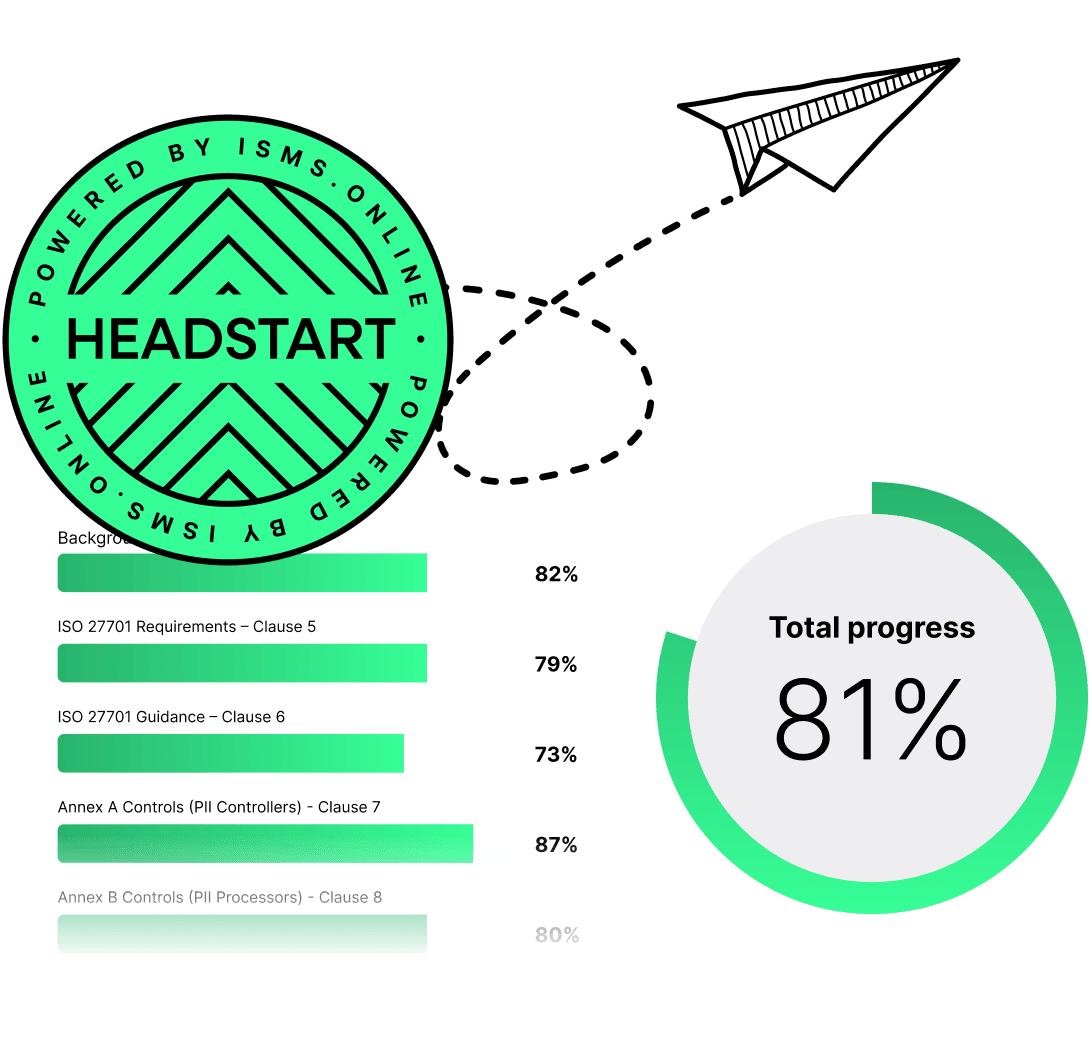
An 81% Headstart from day one
We’ve done the hard work for you, giving you an 81% Headstart from the moment you log on. All you have to do is fill in the blanks.
Which tools and workflows actually shrink risk-without overloading your teams?
It’s a trap to think buying more tools will solve the vulnerability deluge. The best teams win not by accumulating scanners, but by integrating technology and workflow so that risk is not just detected, but reduced in operational reality.
Integrated, Contextual Scanning
Effective coverage requires both “internal” (deep, credentialed) and “external” (attacker-eye-view) scanning, and not just on servers, but on endpoints, cloud resources, and even third-party platforms. Doubling scan frequency for internet-facing systems dramatically cuts exposure, slicing the attacker’s window of opportunity.
Running scans is meaningless if findings aren’t assigned, tracked, and remediated. Integrate scanning tools with ticketing platforms-such as Jira or ServiceNow-so that every new vulnerability triggers a workflow: assignment, status tracking, escalation, and closure. Deploying in DevOps pipelines blocks known flaws before code even deploys; for everyone else, automation should mean more than notifications: the system should assign and chase up routine fixes, so the team can focus on the trickiest risks.
Orchestrated Patch Lifecycle
- Detect: Scan reveals vulnerability.
- Assign: Ticket is created and owner assigned automatically.
- Remediate: Owner applies patch/update.
- Retest: System or owner verifies fix.
- Log: Evidence and approvals flow to audit library.
Orchestration turns busy teams into resilient teams-without ballooning manual work.
When evidence and action flow seamlessly, you move from reactive to proactive-converting tool investments from noise-makers into business protectors.
How do you prioritise, patch, and prove progress without drowning in alerts?
Not every alert deserves instant action. The difference between exhausted teams and resilient ones? Knowing which technical gap poses real risk, and which can be planned or deferred. Every organisation wrestles with alert fatigue, but with risk-driven prioritisation, your capacity lands where it moves the needle.
Risk-Based Triage for Real Impact
Build a triage model mixing:
- Severity (CVSS plus context): High base scores plus your own asset ranking.
- Exposure: Is the asset public, business-critical, segmented?
- Active exploitation: Is this being used by attackers right now?
Patch Prioritisation Table
| Asset Type | Priority | Risk Rationale |
|---|---|---|
| Internet-facing | Highest | Most attacked, highest impact |
| Business systems | High | Sensitive data/processes |
| Internal endpoints | Medium | Lateral movement risk |
| Legacy/end-of-life | Monitor | Retire/segregate as needed |
Focus first on what attackers would exploit and what is hardest to repair later.
Change Controls and Business Escalation
Patching can’t break the business. Pull urgent fixes through change management, logging risk decisions, and flagging business impacts for review. Executives should know about major risks before they make headlines.
Exceptions with Accountability
When a fix must wait-due to system constraints, third-party delays, or approved business risks-document the exception, implement compensating controls (like extra monitoring), and set review calendars. Most serious breaches are not single points of failure, but a stack of delayed, deferred, and ignored exceptions.
Audit trails are not a chore-they’re your shield when something’s missed twice.
Confident teams prove progress not by shouting “all green,” but by showing a reasoned, reviewed track record: risks ranked, fixes logged, exceptions justified.

Free yourself from a mountain of spreadsheets
Embed, expand and scale your compliance, without the mess. IO gives you the resilience and confidence to grow securely.
What practical steps let lean teams ace vulnerability management without huge budgets?
Sustainable vulnerability management is not about throwing people at the problem, but marshalling automation, partnerships, and just enough process to keep things moving-even when resources are tight.
Automate the Ordinary, Focus Human Skill on the Exceptional
Routine, repeatable patching is a machine’s job. Modern endpoint management tools and patching platforms can remediate desktops and standard servers without intervention. Reserve human skill for prioritising, testing, and validating fixes for your organisation’s unique or high-impact assets.
Focus, automation, and shared metrics let lean teams outperform larger but scattered rivals.
Managed Services: Plug Strategic Gaps
External specialists (MSSPs) are most valuable for 24/7 monitoring, incident response, or covering time zones/languages your team lacks. Use them for “burst capacity,” not as a substitute for core ownership.
Recommended Dashboard Measures
- “Automated patches this month”
- Number of “open, critical vulnerabilities needing human review”
- “Pending by partner/MSSP”
- Heat maps highlighting overdue patching by asset/risk class
Winning Executive Buy-In
Board or exec support doesn’t come from tech jargon, but by communicating in terms of risk closure, compliance, and business continuity. Push simple KPIs: average patch lead time, critical backlog trend, and open exception count.
Resilience for lean teams hinges on ruthless focus, orchestration, and transparency-solid ground for both operational confidence and audit trust.
What does seamless audit and board readiness look like in vulnerability management?
Audit readiness is about translating real operational resilience into evidence the board and regulators trust-without quarterly scramble.
Centralising Evidence and Accountability
Collate a living evidence bank:
| Artefact | Source | Update Cadence |
|---|---|---|
| Patch records | Patch tools/dashboard | Monthly, Quarterly |
| Scan exports | VA platform | Monthly |
| Exceptions log | Compliance tracker | As needed |
| Approval logs | Board/minutes/records | Quarterly |
You want a single dashboard or repository where evidence is always current, not “reconstructed for audit”. Structures where each piece of evidence matches an assigned owner, linked risk, and review cycle make audits less about interviews, more about demonstration.
Trust is fostered before the questions start-by showing what’s owned, reviewed, and evolving.
- Routine, not just event-driven, review cycles.
- Named, visible accountability for controls.
- On-demand audit/export capability for findings and exceptions.
- Alignment with wider regimes (NIS 2, GDPR, DORA).
In strong programmes, every stakeholder knows how to surface evidence and who owns it. Vulnerability management becomes part of a visible culture of continuous improvement, not a stress-driven, audit-season afterthought.

Manage all your compliance, all in one place
ISMS.online supports over 100 standards and regulations, giving you a single platform for all your compliance needs.
How do you futureproof vulnerability management for new attack and compliance challenges?
The speed of attackers, regulators, and business change outpaces any document or platform-but adaptive systems, built on today’s best practice, can bend without breaking.
AI and DevSecOps: Turning Risk Management from Reactive to Predictive
AI-powered platforms now triage findings, spotting patterns and prioritising review, letting your team focus attention where it matters. Meanwhile, feeding vulnerability management directly into DevOps pipelines-“DevSecOps”-blocks issues before they reach production.
Shifting Board and Insurer Demands
Boards and insurers increasingly expect live reporting:
- Time to closure for critical vulnerabilities
- High/critical issue trends over time
- Documented rationale for accepted risk
- Track record for remediation deadlines Those with integrated, audit-ready dashboards can often command lower insurance rates and faster board sign-off.
Cross-Framework Alignment: Build Once, Demonstrate Everywhere
Annex A 8.8 is foundational for ISO 27001 but is echoed in NIS 2, HIPAA, DORA, and emerging regulations. Map controls and evidence to frameworks as you go, and you multiply the Audit ROI of every workflow; the time spent hardening for one regime pays off across others.
The strongest programmes make compliance a result-not the sole goal.
True futureproofing comes from making vulnerability management not just a policy, but a daily practice anchored in adaptive accountability.
Demonstrate Annex A 8.8 Resilience With ISMS.online-Operational Results, Audit-Ready, Futureproofed
The hallmark of resilience is a system that stands up to review any day-not a hectic evidence scramble when audit season hits.
Why do technical, compliance, and executive teams use ISMS.online for Annex A 8.8? Because it unifies every step-patch evidence, scan exports, exceptions, role-tracking-into a single, continuously updated evidence bank. This isn’t just reporting; it’s real, daily operational resilience (isms.online).
ISMS.online Advantage
- Audit/Evidence Readiness: All patch, scan, and approval records are housed together, versioned, and instantly exportable-for auditor spot-checks, executive reviews, or partner queries.
- Board Metrics at a Glance: Live dashboards surface closure times, open critical issues, and risk acceptances-empowering timely, informed leadership.
- Cross-Framework Mapping: One system supports compliance for ISO 27001, NIS 2, DORA, SOC 2, and privacy regimes, eliminating duplication.
Customers report 40% faster audit processes, materially shorter patch windows, and greater board and auditor trust-not through heroics, but by making reliable compliance the natural by-product of daily work.
You dont just pass Annex A 8.8 with ISMS.online. You operationalise, prove, and build lasting trust-within your business and with every regulator, partner, and customer who relies on you.
Book a demoFrequently Asked Questions
Why is technical vulnerability management under ISO 27001:2022 Annex A 8.8 a continuous, organisation-wide priority?
You face relentless cyber threats exploiting hidden weaknesses in software, cloud systems, and even third-party apps-an environment where 57% of breaches last year involved vulnerabilities that were fixable in advance (CSO Online, 2022). Annex A 8.8 raises the bar: vulnerability management is no longer a quiet IT task or a once-a-year checklist, but a daily discipline expected to be visible at the board level, tightly linked to business risk, and provable on demand. Every asset, from laptops to shadow SaaS, must have a named owner, with up-to-date records, live remediation workflows, and a direct line into compliance and risk reporting. Why does this matter more now? Regulators, cyber insurers, and sophisticated buyers expect rapid, thorough remediation and real-time evidence, not audit-after-the-fact excellence. Failing this bar means operational losses and growing legal exposure.
One unowned tech asset can expose you to headlines, fines, and lost customer trust-no organisation is invisible.
What is newly expected of boards and privacy leads?
Accountability now begins at the top. Board members and privacy officers must attest to proactive technical risk management, not just sign off on static policies. Real-time risk dashboards, audit traces, and rapid response protocols are not only compliance requirements (GDPR, NIS 2), but cornerstones of maintaining your reputation and trust.
Which essential steps move vulnerability management from compliance checkbox to real-world risk control?
Start by creating a complete, living asset inventory-every device, endpoint, cloud service, and third-party connection mapped with a responsible owner. Schedule automated vulnerability scans (authenticated for internal coverage, unauthenticated for public-facing attack surfaces) at least monthly, or faster for high-risk systems (Rapid7, 2023). Integrate scan outputs with workflow tools like Jira or ServiceNow to auto-assign findings, track closure, and keep evidence auditor-ready. For unpatchable issues, implement compensating controls (like segmentation or monitoring), log the decision, set review deadlines, and document executive signoff. Update policies and procedures after every audit, incident, or technology change-stale policies signal gaps to auditors and attackers alike. Above all, empower non-IT employees through ongoing awareness, so suspicious flaws get flagged before they become incidents.
Where do most teams falter?
Box-ticking cultures see delayed patches, blurred accountability, abandoned spreadsheets, and mounting backlogs. Continuous, cross-team processes keep vulnerability management proactive and genuinely protective.
Which tools and automations maximise risk reduction while defeating alert fatigue?
Choose vulnerability scanners that provide both internal and external coverage-authenticated scans reveal hidden config issues, while external scans identify openings an attacker sees (Rapid7, 2023). Integrate these tools into ticketing systems to deliver findings straight to the right owner, triggering timely remediation or business-justified exception management. Utilise automation for routine patch scheduling, ticket generation, and pre-set alert triaging, ensuring teams aren’t overwhelmed by low-priority noise. High-maturity organisations implement risk-based thresholds-only truly urgent or actively exploited vulnerabilities interrupt workflow, while lower-risk issues are batched for scheduled review. Managed service providers can bridge after-hours or high-volume periods, but must feed directly into your main evidence trail to avoid data silos and missed actions.
Security isn’t about collecting alerts; it’s about quick, measurable actions on the most dangerous flaws.
How do you stay ahead without burning out staff?
Set clear escalation rules, batch non-urgent items, routinely tune detection logic, and always review tool output for false positives or missed threats. A culture of regular, calm backlog review beats heroics at audit crunch time.
How can organisations prioritise remediation for both business resilience and audit assurance?
Effective prioritisation balances technical severity (CVSS score) with real-world exploitation data and asset business impact (FIRST.org, CISA 2023). Internet-facing, high-value, or actively targeted vulnerabilities must come first, even if less severe bugs have a higher technical score. When fixes pose operational risks or require third-party intervention, document compensating controls, assign owners, and require formal exception signoff with a review schedule. Use change control to schedule disruptive fixes out of business hours and keep non-technical stakeholders informed. Transparency is key: live dashboards must show what’s open, why, and when it will close-supporting not just audit requests, but executive risk decisions as situations evolve.
How do you communicate and document this effectively?
Move away from static reports-adopt real-time dashboards and trend visualisation for leadership. Clear narratives around deferred risks and their mitigation build trust across technical and executive teams.
What evidence and KPIs are required to prove robust 8.8 compliance and real security maturity?
Auditors, insurers, and regulators increasingly demand live, cohesive evidence rather than cobbled-together screenshots. Expect to provide:
- Comprehensive, up-to-date asset inventories: (owners, statuses, recent scans)
- Scan logs and vulnerability findings: (frequency, risk coverage)
- Remediation trails: (assignments, closure timestamps, approval artefacts)
- Exception registers: (rationale, mitigations, review cycles, executive signoff)
- Policy and process versioning: , showing improvement after each incident
- Key KPIs: patch lead times (especially for criticals), overdue issues, frequency of exceptions, asset coverage
Version-controlled documentation, live dashboards, and a provable workflow chain demonstrate not just box-tick compliance, but a mature, future-ready organisation-building trust with auditors, boards, and insurers alike (AuditBoard, 2023; LogicGate, 2023; Findstack, 2024).
Mature organisations don’t scramble during audits-they confidently show work in progress, trends, and governance, building a record that wins both trust and better insurance terms.
What separates top performers?
Leaders monitor everything “on demand,” with living records and transparent trendlines-laggards are exposed by gaps and delayed responses.
How do you sustain and futureproof vulnerability management as new regulations, DevSecOps, and insurance demands shift?
Unlock true resilience by mapping processes directly to frameworks like NIS 2, DORA, and GDPR, ensuring assets, risks, and mitigation map to every legal requirement. Integrate with DevSecOps pipelines-embedding vulnerability checks into every software deployment cycle, not as a bolted-on step. Advanced AI/ML-based scanning platforms can help prioritise real threats, spot zero-days, and limit false positives (Security Magazine, 2022). Capture actions and outcomes with date-stamped evidence and automated logs-insurers increasingly look for time-to-response as a premium or payout lever (Insurance Journal, 2023). Continuous KPI reporting into board dashboards, not just yearly audits, ensures lessons are learned and gaps closed as fast as threats emerge.
What happens to those who stand still?
Static, document-only processes quickly become non-compliant, riskier, and less insurable. Organisations treating 8.8 as a living, integrated process are rewarded with lower risk, easier audits, and trust from buyers, partners, and leadership.
How does ISMS.online turn vulnerability management into an engine for audit-readiness and trust, where manual or spreadsheet-based approaches fail?
ISMS.online brings together every required element-asset inventories, scan logs, remediation assignments, exception controls, and KPI dashboards-into a unified, audit-ready workflow. No more lost emails, out-of-date spreadsheets, or last-minute evidence scrambles; every action is tracked, permissioned, and instantly accessible, from IT and compliance to the boardroom itself. Automated reminders, live dashboarding, and structured evidence banks cut audit prep by up to 40%, converting periodic fire drills into calm, continual assurance (TEISS, 2023; ITSecurityGuru, 2023). With everything visible in real time, confidence rises-not only for compliance, but for winning new business and meeting cyber insurer demands, even as regulations evolve.
Resilience isn't a paper trail-it’s action, visibility, and rapid adaptation, all built into ISMS.online’s living record.
What changes for your team, day to day?
Teams spend less time chasing evidence and more on resolving actual risks; compliance and risk managers answer queries instantly; and executives see dynamic risk and progress dashboards, not just annual summaries. This puts your organisation ahead-operationally prepared, always audit-ready, and measurably trustworthy.