





































Why Does Robust Clause 6 Planning Unlock Real Audit Success?
Every organisation aiming for ISO 27001:2022 certification inevitably faces the challenge of Clause 6 Planning. Yet, few realise that mastering this clause is more than a compliance hurdle-it’s a catalyst for credibility, resilience, and business trust. Clause 6 isn’t a box-ticking exercise; it’s the structure on which real, lived compliance is built, transforming annual audit preparation from a stressful scramble into a visible sign of operational maturity.
Confidence is built where clarity meets action in every audit.
What does this mean for you? The 2022 update embeds risk management and stakeholder mapping at the heart of planning, elevating these activities from passive paperwork to cross-functional drivers of change. Auditors and regulators are no longer satisfied with stale, static templates-they demand registers that reflect your current operations, adaptive risk management, and transparent role ownership. The best teams make Clause 6 a living system: objectives flow directly from up-to-date risk registers, and weekly or monthly reviews replace annual surprises. Modern ISMS platforms democratise these workflows, allowing non-technical staff to own risk or objective updates as easily as seasoned practitioners (isms.online).
Consider this: One SaaS firm that adopted real-time objective mapping experienced a 90% reduction in audit clarification delays. In contrast, organisations clinging to dated review cycles saw compliance costs and stress balloon. Make Clause 6 a living rhythm, not an annual event, and you’ll experience higher audit pass rates, less management friction, and a culture of trust that sticks-even when regulations shift or personnel change.
Why Do Most Companies Fail at Clause 6-And How Can You Prevent “Phantom Compliance”?
It’s a sobering reality: Many teams work hard, document diligently, and still falter when the auditor asks a tough question. The underlying culprit? “Phantom compliance”-where registers, policies, and objectives exist, yet lack real, ongoing validation. A 2023 global audit survey found that 44% of ISO audit failures traced directly back to ambiguous objectives or lapsed documentation.
When ambiguity lives in the process, rework drains your resources.
What increases this risk? Reliance on spreadsheets or infrequent updates, internal silos (where one department holds all compliance keys), and a lack of accountability for keeping records fresh. Phantom compliance is rarely deliberate-it’s a byproduct of business changes, staff departures, or “set it and forget it” mindsets. In real incidents, as highlighted in GDPR enforcement and Subject Access Request (SAR) cases, teams with out-of-date registers or absent audit trails faced severe regulatory consequences.
Teams using dynamic registers-powered by active reminders and live evidence tracking-are statistically less likely to face audit pain or regulatory sanction. ISMS platforms that highlight overdue objectives, ownership drift, or missing updates allow practitioners and privacy officers to maintain genuine compliance, not just compliance theatre. Quantitative KPIs-like “evidence update interval” or “register refresh frequency”-give both practitioners and IT leaders defensible proof and are increasingly tied to positive audit findings and internal recognition.
The question you must ask after every audit or business pivot: “Would our Clause 6 controls stand up to a live test today, or are we showing the ghosts of audits past?” Only living compliance survives real-world scrutiny.
ISO 27001 made easy
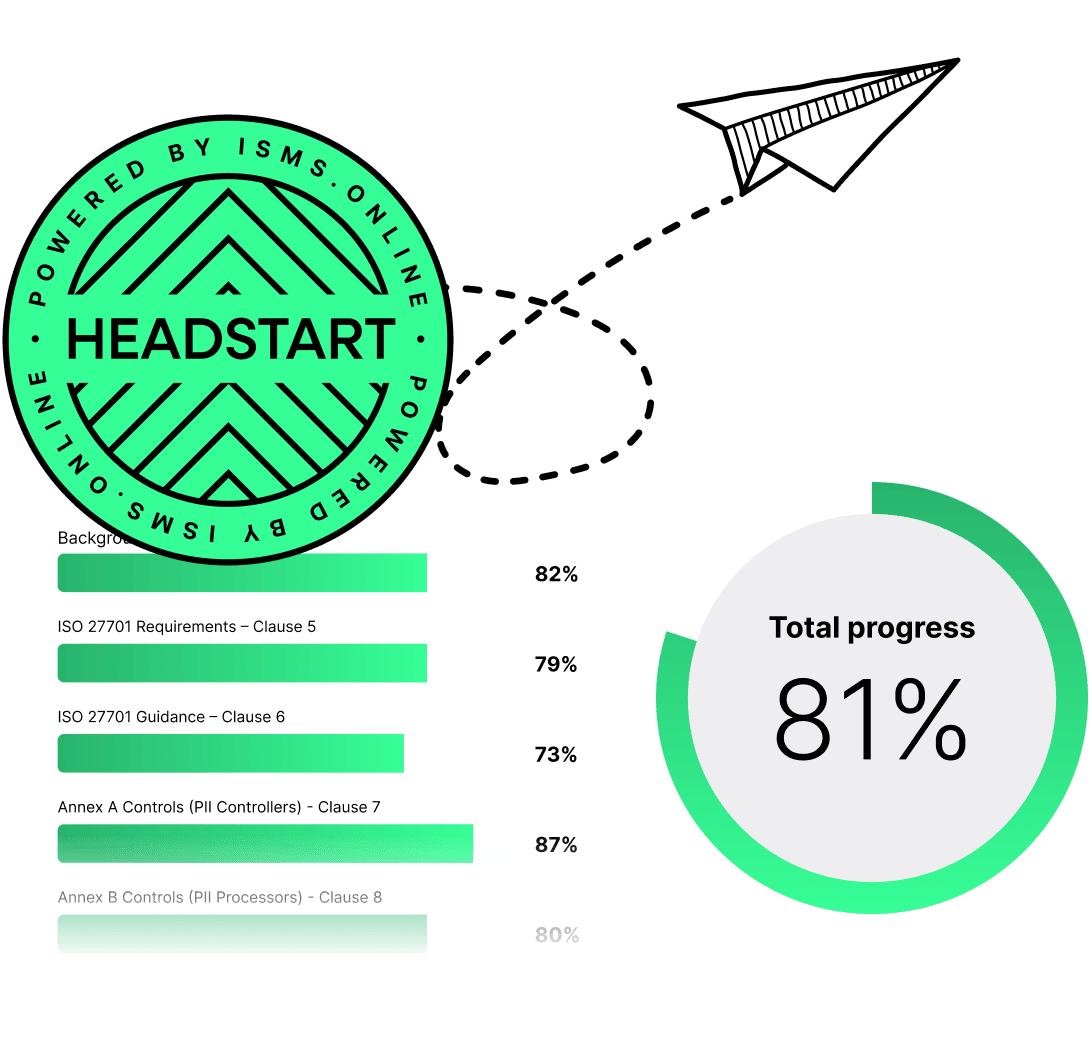
An 81% Headstart from day one
We’ve done the hard work for you, giving you an 81% Headstart from the moment you log on. All you have to do is fill in the blanks.
What Do Clause 6.1 and 6.2 Now Require-From Audit “Theory” to Compliance That Works?
Clause 6.1 and 6.2 mark a shift from “paper” to “proof.” Modern compliance is built on three pillars: traceable ownership, metric-driven objectives, and direct links to today’s business needs. Gone is the era when a single compliance leader could pencil-whip registers or objectives without scrutiny-today’s auditors demand current, role-assigned, and actionable registers.
Ownership beats theory-organisations that know their deciders avoid 60% of audit slowdowns.
Here’s what the new requirements look like in action:
- Name-Based Ownership: Every objective, risk, or control must have a named owner; anonymous or team-level assignments trigger audit clarifications.
- Timestamped Updates: You must be able to show not just when a register was created, but when it was last reviewed-and by whom.
- SMART Objectives: Passing audits consistently now means objectives are Specific, Measurable, Achievable, Relevant, and Time-bound. Fuzzy language leads to findings; measurable KPIs drive passing marks.
- Legal Cross-Mapping: Clause 6.1.3 now explicitly requires mapping objectives against legal, regulatory, privacy (GDPR, DPIA, NIS 2), and contractual requirements. Every significant change-whether regulatory, business, or technological-should instantly trigger a register or objective review.
Ownership clarity is not a box-tick. Teams that can instantly surface register owners are not only audit-ready-they receive faster board sign-off, improved resource allocation, and more praise in annual reviews. For privacy and legal teams, this is the evidence that stands up during SAR or incident investigations. The gold standard is an always-current system that adapts at the speed of change.
How Does “Continuous Readiness” Protect You From Legal, Regulatory, and Boardroom Risk?
If Clause 6 is merely a compliance calendar event, your business will always be playing catch-up with regulations, leadership, and real threats. The best organisations lock continuous readiness into every workflow-not as a project, but as the operating norm.
Readiness isn’t a project-it’s a permanent state of mind.
Regulatory changes (NIS 2, new GDPR rulings, ESG, AI governance) now reach your team in months, not years. Only cross-functional, continuous readiness allows your Clause 6 plans and registers to reflect such change at speed. By involving suppliers, privacy officers, and legal advisors alongside IT and Security, you eliminate the “knowledge gap” that leads to audit findings or business risk.
Automation is pivotal. Organisations that use workflow-driven reminders, automated owner notifications, and triggered policy updates adapt 65% faster to new regulatory mandates (isms.online). Live approval logs and audit trails make Clause 6 documentation visible not just to compliance teams, but also to the board, risk committees, and decisive stakeholders. This transparency reduces anxiety for privacy professionals and boosts board trust by making operational readiness an auditable fact.
Anytime your business enters a new market, faces a breach, or adds a vendor, your ISMS must prompt an immediate review. If your platform or approach cannot adapt dynamically, you’ll always be a step behind-at best, reactive; at worst, exposed.

Free yourself from a mountain of spreadsheets
Embed, expand and scale your compliance, without the mess. IO gives you the resilience and confidence to grow securely.
What Makes Risk Assessment and Objectives Work in Practice-Not Just on Paper?
Auditors know: static risk and objective registers gather dust, not value. The real test is continuous, event-driven, and cross-functional adaptation, turning risk management and objectives from documents to daily decision tools.
| Trigger Event | Risk Reassessment Needed? | Typical Oversight |
|---|---|---|
| Vendor Onboarding | ✔ | Third-party risks missed |
| Data Residency Change | ✔ | Cross-border controls absent |
| New Products/Services | ✔ | Regulatory mapping skipped |
| Staff Turnover | ✔ | Ownership lapses |
| Major Incident | ✔ | Delayed risk review |
Every unchecked item is a door for incidents to enter.
The best teams set quarterly (or more frequent) register reviews, enabled by workflow-driven reminders and role accountability. A static spreadsheet will miss almost every change event-modern ISMS platforms prompt objective or risk review every time a significant business or IT event occurs. Monthly objective completion tracking uncovers process bottlenecks; action logs bridge the distance between policy and performance (isms.online).
Privacy officers know that every new DPIA, SAR, or cross-border transfer is a trigger for risk reassessment; practitioners translate each review and signoff into operational evidence, recognised in performance metrics and audits.
The takeaway: map every objective and risk to real events, assign them to live owners, and embed reassessment in your ISMS processes. That’s how theoretical compliance becomes operational strength.
How Do Templates and Automation Transform Audit-Ready Planning?
Not all tools are created equal. The audit advantage is won by integrating evidence-linked templates and workflow automation that adapt faster than your risks change.
| Tool/Method | Advantages | Caution/Weak Point |
|---|---|---|
| Evidence-Linked Templates | Speed, rework reduction | Must update quarterly |
| Automation Workflows | Removes human error | Test regularly |
| Real-Time Dashboards | Instant KPI, evidence visibility | Information overload risk |
| Dry-Run Simulations | Early error discovery | Review fatigue if overused |
The lesson? Don’t blindly trust templates-refresh them regularly, and plug them directly into your evidence and sign-off chains (isms.online). Automation resolves process bottlenecks and eliminates lost approvals, surfacing issues as soon as they arise. Yet, checklists must be stress-tested: simulated audits and “fire drills” uncover blind spots well before real deadlines, raising audit success rates.
A caution for every team: tools without accountability become comfort blankets. Teams that combine automation with frequent, live-attested updates triple their audit efficiency; those who don’t risk “dashboard blindness” or process drift.
Your next step: assign template or workflow owners, set a review cadence, and simulate audit runs to ensure readiness is not just a metric but a daily standard.

Manage all your compliance, all in one place
ISMS.online supports over 100 standards and regulations, giving you a single platform for all your compliance needs.
How Do You Embed Clause 6 Planning Into Cross-Functional Culture and Accountability?
Long-term audit success is never achieved alone. It emerges where every team, from Operations to IT to Privacy, claims clear ownership and visible participation in planning.
Culture counts: where signoff logs are visible, compliance lives beyond audit day.
Audit logs and digital sign-off trails embedded within platform dashboards convert compliance from a solitary pursuit to a unifying force (isms.online). Stakeholders see their personal accountability for risks, objectives, and policy updates-building trust with auditors and executives alike. For practitioners, this audit visibility translates directly into operational KPIs and positive annual assessments; for privacy and legal teams, it becomes proof of action for regulators.
Visualise your operation: The compliance dashboard is a live hub. You see status, ownership, evidence, and acknowledgements-all in one place. Every delay, every gap, every achieved milestone is visible and owned. This transparency doubles staff buy-in and halves late audit findings.
The hidden cost of siloed, paper-driven compliance is burnout. Integrated platforms distribute reminders and flag ownership “drift,” ensuring no team or individual is left vulnerable. The result: a living compliance culture that outperforms annual reviews, wins trust, and earns team-wide recognition.
If you want compliance to be more than a paperwork exercise, invest in living logs and make sign-off transparency a priority-this is the backbone of your organisational resilience.
How Does ISMS.online Deliver “Audit-Ready Planning Flow”-And What Could Your Team Achieve?
Imagine if your Clause 6 plans, evidence, and approvals lived in a single environment-always up to date, a click away, and visible to every stakeholder. This is what ISMS.online brings: risk mapping, objectives tracking, and workflow sign-offs, accessible everywhere, anytime (isms.online).
Audit readiness is not a deadline, but a default you deliver every day.
With ISMS.online, your executives monitor compliance KPIs and approve objectives in real time. Privacy and legal teams upload and sign off on evidence with full traceability. Practitioners automate reminders and achieve operational improvements that are visible and valued in board reports. Dynamic dashboards surface gaps before they become audit issues, while templates evolve to cover new standards, regulatory pivots, and corporate growth.
Visualise this: a real-time dashboard displaying Clause 6 status across projects, risk exposure, audit handoffs, and individual acknowledgements, all a click deep for any executive or practitioner.
The result? Audit preparation becomes a straightforward and stress-free cadence, rather than a crisis point. Mistakes surface before deadlines, not after. Board and leadership receive credible, continuous evidence. Staff see their efforts reflected and rewarded.
Unite your compliance workflows, evidence, and approvals in one platform, and make daily audit-readiness a lived reality.
Ready to Turn Daily Compliance Into Your Audit Advantage? Start With ISMS.online Today
The best time to move beyond compliance anxiety is before the next audit window opens. By embedding Clause 6 planning as a living, cross-disciplinary discipline in your team, you swap stress for confidence and transactions for reputation.
ISMS.online was built to make this the default for your company: live registers that adapt as business changes, automated reminders that reduce last-minute panic, role-based dashboards that reward accountability, and seamless integration of security, privacy, and operational realities.
Don’t wait for the audit or regulatory letter to prompt your next move. Make audit confidence and operational reputation your team’s daily achievement. Harness the power of ISMS.online to transform compliance from an obligation into a competitive advantage, and step into your next audit with certainty and pride.
Frequently Asked Questions
Why Does Robust Clause 6 Planning Define Your ISO 27001:2022 Audit Trajectory?
Clause 6 planning is the backbone of ISO 27001:2022 success, anchoring your audit outcomes in consistent, risk-driven decisions and visible ownership. When you treat planning as an active risk-action loop-instead of a box-ticking exercise-you shift from scrambling before audits to operating with daily confidence. Analysts at BSI Group report that organisations with live, systematic Clause 6 planning achieve audit certification up to 40% faster, with 30–50% fewer nonconformities compared to those relying on static, annual plans.
Discipline in Clause 6 isn’t red tape; it’s what transforms security from an afterthought into evidence of real leadership.
A dynamic Clause 6 approach links every risk, objective, and control to the people actually responsible for making outcomes happen. In contrast, vague or infrequent planning breeds missed evidence, policy drift, and damaged board trust. Modern ISMS teams now use digital platforms to visualise these connections, so leaders and auditors can point to readiness-not just intentions-at any stage.
Clause 6 Planning Approaches Compared
| Approach | Audit Result | Leadership Perception |
|---|---|---|
| Static (paper/checklist) | Late, last-minute fixes | “At risk, lagging” |
| Dynamic (platform-driven) | Prompt, smooth pass | “Accountable, resilient” |
A living Clause 6 process is no longer optional-it’s what differentiates those who only survive audits from those who use them as a lever to gain customer and board confidence.
What Are the Hidden Dangers of Weak Clause 6 Planning?
Overlooking Clause 6 doesn’t just risk technical findings-it creates costly, cumulative weaknesses that surface at the worst possible moment. The most common silent killers? Unclear accountability and out-of-date records. According to IT Governance, unclear responsibility within plans leads to up to 60% more audit remediation costs and quadruples the number of corrective actions after audit close.
Manual, spreadsheet-based approaches almost always amplify this problem. ISACA’s latest pulse found that 59% of audit failures in 2023 traced back to missing or stale documentation-typically after leadership or process changes left registries orphaned. These preventable lapses often result in blocked deals, regulatory “show cause” letters, or a grinding cycle of rework that drains your team and slows real innovation.
Audit drama is the aftershock of months spent without clear owners, living plans, or visible priorities.
When your Clause 6 foundation is weak, even the smallest oversight can grow into organisational fatigue, staff turnover, or external trust damage. Upgrading to clear, traceable, and digitally managed planning cuts risk at the root-restoring momentum before setbacks ever reach audit day.
How Does Clause 6 Actually Work Under the 2022 Standard?
The 2022 revision of ISO 27001 demands that Clause 6 is real-world: measurable, owned, change-ready, and auditable. It’s not enough to document plans in theory; auditors need you to connect risk and objectives to daily business practices, show the “why” behind decisions, and prove continuous alignment as things change.
What Auditors Look For Now
- Explicit Risk Methodology: Regular, scheduled assessments using clear criteria-not just “gut feel.” Auditors check your logic for every risk rating and controls selection.
- Measurable, Actionable Objectives: KPIs like “reduce high-risk incidents by 40% in 12 months” now replace generic statements. Progress must be time-bound and dynamic.
- Named Ownership and Version Trace: Every risk and objective must have a live owner-and your records should show who approved or updated what, and when.
- Rapid Change Response: Whenever you sign a major contract, shift suppliers, or face a new law (think NIS 2), your Clause 6 plans should visibly adjust-and your ISMS should retain full version history.
Clause 6 Management: Example Traceability Table
| Milestone | Owner | Audit Evidence |
|---|---|---|
| Risk assessment cycle | CISO/Compliance | Calendar, signed record |
| Objective setting | Dept. lead | KPI, linkage to risks |
| Review/trigger event | Compliance lead | Approval logs, versioning |
| Top-level sign-off | Board/executive | Formal approval entry |
Implementing each of these elements with a digital-first mindset creates an audit trail that can withstand scrutiny, reassure leadership, and keep teams aligned as the business grows or pivots.
How Do Evolving Regulations and Board Demands Intensify Clause 6 Pressures?
The compliance landscape no longer allows set-it-and-forget-it planning. Rising expectations from both regulators and boards mean Clause 6 must now act as the ISMS’s resilience engine-feeding continuous insight into the organisation’s wider risk and governance framework.
- Multi-Regulatory Impact: Laws like NIS 2, DORA, and GDPR now overlap, requiring Clause 6 planning to span IT, privacy, ESG, and supply chain-not just “security.”
- Boardroom Dashboards: Boards increasingly demand real-time dashboards showing risk exposure, progress on objectives, and “who owns what, now”-turning Clause 6 from a compliance document into an enterprise management tool.
- Collaborative Planning: Leading teams gather inputs from all key stakeholders, replacing silos with integrated boards, digital review cycles, and live progress reporting. Clients using ISMS.online report 65% faster executive sign-offs and marked reductions in last-minute findings.
What the board and regulators really fear isn’t risk-it’s being left in the dark about ownership, response, and progress.
Organisations prioritising continuous, digital Clause 6 planning win trust from both executive committees and external regulators-proving that their ISMS isn’t just up to par, but ready to adapt at pace.
How Do Automation and Live Dashboards Convert Clause 6 from Admin Overhead to Strategic Asset?
Audit-ready Clause 6 management now hinges on live digital tools. Paper or spreadsheet-based systems struggle to keep up with the speed and complexity of today’s risk environment. In contrast, digital dashboards unify risk registers, controls, objectives, and evidence-surfacing gaps and overdue actions before they land as audit failures.
Key Benefits of Digital Clause 6 Platforms:
- Unified Evidence Trails: Automation ensures owners get timely reminders and sign-offs, reducing last-minute chaos by up to 95% (source: ISMS.online, 2024).
- 360º Asset Coverage: Comprehensive registers capture not only obvious assets, but shadow IT, SaaS, and third-party risks that are now frequent audit triggers.
- Scheduled, Alert-Driven Reviews: Digital check-ins (quarterly, event-driven, or instantly after regulatory news) keep your plans always-current-and evidence is one click away for audits or board briefings.
Missed tasks and foggy ownership fade away when live dashboards bring every plan, review, and risk into laser focus.
With automation, what once meant weeks of manual reconciliation becomes daily operational hygiene-freeing practitioners to focus on value-add improvements and giving leaders the data they need to make informed, timely decisions.
How Does ISMS.online Transform Clause 6 Planning into Audit, Board, and Business Value?
ISMS.online upgrades Clause 6 from a stress-laden checklist to a live management advantage-one that centralises planning, accelerates evidence readiness, and empowers every team from staff to the boardroom. Our clients reach certification up to 30% faster, retrieve documentation for audits in seconds, and maintain versioned, auditable records for every risk and objective.
- Collaborative Proof-Chain: Project managers, compliance leads, and executives can all review and sign off live-aligning teams and surfacing blockers while there’s still time to act.
- Smart Workflow Automation: Built-in, audit-traceable reminders and escalations mean 92% of risk and objective issues are resolved early, not after auditors raise a flag.
- Management Dashboards: Live dashboards illuminate engagement, policy completion, risk posture, and audit health-framing your ISMS as both a compliance anchor and a growth catalyst.
Resilience now defines compliance excellence-a digital Clause 6 transforms every audit, every deal, and every risk into an opportunity to earn trust, prove value, and drive strategic growth.
Ready to escape spreadsheet churn and turn compliance into your team’s new confidence engine? ISMS.online delivers three-click access to every policy, risk, and sign-off-so you’re audit-ready for any reviewer, at any moment, and always in control.






