





































Understanding the Impact of ISO 27001:2022 on Enterprise Risk Management
Strengthen Your Security Framework with ISO 27001:2022
ISO 27001:2022 serves as a cornerstone in enhancing information security frameworks, aligning security measures with business objectives, and advancing enterprise risk management (ERM). With over 40,000 organisations globally certified, its widespread adoption highlights its significance in contemporary security strategies. This standard introduces refined controls and processes, ensuring a comprehensive approach to ERM. These enhancements focus on integrating cybersecurity measures with business goals, providing a structured pathway to mitigate risks effectively.
Key Updates in ISO 27001:2022
The latest iteration of ISO 27001:2022 introduces refined controls and processes, ensuring a comprehensive approach to ERM. These enhancements focus on integrating cybersecurity measures with business goals, providing a structured pathway to mitigate risks effectively.
- Enhanced Risk Management: ISO 27001:2022 offers a robust framework for aligning security with business goals, as noted by cybersecurity experts.
- Reduction in Security Incidents: Organisations report a 30% decrease in security incidents post-implementation, showcasing its effectiveness.
How ISO 27001:2022 Elevates Enterprise Risk Management
Implementing ISO 27001:2022 can lead to a substantial reduction in security incidents, fostering a culture of continuous improvement and resilience against emerging threats. This standard emphasises proactive risk assessment and treatment, aligning with ERM principles to provide a holistic view of organisational risks.
Key Benefits for Compliance Officers
Compliance officers will find ISO 27001:2022 invaluable in streamlining risk management processes and ensuring adherence to regulatory requirements. The standard’s alignment with ERM principles facilitates informed decision-making and strategic planning.
Introduction to Enterprise Risk Management
Enterprise Risk Management (ERM) is a strategic approach to identifying, assessing, and managing risks across an organisation. ISO 27001:2022 enhances ERM by providing a framework that aligns security initiatives with business objectives, ensuring comprehensive protection and compliance.
How ISMS.online Supports Your Compliance Journey
Our platform, ISMS.online, offers a comprehensive suite of tools to support your ISO 27001:2022 compliance journey. From risk assessment to policy management, we provide the resources you need to enhance your security posture and achieve certification. Book a demo today to discover how we can transform your risk management strategy.
Book a demoKey Updates in ISO 27001:2022: A Comprehensive Overview
Major Changes in ISO 27001:2022
The ISO 27001:2022 standard introduces significant updates that align cybersecurity measures with business objectives, reflecting current trends in enterprise risk management. These changes emphasise integration with other management standards, enhancing applicability and streamlining compliance processes. Key updates include:
- Revised Controls: The updated controls address evolving security challenges, ensuring a robust framework for managing information security risks.
- New Requirements: These focus on aligning cybersecurity with business goals, facilitating a more strategic approach to risk management.
Impact on Risk Management Practices
The 2022 version of ISO 27001 enhances risk management practices by providing a structured pathway for proactive risk assessment and treatment. This approach fosters a culture of continuous improvement and resilience against emerging threats, ensuring comprehensive protection and compliance.
- Impact on Risk Management: The updates streamline processes, making it easier for organisations to adapt and implement effective risk management strategies.
- Integration with ERM: By aligning with enterprise risk management principles, the standard offers a holistic view of organisational risks, aiding compliance officers in strategic planning.
New Requirements Introduced
The latest iteration of ISO 27001 includes updated controls and requirements that focus on integrating cybersecurity with business objectives. These enhancements reflect the need for a strategic approach to risk management, ensuring that organisations can effectively mitigate risks while achieving their business goals.
- Enhanced Focus on Cybersecurity: The new requirements emphasise the importance of cybersecurity in achieving business objectives, providing a framework for aligning security measures with strategic goals.
Implementing the New Updates
Organisations can effectively implement the new updates by integrating them into existing systems and aligning them with business objectives. This approach ensures that the updates are not only compliant but also enhance the organisation’s overall security posture.
- Implementation Strategies: Focus on aligning the updates with existing systems and business goals to maximise their impact on risk management practices.
These updates underscore the importance of integrating cybersecurity with business objectives, providing a comprehensive framework for managing information security risks. Building on this foundation, organisations can enhance their risk management strategies and achieve seamless compliance with ISO 27001:2022.
ISO 27001 made easy
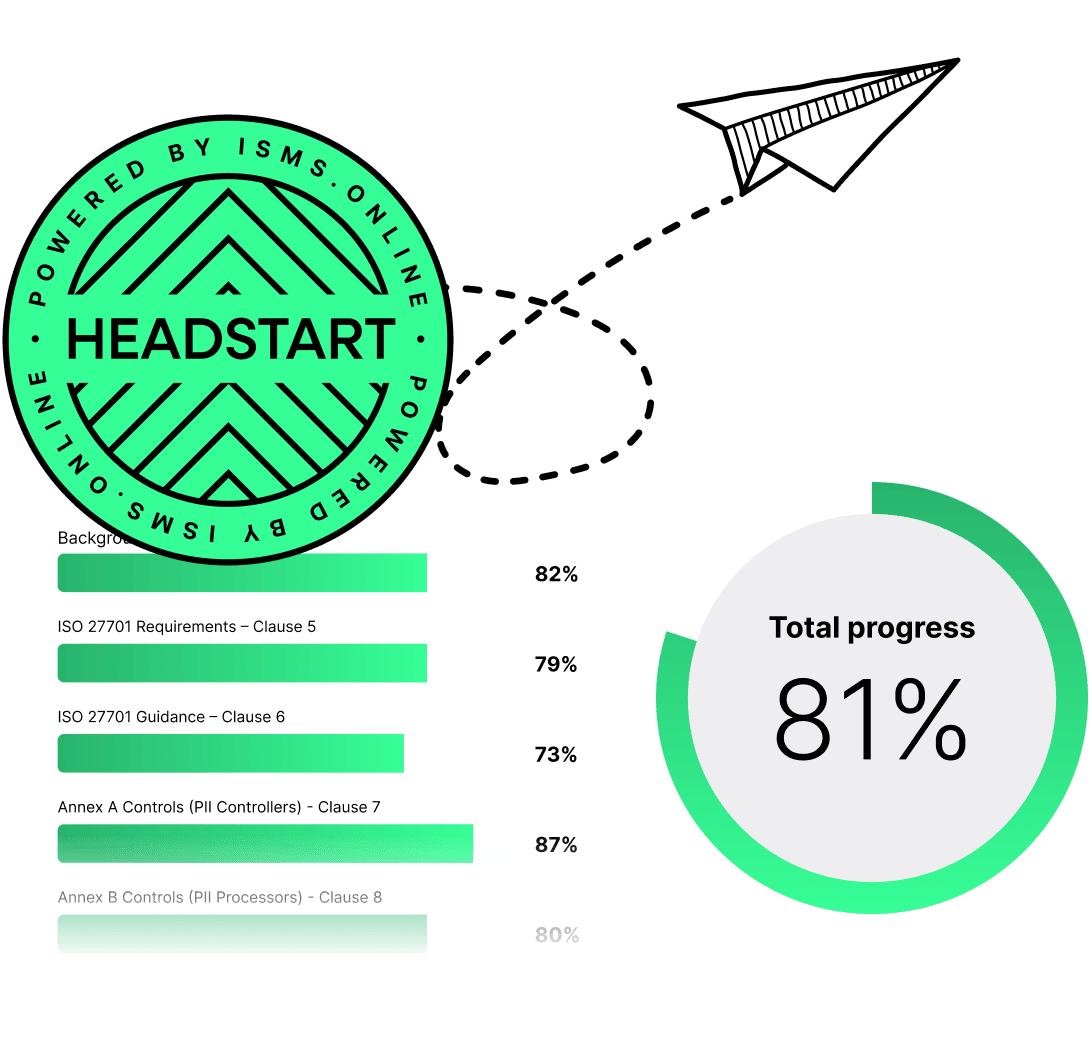
An 81% Headstart from day one
We’ve done the hard work for you, giving you an 81% Headstart from the moment you log on. All you have to do is fill in the blanks.
How Does ISO 27001 Integrate with Enterprise Risk Management?
Aligning ISO 27001 with ERM Frameworks
Integrating ISO 27001 with Enterprise Risk Management (ERM) frameworks significantly enhances an organisation’s ability to manage risks comprehensively. By aligning risk assessment and treatment processes, organisations achieve a unified approach to risk management, ensuring security measures are in sync with business objectives. This alignment facilitates a structured method for identifying, assessing, and mitigating risks, essential for maintaining compliance and enhancing security posture (ISO 27001:2022 Clause 6.1).
Benefits of a Unified Approach
A unified risk management strategy offers improved efficiency and effectiveness in managing risks. Integrating ISO 27001 with ERM streamlines processes, reducing redundancy and ensuring all risks are addressed cohesively. This integration enhances decision-making capabilities by providing a holistic view of risks across the organisation, enabling more informed strategic planning (ISO 27001:2022 Clause 5.1).
Challenges in Integration
Despite the benefits, integrating ISO 27001 with ERM frameworks presents challenges. Comprehensive preparation and planning are crucial to align security practices with organisational goals. Audits play a vital role in verifying compliance and identifying areas for improvement, necessitating continuous monitoring and enhancement of security practices (ISO 27001:2022 Clause 9.2).
Achieving a Unified Risk Management Approach
To achieve a unified risk management approach, organisations must align security practices with business objectives. This involves conducting thorough risk assessments and audits, and implementing continuous improvement strategies to ensure security measures remain effective and compliant with ISO 27001 standards. By doing so, organisations enhance their security posture and prepare to address emerging threats and challenges (ISO 27001:2022 Clause 10.1).
What Are the Benefits of Implementing ISO 27001 for ERM?
Strengthening Security and Compliance
Implementing the ISO 27001 standard within your Enterprise Risk Management (ERM) framework offers a structured approach to risk assessment and treatment. This integration not only enhances security but also aligns with your strategic objectives, ensuring continuous improvement. By adopting ISO 27001, your organisation can significantly reduce security incidents, safeguarding assets and data while meeting regulatory requirements (ISO 27001:2022 Clause 6.1).
Boosting Organisational Resilience
The ISO 27001 standard fortifies your organisation’s resilience by providing a robust framework for risk management. This proactive approach enables you to anticipate and respond effectively to potential disruptions, maintaining operations during crises and minimising downtime. By aligning security measures with business goals, ISO 27001 ensures business continuity and enhances your ability to withstand emerging threats (ISO 27001:2022 Clause 8.2).
Enhancing Stakeholder Confidence
Adopting ISO 27001 builds stakeholder confidence by demonstrating a commitment to security and compliance. This assurance is crucial in fostering trust with clients, partners, and regulators, ultimately strengthening your organisation’s reputation and competitive edge. The standard’s structured approach to risk management provides transparency and accountability, further reinforcing stakeholder trust (ISO 27001:2022 Clause 5.1).
By integrating ISO 27001 into your ERM framework, you not only enhance security and compliance but also bolster resilience and stakeholder confidence, ensuring your organisation is well-prepared to navigate a dynamic environment.

Free yourself from a mountain of spreadsheets
Embed, expand and scale your compliance, without the mess. IO gives you the resilience and confidence to grow securely.
Overcoming Challenges in Achieving ISO 27001 Certification
Achieving ISO 27001 certification presents a unique set of challenges for organisations, ranging from resource constraints to the complexity of requirements. However, with strategic planning and the right tools, these obstacles can be effectively managed.
Navigating Common Challenges
Organisations often grapple with resource constraints, making it difficult to allocate sufficient time and budget for certification. The complexity of ISO 27001 requirements demands a comprehensive understanding of the standard and its application within specific business contexts. Additionally, maintaining compliance requires continuous monitoring and improvement, which can be resource-intensive.
Addressing Resource Constraints
To tackle resource constraints, prioritising investments in training and technology is essential. Our platform, ISMS.online, offers streamlined processes and tools that optimise resource allocation, ensuring efficient certification efforts. By focusing on critical areas, organisations can achieve certification without overextending their budgets.
Strategies for Sustaining Compliance
Maintaining compliance requires a structured approach, including regular audits and continuous monitoring. Engaging stakeholders at all levels fosters a culture of security awareness and accountability, aligning with ISO 27001:2022 standards (Clause 9.2). This proactive stance not only maintains compliance but also strengthens the organisation’s security posture.
Ensuring Continuous Improvement
Continuous improvement is vital for adapting to evolving threats. Establishing a feedback loop for regular updates and enhancements to security protocols ensures resilience. This proactive approach not only maintains compliance but also strengthens your organisation’s security posture.
The Role of Stakeholder Engagement
Stakeholder engagement is essential for successful implementation and ongoing compliance. By involving key stakeholders in the certification process, organisations can ensure that security measures align with business objectives, fostering a unified approach to risk management.
Embrace these strategies to overcome certification challenges and enhance your organisation’s security framework. Discover how ISMS.online can support your journey towards seamless compliance and robust information security management.
How Are Risk Assessment and Treatment Processes Conducted Under ISO 27001?
Evaluating Risk Assessment Methodologies
Risk assessment within the ISO 27001 framework involves a meticulous process of identifying potential threats to your organisation’s information assets and evaluating their impact. This critical step ensures a secure environment and compliance with the standard. Employing both qualitative and quantitative methodologies provides a structured approach to risk evaluation, enabling your organisation to prioritise response strategies effectively.
Implementing Risk Treatment Strategies
Following risk identification, the next phase is risk treatment, where you select measures to mitigate, transfer, or accept risks. This process aligns with your organisation’s risk appetite and strategic objectives. By synchronising risk treatment with business goals, you ensure that security measures are both effective and efficient, adhering to ISO 27001:2022 standards.
Best Practices for Robust Risk Management
Adopting best practices in risk management empowers your organisation to proactively address potential threats. Regular risk assessments, continuous monitoring, and embedding risk management into your organisational culture are essential. Our platform, ISMS.online, streamlines these processes, offering features that support compliance and enhance risk management through automation and data analytics.
Customising Risk Management Processes
Tailoring risk management processes to meet specific organisational needs and challenges is crucial. This involves adapting risk assessment and treatment methodologies to fit your unique context and objectives. Utilising ISMS.online’s comprehensive suite of tools, you can reduce compliance costs and improve efficiency, aligning your risk management strategies with ISO 27001 standards.
Our platform supports continuous improvement, ensuring your organisation remains resilient against emerging threats. Embrace these strategies to enhance your security posture and achieve seamless compliance.

Manage all your compliance, all in one place
ISMS.online supports over 100 standards and regulations, giving you a single platform for all your compliance needs.
Why Is Continuous Improvement Important for Maintaining Compliance?
Enhancing Compliance Through Continuous Improvement
Continuous improvement is a cornerstone of maintaining compliance with the ISO 27001 standard. It ensures that security practices remain robust and adaptable to evolving threats. By fostering a culture of ongoing enhancement, organisations can align their security measures with regulatory requirements and business objectives, thereby strengthening their overall security posture.
Strategies for Advancing Security Practices
To effectively enhance security practices, organisations should implement a structured approach that includes regular audits, stakeholder engagement, and feedback loops. These strategies not only support compliance but also drive innovation in risk management, allowing organisations to proactively address vulnerabilities and adapt to new challenges.
- Regular Audits: Conducting periodic audits helps identify areas for improvement and ensures that security measures are up to date.
- Stakeholder Engagement: Involving key stakeholders fosters a collaborative approach to security, aligning practices with organisational goals.
- Feedback Loops: Establishing mechanisms for continuous feedback allows for real-time adjustments and improvements.
Ensuring Adaptability and Resilience
Adaptability and resilience are critical in risk management, enabling organisations to respond effectively to unforeseen events. By integrating ISO 27001 with Enterprise Risk Management (ERM) frameworks, organisations can enhance their ability to manage risks across all areas, improving decision-making and strategic alignment.
Contribution to Long-Term Success
Continuous improvement not only ensures compliance but also contributes to long-term success by embedding a proactive risk management culture. This approach enhances organisational resilience, supports strategic objectives, and builds stakeholder confidence, ultimately leading to sustained growth and competitiveness.
This progression underscores the necessity of adapting these principles to changing circumstances, ensuring continued success in a dynamic environment.
Further Reading
How Technology Enhances ISO 27001 Compliance
The Transformative Role of Technology
Technology fundamentally reshapes how organisations align security practices with business objectives, enhancing compliance with the ISO 27001 standard. By leveraging automation, data analytics, and advanced cybersecurity tools, companies can streamline processes, improve risk management, and strengthen organisational resilience. These technologies enable seamless compliance and significantly reduce security incidents.
Automation’s Impact on Risk Management
Automation minimises manual errors and boosts efficiency in risk management. Automated systems deliver real-time insights, facilitating proactive decision-making and ensuring adherence to ISO 27001 requirements (Clause 6.1). This capability is crucial for maintaining effective and efficient risk management processes.
Advancing Compliance with Data Analytics
Data analytics provides powerful tools for refining compliance processes. By examining extensive datasets, organisations can uncover patterns and trends that inform risk assessment and treatment strategies. This data-driven approach enhances the accuracy and reliability of compliance efforts, leading to improved data protection and fewer security incidents.
Strengthening Security with Cybersecurity Tools
Cybersecurity tools are indispensable for fortifying an organisation’s security posture. These tools offer robust defences against emerging threats, ensuring alignment with ISO 27001 requirements (Clause 8.2). By integrating cybersecurity tools into compliance strategies, organisations can safeguard their assets and maintain stakeholder confidence.
Implementing ISO 27001 not only enhances security and compliance but also bolsters risk mitigation, ultimately improving organisational resilience and stakeholder trust. As technology evolves, its role in supporting ISO 27001 compliance will become increasingly vital, equipping organisations with the tools needed to navigate complex security challenges.
Building on these insights, the next section will explore the strategic alignment of ISO 27001 with business objectives, examining how organisations can leverage these frameworks to achieve long-term success.
Why Is Stakeholder Engagement Essential in ISO 27001 Implementation?
The Importance of Stakeholder Engagement
Engaging stakeholders is crucial in implementing the ISO 27001 standard, as it ensures alignment with organisational goals and fosters collaboration. Stakeholders bring diverse perspectives and expertise, enhancing risk management processes and contributing to a comprehensive security posture. Their involvement is vital in identifying potential risks and implementing effective mitigation strategies, ensuring compliance with ISO 27001 requirements (Clause 5.1).
Strategies for Fostering Collaboration
To foster collaboration among stakeholders, organisations should implement structured communication channels and regular engagement sessions. These strategies facilitate the exchange of ideas and promote a shared understanding of security objectives. By involving stakeholders in decision-making processes, organisations can align security measures with business goals, enhancing the effectiveness of risk management initiatives.
- Regular Engagement: Schedule periodic meetings to discuss security objectives and progress.
- Clear Communication: Establish transparent communication channels to ensure all stakeholders are informed and engaged.
- Collaborative Tools: Utilise digital platforms to facilitate real-time collaboration and information sharing.
Enhancing Risk Management Through Communication
Effective communication is a cornerstone of successful risk management. By maintaining open lines of communication, organisations can quickly identify and address potential threats, ensuring a proactive approach to risk mitigation. This collaborative environment fosters a culture of continuous improvement, enabling organisations to adapt to evolving security challenges and maintain compliance with ISO 27001 standards (Clause 7.4).
Contribution to Successful Implementation
Stakeholder involvement is instrumental in the successful implementation of ISO 27001. By engaging stakeholders throughout the process, organisations can ensure that security measures are comprehensive and aligned with business objectives. This collaborative approach not only enhances risk management but also builds trust and confidence among stakeholders, ultimately contributing to the organisation’s long-term success.
Aligning ISO 27001 with Business Objectives
Transforming Security into Strategic Assets
Aligning the ISO 27001 standard with your business objectives transforms security practices into strategic assets, fostering a culture of proactive risk management. By integrating these practices with organisational goals, your company can enhance its competitive edge and ensure regulatory compliance. This alignment is essential for achieving strategic success and long-term resilience.
Embedding Security Practices into Organisational Goals
Integrating security practices with business objectives involves embedding risk management into the organisational fabric. This approach ensures that security measures are not just reactive but are aligned with your company’s strategic vision. By doing so, organisations can effectively manage risks, ensuring that security practices support business growth and resilience.
- Risk Assessment Methodologies: Identify, assess, and mitigate risks to align with business objectives (ISO 27001:2022 Clause 6.1).
- Best Practices: Implement a systematic approach tailored to organisational needs.
- Risk Treatment Processes: Require clear documentation and continuous monitoring (ISO 27001:2022 Clause 8.3).
Driving Strategic Success
Aligning ISO 27001 with business objectives contributes significantly to strategic success. It enables organisations to anticipate and mitigate risks, ensuring that security measures are in sync with business goals. This alignment not only enhances operational efficiency but also builds stakeholder confidence, crucial for long-term success.
Gaining a Competitive Edge with ISO 27001
Organisations can gain a competitive edge by demonstrating a commitment to security and compliance through ISO 27001. This standard provides a robust framework for risk assessment and treatment, ensuring that security measures are both effective and efficient. By aligning ISO 27001 with business objectives, companies can enhance their reputation, attract new clients, and retain existing ones.
This progression underscores the necessity of adapting these principles to changing circumstances, ensuring continued success in a dynamic environment.
Best Practices for Managing Third-Party Risks
Effective Strategies for Third-Party Risk Management
Managing third-party risks is crucial for maintaining compliance with the ISO 27001 standard. Organisations must adopt a structured approach that includes comprehensive vendor assessments, detailed contracts, and continuous monitoring to ensure third-party adherence to security standards.
-
Vendor Assessments: Conduct thorough evaluations to identify potential vulnerabilities and ensure vendors comply with ISO 27001 requirements. This proactive strategy aligns with organisational security objectives and mitigates risks effectively (ISO 27001:2022 Clause 8.1).
-
Contracts: Clearly define security expectations and responsibilities within contracts. These legal frameworks ensure vendors are accountable for maintaining security standards, establishing a foundation for compliance (ISO 27001:2022 Clause 5.1).
-
Ongoing Monitoring: Implement regular audits and leverage technology to track vendor performance. Tools like ISMS.online automate monitoring processes, ensuring third-party partners consistently meet security requirements. This approach not only enhances compliance but also contributes to long-term strategic alignment (ISO 27001:2022 Clause 9.2).
Monitoring Third-Party Compliance
Effective monitoring involves regular audits and the strategic use of technology to track performance. By utilising platforms like ISMS.online, organisations can automate these processes, ensuring that third-party partners consistently meet security requirements. This proactive stance enhances compliance and supports long-term success.
Continuous improvement is essential for adapting to evolving security threats and maintaining compliance. Strategies for enhancement include regular audits, comprehensive training, and active stakeholder engagement. Ensuring adaptability and resilience is key to achieving seamless compliance with ISO 27001:2022.
Discover the Power of ISMS.online: Book Your Demo Today
Unleash Your Compliance Potential with ISMS.online
Transform your compliance strategy with ISMS.online, a platform designed to seamlessly integrate with your existing processes and elevate your security posture. By booking a demo, you gain firsthand insight into how our tools can revolutionise your organisation’s approach to ISO 27001 compliance and enterprise risk management.
-
Efficient Compliance Management: Our platform simplifies complex compliance tasks, ensuring alignment with ISO 27001 standards (Clause 6.1). Experience how we streamline processes to meet your organisation’s unique needs.
-
Comprehensive Risk Management: Explore features that enhance your risk management strategy, offering a holistic view of potential threats and effective mitigation tactics (Clause 8.2).
-
Seamless ISO 27001 Integration: Discover how ISMS.online facilitates the implementation of ISO 27001, providing guidance and resources for a smooth transition (Clause 5.1).
Explore Our Platform’s Capabilities
ISMS.online is more than just a compliance tool; it’s a comprehensive solution that integrates seamlessly with your existing processes. Our intuitive interface and robust features make it the ideal partner for organisations aiming to enhance their security posture and achieve ISO 27001 certification.
-
User-Friendly Interface: Navigate our platform with ease, accessing all the tools you need to manage compliance and risk effectively.
-
Robust Features: From risk assessment to policy management, our platform covers every aspect of ISO 27001 compliance, ensuring you have the support you need at every step.
Take the Next Step
Ready to elevate your compliance strategy? Book a demo with ISMS.online today and discover how our platform can revolutionise your approach to ISO 27001 compliance and enterprise risk management. Experience firsthand the benefits of a streamlined, efficient compliance process tailored to your organisation's needs.
Book a demoFrequently Asked Questions
What Is ISO 27001:2022 and Why Is It Important?
The Essence of ISO 27001:2022
ISO 27001:2022 is a comprehensive framework designed to establish, implement, maintain, and enhance an Information Security Management System (ISMS). This standard is indispensable for organisations committed to safeguarding their information assets against evolving threats while ensuring compliance with regulatory mandates. By adhering to ISO 27001:2022, organisations can systematically identify and manage risks, aligning security measures with business objectives and regulatory demands (ISO 27001:2022 Clause 4.1).
The Role of Information Security Standards
Information security standards like ISO 27001:2022 are critical in protecting sensitive data and maintaining stakeholder trust. These standards provide a structured approach to risk management, enabling organisations to identify, assess, and mitigate risks effectively. By integrating these standards into their operations, organisations can ensure that their security measures are robust and aligned with both business goals and regulatory requirements (ISO 27001:2022 Clause 6.1).
Advancing Risk Management
ISO 27001:2022 enhances risk management by offering a structured methodology for identifying, assessing, and mitigating risks. This involves implementing security controls that address potential vulnerabilities, thereby reducing the likelihood of data breaches and other security incidents. By embedding risk management into the organisational culture, companies can foster resilience and adaptability in the face of emerging threats (ISO 27001:2022 Clause 8.2).
Organisational Benefits
Implementing ISO 27001:2022 offers numerous advantages, including enhanced data protection, increased stakeholder confidence, and a competitive edge in the marketplace. Organisations that achieve certification demonstrate a commitment to security excellence, which can lead to increased trust and credibility with clients and partners (ISO 27001:2022 Clause 5.1).
Driving Organisational Success
Adopting ISO 27001:2022 aligns security practices with strategic goals, ensuring that security measures support business growth and resilience. This alignment enables organisations to navigate complex security challenges effectively, fostering a culture of continuous improvement. By integrating ISO 27001:2022 into their risk management strategy, organisations can achieve long-term success and sustainability in an increasingly digital world (ISO 27001:2022 Clause 10.1).
How Does ISO 27001:2022 Differ from Previous Versions?
Key Updates in ISO 27001:2022
ISO 27001:2022 introduces enhancements that strategically align cybersecurity measures with business objectives, reflecting the latest trends in enterprise risk management. This version integrates seamlessly with other management standards, enhancing applicability and streamlining compliance processes. Key updates include:
- Refined Security Controls: Updated controls address evolving security challenges, ensuring a robust framework for managing information security risks.
- Strategic Alignment: New requirements focus on aligning cybersecurity with business goals, facilitating a more strategic approach to risk management.
Comparison with Previous Versions
Building on its predecessors, ISO 27001:2022 refines its approach to risk management and compliance. While previous versions laid the groundwork for a comprehensive security framework, the 2022 update introduces dynamic controls and requirements that better integrate with organisational objectives. This evolution reflects a shift towards a holistic view of risk management, emphasising proactive measures and continuous improvement.
Impact on Compliance and Risk Management
The 2022 version enhances risk management practices by providing a structured pathway for proactive risk assessment and treatment. This approach fosters a culture of continuous improvement and resilience against emerging threats, ensuring comprehensive protection and compliance.
- Streamlined Processes: Updates simplify adaptation and implementation of effective risk management strategies.
- Integration with ERM: By aligning with enterprise risk management principles, the standard offers a holistic view of organisational risks, aiding compliance officers in strategic planning.
Adapting to the Changes
Organisations can effectively implement the new updates by integrating them into existing systems and aligning them with business objectives. This approach ensures that the updates are not only compliant but also enhance the organisation’s overall security posture.
- Implementation Strategies: Focus on aligning the updates with existing systems and business goals to maximise their impact on risk management practices.
These updates underscore the importance of integrating cybersecurity with business objectives, providing a comprehensive framework for managing information security risks. Building on this foundation, organisations can enhance their risk management strategies and achieve seamless compliance with ISO 27001:2022.
Steps to Achieve ISO 27001 Certification
Navigating the Path to ISO 27001 Certification
Achieving ISO 27001 certification requires a structured approach that ensures your organisation meets the highest standards of information security. This journey begins with a comprehensive understanding of the standard’s requirements, followed by meticulous planning and execution.
-
Preparation and Planning: Start with a thorough gap analysis to pinpoint areas needing improvement. Develop a detailed project plan outlining timelines, responsibilities, and resources. This foundational step sets a clear path toward certification.
-
Risk Assessment and Treatment: Conduct a risk assessment to identify potential threats and vulnerabilities. Evaluate the impact of risks on your organisation’s information assets and implement appropriate controls to mitigate them (ISO 27001:2022 Clause 6.1).
-
Documentation and Implementation: Develop and implement the necessary policies and procedures to support your Information Security Management System (ISMS). Ensure all documentation aligns with the ISO 27001 standard and is accessible to relevant stakeholders.
-
Internal Audits and Management Review: Conduct regular internal audits to assess the effectiveness of your ISMS. These audits help identify areas for improvement and ensure compliance with the standard. Management reviews provide an opportunity to evaluate the ISMS’s performance and make strategic adjustments (ISO 27001:2022 Clause 9.2).
-
Certification Audit: Engage an accredited certification body to conduct the certification audit. This audit consists of two stages: a documentation review and an on-site assessment. The certification body evaluates your ISMS against the ISO 27001 standard to determine compliance.
-
Continuous Improvement: After achieving certification, focus on continuous improvement to maintain compliance and adapt to evolving security challenges. Regularly review and update your ISMS to ensure it remains effective and aligned with organisational goals.
By following these steps, your organisation can achieve ISO 27001 certification, demonstrating a commitment to information security and building trust with stakeholders.
How Does ISO 27001 Support Enterprise Risk Management?
Elevating Risk Management with ISO 27001
ISO 27001 is instrumental in fortifying risk management by providing a structured framework that aligns security measures with your business objectives. This alignment empowers organisations to manage risks effectively, safeguarding assets and data. By integrating ISO 27001 with Enterprise Risk Management (ERM), companies streamline risk management processes, ensuring a comprehensive approach to identifying, assessing, and mitigating risks (ISO 27001:2022 Clause 6.1).
Advantages of Integrating ISO 27001 with ERM
Integrating ISO 27001 with ERM offers numerous advantages, including enhanced efficiency and effectiveness in managing risks. This integration fosters a unified risk management approach, reducing redundancy and ensuring cohesive risk addressing. By aligning risk assessment processes with business goals, companies can enhance decision-making capabilities and strategic planning (ISO 27001:2022 Clause 5.1).
Strengthening Risk Assessment Processes
ISO 27001 enhances risk assessment by providing a robust framework for identifying potential threats and vulnerabilities. This framework enables organisations to conduct thorough risk assessments, prioritising response strategies effectively. Aligning risk assessment processes with ERM principles ensures that security measures are both effective and efficient (ISO 27001:2022 Clause 8.2).
Building Organisational Resilience
Implementing ISO 27001 significantly bolsters organisational resilience by adopting a proactive risk management approach. This strategy enables organisations to anticipate and respond to potential disruptions effectively, ensuring business continuity and minimising downtime. By fostering a culture of continuous improvement, ISO 27001 empowers organisations to adapt to changing circumstances and maintain a strong security posture (ISO 27001:2022 Clause 10.1).
Incorporating ISO 27001 into your organisation’s risk management strategy is a proactive step towards achieving long-term success and sustainability in an increasingly digital world.
Navigating ISO 27001 Compliance Challenges
Overcoming Common Compliance Challenges
Navigating ISO 27001 compliance presents several challenges, including resource allocation, evolving regulatory demands, and the need for continuous stakeholder engagement. These obstacles can hinder the effective implementation of security measures and risk management strategies.
Strategic Approaches to Overcoming Obstacles
Organisations can overcome these challenges by adopting strategic approaches that prioritise investments in training and technology. Automation and data analytics streamline compliance processes, enhancing efficiency and ensuring alignment with ISO 27001 standards (Clause 9.2). Regular audits and continuous monitoring are essential to maintain compliance and adapt to evolving threats.
Supporting Continuous Improvement
Continuous improvement is crucial for maintaining compliance and adapting to new challenges. Establishing feedback loops and conducting regular reviews help identify areas for enhancement. This proactive approach not only ensures compliance but also strengthens your organisation’s security posture and resilience.
Enhancing Compliance Through Stakeholder Engagement
Engaging stakeholders is vital for successful compliance efforts. By fostering collaboration and open communication, organisations can align security measures with business objectives, ensuring a comprehensive approach to risk management. Stakeholder involvement enhances decision-making capabilities and supports the continuous improvement of security practices.
By addressing these challenges and implementing effective strategies, organisations can maintain ISO 27001 compliance and enhance their overall security framework. This proactive approach ensures adherence to regulatory requirements and supports long-term success and resilience in a dynamic environment.
How Can ISMS.online Support ISO 27001 Compliance?
Empowering Compliance with ISMS.online
ISMS.online revolutionises your ISO 27001 compliance journey by offering a comprehensive suite of tools designed to optimise complex processes efficiently. Our platform ensures you meet the standard’s requirements with ease, providing a seamless experience for your organisation.
Strategic Risk Management
Our platform empowers you with automated risk assessment tools that align with ISO 27001 standards (Clause 6.1). By streamlining risk identification and evaluation, you can proactively address potential threats and vulnerabilities, ensuring a robust security posture.
Comprehensive Policy and Audit Management
Easily create, update, and manage policies to meet compliance requirements. Our audit management tools simplify the audit process, ensuring continuous compliance and enhancing your organisation’s resilience.
Real-Time Insights and Analytics
ISMS.online enhances risk management by providing real-time insights and data-driven analytics. This approach allows you to align risk management strategies with business objectives, ensuring a comprehensive approach to security.
Building Stakeholder Confidence
By supporting ISO 27001 compliance, ISMS.online contributes to your organisation’s success by enhancing its security posture and building stakeholder confidence. This commitment to compliance safeguards your assets and strengthens your reputation, providing a competitive edge in the marketplace.
Experience the benefits of a streamlined, efficient compliance process tailored to your needs.






