















How ISO 27001:2022 Enhances Healthcare Risk Management
Understanding ISO 27001:2022
ISO 27001:2022 stands as a beacon of excellence in Information Security Management Systems (ISMS), offering a robust framework for safeguarding sensitive information. In the healthcare sector, this standard is indispensable for protecting patient data and ensuring compliance with regulations like HIPAA and GDPR.
The Role of ISO 27001:2022 in Healthcare
With a staggering 80% of healthcare organisations facing data breaches recently, the urgency for fortified security measures is undeniable. ISO 27001:2022 provides a comprehensive risk management approach tailored to the healthcare industry’s unique challenges. By aligning with healthcare regulations, it fortifies data protection and enhances operational resilience.
Key Advantages of ISO 27001:2022
Implementing ISO 27001:2022 in healthcare yields several critical benefits:
- Data Security Enhancement: Rigorous data classification and access control measures safeguard patient information.
- Regulatory Alignment: Ensures compliance with standards like HIPAA and GDPR, meeting legal obligations.
- Risk Management: Proactively identifies, analyses, and mitigates risks, reducing data breach likelihood.
- Continuous Improvement: Encourages regular audits and reviews to sustain and elevate security posture.
Customising ISO 27001:2022 for Healthcare
To effectively adapt ISO 27001:2022 for healthcare, organisations should prioritise:
- Data Classification: Identifying and categorising sensitive patient data to apply appropriate security controls.
- Access Control: Implementing stringent access controls to restrict sensitive information access to authorised personnel.
- Incident Response: Developing and testing incident response plans to swiftly address data breaches or security incidents.
How ISMS.online Supports Your Compliance Journey
Our platform, ISMS.online, offers a comprehensive solution for tailoring risk management in healthcare using ISO 27001:2022. By integrating advanced threat detection techniques and security automation, we empower your compliance officers and CEOs to enhance data security and streamline risk management processes. Explore how we can support your organisation's compliance journey.
Book a demoUnderstanding Risk Management in the Healthcare Sector
Navigating Unique Challenges in Healthcare Risk Management
Healthcare organisations face a myriad of challenges, from unauthorised access to complex security incidents, all of which threaten patient safety and data integrity. The intricate web of diverse IT systems, often constrained by limited resources, further complicates risk management efforts. ISO 27001:2022 offers a robust framework to tackle these issues, ensuring continuous risk assessment and treatment to protect sensitive information (ISO 27001:2022 Clause 6.1).
Mitigating Challenges with ISO 27001:2022
ISO 27001:2022 provides a structured approach to risk management, crucial for maintaining compliance and bolstering data security. By identifying, assessing, and controlling threats to an organisation’s assets, the standard empowers healthcare entities to manage risks effectively. This process is vital for safeguarding patient data and ensuring operational resilience (ISO 27001:2022 Clause 8.2).
Core Components of Effective Risk Management in Healthcare
Effective risk management in healthcare hinges on several core components:
- Data Classification: Identifying and categorising sensitive patient data to apply appropriate security controls.
- Access Control: Implementing strict measures to ensure only authorised personnel can access sensitive information.
- Incident Response: Testing response plans to swiftly address security incidents.
- Continuous Improvement: Regularly auditing and reviewing the ISMS to identify gaps and areas for enhancement (ISO 27001:2022 Clause 9.3).
Aligning Risk Management Strategies with ISO 27001:2022
Aligning risk management strategies with ISO 27001:2022 involves integrating the standard’s principles into existing processes. This includes conducting regular risk assessments, implementing security controls, and fostering a culture of security awareness. By doing so, healthcare organisations can enhance their data protection measures and ensure compliance with regulatory requirements (ISO 27001:2022 Clause 5.1).
As healthcare organisations navigate the complexities of risk management, ISO 27001:2022 offers a structured framework for continuous risk assessment and treatment. This ensures compliance and enhances data security. Building on this foundation, the next step is to explore the practicalities of conducting a risk assessment, focusing on the systematic approach outlined by ISO 27001:2022. This approach is crucial for identifying, prioritising, and managing risks effectively within the healthcare sector.
ISO 27001 made easy
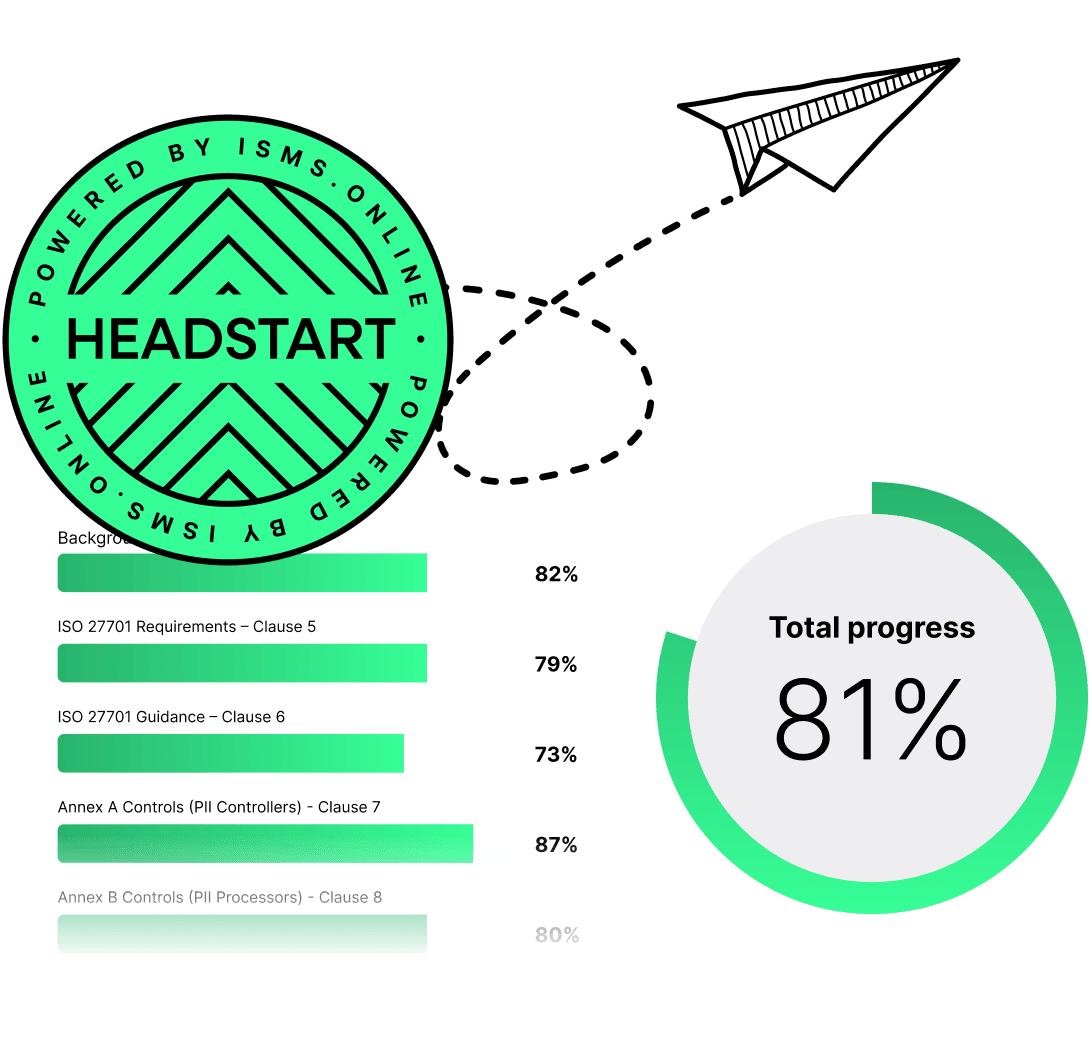
An 81% Headstart from day one
We’ve done the hard work for you, giving you an 81% Headstart from the moment you log on. All you have to do is fill in the blanks.
How to Conduct a Risk Assessment Using ISO 27001:2022
Steps for Effective Risk Assessment
Conducting a risk assessment using the ISO 27001:2022 standard involves a structured methodology to identify, analyse, and manage risks. Begin by defining the scope and context of your assessment, ensuring alignment with organisational objectives. Identify potential risks to information assets, considering both internal and external threats. Evaluate the likelihood and impact of each risk, prioritising them based on their potential effect on your organisation. Develop and implement a risk treatment plan to mitigate identified risks, ensuring compliance with ISO 27001:2022 Clause 6.1.
Identifying and Prioritising Risks in Healthcare
Healthcare organisations must focus on specific risks such as data breaches and unauthorised access. Employ both qualitative and quantitative methods, like risk matrices and scoring systems, to effectively prioritise risks. This approach ensures that resources are allocated to address the most critical threats first, enhancing data security and compliance.
Recommended Tools and Techniques for Risk Assessment
Utilising platforms like ISMS.online and Sprinto can streamline the risk assessment process. These tools offer features such as automated risk tracking, reporting, and compliance management, simplifying the maintenance of an effective Information Security Management System (ISMS).
Tailoring Risk Assessments for Healthcare-Specific Challenges
To address healthcare-specific risks, focus on challenges related to patient data protection, regulatory compliance, and operational resilience. Customise your approach by integrating ISO 27001:2022 principles, ensuring that your risk management strategy effectively safeguards sensitive information.
By following these steps, healthcare organisations can conduct comprehensive risk assessments using ISO 27001:2022, ensuring robust data protection and compliance. Explore how our platform, ISMS.online, can support your risk management efforts and enhance your organisation’s security posture.
Key Components of ISO 27001:2022 in Healthcare Risk Management
Core Elements of ISO 27001:2022
ISO 27001:2022 offers a detailed framework for managing information security risks, particularly vital in healthcare. The standard’s 93 controls in Annex A are instrumental in safeguarding sensitive patient data. Key components include:
- Risk Management: Employs a structured methodology to identify, assess, and mitigate risks, ensuring patient data security (ISO 27001:2022 Clause 6.1).
- Security Controls: Implements robust measures to protect information assets from threats, enhancing compliance with regulations like HIPAA.
- Leadership Commitment: Involves top management actively fostering a security-focused culture and allocating necessary resources (ISO 27001:2022 Clause 5.1).
- Continuous Improvement: Encourages regular audits and reviews to enhance the Information Security Management System (ISMS) and adapt to evolving threats (ISO 27001:2022 Clause 9.3).
Contribution to Effective Risk Management
Each component plays a crucial role in healthcare settings:
- Risk Management: Identifies vulnerabilities and implements strategies to mitigate them, safeguarding sensitive patient information.
- Security Controls: Establishes robust defences against unauthorised access and data breaches, ensuring compliance with regulations like HIPAA.
- Leadership Commitment: Drives organisational focus on security, ensuring that policies and procedures are consistently applied.
- Continuous Improvement: Encourages ongoing evaluation and enhancement of security measures, maintaining resilience against emerging threats.
Integrating Components into Healthcare Frameworks
Incorporating these components into existing frameworks ensures a comprehensive approach to risk management. Healthcare organisations can:
- Align with Existing Policies: Integrate ISO 27001:2022 standards into current risk management practices, enhancing data protection.
- Customise Security Controls: Tailor controls to address specific healthcare challenges, such as patient data privacy and regulatory compliance.
- Engage Leadership: Foster a culture of security awareness and commitment from top management to frontline staff.
- Implement Continuous Monitoring: Use tools and technologies to track and respond to security incidents proactively.
By understanding and applying these core components, healthcare organisations can enhance their risk management strategies, ensuring robust data security and compliance. This foundation sets the stage for exploring practical applications and further integration into healthcare systems.

Free yourself from a mountain of spreadsheets
Embed, expand and scale your compliance, without the mess. IO gives you the resilience and confidence to grow securely.
Why Is Data Security a Priority in Healthcare?
The Imperative of Protecting Patient Information
In the healthcare sector, safeguarding patient data is not just a regulatory requirement but a moral obligation. The increasing prevalence of digital health records demands stringent measures to maintain trust and ensure compliance with standards like HIPAA and GDPR.
Strengthening Security with ISO 27001:2022
ISO 27001:2022 provides a robust framework for enhancing data security through a comprehensive Information Security Management System (ISMS). This system enables healthcare organisations to systematically manage risks, implement effective security controls, and continuously improve their security posture. By aligning with ISO 27001:2022, healthcare providers can protect patient data and meet compliance standards (ISO 27001:2022 Clause 6.1).
The High Stakes of Inadequate Security
Failing to secure data can lead to severe repercussions, including financial losses, reputational damage, and legal liabilities. Data breaches compromise patient privacy and erode trust in healthcare institutions, with potential fines and business losses compounding the impact.
Achieving Comprehensive Protection
To ensure robust protection, healthcare organisations must implement stringent access controls and encryption methods. These measures prevent unauthorised access and safeguard data integrity. Regular audits and continuous monitoring are essential to identify vulnerabilities and adapt to emerging threats (ISO 27001:2022 Annex A.8).
Incorporating ISO 27001:2022 into your healthcare organisation’s risk management strategy is a proactive step towards enhancing data security. Our platform, ISMS.online, offers tailored solutions to streamline this process, ensuring your organisation remains compliant and secure. Protect your patient data and build trust with your stakeholders.
Implementing ISO 27001:2022 in Healthcare Settings
Steps to Implement ISO 27001:2022
Implementing the ISO 27001:2022 standard in healthcare requires a methodical approach. Start with a gap analysis to pinpoint areas needing enhancement. Develop an Information Security Management System (ISMS) tailored to your organisation’s specific needs, ensuring alignment with healthcare regulations. Conduct internal audits to assess compliance and identify potential risks (ISO 27001:2022 Clause 9.2).
Ensuring Successful Implementation in Healthcare
Success in implementing ISO 27001:2022 hinges on leadership commitment and stakeholder engagement. Engage top management to foster a culture of security awareness and allocate necessary resources. Regular training for staff is crucial to maintain compliance and adapt to evolving threats. By prioritising these elements, healthcare organisations can enhance data security and operational resilience.
Best Practices for ISO 27001:2022 Implementation
Adopt best practices such as establishing clear access controls and incident response plans. Regularly update your ISMS to reflect changes in regulations and technology. Encourage continuous improvement through audits and reviews, ensuring your security posture remains robust (ISO 27001:2022 Annex A.8).
Overcoming Implementation Challenges
Overcoming challenges requires addressing resource constraints and ensuring stakeholder engagement. Use technology to streamline processes and automate compliance tasks. By focusing on these areas, healthcare organisations can navigate obstacles and achieve successful implementation.
Implementing ISO 27001:2022 in healthcare settings is a strategic move towards enhanced data security and compliance. By following these steps and best practices, organisations can safeguard patient information and build trust with stakeholders. This foundation sets the stage for exploring further integration into healthcare systems, ensuring a comprehensive approach to risk management.

Manage all your compliance, all in one place
ISMS.online supports over 100 standards and regulations, giving you a single platform for all your compliance needs.
Navigating Implementation Challenges in Healthcare
Overcoming Implementation Hurdles
Implementing the ISO 27001:2022 standard in healthcare is not without its challenges. Resource limitations, stakeholder engagement, and the integration of new standards with existing systems can pose significant obstacles. However, these challenges are surmountable with strategic planning and execution.
Strategies for Success
To address these challenges, healthcare organisations must prioritise effective communication and comprehensive training. Engaging stakeholders early fosters alignment with organisational goals and ensures a smoother implementation process. Automation tools, such as ISMS.online, can streamline compliance tasks, enhancing efficiency and reducing the burden on limited resources.
Resources for Implementation
Several resources are available to support the implementation process. ISO.org offers detailed documentation on ISO 27001:2022, providing valuable insights into best practices. Additionally, the Healthcare Information and Management Systems Society (HIMSS) provides resources tailored to healthcare IT and data security needs.
Proactive Obstacle Mitigation
Anticipating potential obstacles is crucial for a successful implementation. Conducting thorough risk assessments helps identify areas of concern, allowing organisations to develop proactive strategies. Regular audits and reviews ensure continuous improvement and compliance, reinforcing the organisation’s security posture (ISO 27001:2022 Clause 9.3).
By addressing these challenges head-on, healthcare organisations can effectively manage risks and protect sensitive information. Utilising available resources and fostering a culture of security awareness enables organisations to navigate the complexities of ISO 27001:2022 implementation with confidence.
Further Reading
Overcoming Common Obstacles in Healthcare Risk Management
Identifying Key Challenges
Healthcare organisations frequently encounter significant hurdles in managing risk, primarily due to stringent compliance requirements and insufficient automation. These challenges can expose vulnerabilities in data security and compliance, necessitating a robust approach to risk management.
Leveraging ISO 27001:2022 for Effective Solutions
The ISO 27001:2022 standard offers a comprehensive framework to address these challenges by providing clear guidelines for risk management. Implementing this standard enables healthcare organisations to streamline compliance efforts and automate risk management processes, ensuring a more efficient and effective approach to safeguarding sensitive information.
Strategic Approaches to Address Challenges
To effectively navigate these obstacles, healthcare organisations should focus on:
- Continuous Risk Assessment: Regularly evaluate and prioritise risks to ensure resources are allocated effectively.
- Ongoing Training: Conduct regular training sessions to keep staff informed about the latest security practices and compliance requirements.
- Advanced Technology Utilisation: Employ cutting-edge tools and technologies to automate risk management tasks and enhance data security.
Enhancing Risk Management Practices
Continuous improvement is vital for maintaining effective risk management practices. Healthcare organisations should:
- Conduct Regular Audits: Perform periodic audits to identify gaps and areas for enhancement.
- Promote Security Awareness: Foster a proactive approach to security by promoting awareness and accountability among staff.
- Adapt to Emerging Threats: Stay informed about new security threats and adjust risk management strategies accordingly.
By implementing these strategies, healthcare organisations can overcome common obstacles in risk management and ensure robust data protection. This proactive approach not only enhances compliance but also builds trust with patients and stakeholders.
Can Automation Enhance Compliance with ISO 27001:2022?
How Automation Transforms Compliance
Automation revolutionises compliance with the ISO 27001:2022 standard by eliminating manual errors and expediting routine tasks. This shift allows healthcare organisations to concentrate on strategic priorities, ensuring compliance without the burden of manual processes. Automation not only boosts accuracy but also enhances response times to security threats.
Benefits of Automation in Healthcare Compliance
Automation offers transformative benefits for healthcare compliance:
- Operational Efficiency: Streamlining compliance tasks frees up resources, enabling staff to prioritise patient care.
- Cost Efficiency: Reducing manual interventions lowers operational expenses.
- Data Security: Automated systems ensure consistent monitoring and reporting, safeguarding data integrity and compliance with standards like HIPAA and GDPR.
Implementing Automation Effectively
To harness automation’s full potential, healthcare organisations should integrate it into existing compliance frameworks:
- Evaluate Current Systems: Identify areas where automation can drive the most impact.
- Select Appropriate Tools: Choose solutions that align with organisational objectives and compliance needs.
- Train Staff: Equip employees to work with new automated systems, fostering a culture of continuous improvement.
Integrating Automation into Compliance Frameworks
Automation seamlessly integrates into platforms like ISMS.online, enhancing compliance efforts. Our platform offers tools that automate risk assessments, incident response, and data management, providing a comprehensive solution for healthcare organisations. By embracing automation, you can streamline compliance processes, mitigate risks, and bolster data security.
Elevate your compliance strategy and ensure robust data protection by integrating automation. Discover how ISMS.online can support your journey towards seamless compliance with ISO 27001:2022.
How to Measure the Effectiveness of ISO 27001:2022 Implementation
Evaluating Implementation Success
To gauge the success of ISO 27001:2022 in healthcare, organisations must employ a comprehensive set of metrics. Key indicators include:
- Security Incidents: Monitor the frequency and severity of incidents to evaluate the ISMS’s effectiveness.
- Audit Findings: Analyse audit results to pinpoint areas for enhancement.
- Compliance Rates: Track adherence to regulatory standards to ensure ongoing compliance.
Tools for Measuring Effectiveness
Healthcare organisations can leverage compliance management software and audit tools to streamline evaluations. These technologies automate data collection and analysis, offering real-time insights into compliance status and risk exposure. By integrating these tools, organisations can better monitor and respond to security challenges.
Ensuring Continuous Improvement
Continuous improvement is crucial for maintaining compliance and adapting to evolving threats. Regular reviews and updates to the ISMS, informed by audit findings and stakeholder feedback, ensure that security measures remain effective and relevant. This proactive approach fosters a culture of security awareness and resilience, essential for safeguarding sensitive patient data.
By adopting these metrics and methods, healthcare organisations can ensure robust data protection and build lasting trust with stakeholders.
What Are the Benefits of ISO 27001:2022 for Healthcare Organisations?
Enhancing Data Security and Compliance
ISO 27001:2022 provides healthcare organisations with a structured framework to fortify data security and ensure compliance with regulations such as HIPAA and GDPR. By implementing this standard, healthcare entities can:
- Strengthen Data Security: Employ comprehensive security controls to protect patient information, reducing the risk of unauthorised access and data breaches (ISO 27001:2022 Clause 8.2).
- Achieve Regulatory Compliance: Align with legal requirements, ensuring adherence to standards like HIPAA and GDPR, and mitigating potential legal liabilities (ISO 27001:2022 Clause 5.1).
- Enhance Risk Management: Identify, analyse, and treat risks effectively, minimising the likelihood of data breaches and enhancing operational resilience (ISO 27001:2022 Clause 6.1).
Boosting Organisational Efficiency
Implementing ISO 27001:2022 streamlines processes, reducing redundancies and enhancing organisational efficiency. By automating compliance tasks, healthcare organisations can allocate resources more effectively, allowing staff to focus on patient care and strategic initiatives. This approach not only improves operational efficiency but also enhances the organisation’s ability to respond swiftly to security threats.
Gaining a Competitive Edge
Adopting ISO 27001:2022 signals a commitment to data security, offering a competitive advantage in the healthcare industry. By demonstrating compliance with this internationally recognised standard, healthcare organisations can build trust with patients and stakeholders, enhancing their reputation and market position. This proactive approach to risk management safeguards sensitive information and positions the organisation as a leader in data security.
Embrace the advantages of ISO 27001:2022 to bolster your healthcare organisation’s data security and compliance. Our platform, ISMS.online, offers tailored solutions to streamline this process and support your journey towards robust risk management. Secure your organisation and build trust with your stakeholders.
Book a Demo with ISMS.online
Discover Tailored Solutions for Healthcare Risk Management
Unlock the full potential of ISO 27001:2022 with ISMS.online, your dedicated partner in healthcare risk management. Our platform is designed to simplify compliance, offering intuitive tools and resources that make implementation straightforward.
-
Streamline Compliance: Navigate the complexities of ISO 27001:2022 with ease, ensuring your organisation meets all regulatory requirements efficiently.
-
Customised Strategies: We provide bespoke risk management solutions tailored to the unique challenges faced by healthcare organisations.
-
Efficient Implementation: Our platform equips you with the tools needed for a seamless ISO 27001:2022 implementation, enhancing your security posture.
-
Experience Our Platform: Book a demo to see how ISMS.online can revolutionise your risk management approach. Witness firsthand the capabilities that elevate your organisation’s security framework.
Why Choose ISMS.online?
Our platform is crafted with healthcare professionals in mind, offering a comprehensive suite of features that support your journey towards robust data protection and compliance. By integrating advanced threat detection and security automation, we empower you to focus on patient care and operational excellence.
Take the Next Step
Join the growing number of healthcare organisations that trust ISMS.online to safeguard their sensitive information. Book a demo today and discover how our platform can transform your risk management strategy, ensuring compliance with ISO 27001:2022 and beyond.
Book a demoFrequently Asked Questions
How Does ISO 27001:2022 Address Healthcare Compliance?
Aligning with Healthcare Regulations
ISO 27001:2022 offers a comprehensive framework for managing information security, crucial for healthcare compliance. By aligning with standards like HIPAA and GDPR, it ensures that healthcare organisations meet stringent regulatory requirements. This alignment not only safeguards patient data but also fosters trust and strengthens operational resilience.
Compliance Benefits for Healthcare Organisations
Implementing ISO 27001:2022 provides healthcare entities with several advantages:
- Data Security: Establishes rigorous security controls to protect sensitive patient information.
- Regulatory Compliance: Ensures adherence to healthcare-specific regulations, minimising legal risks.
- Risk Management: Identifies and mitigates potential threats, bolstering the overall security posture.
Effective Implementation Strategies
To effectively implement ISO 27001:2022, healthcare organisations should:
- Conduct a Gap Analysis: Identify areas for improvement and prioritise actions.
- Develop a Customised ISMS: Tailor the Information Security Management System to meet specific organisational needs.
- Engage Stakeholders: Cultivate a culture of security awareness and commitment across all organisational levels.
Enhancing Compliance Efforts
ISO 27001:2022 enhances compliance through a holistic approach to risk management. By integrating continuous monitoring and regular audits, healthcare organisations can maintain compliance and adapt to evolving threats. This proactive strategy not only protects patient data but also builds trust with stakeholders.
By focusing on these critical areas, ISO 27001:2022 serves as an essential tool for healthcare compliance, ensuring robust data protection and operational efficiency.
Implementing ISO 27001:2022 in Healthcare
Key Steps for Implementation
Implementing the ISO 27001:2022 standard in healthcare demands a methodical approach. Start with a gap analysis to pinpoint areas needing enhancement. Develop an Information Security Management System (ISMS) tailored to your organisation’s specific needs, ensuring alignment with healthcare regulations. Conduct internal audits to assess compliance and identify potential risks (ISO 27001:2022 Clause 9.2).
Ensuring Successful Implementation
Success hinges on leadership commitment and stakeholder engagement. Engage top management to foster a culture of security awareness and allocate necessary resources. Regular training for staff is crucial to maintain compliance and adapt to evolving threats. By prioritising these elements, healthcare organisations can enhance data security and operational resilience.
Best Practices for Overcoming Challenges
Overcoming challenges requires addressing resource constraints and ensuring stakeholder engagement. Use technology to streamline processes and automate compliance tasks. By focusing on these areas, healthcare organisations can navigate obstacles and achieve successful implementation.
Continuous Improvement
Continuous improvement is essential for maintaining effective risk management practices. Healthcare organisations should engage in regular audits to identify gaps and areas for enhancement. Foster a culture of security awareness and encourage a proactive approach to security by promoting awareness and accountability among staff. Adapt to emerging threats by staying informed about new security threats and adjusting risk management strategies accordingly.
By following these steps and best practices, organisations can effectively implement ISO 27001:2022, ensuring robust data protection and compliance. This proactive approach not only enhances compliance but also builds trust with patients and stakeholders.
How Can Automation Enhance ISO 27001:2022 Compliance?
Transforming Compliance through Automation
Automation fundamentally reshapes compliance by streamlining processes, minimising manual intervention, and reducing errors. By automating routine tasks, healthcare organisations can focus on strategic initiatives, ensuring adherence to the ISO 27001:2022 standard. This approach not only enhances accuracy but also accelerates response times to potential security threats.
Elevating Compliance with Automated Systems
Integrating automation into compliance frameworks ensures consistent monitoring and reporting, crucial for maintaining alignment with ISO 27001:2022. Automated systems provide real-time insights, enabling organisations to swiftly identify and address vulnerabilities. This proactive stance enhances data security and aligns with regulatory requirements (ISO 27001:2022 Clause 6.1).
Implementing Automation Effectively
To harness the full potential of automation, healthcare organisations should:
- Assess Current Systems: Identify areas where automation can deliver the most significant impact.
- Select Appropriate Tools: Choose solutions that align with organisational objectives and compliance needs.
- Empower Employees: Provide training to ensure staff can effectively use new automated systems, fostering a culture of continuous improvement.
Seamless Integration into Compliance Frameworks
Automation can be seamlessly integrated into existing compliance frameworks, enhancing their effectiveness. By automating risk assessments, incident response, and data management, organisations can streamline compliance efforts and reduce risks. This integration not only simplifies processes but also ensures robust data protection (ISO 27001:2022 Annex A.8).
Automation is a powerful tool for enhancing compliance with the ISO 27001:2022 standard, offering numerous benefits for healthcare organisations. By streamlining processes and improving accuracy, automation supports a proactive approach to risk management, ensuring robust data protection and compliance with regulatory standards.
What Are the Benefits of ISO 27001:2022 for Healthcare Organisations?
Fortifying Data Security and Compliance
ISO 27001:2022 provides a comprehensive framework that strengthens data security, enabling healthcare organisations to protect sensitive patient information effectively. By implementing stringent security controls and aligning with regulations such as HIPAA and GDPR, organisations can significantly reduce the risk of data breaches and legal liabilities (ISO 27001:2022 Clause 8.2).
Streamlining Organisational Efficiency
The standard enhances operational efficiency by automating compliance tasks, allowing healthcare organisations to allocate resources more effectively. This not only improves the organisation’s ability to respond swiftly to security threats but also enables staff to focus on patient care and strategic initiatives.
Securing a Competitive Advantage
Adopting ISO 27001:2022 signals a strong commitment to data security, providing a competitive edge in the healthcare industry. By demonstrating compliance with this internationally recognised standard, healthcare organisations can build trust with patients and stakeholders, enhancing their reputation and market position.
Key Advantages of ISO 27001:2022
- Data Security: Establishes comprehensive security controls to protect patient information.
- Regulatory Compliance: Ensures adherence to standards like HIPAA and GDPR, reducing legal risks.
- Operational Efficiency: Streamlines processes, allowing for better resource allocation and focus on core activities.
- Competitive Edge: Enhances reputation and trust, positioning the organisation as a leader in data security.
By embracing ISO 27001:2022, healthcare organisations can enhance their data security and compliance efforts, streamline operations, and gain a competitive advantage. This standard provides a structured approach to managing information security risks, ensuring robust protection for sensitive patient data and compliance with regulatory requirements.
Measuring the Effectiveness of ISO 27001:2022 Implementation
Assessing Implementation Success
To determine the success of ISO 27001:2022 implementation, healthcare organisations should focus on key performance indicators that reflect the system’s robustness. These include:
- Incident Reduction: Track the frequency and severity of security incidents to evaluate the effectiveness of the Information Security Management System (ISMS) (ISO 27001:2022 Clause 8.2).
- Audit Outcomes: Examine audit results to identify areas for improvement and ensure compliance with regulatory standards (ISO 27001:2022 Clause 9.2).
- Compliance Metrics: Monitor adherence to internal policies and external regulations to maintain a secure environment (ISO 27001:2022 Clause 5.1).
Tools for Measuring Effectiveness
Healthcare entities can utilise specialised tools to streamline the evaluation process. These tools offer automated data collection and analysis, providing real-time insights into compliance status and risk exposure. By integrating such technologies, organisations can enhance their ability to monitor and respond to security challenges effectively.
Ensuring Continuous Improvement
Continuous improvement is essential for maintaining compliance and adapting to evolving threats. Regular reviews and updates to the ISMS, informed by audit findings and stakeholder feedback, ensure that security measures remain effective and relevant. This proactive approach fosters a culture of security awareness and resilience, essential for safeguarding sensitive patient data.
Incorporating these metrics and methods illustrates that measuring the effectiveness of ISO 27001:2022 implementation is not a one-time task but an ongoing commitment to excellence. By embracing a dynamic approach to risk management, healthcare organisations can ensure robust data protection and build lasting trust with stakeholders.
Overcoming Common Obstacles in Healthcare Risk Management
Navigating Key Challenges
Healthcare organisations often grapple with stringent compliance requirements and limited automation in risk management processes. These challenges can hinder effective risk management, potentially exposing vulnerabilities in data security and compliance.
Utilising ISO 27001:2022 for Effective Solutions
The ISO 27001:2022 standard offers a structured framework to address these challenges, providing clear guidelines for risk management. By implementing this standard, healthcare organisations can streamline compliance efforts and automate risk management processes, ensuring a more efficient approach to safeguarding sensitive information.
Strategic Approaches to Overcome Challenges
To effectively tackle these obstacles, healthcare organisations should focus on:
- Dynamic Risk Evaluation: Continuously assess and prioritise risks to ensure resources are allocated effectively.
- Comprehensive Staff Training: Conduct regular training sessions to keep staff informed about the latest security practices and compliance requirements.
- Advanced Technological Integration: Utilise cutting-edge tools and technologies to automate risk management tasks and enhance data security.
Continuous Improvement in Risk Management
Continuous improvement is essential for maintaining effective risk management practices. Healthcare organisations should:
- Engage in Regular Audits: Conduct periodic audits to identify gaps and areas for enhancement.
- Cultivate a Security-Conscious Culture: Promote a proactive approach to security by fostering awareness and accountability among staff.
- Adapt to Emerging Threats: Stay informed about new security threats and adjust risk management strategies accordingly.
By implementing these strategies, healthcare organisations can overcome common obstacles in risk management and ensure robust data protection. This proactive approach not only enhances compliance but also builds trust with patients and stakeholders.