





































Discover How to Measure ISO 27001 Effectiveness
The Significance of Measuring Effectiveness
Understanding how well your ISO 27001:2022 risk management programme performs is essential for maintaining compliance and strengthening your organisation’s security posture. By assessing effectiveness, you can pinpoint areas needing improvement, ensuring your security measures remain robust and adaptable to new threats.
Core Elements of an Effective Measurement Strategy
To accurately gauge ISO 27001 effectiveness, consider these key components:
- Risk Assessment Methodologies: Employ both qualitative and quantitative approaches to thoroughly evaluate risks (ISO 27001:2022 Clause 5.3).
- Strategic Risk Treatment: Implement controls from ISO 27001 Annex A to address identified risks effectively.
- Continuous Monitoring: Utilise Key Performance Indicators (KPIs) to track the performance of your Information Security Management System (ISMS) and ensure ongoing improvement (ISO 27001:2022 Clause 9.1).
Advantages of Measuring Effectiveness
Evaluating effectiveness offers several advantages:
- Enhanced Compliance: Aligns with ISO 27001 standards, minimising the risk of non-compliance.
- Strengthened Security: Boosts your organisation’s capacity to respond to threats, with over 70% of organisations reporting improved risk management after adopting ISO 27001.
- Improved Risk Management: Provides a structured approach to identifying and mitigating risks, leading to a 30% reduction in security incidents.
Influence on Security Posture
Dr. Jane Smith, a cybersecurity expert, highlights that ISO 27001:2022 offers a comprehensive framework for managing information security risks effectively. By measuring effectiveness, your organisation can maintain a proactive security posture, ready to tackle emerging challenges and threats.
How ISMS.online Supports Your Efforts
Our platform simplifies the process of evaluating ISO 27001 effectiveness, offering dynamic risk management tools and comprehensive compliance support. By utilising our solutions, you can enhance your organisation's security posture and ensure seamless compliance. Explore how we can assist your risk management journey by booking a demo with ISMS.online.
Book a demoWhat Metrics Define ISO 27001 Effectiveness?
Key Metrics for Evaluation
To truly assess the effectiveness of your ISO 27001:2022 risk management programme, it’s crucial to employ specific metrics that reflect performance and align with your organisational objectives. Key Performance Indicators (KPIs) are instrumental in evaluating your Information Security Management System (ISMS), offering insights into risk reduction, compliance, and operational efficiency. These metrics should resonate with your strategic goals, providing a comprehensive view of how well the ISMS supports broader business objectives.
Aligning Metrics with Strategic Goals
Tailoring metrics to your organisation’s unique goals and challenges ensures that your risk management programme not only meets compliance requirements but also drives business success. This alignment fosters a proactive risk management approach, enabling your organisation to adapt effectively to evolving threats and opportunities.
The Role of KPIs in Evaluation
KPIs are vital in assessing ISMS effectiveness. They offer measurable benchmarks that track progress and highlight areas for improvement. Effective monitoring can significantly reduce security incidents, underscoring the importance of continuous evaluation and adaptation. By focusing on KPIs, your organisation can maintain a robust security posture and enhance its ability to respond to emerging threats.
Customising Metrics to Organisational Needs
Customising metrics to fit your organisation’s specific needs maximises the effectiveness of your risk management programme. This involves selecting metrics that align with your strategic priorities and operational realities. By doing so, you create a dynamic framework that not only measures compliance but also supports continuous improvement and innovation.
Understanding these metrics empowers organisations to align their risk management strategies with their goals. Now, let’s delve into implementing effective risk assessment methodologies within the ISO 27001 framework to comprehensively identify and mitigate risks.
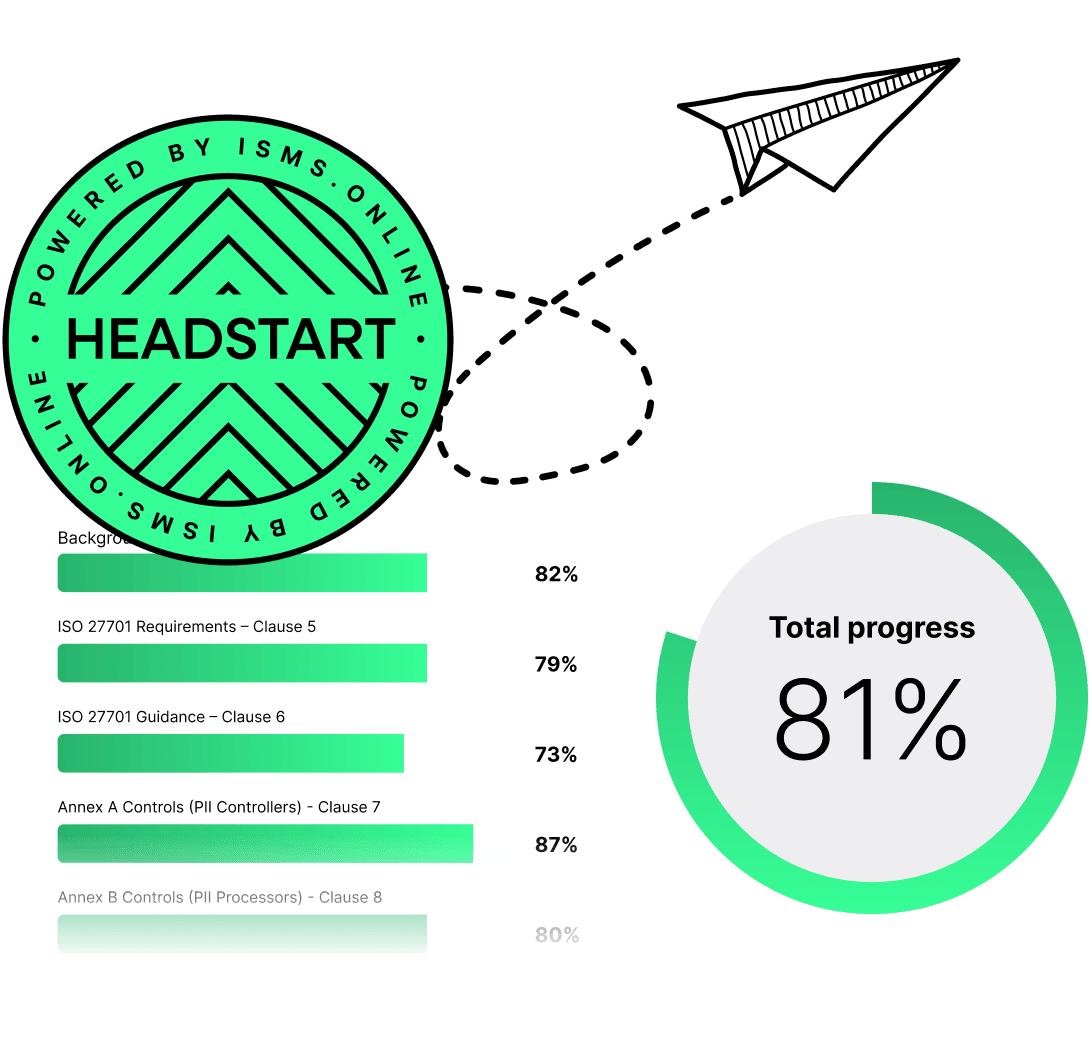
ISO 27001 made easy
An 81% Headstart from day one
We’ve done the hard work for you, giving you an 81% Headstart from the moment you log on. All you have to do is fill in the blanks.
How to Implement Effective Risk Assessment?
Steps for Comprehensive Risk Assessment
Conducting a thorough risk assessment within the ISO 27001 framework involves several critical steps. Begin by identifying potential information security risks, evaluating their likelihood and impact, and defining a robust risk assessment methodology. Documenting these results meticulously ensures transparency and accountability, aligning with ISO 27001:2022 (Clause 6.1).
Seamless Integration with ISO 27001
Integrating risk assessment into the ISO 27001 framework enhances your organisation’s ability to manage risks effectively. This integration requires aligning assessment methodologies with ISO 27001, ensuring that risk management processes are both compliant and comprehensive. By doing so, you create a structured approach to risk management that aligns with organisational goals and compliance requirements.
Recommended Tools and Techniques
Utilise both qualitative and quantitative risk assessment methodologies to gain a holistic view of potential threats. Qualitative methods, such as risk matrices, help prioritise risks based on their impact and likelihood, while quantitative methods provide numerical data for more precise analysis. Tools like risk assessment software can streamline the process, offering real-time insights and facilitating informed decision-making.
Contribution to Programme Success
Effective risk assessment is essential to the success of your ISO 27001 programme. By identifying and mitigating risks proactively, you enhance your organisation’s resilience against security threats. This proactive approach not only strengthens your security posture but also ensures continuous compliance with ISO 27001, ultimately contributing to the overall success of your risk management programme.
Having established a robust risk assessment framework, the next vital step is to ensure continuous monitoring, which plays a crucial role in sustaining ISO 27001 compliance by providing real-time insights into risk management and enhancing decision-making processes.
Why Continuous Monitoring is Essential
Enhancing Risk Visibility and Decision-Making
Continuous monitoring is a fundamental aspect of maintaining ISO 27001 compliance. It significantly enhances risk visibility and informs decision-making processes. By leveraging real-time data, organisations can swiftly identify and address potential threats, ensuring a proactive approach to risk management. This capability allows for immediate adjustments, reducing vulnerabilities and fortifying the overall security posture.
Real-Time Data and Risk Management
Real-time data is crucial for effective risk management. It empowers organisations to detect anomalies and threats as they occur, facilitating timely responses. This proactive stance not only mitigates risks but also aligns with ISO 27001 standards, supporting ongoing risk assessment and management (ISO 27001:2022 Clause 6.1).
Benefits of Proactive Monitoring
Proactive monitoring offers numerous advantages, including improved threat detection and enhanced decision-making processes. By continuously analysing data, organisations can anticipate potential issues and implement corrective measures before they escalate. This foresight is crucial for maintaining compliance and ensuring that security measures are both effective and adaptive to evolving threats.
Impact on Decision-Making Processes
Continuous monitoring significantly impacts decision-making by providing a comprehensive view of the organisation’s security framework. This holistic perspective enables informed decisions, ensuring that risk management strategies are aligned with organisational objectives and compliance requirements. As organisations strive to maintain ISO 27001 compliance, continuous monitoring becomes an indispensable tool for achieving these goals.
Understanding the importance of continuous monitoring sets the stage for exploring when to conduct audits, a critical step in reinforcing proactive monitoring benefits and ensuring compliance through regular evaluations and improvements.

Free yourself from a mountain of spreadsheets
Embed, expand and scale your compliance, without the mess. IO gives you the resilience and confidence to grow securely.
When to Conduct ISO 27001 Audits?
Optimal Timing and Frequency
Determining the right frequency for ISO 27001 audits is crucial for maintaining compliance and driving continuous improvement. While annual audits are generally recommended, high-risk environments may necessitate more frequent assessments to ensure robust security measures. Tailor the timing to your organisation’s specific needs and risk levels (ISO 27001:2022 Clause 9.2).
Identifying Areas for Improvement
Audits are invaluable for pinpointing areas where your Information Security Management System (ISMS) can be strengthened. By systematically evaluating processes and controls, audits reveal gaps and inefficiencies, providing a clear roadmap for enhancement. This proactive approach not only bolsters compliance but also fortifies your organisation’s security posture.
Key Components of an Effective Audit Process
An effective ISO 27001 audit process includes:
- Preparation: Define the audit scope and objectives, ensuring alignment with organisational goals.
- Execution: Conduct thorough assessments of policies, procedures, and controls.
- Reporting: Document findings and offer actionable recommendations for improvement.
- Follow-up: Implement corrective actions and monitor progress to ensure continuous enhancement.
Contribution to Continuous Improvement
Regular audits are instrumental in fostering a culture of continuous improvement. By identifying and addressing weaknesses, they drive the evolution of your ISMS, ensuring it remains adaptive to emerging threats and compliant with ISO 27001 standards. This ongoing process not only safeguards your organisation but also builds trust with stakeholders by demonstrating a commitment to security excellence.
Our platform, ISMS.online, simplifies the audit process by offering comprehensive tools and resources to support your compliance journey. Embrace the opportunity to enhance your ISMS and ensure your organisation remains at the forefront of information security.
How to Align Risk Management with Business Objectives?
Strategic Integration
Integrating risk management with your business objectives is crucial for ensuring that security measures actively support your organisational goals. This strategic alignment requires embedding risk management processes into broader business strategies, creating a cohesive framework that not only meets compliance requirements but also drives business success.
Supporting Organisational Goals
To effectively support your organisational goals, risk management must be woven into the core business strategy. This involves identifying key risks that could impact your objectives and developing targeted strategies to mitigate them. By aligning risk management with business objectives, you ensure that security measures are not only compliant but also contribute to achieving strategic goals (ISO 27001:2022 Clause 6.1).
Leadership’s Role
Leadership is instrumental in aligning risk management with business objectives. Leaders must champion the integration of risk management processes into the organisational strategy, ensuring all stakeholders are engaged and committed. By fostering a culture of risk awareness and accountability, leadership can drive the successful integration of risk management into the business framework.
Enhancing Business Performance
Aligning risk management with business objectives enhances overall business performance by fostering a proactive approach to risk mitigation. This alignment ensures that security measures are not only compliant but also contribute to achieving strategic goals, ultimately improving operational efficiency and resilience. As your organisation strives to enhance its risk management processes, adopting automation emerges as a key component, increasing efficiency and accuracy in compliance efforts.
Building on this foundation, the next section explores how automation can further streamline compliance processes, setting the stage for a transformative leap in ISO 27001 compliance.

Manage all your compliance, all in one place
ISMS.online supports over 100 standards and regulations, giving you a single platform for all your compliance needs.
How to Enhance Stakeholder Engagement?
Strategies for Effective Engagement
Engaging stakeholders in ISO 27001 risk management is crucial for fostering collaboration and driving success. Effective communication and collaboration are essential. Consider these strategies:
- Regular Meetings: Schedule consistent discussions to address progress, challenges, and opportunities.
- Feedback Channels: Establish avenues for stakeholders to share insights and feedback, ensuring their input is valued.
- Comprehensive Communication Plans: Develop strategies outlining how information will be shared and disseminated.
Improving Collaboration Through Communication
Clear communication enhances collaboration, ensuring all stakeholders work towards common goals. Consider these approaches:
- Collaborative Tools: Leverage technology for real-time communication and document sharing.
- Defined Roles: Clearly outline responsibilities to prevent overlap and ensure accountability.
- Transparent Reporting: Provide regular updates on risk management activities to keep stakeholders informed.
Stakeholders’ Role in Risk Management
Stakeholders are vital in identifying and mitigating risks. Their involvement ensures diverse perspectives are considered, leading to robust risk management strategies. Key roles include:
- Risk Identification: Stakeholders offer valuable insights into potential risks.
- Decision-Making: Involve stakeholders in key decisions to ensure support for initiatives.
- Monitoring and Evaluation: Engage stakeholders in ongoing monitoring and evaluation of activities.
Driving Programme Success Through Engagement
Engagement is about driving success. Actively involving stakeholders enhances compliance efforts and ensures effective implementation of strategies. Benefits include:
- Increased Support: Engaged stakeholders are more likely to champion initiatives.
- Improved Compliance: Active participation helps meet compliance requirements.
- Enhanced Outcomes: Collaboration leads to effective risk management and programme success.
Understanding the importance of stakeholder engagement sets the stage for addressing challenges in ISO 27001 implementation, such as resource constraints and resistance to change. These challenges require strategic solutions and foresight to navigate successfully.
Further Reading
Overcoming Challenges in ISO 27001 Implementation
Common Challenges in Implementation
Implementing the ISO 27001 standard can be daunting due to various hurdles such as resource constraints, resistance to change, and the complexity of the process itself. These challenges often stem from limited budgets, insufficient staffing, and organisational inertia, requiring a strategic approach to ensure successful implementation.
Strategies to Overcome Challenges
To navigate these obstacles, organisations should focus on strategic planning and leveraging technology. Effective planning involves setting clear objectives, efficiently allocating resources, and engaging stakeholders early in the process. Utilising technology, such as automated risk management tools, can streamline processes and enhance efficiency. By adopting these strategies, organisations can overcome obstacles and achieve compliance with ISO 27001 standards.
The Role of Planning in Success
Planning is integral to the successful implementation of ISO 27001. A well-structured plan outlines the necessary steps, timelines, and responsibilities, ensuring that all stakeholders are aligned and committed to the process. This proactive approach minimises disruptions and facilitates a smooth transition to compliance.
Preparing for Potential Challenges
Preparation is crucial for addressing potential challenges in ISO 27001 implementation. Organisations should conduct thorough risk assessments to identify potential obstacles and develop contingency plans. By anticipating challenges and preparing accordingly, organisations can mitigate risks and ensure a successful implementation.
Addressing common challenges in ISO 27001 implementation, such as resource constraints and resistance to change, highlights the vital role of strategic planning and leveraging technology to overcome obstacles. This sets the stage for a deeper examination of how advanced technological tools can further enhance ISO 27001 compliance, driving efficiency, accuracy, and continuous improvement in risk management processes.
How to Leverage Technology for Better Compliance?
Elevating Compliance through Technological Integration
Integrating advanced technology into ISO 27001 compliance processes significantly enhances both efficiency and accuracy. By utilising AI and machine learning, organisations can automate routine tasks, facilitating real-time risk assessment and proactive threat mitigation. This integration ensures compliance measures are exceeded, streamlining risk management processes.
Cutting-Edge Tools for Risk Management
Modern risk management tools offer unparalleled capabilities in identifying and addressing potential threats. These tools provide comprehensive insights, enabling swift, informed decision-making. AI-driven solutions enhance predictive analytics, offering a nuanced understanding of risk factors and facilitating continuous improvement.
Boosting Efficiency and Precision
Technology plays a crucial role in enhancing compliance precision. Automated systems reduce human error, ensuring consistent application of compliance measures. This not only saves time but also ensures effective resource allocation, aligning with organisational objectives and compliance requirements.
Fostering Continuous Improvement
Continuous improvement is a cornerstone of effective risk management. Technology supports this by providing ongoing insights into compliance performance. Real-time data analytics enable organisations to adapt quickly to emerging threats, ensuring robust and responsive security measures.
Why Choose ISMS.online for ISO 27001 Management?
Unmatched Benefits of ISMS.online
ISMS.online offers a powerful platform that revolutionises ISO 27001 management, providing a seamless experience for compliance officers, CISOs, and CEOs. Our platform is engineered to optimise compliance and risk management processes, supporting over 100 standards and regulations. This holistic approach ensures your organisation can efficiently manage compliance needs, enhancing overall programme effectiveness.
Elevating Compliance and Risk Management
Our platform excels in elevating compliance and risk management by offering dynamic tools that align with ISO 27001 standards. These tools facilitate the identification, assessment, and treatment of risks, ensuring your organisation remains compliant and secure. By integrating these processes, ISMS.online empowers you to focus on strategic objectives without being encumbered by administrative tasks.
Distinctive Features of ISMS.online
ISMS.online distinguishes itself with features tailored to the unique needs of compliance officers, CISOs, and CEOs. Key features include:
- Comprehensive Compliance Support: Access a wide array of compliance tools and resources.
- User-Centric Interface: Intuitive design that simplifies navigation and enhances user experience.
- Scalability: Adaptable solutions that grow with your organisation’s needs.
Amplifying Programme Effectiveness
Our platform not only supports compliance but also amplifies overall programme effectiveness. By providing real-time insights and analytics, ISMS.online empowers you to make informed decisions and continuously refine your risk management strategies. This proactive approach ensures your organisation remains resilient against evolving threats.
Discover how ISMS.online can transform your ISO 27001 management efforts. Experience the benefits of a comprehensive, user-friendly platform that supports compliance and risk management, ensuring your organisation’s success in a competitive environment.
Book a Demo with ISMS.online
Uncover the Power of ISMS.online
Discover how ISMS.online can transform your approach to ISO 27001 management. Our platform offers a hands-on experience that showcases tools designed to streamline compliance and enhance risk management processes.
Explore Our Innovative Features
Our platform is tailored to meet the needs of compliance officers, CISOs, and CEOs, supporting over 100 standards and regulations. Key features include:
- Advanced Compliance Tools: Access a comprehensive suite of resources designed to meet your compliance needs.
- User-Friendly Interface: Navigate our platform effortlessly, boosting workflow efficiency.
- Scalable Solutions: Adapt our tools to grow with your organisation’s evolving requirements.
Schedule Your Personalised Demo
Our experts are ready to guide you through a customised demonstration, highlighting how ISMS.online can address your specific compliance challenges. By scheduling a demo, you empower your organisation to navigate ISO 27001 complexities with confidence.
Embrace the Future of Risk Management
Take the next step in enhancing your ISO 27001 management with ISMS.online. Our platform not only simplifies compliance but also supports continuous improvement, ensuring your organisation remains resilient against evolving threats. Book a demo today and discover how ISMS.online can revolutionise your risk management strategy.
What is ISO 27001:2022?
Understanding ISO 27001:2022
ISO 27001:2022 stands as a recognised standard, offering a structured framework for establishing, implementing, maintaining, and continually improving an Information Security Management System (ISMS). This standard aids organisations in safeguarding their information assets, ensuring data confidentiality, integrity, and availability. By adhering to ISO 27001:2022, your organisation can bolster its security posture and demonstrate compliance with regulatory requirements.
Purpose and Significance
The core aim of ISO 27001:2022 is to protect information assets through a comprehensive security framework. This framework assists organisations in managing risks associated with information security threats, ensuring sensitive data remains secure. Following this standard builds trust with clients and stakeholders, showcasing your commitment to information security.
Key Components of the Standard
ISO 27001:2022 encompasses several vital components that form the backbone of an effective ISMS:
- Risk Assessment and Treatment: Identify potential security risks and implement measures to mitigate them (ISO 27001:2022 Clause 6.1).
- Leadership and Commitment: Ensure top management supports and promotes information security initiatives (ISO 27001:2022 Clause 5.1).
- Continuous Improvement: Regularly review and update security practices to adapt to evolving threats (ISO 27001:2022 Clause 10.2).
Benefits of Implementation
Implementing ISO 27001:2022 offers numerous benefits, including:
- Enhanced Security: Strengthens your organisation’s ability to protect sensitive information from breaches and cyber threats.
- Regulatory Compliance: Aligns with legal and regulatory requirements, reducing the risk of penalties and fines.
- Competitive Advantage: Demonstrates a commitment to security, enhancing reputation and trust among clients and partners.
Improving Information Security
ISO 27001:2022 improves information security by providing a structured framework for managing risks and implementing security controls. This proactive approach ensures that organisations are well-prepared to handle security incidents, minimising potential damage and disruption. By adopting ISO 27001:2022, your organisation can foster a culture of security awareness and accountability, creating a secure environment for its information assets.
Book a demoFrequently Asked Questions
How is ISO 27001 Effectiveness Measured?
Strategic Metrics Alignment
To truly gauge the effectiveness of your ISO 27001 risk management programme, it’s essential to align metrics with your organisation’s strategic goals. Key Performance Indicators (KPIs) serve as quantifiable benchmarks, offering insights into how well your Information Security Management System (ISMS) supports broader business objectives. Tailor these metrics to reflect specific organisational needs, ensuring they resonate with strategic priorities and operational realities.
Comprehensive Evaluation Methodologies
Employing both qualitative and quantitative methodologies is crucial for a thorough evaluation of ISO 27001 effectiveness. Qualitative approaches, like risk matrices, prioritise risks based on their impact and likelihood. Meanwhile, quantitative methods provide numerical data for precise analysis. This dual approach ensures a comprehensive evaluation, aligning with ISO 27001:2022 (Clause 6.1).
The Role of KPIs in Measurement
KPIs are vital tools in measuring the effectiveness of the ISMS. They provide measurable benchmarks that help track progress and identify areas for improvement. By focusing on KPIs, organisations can maintain a robust security posture and enhance their ability to respond to emerging threats.
Customising Metrics for Organisational Needs
Tailoring metrics to fit your organisation’s specific needs is essential for maximising the effectiveness of your risk management programme. This involves selecting metrics that resonate with your strategic priorities and operational realities. By doing so, you create a dynamic framework that not only measures compliance but also supports continuous improvement and innovation.
Enhancing Compliance Through Measurement
Measuring effectiveness is not just about compliance; it’s about enhancing your organisation’s security posture. By regularly evaluating metrics and methodologies, organisations can identify areas for improvement, ensuring that security measures are both robust and adaptive to evolving threats. This proactive approach aligns with ISO 27001:2022 standards, fostering a culture of continuous improvement and resilience.
What are the Benefits of Continuous Monitoring?
Real-Time Risk Management
Continuous monitoring transforms risk management by delivering real-time insights into potential threats and vulnerabilities. This proactive approach empowers organisations to swiftly identify and address risks, ensuring a dynamic and adaptive security posture aligned with ISO 27001:2022 (Clause 6.1).
Comprehensive Security Perspective
Integrating continuous monitoring provides a holistic view of your organisation’s security environment. By detecting anomalies early, you can implement corrective actions before risks escalate, maintaining resilience and fortifying your security framework.
Informed Decision-Making
Access to real-time data significantly enhances decision-making processes. With up-to-date information, organisations can make informed decisions that align risk management strategies with business objectives, ensuring operational efficiency and strategic alignment.
Sustaining Compliance
Continuous monitoring is crucial for sustaining compliance, ensuring security measures consistently meet regulatory requirements. By offering ongoing insights into compliance performance, organisations can quickly adapt to changing standards, demonstrating a commitment to security excellence and building trust with stakeholders.
Embracing continuous monitoring as a cornerstone of your risk management strategy not only enhances decision-making but also supports compliance, fostering a culture of continuous improvement and resilience.
Why is Stakeholder Engagement Important in ISO 27001?
The Significance of Stakeholder Engagement
Engaging stakeholders is crucial for ISO 27001 compliance, ensuring alignment with security objectives. This collaboration not only enhances risk management strategies but also makes them adaptable to evolving threats. Stakeholder engagement transcends mere participation; it drives programme success through collective effort and shared responsibility.
Strategies to Enhance Engagement
To effectively engage stakeholders, organisations should implement strategies that promote active participation and collaboration:
- Regular Meetings: Convene consistently to discuss progress, challenges, and opportunities.
- Feedback Channels: Establish avenues for stakeholders to provide input, ensuring their voices are heard and valued.
- Comprehensive Communication Plans: Develop strategies that outline how information will be shared and disseminated.
The Role of Communication and Collaboration
Communication and collaboration are the cornerstones of successful stakeholder engagement. By establishing clear lines of communication, organisations can enhance collaboration and ensure that all stakeholders work towards common goals:
- Collaborative Tools: Utilise technology to facilitate real-time communication and document sharing.
- Defined Roles: Clearly outline roles and responsibilities to prevent overlap and ensure accountability.
- Transparent Reporting: Provide regular updates on risk management activities to keep stakeholders informed.
Driving Programme Success Through Engagement
Engagement is not just about participation; it’s about driving programme success. By actively involving stakeholders, organisations can enhance compliance efforts and ensure that risk management strategies are effectively implemented. The benefits of strong stakeholder engagement include:
- Increased Support: Engaged stakeholders are more likely to champion risk management initiatives.
- Improved Compliance: Active participation helps ensure that compliance requirements are met and maintained.
- Enhanced Outcomes: Collaborative efforts lead to more effective risk management and better overall programme success.
Understanding the importance of stakeholder engagement sets the stage for addressing challenges that often arise during ISO 27001 implementation, such as resource constraints and resistance to change, which require strategic solutions and foresight to navigate successfully.
How Can Technology Enhance ISO 27001 Compliance?
Harnessing Technology for Compliance
Integrating technology into ISO 27001 compliance processes significantly boosts both efficiency and accuracy. By automating routine tasks, technology facilitates real-time risk assessment and proactive threat mitigation, ensuring compliance measures are exceeded. This integration streamlines risk management processes, aligning with organisational objectives and compliance requirements (ISO 27001:2022 Clause 6.1).
Cutting-Edge Risk Management Tools
Modern risk management tools offer unparalleled capabilities in identifying and addressing potential threats. These tools provide comprehensive insights, enabling organisations to make informed decisions swiftly. AI-driven solutions enhance predictive analytics, allowing for a nuanced understanding of risk factors and facilitating continuous improvement.
Precision and Efficiency in Compliance
Technology plays a crucial role in enhancing the precision of compliance processes. Automated systems reduce human error, ensuring that compliance measures are consistently applied. This saves time and ensures effective resource allocation, aligning with organisational objectives and compliance requirements.
Driving Continuous Improvement
Continuous improvement is a cornerstone of effective risk management. Technology supports this by providing ongoing insights into compliance performance. Real-time data analytics enable organisations to adapt quickly to emerging threats, ensuring that their security measures remain robust and responsive.
The integration of advanced technological tools not only enhances compliance but also streamlines risk management processes, setting the stage for an exploration of how a dedicated platform can further elevate your ISO 27001 management efforts.
Navigating ISO 27001 Implementation Challenges
Common Challenges in ISO 27001 Implementation
Implementing the ISO 27001 standard often presents significant hurdles, primarily due to resource constraints, resistance to change, and the inherent complexity of the process. These challenges typically arise from limited budgets, insufficient staffing, and organisational inertia, necessitating a strategic approach to ensure successful implementation.
Overcoming Implementation Challenges
To effectively navigate these obstacles, organisations should focus on strategic planning and leveraging technology. Effective planning involves setting clear objectives, allocating resources efficiently, and engaging stakeholders early in the process. Utilising technology, such as automated risk management tools, can streamline processes and enhance efficiency. By adopting these strategies, organisations can overcome obstacles and achieve compliance with ISO 27001 standards.
The Role of Planning in Success
Planning is integral to the successful implementation of ISO 27001. A well-structured plan outlines the necessary steps, timelines, and responsibilities, ensuring that all stakeholders are aligned and committed to the process. This proactive approach minimises disruptions and facilitates a smooth transition to compliance.
Preparing for Potential Challenges
Preparation is crucial for addressing potential challenges in ISO 27001 implementation. Organisations should conduct thorough risk assessments to identify potential obstacles and develop contingency plans. By anticipating challenges and preparing accordingly, organisations can mitigate risks and ensure a successful implementation.
Addressing common challenges in ISO 27001 implementation, such as resource constraints and resistance to change, highlights the vital role of strategic planning and leveraging technology to overcome obstacles. This sets the stage for a deeper examination of how advanced technological tools can further enhance ISO 27001 compliance, driving efficiency, accuracy, and continuous improvement in risk management processes.







