





































Understanding ISO 27001:2022 Risk Avoidance
ISO 27001:2022 stands as a benchmark for information security management systems (ISMS), offering a structured approach to safeguarding information assets. This standard is pivotal in aligning security measures with business objectives, ensuring the confidentiality, integrity, and availability of data. By addressing emerging threats, ISO 27001:2022 becomes indispensable for organisations striving to fortify their security frameworks.
Structural Components and Framework
ISO 27001:2022 is underpinned by a robust framework comprising:
- Risk Assessment: Systematic identification and evaluation of information security risks.
- Risk Treatment: Deployment of strategies to mitigate identified risks.
- Continuous Monitoring: Ongoing review and enhancement of the ISMS to maintain its efficacy.
Organisational Security Impact
Adopting ISO 27001:2022 has demonstrably bolstered the security posture of 70% of organisations (Industry Survey 2022). By implementing this standard, organisations can enhance stakeholder trust and ensure compliance with international security protocols.
How ISMS.online Facilitates Compliance
Our platform, ISMS.online, streamlines the path to ISO 27001:2022 compliance. We offer tailored tools and resources that empower Compliance Officers, Chief Information Security Officers, and CEOs to manage risks effectively and elevate security standards. Discover how our solutions can transform your organisation's security landscape by scheduling a demo with us today.
Book a demoWhat Are Risk Avoidance Techniques?
Strategic Risk Avoidance
Risk avoidance involves strategically eliminating activities that pose unacceptable risks. Within the ISO 27001:2022 framework, this approach is crucial for managing information security risks effectively. It integrates people, policies, and technology to bolster security measures.
Core Techniques and Strategies
-
Zero Trust Architecture: This framework mandates verification for every access request, eliminating implicit trust. By enforcing strict access controls and data encryption, organisations can significantly reduce vulnerabilities (ISO 27001:2022 Clause 9.4).
-
Asset Management: Maintaining a comprehensive inventory of information assets is vital. This practice helps identify potential risks and implement appropriate safeguards, aligning with ISO 27001:2022’s emphasis on comprehensive risk management (ISO 27001:2022 Clause 8.1).
-
Continuous Monitoring: Regularly reviewing and updating the Information Security Management System (ISMS) ensures it remains effective in addressing evolving threats and maintaining compliance (ISO 27001:2022 Clause 9.1).
Role in ISMS
Risk avoidance is integral to an ISMS, providing a structured approach to managing information security risks. It aligns with the standard’s holistic approach, covering people, policies, and technology. By integrating risk avoidance techniques, organisations can enhance their security posture and build trust with stakeholders.
Implementation Best Practices
-
Conduct Thorough Risk Assessments: Identify and evaluate potential risks to determine the most effective avoidance strategies (ISO 27001:2022 Clause 6.1).
-
Utilise Advanced Tools: Employ technology and automation to streamline risk management processes.
-
Engage Stakeholders: Ensure all relevant parties are involved in the risk management process, fostering a culture of security awareness.
Implementing these techniques effectively mitigates potential risks, ensuring the confidentiality, integrity, and availability of information assets. This proactive approach not only enhances security but also supports compliance with global standards.
ISO 27001 made easy
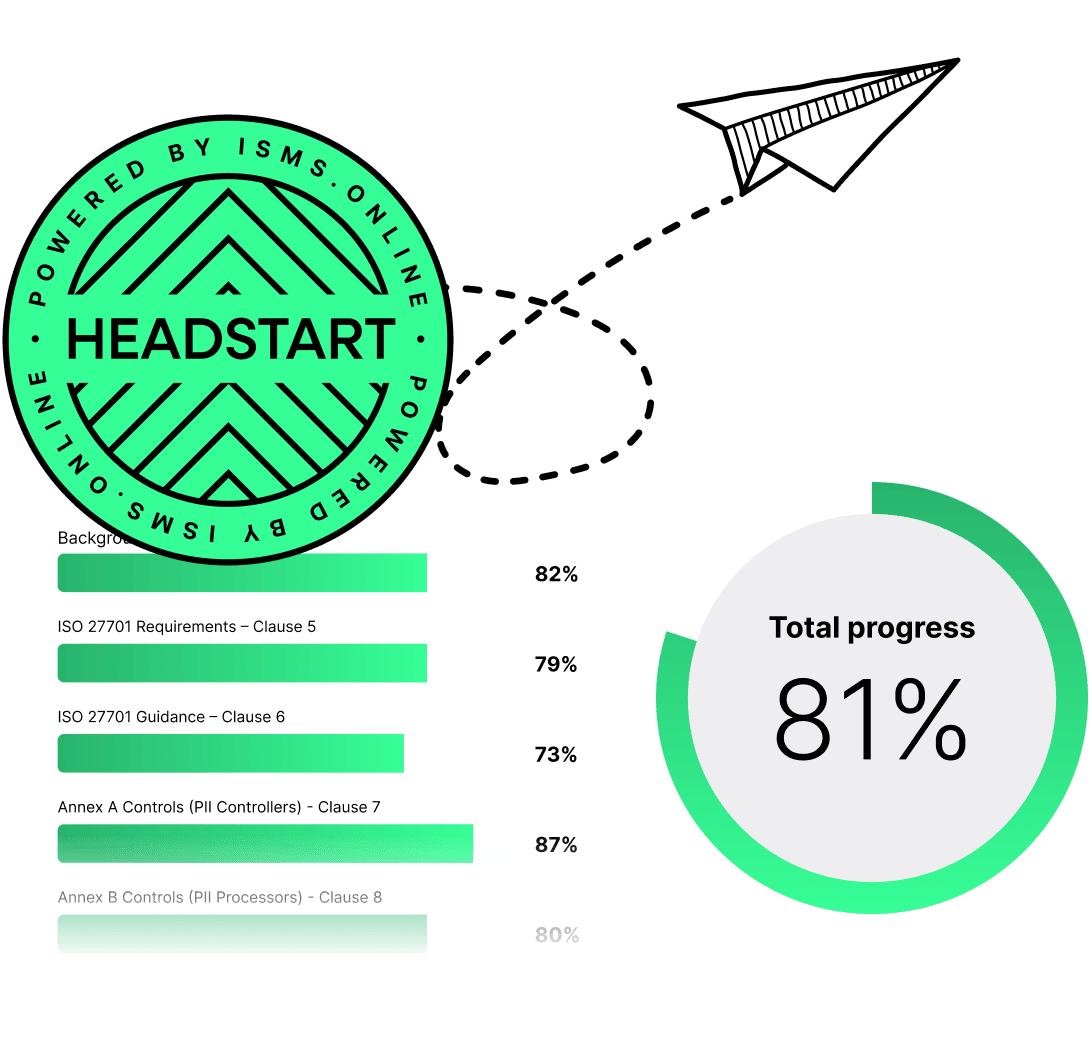
An 81% Headstart from day one
We’ve done the hard work for you, giving you an 81% Headstart from the moment you log on. All you have to do is fill in the blanks.
Implementing Risk Avoidance Techniques in ISO 27001:2022
Strategic Integration of Risk Avoidance
To effectively weave risk avoidance into the ISO 27001:2022 framework, organisations must adopt a methodical approach. Start with a thorough risk assessment to pinpoint potential threats and vulnerabilities. This foundational step is essential for grasping the risk landscape and prioritising actions (ISO 27001:2022 Clause 6.1).
Key Success Factors and Challenges
Aligning risk management with business objectives is crucial for successful implementation. This alignment ensures that risk avoidance strategies bolster organisational goals, enhancing overall security posture. However, challenges such as complex compliance requirements and inefficient processes can impede progress. Overcome these by cultivating a culture of security awareness and engaging stakeholders at all levels.
Leveraging ISMS.online for Implementation
Our platform, ISMS.online, provides tailored solutions to streamline the implementation of risk avoidance techniques. By offering tools for risk assessment, policy management, and continuous monitoring, we empower your organisation to manage risks effectively and ensure compliance with the ISO 27001:2022 standard.
Best Practices for Implementation
- Engage Key Stakeholders: Involve all relevant parties in the risk management process to foster a culture of security awareness.
- Utilise Advanced Tools: Employ technology and automation to enhance efficiency and accuracy in risk management.
- Regular Monitoring: Consistently review and update your ISMS to address evolving threats and maintain compliance.
By following these steps, your organisation can effectively implement risk avoidance techniques, ensuring the confidentiality, integrity, and availability of information assets. Discover how ISMS.online can support your journey towards enhanced security and compliance.
Why Integrate ISO 27001:2022 with Other Frameworks?
Benefits of Integration
Integrating ISO 27001:2022 with frameworks like ISO 22301 and ISO 31000 creates a comprehensive risk management strategy. This synergy not only strengthens your organisation’s security posture but also ensures compliance with global standards. Aligning with GDPR further enhances data protection, creating a unified security strategy that addresses both regulatory and operational needs.
Enhancing Risk Management Through Integration
A holistic approach to risk management emerges when ISO 27001:2022 is integrated with other frameworks. This integration allows organisations to address vulnerabilities more effectively, creating a resilient security posture that adapts to evolving threats. By combining the strengths of various frameworks, you can streamline compliance processes, reducing the burden on your team and enhancing overall security.
Common Frameworks for Integration
- ISO 22301: Focuses on business continuity management, ensuring your organisation can withstand disruptions.
- ISO 31000: Provides guidelines for risk management, enhancing decision-making processes.
- GDPR: Aligns data protection practices, ensuring compliance with stringent regulations.
Facilitating Integration with ISMS.online
Our platform, ISMS.online, simplifies the integration process by offering tailored solutions that align with your organisation’s needs. We provide tools for risk assessment, policy management, and continuous monitoring, empowering you to manage risks effectively and ensure compliance with ISO 27001:2022. By utilising our expertise, you can seamlessly integrate these frameworks, enhancing your security posture and building trust with stakeholders.
Explore how ISMS.online can support your integration efforts and take the next step towards a comprehensive security strategy.

Free yourself from a mountain of spreadsheets
Embed, expand and scale your compliance, without the mess. IO gives you the resilience and confidence to grow securely.
Practical Applications of Risk Avoidance Techniques
Applying Risk Avoidance Techniques in Your Organisation
Risk avoidance is a cornerstone of a robust security framework. By strategically eliminating activities that pose significant risks, organisations can fortify their defences and streamline compliance. Implementing a Zero Trust Architecture, for instance, mandates verification for every access request, thereby reducing vulnerabilities and enhancing security (ISO 27001:2022 Clause 9.4).
The Advantages of Practical Application
Applying risk avoidance techniques yields substantial benefits. Organisations often report a 30% reduction in compliance costs through automation, highlighting the financial advantages of these strategies. These techniques also empower organisations to manage risks proactively, aligning with ISO 27001:2022’s comprehensive risk management approach (Clause 6.1).
Enhancing Security Posture Through Application
Integrating risk avoidance techniques allows organisations to build a resilient security framework that adapts to evolving threats. This proactive stance not only mitigates risks but also ensures compliance with global standards, safeguarding the confidentiality, integrity, and availability of information assets.
How ISMS.online Supports Practical Application
Our platform, ISMS.online, facilitates the practical application of risk avoidance techniques by offering comprehensive compliance tools. These tools streamline risk management processes, enabling your organisation to manage risks effectively and comply with ISO 27001:2022. By utilising our expertise, you can enhance your security posture and build trust with stakeholders.
Explore how ISMS.online can transform your security strategy by integrating risk avoidance techniques effectively. Engage with our platform to discover tailored solutions that align with your compliance and security needs.
How Does Technology Enhance Risk Avoidance Techniques?
Transformative Role of Technology in Risk Management
Technology revolutionises risk management by offering innovative solutions that enhance security and streamline compliance. By integrating advanced tools, organisations can automate processes, reduce human error, and align with the ISO 27001:2022 standard, ensuring robust data protection.
Automation and Technological Advancements
Automation is pivotal in modern risk management, enabling real-time monitoring and swift responses to potential threats. Technologies like artificial intelligence and machine learning provide predictive analytics that identify risks before they escalate, supporting risk avoidance by enhancing data protection and maintaining the confidentiality, integrity, and availability of information assets (ISO 27001:2022 Clause 9.1).
Benefits of Technological Integration
- Efficiency: Automation reduces manual processes, allowing for quicker and more accurate risk assessments.
- Scalability: Technology enables organisations to scale their risk management efforts as they grow.
- Proactive Risk Management: Advanced tools provide insights that help organisations anticipate and mitigate risks proactively.
ISMS.online’s Technological Leverage
At ISMS.online, we harness technology to enhance compliance and risk management. Our platform offers a suite of tools designed to automate risk assessments, manage compliance tasks, and provide real-time insights into your organisation’s security posture. By integrating these technologies, we empower you to focus on strategic initiatives while ensuring robust risk management.
Embracing the Future of Risk Management
As technology evolves, organisations must adapt to remain competitive and secure. By embracing automation and technological advancements, you can enhance your risk management strategies and ensure compliance with global standards. Discover how ISMS.online can support your journey towards enhanced security and compliance, and take the next step in safeguarding your organisation’s future.

Manage all your compliance, all in one place
ISMS.online supports over 100 standards and regulations, giving you a single platform for all your compliance needs.
Navigating Challenges in Risk Avoidance
Overcoming Challenges in Risk Avoidance Techniques
Organisations often encounter obstacles when implementing risk avoidance strategies, primarily due to the need to align these techniques with overarching business objectives. This alignment can lead to conflicts between compliance requirements and operational goals. Additionally, integrating risk management into existing business strategies demands a shift in organisational culture and processes, which can be complex for many.
Strategies for Overcoming Challenges
To effectively navigate these challenges, organisations should focus on integrating risk management with their core business strategies. This involves:
- Strategic Integration: Align risk management objectives with business goals to create a cohesive strategy.
- Stakeholder Engagement: Involve all relevant parties in the risk management process to foster a culture of security awareness.
- Technological Advancements: Utilise advanced tools and automation to streamline risk management processes, enhancing efficiency and accuracy.
Common Pitfalls to Avoid
Avoiding common pitfalls is essential for successful implementation. These include:
- Neglecting Stakeholder Involvement: Failing to engage key stakeholders can lead to resistance and lack of buy-in.
- Overlooking Continuous Monitoring: Without regular reviews, risk management strategies can become outdated and ineffective.
- Underestimating Resource Needs: Ensure adequate resources are allocated to support risk management initiatives.
How ISMS.online Supports Organisations
ISMS.online offers comprehensive support to overcome these challenges. Our platform provides tailored solutions that streamline the implementation of risk avoidance techniques, ensuring alignment with ISO 27001:2022. By offering tools for risk assessment, policy management, and continuous monitoring, we empower organisations to manage risks effectively and maintain compliance.
Take a proactive approach to risk management with ISMS.online and enhance your organisation’s security posture today.
Further Reading
How Do Expert Insights Influence Risk Avoidance Strategies?
Expert Insights on ISO 27001:2022 Risk Avoidance
Industry experts emphasise aligning security measures with business objectives, ensuring risk management strategies not only protect information assets but also support organisational goals. This alignment is essential for fostering a proactive security posture. Experts highlight the importance of continuous learning and professional development to stay ahead in the field of information security.
Influence on Risk Management Strategies
Expert insights provide practical applications that shape risk management strategies. By integrating these insights, organisations can develop robust frameworks that address both current and emerging threats. This approach enhances security measures and streamlines compliance with the ISO 27001:2022 standard.
Key Takeaways from Expert Opinions
- Alignment with Business Goals: Security measures should support and enhance business objectives.
- Continuous Learning: Staying updated with the latest trends and technologies is essential for effective risk management.
- Practical Applications: Insights from experts help in developing strategies that are both effective and efficient.
Application of Expert Insights
Organisations can apply these insights by fostering a culture of continuous improvement and innovation. This involves engaging stakeholders at all levels, utilising advanced tools for risk assessment, and regularly reviewing and updating security measures. By doing so, organisations can ensure that their risk management strategies remain relevant and effective in the face of evolving threats.
The insights provided by industry experts serve as a guiding light for organisations seeking to enhance their security posture. By integrating these insights into their risk management strategies, organisations can not only protect their information assets but also achieve their business goals with confidence.
Unveiling Misconceptions About ISO 27001:2022
Addressing Common Misconceptions
Many believe ISO 27001:2022 suits only large enterprises, deterring smaller businesses from pursuing certification. This standard, however, is inherently scalable, adaptable to any organisation’s size and needs, offering a robust Information Security Management System (ISMS) framework.
Overcoming Misconceptions
Clear communication and education are vital. Organisations should:
- Comprehensive Training: Educate stakeholders on the standard’s applicability and benefits across various organisational sizes.
- Tailored Communication: Customise messages to address specific concerns, emphasising the standard’s flexibility.
Impact on Implementation
Misconceptions can hinder ISO 27001:2022 adoption, undermining security efforts. Perceiving the standard as complex or irrelevant may lead to inadequate risk management and increased vulnerabilities.
Ensuring Accurate Understanding
To foster accurate understanding, organisations should:
- Engage Experts: Collaborate with ISO 27001:2022 experts for tailored insights and guidance.
- Utilise Resources: Access webinars and whitepapers to deepen understanding and address concerns.
By dispelling misconceptions, organisations unlock ISO 27001:2022’s full potential, fostering security awareness and resilience, aligning with global standards for a robust security framework.
Future Trends in ISO 27001:2022 Risk Management
Emerging Trends in Risk Management
ISO 27001:2022 is evolving to integrate risk management with business objectives, emphasising security measures that support organisational growth. This alignment ensures that risk management not only protects information assets but also enhances strategic goals. As organisations aim for seamless compliance, aligning risk management with business strategy becomes increasingly vital.
Impact on Organisations
These trends necessitate adapting risk management strategies to remain competitive. By aligning with business objectives, organisations can enhance their security posture, build trust with stakeholders, and ensure compliance with global standards. This alignment streamlines compliance processes, reducing organisational burdens and enabling a focus on strategic initiatives.
Technology’s Transformative Role
Technology will play a crucial role in the future of ISO 27001:2022 risk management. Automation and advanced tools will streamline compliance processes, reduce manual efforts, and enhance accuracy. By integrating technology, organisations can achieve real-time monitoring and swift responses to potential threats, ensuring robust data protection and maintaining the confidentiality, integrity, and availability of information assets.
Preparing for Future Trends
To prepare for these trends, organisations should adopt automation tools and align their risk management strategies with emerging trends. This involves:
- Strategic Alignment: Integrate risk management objectives with business goals to create a cohesive strategy.
- Technological Integration: Employ advanced tools and automation to streamline risk management processes.
- Continuous Improvement: Regularly review and update the Information Security Management System (ISMS) to address evolving threats and maintain compliance.
By embracing these strategies, organisations can enhance their security posture and ensure compliance with ISO 27001:2022. This proactive approach not only mitigates risks but also supports organisational growth and resilience.
FAQs About ISO 27001:2022
Addressing Common Queries
Navigating the intricacies of ISO 27001:2022 can be challenging, but addressing frequently asked questions (FAQs) simplifies the process. These questions often focus on the standard’s updates, its role in enhancing security posture, and the steps organisations can take to achieve compliance. By understanding these FAQs, organisations can lay a solid foundation for building a robust Information Security Management System (ISMS) and aligning with global standards.
Clarifying ISO 27001:2022 for Organisations
FAQs serve as a valuable resource for demystifying the complexities of ISO 27001:2022. They provide straightforward answers to common concerns, such as integrating risk management with business objectives and implementing new controls. By addressing these queries, organisations gain a clearer understanding of the standard’s requirements and the necessary steps for compliance.
Common Concerns and Solutions
Organisations often express concerns about the complexity of compliance and the resources required for implementation. FAQs tackle these issues by outlining practical steps for integrating ISO 27001:2022 into existing processes, emphasising stakeholder engagement and continuous monitoring (ISO 27001:2022 Clause 9.1).
How ISMS.online Enhances Compliance
Our platform, ISMS.online, offers comprehensive support for organisations seeking ISO 27001:2022 compliance. We provide tools for risk assessment, policy management, and continuous monitoring, empowering your organisation to manage risks effectively and maintain compliance. By utilising our expertise, you can streamline your compliance journey and enhance your security posture.
Explore how ISMS.online can support your organisation’s compliance efforts and take the next step towards a secure future.
How to Book a Demo with ISMS.online
Discover the Benefits
Engaging with ISMS.online through a demo offers a unique opportunity to transform your organisation’s security posture. By participating in a personalised demonstration, you gain firsthand insight into our comprehensive suite of tools designed to streamline compliance with the ISO 27001:2022 standard. This experience not only highlights the platform’s capabilities but also showcases how it can address your specific needs, ensuring a tailored approach to risk management.
What to Expect
During the demo, expect a thorough walkthrough of our platform’s features, including risk assessment, policy management, and continuous monitoring. Our experts will guide you through each component, demonstrating how our solutions align with your organisation’s objectives and enhance your security measures. This interactive session is designed to provide clarity and confidence in your decision-making process.
Addressing Specific Needs
ISMS.online is committed to addressing the unique challenges faced by Compliance Officers, Chief Information Security Officers, and CEOs. Our platform is equipped to handle diverse requirements, offering customizable solutions that integrate seamlessly with your existing systems. By focusing on your organisation’s specific needs, we ensure that our tools deliver maximum value and efficiency.
Booking Process
Booking a demo is simple and straightforward. Visit our website and navigate to the demo booking page, where you can select a convenient date and time. Our team will promptly confirm your appointment and provide any necessary details to prepare for the session. This streamlined process ensures that you can quickly access the insights and support needed to elevate your organisation's security strategy.
Embrace the opportunity to enhance your security posture with ISMS.online. Book your demo today and take the first step towards comprehensive compliance and risk management.
Book a demoFrequently Asked Questions
What Are the Key Benefits of ISO 27001:2022?
Strengthened Security Framework
Implementing the ISO 27001:2022 standard fortifies your organisation’s security framework by systematically addressing vulnerabilities. This structured approach to managing security risks aligns with organisational goals, fostering a proactive security posture (ISO 27001:2022 Clause 6.1).
Comprehensive Risk Management
The ISO 27001:2022 standard provides a robust framework for identifying, assessing, and mitigating risks. This approach enables organisations to prioritise threats and allocate resources effectively, reducing potential impacts and ensuring business continuity. By integrating risk management with business objectives, organisations can achieve a balanced approach that supports strategic goals.
Enhanced Stakeholder Trust
Adhering to ISO 27001:2022 builds trust among stakeholders by demonstrating a commitment to information security and compliance. This standard assures clients, partners, and regulators that your organisation is dedicated to maintaining the confidentiality, integrity, and availability of information. As a result, you can build stronger relationships and enhance your reputation in the market.
Competitive Edge
Achieving ISO 27001:2022 compliance provides a competitive advantage by differentiating your organisation in a crowded marketplace. This standard not only enhances security measures but also streamlines compliance processes, reducing the burden on internal teams. Organisations that prioritise information security are better positioned to attract clients and partners, ultimately driving growth and success.
By embracing ISO 27001:2022, your organisation can enhance its security posture, improve risk management, and build stakeholder trust, all while gaining a competitive advantage. This proactive approach ensures alignment with global standards and supports long-term business objectives.
How Does ISO 27001:2022 Integrate with GDPR?
Harmonising Data Protection Efforts
ISO 27001:2022 and GDPR converge on a shared mission: the protection of personal data. By aligning with GDPR, ISO 27001:2022 offers a structured framework that emphasises risk management and data protection. This alignment empowers organisations to manage personal data effectively, reducing breach risks and enhancing stakeholder trust.
Enhancing Data Security
The integration of ISO 27001:2022 with GDPR significantly bolsters data protection. Organisations can leverage ISO 27001:2022’s risk assessment and treatment processes to identify and mitigate vulnerabilities. This proactive stance not only fortifies data security but also ensures compliance with GDPR’s stringent requirements, safeguarding sensitive information from unauthorised access (ISO 27001:2022 Clause 6.1).
Streamlining Compliance
Integrating ISO 27001:2022 with GDPR creates compliance synergies that simplify security and privacy efforts. This integration reduces the complexity of managing multiple frameworks, allowing organisations to focus on strategic initiatives. The synergy between ISO 27001:2022 and GDPR ensures efficient data protection management, easing the burden on internal teams and enhancing overall security posture.
Advantages of Integration
The integration of ISO 27001:2022 with GDPR offers numerous benefits, including enhanced data protection, streamlined compliance processes, and increased stakeholder trust. Organisations that embrace this integration can achieve a competitive edge by demonstrating their commitment to information security and privacy. This proactive approach not only mitigates risks but also supports long-term business objectives, ensuring a robust security framework that adapts to evolving challenges.
Navigating ISO 27001:2022 Implementation Challenges
Identifying Common Challenges
Implementing the ISO 27001:2022 standard presents a multifaceted array of challenges. Organisations frequently grapple with aligning risk management strategies with overarching business objectives, integrating new controls, and ensuring comprehensive stakeholder engagement. These challenges can result in resistance and slow adoption, especially when existing processes require significant adaptation to meet the standard’s rigorous requirements.
Strategies to Overcome Challenges
To effectively navigate these challenges, a strategic approach is paramount. Organisations should:
-
Align Risk Management with Business Goals: Ensure that risk management objectives are in harmony with organisational goals, fostering a proactive security posture (ISO 27001:2022 Clause 6.1).
-
Cultivate a Culture of Security Awareness: Regular training and communication are essential to ensure all parties understand their roles and responsibilities, reducing resistance and enhancing buy-in.
-
Employ Advanced Tools: Leverage technology and automation to streamline processes, making compliance more manageable and efficient.
Avoiding Common Pitfalls
Successfully implementing ISO 27001:2022 requires avoiding common pitfalls. Organisations must:
-
Ensure Continuous Monitoring: Without regular reviews, risk management strategies may become outdated, compromising the organisation’s security posture (ISO 27001:2022 Clause 9.1).
-
Allocate Adequate Resources: Underestimating the resources needed for implementation can lead to inadequate support and commitment.
-
Engage Stakeholders: Failing to involve key stakeholders can result in a lack of support and buy-in, hindering progress.
By addressing these challenges and avoiding common pitfalls, organisations can ensure a successful implementation of ISO 27001:2022, enhancing their security posture and building trust with stakeholders.
How Can Technology Enhance ISO 27001:2022 Compliance?
Transformative Role of Technology
Technology is reshaping compliance with the ISO 27001:2022 standard by integrating artificial intelligence and machine learning. These advancements enable predictive analytics to identify risks before they escalate, fortifying data protection and ensuring compliance measures are consistently met.
Automation’s Impact
Automation reduces manual processes, allowing for quicker and more accurate risk assessments. This efficiency not only saves time but also minimises human error, providing a robust framework for managing information security risks.
Tools for Compliance
A variety of tools support organisations in their ISO 27001:2022 journey. These tools offer real-time monitoring, policy management, and risk assessment, enabling organisations to maintain a comprehensive view of their security posture. By utilising these tools, organisations can ensure that their compliance efforts are both effective and efficient.
Future of Compliance
As technology evolves, the future of compliance will be shaped by advancements in automation and data analytics. Organisations that embrace these developments will be better equipped to anticipate and mitigate risks, ensuring that their compliance strategies remain relevant and effective. By staying ahead of technological trends, organisations can enhance their security posture and build trust with stakeholders.
Incorporating technology into compliance processes not only enhances efficiency but also ensures that organisations remain competitive in an ever-changing security landscape. By leveraging technological advancements, organisations can achieve seamless compliance with the ISO 27001:2022 standard, safeguarding their information assets and supporting long-term business objectives.
Key Components of an ISMS
Core Elements of an ISMS
An Information Security Management System (ISMS) serves as a comprehensive framework to safeguard your organisation’s information assets. It integrates several critical components:
- Risk Assessment: Identify potential threats and vulnerabilities to prioritise risk mitigation actions (ISO 27001:2022 Clause 6.1).
- Risk Treatment: Implement strategies to address identified risks, such as mitigation, transfer, or acceptance, ensuring robust security.
- Continuous Monitoring: Regularly review and update the ISMS to maintain its effectiveness against evolving threats.
Structuring an ISMS
An ISMS is structured to harmonise people, processes, and technology, forming a cohesive security framework. Key elements include:
- Policy Development: Establish clear information security policies that guide organisational practices.
- Implementation Strategies: Execute plans to integrate security measures across the organisation, ensuring compliance with the ISO 27001:2022 standard.
Benefits of Implementing an ISMS
Implementing an ISMS offers numerous advantages:
- Enhanced Security Posture: By systematically addressing vulnerabilities, an ISMS strengthens your organisation’s security framework and builds trust with stakeholders.
- Compliance and Assurance: Adhering to the ISO 27001:2022 standard demonstrates a commitment to information security, ensuring compliance with global standards.
- Operational Efficiency: Streamlining security processes and reducing the risk of incidents lead to improved operational efficiency and reduced costs.
An ISMS not only enhances organisational security but also supports strategic objectives by aligning risk management with business goals. By integrating these components, organisations can create a robust security framework that adapts to evolving challenges and ensures the protection of critical information assets.
How Can ISMS.online Support ISO 27001:2022 Compliance?
Comprehensive Support Services
ISMS.online provides a comprehensive suite of services tailored to simplify your path to ISO 27001:2022 compliance. Our team offers expert guidance and resources, ensuring your organisation can confidently navigate the complexities of compliance. From initial consultation to ongoing support, we are dedicated to helping you achieve and maintain compliance effectively.
Advanced Compliance Tools
Our platform is equipped with advanced compliance tools that streamline risk management processes. These tools facilitate risk assessments, policy management, and continuous monitoring, aligning with ISO 27001:2022 requirements (Clause 6.1). By utilising these tools, your organisation can enhance its security posture and ensure adherence to global standards.
Tailored Implementation Assistance
Implementing ISO 27001:2022 can be challenging. That’s why ISMS.online offers tailored implementation assistance, guiding you through each step of the process. Our experts collaborate closely with your team to develop a customised compliance strategy that aligns with your organisation’s unique needs and objectives.
Ongoing Compliance Support
Compliance is an ongoing journey, and ISMS.online is here to support you every step of the way. Our platform provides continuous updates and insights, ensuring your organisation remains compliant with evolving standards. With our ongoing support, you can focus on strategic initiatives while maintaining a robust security framework.
Empowering Your Compliance Journey
By choosing ISMS.online, you empower your organisation to achieve seamless ISO 27001:2022 compliance. Our comprehensive support services, advanced tools, and expert assistance ensure you can navigate the complexities of compliance with ease. Take the next step towards a secure future with ISMS.online.






