





































Understanding ISO 27001:2022 Risk Evaluation
A Comprehensive Guide for Compliance Officers
ISO 27001:2022 stands as a cornerstone for organisations seeking to fortify their information security management systems. This standard advocates a systematic approach to managing information security risks, crucial for maintaining compliance and safeguarding data integrity. With over 44,000 certificates issued globally, its adoption underscores its significance in today’s security environment.
Importance of Risk Evaluation
Risk evaluation within ISO 27001:2022 is essential for identifying and mitigating potential threats. Certified organisations report a 30% reduction in security incidents, highlighting the effectiveness of a structured risk management approach. Continuous risk assessment is vital for maintaining compliance and protecting information assets.
Role in Information Security
The ISO 27001:2022 framework provides a comprehensive methodology for assessing risk impact and likelihood. By implementing Annex A controls, organisations can effectively manage information security risks, ensuring the confidentiality, integrity, and availability of their data.
Global Impact and Adoption
ISO 27001:2022’s global adoption reflects its importance in the information security domain. Its structured approach to risk management not only enhances security posture but also builds trust with stakeholders. As organisations navigate compliance complexities, ISO 27001:2022 serves as a guiding light.
How ISMS.online Can Help
Our platform, ISMS.online, offers tools and resources to streamline the ISO 27001:2022 risk evaluation process. By leveraging our expertise, Compliance Officers, Chief Information Security Officers, and CEOs can enhance their organisation's security posture. Book a demo today to explore how we can support your compliance journey.
Book a demoHow Is Risk Evaluation Integrated into ISO 27001?
Understanding Integration
Risk evaluation is a cornerstone of the ISO 27001 framework, essential for identifying and mitigating potential threats. This process aligns with ISO 27001’s objectives by systematically assessing and prioritising risks to safeguard information assets. By embedding risk evaluation into the framework, organisations can ensure a proactive approach to information security.
Steps in Conducting Risk Evaluation
The risk evaluation process involves several key steps:
- Identify Risks: Catalogue potential threats and vulnerabilities within your organisation’s information systems.
- Assess Impact and Likelihood: Evaluate the potential impact and likelihood of each identified risk using a risk matrix.
- Prioritise Risks: Rank risks based on their severity and potential impact on operations.
- Implement Controls: Select appropriate controls from Annex A to mitigate identified risks effectively (ISO 27001:2022 Annex A.5).
Supporting Information Security
Risk evaluation plays a vital role in supporting overall information security by ensuring potential threats are proactively managed. By aligning risk evaluations with ISO 27001’s objectives, organisations can enhance their security posture and build trust with stakeholders. Continuous risk assessment is crucial to maintaining compliance and security, as highlighted by expert opinions.
Best Practices for Alignment
To align risk evaluations with ISO 27001 effectively, consider the following best practices:
- Regular Assessments: Conduct risk evaluations regularly to adapt to evolving threats and maintain compliance.
- Align with Security Goals: Ensure that risk evaluations align with your organisation’s broader security objectives.
- Continuous Improvement: Embrace a culture of continuous improvement, using expert insights to refine risk management strategies.
By integrating these best practices, organisations can ensure their risk evaluations meet ISO 27001 standards and enhance their overall security framework. This strategic approach positions organisations to navigate the complexities of information security with confidence and resilience.
ISO 27001 made easy
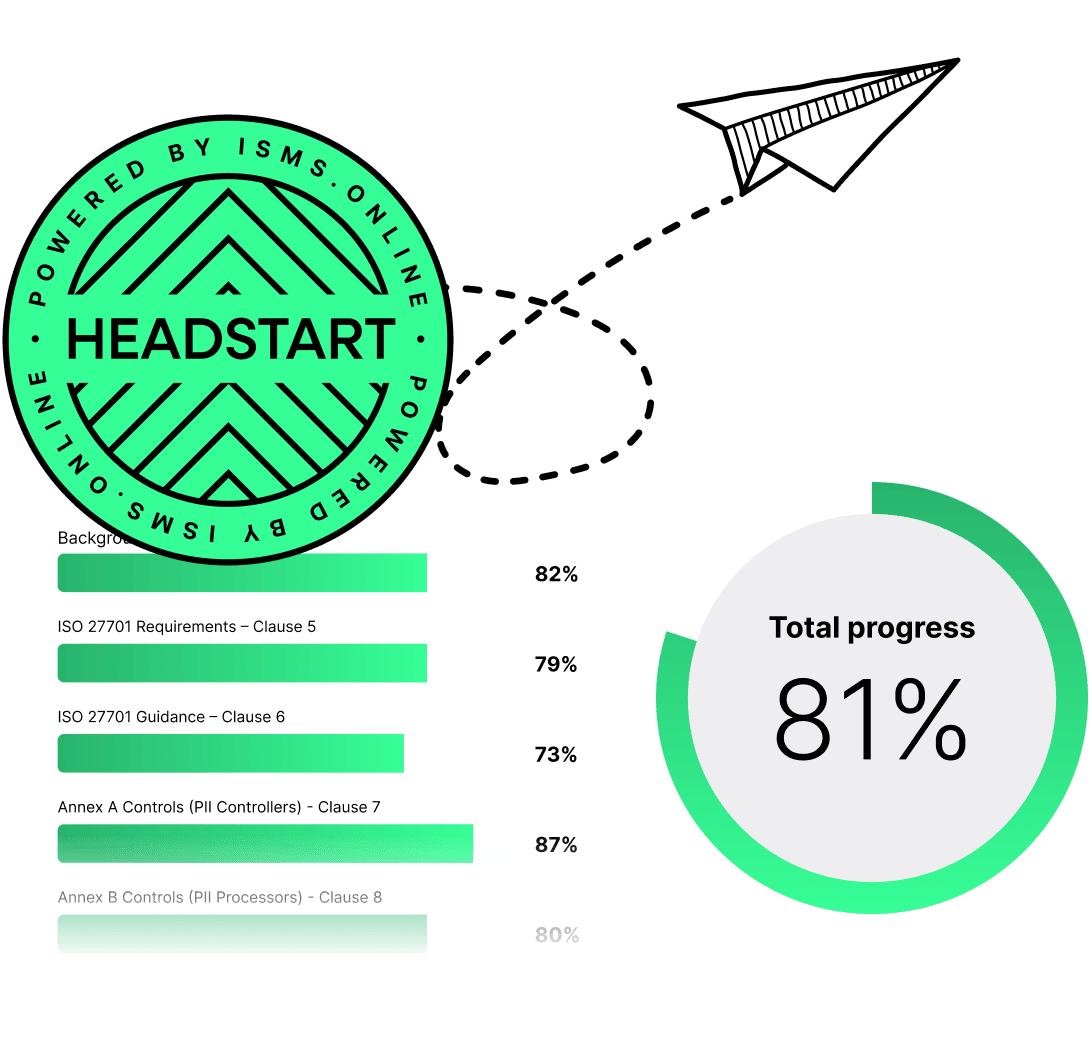
An 81% Headstart from day one
We’ve done the hard work for you, giving you an 81% Headstart from the moment you log on. All you have to do is fill in the blanks.
Why Is Risk Evaluation Essential for ISO 27001 Compliance?
Importance for Compliance
Risk evaluation is a cornerstone of achieving ISO 27001 compliance. By systematically identifying potential threats, organisations can proactively address vulnerabilities. Aligning with ISO 27001 standards ensures the confidentiality, integrity, and availability of information assets, which is crucial for compliance (Clause 6.1).
Identifying Potential Threats
Effective risk evaluation involves a comprehensive assessment of potential threats to an organisation’s information systems. Utilising tools like risk matrices, organisations can evaluate the impact and likelihood of risks, enabling informed decision-making. Early threat identification allows for the implementation of appropriate controls from Annex A to mitigate risks effectively (Annex A.5).
Consequences of Inadequate Evaluation
Neglecting comprehensive risk evaluation can lead to non-compliance and increased vulnerability to security incidents. Without proper assessment, organisations may overlook critical threats, resulting in data breaches or loss of stakeholder trust. This highlights the importance of a structured approach to risk management.
Enhancing Compliance Efforts
Risk evaluation enhances compliance efforts by systematically addressing potential risks. Organisations with ISO 27001 certification report improved data protection and customer trust, underscoring the value of rigorous risk management. By continuously evaluating risks, organisations can adapt to evolving threats and maintain compliance, reinforcing their security posture.
Incorporating risk evaluation into your compliance strategy not only safeguards your organisation’s assets but also builds trust with stakeholders. Understanding the nuances of risk evaluation empowers your organisation to navigate the complexities of ISO 27001 compliance with confidence.
When Is the Ideal Time for ISO 27001 Risk Evaluation?
Optimal Timing and Frequency
Conducting ISO 27001 risk evaluations at the right time is crucial for maintaining a robust security posture. Regular assessments ensure your organisation’s risk management strategies remain effective against current threats. While annual evaluations are standard, the frequency should increase if your risk environment changes or new threats emerge.
Triggers for New Evaluations
Several factors can necessitate a new risk evaluation. Technological advancements, changes in business processes, or updates in regulatory requirements can introduce vulnerabilities, necessitating a reassessment of controls. For example, adopting cloud technologies or altering data handling processes might require fresh evaluations to ensure compliance (ISO 27001:2022 Clause 6.1).
Impact of Timing on Effectiveness
The timing of risk evaluations significantly affects their effectiveness. Regularly scheduled assessments keep risk management strategies current and capable of addressing emerging threats. This proactive stance not only protects information assets but also reinforces stakeholder trust by demonstrating a commitment to security and compliance.
How ISMS.online Supports Your Risk Evaluation
Our platform, ISMS.online, provides comprehensive tools to streamline the risk evaluation process. By utilising our expertise, you can ensure timely and effective evaluations, enhancing your organisation’s security posture. Discover how our solutions can support your compliance journey and strengthen your risk management strategies.

Free yourself from a mountain of spreadsheets
Embed, expand and scale your compliance, without the mess. IO gives you the resilience and confidence to grow securely.
Where to Start with ISO 27001 Risk Evaluation?
Initiating Your Risk Evaluation Process
Starting the ISO 27001 risk evaluation requires strategic foresight. First, identify and prioritise risks to gain a comprehensive understanding of your risk environment. Catalogue potential threats and vulnerabilities to establish a robust foundation for effective risk management.
Key Steps for Effective Evaluation
To evaluate risks effectively, consider these steps:
- Understand Your Risk Environment: Conduct a thorough assessment to identify potential threats and vulnerabilities.
- Define Risk Acceptance Criteria: Establish criteria to determine which risks are acceptable and which require mitigation.
- Prioritise Risks: Use a risk matrix to evaluate the impact and likelihood of each identified risk, ensuring resources are allocated effectively.
Prioritising Risks
Focusing on high-impact risks allows for efficient resource allocation and ensures significant threats are addressed promptly. This strategic approach not only enhances security but also builds trust with stakeholders by demonstrating a commitment to proactive risk management.
Resources for Support
Access various resources to support your risk evaluation process. ISO 27001 templates and toolkits offer structured guidance, while our platform, ISMS.online, provides comprehensive tools to streamline the process. Our platform is designed to enhance your organisation’s security posture by offering the necessary resources for effective risk management.
Begin your risk evaluation journey with confidence. Utilise the tools and resources available to ensure a robust and effective risk management strategy.
Can ISO 27001 Certification Enhance Security Posture?
Enhancing Security Posture
ISO 27001 certification empowers organisations to systematically manage information security risks, significantly bolstering their security posture. By implementing robust controls, your organisation can safeguard data assets against potential threats, fortifying defences and instilling stakeholder confidence.
Addressing Emerging Threats
ISO 27001 offers a dynamic framework to tackle evolving security threats. Its comprehensive risk management strategies ensure your organisation remains resilient, adapting to new challenges with agility and precision.
Long-Term Benefits of Implementation
Beyond immediate security enhancements, ISO 27001 implementation yields long-term benefits. Organisations experience improved data protection, reduced security incidents, and increased customer trust. This certification positions companies as industry leaders, demonstrating a commitment to maintaining the highest security standards.
Measuring Impact on Security
Regular assessments and audits measure the impact of ISO 27001 on your security posture. These evaluations provide insights into the effectiveness of implemented controls, allowing for continuous improvement and adaptation to evolving threats. By maintaining a cycle of assessment and enhancement, your organisation ensures sustained security and compliance.

Manage all your compliance, all in one place
ISMS.online supports over 100 standards and regulations, giving you a single platform for all your compliance needs.
Navigating Challenges in Risk Evaluation
Understanding Common Challenges
Organisations often face hurdles when integrating the ISO 27001 standard with existing systems, leading to potential non-compliance and security vulnerabilities. These challenges arise from complex compliance requirements and the need for effective risk management integration.
Impact on Risk Management
The repercussions of inadequate risk management are profound. Poor risk identification and prioritisation can result in overlooked threats, compromising strategies and escalating security incidents. This oversight undermines stakeholder trust and organisational integrity.
Identifying Potential Pitfalls
Failing to accurately identify and prioritise risks is a common pitfall. Without a clear understanding of potential threats, resources may be misallocated, leaving vulnerabilities exposed. This misalignment can impede compliance efforts and expose organisations to unnecessary risks.
Strategies for Anticipation and Mitigation
To anticipate and mitigate these challenges, organisations should embrace technology and continuous improvement. Implementing automated tools can streamline risk evaluation processes, ensuring timely identification and prioritisation of risks. Additionally, fostering a culture of continuous improvement encourages proactive risk management, adapting to evolving threats and maintaining compliance.
Addressing these challenges requires a strategic approach, integrating technology and continuous improvement to enhance risk evaluation processes. By doing so, organisations can safeguard their information assets, build stakeholder trust, and maintain compliance with the ISO 27001 standard.
Further Reading
Overcoming Common Risk Evaluation Obstacles
Addressing Challenges in Risk Evaluation
Organisations frequently encounter challenges in evaluating risks. However, integrating technology and fostering a culture of continuous improvement can offer effective solutions. By employing AI and machine learning, companies can enhance their risk management processes, making evaluations more efficient and accurate. These technologies automate data analysis, identify patterns, and predict potential threats, streamlining the entire evaluation process.
Effective Strategies for Overcoming Obstacles
To overcome obstacles in risk evaluation, organisations should implement a combination of technology and strategic planning. Utilising AI-driven tools automates repetitive tasks, allowing teams to focus on in-depth analysis and decision-making. Additionally, fostering a culture of continuous improvement ensures that risk evaluation processes are regularly reviewed and refined, adapting to evolving threats and maintaining compliance with standards like ISO 27001:2022.
Streamlining Risk Evaluation with Technology
Technology plays a significant role in streamlining risk evaluation by providing tools that enhance data accuracy and speed. Machine learning algorithms process vast amounts of data, offering insights that might be missed by manual analysis. This not only improves the precision of risk assessments but also reduces the time required to complete evaluations, allowing organisations to respond swiftly to emerging risks.
The Role of Continuous Improvement in Risk Evaluation
Continuous improvement is essential for refining risk evaluation processes. By regularly assessing and updating evaluation strategies, organisations ensure alignment with current security standards and best practices. This approach fosters resilience, enabling companies to adapt to new challenges and maintain a robust security posture.
Addressing these challenges transforms risk evaluation into a proactive and dynamic process, ensuring organisations remain resilient in the face of evolving threats. By integrating technology and continuous improvement, companies enhance their risk management strategies, safeguarding their assets and building trust with stakeholders.
Why Choose ISMS.online for ISO 27001 Implementation?
Streamlining Compliance with ISMS.online
ISMS.online stands out as a preferred choice for ISO 27001 implementation, offering a suite of features designed to simplify compliance and risk management. Our platform provides comprehensive templates and toolkits that streamline the risk evaluation process, ensuring your organisation meets the stringent requirements of the ISO 27001 standard.
Enhancing Risk Management Processes
Our platform is engineered to enhance risk management by automating key processes, allowing your team to focus on strategic decision-making. With ISMS.online, you gain access to tools that facilitate the identification, assessment, and treatment of risks, aligning with Annex A controls to mitigate potential threats effectively (ISO 27001:2022 Clause A.5).
Unique Benefits of ISMS.online
- Comprehensive Support: Our platform offers tailored solutions that adapt to your organisation’s specific needs, ensuring a seamless certification journey.
- User-Friendly Interface: Navigate complex compliance requirements with ease, thanks to our intuitive design.
- Continuous Improvement: Regular updates and expert insights keep your risk management strategies aligned with evolving security threats.
Supporting the ISO 27001 Certification Process
ISMS.online not only supports compliance but also enhances the overall certification process. By providing a structured approach to risk management, our platform helps organisations achieve certification efficiently, reducing the time and resources typically required. This proactive stance not only safeguards your information assets but also builds trust with stakeholders, reinforcing your commitment to security excellence.
Embrace the future of information security with ISMS.online. Our platform is your partner in achieving ISO 27001 certification, offering the tools and support needed to navigate the complexities of compliance with confidence.
What Advantages Does ISO 27001 Certification Offer?
Enhancing Business Operations and Reputation
ISO 27001 certification transforms business operations by ensuring compliance with legal, regulatory, and contractual requirements. This certification fortifies data security and builds trust with stakeholders, reducing the risk of data breaches and enhancing your company’s reputation.
Financial Benefits and Operational Efficiency
Achieving ISO 27001 certification leads to substantial financial benefits. Organisations often experience reduced costs associated with information security incidents due to proactive risk management strategies embedded in the certification process. Streamlined processes and enhanced security measures contribute to cost savings and resource optimization.
Driving Continuous Improvement in Security Practices
ISO 27001 certification fosters continuous improvement in security practices. By promoting ongoing assessment and refinement, organisations adapt to evolving threats and maintain a robust security posture. This commitment supports long-term organisational resilience and ensures security measures remain effective.
Why Choose ISMS.online for Your Certification Journey?
Our platform, ISMS.online, supports your ISO 27001 certification journey with comprehensive tools and resources. By choosing ISMS.online, you gain access to expert insights and tailored solutions that align with your specific needs, ensuring a seamless certification process.
Book a Demo with ISMS.online
Discover the Power of ISMS.online
Schedule a personalised demo to explore ISMS.online’s capabilities. Our platform simplifies ISO 27001 compliance with tailored solutions that meet your organisation’s unique needs. See how our tools enhance risk management and fortify security.
What Awaits in Your Demo Session
During your demo, our experts will guide you through ISMS.online’s features, showcasing our intuitive interface and robust risk management capabilities. Learn how to optimise your information security management system (ISMS) and effectively apply Annex A controls.
Custom Solutions for Your Organisation
ISMS.online offers customizable solutions that integrate seamlessly with your existing systems. Whether you’re a Compliance Officer, Chief Information Security Officer, or CEO, our platform supports your compliance efforts and strengthens your security framework.
How to Book Your Demo
Booking a demo is simple. Visit our website, fill out the demo request form, and our team will contact you to schedule a convenient time. Discover how ISMS.online can transform your approach to ISO 27001 compliance and risk management.
Unlock the potential of ISMS.online and elevate your organisation’s security standards. Schedule your demo today and start your journey towards a more secure future.
Understanding the Significance of ISO 27001:2022 Risk Evaluation
Purpose of Risk Evaluation in ISO 27001
Risk evaluation within the ISO 27001:2022 framework is designed to pinpoint and assess potential threats to an organisation’s information assets. This systematic process evaluates risks to determine their impact and likelihood, enabling organisations to prioritise and address vulnerabilities effectively. By doing so, risk evaluation supports the overarching goal of safeguarding data integrity and confidentiality.
Supporting Information Security
Risk evaluation plays a crucial role in fortifying information security. By identifying potential threats and vulnerabilities, organisations can implement targeted controls to mitigate risks, ensuring the protection of sensitive data. This proactive approach not only enhances security but also builds trust with stakeholders by demonstrating a commitment to safeguarding information assets.
Role in Compliance
Compliance with the ISO 27001:2022 standard hinges on effective risk evaluation. This process ensures that organisations meet the standard’s requirements by systematically addressing potential threats and vulnerabilities. By aligning risk evaluation with compliance efforts, organisations can maintain the confidentiality, integrity, and availability of their information assets, which is essential for meeting regulatory and contractual obligations.
Key Benefits of Conducting Risk Evaluation
Conducting risk evaluation offers several benefits, including:
- Enhanced Security: By identifying and addressing potential threats, organisations can strengthen their security posture.
- Informed Decision-Making: Risk evaluation provides valuable insights that inform strategic decision-making and resource allocation.
- Improved Compliance: By aligning risk evaluation with the ISO 27001:2022 standard, organisations can ensure compliance with regulatory requirements.
Alignment with Organisational Security Goals
Risk evaluation aligns with organisational security goals by providing a structured approach to managing information security risks. This process enables organisations to prioritise and address vulnerabilities, ensuring the protection of sensitive data and maintaining stakeholder trust. By integrating risk evaluation into their security strategy, organisations can enhance their overall security posture and achieve long-term resilience.
Book a demoFrequently Asked Questions
How Does ISO 27001:2022 Address Risk Management?
Integrating Risk Management into ISO 27001
ISO 27001:2022 embeds risk management as a fundamental component, enabling organisations to systematically identify and mitigate potential threats. This integration is crucial for preserving the confidentiality, integrity, and availability of your information assets, aligning with the standard’s core objectives.
The Role of Annex A in Risk Management
Annex A of ISO 27001:2022 provides a robust set of controls that enhance risk management efforts. These controls offer a structured methodology for mitigating identified risks, ensuring your organisation can effectively protect its information assets (ISO 27001:2022 Annex A.5).
Importance of Continuous Risk Assessment
Continuous risk assessment is a pivotal aspect of ISO 27001:2022, allowing organisations to adapt to emerging threats and maintain compliance. Regular evaluations ensure that risk management strategies remain effective, addressing new vulnerabilities as they arise.
Best Practices for Effective Risk Management
To achieve effective risk management under ISO 27001:2022, organisations should:
- Conduct Regular Assessments: Periodically evaluate risks to stay ahead of emerging threats.
- Implement Annex A Controls: Utilise the controls provided in Annex A to mitigate identified risks effectively.
- Foster a Culture of Continuous Improvement: Encourage ongoing refinement of risk management strategies to adapt to changing security environments.
By adhering to these best practices, organisations can enhance their security posture and build trust with stakeholders, demonstrating a commitment to safeguarding information assets. This structured approach to risk management not only supports compliance but also fortifies defences against potential threats.
Why is ISO 27001:2022 Certification Important?
Enhancing Security Posture
ISO 27001:2022 certification is a strategic asset for fortifying your organisation’s security framework. By implementing a structured risk management approach, you can systematically identify and mitigate potential threats, ensuring the confidentiality, integrity, and availability of your information assets (ISO 27001:2022 Clause 6.1).
Impact on Business Reputation
Achieving certification under ISO 27001:2022 significantly elevates your company’s reputation. It signals a steadfast commitment to safeguarding sensitive data, thereby building trust with clients and stakeholders. As data protection becomes increasingly critical, certified organisations are viewed as industry leaders, showcasing their dedication to high security standards.
Financial Benefits and Operational Efficiency
The financial advantages of ISO 27001 certification are noteworthy. By embedding proactive risk management strategies, your organisation can reduce costs associated with information security incidents. Streamlined processes and enhanced security measures contribute to cost savings and resource optimization.
Driving Continuous Improvement
ISO 27001:2022 fosters a culture of continuous improvement in security practices. Regularly assessing and refining risk management strategies allows your organisation to adapt to evolving threats, maintaining a robust security posture. This commitment to ongoing enhancement supports long-term resilience and ensures effective security measures.
Incorporating ISO 27001:2022 into your organisational framework not only enhances security and reputation but also drives financial efficiency and continuous improvement. This strategic approach positions your organisation to navigate the complexities of information security with confidence and resilience.
Navigating Key Challenges in ISO 27001:2022 Implementation
Overcoming Implementation Challenges
Implementing the ISO 27001:2022 standard presents significant challenges. Organisations often grapple with complex compliance requirements and resource allocation, which can impede progress and lead to compliance gaps if not addressed proactively.
Impact on Compliance Efforts
Missteps in risk assessment or control implementation can result in non-compliance, exposing organisations to security breaches and regulatory penalties. A thorough understanding of the standard’s requirements is crucial for maintaining compliance and safeguarding information assets.
Strategies for Overcoming Obstacles
To navigate these challenges, organisations should adopt a structured approach:
- Comprehensive Training: Equip teams with the necessary knowledge and skills to navigate the standard’s complexities.
- Resource Allocation: Prioritise resources effectively to address critical areas of implementation.
- Continuous Monitoring: Implement regular assessments to ensure compliance and adapt to evolving threats.
Role of Technology in Addressing Challenges
Technology plays a vital role in streamlining ISO 27001:2022 implementation. Automated tools can enhance risk assessment accuracy, while integrated platforms facilitate seamless compliance management. By utilising technology, organisations can reduce manual errors, improve efficiency, and maintain a robust security posture.
Navigating the challenges of ISO 27001:2022 implementation requires a strategic approach that combines comprehensive training, effective resource allocation, and technology integration. By addressing these challenges proactively, organisations can ensure compliance, enhance their security posture, and build trust with stakeholders.
How Can ISMS.online Support ISO 27001:2022 Implementation?
Streamlining ISO 27001:2022 Implementation with ISMS.online
ISMS.online transforms the ISO 27001:2022 implementation process by offering structured templates and toolkits that simplify risk management. Our platform empowers strategic decision-making while ensuring compliance with Annex A controls.
Key Features for ISO 27001 Compliance
Our platform automates critical processes to bolster compliance efforts. With ISMS.online, you access tools that facilitate risk identification, assessment, and treatment, aligning with Annex A controls to effectively mitigate potential threats (ISO 27001:2022 Annex A.5).
Elevating Risk Management Processes
ISMS.online provides a dynamic framework that evolves with emerging threats. Our AI-driven tools automate data analysis, uncover patterns, and predict risks, ensuring timely and precise evaluations. This proactive stance fortifies your security posture and fosters stakeholder trust.
Advantages of Choosing ISMS.online for Certification
Opting for ISMS.online in your ISO 27001 certification journey offers distinct advantages:
- Tailored Solutions: Our platform adapts to your organisation’s unique needs, ensuring a seamless certification process.
- User-Friendly Interface: Navigate complex compliance requirements effortlessly with our intuitive design.
- Expert Insights: Regular updates keep your risk management strategies aligned with evolving security threats.
Customising Solutions to Fit Organisational Needs
Recognising the uniqueness of each organisation, ISMS.online offers customizable solutions tailored to your specific requirements, ensuring seamless integration with existing systems. Whether you’re a Compliance Officer, Chief Information Security Officer, or CEO, our tools support your compliance efforts and enhance your organisation’s security framework.
Embrace the future of information security with ISMS.online. Our platform partners with you to achieve ISO 27001 certification, providing the tools and support needed to confidently navigate compliance complexities.
Long-Term Benefits of ISO 27001:2022 Certification
Enduring Advantages of Certification
ISO 27001:2022 certification provides enduring benefits that extend beyond immediate security enhancements. Actively managing information security risks allows your organisation to fortify defences and build stakeholder trust. Compliance with legal, regulatory, and contractual requirements is assured, enhancing your business reputation by demonstrating a commitment to safeguarding sensitive data (Clause 6.1).
Supporting Continuous Improvement
A culture of continuous improvement is fostered by ISO 27001:2022, encouraging regular assessment and refinement of risk management strategies. This proactive approach ensures security measures remain effective and aligned with evolving threats, supporting long-term resilience. By embracing continuous improvement, your organisation can adapt to new challenges and maintain a robust security posture.
Impact on Organisational Resilience
Strengthening resilience through ISO 27001:2022 certification involves a structured framework for managing information security risks. This framework enables your organisation to identify and mitigate potential threats, ensuring the confidentiality, integrity, and availability of information assets. Consequently, your organisation can withstand disruptions and recover more quickly from incidents, enhancing overall resilience.
Enhancing Business Reputation Over Time
Achieving ISO 27001:2022 certification signals a steadfast commitment to high security standards, significantly enhancing your business reputation. Certified organisations are viewed as industry leaders, instilling confidence in clients and stakeholders. This reputation boost can lead to increased customer trust, improved business opportunities, and a competitive edge in the market.
By embracing the long-term benefits of ISO 27001:2022 certification, your organisation can enhance its security posture, build trust with stakeholders, and drive continuous improvement. Partner with ISMS.online to navigate the complexities of compliance with confidence.






