





































Discover the Key Updates in ISO 27001:2022
Elevate Your Information Security Management with the Latest Standards
ISO 27001:2022 stands as a robust framework for protecting information assets, adopted by over 40,000 organisations worldwide. This update introduces refined risk treatment strategies, aligning seamlessly with business objectives to reduce security incidents by up to 30%. Compliance officers play a crucial role in implementing these standards, ensuring security measures align with organisational goals.
What are the Key Updates in ISO 27001:2022?
- Advanced Risk Treatment: The 2022 version introduces sophisticated strategies for risk mitigation, focusing on proactive measures and continuous improvement (Clause 6.1).
- Integration with Business Strategy: Emphasising alignment with business objectives, the standard fosters a comprehensive approach to risk management.
How Does ISO 27001:2022 Enhance Security Management?
- Structured Framework: The standard provides a structured methodology for protecting information assets, ensuring adherence to regulatory requirements (Clause 5.2).
- Global Certification: With widespread adoption, ISO 27001:2022 demonstrates its effectiveness in strengthening security postures.
Understanding Risk Assessment in ISO 27001
What is the Risk Assessment Process in ISO 27001?
Risk assessment forms the backbone of the ISO 27001 standard, enabling organisations to systematically identify and evaluate potential threats to their information assets. This process involves a structured approach to identifying, analysing, and evaluating risks, prioritising them for treatment. By aligning risk assessments with business objectives, organisations ensure that their risk management strategies not only protect assets but also support strategic goals.
How Do Organisations Conduct Effective Risk Assessments?
Organisations conduct effective risk assessments by employing structured methodologies that encompass:
- Identification: Recognising potential threats and vulnerabilities to information assets.
- Analysis: Evaluating the likelihood and impact of identified risks.
- Evaluation: Prioritising risks based on their significance and potential impact on the organisation.
This structured approach not only reduces security incidents by 30% post-certification but also ensures that risk management strategies are proactive and aligned with business objectives.
Why is Risk Assessment Crucial for Information Security?
Risk assessment is crucial for information security as it provides a comprehensive understanding of potential threats and vulnerabilities. By identifying and evaluating risks, organisations can implement targeted controls to mitigate these risks, ensuring the protection of their information assets. This proactive approach is integral to maintaining compliance with ISO 27001 and safeguarding the organisation’s reputation and operational continuity.
How Can Risk Assessments be Integrated with Business Objectives?
Integrating risk assessments with business objectives involves aligning risk management strategies with the organisation’s goals. This alignment ensures that risk management is not only a compliance exercise but also a strategic tool that supports business growth and resilience. By embedding risk management into the organisational culture, companies can enhance their security posture and drive sustainable success.
The insights gained from these assessments pave the way for a deeper exploration of risk treatment strategies, ensuring that organisations remain agile and responsive to emerging threats.
ISO 27001 made easy
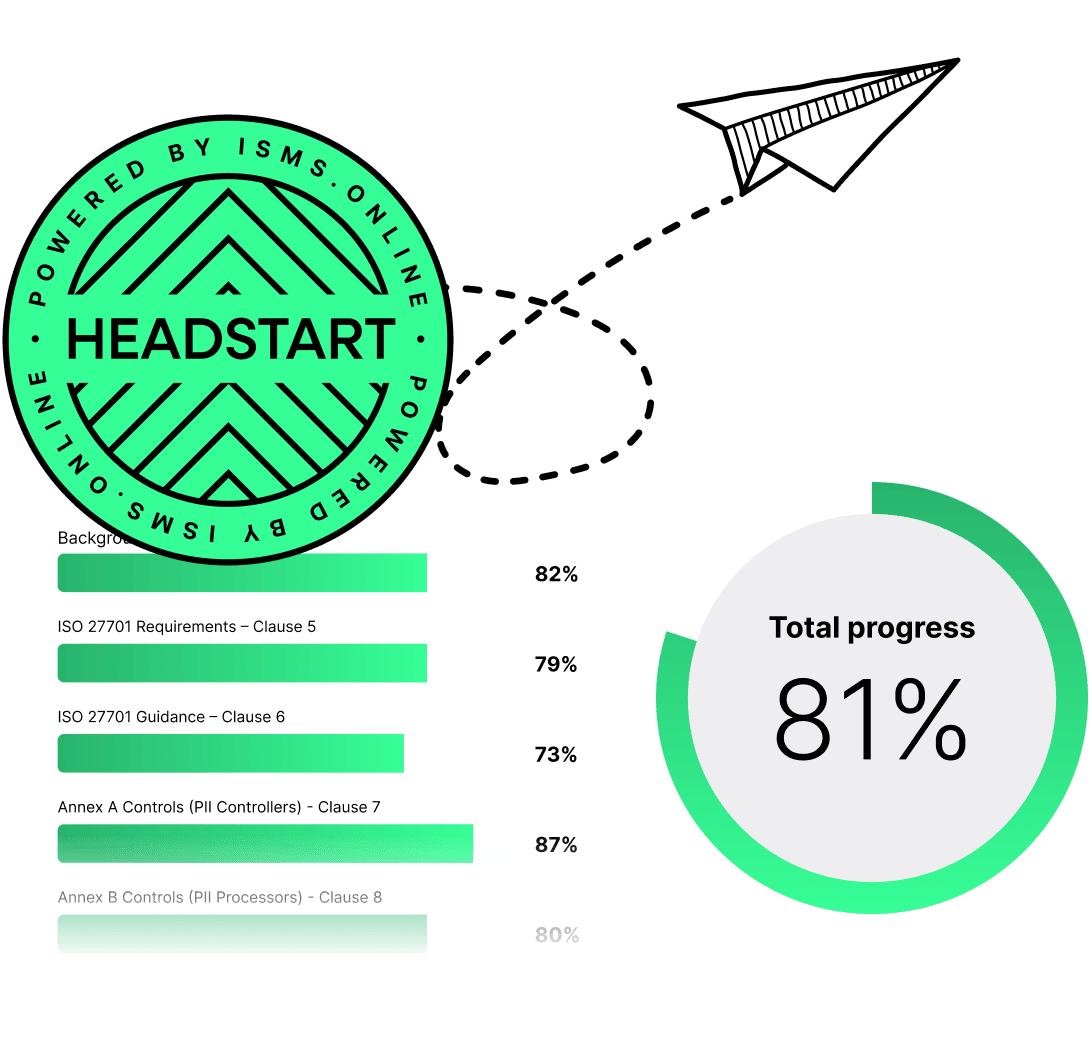
An 81% Headstart from day one
We’ve done the hard work for you, giving you an 81% Headstart from the moment you log on. All you have to do is fill in the blanks.
Exploring Risk Treatment Strategies in ISO 27001:2022
What Are the Risk Treatment Options?
ISO 27001:2022 delineates four primary risk treatment strategies, each tailored to address specific organisational needs:
- Avoidance: Cease activities that introduce risk.
- Reduction: Implement controls to minimise risk impact.
- Transfer: Delegate risk to third parties, such as insurers.
- Acceptance: Acknowledge and manage the risk’s impact.
These strategies are selected based on criteria that ensure alignment with compliance goals and organisational objectives.
How to Select Appropriate Risk Treatment Strategies?
Selecting the right strategy involves a thorough assessment of potential risks and their impact on the organisation. Key criteria include:
- Likelihood of Occurrence: Probability of risk materialising.
- Potential Consequences: Severity of impact if risk occurs.
- Risk Appetite: Acceptable level of risk for the organisation.
Aligning these strategies with compliance goals enhances security posture and ensures adherence to ISO 27001:2022.
Why Tailor Risk Treatment to Specific Needs?
Tailoring risk treatment strategies ensures they are effective and relevant to the organisation’s context. This customization allows for focused risk management, addressing specific vulnerabilities and aligning with business objectives. The standard’s updates emphasise integrating risk treatment with business strategy, promoting comprehensive management and continuous improvement.
Aligning Risk Treatment with Compliance Goals
Aligning strategies with compliance goals not only enhances security but also supports organisational growth. By integrating these strategies into the broader business framework, organisations achieve a balanced approach to risk management that fosters resilience and innovation. This alignment is crucial for maintaining compliance with ISO 27001:2022 and ensuring long-term success.
The exploration of risk treatment strategies in ISO 27001 sets the stage for understanding their practical applications and transformative potential. By focusing on tailored solutions and strategic alignment, organisations can navigate the complexities of information security with confidence and clarity.
Implementing Key Controls in ISO 27001
Understanding the Core Controls
ISO 27001:2022 introduces a comprehensive set of 93 controls, spanning organisational, people, physical, and technological domains. These controls are instrumental in managing and mitigating risks to your information assets. By implementing these controls effectively, your organisation can significantly reduce security incidents, aligning with ISO 27001:2022’s emphasis on proactive risk management (Clause 6.1).
Enhancing Risk Management Through Controls
The controls within ISO 27001 provide a structured framework for identifying and mitigating potential threats. They encompass a range of measures, from access control and encryption to incident response and monitoring. By addressing vulnerabilities and ensuring compliance with the standard, these controls help safeguard your organisation’s information assets and maintain operational continuity (Clause 8.1).
The Importance of Effective Control Implementation
Implementing controls effectively is crucial for achieving desired security outcomes. It involves selecting the right controls from Annex A and tailoring them to your organisation’s specific needs and risk profile. This customization enhances the controls’ effectiveness, enabling you to address unique challenges and maintain compliance with ISO 27001:2022 (Clause 5.1).
Continuous Improvement of Controls
Continuous improvement is a cornerstone of ISO 27001, requiring regular review and refinement of controls. This involves monitoring control performance, identifying areas for enhancement, and adapting to evolving threats and business needs. By fostering a culture of continuous improvement, your organisation can ensure controls remain effective and aligned with risk management objectives (Clause 10.1).
The insights gained from these assessments pave the way for a deeper exploration of risk treatment strategies, ensuring that your organisation remains agile and responsive to emerging threats.

Free yourself from a mountain of spreadsheets
Embed, expand and scale your compliance, without the mess. IO gives you the resilience and confidence to grow securely.
Integrating Risk Management with Business Strategy
How Can Risk Management Be Integrated with Business Strategy?
Integrating risk management with business strategy is crucial for organisations seeking to enhance their security posture and drive growth. This integration ensures that risk management adapts to various business phases, supporting organisational resilience and innovation.
What Are the Benefits of Aligning Risk Management with Business Goals?
Aligning risk management with business strategy offers several advantages:
- Strategic Alignment: Ensures that risk management efforts are in sync with corporate objectives, fostering a proactive approach to emerging threats.
- Competitive Edge: By aligning risk management with business goals, organisations can enhance their decision-making processes, leading to improved operational efficiency and market positioning.
- Organisational Growth: Supports sustainable growth by ensuring that risk management evolves with business phases, adapting to new challenges and opportunities.
Why Is Strategic Alignment Crucial for Effective Risk Management?
Strategic alignment is vital for effective risk management as it ensures that security measures are not only reactive but also anticipatory. This alignment allows organisations to:
- Proactively Address Risks: By anticipating potential threats, organisations can implement measures to mitigate risks before they materialise.
- Enhance Compliance: Aligning risk management with business strategy ensures adherence to standards like ISO 27001:2022, fostering a culture of continuous improvement (Clause 6.1).
Overcoming Challenges in Integration
Integrating risk management with business strategy presents challenges, such as aligning diverse objectives and managing resource constraints. Overcoming these challenges requires:
- Proactive Problem-Solving: Identifying potential obstacles early and developing strategies to address them.
- Strategic Planning: Ensuring that risk management initiatives are well-planned and aligned with organisational goals.
Compliance officers play a crucial role in this integration, ensuring that risk management aligns with business strategy and supports organisational growth. By utilising our platform, ISMS.online, organisations can streamline their risk management processes, aligning them with strategic objectives and enhancing their security posture.
The Role of Automation in Compliance
Transforming Compliance with Automation
Automation revolutionises your compliance processes, streamlining operations and cutting costs by up to 20%. By integrating advanced tools, workflows accelerate, ensuring adherence to the ISO 27001 standard.
Enhancing Risk Management with Automation
Through real-time monitoring and rapid threat response, automation enhances your risk management. Automated systems swiftly identify vulnerabilities, allowing immediate mitigation, in line with ISO 27001’s emphasis on continuous improvement (Clause 10.2).
The Strategic Importance of Automation
Navigating evolving standards becomes manageable with automation, aiding your organisation in handling complex regulatory requirements through precise data and insights. It ensures seamless integration of compliance processes, maintaining agility and responsiveness.
Implementing Automation Effectively
Strategic planning is crucial for effective automation:
- System Integration: Ensure seamless connectivity between your existing systems and new tools.
- Data Integrity: Maintain high data accuracy for reliable compliance reporting.
- Stakeholder Engagement: Involve stakeholders to align with your goals.
Overcoming Automation Challenges
Addressing challenges such as data accuracy and system integration requires:
- Conducting Thorough Testing: Regularly test systems to resolve issues.
- Providing Training: Equip your staff with skills for managing systems.
- Monitoring Performance: Continuously assess tool performance for compliance.
Automation’s transformative impact underscores its importance in modern strategies. By addressing challenges and implementing effective strategies, your organisation can fully harness automation’s potential.

Manage all your compliance, all in one place
ISMS.online supports over 100 standards and regulations, giving you a single platform for all your compliance needs.
Aligning Risk Management with Organisational Growth
How Can Risk Management Propel Organisational Growth?
Risk management is integral to driving organisational growth by systematically identifying and mitigating potential threats. By aligning risk management strategies with growth objectives, organisations can fortify their security posture and foster sustainable development.
Key Considerations for Scaling Risk Management
Scaling risk management requires a strategic approach that ensures adaptability and resource efficiency. Considerations include:
- Adaptability: Evolving strategies to meet new challenges and opportunities.
- Resource Allocation: Allocating resources efficiently to sustain risk management efforts.
- Continuous Improvement: Regularly refining processes to maintain relevance and effectiveness.
Adapting Risk Management to Growth Phases
Tailoring risk management to different growth phases is crucial for alignment with organisational objectives. This involves:
- Phase-Specific Strategies: Customising strategies to address the unique needs of each growth phase.
- Scalability: Ensuring processes can scale with the organisation, accommodating increased complexity.
Ensuring Scalability and Flexibility
Effective risk management requires scalability and flexibility. Organisations must ensure their frameworks can adapt to changing circumstances and support long-term growth. This involves:
- Dynamic Processes: Implementing processes that adjust to new risks and opportunities.
- Stakeholder Engagement: Engaging key stakeholders to ensure alignment with organisational goals.
By aligning risk management with organisational growth, companies can enhance their security posture and drive sustainable success. This approach supports compliance with the ISO 27001 standard and fosters a proactive culture of continuous improvement.
Further Reading
Managing Third-Party Risks and Supplier Relationships
Navigating the Complexities of Third-Party Risks
Effectively managing third-party risks is crucial for maintaining compliance and security within supplier relationships. Organisations face challenges such as ensuring suppliers adhere to standards, safeguarding data, and mitigating reputational risks. Compliance officers play a pivotal role in overseeing these relationships, ensuring alignment with ISO 27001:2022 requirements (Clause 5.19).
Assessing and Mitigating Third-Party Risks
Organisations can assess and mitigate third-party risks through structured methodologies, including regular audits and compliance checks. Key strategies involve:
- Regular Audits: Conduct evaluations to ensure adherence to established standards.
- Compliance Checks: Verify that third-party practices align with organisational policies.
- Risk Mitigation Strategies: Implement controls to minimise potential impacts.
Importance of Effective Supplier Relationship Management
Managing supplier relationships effectively is vital for compliance and security. Clear communication and well-defined contractual agreements are crucial in ensuring suppliers meet compliance requirements. This not only protects the organisation but also enhances its reputation and operational efficiency.
Ensuring Compliance in Supplier Relationships
Ensuring compliance in supplier relationships requires a strategic approach. Organisations must establish clear expectations and maintain open communication channels. Compliance officers guide the development of contractual agreements that align with ISO 27001:2022, fostering trust and collaboration, ultimately strengthening the organisation’s security posture.
Managing third-party risks and supplier relationships is a dynamic process demanding vigilance and strategic oversight. Addressing these challenges head-on allows organisations to safeguard their interests and maintain robust compliance frameworks, setting the stage for further strategies to enhance organisational security and resilience.
Practical Examples of ISO 27001 Implementations
What are Some Successful Examples of ISO 27001 Implementations?
Organisations across diverse sectors have successfully implemented ISO 27001, showcasing effective risk management strategies that fortify security postures and deliver transformative results. By examining real-world applications, we uncover best practices and challenges, emphasising the importance of practical examples in understanding ISO 27001.
How Do These Examples Illustrate Effective Risk Management?
These implementations demonstrate adept risk management through the integration of ISO 27001 standards into operations. Key lessons include:
- Risk Assessment: Identifying and evaluating potential threats to information assets (Clause 6.1).
- Control Selection: Implementing tailored controls to mitigate identified risks (Annex A).
- Continuous Improvement: Regularly reviewing and refining risk management strategies to adapt to evolving threats (Clause 10.1).
Why Are Practical Examples Important for Understanding ISO 27001?
Practical examples are crucial for understanding ISO 27001 as they showcase the standard’s real-world application and effectiveness. They provide tangible demonstrations of how compliance officers play a critical role in implementing and maintaining these standards. By learning from these examples, organisations can navigate the complexities of risk management and enhance their security posture.
How Can Organisations Learn from These Examples?
Organisations can learn from these examples by analysing the strategies and outcomes of successful implementations. This involves:
- Benchmarking: Comparing practices with industry leaders to identify areas for improvement.
- Adapting Best Practices: Tailoring successful strategies to fit unique contexts and challenges.
- Engaging Compliance Officers: Utilising their expertise to ensure alignment with ISO 27001 standards.
These insights pave the way for a deeper understanding of ISO 27001’s transformative potential, enabling organisations to enhance their security posture and achieve compliance with confidence.
Navigating Challenges in ISO 27001 Implementation
Overcoming Common Obstacles
Implementing the ISO 27001 standard requires addressing challenges such as resource allocation, process complexity, and employee resistance. Many organisations struggle to balance resource dedication with managing intricate processes. Additionally, employee resistance can hinder the adoption of new security measures.
Strategies for Success
To effectively tackle these challenges, strategic planning and proactive problem-solving are essential. Consider the following strategies:
- Securing Leadership Support: Gaining top management commitment ensures the necessary resources and authority to drive implementation.
- Fostering Employee Engagement: Involving employees in the process cultivates a culture of security awareness and reduces resistance.
- Streamlining Processes: Simplifying complex procedures makes them more manageable for all stakeholders.
The Importance of Proactive Problem-Solving
Proactive problem-solving is crucial for successful implementation. By anticipating potential obstacles, you can develop strategies to mitigate them before they escalate. This approach not only enhances compliance but also strengthens your organisation’s overall security posture.
The Role of Compliance Officers
Compliance officers play a pivotal role in navigating these challenges. They ensure alignment between security measures and organisational goals, facilitating seamless integration. Their expertise in risk management and compliance is invaluable in guiding your organisation through the complexities of ISO 27001 implementation.
As you tackle these challenges, you lay the groundwork for a robust information security framework, positioning your organisation for long-term success. This proactive approach to overcoming obstacles not only ensures compliance but also fosters a culture of continuous improvement, setting the stage for future growth and resilience.
Continuous Improvement and Monitoring in ISO 27001
Why Continuous Improvement is Essential
Continuous improvement is crucial for maintaining the ISO 27001 standard’s effectiveness. It ensures that your risk management strategies evolve with emerging threats, fostering a proactive security posture. This approach aligns with compliance requirements and supports your organisation’s resilience and growth (Clause 10.1).
Key Metrics for Monitoring Risk Management
Monitoring involves tracking key metrics such as:
- Incident Frequency: Regularly assess security incidents to identify patterns and areas for improvement.
- Control Effectiveness: Evaluate how well controls mitigate risks, ensuring alignment with your organisational goals.
These metrics provide valuable insights into your organisation’s security posture, enabling timely adjustments to strategies.
Strategies for Implementing Monitoring Processes
Implementing effective monitoring requires a strategic approach:
- Regular Audits: Conduct audits to assess the performance of your risk management strategies.
- Feedback Loops: Establish mechanisms to continuously refine processes and address emerging threats.
By setting clear objectives and engaging stakeholders, your organisation can ensure that risk management efforts are continuously optimised.
The Role of Compliance Officers
Compliance officers play a crucial role in ensuring continuous improvement and alignment with ISO 27001 objectives. They oversee the implementation of monitoring processes, ensuring metrics are accurately tracked and analysed. By providing expert guidance and facilitating communication between stakeholders, compliance officers help your organisation maintain compliance and drive continuous improvement.
Our platform, ISMS.online, offers tools and resources to support your organisation in implementing continuous improvement and monitoring processes. By leveraging our expertise, you can enhance your risk management strategies and achieve seamless compliance with ISO 27001.
How Can ISMS.online Support ISO 27001 Implementation?
Overview of ISMS.online’s Offerings
ISMS.online seamlessly integrates with your existing systems, providing a comprehensive platform that simplifies ISO 27001 implementation. Our tools are designed to enhance risk management by aligning with your organisation’s unique needs, ensuring a robust security posture.
Benefits of Using ISMS.online for Compliance
- Comprehensive Suite: Access features tailored to ISO 27001, including risk assessment, treatment plans, and compliance tracking.
- Intuitive Design: Navigate complex compliance requirements with ease.
- Continuous Improvement: Utilise analytics to refine strategies and ensure ongoing compliance.
Importance of Booking a Demo
Booking a demo with ISMS.online is crucial for experiencing firsthand how our platform can transform your compliance processes. Discover how our tools can be customised to meet your organisation’s specific needs.
Enhancing Risk Management with ISMS.online
Our platform empowers you to manage risks proactively, aligning with ISO 27001’s emphasis on continuous improvement (Clause 10.2). By integrating risk management with business objectives, you can enhance your security posture and support organisational growth.
Why Choose ISMS.online?
- Proven Expertise: Trusted by organisations worldwide, ISMS.online offers a proven track record in ISO 27001 implementation.
- Tailored Solutions: Customise our platform to fit your specific compliance needs and objectives.
- Expert Support: Benefit from our team's expertise, guiding you through every step of the implementation process.
Explore the transformative potential of ISMS.online by booking a demo today. Discover how our platform can elevate your risk management strategies and ensure seamless compliance with ISO 27001 standards.
Book a demoFrequently Asked Questions
Why ISO 27001:2022 is Essential for Organisations
Understanding the Purpose of ISO 27001:2022
ISO 27001:2022 is a cornerstone for information security management, providing a structured framework to safeguard sensitive data. This standard is vital for aligning security measures with organisational objectives, ensuring compliance, and enhancing the overall security posture. By integrating risk management with business strategy, organisations can proactively address potential threats and vulnerabilities, fostering resilience and growth.
Key Updates in the 2022 Version
The 2022 update introduces refined risk treatment strategies, emphasising proactive measures and continuous improvement (ISO 27001:2022 Clause 6.1). These updates ensure that security practices align with evolving business needs, keeping organisations agile and responsive to emerging threats. By integrating business objectives into risk management processes, the standard enhances strategic alignment, supporting sustainable growth and innovation.
Role of Compliance Officers in Implementation
Compliance officers are instrumental in implementing ISO 27001:2022, ensuring that security measures align with organisational goals. Their expertise in risk management and compliance is invaluable in navigating the complexities of the standard, facilitating seamless integration and adherence to requirements. By embedding security into the organisational culture, compliance officers drive continuous improvement and foster a proactive security posture.
Enhancing Information Security Management
ISO 27001:2022 enhances information security management by providing a comprehensive framework for identifying, assessing, and mitigating risks. This structured approach ensures that security measures are not only reactive but also anticipatory, allowing organisations to stay ahead of potential threats. By fostering a culture of continuous improvement, ISO 27001:2022 supports organisational resilience and growth, ensuring that security practices evolve with business needs.
Effective Implementation of ISO 27001:2022
Implementing ISO 27001:2022 requires a strategic approach that aligns security measures with organisational objectives. Key strategies include:
- Risk Assessment: Identifying and evaluating potential threats to information assets.
- Control Selection: Implementing tailored controls to mitigate identified risks.
- Continuous Improvement: Regularly reviewing and refining risk management strategies to adapt to evolving threats.
By aligning risk management with business strategy, organisations can enhance their security posture and drive sustainable success.
Understanding Risk Assessment in ISO 27001
What is the Risk Assessment Process in ISO 27001?
Risk assessment is a fundamental component of the ISO 27001 standard, providing a structured method to identify and evaluate potential threats to your information assets. This process involves several critical steps:
- Identifying Threats: Recognise vulnerabilities and potential threats.
- Analysing Impact: Assess the likelihood and impact of these risks.
- Prioritising Risks: Evaluate risks based on their significance and potential impact on your organisation.
Aligning risk assessments with business objectives ensures that your risk management strategies not only protect assets but also support strategic goals.
How Do Organisations Conduct Effective Risk Assessments?
Effective risk assessments require a systematic approach, encompassing:
- Methodical Frameworks: Employ structured methodologies to guide the identification, analysis, and evaluation of risks.
- Business Integration: Ensure risk management strategies align with organisational goals, enhancing both security and strategic alignment.
This approach not only reduces security incidents but also ensures that risk management strategies are proactive and aligned with business objectives.
Why is Risk Assessment Important for Information Security?
Risk assessment is crucial for information security as it provides a comprehensive understanding of potential threats and vulnerabilities. By identifying and evaluating risks, organisations can implement targeted controls to mitigate these risks, ensuring the protection of their information assets. This proactive approach is integral to maintaining compliance with ISO 27001 and safeguarding your organisation’s reputation and operational continuity.
How Can Risk Assessments be Integrated with Business Objectives?
Integrating risk assessments with business objectives involves aligning risk management strategies with your organisation’s goals. This alignment ensures that risk management is not only a compliance exercise but also a strategic tool that supports business growth and resilience. By embedding risk management into the organisational culture, companies can enhance their security posture and drive sustainable success.
Key Controls in ISO 27001:2022
Enhancing Risk Management with Strategic Controls
The ISO 27001:2022 standard introduces a robust set of controls designed to fortify risk management and safeguard your organisation’s information assets. These controls, spanning organisational, people, physical, and technological domains, are integral to mitigating risks and ensuring compliance with the standard.
Overview of Key Controls
-
Organisational Controls: Develop policies and procedures that align with your business objectives, ensuring a cohesive approach to information security (ISO 27001:2022 Clause 5.1).
-
People Controls: Prioritise training and awareness to empower employees with the skills necessary to uphold security measures effectively (ISO 27001:2022 Clause 6.3).
-
Physical Controls: Secure facilities and equipment to prevent unauthorised access and protect against environmental threats (ISO 27001:2022 Clause 7.1).
-
Technological Controls: Implement advanced security technologies to protect data and systems from cyber threats (ISO 27001:2022 Clause 8.1).
Effective Implementation of Controls
Implementing these controls effectively requires a strategic approach tailored to your organisation’s unique risk profile. Key steps include:
-
Risk Assessment: Identify potential threats and vulnerabilities to determine the most appropriate controls (ISO 27001:2022 Clause 6.1).
-
Control Selection: Choose controls from Annex A that align with your organisation’s risk appetite and compliance goals.
-
Customization: Tailor controls to address specific organisational needs and challenges.
Continuous Improvement and Monitoring
Continuous improvement is essential for maintaining the effectiveness of controls. Regularly review and refine your controls to adapt to evolving threats and business needs. This involves:
-
Monitoring Performance: Track the effectiveness of controls and identify areas for enhancement.
-
Feedback Loops: Establish mechanisms for continuous feedback and improvement, ensuring controls remain aligned with organisational objectives.
By implementing these controls effectively and fostering a culture of continuous improvement, your organisation can enhance its security posture and achieve compliance with ISO 27001:2022. This proactive approach not only mitigates risks but also supports long-term organisational growth and resilience.
The Impact of Automation on Compliance Processes
Revolutionising Compliance with Automation
Automation is fundamentally transforming compliance by reducing manual tasks and enhancing accuracy. This shift allows organisations to focus on strategic initiatives, aligning with ISO 27001:2022’s emphasis on continuous improvement (Clause 10.2). By accelerating compliance processes, automation ensures consistent adherence to standards.
Enhancing Risk Management Efficiency
Automation significantly boosts risk management efficiency through real-time monitoring and rapid response to potential threats. Automated systems quickly identify vulnerabilities, allowing for swift mitigation measures. This proactive approach ensures that risk management strategies remain robust and adaptive, aligning with ISO 27001’s continuous improvement ethos.
The Strategic Importance of Automation
In today’s regulatory environment, automation is crucial for maintaining compliance with evolving standards. It supports organisations in managing complex requirements by providing accurate data and insights. Automation facilitates seamless integration of compliance processes, ensuring that organisations remain agile and responsive to changes.
Implementing Automation Effectively
To successfully integrate automation, organisations should adopt strategic approaches:
- Seamless Integration: Connect existing systems with new automation tools to ensure smooth operation.
- Data Integrity: Maintain high data accuracy to support reliable compliance reporting.
- Engage Stakeholders: Involve key stakeholders in planning and implementation to align with organisational goals.
Overcoming Automation Challenges
While automation offers numerous benefits, it also presents challenges, such as ensuring data accuracy and system integration. To overcome these challenges, organisations should:
- Conduct Regular Testing: Identify and resolve potential issues through consistent testing.
- Provide Comprehensive Training: Equip staff with the skills to manage and operate automated systems effectively.
- Monitor Performance Continuously: Assess the performance of automated tools to ensure they meet compliance objectives.
Automation’s transformative impact on compliance processes underscores its importance in modern strategies. By addressing challenges and implementing effective strategies, organisations can harness the full potential of automation to enhance their compliance efforts.
Overcoming Challenges in ISO 27001 Implementation
Navigating Common Challenges
Implementing the ISO 27001 standard can be challenging, with hurdles like resource constraints and complex processes. Your organisation might struggle to allocate resources effectively and manage these intricacies. Additionally, employee resistance can hinder the adoption of new security measures.
Strategies to Overcome Challenges
Overcoming these obstacles requires strategic planning and proactive problem-solving. Key strategies include:
- Leadership Engagement: Involving top management ensures the necessary resources and authority to drive implementation.
- Employee Involvement: Actively engaging employees fosters a culture of security awareness, reducing resistance to new measures.
- Streamlined Processes: Simplifying complex procedures makes them more manageable for all stakeholders.
Importance of Proactive Problem-Solving
Addressing challenges proactively is essential for successful implementation. By anticipating potential obstacles, your organisation can develop strategies to mitigate them before they escalate. This approach not only enhances compliance but also strengthens your overall security posture.
Role of Compliance Officers
Compliance officers play a crucial role in navigating these challenges. They ensure alignment between security measures and organisational goals, facilitating seamless integration. Their expertise in risk management and compliance is invaluable in guiding your organisation through the complexities of ISO 27001 implementation.
As you tackle these challenges, you lay the groundwork for a robust information security framework, positioning your organisation for long-term success. This proactive approach to overcoming obstacles not only ensures compliance but also fosters a culture of continuous improvement, setting the stage for future growth and resilience.
Why Continuous Improvement is Essential for ISO 27001
Continuous improvement is the linchpin of ISO 27001, ensuring risk management evolves with threats. This proactive stance aligns with compliance and bolsters resilience.
Ensuring Continuous Improvement
To drive continuous improvement, your organisation should implement robust monitoring and engage compliance officers:
- Conduct regular audits to evaluate risk management.
- Establish feedback loops to refine processes and address threats.
- Engage stakeholders to align with goals.
Key Metrics for Monitoring
Key metrics to monitor include:
- Incident frequency: Evaluate security incidents for improvement.
- Control effectiveness: Assess risk mitigation alignment.
These insights enable timely strategy adjustments.
Role of Compliance Officers
Compliance officers are essential for continuous improvement and ISO 27001 alignment. They oversee monitoring, ensuring accurate metrics tracking. By guiding stakeholders, they maintain compliance and drive improvement.
Our platform, ISMS.online, offers tools to support continuous improvement and monitoring, enhancing your risk management for seamless ISO 27001 compliance.






