





































ISO 27001:2022 Certification: Enhancing Risk Management
Core Elements of ISO 27001
ISO 27001:2022 certification fortifies your organisation’s information security management system (ISMS). It encompasses key components that collectively empower your organisation to identify, evaluate, and mitigate risks effectively, aligning with international standards (ISO 27001:2022 Clause 6.1). These components include:
- Risk Assessment: Identifying potential security threats and vulnerabilities.
- Risk Treatment: Implementing measures to mitigate identified risks.
- Continuous Improvement: Regularly updating and refining security practices to adapt to new challenges.
Improving Risk Management with ISO 27001
Implementing ISO 27001 can significantly reduce security incidents, with statistics indicating a 30% decrease globally. This certification provides a structured framework for managing sensitive information, ensuring robust data protection, and enhancing overall risk management practices. It integrates seamlessly with other standards like ISO 9001, offering a comprehensive approach to information security.
The Essential Nature of ISO 27001 Certification
With over 40,000 organisations worldwide certified, ISO 27001 is recognised for building trust with clients and stakeholders. A cybersecurity expert emphasises its crucial role in establishing credibility and competitive advantage. This certification not only ensures compliance but also positions your organisation as a leader in risk management.
Integration with Other Standards
ISO 27001 aligns with other management systems, such as ISO 9001, to offer a holistic approach to information security. This integration enhances your organisation's ability to manage risks across various domains, ensuring consistency and efficiency in security practices.
Understanding the strategic importance of ISO 27001 certification allows your organisation to harness its benefits and maintain a competitive edge. Explore how ISMS.online can support your journey towards achieving this certification and enhancing your risk management practices.
Book a demoHow Does ISO 27001 Facilitate Risk Assessment?
Steps in the ISO 27001 Risk Assessment Process
The ISO 27001:2022 standard provides a robust framework for risk assessment, beginning with identifying potential threats and vulnerabilities. This process involves both qualitative and quantitative evaluations, offering a flexible approach to risk management. Key steps include:
- Identifying Threats: Recognise potential risks to your information assets.
- Evaluating Risks: Assess the likelihood and impact of these risks.
- Prioritising Risks: Rank risks based on their potential impact and likelihood.
Identifying and Evaluating Risks with ISO 27001
ISO 27001 ensures a comprehensive approach to risk assessment, facilitating the systematic identification and evaluation of risks. This process supports effective control implementation, guided by the 93 controls in Annex A (ISO 27001:2022 Clause A.5).
Tools for Risk Assessment in ISO 27001
Risk assessment matrices and software solutions are vital tools in this process. They help organisations visualise and prioritise risks, ensuring a thorough evaluation. Our platform, ISMS.online, offers integrated tools that streamline this process, enhancing both efficiency and accuracy.
The Importance of Risk Assessment in ISO 27001
Risk assessment is crucial in ISO 27001 as it helps organisations understand potential threats and vulnerabilities, enabling effective control implementation. By systematically identifying and evaluating risks, organisations can protect their information assets and maintain compliance with international standards.
Harness the capabilities of ISO 27001 to safeguard your organisation’s information assets. Discover how our solutions can support your risk assessment journey.
ISO 27001 made easy
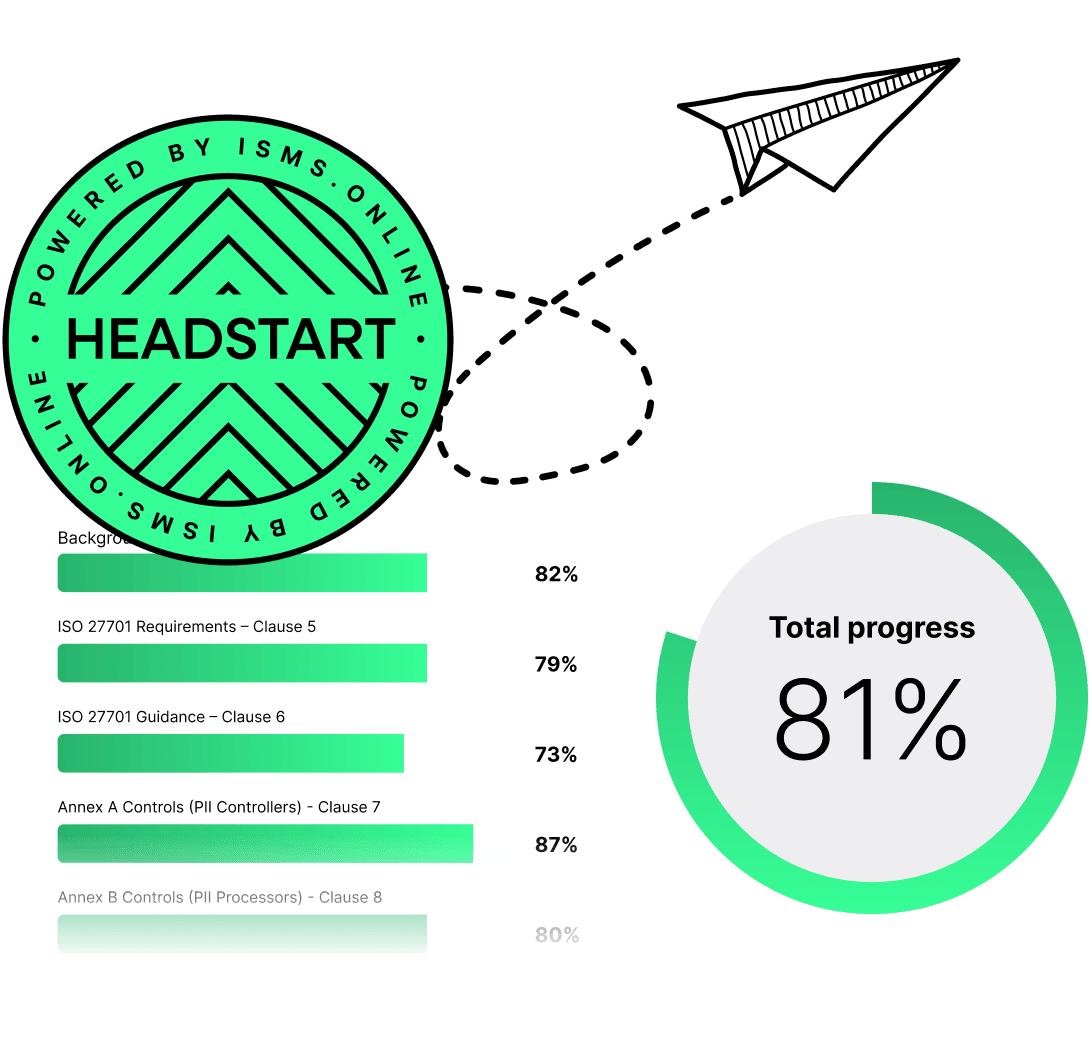
An 81% Headstart from day one
We’ve done the hard work for you, giving you an 81% Headstart from the moment you log on. All you have to do is fill in the blanks.
Why is the Statement of Applicability Indispensable?
Understanding the Statement of Applicability’s Purpose
The Statement of Applicability (SoA) is a cornerstone document within the ISO 27001:2022 standard, guiding your organisation’s information security controls. It details the controls selected to address identified risks, ensuring they align with your organisation’s risk management strategy. By specifying the inclusion or exclusion of controls, the SoA provides a clear rationale for each decision, supporting the risk treatment process and demonstrating compliance with ISO 27001 requirements (Clause 6.1).
Justifying Control Selection through the Statement of Applicability
The SoA justifies control selection by linking each control to identified risks. This ensures that every control is deliberately chosen to address specific vulnerabilities, enhancing the effectiveness of your risk management strategy. Documenting these decisions supports compliance and provides a transparent rationale that can be communicated to stakeholders, reinforcing trust and credibility.
Key Elements of the Statement of Applicability
The SoA comprises several key elements essential for effective risk management:
- Control Selection: Identifies applicable controls and their rationale.
- Justification: Provides reasons for including or excluding each control.
- Risk Alignment: Ensures controls align with identified risks and organisational objectives.
- Compliance Demonstration: Shows adherence to ISO 27001 requirements and supports audits.
Aligning the Statement of Applicability with Risk Assessment and Treatment
The SoA is intrinsically linked to risk assessment and treatment processes. It acts as a bridge, connecting risk identification with control implementation. This alignment ensures comprehensive risk treatment strategies tailored to your organisation’s unique risk environment. By maintaining this alignment, the SoA facilitates continuous improvement and adaptation to emerging threats, ensuring your information security management system remains robust and effective.
Explore how our platform, ISMS.online, can streamline the creation and management of your Statement of Applicability, enhancing your risk management practices and ensuring compliance with ISO 27001.
How Does Continuous Improvement Enhance ISMS?
Understanding Continuous Improvement
Continuous improvement is a cornerstone of the ISO 27001:2022 standard, ensuring your Information Security Management System (ISMS) remains resilient and compliant with evolving security standards. This ongoing process involves systematic reviews, audits, and updates, fostering a proactive approach to risk management.
Enhancing ISMS Through Continuous Improvement
Embedding continuous improvement within your ISMS allows your organisation to swiftly adapt to emerging threats and vulnerabilities, ensuring robust protection of information assets. This dynamic process not only strengthens security measures but also aligns with ISO 27001’s commitment to maintaining compliance and achieving operational excellence (ISO 27001:2022 Clause 10.2).
Key Processes in Continuous Improvement
The continuous improvement cycle encompasses:
- Regular Audits: Conduct systematic evaluations to uncover areas for enhancement.
- Review Meetings: Facilitate collaborative sessions to assess ISMS performance.
- Feedback Mechanisms: Establish channels for capturing insights and suggestions.
- Action Plans: Develop strategic initiatives to address identified gaps.
Contribution to Compliance
Continuous improvement ensures your ISMS aligns with international standards, maintaining compliance and enhancing your organisation’s security posture. By regularly updating security practices, your organisation can effectively manage risks and demonstrate a steadfast commitment to information security.
Our platform, ISMS.online, offers comprehensive tools to support your continuous improvement journey, providing insights and resources to enhance your ISMS. Embrace continuous improvement to safeguard your organisation’s information assets and achieve ISO 27001 certification.

Free yourself from a mountain of spreadsheets
Embed, expand and scale your compliance, without the mess. IO gives you the resilience and confidence to grow securely.
Why Integrate ISO 27001 with Other Standards?
What are the Benefits of Integration?
Integrating ISO 27001 with standards like ISO 9001 and ISO 31000 creates a robust framework for risk management. This synergy not only enhances organisational efficiency but also aligns with strategic goals. Key benefits include:
- Unified Risk Management: Achieve a comprehensive view of risk management, facilitating informed decision-making and optimal resource allocation.
- Streamlined Processes: Eliminate redundant efforts and focus on strategic objectives, thereby enhancing operational efficiency.
How Does Integration Enhance Organisational Efficiency?
Integrating ISO 27001 with other standards supports seamless process alignment, fortifying the organisation’s security posture. By adopting a unified approach, organisations can:
- Improve Effectiveness: Enhance the effectiveness of risk management practices.
- Strengthen Security: Bolster security measures and ensure compliance.
What Challenges are Faced During Integration?
While integration offers substantial benefits, organisations may encounter challenges such as:
- Aligning Standards: Managing different standard requirements.
- Resource Allocation: Efficiently distributing resources to meet integration needs.
These challenges necessitate careful planning and a clear understanding of each standard’s specific requirements. By leveraging our expertise and resources, organisations can navigate these complexities and achieve successful integration, ultimately enhancing their risk management capabilities.
How Does Integration Align with Business Objectives?
Integrating ISO 27001 with other standards aligns with business objectives by supporting continuous improvement and strategic alignment. This integration ensures that risk management practices are compliant with international standards and tailored to the organisation’s unique needs. By aligning with business goals, organisations can enhance stakeholder trust and gain a competitive advantage in the market.
Explore how ISMS.online can support your integration journey, providing the tools and resources needed to achieve seamless alignment with ISO 27001 and other standards.
Overcoming Challenges in ISO 27001 Certification
Navigating Common Obstacles
Securing ISO 27001 certification often presents challenges such as resource allocation, cultural shifts, and compliance demands. These hurdles typically arise from the need to balance ongoing responsibilities with certification demands, necessitating strategic planning and effective resource management (ISO 27001:2022 Clause 6.1).
Strategies for Overcoming Challenges
Organisations can address these hurdles by focusing on:
- Leadership Engagement: Active involvement from leadership ensures the certification process is prioritised and well-resourced.
- Employee Training: Comprehensive training empowers employees to implement necessary changes, fostering a culture of security awareness and compliance.
The Role of Organisational Culture
The influence of organisational culture is profound in the certification journey. A culture that prioritises security and compliance can enhance engagement and facilitate smoother implementation. Encouraging open communication and collaboration across departments helps align objectives and ensures collective commitment to achieving certification.
Strategic Resource Allocation
Certification requires a strategic allocation of both human and financial resources. Organisations must evaluate their current capabilities and pinpoint areas needing additional support. This may involve redistributing tasks or investing in new tools and technologies to streamline processes and boost efficiency.
By proactively addressing these challenges, organisations can successfully achieve ISO 27001 certification, enhancing their security posture and building trust with stakeholders. Embrace the journey with ISMS.online, where our platform offers the tools and support necessary to navigate the complexities of certification and fortify your organisation’s risk management framework.

Manage all your compliance, all in one place
ISMS.online supports over 100 standards and regulations, giving you a single platform for all your compliance needs.
How Does ISO 27001 Impact Organisational Culture?
What Changes Occur Post-Certification?
ISO 27001 certification serves as a catalyst for cultivating a security-conscious culture within your organisation. This transformation is deeply embedded in cultural values, fostering a unified approach to security. Employees become more vigilant, understanding their critical role in safeguarding information assets.
How Does It Enhance Security Awareness Among Employees?
The certification process integrates best practices into daily routines, elevating security awareness. Employees are trained to recognise potential threats, enhancing their ability to respond effectively. This proactive stance is crucial in mitigating risks and ensuring compliance with international standards (ISO 27001:2022 Clause 7.2).
What Role Does Leadership Play in Cultural Transformation?
Leadership plays a crucial role in setting the tone for cultural change. By championing security initiatives, leaders inspire a collective commitment to protecting information assets. Their involvement ensures that security becomes a shared responsibility, reinforcing the organisation’s dedication to maintaining a robust Information Security Management System (ISMS).
How Does ISO 27001 Align with Organisational Values?
ISO 27001 certification aligns seamlessly with organisational values by promoting transparency, accountability, and trust. It supports a culture where security is prioritised, and employees are empowered to act as stewards of information integrity. This alignment not only enhances security measures but also strengthens stakeholder confidence.
Our platform, ISMS.online, supports this cultural shift by providing tools and resources that facilitate the integration of ISO 27001 standards into your organisation’s fabric. Embrace this transformation to elevate your security posture and foster a culture of continuous improvement.
Further Reading
Why is Leadership Important in ISMS Implementation?
The Role of Leadership in ISMS Implementation
Leadership is crucial in deploying an Information Security Management System (ISMS) effectively. Leaders establish the foundation for security practices, ensuring alignment with the ISO 27001 standard. By prioritising security, they cultivate a culture of vigilance and compliance, essential for safeguarding your organisation’s information assets.
How Leadership Shapes Security Culture
Leaders play a transformative role in embedding security awareness into the organisation’s core values. Their commitment to security initiatives motivates employees to adopt proactive measures, reinforcing the organisation’s security framework. This influence is vital in maintaining a resilient ISMS that evolves with emerging threats (ISO 27001:2022 Clause 5.1).
Key Responsibilities of Leaders in ISMS
Leaders are responsible for steering the organisation’s security strategy, ensuring compliance with international standards, and allocating resources for ISMS implementation. Their responsibilities include:
- Resource Allocation: Ensuring adequate resources for security initiatives.
- Strategic Direction: Aligning security objectives with business goals.
- Compliance Assurance: Guaranteeing adherence to ISO 27001 requirements.
Leadership’s Role in Continuous Improvement
Continuous improvement is a cornerstone of effective ISMS management. Leaders drive this by regularly assessing security practices, identifying enhancement opportunities, and implementing strategic initiatives. This commitment to improvement ensures the ISMS remains robust and adaptable to new threats.
Our platform, ISMS.online, equips leaders with tools and resources to streamline ISMS implementation and nurture a culture of continuous improvement. Enhance your organisation’s security strategy with our comprehensive solutions.
What Tools and Resources Aid ISO 27001 Implementation?
How Do Software Tools Enhance ISO 27001 Certification?
Achieving ISO 27001 certification is not just about ticking boxes; it requires a strategic approach. Software solutions like ISMS.online are crucial in this endeavour, automating key tasks such as documentation, risk assessment, and compliance tracking. This automation reduces manual effort and enhances accuracy, aligning with ISO 27001:2022 Clause 7.5. Our platform offers intuitive interfaces and customizable templates, empowering your organisation to manage its Information Security Management System (ISMS) effectively.
What Resources Are Essential for Successful Implementation?
Securing ISO 27001 certification demands more than just software tools. Essential resources include:
- Training Programmes: Equip your team with the knowledge to meet the standard’s requirements.
- Expert Guidance: Gain strategic insights from consultants or internal specialists to align security practices with ISO 27001 standards.
Our platform supports continuous improvement by offering resources that ensure ongoing compliance and adaptation to emerging threats.
How Does ISMS.online Facilitate ISO 27001 Implementation?
ISMS.online is your ally in achieving and maintaining ISO 27001 certification. Our platform simplifies the certification process while promoting continuous improvement and compliance. With features that support risk management, document control, and audit readiness, we ensure your organisation remains agile and responsive to evolving security challenges. By integrating these tools and resources, your organisation can confidently pursue ISO 27001 certification, strengthening its security posture and stakeholder trust.
Explore how our solutions can transform your ISO 27001 journey, providing the tools and support needed to achieve certification and maintain a robust ISMS. Embrace the future of information security with confidence.
How Does ISO 27001 Provide Strategic Advantage?
What Competitive Advantages Does ISO 27001 Offer?
ISO 27001 certification fortifies your market position by providing a competitive edge. Demonstrating a commitment to information security, your organisation attracts clients who prioritise robust data protection. This certification aligns with international standards, underscoring your dedication to safeguarding information and distinguishing you in a competitive field.
How Does It Enhance Stakeholder Trust and Confidence?
ISO 27001 certification is instrumental in building trust, a cornerstone of business. By adhering to stringent security protocols, your organisation reassures stakeholders of your commitment to protecting sensitive information. This assurance extends to clients, partners, and investors, fostering long-term relationships built on transparency and reliability. Consequently, your organisation emerges as a trusted leader, enhancing its reputation and credibility.
What Role Does Certification Play in Market Differentiation?
Differentiation is crucial for standing out. ISO 27001 certification provides a clear signal of your organisation’s dedication to excellence in information security. It sets your company apart from competitors who may not meet the same rigorous standards. This distinction not only attracts new business but also strengthens existing relationships, as clients and partners recognise the value of partnering with a certified organisation.
How Does It Align with Strategic Business Goals?
Aligning ISO 27001 certification with your strategic business goals ensures that information security is woven into your organisational framework. This alignment supports market differentiation by embedding security into your business processes, enhancing operational efficiency and resilience. By prioritising security, your organisation is better equipped to navigate challenges and seize opportunities, driving growth and success.
- Competitive Edge: Attracts clients by showcasing a commitment to data protection.
- Stakeholder Trust: Builds confidence through adherence to security protocols.
- Market Differentiation: Distinguishes your company from competitors.
- Strategic Alignment: Integrates security into business processes for resilience.
Discover how ISMS.online can support your journey towards ISO 27001 certification, providing the tools and resources needed to achieve a competitive advantage.
What Future Trends Influence ISO 27001?
How Do Technological Advancements Impact ISO 27001?
Emerging technologies are reshaping ISO 27001, enhancing risk management strategies. The integration of AI and machine learning empowers organisations to foresee and address risks with precision. These innovations facilitate predictive analytics, enabling proactive threat detection and response, thus bolstering the resilience of information security measures.
How Do AI and Machine Learning Enhance Risk Management?
AI and machine learning are transformative in refining risk management within ISO 27001. They streamline threat detection and response, minimising human error and boosting efficiency. By processing extensive datasets, these technologies uncover patterns and anomalies that may signal potential security threats. This anticipatory approach not only fortifies security protocols but also aligns with ISO 27001’s dedication to ongoing enhancement (ISO 27001:2022 Clause 10.2).
What Role Does Cloud Security Play in ISO 27001?
Cloud security is increasingly significant in ISO 27001, addressing data privacy challenges and ensuring secure data handling. As organisations transition to cloud-based infrastructures, robust security frameworks become essential to safeguard sensitive data. ISO 27001 offers a structured framework for cloud security, incorporating controls that protect data integrity and confidentiality.
How Do Future Trends Shape the Evolution of ISO 27001?
Future trends, including AI, machine learning, and cloud security, are instrumental in steering the evolution of ISO 27001. These developments support the creation of more robust information security systems, enhancing risk management and ensuring adherence to international standards. As technology progresses, ISO 27001 continues to evolve, equipping organisations with the tools necessary to navigate a dynamic security environment.
Explore these technological advancements with ISMS.online, where our platform provides the tools and resources to seamlessly integrate these trends into your risk management strategy. Strengthen your organisation’s security framework and maintain a competitive edge in the ever-evolving field of information security.
Experience ISMS.online: Schedule Your Demo
How Does ISMS.online Streamline ISO 27001 Certification?
ISMS.online stands as your dedicated ally in navigating the complexities of ISO 27001 certification. Our platform seamlessly integrates with ISO 27001:2022, offering robust tools for documentation, risk assessment, and compliance tracking. This empowers your organisation to refine its Information Security Management System (ISMS) and embrace continuous improvement.
What Features Elevate ISMS Management?
Our platform is meticulously designed to enhance your ISMS management through:
- Risk Management Tools: Prioritise and manage risks with precision using our comprehensive solutions.
- Seamless Documentation: Effortlessly control and update critical documents, ensuring accuracy and compliance.
- Dynamic Compliance Monitoring: Stay ahead of ISO 27001 requirements with real-time tracking and insights.
How Does ISMS.online Support Continuous Improvement?
Continuous improvement is embedded in our platform’s core. ISMS.online facilitates regular audits, feedback loops, and strategic action plans, ensuring your ISMS evolves with emerging threats and maintains compliance with global standards (ISO 27001:2022 Clause 10.2).
Why Schedule a Demo with ISMS.online?
Uncover the transformative potential of ISMS.online by scheduling a demo. Witness how our platform can revolutionise your ISO 27001 journey, providing the tools and support needed to achieve certification and sustain a robust ISMS. Our expert guidance and customizable templates ensure your organisation remains agile and resilient in the face of evolving security challenges.
Embrace the future of information security with ISMS.online. Schedule your demo today and unlock the full potential of our comprehensive platform.
Book a demoFrequently Asked Questions
How Long Does ISO 27001 Certification Take?
Factors Influencing Certification Duration
Achieving ISO 27001:2022 certification is a nuanced process, with timelines varying based on several factors. The complexity of your existing Information Security Management System (ISMS), the resources you allocate, and your current compliance level with ISO standards are pivotal. Smaller organisations might find the process more straightforward, while larger entities could face extended timelines due to intricate systems and processes.
Strategies to Expedite Certification
To accelerate the certification process, thorough preparation is crucial. Begin with a comprehensive gap analysis to pinpoint areas needing improvement. Implementing effective risk assessment and treatment plans can significantly reduce delays. Our platform, ISMS.online, streamlines documentation and compliance tracking, ensuring your organisation remains on course.
The Role of Preparation in Certification Duration
Preparation is a decisive factor in determining the certification timeline. A well-prepared organisation, with clearly defined security policies and procedures, can navigate the certification process more efficiently. Regular audits and reviews, as outlined in ISO 27001:2022 Clause 9.2, help maintain compliance and readiness for certification.
Impact of Organisational Size on Certification Timeline
The size of your organisation plays a significant role in the duration of the certification process. Larger organisations often require more time due to the complexity of their operations and the need to coordinate across multiple departments. Conversely, smaller organisations may achieve certification more swiftly, benefiting from simpler structures and fewer bureaucratic hurdles.
By understanding these factors and utilising strategic tools and resources, your organisation can efficiently achieve ISO 27001 certification. Embrace the journey with ISMS.online to enhance your security posture and gain a competitive edge in the market.
What Are the Costs Associated with ISO 27001 Certification?
Understanding the Financial Implications
Achieving ISO 27001 certification involves both direct and indirect costs. Direct expenses include audits, consultancy, and training, while indirect costs may arise from reallocating internal resources and potential operational disruptions during implementation. Understanding these financial implications is crucial for effective budgeting and strategic planning.
Crafting a Strategic Budget
To budget effectively for ISO 27001 certification, organisations should conduct a comprehensive cost analysis to identify all potential expenses. This includes allocating funds for initial certification and ongoing maintenance, ensuring alignment with evolving standards (ISO 27001:2022 Clause 7.5). A strategic budget not only covers immediate costs but also anticipates future financial needs.
Factors Influencing Certification Costs
Several factors can influence the overall cost of certification, including organisational size, complexity, existing security measures, and the level of expertise required. Additionally, selecting tools and resources, such as ISMS.online, can streamline processes and reduce manual efforts, impacting costs positively.
Return on Investment: A Strategic Perspective
ISO 27001 certification offers a substantial return on investment by strengthening your organisation’s security framework and enhancing stakeholder confidence. Certified entities often experience fewer security incidents, leading to cost savings and improved operational efficiency. This strategic investment not only safeguards information assets but also positions your organisation as a leader in risk management.
By understanding the costs and benefits of ISO 27001 certification, your organisation can make informed decisions and refine its information security strategy. Discover how ISMS.online can support your certification journey, providing the tools and resources necessary to achieve compliance and fortify your security infrastructure.
How Does ISO 27001 Certification Enhance Data Security?
Key Controls Enhancing Data Security
ISO 27001:2022 fortifies data security through comprehensive controls:
- Access Control (Annex A.9): Limits data access to authorised personnel, safeguarding sensitive information.
- Cryptographic Controls (Annex A.10): Employs encryption to ensure data integrity and confidentiality.
- Physical Security (Annex A.11): Shields data centres and physical assets from unauthorised access.
Mitigating Data Breach Risks
Implementing ISO 27001’s risk management framework significantly reduces data breach risks by identifying threats and vulnerabilities. This proactive approach prevents unauthorised data access and ensures robust protection.
The Role of Employee Training
Training equips your team to recognise and respond to threats, fostering a culture of security awareness. This proactive stance is crucial in mitigating human error, a common cause of data breaches.
Aligning with Data Protection Regulations
ISO 27001:2022 aligns with data protection regulations like GDPR, embedding compliance into its framework. This ensures your organisation adheres to legal requirements, protecting personal data and maintaining stakeholder trust.
Our platform, ISMS.online, supports your journey towards ISO 27001 certification, offering tools and resources to enhance data security and compliance. Embrace the power of certification to safeguard your organisation’s data and build trust with stakeholders.
The Role of Internal Audits in ISO 27001
How Do Internal Audits Ensure Compliance with ISO 27001?
Internal audits are indispensable for ensuring your organisation’s Information Security Management System (ISMS) aligns with the ISO 27001 standard. These audits meticulously evaluate processes and controls, identifying gaps and areas for improvement. This rigorous assessment reinforces your organisation’s dedication to maintaining robust security measures (ISO 27001:2022 Clause 9.2).
What Are the Key Steps in Conducting an Internal Audit?
Conducting a thorough internal audit involves several essential steps:
- Planning: Establish the audit scope and objectives, ensuring they align with your organisation’s goals.
- Execution: Evaluate the ISMS against ISO 27001 standards, identifying non-conformities and areas for improvement.
- Reporting: Document findings and provide actionable recommendations to address identified issues.
- Follow-Up: Monitor the implementation of corrective actions to ensure ongoing compliance and continuous improvement.
How Do Audits Contribute to Continuous Improvement?
Audits play a vital role in the continuous improvement cycle, offering insights that drive enhancements in your ISMS. By identifying weaknesses and recommending corrective actions, audits foster a proactive approach to risk management, ensuring your organisation remains resilient against emerging threats. This ongoing process aligns with ISO 27001’s commitment to maintaining robust security measures (ISO 27001:2022 Clause 10.2).
How Does Audit Frequency Impact ISMS Effectiveness?
The frequency of internal audits significantly impacts the effectiveness of your ISMS. Regular audits ensure that security practices remain aligned with evolving standards and organisational changes. By maintaining a consistent audit schedule, your organisation can swiftly adapt to new challenges, enhancing its security posture and compliance readiness.
Our platform, ISMS.online, supports your audit journey by offering tools that streamline the audit process, ensuring your organisation remains compliant and secure. Utilise the advantages of internal audits to fortify your ISMS and safeguard your information assets.
How Does ISO 27001 Certification Affect Business Continuity?
Strengthening Your Business Continuity Planning
ISO 27001 certification fortifies your business continuity planning by integrating security measures into your continuity strategies. This comprehensive framework ensures your organisation can respond effectively to disruptions, enhancing resilience against unforeseen events.
Boosting Organisational Resilience
Certification embeds a culture of security awareness and proactive risk management. Regular assessments and audits keep your company vigilant and adaptive to emerging threats, enabling swift recovery and minimising downtime.
Key Components of Business Continuity
ISO 27001 outlines essential components for effective continuity:
- Risk Assessment (Clause 6.1): Identifying potential threats.
- Risk Treatment (Clause 5.5): Implementing mitigation measures.
- Continuous Improvement (Clause 10.2): Updating continuity plans.
Aligning with Disaster Recovery Strategies
ISO 27001 certification aligns with disaster recovery strategies, ensuring effective coordination of recovery efforts. By integrating ISO 27001, you enhance your organisation’s crisis response capabilities.
Our platform, ISMS.online, offers tools to support your ISO 27001 journey, ensuring robust continuity strategies aligned with international standards. Embrace certification to safeguard your organisation’s future and maintain stakeholder trust.
Can ISO 27001 Certification Be Integrated with GDPR Compliance?
How Does ISO 27001 Facilitate GDPR Compliance?
ISO 27001 certification is crucial for aligning with GDPR compliance, establishing a robust framework for managing information security risks. This standard ensures your organisation effectively protects personal data, meeting GDPR’s stringent data protection and privacy requirements (ISO 27001:2022 Clause 6.1). By adopting ISO 27001, you demonstrate a commitment to safeguarding sensitive information, thereby enhancing stakeholder trust.
What Are the Synergies Between ISO 27001 and GDPR?
The synergy between ISO 27001 and GDPR is evident in their shared focus on data protection and risk management. Both frameworks emphasise identifying, assessing, and mitigating risks to ensure data security and privacy. Integrating ISO 27001 with GDPR streamlines compliance processes, reduces redundancy, and ensures consistency across domains. This integration simplifies compliance efforts and enhances your organisation’s risk management capabilities.
How Does Certification Improve Data Protection Practices?
ISO 27001 certification improves data protection practices by providing a structured approach to managing information security. The standard outlines specific controls that align with GDPR requirements, ensuring your organisation protects personal data from unauthorised access and breaches. By adhering to ISO 27001, you implement robust data protection measures that mitigate risks and ensure compliance with international standards.
How Does Integration Simplify Compliance Processes?
Integrating ISO 27001 with GDPR simplifies compliance by aligning security measures with regulatory requirements. This integration facilitates a unified approach to managing information security, reducing compliance complexity and enhancing operational efficiency. By capitalising on the alignment between ISO 27001 and GDPR, your organisation achieves a comprehensive compliance strategy that supports data protection and business objectives.
Explore how ISMS.online can support your integration journey, providing tools and resources to achieve seamless alignment with ISO 27001 and GDPR. Enhance your data protection practices and streamline compliance processes with our comprehensive solutions.






