





































Addressing Risk Management Challenges for SMEs
Understanding the Challenges
Small and medium enterprises (SMEs) often face significant hurdles in establishing effective risk management frameworks. A staggering 70% struggle to align compliance with business objectives, a gap that ISO 27001:2022 adeptly bridges. This standard offers a structured approach to managing risks, enhancing both business resilience and competitive advantage.
The Role of ISO 27001:2022
ISO 27001:2022 provides a comprehensive framework for SMEs to address these challenges effectively. By emphasising risk assessment and mitigation, it can reduce the risk of data breaches by up to 50%. This structured approach not only safeguards information but also aligns with SMEs’ strategic goals, ensuring compliance and operational efficiency (ISO 27001:2022 Clause 5.3).
- Key Benefits:
- Mitigates data breach risks by up to 50%.
- Aligns risk management with business objectives.
- Enhances business resilience and competitive edge.
The Importance of Risk Management for SMEs
For SMEs, effective risk management is crucial to thrive in competitive environments. ISO 27001:2022 enhances business resilience, providing a competitive edge by ensuring that risk management processes are aligned with business objectives. This alignment is vital for maintaining trust and credibility in the market (ISO 27001:2022 Clause 5.1).
How ISMS.online Can Assist
Our platform, ISMS.online, simplifies the implementation of ISO 27001:2022, offering pre-configured solutions tailored for SMEs. By integrating our tools, you can streamline your compliance processes, engage employees in risk management, and ensure continuous improvement. Discover how our solutions can transform your approach to risk management and book a demo with us today.
Book a demoWhy ISO 27001:2022 is Essential for SMEs
What Benefits Does ISO 27001:2022 Offer to SMEs?
For small and medium enterprises (SMEs), adopting the ISO 27001:2022 standard is a strategic move that fortifies information security. This framework not only curtails security incidents by up to 30% but also aligns seamlessly with business objectives, enhancing operational efficiency. By implementing this standard, your organisation can safeguard sensitive data and establish a robust defence against potential threats.
How Does ISO 27001:2022 Enhance Information Security?
ISO 27001:2022 emphasises a comprehensive risk management approach, empowering SMEs to identify, assess, and mitigate risks effectively. By prioritising security controls based on risk severity, your company can strengthen its security posture, enhancing resilience against cyber threats. This alignment with regulatory requirements simplifies compliance processes, providing a clear pathway to meeting legal obligations (ISO 27001:2022 Clause 6.1).
Why Should SMEs Prioritise ISO 27001:2022 Certification?
Achieving certification under ISO 27001:2022 offers a competitive edge by elevating market reputation and demonstrating a commitment to security excellence. This recognition fosters trust among clients and partners, positioning your business as a reliable and secure entity. Furthermore, the standard’s focus on continuous improvement ensures adaptability to evolving security challenges, maintaining competitive positioning.
How Can ISO 27001:2022 Certification Impact an SME’s Market Reputation?
Securing ISO 27001:2022 certification signals to the market that your company is dedicated to maintaining high security standards. This commitment enhances your reputation, attracting potential clients who prioritise data security. As more businesses recognise the importance of robust security measures, ISO 27001:2022 certification becomes a valuable differentiator, setting your organisation apart in a competitive marketplace.
By embracing ISO 27001:2022, SMEs not only fortify their information security but also gain a strategic advantage, ensuring compliance and fostering trust in an increasingly security-conscious environment.
ISO 27001 made easy
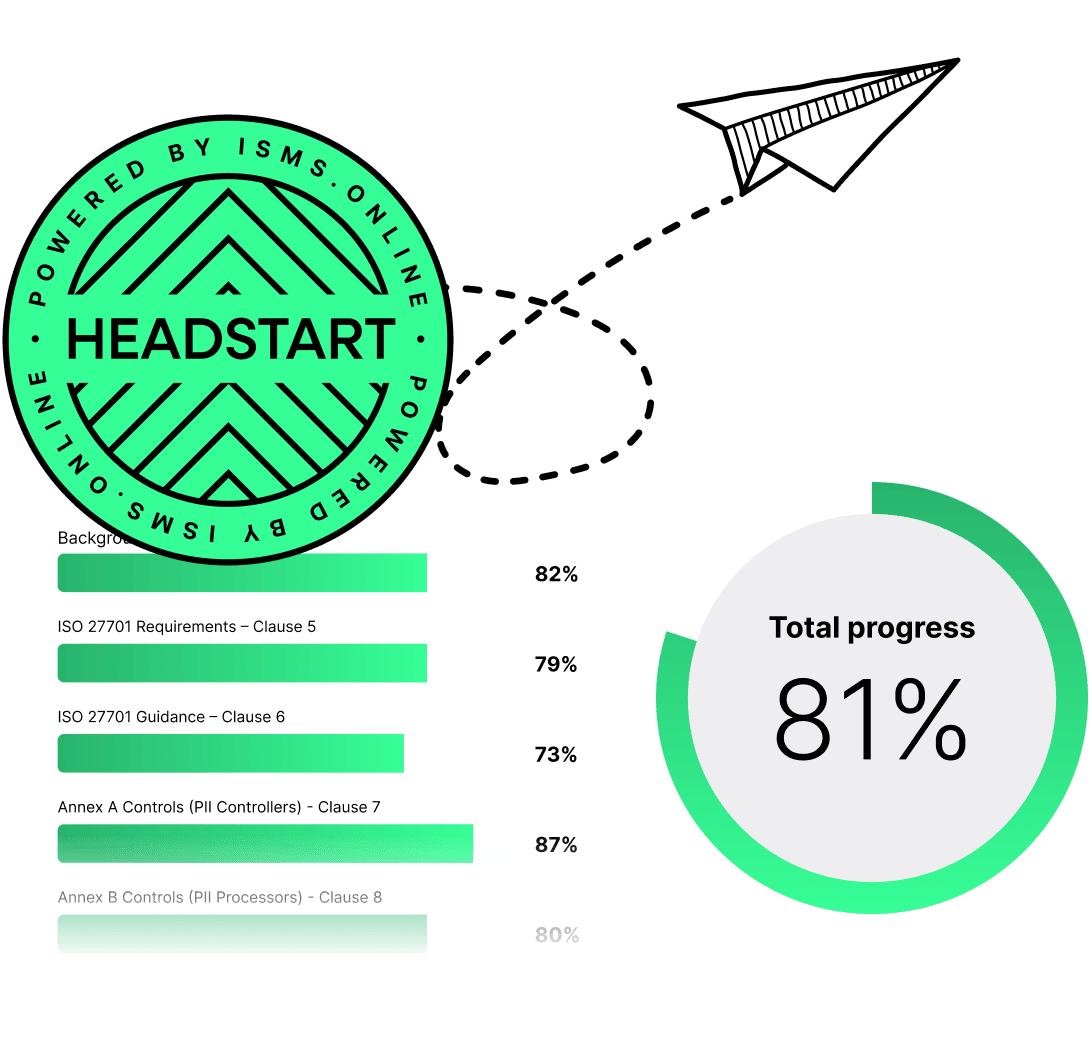
An 81% Headstart from day one
We’ve done the hard work for you, giving you an 81% Headstart from the moment you log on. All you have to do is fill in the blanks.
Understanding the Key Components of ISO 27001:2022
Core Components of ISO 27001:2022
ISO 27001:2022 is built on three foundational pillars that underpin a robust information security management system:
-
Risk Assessment: This process involves systematically identifying and evaluating potential threats and vulnerabilities. By doing so, organisations can prioritise security measures effectively, aligning them with their strategic objectives (ISO 27001:2022 Clause 5.3).
-
Risk Treatment: Here, strategies are crafted to mitigate identified risks, ensuring that security controls are tailored to the organisation’s unique needs. This customization is crucial for maintaining operational efficiency and compliance.
-
Information Security Policies: These policies govern the protection of information assets, ensuring compliance and security across all operations. They define employee responsibilities and outline procedures for handling sensitive information, minimising the risk of unauthorised access (ISO 27001:2022 Clause 5.1).
Supporting Risk Management
Each component plays a critical role in strengthening an organisation’s security posture. The structured approach to risk assessment and treatment reduces the likelihood of data breaches, while information security policies foster a culture of security awareness and adherence to best practices.
Role of Information Security Policies
Information security policies are vital in guiding the implementation of security measures and ensuring compliance with legal and regulatory requirements. They serve as a blueprint for employee responsibilities, outlining procedures for handling sensitive information and minimising unauthorised access.
Effective Implementation for SMEs
For SMEs, integrating these components into existing processes is essential for achieving ISO 27001:2022 compliance. This involves:
-
Tailored Implementation: Adapting risk management strategies to fit the unique needs and constraints of SMEs.
-
Employee Engagement: Involving staff in the development and execution of security policies to ensure buy-in and adherence.
-
Continuous Monitoring: Regularly reviewing and updating security measures to address emerging threats and maintain compliance.
By focusing on these key components, SMEs can enhance their information security posture, ensuring resilience against evolving cyber threats.
How to Conduct a Risk Assessment for SMEs
Steps for Effective Risk Assessment
To embark on a successful risk assessment, begin by defining the scope in alignment with your organisation’s objectives. This ensures all actions are relevant and purposeful. Identify potential threats and vulnerabilities, considering both internal and external factors. Utilise tools like risk matrices to evaluate the likelihood and impact of each risk, prioritising them based on potential consequences. This sets the stage for effective risk treatment planning (ISO 27001:2022 Clause 5.3).
Identifying Vulnerabilities and Impacts
A comprehensive audit of systems and processes is essential for identifying vulnerabilities. Conduct a SWOT analysis to evaluate strengths, weaknesses, opportunities, and threats, providing a holistic view of your organisation’s risk profile. This analysis guides the development of targeted mitigation strategies, ensuring alignment with strategic goals.
Tools and Techniques for Risk Assessment
Several tools and techniques can aid SMEs in conducting effective risk assessments:
- Risk Matrices: Visualise and prioritise risks based on severity and likelihood.
- SWOT Analysis: Evaluate internal and external factors affecting risk.
- Software Solutions: Streamline the assessment process with real-time insights and automated reporting.
These tools enhance accuracy and facilitate strategic decision-making by providing actionable data.
Informing Risk Treatment Plans
Risk assessment results are crucial for developing risk treatment plans. By understanding the severity and likelihood of identified risks, SMEs can allocate resources effectively, focusing on high-priority areas. This informed approach ensures that security measures are both efficient and effective, aligning with the organisation’s strategic goals. Regular updates to the risk assessment process allow for continuous improvement and adaptation to emerging threats, maintaining a robust security posture (ISO 27001:2022 Clause 8.2).
Incorporating these practices into your risk management strategy not only strengthens your organisation’s resilience but also enhances its competitive edge in a security-conscious market.

Free yourself from a mountain of spreadsheets
Embed, expand and scale your compliance, without the mess. IO gives you the resilience and confidence to grow securely.
Implementing Risk Treatment Plans
How to Implement Risk Treatment Plans
Implementing risk treatment plans effectively is crucial for safeguarding your organisation’s assets. Begin by identifying and prioritising security controls based on the severity and likelihood of risks. This strategic alignment ensures that your efforts bolster both security and operational efficiency.
Key Steps in Implementation
- Identify Risks: Conduct a thorough assessment to pinpoint potential threats.
- Prioritise Controls: Evaluate risks by severity and likelihood, focusing on high-impact areas.
- Develop Treatment Plans: Tailor strategies to mitigate identified risks effectively.
- Integrate into Operations: Embed risk management practices into daily activities for seamless execution.
Aligning with Business Objectives
Aligning risk treatment plans with business objectives is essential for maintaining strategic focus. This alignment ensures that security measures support your organisation’s goals, enhancing operational efficiency and competitive advantage. By integrating risk management into your business strategy, you create a cohesive approach that drives success.
Continuous Monitoring and Adjustment
Continuous monitoring and adjustment of risk treatment plans are necessary for maintaining their effectiveness. Regularly review and update your plans to address new threats and opportunities. This dynamic approach ensures that your organisation remains resilient and responsive to changes in the security environment.
By adopting these strategies, your organisation can effectively implement risk treatment plans that align with your business objectives and enhance your security posture. Embrace the power of proactive risk management and secure your organisation’s future.
Overcoming Common Challenges in ISO 27001 Implementation
Navigating Implementation Hurdles
Small and medium enterprises (SMEs) often face significant challenges when implementing the ISO 27001:2022 standard. Resource constraints and the integration of new processes with existing workflows can impede progress. However, strategic foresight and targeted solutions can help overcome these obstacles.
Strategies for Success
-
Resource Allocation: Focus on critical areas by identifying processes that require immediate attention. This phased approach ensures efficient use of limited resources, aligning with ISO 27001:2022 Clause 5.3.
-
Process Integration: Seamlessly align ISO 27001 processes with current workflows to minimise disruption and enhance operational efficiency.
-
Automation: Implement automation tools to streamline the implementation process, reducing manual workload and allowing teams to concentrate on strategic initiatives.
Innovative Solutions
- Adaptive Risk Management: Employ systems that dynamically adjust to evolving risk environments, ensuring continuous protection and compliance with ISO 27001:2022 Clause 8.2.
- Cloud-Based Platforms: Utilise cloud solutions for scalable and flexible ISO 27001 compliance management.
- Comprehensive Training: Develop robust training programmes to engage employees and foster a culture of security awareness.
Ensuring Long-Term Success
Achieving long-term success with ISO 27001 requires viewing it as an ongoing journey rather than a one-time project. Regular updates to your Information Security Management System (ISMS) are essential to address emerging threats and opportunities. Securing top management support is crucial for aligning with business objectives and fostering a culture of continuous improvement. This proactive approach not only enhances security but also strengthens your organisation’s resilience in a competitive market.
By adopting these strategies, SMEs can effectively navigate the complexities of ISO 27001 implementation, ensuring robust security measures and sustained success.

Manage all your compliance, all in one place
ISMS.online supports over 100 standards and regulations, giving you a single platform for all your compliance needs.
The Role of Leadership in ISO 27001 Success
Leadership’s Influence on ISO 27001 Implementation
Leadership is crucial in steering ISO 27001:2022 success for SMEs. By articulating a clear vision and demonstrating unwavering commitment, leaders cultivate a security-conscious culture that aligns with organisational objectives.
Leaders prioritise risk management and compliance, ensuring security measures are seamlessly integrated into business strategies. This top-down approach not only bolsters the organisation’s security posture but also instils confidence among stakeholders.
Essential Management Support
Management support is indispensable for ISO 27001 success. By allocating resources and providing strategic direction, management ensures the necessary infrastructure and processes are in place, empowering teams to focus on continuous improvement and compliance (ISO 27001:2022 Clause 5.1).
- Key Areas of Support:
- Resource Allocation: Adequate resources for implementation.
- Strategic Direction: Aligning security measures with business goals.
- Continuous Improvement: Fostering ongoing enhancement.
Fostering a Security-Conscious Culture
Leaders engage employees at all levels, promoting awareness and training to cultivate a vigilant workforce. This engagement not only enhances compliance efforts but also fortifies the organisation’s resilience against cyber threats.
Impact of Leadership Engagement on Employee Participation
Leadership engagement significantly influences employee participation in compliance efforts. When leaders actively participate in the implementation process, they set an example that encourages employees to take ownership of their roles in maintaining information security. This collaborative approach fosters a sense of accountability and commitment, driving the overall success of the Information Security Management System (ISMS).
By understanding and embracing their role in ISO 27001 success, leaders can create a robust security framework that supports the organisation’s long-term objectives. This proactive leadership not only ensures compliance but also enhances the organisation’s reputation and competitive edge in a security-conscious market.
Further Reading
Engaging Employees in the Compliance Process
The Critical Role of Employee Engagement in Compliance
Employee engagement is a cornerstone of compliance success. When employees are actively involved, they are more likely to adhere to security policies, reducing risks and enhancing the organisation’s security posture. Engaged employees understand their roles in maintaining security, fostering a proactive approach to compliance (ISO 27001:2022 Clause 5.1).
Cultivating a Security-Conscious Culture
Creating a security-conscious culture begins with leadership commitment and clear communication. Leaders must emphasise the importance of compliance and security, setting the tone for the entire organisation. Regular training and awareness programmes are essential strategies for embedding security into the company culture. These initiatives empower employees with the knowledge and skills needed to identify and mitigate risks effectively.
Strategies to Engage Employees
To effectively engage employees, SMEs can implement the following strategies:
- Comprehensive Training Programmes: Regularly scheduled sessions that cover the latest security protocols and compliance requirements.
- Awareness Campaigns: Initiatives that highlight the importance of security in daily operations, using real-world examples to illustrate potential risks.
- Feedback Mechanisms: Channels for employees to voice concerns and suggestions, fostering a sense of ownership and involvement.
The Impact of Employee Engagement on Compliance Success
The impact of employee engagement on compliance success is profound. Engaged employees are vigilant, reducing the likelihood of security breaches and non-compliance incidents. This proactive stance not only enhances the organisation’s security posture but also builds trust with clients and stakeholders. By fostering a culture where security is everyone’s responsibility, SMEs can achieve sustained compliance success and a competitive edge in the market.
How to Use Technology for ISO 27001 Compliance
Enhancing Compliance with Technology
Incorporating technology into compliance strategies can significantly elevate the efficiency and effectiveness of ISO 27001 processes. Automation tools, for example, streamline routine tasks, enabling SMEs to focus on strategic initiatives. Digital solutions facilitate continuous monitoring and improvement, ensuring compliance efforts align with evolving standards (ISO 27001:2022 Clause 5.3).
Streamlining Compliance Processes with Technology
Technology simplifies compliance by automating repetitive tasks, reducing the manual workload on your team. This automation not only saves time but also minimises the risk of human error, ensuring more accurate compliance outcomes. By integrating technology into existing frameworks, SMEs can achieve seamless compliance management, enhancing both operational efficiency and security posture.
Benefits of Technology in Compliance
Adopting technology for compliance offers several advantages:
- Efficiency: Automation accelerates compliance processes, freeing up resources for other essential areas.
- Accuracy: Digital tools enhance data accuracy, reducing the likelihood of compliance breaches.
- Scalability: Technology solutions can easily adapt to the growing needs of SMEs, supporting long-term compliance goals.
Integrating Technology into Compliance Frameworks
Integrating technology into compliance frameworks requires a strategic approach. Start by identifying areas where automation can have the most impact, such as risk assessment and monitoring. Collaborate with technology providers to ensure seamless integration with existing systems, and prioritise solutions that offer scalability and flexibility.
By embracing technology, SMEs can transform their approach to ISO 27001 compliance, achieving greater efficiency and effectiveness. This strategic integration not only enhances compliance efforts but also positions SMEs for sustained success in a competitive market.
How to Ensure Continuous Improvement and Monitoring
The Significance of Continuous Improvement
Continuous improvement is a cornerstone of maintaining ISO 27001 compliance. It involves a methodical approach to refining processes, ensuring they remain robust against emerging security threats. This proactive strategy not only strengthens your organisation’s security framework but also aligns with strategic objectives, fostering resilience and trust.
Implementing Robust Monitoring Practices
Effective monitoring is crucial for identifying areas that require enhancement and ensuring ongoing compliance. By establishing a comprehensive monitoring framework, SMEs can track performance metrics, detect anomalies, and respond swiftly to potential threats. This vigilance is essential for maintaining the integrity of your Information Security Management System (ISMS) and achieving long-term compliance success (ISO 27001:2022 Clause 9.1).
Tools for Sustained Compliance
Several tools support continuous improvement and monitoring efforts:
- Dashboards: Provide real-time insights into security metrics, enabling informed decision-making.
- Analytics Platforms: Offer comprehensive data analysis, helping organisations identify trends and areas for enhancement.
These tools facilitate a dynamic approach to compliance, allowing SMEs to adapt to changes and maintain a competitive edge.
Impact on Long-term Compliance Success
Continuous improvement and monitoring significantly impact long-term compliance success. By fostering a culture of ongoing evaluation and adaptation, organisations can ensure their ISMS remains robust and responsive to emerging challenges. This commitment to excellence not only enhances security but also builds confidence among stakeholders, positioning your organisation as a leader in information security.
Integrating these practices into your compliance strategy ensures sustained success and a strong security posture. Embrace the power of continuous improvement and monitoring to secure your organisation’s future.
How to Ensure Legal and Regulatory Compliance
Grasping Legal and Regulatory Requirements
For SMEs, navigating the maze of legal and regulatory compliance is crucial. The ISO 27001:2022 standard offers a robust framework that simplifies adherence to regulations like GDPR, ensuring your organisation meets legal obligations while safeguarding its reputation and operational success (ISO 27001:2022 Clause 6.1).
Ensuring Compliance with Requirements
To effectively ensure compliance, SMEs should adopt a proactive approach:
- Regular Audits: Conduct periodic reviews to identify gaps and ensure adherence to evolving regulations.
- Documentation: Maintain comprehensive records of compliance activities to demonstrate due diligence.
- Training: Implement ongoing training programmes to keep employees informed about regulatory changes and best practices.
Role of ISO 27001 in Legal Compliance
ISO 27001 plays a crucial role in legal compliance by providing a structured approach to risk management and information security. By aligning with this standard, SMEs can streamline their compliance processes, reducing the risk of legal penalties and enhancing their market reputation. This proactive stance not only fortifies your security posture but also positions your organisation as a trusted entity in the industry.
Impact on Reputation and Operations
Legal compliance significantly impacts an SME’s reputation and operational success. Organisations that prioritise compliance are viewed as reliable and trustworthy, attracting potential clients and partners. Furthermore, staying updated with evolving regulations ensures that your operations remain efficient and resilient, minimising disruptions and fostering long-term growth.
By adopting the ISO 27001 framework, your organisation can navigate the complexities of legal compliance with confidence, ensuring both security and success. Embrace this opportunity to enhance your reputation and operational efficiency, positioning your SME for sustained growth and competitive advantage.
Book a Demo with ISMS.online
Why ISMS.online is the Right Choice for Your Compliance Needs
Navigating the complexities of ISO 27001 compliance becomes straightforward with ISMS.online. Our platform is designed specifically for small and medium enterprises (SMEs), offering a streamlined approach that allows you to focus on strengthening your security posture and achieving certification.
Elevate Your Risk Management Strategy with ISMS.online
Our comprehensive suite of tools empowers you to effectively identify, assess, and mitigate risks. By prioritising security controls based on risk severity and likelihood, our platform ensures alignment with ISO 27001:2022 requirements (Clause 6.1).
- Streamlined Compliance: Automate routine tasks, reducing manual workload and freeing up resources for strategic initiatives.
- Enhanced Security: Implement robust security measures that align with your business objectives, bolstering resilience against cyber threats.
- Continuous Improvement: Regularly update your Information Security Management System (ISMS) to address emerging threats and opportunities.
Experience the Benefits of a Demo with ISMS.online
Booking a demo with ISMS.online offers a firsthand look at how our solutions can revolutionise your compliance approach. Experience the transformative power of our platform and discover how it can support your journey towards ISO 27001 certification.
- Explore Our Features: Uncover the full range of tools available to streamline your compliance process.
- Tailored Solutions: Learn how our platform can be customised to meet your specific needs.
- Expert Guidance: Gain insights from our team of experts on optimising your risk management strategy.
Take the next step in securing your organisation's future by booking a demo with ISMS.online today. Experience the power of a platform designed to enhance your compliance efforts and drive success.
Book a demoFrequently Asked Questions
What Are the Key Benefits of ISO 27001:2022 for SMEs?
Enhancing Information Security
ISO 27001:2022 empowers your organisation to fortify its defences through a structured framework for managing information security risks. By identifying vulnerabilities and implementing robust security controls, your company can significantly reduce the likelihood of data breaches. Prioritising risk assessment and mitigation ensures that security measures align with strategic objectives, enhancing your security posture (ISO 27001:2022 Clause 6.1).
Prioritising ISO 27001:2022 Certification
Achieving ISO 27001:2022 certification provides a competitive edge by showcasing your commitment to security excellence. This certification not only elevates your market reputation but also builds trust with clients and partners, positioning your organisation as a reliable and secure entity. As businesses increasingly value robust security measures, ISO 27001:2022 certification becomes a key differentiator in the marketplace.
Impact on Market Reputation
Certification under ISO 27001:2022 signals to the market your dedication to maintaining high security standards. This commitment enhances your reputation, attracting clients who prioritise data security. As demand for secure business practices grows, ISO 27001:2022 certification sets your SME apart, offering a strategic advantage in a competitive environment.
Benefits for SMEs
- Enhanced Security: Bolsters defences against cyber threats.
- Regulatory Compliance: Simplifies adherence to legal requirements.
- Competitive Advantage: Improves market reputation and client trust.
- Risk Management: Aligns security measures with business goals.
By embracing ISO 27001:2022, SMEs not only strengthen their information security but also gain a strategic advantage, ensuring compliance and fostering trust in a security-conscious environment.
How Can SMEs Overcome Common Challenges in ISO 27001 Implementation?
Navigating the Challenges
Small and medium enterprises (SMEs) often grapple with the complexities of implementing ISO 27001 due to limited resources and the intricate task of integrating new processes with existing workflows. Without strategic management, these challenges can stall progress.
Strategies for Success
-
Resource Prioritisation: Identify critical areas that require immediate focus and phase in other tasks over time. This approach ensures optimal resource utilisation, maximising impact.
-
Process Harmonisation: Align ISO 27001 protocols with current operations to minimise disruption and boost productivity. This seamless integration fosters operational continuity.
-
Automation for Efficiency: Implement automation tools to manage repetitive tasks, freeing your team to concentrate on strategic initiatives. This not only enhances efficiency but also reduces human error.
Innovative Solutions
- Adaptive Risk Management: Leverage systems that adjust to evolving risk environments, ensuring continuous protection and compliance.
- Scalable Cloud Solutions: Utilise cloud-based platforms to manage ISO 27001 compliance, accommodating growth and change.
- Engaging Training Programmes: Develop comprehensive training initiatives to engage employees, fostering a culture of security awareness and responsibility.
Ensuring Long-Term Success
Achieving long-term success with ISO 27001 requires viewing it as an ongoing journey rather than a one-time project. Regularly update your Information Security Management System (ISMS) to address emerging threats and opportunities. Securing top management support is crucial to ensure alignment with business objectives and foster a culture of continuous improvement. This proactive approach not only enhances security but also strengthens your organisation’s resilience in a competitive market.
The Role of Leadership in ISO 27001 Success
Leadership’s Transformative Influence
Leadership is crucial in steering the successful implementation of the ISO 27001 standard. By prioritising risk management and compliance, leaders ensure that security measures align seamlessly with business strategies. This proactive approach not only fortifies your organisation’s security posture but also builds confidence among stakeholders, aligning security initiatives with overarching business goals.
Essential Management Support
Effective management support is vital for ISO 27001 implementation. Strategic guidance and resource allocation are essential to establish the necessary infrastructure and processes. This support empowers teams to focus on continuous improvement and compliance, overcoming challenges and achieving certification (ISO 27001:2022 Clause 5.1).
- Resource Allocation: Direct resources towards essential areas to ensure robust implementation.
- Strategic Guidance: Provide direction to align security measures with organisational objectives.
- Ongoing Enhancement: Cultivate a culture of continuous improvement and adaptation.
Fostering a Security-Conscious Culture
Leaders can foster a security-conscious culture by engaging employees at all levels. Promoting awareness and providing training cultivates a workforce that is vigilant and proactive in identifying and mitigating risks. This engagement not only enhances compliance efforts but also strengthens your organisation’s resilience against cyber threats.
Leadership’s Impact on Employee Participation
Leadership engagement significantly influences employee participation in compliance efforts. Active involvement from leaders sets a precedent, encouraging employees to take ownership of their roles in maintaining information security. This collaborative approach fosters a sense of accountability and commitment, driving the overall success of the Information Security Management System (ISMS).
By understanding and embracing their role in ISO 27001 success, leaders can create a robust security framework that supports the organisation’s long-term objectives. This proactive leadership not only ensures compliance but also enhances the organisation’s reputation and competitive edge in a security-conscious market.
Why is Continuous Improvement Important for ISO 27001?
Continuous improvement is integral to the ISO 27001 standard, ensuring that security measures adapt to emerging threats. This approach not only fortifies your organisation’s security posture but also aligns with strategic objectives, fostering resilience and trust.
Implementing Robust Monitoring Practices
Establishing effective monitoring practices is crucial for maintaining ISO 27001 compliance. A comprehensive framework allows you to track performance metrics, detect anomalies, and respond swiftly to potential threats, safeguarding the integrity of your Information Security Management System (ISMS). Tools like interactive dashboards and data analysis platforms provide real-time insights, enabling informed decision-making and strategic adaptation.
Tools for Continuous Improvement
Several tools facilitate continuous improvement efforts, offering detailed insights into trends and areas for enhancement:
- Interactive Dashboards: Visualise security metrics to inform strategic decisions.
- Comprehensive Data Analysis Platforms: Deliver in-depth insights, supporting proactive risk management.
These resources empower your organisation to dynamically adapt to changes, maintaining a competitive edge.
Impact on Long-term Compliance Success
Continuous improvement profoundly impacts long-term compliance success. By fostering a culture of ongoing evaluation and adaptation, your organisation ensures its ISMS remains robust and responsive to emerging challenges. This commitment to excellence not only enhances security but also builds confidence among stakeholders, positioning your organisation as a leader in information security.
Integrating these practices into your compliance strategy ensures sustained success and a strong security posture. Embrace the power of continuous improvement to secure your organisation’s future.
How Can SMEs Ensure Legal and Regulatory Compliance?
Navigating Legal Requirements
For SMEs, understanding and adhering to legal and regulatory requirements is crucial. Compliance with data protection laws like GDPR demands stringent measures to safeguard information. Regularly reviewing and documenting compliance efforts is essential to demonstrate adherence to these evolving standards.
Strategies for Compliance
To effectively manage compliance, SMEs should adopt a strategic approach:
- Conduct Thorough Reviews: Regularly assess processes to identify compliance gaps and ensure alignment with current regulations.
- Maintain Detailed Records: Keep comprehensive documentation of compliance efforts to demonstrate accountability and due diligence.
- Implement Continuous Training: Regularly update training programmes to keep your team informed about regulatory changes and best practices.
ISO 27001’s Role in Compliance
ISO 27001 provides a structured framework for managing information security and legal compliance. Aligning with this standard streamlines processes, reduces the risk of legal penalties, and enhances market reputation. This alignment not only strengthens your security posture but also positions your organisation as a trusted entity in the industry.
Impact on Reputation and Operations
Adhering to legal requirements significantly enhances an SME’s reputation and operational success. Companies that prioritise compliance are perceived as reliable and trustworthy, attracting potential clients and partners. Staying updated with evolving regulations ensures that your operations remain efficient and resilient, minimising disruptions and fostering long-term growth.
By adopting the ISO 27001 framework, your organisation can confidently navigate the complexities of legal compliance, ensuring both security and success. Embrace this opportunity to enhance your reputation and operational efficiency, positioning your SME for sustained growth and competitive advantage.






