





































Master Third-Party Risk Management with ISO 27001:2022
Understanding Third-Party Risk Management
Managing risks from external vendors is vital for safeguarding your organisation. A 2021 survey revealed that 60% of organisations experienced data breaches due to third-party vendors, underscoring the need for robust risk management strategies.
How ISO 27001:2022 Supports Risk Management
The ISO 27001:2022 standard offers a structured framework for managing information security risks, including those from third-party vendors. By aligning third-party risk management with your organisation’s security objectives, it ensures consistent and effective security measures (ISO 27001:2022 Clause 6.1).
Key Benefits of ISO 27001:2022 Alignment
- Strengthened Security: Fortify your organisation’s security posture by implementing ISO 27001.
- Regulatory Compliance: Meet regulatory requirements and mitigate non-compliance risks.
- Trust Building: Cultivate trust with clients and partners by demonstrating a commitment to security.
Utilising ISO 27001 for Organisational Benefit
Organisations can enhance their risk management strategies by integrating continuous monitoring and improvement processes. This proactive approach fosters a culture of security awareness and resilience.
How ISMS.online Can Assist
Our platform simplifies third-party risk management with tools aligned with ISO 27001:2022. Compliance Officers, Chief Information Security Officers, and CEOs can benefit from our comprehensive solutions. Book a demo with ISMS.online to explore how we can support your organisation's security journey.
Book a demoKey Components of ISO 27001 for Risk Management
Core Elements of ISO 27001
ISO 27001 provides a comprehensive framework for managing information security risks, crucial for third-party risk management. It includes a detailed risk assessment process that identifies, evaluates, and mitigates risks, ensuring security and compliance. The standard’s emphasis on continuous improvement allows organisations to refine their risk management strategies over time (ISO 27001:2022 Clause 10.2).
Enhancing Third-Party Risk Management
ISO 27001’s risk assessment and treatment processes address the challenges of third-party relationships. By pinpointing vulnerabilities and implementing effective controls, organisations can protect data and build trust with partners. Annex A of ISO 27001:2022 introduces 11 new controls, tackling modern security challenges and reinforcing the standard’s relevance.
Continuous Improvement: A Pillar of ISO 27001
Continuous improvement is central to ISO 27001, ensuring that risk management processes evolve with emerging threats. This proactive stance fosters a culture of security awareness and resilience, enabling organisations to anticipate and mitigate potential risks. By integrating these components into existing frameworks, businesses can bolster their security posture and achieve sustained success.
Strategic Integration of ISO 27001 Components
Integrating ISO 27001 components into existing risk management frameworks demands a strategic approach. Organisations should align their processes with the standard’s requirements, utilising automation and technology to streamline operations. This integration fortifies security and ensures compliance with regulatory standards, offering a competitive advantage.
By grasping and applying these key components, organisations can effectively manage third-party risks and uphold a robust security posture. This foundation paves the way for exploring practical applications and strategies that drive success in an interconnected digital environment.
ISO 27001 made easy
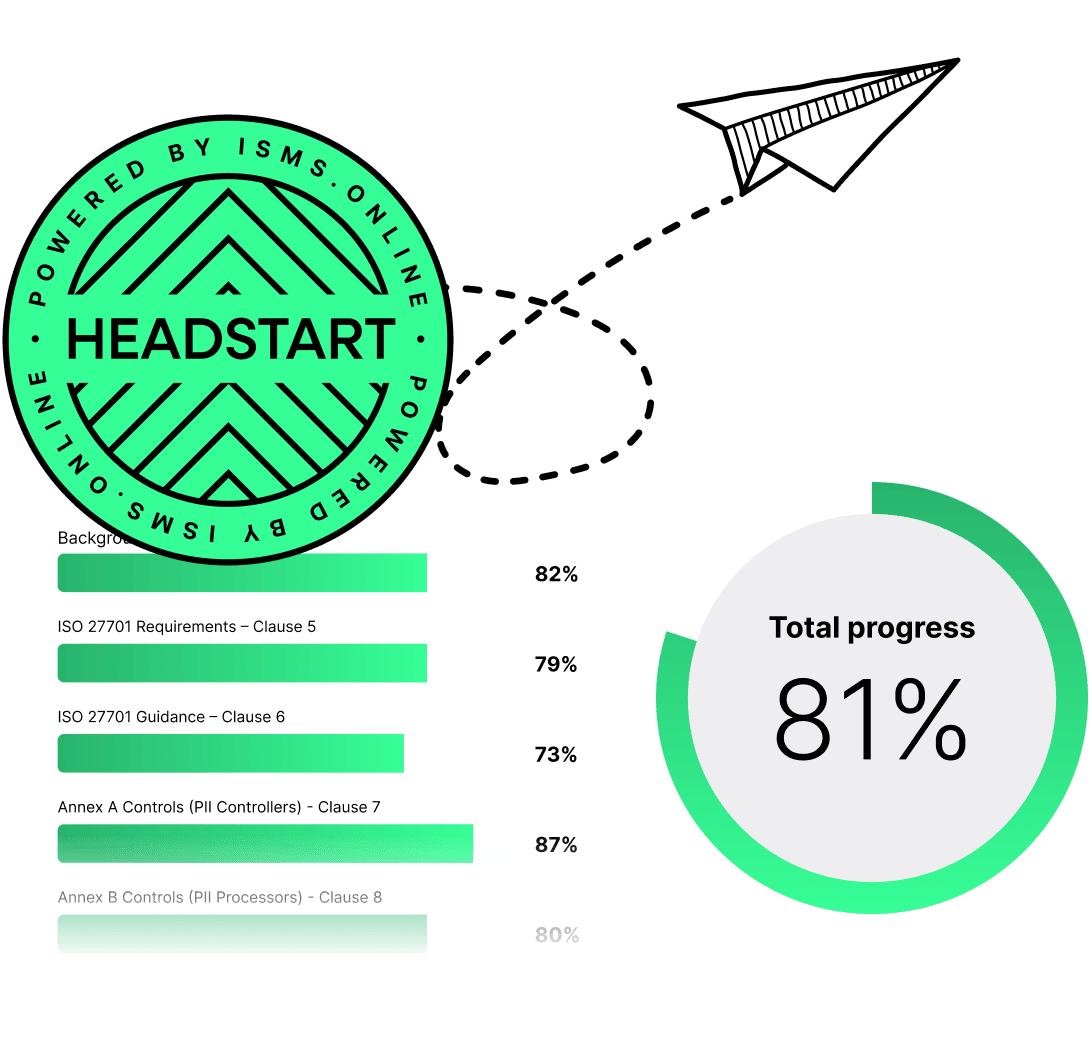
An 81% Headstart from day one
We’ve done the hard work for you, giving you an 81% Headstart from the moment you log on. All you have to do is fill in the blanks.
Implementing Third-Party Risk Management with ISO 27001
Step-by-Step Guide to Implementation
To effectively manage third-party risks with ISO 27001, start by crafting a risk assessment methodology that aligns with your organisation’s specific needs. This foundational step is crucial for pinpointing vulnerabilities and selecting the right controls (ISO 27001:2022 Clause 6.1).
Creating Effective Risk Management Plans
Develop risk management plans that address the distinct challenges of third-party relationships. These plans should detail strategies for mitigating identified risks and include ongoing reviews to ensure their continued effectiveness.
Tools and Templates for Implementation
Utilise platforms like ISMS.online to streamline the implementation process. Our platform provides templates and compliance resources that simplify risk management and boost efficiency. These tools help your organisation align with ISO 27001 standards and achieve compliance.
Ensuring Successful Compliance
Regular audits and reviews are vital for verifying the effectiveness of your third-party risk management strategies. By continuously adapting your processes, you can maintain compliance and build trust with stakeholders. This proactive approach not only enhances security but also supports long-term resilience.
By following these steps, your organisation can implement third-party risk management with ISO 27001, ensuring a robust security posture and fostering stakeholder confidence. Embrace the tools and resources available to streamline your journey towards compliance and security excellence.
Why Is Compliance with ISO 27001 Essential for Third-Party Risk?
Understanding ISO 27001 Compliance
Aligning with the ISO 27001 standard is crucial for managing third-party risks. This standard provides a comprehensive framework for information security, safeguarding sensitive data and fostering trust with stakeholders. By adhering to ISO 27001, organisations ensure their risk management strategies are both thorough and effective (ISO 27001:2022 Clause 6.1).
Benefits of Maintaining Compliance
- Structured Security Approach: ISO 27001 compliance enables organisations to systematically identify and mitigate risks, protecting data and maintaining trust with partners.
- Regulatory Synergy: Compliance with ISO 27001 aligns with other standards like ISO 31000, enhancing overall risk management efforts.
- Trust and Confidence: Demonstrating a commitment to information security through compliance builds trust with clients and partners, strengthening business relationships.
Risks of Non-Compliance
Non-compliance with ISO 27001 can lead to severe financial and reputational consequences. It increases the likelihood of security breaches, resulting in data loss, legal penalties, and diminished stakeholder trust. Prioritising compliance is essential to mitigate these risks and safeguard organisational interests.
Enhancing Strategies Through Compliance
Organisations can leverage ISO 27001 compliance to refine their risk management strategies by integrating continuous monitoring and improvement processes. This proactive approach not only addresses current threats but also prepares organisations for future challenges, ensuring long-term resilience and security.
Understanding the importance of ISO 27001 compliance in managing third-party risks is vital for maintaining a robust security posture. By prioritising compliance, businesses can protect their data, build stakeholder confidence, and achieve sustained success.

Free yourself from a mountain of spreadsheets
Embed, expand and scale your compliance, without the mess. IO gives you the resilience and confidence to grow securely.
When Should Organisations Conduct Risk Assessments?
Strategic Timing for Risk Assessments
Conducting risk assessments at strategic intervals is essential for safeguarding your organisation from third-party risks. Regular evaluations, guided by the ISO 27001 standard, ensure your security measures remain effective and adaptable to evolving threats.
Timing and Frequency of Assessments
Risk assessments should occur regularly, particularly when significant changes arise within your organisation or its third-party interactions. This proactive stance helps identify vulnerabilities and implement necessary controls. ISO 27001 provides a structured framework for determining assessment frequency, ensuring they are both effective and timely (ISO 27001:2022 Clause 6.1).
ISO 27001’s Role in Assessments
ISO 27001 offers comprehensive guidance on conducting risk assessments, emphasising alignment with organisational security objectives. By adhering to this standard, organisations maintain a consistent and effective approach to managing third-party risks, fostering a culture of security awareness and resilience.
Influencing Factors for Assessment Timing
Several factors influence assessment timing, including changes in threat dynamics, regulatory updates, and shifts in business operations. By considering these elements, organisations ensure their assessments are timely and relevant, addressing potential risks before they escalate.
Ensuring Effective Assessments
To ensure assessments are both timely and effective, organisations should integrate continuous monitoring and improvement processes. This approach not only enhances security but also supports compliance with regulatory standards, providing a competitive edge in the marketplace.
By understanding the optimal timing and frequency of risk assessments, organisations can effectively manage third-party risks and maintain a strong security posture. Embrace the guidance provided by ISO 27001 to enhance your risk management strategies and build stakeholder confidence.
Enhancing Risk Management with Automation
Opportunities for Automation
Automation is reshaping risk management by streamlining assessments and monitoring processes. By integrating AI and machine learning, organisations can anticipate and address risks in real-time, enhancing both efficiency and precision. This approach facilitates continuous monitoring, reducing human error and ensuring compliance with industry standards (ISO 27001:2022 Clause 6.1).
Improving Efficiency and Precision
Automated systems can swiftly process vast amounts of data, identifying potential risks and vulnerabilities that might be missed manually. This accelerates the risk assessment process and enhances precision by minimising human bias. Solutions like UpGuard offer automated tools for managing third-party risks, ensuring organisations maintain compliance and foster trust with stakeholders.
Tools and Technologies for Automation
A variety of tools and technologies are available to bolster risk management through automation. AI-driven platforms can analyse data patterns, predict potential threats, and propose mitigation strategies. Machine learning algorithms continuously refine their accuracy by learning from historical data, providing organisations with a dynamic and responsive risk management system.
Balancing Automation with Human Insight
While automation offers substantial advantages, it is crucial to balance it with human insight. Human judgement is vital for interpreting complex data and making strategic decisions. By combining automated processes with expert analysis, organisations can develop a comprehensive risk management strategy that harnesses the strengths of both technology and human insight.
Automation in risk management not only enhances efficiency and precision but also supports compliance and builds stakeholder confidence. By integrating advanced tools and technologies, organisations can proactively manage risks and ensure a robust security posture.

Manage all your compliance, all in one place
ISMS.online supports over 100 standards and regulations, giving you a single platform for all your compliance needs.
Can Continuous Monitoring Improve Third-Party Risk Management?
Benefits of Continuous Monitoring
Continuous monitoring provides your organisation with real-time insights into third-party risk exposure, enabling swift detection and response to potential threats. This proactive stance fortifies security and aligns with ISO 27001’s emphasis on continuous monitoring as a cornerstone of effective risk management (ISO 27001:2022 Clause 6.1).
Supporting Compliance with Continuous Monitoring
Real-time data from continuous monitoring ensures compliance with regulatory requirements. By promptly identifying and addressing changes in risk exposure, your organisation reduces the risk of non-compliance. This alignment with ISO 27001 enhances security posture and fosters stakeholder trust.
Implementing Effective Monitoring Strategies
To implement effective continuous monitoring, integrate automated tools that offer comprehensive risk assessments. These tools analyse data patterns, predict threats, and recommend mitigation strategies. By embracing technology, your business refines risk management processes and establishes a robust security framework.
Enhancing Security with Continuous Monitoring
Continuous monitoring strengthens security by enabling rapid threat detection and response. This vigilance allows you to address vulnerabilities before they escalate, minimising breach impacts. By embedding continuous monitoring into your risk management strategy, you maintain a strong security posture and safeguard assets.
Understanding continuous monitoring’s role in third-party risk management is vital for enhancing security and compliance. By adopting effective monitoring strategies, your organisation proactively manages risks and ensures a resilient security framework.
Further Reading
Navigating Common Challenges in Third-Party Risk Management
Identifying Key Challenges
Managing third-party risks requires addressing integration, compliance, and resource challenges. These obstacles can hinder effective risk management, demanding a strategic approach to overcome them.
Overcoming Integration Issues
Integration challenges often arise when aligning new risk management processes with existing systems. A phased approach ensures compatibility and minimises disruption. Utilising technology, such as ISMS.online, streamlines integration, enhancing efficiency and reducing manual errors.
Addressing Compliance Hurdles
Compliance with the ISO 27001 standard is essential yet challenging. Organisations must navigate complex regulatory requirements, necessitating a robust compliance framework. This alignment reduces non-compliance risks and fosters stakeholder trust.
Managing Resource Constraints
Resource constraints are a common barrier in risk management. Prioritising high-impact areas and automating routine tasks can free up resources, allowing teams to focus on strategic initiatives. Fostering a culture of continuous improvement ensures processes remain efficient and effective over time.
By understanding and overcoming these challenges, organisations can enhance their risk management strategies, maintain a robust security posture, and build stakeholder confidence.
Strategies for Ensuring Compliance with ISO 27001 in Third-Party Risk Management
Ensuring Compliance with ISO 27001
Achieving compliance with the ISO 27001 standard in managing third-party risks demands a structured approach. Establishing a robust Information Security Management System (ISMS) aligned with ISO 27001 is essential. This involves continuous improvement and engaging stakeholders to maintain compliance and enhance risk management.
Supporting Compliance Efforts
- Regular Audits: Conduct audits periodically to identify gaps and ensure security measures are current.
- Employee Training: Cultivate a culture of security awareness through regular training.
- Compliance Tools: Utilise tools designed for ISO 27001 compliance to streamline processes.
Tools and Resources for Compliance
Organisations can access various tools and resources to support compliance. These include automated risk assessment platforms, compliance management software, and policy development templates. Such resources simplify the implementation of ISO 27001 standards, ensuring a strong security posture.
Enhancing Risk Management Strategies
Compliance with ISO 27001 not only ensures adherence to security standards but also enhances risk management strategies. By integrating continuous improvement processes, organisations can adapt to emerging threats and maintain resilience. Engaging stakeholders in the compliance journey builds trust and reinforces the organisation’s commitment to security.
By adopting these strategies, organisations can effectively manage third-party risks while ensuring compliance with ISO 27001. This approach safeguards data and strengthens relationships with partners, fostering a culture of trust and security.
Why Is Stakeholder Confidence Essential in Risk Management?
Understanding Stakeholder Confidence
Stakeholder confidence forms the cornerstone of effective risk management. By demonstrating transparency and unwavering dedication to security, your organisation can cultivate and sustain this confidence, which is crucial for business resilience.
Impact on Business Resilience
The trust of stakeholders directly influences your organisation’s capacity to endure disruptions. When stakeholders are assured that risks are managed proficiently, they are more inclined to support strategic initiatives, thereby enhancing overall resilience. This trust is particularly vital in maintaining operational continuity during unforeseen events.
The Role of Reputation in Risk Management
A robust reputation acts as a safeguard against potential risks. Organisations celebrated for their comprehensive risk management practices, including ISO 27001 compliance, are better equipped to attract and retain clients. This reputation not only mitigates risks but also boosts market competitiveness.
Building and Maintaining Stakeholder Confidence
To foster stakeholder confidence, prioritise transparency and open communication. Regular updates on risk management strategies and outcomes reassure stakeholders of your organisation’s commitment to security. Additionally, aligning practices with recognised standards like ISO 27001 demonstrates a proactive approach to risk management, further solidifying trust.
Strategies for Enhancing Stakeholder Confidence
- Transparency: Clearly communicate risk management policies and procedures.
- Engagement: Involve stakeholders in risk assessment and decision-making processes.
- Continuous Improvement: Regularly update and refine risk management strategies to adapt to emerging threats.
By prioritising stakeholder confidence, your organisation can enhance its risk management strategies, ensuring resilience and a positive reputation. This foundation sets the stage for exploring practical applications and strategies that drive success in a complex digital environment.
The Role of Technology in Risk Management
Transforming Risk Management with Technology
Integrating technology into risk management fundamentally changes how your organisation identifies and mitigates threats. Advanced tools, like AI-driven analytics and real-time monitoring systems, offer deep insights into risk exposure. These innovations not only streamline operations but also align with the ISO 27001 framework, ensuring robust security measures.
Advanced Tools for Enhanced Processes
Machine learning algorithms and automated risk assessment platforms significantly boost the accuracy and efficiency of risk management. By analysing extensive datasets, these tools detect patterns and predict potential vulnerabilities, enabling proactive strategies. This approach reduces human error and ensures compliance with industry standards (ISO 27001:2022 Clause 6.1).
Platforms for Comprehensive Monitoring and Assessment
Platforms such as ISMS.online provide holistic solutions for monitoring and assessment, offering real-time visibility into risk exposure. These platforms empower your organisation to track and manage risks effectively, ensuring alignment with ISO 27001 requirements. By utilising these tools, businesses maintain a strong security posture and build stakeholder confidence.
Strategic Improvement Through Technology
Harnessing technology refines your risk management strategies, enhancing their efficiency and effectiveness. By integrating advanced tools and platforms, businesses improve their ability to identify, assess, and mitigate risks. This proactive approach supports compliance and fosters a culture of continuous improvement and resilience.
Embrace the power of technology to transform your risk management processes. Discover how ISMS.online can support your organisation’s journey towards enhanced security and compliance.
Book a Demo with ISMS.online
Unlock your organisation’s potential with ISMS.online. Our platform automates risk management, aligning with ISO 27001:2022 to enhance your security posture. Experience streamlined processes and robust compliance tools tailored to your unique needs.
Discover the Benefits
- Streamline Processes: Automate risk management tasks, allowing focus on strategic priorities.
- Enhance Compliance: Utilise tools designed to meet ISO 27001 standards, ensuring security and reducing breach risks.
- Explore Features: From risk assessment to compliance tracking, our intuitive interface and robust reporting capabilities make managing compliance effortless.
Schedule Your Personalised Demo
Ready to transform your risk management strategy? Schedule a personalised demo with ISMS.online today. Discover firsthand how our platform can revolutionise your approach to compliance, providing insights and tools needed to thrive.
Embrace the future of risk management with ISMS.online. Our solutions empower your organisation to stay ahead of emerging threats while maintaining a strong security posture. Experience the difference with ISMS.online.
Book a demoFrequently Asked Questions
How ISO 27001 Enhances Third-Party Risk Management
ISO 27001’s Role in Risk Management
ISO 27001 serves as a comprehensive framework for managing information security risks, particularly those posed by third-party vendors. By adopting this standard, organisations can systematically identify, assess, and mitigate risks, ensuring robust security measures are in place. This alignment not only protects sensitive data but also fosters trust with stakeholders.
Advantages of Implementing ISO 27001
Implementing ISO 27001 offers several advantages in managing third-party risks:
- Enhanced Security: Establishes a structured approach to address vulnerabilities in vendor relationships.
- Regulatory Compliance: Aligns with international standards, reducing the risk of non-compliance.
- Trust Building: Demonstrates a commitment to security, enhancing confidence among clients and partners.
Framework and Components
The ISO 27001 framework comprises key components that bolster effective risk management:
- Risk Assessment: Identifies potential threats and evaluates their impact.
- Risk Treatment: Implements controls to mitigate identified risks.
- Continuous Improvement: Encourages regular reviews and updates to adapt to emerging threats (ISO 27001:2022 Clause 10.2).
Supporting Third-Party Risk Management Strategies
Organisations can utilise ISO 27001 to enhance their third-party risk management strategies by integrating its principles into existing frameworks. This involves aligning processes with the standard’s requirements, using technology to streamline operations, and fostering a culture of security awareness. By doing so, businesses can effectively manage third-party risks, ensuring a robust security posture and long-term resilience.
Understanding the Benefits of ISO 27001 Compliance for Third-Party Risk Management
Enhancing Security and Risk Management
Implementing ISO 27001 strengthens your organisation’s security framework by systematically managing risks associated with third-party vendors. This standard enables the identification of vulnerabilities and the application of targeted controls, reducing the likelihood of data breaches and enhancing overall security (ISO 27001:2022 Clause 6.1).
Building Stakeholder Confidence
Stakeholder confidence is crucial for maintaining strong business relationships. Adhering to ISO 27001 demonstrates a commitment to security, reassuring clients and partners of your dedication to safeguarding sensitive information. This trust is vital for fostering long-term partnerships and ensuring business continuity.
Streamlining Risk Management Strategies
Aligning with ISO 27001 simplifies compliance with various regulatory requirements, reducing the risk of non-compliance penalties. This alignment streamlines the audit process and ensures your organisation remains agile in adapting to evolving legal requirements. By maintaining compliance, businesses can focus on strategic growth without the distraction of regulatory hurdles.
Supporting Business Resilience
Compliance with ISO 27001 enhances business resilience by embedding a culture of continuous improvement and risk awareness. This proactive approach ensures organisations are prepared to face emerging threats, minimising disruptions and maintaining operational continuity. By leveraging compliance, businesses can build a resilient infrastructure that supports long-term success and adaptability.
Understanding the multifaceted benefits of ISO 27001 compliance is essential for organisations aiming to strengthen their risk management strategies. By prioritising compliance, businesses can enhance security, build stakeholder confidence, and achieve sustainable growth.
Implementing ISO 27001 for Third-Party Risk Management
Step-by-Step Implementation Guide
Implementing ISO 27001 for third-party risk management requires a comprehensive approach to establish robust security measures. Begin with a detailed risk assessment to identify vulnerabilities and prioritise risks (ISO 27001:2022 Clause 6.1). Develop a risk management plan that specifies controls and strategies for mitigating identified risks. Continuously adapt these plans to address evolving threats.
Tools and Resources for Successful Implementation
Streamline the implementation process by utilising tools and resources tailored for ISO 27001 compliance. Automated risk assessment platforms and compliance management software simplify the process, ensuring efficient and accurate risk management. These tools offer templates and frameworks aligned with ISO 27001 standards, facilitating seamless integration into existing systems.
Ensuring Compliance with ISO 27001
Achieving compliance with ISO 27001 requires ongoing improvement and stakeholder engagement. Perform routine audits to identify gaps and ensure security measures remain effective. Employee training is essential for fostering a culture of security awareness and compliance. By aligning practices with ISO 27001, organisations can build trust with stakeholders and enhance their security posture.
Strategic Enhancement with ISO 27001
ISO 27001 serves as a strategic tool for enhancing risk management strategies. By integrating its principles into your organisation’s processes, you can improve operational resilience and adaptability. This proactive approach not only addresses current threats but also prepares your organisation for future challenges, ensuring long-term success and security.
Implementing ISO 27001 for third-party risk management is a strategic investment in your organisation’s security and resilience. By following these steps and utilising available tools, you can ensure compliance, enhance risk management strategies, and build stakeholder confidence.
Navigating Common Challenges in Third-Party Risk Management
Identifying Key Challenges
Navigating third-party risks involves several hurdles, including integration issues, compliance demands, and resource constraints. These obstacles can impede effective risk management, necessitating a strategic approach to overcome them.
Overcoming Integration Issues
Integration challenges often arise when aligning new risk management processes with existing systems. To address this, organisations should adopt a phased approach, ensuring compatibility and minimising disruption. Utilising technology, such as automated tools, can streamline integration, enhancing efficiency and reducing manual errors.
Addressing Compliance Hurdles
Compliance with standards like ISO 27001 is essential but can be challenging. Organisations must navigate complex regulatory landscapes, requiring a thorough understanding of compliance requirements. Implementing a robust compliance framework helps maintain alignment with industry standards, reducing the risk of non-compliance and fostering stakeholder trust.
Managing Resource Constraints
Resource constraints are a common barrier in risk management. To mitigate this, organisations should prioritise risk management activities, focusing on high-impact areas. Utilising technology to automate routine tasks can free up resources, allowing teams to concentrate on strategic initiatives. Additionally, fostering a culture of continuous improvement ensures that processes remain efficient and effective over time.
Addressing these challenges requires a strategic approach, leveraging technology to streamline processes and ensure compliance. By understanding and overcoming these obstacles, organisations can enhance their risk management strategies, maintaining a robust security posture and building stakeholder confidence.
Enhancing Third-Party Risk Management with Continuous Monitoring
Transforming Risk Management with Continuous Monitoring
Continuous monitoring revolutionises third-party risk management by providing immediate insights into vulnerabilities. This proactive approach enables organisations to swiftly detect and address risks, reinforcing their security posture. By integrating continuous monitoring, businesses can align with ISO 27001 standards, refining their risk management strategies.
Key Benefits of Continuous Monitoring
- Instant Threat Detection: Immediate visibility into risk exposure facilitates rapid threat response.
- Compliance Assurance: Continuous oversight ensures timely identification and resolution of risk exposure changes, reducing non-compliance risks.
- Data-Driven Decisions: Real-time data access supports strategic adjustments to risk management strategies.
Supporting Compliance with Continuous Monitoring
Continuous monitoring is crucial for maintaining compliance with industry standards. By providing ongoing oversight, it ensures that any changes in risk exposure are promptly identified and addressed, minimising non-compliance risks. This alignment with ISO 27001 strengthens an organisation’s security framework and builds stakeholder trust.
Implementing Effective Monitoring Strategies
To implement effective continuous monitoring strategies, organisations should integrate automated tools that provide comprehensive risk assessments. These tools analyse data patterns, predict potential threats, and suggest mitigation strategies. By leveraging technology, businesses can enhance their risk management processes and ensure a robust security framework.
Enhancing Security with Continuous Monitoring
Continuous monitoring enhances security by enabling rapid detection and response to potential threats. This real-time vigilance allows organisations to address vulnerabilities before they escalate, minimising the impact of security breaches. By incorporating continuous monitoring into their risk management strategies, businesses can maintain a strong security posture and protect their assets.
Understanding the role of continuous monitoring in third-party risk management is crucial for organisations aiming to enhance their security and compliance efforts. By implementing effective monitoring strategies, businesses can proactively manage risks and ensure a resilient security framework.
The Role of Technology in Enhancing Risk Management Processes
How Technology Transforms Risk Management
Integrating technology into risk management processes fundamentally changes how organisations identify and mitigate potential threats. Advanced tools, such as AI-driven analytics and real-time monitoring systems, offer deep insights into risk exposure, aligning with ISO 27001 to ensure robust security measures (ISO 27001:2022 Clause 6.1).
Advanced Tools for Improved Processes
Machine learning algorithms and automated risk assessment platforms significantly boost the accuracy and efficiency of risk management. By analysing extensive datasets, these tools detect patterns and predict potential vulnerabilities, enabling organisations to implement proactive strategies. This approach minimises human error and ensures compliance with industry standards.
Platforms for Monitoring and Assessment
Platforms like ISMS.online provide comprehensive solutions for monitoring and assessment, providing real-time risk visibility. These platforms empower organisations to track and manage risks effectively, ensuring alignment with ISO 27001 requirements. By utilising these tools, businesses maintain a strong security posture and foster stakeholder confidence.
Strategic Improvement Through Technology
Organisations can harness technology to refine their risk management strategies, enhancing their efficiency and effectiveness. By integrating advanced tools and platforms, businesses improve their ability to identify, assess, and mitigate risks. This proactive approach not only supports compliance but also fosters a culture of continuous improvement and resilience.
Embrace the power of technology to transform your risk management processes. Discover how ISMS.online can support your organisation’s journey towards enhanced security and compliance.






