





































Understanding Risk Treatment Evaluation for ISO 27001:2022
The Importance of Risk Treatment Evaluation
Evaluating the effectiveness of risk treatment is crucial for maintaining compliance with the ISO 27001:2022 standard. This evaluation process not only strengthens your organisation’s security posture but also ensures resilience against emerging threats. With over 70,000 organisations globally certified, the significance of this evaluation lies in its ability to align security objectives with business goals.
Core Elements of Effective Risk Evaluation
To effectively evaluate risk treatment, consider these essential elements:
-
Continuous Monitoring: Regular assessments are vital for maintaining compliance and adapting to new threats. This aligns with ISO 27001:2022 Clause 9.1, which emphasises the importance of monitoring and measurement.
-
Stakeholder Engagement: Engaging stakeholders ensures that security objectives align with business goals, fostering a culture of awareness and accountability.
-
Control Implementation: Implementing necessary controls from Annex A comprehensively addresses potential risks, as outlined in ISO 27001:2022 Annex A.5.
Overcoming Challenges in Risk Treatment Evaluation
Organisations often encounter challenges such as resource constraints and evolving threat environments. Continuous evaluation is essential for maintaining compliance and security resilience. A 2022 survey revealed that 70% of organisations reported an improved security posture after implementing ISO 27001, underscoring the benefits of structured evaluation.
Advantages of a Structured Evaluation Approach
Adopting a structured approach to risk treatment evaluation offers numerous advantages:
-
Enhanced Security Posture: Regular assessments help identify and mitigate potential threats, aligning with ISO 27001:2022 Clause 5.3 on risk assessment and treatment.
-
Improved Compliance: Aligning with ISO 27001:2022 ensures adherence to international standards, enhancing your organisation’s credibility and trustworthiness.
-
Informed Decision-Making: Data-driven insights support strategic planning and resource allocation, empowering your organisation to make informed decisions.
How ISMS.online Supports Your Risk Management
Our platform simplifies the process of evaluating risk treatment effectiveness over time. We offer tools and resources that align with ISO 27001:2022, enabling compliance officers, chief information security officers, and CEOs to enhance their risk management strategies. Book a demo to explore how ISMS.online can support your organisation's security objectives.
Book a demoWhat Defines Risk Treatment Effectiveness?
Risk treatment effectiveness evaluates how well risk controls mitigate identified risks over time. This process is vital for ISO 27001:2022 compliance, providing a structured framework for managing information security risks. Understanding key factors enhances your organisation’s security posture and ensures resilience against potential threats.
Factors Influencing Successful Risk Treatment
Several key factors influence the success of risk treatment:
-
Stakeholder Involvement: Engaging stakeholders ensures alignment between security objectives and business goals, fostering a culture of awareness and accountability.
-
Continuous Improvement: Regular assessments and updates to risk controls help organisations adapt to evolving threats and maintain compliance (ISO 27001:2022 Clause 9.1).
-
Control Implementation: Applying necessary controls from Annex A comprehensively covers potential risks, strengthening your organisation’s security framework.
Importance for ISO 27001 Compliance
Adhering to the ISO 27001 standard is essential for managing information security risks effectively. By following this standard, your organisation demonstrates its commitment to protecting sensitive data and maintaining a robust security posture. This not only enhances trust with stakeholders but also supports informed decision-making and strategic planning.
Impact on Overall Security Posture
Effective risk treatment directly impacts your organisation’s security posture by identifying and mitigating potential threats. This proactive approach ensures resilience in the face of evolving security challenges, ultimately safeguarding your assets and reputation.
Understanding risk treatment effectiveness sets the foundation for the next crucial step—measuring it. As we delve further into ISO 27001:2022 compliance, consider the methodologies and metrics that enable us to gauge the success of risk treatment strategies accurately. This brings us to our next essential topic—how to measure risk treatment success effectively.
ISO 27001 made easy
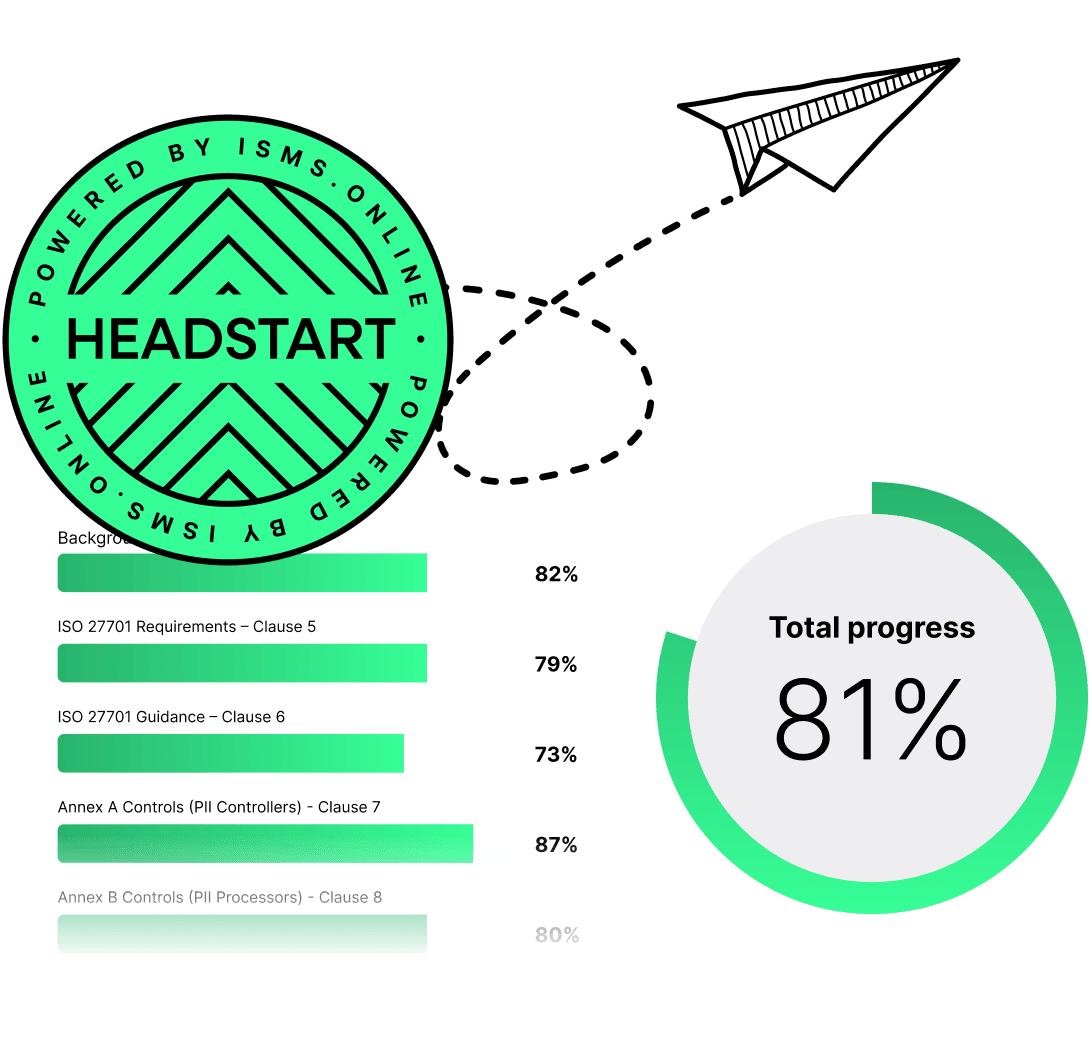
An 81% Headstart from day one
We’ve done the hard work for you, giving you an 81% Headstart from the moment you log on. All you have to do is fill in the blanks.
How to Effectively Measure Risk Treatment Success?
Methodologies for Assessing Success
Measuring the success of risk treatment involves a blend of qualitative and quantitative assessments. By utilising Key Performance Indicators (KPIs) and comprehensive data analysis, organisations can establish a structured framework to evaluate the effectiveness of risk controls. KPIs serve as measurable benchmarks, enabling your organisation to track progress and pinpoint areas for improvement. Additionally, qualitative assessments, such as stakeholder feedback, offer valuable insights into the practical application of risk treatments.
The Role of Metrics in Evaluation
Metrics are indispensable for assessing risk treatment success, providing a clear view of how well controls mitigate identified risks. By setting specific metrics, your organisation can monitor performance and make informed decisions. Continuous monitoring, a cornerstone of ISO 27001:2022 compliance (Clause 9.1), ensures that risk treatments remain effective over time, adapting to evolving threats and business needs.
Data Analysis: A Key Component
Data analysis is crucial in quantifying success, transforming raw data into actionable insights. By examining trends and patterns, your organisation can evaluate the impact of risk treatments and refine strategies accordingly. This data-driven approach supports informed decision-making, ensuring that risk management efforts align with your organisational objectives.
Continuous Monitoring for Sustained Improvement
Continuous monitoring is vital for maintaining the effectiveness of risk treatments. It provides real-time insights into your security posture, facilitating ongoing evaluation and adaptation. This proactive strategy not only strengthens compliance with the ISO 27001:2022 standard but also enhances your organisation’s resilience against emerging threats.
Understanding the methodologies and metrics for measuring risk treatment success lays the groundwork for continuous improvement. As we explore the benefits of continuous monitoring, we delve into how this process, integral to ISO 27001:2022 compliance, ensures that risk evaluation is not a one-off event but a sustained effort. It provides real-time insights, facilitates ongoing evaluation, and ultimately strengthens your security posture.
Why Continuous Monitoring is Essential for Risk Management
Real-Time Insights and Adaptive Strategies
Continuous monitoring is a cornerstone of effective risk management, providing the real-time insights necessary to swiftly identify and address vulnerabilities. This proactive approach aligns with ISO 27001:2022 requirements, ensuring compliance and enhancing your organisation’s security posture. By integrating continuous monitoring into your risk management strategy, you maintain agility in responding to emerging threats.
Benefits of Ongoing Evaluation
- Immediate Visibility: Gain instant access to potential risks, allowing for timely interventions.
- Strategic Adaptation: Regular evaluations enable your organisation to adjust strategies effectively, tackling new challenges head-on.
- Compliance Assurance: Continuous monitoring supports adherence to international standards, as outlined in ISO 27001:2022 Clause 9.1.
Technology’s Role in Continuous Monitoring
Our platform, ISMS.online, offers advanced tools that streamline ongoing evaluation, seamlessly integrating with existing systems to enhance compliance efforts. Leveraging AI and machine learning, these tools provide predictive risk analysis, enabling proactive threat management.
Embracing Technological Advancements
Technology plays a vital role in continuous monitoring, with AI and machine learning driving predictive analytics. These advancements allow organisations to anticipate risks before they materialise, ensuring a robust security framework.
Harness the power of continuous monitoring to safeguard your organisation’s future. Discover how ISMS.online can elevate your risk management strategy today.

Free yourself from a mountain of spreadsheets
Embed, expand and scale your compliance, without the mess. IO gives you the resilience and confidence to grow securely.
What Metrics Are Essential for Risk Evaluation?
Key Metrics for Effective Risk Evaluation
In the context of the ISO 27001:2022 standard, evaluating the effectiveness of risk treatment relies on specific metrics that guide strategic decisions. These metrics include:
- Incident Frequency: Tracks the number of security incidents, offering insights into areas needing immediate attention and potential vulnerabilities.
- Control Effectiveness: Assesses how well implemented controls mitigate identified risks, providing a measure of their robustness and efficiency.
- Compliance Rates: Reflects adherence to standards, reinforcing your organisation’s commitment to maintaining security excellence.
Tailoring Metrics to Specific Risks
Metrics should be customised to address specific risks, adapting to the unique challenges your organisation faces. For instance, tracking incident frequency can highlight areas requiring immediate attention, while evaluating control effectiveness offers insights into the robustness of implemented measures. Compliance rates, on the other hand, reflect adherence to standards like ISO 27001:2022, reinforcing your commitment to security excellence.
Importance of Tracking Metrics Over Time
The value of metrics lies in their ability to reveal trends and patterns over time. Continuous tracking allows organisations to anticipate potential risks and adapt strategies accordingly. This proactive approach not only enhances compliance but also strengthens your security posture, ensuring that risk management efforts align with evolving business needs.
Role of Metrics in Decision-Making
Metrics are not just numbers; they are powerful tools that inform strategic decisions. By providing a clear picture of risk treatment effectiveness, metrics enable organisations to allocate resources efficiently and prioritise initiatives that drive continuous improvement. This data-driven approach supports informed decision-making, fostering a culture of resilience and adaptability.
Incorporating these metrics into your risk management strategy is crucial for maintaining a strong security posture. Our platform, ISMS.online, offers the tools and resources needed to track these metrics effectively, empowering your organisation to navigate the complexities of ISO 27001:2022 compliance with confidence.
How to Ensure Alignment with ISO 27001:2022 Guidelines?
Aligning risk evaluation practices with ISO 27001:2022 fortifies your security framework. This alignment not only ensures compliance but also bolsters your organisation’s risk management strategy.
Key Guidelines for Risk Evaluation
-
Risk Assessment: Regularly identify and assess potential risks to ensure effective mitigation (ISO 27001:2022 Clause 6.1).
-
Control Implementation: Apply necessary controls from Annex A to address identified risks comprehensively.
-
Continuous Improvement: Regularly review and update risk management practices to adapt to evolving threats (ISO 27001:2022 Clause 10.2).
Importance of Compliance and Standardisation
Compliance with ISO 27001:2022 fosters trust with stakeholders and enhances your security posture. Standardisation streamlines processes, simplifying risk management and compliance maintenance.
Benefits of Aligning with ISO Standards
-
Enhanced Risk Management: A structured approach ensures comprehensive threat coverage.
-
Improved Decision-Making: Data-driven insights support strategic planning and resource allocation.
-
Increased Stakeholder Confidence: Demonstrating compliance builds trust and credibility.
Role of Guidelines in Risk Management
ISO 27001:2022 guidelines enhance risk management by providing a clear framework for evaluating and mitigating risks. This structured approach ensures resilience against evolving security challenges.
Understanding and implementing these guidelines is crucial for maintaining compliance and strengthening your organisation’s security posture. Aligning with ISO 27001:2022 ensures a comprehensive approach to information security, safeguarding your assets and reputation.

Manage all your compliance, all in one place
ISMS.online supports over 100 standards and regulations, giving you a single platform for all your compliance needs.
When Should Risk Assessments Be Conducted?
Optimal Timing for Risk Assessments
Regularly conducting risk assessments is essential for strengthening your organisation’s security posture. Ideally, these evaluations should occur at least annually or whenever significant changes arise in the risk environment. This proactive approach ensures your organisation remains vigilant and prepared to address emerging threats.
Identifying Reassessment Triggers
Several factors can necessitate a reassessment. Changes in technology, business processes, or regulatory requirements often require a fresh evaluation of risks. By staying attuned to these changes, organisations can adapt their strategies to mitigate potential vulnerabilities effectively.
Importance of Regular Evaluations
Regular evaluations are crucial for sustaining compliance with the ISO 27001:2022 standard. They provide a structured framework for identifying and addressing risks, ensuring your organisation remains aligned with international security standards. This continuous process not only enhances your security posture but also fosters trust with stakeholders.
Benefits of Proactive Scheduling
Proactive scheduling of risk assessments offers numerous advantages. It allows organisations to anticipate potential threats and allocate resources efficiently. By integrating assessments into your strategic planning, you can ensure that risk management efforts align with business objectives, ultimately supporting informed decision-making.
Effective Scheduling of Assessments
To schedule assessments effectively, consider the unique needs of your organisation. Align assessment timing with key business cycles or significant projects to maximise their impact. This strategic approach ensures that risk evaluations are not just routine tasks but integral components of your overall security strategy.
Understanding the optimal timing and triggers for risk assessments is crucial for maintaining compliance and enhancing your organisation’s security posture. By embracing a proactive approach, you can navigate the complexities of risk management with confidence and resilience.
Further Reading
How to Effectively Integrate Stakeholder Engagement?
The Significance of Stakeholder Engagement
Incorporating stakeholders into risk evaluation processes is vital for enriching decision-making with diverse perspectives. This involvement ensures that risk management strategies align with business objectives, fostering a culture of collaboration and trust. By engaging stakeholders, organisations can conduct comprehensive risk evaluations that are responsive to emerging threats.
Strategies for Effective Collaboration
To maximise stakeholder engagement, organisations should implement strategies that promote regular communication and feedback. This includes:
- Consistent Meetings: Schedule regular meetings to discuss risk management strategies and gather input from all relevant parties.
- Feedback Mechanisms: Establish continuous feedback loops to adapt strategies as needed, ensuring they remain relevant and effective.
- Digital Collaboration Tools: Utilise platforms that facilitate real-time collaboration and information sharing, enhancing stakeholder involvement.
Advantages of Diverse Perspectives
Incorporating diverse perspectives into risk evaluation enhances decision-making. Stakeholders bring unique insights that can identify blind spots and uncover opportunities for improvement. This collaborative approach not only strengthens the organisation’s security posture but also builds trust and credibility with stakeholders.
Stakeholders’ Role in Decision-Making
Stakeholders play a crucial role in shaping risk management strategies. Their input ensures that decisions are informed by a comprehensive understanding of potential risks and opportunities. By valuing stakeholder input, organisations can make informed decisions that align with their strategic objectives and enhance their overall security framework.
Enhancing Risk Management Through Engagement
Effective stakeholder engagement leads to more robust risk management outcomes. By fostering a collaborative environment, organisations can adapt to changing threats and maintain compliance with standards like ISO 27001:2022. This proactive approach not only mitigates risks but also positions the organisation for long-term success.
Building on these insights, the next section will delve into the practical applications of these principles, exploring how they can be integrated into existing frameworks to enhance overall effectiveness.
What Tools Enhance Risk Evaluation?
Available Tools for Risk Evaluation
Choosing the right tools is crucial for refining risk evaluation processes and ensuring compliance with the ISO 27001:2022 standard. Our platform, ISMS.online, offers a robust suite of tools designed to streamline these processes, providing real-time insights into potential risks and enabling swift interventions. These tools facilitate continuous monitoring, ensuring accuracy and efficiency in risk management.
Enhancing Accuracy and Efficiency with Tools
- Advanced Analytics: Employ machine learning algorithms to refine risk assessments, minimising the chance of oversight.
- Automation: Simplify routine tasks, allowing teams to concentrate on strategic decision-making and optimising resource allocation.
- Real-Time Monitoring: Achieve immediate visibility into potential risks, enabling timely interventions and proactive threat management.
Importance of Tool Selection for Compliance
Selecting appropriate tools is vital for maintaining compliance with ISO 27001:2022. Integrating these tools into existing systems ensures seamless operation and enhances the overall risk management framework. By choosing tools that align with your organisation’s needs, you can ensure a comprehensive approach to risk evaluation.
Integrating Tools into Existing Systems
Integrating risk evaluation tools into your existing systems can significantly enhance your organisation’s security posture. This process involves aligning tool functionalities with your current infrastructure, ensuring compatibility and maximising their impact. By doing so, you can streamline workflows, improve data accuracy, and facilitate continuous monitoring.
Embrace the power of technology to elevate your risk management strategy. Discover how ISMS.online can transform your approach to risk evaluation, ensuring compliance and enhancing your organisation’s security posture.
How to Overcome Common Challenges in Risk Evaluation?
Identifying Common Challenges
Risk evaluation often faces obstacles such as aligning management strategies with business objectives and navigating evolving compliance requirements. These challenges can hinder effective risk management, requiring strategic solutions to address them.
Strategic Solutions for Overcoming Challenges
Organisations can tackle these challenges through proactive planning and targeted training. By anticipating potential obstacles, businesses can develop robust strategies that address issues before they escalate. Utilising AI-driven analytics enhances the precision of risk assessments and streamlines compliance processes (ISO 27001:2022 Clause 9.1).
Importance of Preparation and Resilience
Preparation and resilience are crucial for maintaining a strong security posture. By building resilience against evaluation challenges, organisations can adapt to changing environments and ensure continuous compliance with standards like ISO 27001:2022. This proactive approach safeguards assets and fosters trust with stakeholders.
Proactive Planning in Risk Management
Proactive planning is essential for effective risk management. By anticipating potential challenges and developing strategies to address them, organisations can mitigate risks before they materialise. This forward-thinking approach ensures that risk management efforts align with business objectives and support informed decision-making.
Preparing for Challenges
Organisations can prepare for challenges by fostering a culture of continuous improvement and adaptability. Regular training sessions and workshops equip teams with the skills needed to navigate complex risk environments. Additionally, automating routine tasks allows teams to focus on strategic initiatives, enhancing overall resilience.
By integrating these strategies into existing frameworks, organisations can enhance risk management effectiveness. Embracing a proactive approach enables businesses to navigate the complexities of risk evaluation with confidence and resilience.
Why is ISMS.online the Preferred Choice for Compliance?
Streamlined Compliance Solutions
ISMS.online empowers your organisation with tools that simplify compliance with the ISO 27001:2022 standard. By integrating advanced analytics and automation, our platform enhances your security posture, ensuring alignment with international standards.
Proactive Risk Management
Our platform offers real-time insights and predictive analytics, enabling your organisation to swiftly identify and mitigate potential threats. With features like automated risk assessments and continuous monitoring, ISMS.online ensures your compliance efforts remain robust and adaptive.
Trusted by Organisations Worldwide
Organisations trust ISMS.online for its proven track record in supporting continuous improvement. Our user-friendly interface and customizable dashboards facilitate efficient compliance management, fostering a culture of collaboration and transparency.
Distinctive Features of ISMS.online
- Automated Risk Assessments: Utilise AI-driven analytics to streamline evaluations.
- Continuous Monitoring: Achieve real-time visibility into your security posture.
- Customizable Dashboards: Tailor insights to meet your organisation’s specific needs.
- User-Friendly Interface: Simplify compliance management with intuitive tools.
Commitment to Continuous Improvement
ISMS.online supports your organisation’s continuous improvement by providing the flexibility to adapt to evolving security challenges. Our platform ensures seamless integration of new strategies, maintaining compliance with ISO 27001:2022.
Explore how ISMS.online can transform your compliance strategy and enhance your organisation’s security posture. Embrace the future of risk management with confidence.
Book a Demo with ISMS.online
Elevate Your Compliance Strategy with a Demo
Engaging with our platform through a demo offers a transformative opportunity to refine your compliance strategy. By experiencing ISMS.online firsthand, you gain a comprehensive understanding of how to streamline risk management and bolster your organisation’s security posture. This demo is tailored to showcase our platform’s capabilities, aligning with your specific needs.
Discover Key Features
During the demo, explore features designed to simplify compliance with the ISO 27001:2022 standard:
- Automated Risk Assessments: Witness how our platform automates evaluations, delivering real-time insights into potential risks.
- Continuous Monitoring Tools: Learn about our advanced monitoring capabilities that ensure ongoing compliance and proactive threat management.
- Customizable Dashboards: See how tailored insights align with your organisation’s objectives, enhancing decision-making and resource allocation.
Strategic Benefits for Your Organisation
A demo with ISMS.online is more than a walkthrough—it’s a strategic step towards achieving compliance excellence. Understanding our platform’s full potential empowers you to make informed decisions that drive continuous improvement and resilience. Our solutions enable you to navigate compliance complexities with confidence, keeping your organisation ahead of emerging threats.
Schedule Your Demo Today
Ready to elevate your compliance strategy? Scheduling a demo is simple. Visit our website, select a convenient time, and let our experts guide you through the features that matter most to your organisation. Embrace the future of risk management and discover the transformative power of ISMS.online.
Book a demoFrequently Asked Questions
Understanding Risk Treatment in ISO 27001:2022
Key Elements of Risk Treatment
Risk treatment under ISO 27001:2022 involves a methodical approach to managing identified risks through the implementation of appropriate controls. This process is vital for maintaining a robust security posture and ensuring compliance with international standards. Key elements include:
-
Risk Assessment: Identify and evaluate potential risks to determine their impact and likelihood, forming the basis for effective risk treatment (ISO 27001:2022 Clause 6.1).
-
Control Implementation: Apply necessary controls from Annex A to address identified risks comprehensively, ensuring that all potential threats are mitigated effectively.
-
Continuous Improvement: Regularly review and update risk treatments to adapt to evolving threats and business needs, ensuring ongoing compliance and resilience (ISO 27001:2022 Clause 10.2).
Importance of ISO 27001:2022 Definitions
Understanding the definitions provided by ISO 27001:2022 is crucial for aligning risk management strategies with international standards. This alignment not only enhances compliance but also strengthens your organisation’s overall security framework. By adhering to these definitions, you ensure that risk treatments are comprehensive and effective, ultimately safeguarding your assets and reputation.
Guidance on Risk Treatment Implementation
ISO 27001:2022 offers a structured framework for implementing risk treatments, emphasising the importance of aligning security objectives with business goals. This guidance ensures that risk management efforts are strategic and data-driven, supporting informed decision-making and resource allocation. Following the standard’s guidelines enables you to maintain a proactive approach to risk management, ensuring resilience against potential threats.
Importance of Aligning with ISO Standards
Aligning risk treatment with ISO standards offers numerous benefits, including enhanced risk management and improved stakeholder confidence. Compliance with ISO 27001:2022 demonstrates a commitment to protecting sensitive information and maintaining a robust security posture. This not only builds trust with stakeholders but also supports strategic planning and decision-making, ensuring that risk management efforts align with organisational objectives.
By understanding and implementing these key elements of risk treatment, you maintain compliance and strengthen your organisation’s security posture. Aligning with ISO 27001:2022 ensures a comprehensive approach to information security, safeguarding your assets and reputation.
The Benefits of Continuous Risk Monitoring
How Continuous Monitoring Enhances Risk Management
Continuous monitoring is integral to effective risk management, offering real-time insights that empower organisations to swiftly identify and address vulnerabilities. This proactive approach ensures that risk management strategies remain agile and responsive to emerging threats. By integrating continuous monitoring, your organisation can maintain compliance with the ISO 27001:2022 standard, adapting strategies to meet evolving challenges.
Advantages for ISO 27001 Compliance
Continuous monitoring provides several key benefits for ISO 27001 compliance:
- Enhanced Visibility: Immediate awareness of potential risks facilitates timely interventions.
- Strategic Adaptation: Regular evaluations allow for effective strategy adjustments, addressing new challenges as they arise.
- Compliance Assurance: Supports adherence to international standards, reinforcing your organisation’s commitment to security excellence.
Importance for Security Posture
Maintaining a robust security posture is essential, and continuous monitoring plays a critical role:
- Proactive Threat Detection: Anticipate risks before they materialise, ensuring a strong security framework.
- Informed Decision-Making: Data-driven insights support strategic planning and resource allocation, fostering resilience against evolving threats.
Implementing Effective Monitoring Strategies
To implement effective monitoring strategies, consider:
- Advanced Analytics: Utilise machine learning algorithms to enhance risk assessment precision, reducing oversight.
- Automation: Streamline routine tasks, allowing teams to focus on strategic decision-making and optimising resource allocation.
- Real-Time Monitoring: Gain immediate visibility into potential risks, enabling timely interventions and proactive threat management.
By integrating these strategies, your organisation can ensure compliance with ISO 27001:2022 and enhance its security posture, positioning itself for long-term success.
How Can Metrics Enhance Risk Evaluation?
The Strategic Role of Metrics in Risk Evaluation
Metrics transform abstract risk concepts into actionable insights, enabling organisations to assess control effectiveness and ensure alignment with ISO 27001:2022. By quantifying risk treatment outcomes, metrics highlight areas for improvement and potential vulnerabilities, reinforcing your security framework.
Customising Metrics for Organisational Impact
Tailoring metrics to your organisation’s unique challenges maximises their relevance and impact. Selecting indicators that resonate with your specific risk environment ensures evaluations are precise and actionable, facilitating strategic decision-making.
Tracking Progress for Sustained Security
Continuous tracking of metrics is essential for maintaining a robust security posture. By offering a clear view of risk treatment evolution, metrics reveal improvement areas and vulnerabilities. This ongoing assessment supports informed decision-making and strategic planning, ensuring alignment with organisational goals.
Metrics as Catalysts for Strategic Decisions
Metrics are powerful tools that inform strategic decisions. By providing a comprehensive view of risk treatment effectiveness, they enable efficient resource allocation and prioritise initiatives that drive continuous improvement. This data-driven approach enhances resilience and adaptability, positioning your organisation for long-term success.
Incorporating these metrics into your risk management strategy is crucial for ISO 27001:2022 compliance. By utilising data-driven insights, your organisation can confidently navigate the complexities of risk evaluation, ensuring a secure and resilient future.
Overcoming Challenges in Risk Evaluation
Navigating Organisational Hurdles
Organisations often grapple with aligning risk management strategies with business objectives while adapting to shifting compliance landscapes. These challenges can impede effective risk evaluation, necessitating strategic solutions.
Proactive Strategies for Success
To address these challenges, proactive planning and targeted training are essential. By anticipating potential obstacles, businesses can develop robust strategies that preemptively tackle issues. Incorporating AI-driven analytics enhances risk assessment precision and streamlines compliance processes, aligning with ISO 27001:2022 Clause 9.1.
Building Resilience Through Preparation
Preparation and resilience are critical for maintaining a strong security posture. By fostering resilience against evaluation challenges, organisations can adapt to changing environments and ensure continuous compliance with standards like ISO 27001:2022. This proactive approach not only safeguards assets but also builds trust with stakeholders.
Cultivating a Resilient Organisation
Organisations can cultivate resilience by embracing a culture of continuous improvement and adaptability. Regular training sessions equip teams with the skills needed to navigate complex risk environments. Additionally, automating routine tasks allows teams to focus on strategic initiatives, enhancing overall resilience.
By adopting these strategies, organisations can confidently navigate the complexities of risk evaluation, ensuring a secure and compliant future.
How Does Stakeholder Engagement Improve Risk Management?
Stakeholders’ Role in Risk Management
Stakeholders play a crucial role in shaping risk management strategies. Their diverse perspectives enrich decision-making, ensuring risk evaluations are comprehensive and responsive to emerging threats. By aligning security objectives with business goals, stakeholders foster a culture of collaboration and trust, essential for effective risk management.
Strategies for Effective Engagement
To maximise stakeholder engagement, organisations should implement strategies that promote regular communication and feedback. This includes:
- Scheduled Discussions: Host regular sessions to align on risk management strategies and gather insights.
- Feedback Mechanisms: Develop channels for continuous feedback to refine strategies as needed.
- Digital Collaboration Tools: Use technology to facilitate real-time collaboration and information sharing.
Value of Stakeholder Input in Risk Evaluation
Incorporating stakeholder input into risk evaluation enhances the decision-making process. Stakeholders bring unique insights that can identify blind spots and uncover opportunities for improvement. This collaborative approach not only strengthens the organisation’s security posture but also builds trust and credibility with stakeholders.
Impact of Engagement on Risk Management Outcomes
Effective stakeholder engagement leads to more robust risk management outcomes. By fostering a collaborative environment, organisations can adapt to changing threats and maintain compliance with standards like ISO 27001:2022. This proactive approach not only mitigates risks but also positions the organisation for long-term success.
By embracing these strategies, organisations can navigate the complexities of risk evaluation with confidence and resilience, ensuring a secure and compliant future.
Why Choose ISMS.online for ISO 27001 Compliance?
Unmatched Support for Risk Management
ISMS.online emerges as a leading choice for ISO 27001 compliance, offering a robust suite of tools tailored to the needs of compliance officers, CISOs, and CEOs. Our platform ensures your organisation aligns seamlessly with international security standards.
Proactive Risk Management and Evaluation
Our platform revolutionises risk management by delivering real-time insights and predictive analytics. This proactive stance enables your organisation to swiftly identify and address potential threats, ensuring continuous compliance.
- Automated Risk Assessments: Streamline evaluations with AI-driven analytics, enhancing precision and efficiency.
- Continuous Monitoring: Achieve real-time visibility into your security posture, allowing for timely interventions.
- Customizable Dashboards: Tailor insights to meet your organisation’s specific needs, facilitating strategic decision-making.
Global Trust in ISMS.online
Organisations worldwide rely on ISMS.online for its innovative features and proven track record in fostering continuous improvement. Our user-friendly interface and customizable dashboards simplify compliance management, building trust and enhancing your security framework.
Elevate Your Compliance Strategy
ISMS.online empowers continuous improvement by providing the tools and resources necessary to adapt to evolving security challenges. Our platform’s flexibility ensures seamless integration of new strategies, maintaining compliance with ISO 27001:2022. Discover how ISMS.online can transform your compliance strategy and fortify your organisation’s security posture.







