





































Understanding the Statement of Applicability in ISO 27001
What is the Statement of Applicability?
The Statement of Applicability (SoA) is a critical document within the ISO 27001 standard. It details the security controls selected for your organisation’s Information Security Management System (ISMS), providing clear justification for their inclusion or exclusion. This document is essential for aligning security measures with business risks, ensuring a robust and compliant ISMS (ISO 27001:2022 Clause 6.1).
How Does the SoA Function Within an ISMS?
Within an ISMS, the SoA serves as a blueprint for addressing identified risks, thereby enhancing your organisation’s security posture. It offers a comprehensive overview of the security framework, facilitating effective risk management and compliance with ISO 27001 standards. By documenting the rationale behind control selection, the SoA supports audit preparation and demonstrates a commitment to continuous improvement.
Why is the SoA Considered a Cornerstone Document?
As a cornerstone of ISO 27001 compliance, the SoA is vital for showcasing your organisation’s dedication to information security. It not only supports regulatory compliance but also builds stakeholder confidence by demonstrating a proactive approach to risk management. With over 40,000 organisations worldwide certified under ISO 27001, the global significance of the SoA is clear.
How Can ISMS.online Help?
Our platform simplifies the management of the SoA, offering tools to streamline control selection and documentation. By using ISMS.online, you can efficiently align your security controls with business objectives, ensuring ongoing compliance and risk mitigation. Discover how our solutions can enhance your organisation's security posture and book a demo today.
Book a demoWhy the Statement of Applicability is Crucial for ISO 27001 Compliance
Compliance Requirements and Standards
The Statement of Applicability (SoA) is a linchpin in ISO 27001 compliance, seamlessly connecting risk assessment with control implementation. It provides a detailed account of the security controls selected for your organisation’s Information Security Management System (ISMS), justifying their inclusion or exclusion. This document is indispensable for aligning security measures with business risks, ensuring a robust and compliant ISMS (ISO 27001:2022 Clause 6.1).
Audit Readiness and Preparation
The SoA is among the first documents scrutinised during audits, making it essential for demonstrating adherence to ISO 27001 standards. It offers a clear snapshot of your organisation’s security posture, justifying control selection and demonstrating compliance to auditors. An incomplete SoA can lead to audit complications and non-compliance penalties, underscoring the importance of maintaining a comprehensive and up-to-date document (ISO 27001:2022 Clause 9.2).
Impact on Security Posture and Risk Management
A well-structured SoA enhances your organisation’s security posture by aligning security measures with identified risks. Organisations with ISO 27001 certification report a 30% reduction in security incidents, highlighting the SoA’s impact on effective risk management. By documenting the rationale behind control selection, the SoA supports audit preparation and showcases a commitment to continuous improvement (ISO 27001:2022 Clause 10.2).
Organisational Benefits and Stakeholder Confidence
The SoA not only supports regulatory compliance but also builds stakeholder confidence by demonstrating a proactive approach to risk management. By ensuring that security controls are aligned with business objectives, the SoA enhances organisational resilience and fosters trust among clients, regulators, and auditors.
Practical Applications and Continuous Improvement
Building on the foundational role of the SoA, the subsequent discussion will delve into the practical applications of maintaining an updated SoA, exploring how it adapts to evolving threats and supports continuous improvement.
ISO 27001 made easy
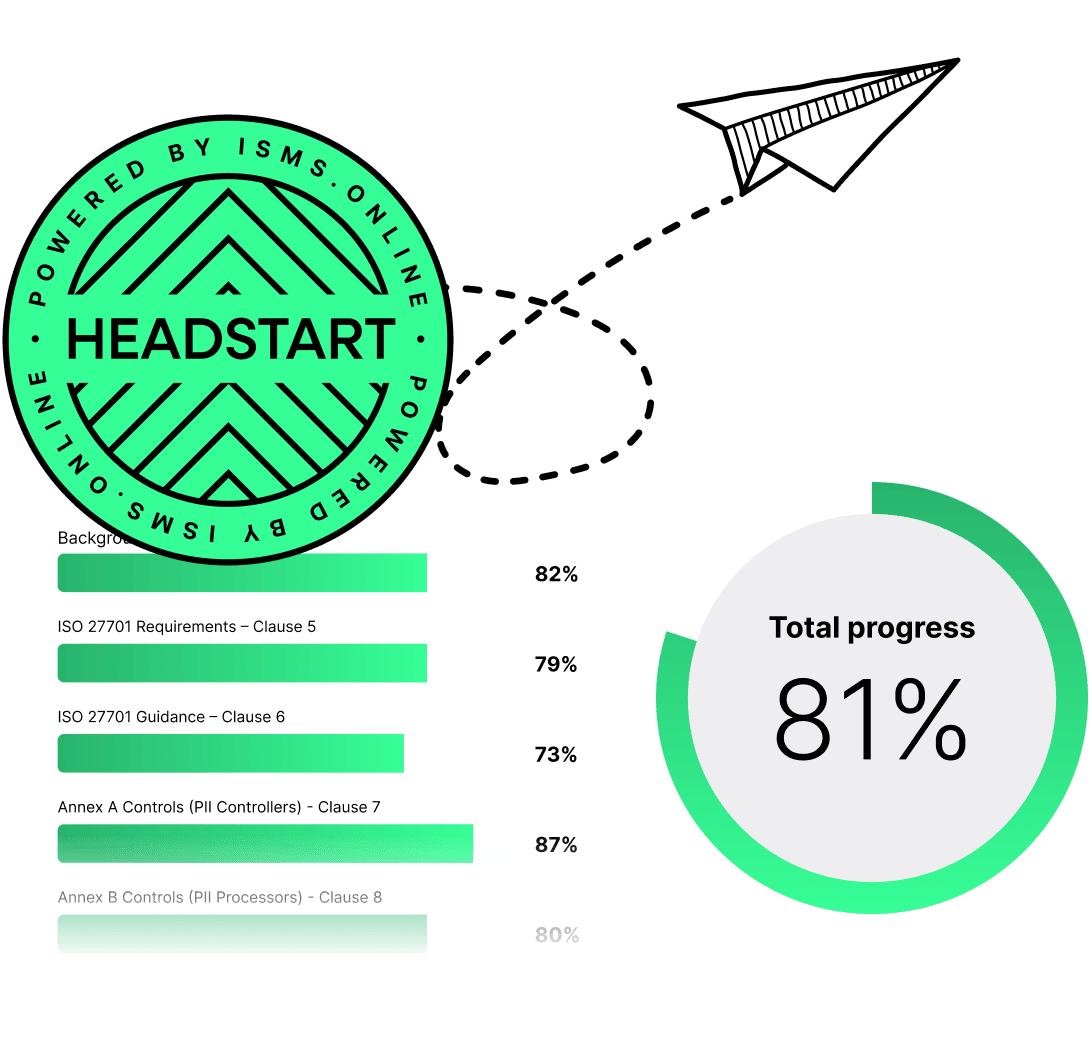
An 81% Headstart from day one
We’ve done the hard work for you, giving you an 81% Headstart from the moment you log on. All you have to do is fill in the blanks.
Key Components of the Statement of Applicability
What are the Key Components of the SoA?
The Statement of Applicability (SoA) is a cornerstone document within the ISO 27001 standard, bridging risk assessment and control implementation. It comprises several essential components that collectively fortify your Information Security Management System (ISMS).
Control Selection and Justification
Control selection forms the backbone of the SoA, involving the identification and implementation of suitable security measures. Justifications for these controls stem from thorough risk assessments, enhancing transparency and ensuring alignment with identified risks. This process is crucial for demonstrating compliance with ISO 27001 standards and bolstering stakeholder confidence.
Exclusions and Their Rationale
Exclusions in the SoA pertain to controls that are not implemented, along with the rationale for their exclusion. This component is vital for providing a clear understanding of your organisation’s security posture and ensuring that all decisions are well-documented and justified. By clearly outlining exclusions, organisations can demonstrate their commitment to effective risk management and compliance.
Implementation Status and Documentation
The implementation status of controls is another key component of the SoA, offering a snapshot of your organisation’s current security measures. This status is documented in detail, allowing for easy tracking of progress and ensuring that all controls are effectively implemented and maintained. Version history in the SoA tracks changes over time, reflecting evolving risks and controls.
Integration with Risk Assessment and Treatment
The SoA is closely integrated with risk assessment and treatment processes, ensuring that all controls align with your organisation’s risk management strategy. This integration is crucial for maintaining a robust and compliant ISMS, as it allows organisations to adapt to changing threats and continuously improve their security posture.
Incorporating these components into the SoA ensures that it is comprehensive and accurately reflects your organisation’s security posture. By maintaining an updated SoA, organisations can effectively manage risks and demonstrate their commitment to information security.
How Does the SoA Link Risk Assessment to Control Implementation?
The Statement of Applicability (SoA) is a crucial connector between risk assessment and control implementation within the ISO 27001 framework. By aligning selected controls with identified risks, the SoA ensures your ISMS remains robust against emerging threats.
Risk Assessment and Treatment Processes
Effective information security management begins with a thorough risk assessment, identifying potential threats and vulnerabilities impacting your organisation’s assets. The SoA documents controls chosen to mitigate these risks, aligning them with your risk treatment plans. This alignment strengthens risk management strategies and supports compliance with ISO 27001 standards (Clause 6.1).
Control Implementation and Effectiveness
The SoA specifies controls and provides a rationale for their selection, essential for demonstrating compliance during audits and building stakeholder confidence. Regular updates ensure your controls remain effective and responsive to new risks, as emphasised by compliance officer Jane Smith.
Alignment with Risk Management Frameworks
Integrating the SoA with broader risk management frameworks allows your organisation to adopt a holistic approach to information security. This integration ensures all controls align with your strategic objectives, enhancing overall security posture and resilience against potential threats.
Benefits of Integrated Risk Management
By linking risk assessment to control implementation, the SoA supports a comprehensive risk management strategy. This approach not only mitigates information security risks but also fosters a culture of continuous improvement. Regular updates ensure it remains a dynamic tool for managing evolving threats and maintaining compliance with ISO 27001 standards (Clause 10.2).
Building on this foundation, the subsequent discussion will delve into the practical applications of maintaining an updated SoA, exploring how it adapts to evolving threats and supports continuous improvement.

Free yourself from a mountain of spreadsheets
Embed, expand and scale your compliance, without the mess. IO gives you the resilience and confidence to grow securely.
How the SoA Supports Audit Preparation and Execution
Enhancing Audit Readiness with the SoA
The Statement of Applicability (SoA) is crucial for audit preparation, offering a detailed overview of your organisation’s security measures. By specifying control implementation, the SoA provides auditors with a transparent, auditable trail that simplifies the audit process and demonstrates adherence to ISO 27001 standards (ISO 27001:2022 Clause 9.2).
Key Audit Requirements and the SoA
Auditors depend on the SoA to verify that selected controls align with identified risks, ensuring that your Information Security Management System (ISMS) is robust and compliant. This document serves as evidence of your organisation’s commitment to information security, supporting audit readiness and preparation.
Benefits of a Comprehensive SoA in Audits
A well-documented SoA enhances audit success by offering clear evidence of risk management and control effectiveness. It simplifies the audit process and builds stakeholder confidence by demonstrating a proactive approach to security. Organisations with a comprehensive SoA are better positioned to demonstrate compliance and avoid audit complications.
Role of the SoA in Audit Success
The SoA plays a vital role in audit success by aligning security controls with business objectives. This alignment ensures that your organisation is prepared to address auditor inquiries and demonstrate its commitment to continuous improvement. By maintaining an updated SoA, organisations can adapt to evolving threats and maintain compliance with ISO 27001 standards.
Our platform at ISMS.online simplifies the management of the SoA, providing tools to document control selection and implementation effectively. By using our solutions, you can enhance your audit readiness and ensure ongoing compliance with industry standards. Discover how our platform can support your organisation’s security goals today.
Why is it Important to Regularly Update the SoA?
Enhancing Compliance and Security
Regularly updating the Statement of Applicability (SoA) is crucial for maintaining compliance with the ISO 27001 standard. An updated SoA reflects the latest changes in risks and controls, ensuring your organisation’s Information Security Management System (ISMS) remains robust and effective. By aligning security measures with evolving threats, the SoA plays a vital role in safeguarding your organisation’s assets and maintaining a strong security posture (ISO 27001:2022 Clause 6.1).
Risks of Outdated Information
An outdated SoA poses significant risks, including potential non-compliance and increased vulnerability to security threats. Without regular updates, your organisation may fail to address new risks or implement necessary controls, leading to gaps in your security framework. This can result in audit complications and undermine stakeholder confidence in your organisation’s commitment to information security.
Supporting Continuous Improvement
The SoA is not just a static document; it is a dynamic tool that supports continuous improvement within your ISMS. By regularly reviewing and updating the SoA, your organisation can adapt to changing security threats and enhance its risk management strategies. This proactive approach ensures that your security controls remain effective and aligned with your business objectives, fostering a culture of continuous improvement and resilience.
Impact on Compliance and Security Effectiveness
Maintaining an updated SoA enhances both compliance and security effectiveness by ensuring that all controls are relevant and up-to-date. This alignment with current risks and threats not only supports audit readiness but also demonstrates your organisation’s dedication to protecting its information assets. By prioritising regular updates to the SoA, you can mitigate risks and strengthen your overall security framework.
Addressing these challenges provides the catalyst for meaningful progress in risk management and compliance, setting the stage for an in-depth exploration of their practical applications.

Manage all your compliance, all in one place
ISMS.online supports over 100 standards and regulations, giving you a single platform for all your compliance needs.
Navigating Challenges in Creating an Effective SoA
Overcoming Common Challenges
Creating a robust Statement of Applicability (SoA) within the ISO 27001 framework involves navigating several challenges that can impact its effectiveness. Key obstacles include:
-
Inadequate Risk Assessments: Without comprehensive evaluations, security controls may not align with actual risks, potentially compromising your organisation’s security posture.
-
Failure to Update Regularly: An outdated SoA can lead to obsolete security measures, leaving your organisation vulnerable to emerging threats.
-
Lack of Clarity in Control Selection: Ambiguity in selecting and justifying controls can hinder the document’s comprehensiveness and affect compliance with ISO 27001 standards.
Strategies for Success
To address these challenges, organisations should:
-
Conduct Thorough Risk Assessments: Ensure all potential threats are evaluated, and controls are aligned with identified risks (ISO 27001:2022 Clause 6.1).
-
Regularly Update the SoA: Reflect changes in the risk environment and maintain alignment with business objectives, ensuring ongoing compliance and security effectiveness.
-
Clearly Document Control Selection: Enhance transparency and support audit readiness by providing clear justifications for each control (ISO 27001:2022 Clause 9.2).
Implications of an Ineffective SoA
An ineffective SoA can lead to increased vulnerability to security threats and potential non-compliance with ISO 27001 standards. This may result in audit complications and undermine stakeholder confidence in your organisation’s commitment to information security.
Solutions Offered by ISMS.online
Our platform, ISMS.online, provides comprehensive solutions to streamline the creation and management of the SoA. By offering tools for efficient risk assessment and control documentation, we help your organisation overcome common challenges and ensure your SoA accurately reflects your security posture. Discover how our solutions can enhance your compliance and risk management strategies today.
Further Reading
Best Practices for Documenting Control Selection in the SoA
Aligning Controls with Risks
Documenting control selection in the Statement of Applicability (SoA) is crucial for aligning security measures with identified risks and organisational needs. This alignment ensures your Information Security Management System (ISMS) remains robust and compliant with the ISO 27001 standard.
- Conduct Comprehensive Risk Assessments: Evaluate all potential threats to identify necessary controls.
- Provide Clear Justifications: Detail the reasons for including or excluding specific controls.
- Regularly Update the SoA: Reflect changes in the risk environment and organisational objectives.
Ensuring Accuracy and Comprehensiveness
Accuracy and comprehensiveness are vital for effective SoA management. To achieve this:
- Document Thoroughly: Clearly document all controls with supporting evidence.
- Review Consistently: Regularly update the SoA to maintain alignment with evolving threats and business needs.
- Engage Stakeholders: Involve relevant stakeholders in the control selection process to ensure comprehensive coverage.
Benefits of Following Best Practices
Adhering to best practices in control selection offers several benefits:
- Enhanced Compliance: Aligns with ISO 27001 standards, reducing the risk of non-compliance.
- Improved Security Posture: Ensures controls are relevant and effective against current threats.
- Increased Stakeholder Confidence: Demonstrates a proactive approach to risk management and information security.
How Our Platform Supports Best Practices
Our platform, ISMS.online, supports best practices in control selection by providing tools to streamline documentation and enhance accuracy. By using our solutions, your organisation can efficiently manage its SoA, ensuring it remains comprehensive and aligned with ISO 27001 standards. Discover how our platform can enhance your organisation’s security posture and compliance efforts.
How Does the SoA Support Continuous Improvement in Information Security?
Continuous Improvement Processes and Strategies
The Statement of Applicability (SoA) is instrumental in driving continuous improvement within an organisation’s Information Security Management System (ISMS). By establishing a structured framework for regular updates and reviews, the SoA ensures that security controls remain aligned with evolving risks and organisational needs. This proactive approach not only enhances compliance but also fortifies the organisation’s overall security posture.
Key Elements of Continuous Improvement in the SoA
Continuous improvement in the SoA involves several key elements:
- Regular Updates: Reflect changes in risks and controls to maintain relevance and effectiveness.
- Comprehensive Reviews: Ensure that all security measures are thoroughly evaluated and adjusted as necessary.
- Stakeholder Engagement: Involve relevant parties in the review process to ensure comprehensive coverage and alignment with business objectives.
Enhancing Ongoing Improvement with the SoA
Organisations can utilise the SoA to drive ongoing improvement by:
- Integrating Risk Management: Aligning control implementation with risk assessments to enhance security measures.
- Adapting to Evolving Threats: Regularly updating the SoA to reflect new threats and vulnerabilities, ensuring a proactive approach to information security.
- Utilising Technology: Employing platforms like ISMS.online to streamline SoA management and enhance compliance efforts.
Role of ISMS.online in Continuous Improvement
Our platform, ISMS.online, plays a vital role in supporting continuous improvement by providing tools for efficient SoA management. By automating updates and facilitating stakeholder collaboration, we help organisations maintain compliance and adapt to changing security requirements. Discover how our solutions can enhance your organisation’s information security strategy today.
Adapting the Statement of Applicability to Evolving Threats
How Can the SoA Be Adapted to Address Evolving Threats?
Adapting the Statement of Applicability (SoA) is crucial for maintaining both compliance and security effectiveness. An adaptive SoA reflects changes in risks, controls, and organisational needs, enhancing your organisation’s ability to mitigate emerging threats and maintain compliance.
Key Considerations for Adaptation
Adapting the SoA requires careful consideration of several factors:
- Regular Risk Assessments: Continuously evaluate potential threats and vulnerabilities to ensure controls are aligned with current risks (ISO 27001:2022 Clause 6.1).
- Control Updates: Keep security measures up-to-date, reflecting changes in the risk environment and organisational objectives.
- Stakeholder Engagement: Engage relevant parties in the adaptation process to ensure comprehensive coverage and alignment with business goals.
Benefits of an Adaptive SoA
An adaptive SoA offers numerous benefits:
- Enhanced Security: By aligning controls with evolving threats, organisations can better protect their assets and maintain a strong security posture.
- Improved Compliance: Regular updates ensure ongoing adherence to the ISO 27001 standard, reducing the risk of non-compliance.
- Increased Stakeholder Confidence: Demonstrating a proactive approach to risk management fosters trust among clients, regulators, and auditors.
Support Provided by ISMS.online
Our platform, ISMS.online, plays a vital role in supporting SoA adaptation. We provide tools for efficient risk assessment and control documentation, ensuring your SoA remains responsive to evolving threats. By utilising our solutions, you can enhance your organisation’s security posture and compliance efforts, maintaining a dynamic and effective ISMS.
Tools and Platforms for Managing the SoA
Streamlining SoA Management with Advanced Platforms
Effectively managing the Statement of Applicability (SoA) is crucial for ISO 27001 compliance. Our platform, ISMS.online, offers sophisticated tools that simplify this process, providing a comprehensive overview of your organisation’s security posture. By integrating risk assessments and control selection, ISMS.online ensures your SoA remains current and aligned with evolving security needs.
Unique Features of ISMS.online
ISMS.online distinguishes itself with an intuitive interface and automated features designed to streamline documentation and updates. Our platform reduces the administrative burden on your team by offering automated reminders and version control. This ensures your SoA reflects the latest security measures and risk assessments, enhancing your organisation’s resilience against threats.
Supporting Compliance and Security Objectives
Effective SoA management tools are essential for supporting compliance and security objectives. By providing a clear, auditable trail of control implementation, ISMS.online facilitates audit preparation and demonstrates adherence to ISO 27001 standards (ISO 27001:2022 Clause 9.2). Our platform also fosters stakeholder confidence by showcasing a commitment to robust information security practices.
Incorporating ISMS.online into your security strategy not only strengthens your compliance efforts but also enhances your organisation’s overall security posture. Discover how our platform can support your SoA management and drive your compliance objectives forward.
Discover the Benefits of Booking a Demo with ISMS.online
How Can ISMS.online Support Your Compliance Efforts?
ISMS.online provides a robust suite of tools designed to streamline your Statement of Applicability (SoA) and ISO 27001 compliance efforts. Our platform simplifies the management of information security controls, ensuring they align seamlessly with your organisation’s risk management strategy. By utilising our solutions, you can enhance your compliance posture and demonstrate a steadfast commitment to robust information security practices.
What Are the Benefits of Booking a Demo?
Booking a demo with ISMS.online offers an invaluable opportunity to experience firsthand how our platform can revolutionise your compliance processes. Witness the intuitive interface and automated features that simplify documentation and updates, ensuring your SoA remains current and aligned with evolving security needs. Our demo highlights the platform’s capabilities, showcasing how it supports a proactive approach to information security management.
Enhancing Information Security Management with ISMS.online
Our platform is meticulously designed to elevate your information security management by integrating risk assessments and control selection. This integration supports a comprehensive risk management strategy, fostering a culture of continuous improvement. With ISMS.online, you can ensure that your security controls are effective and responsive to emerging threats, enhancing your organisation’s resilience against potential risks.
What Are the Next Steps to Get Started?
To explore how ISMS.online can support your compliance objectives, book a demo today. Our team will guide you through the platform's features, demonstrating how it can enhance your information security management and streamline your compliance efforts. Take the next step towards achieving ISO 27001 compliance and strengthening your organisation's security posture.
Book a demoFrequently Asked Questions
Understanding the Statement of Applicability in ISO 27001
What is the Statement of Applicability?
The Statement of Applicability (SoA) is a foundational document within the ISO 27001 standard, serving as a bridge between risk assessment and control implementation. It ensures that security measures align with business risks and compliance requirements, providing a comprehensive overview of your organisation’s Information Security Management System (ISMS).
Key Components and Structure
The SoA comprises several essential components:
- Control Selection: Identifies and justifies the security measures implemented, ensuring they address identified risks effectively.
- Exclusions: Details any controls not applied, with clear reasons for their exclusion, maintaining transparency and accountability.
- Implementation Status: Offers a snapshot of the current security posture, reflecting the organisation’s commitment to maintaining robust security measures.
This structure ensures that the SoA is comprehensive and reflective of the organisation’s security framework.
Relationship with Other ISO 27001 Documents
The SoA is intricately linked with other ISO 27001 documents, such as risk assessments and treatment plans. It acts as a central reference point, documenting the rationale behind control selection and supporting audit preparation (ISO 27001:2022 Clause 6.1).
Importance in Compliance and Security Management
As a cornerstone of ISO 27001 compliance, the SoA is vital for demonstrating an organisation’s commitment to information security. It not only supports regulatory compliance but also builds stakeholder confidence by showcasing a proactive approach to risk management. This document is essential for audits, providing a clear overview of the security controls in place and their alignment with identified risks.
How Does the SoA Align with ISO 27001 Standards?
The SoA aligns with ISO 27001 standards by ensuring that all security measures are relevant and effective against current threats. It facilitates continuous improvement by regularly updating controls to reflect evolving risks, thereby maintaining a robust and compliant ISMS.
By understanding the SoA’s role within ISO 27001, organisations can enhance their security posture and ensure ongoing compliance with industry standards.
Why is the Statement of Applicability Crucial for ISO 27001 Compliance?
Ensuring Compliance and Meeting Standards
The Statement of Applicability (SoA) is a cornerstone in ISO 27001 compliance, bridging the gap between risk assessment and control implementation. It provides a comprehensive overview of the security controls selected for your organisation’s Information Security Management System (ISMS), justifying their inclusion or exclusion. This document is vital for aligning security measures with business risks, ensuring a robust and compliant ISMS (ISO 27001:2022 Clause 6.1).
Demonstrating Compliance During Audits
During audits, the SoA is indispensable for demonstrating adherence to ISO 27001 standards. It offers a clear snapshot of your organisation’s security posture, justifying control selection and demonstrating compliance to auditors. An incomplete SoA can lead to audit complications and non-compliance penalties, underscoring the importance of maintaining a comprehensive and up-to-date document (ISO 27001:2022 Clause 9.2).
Enhancing Security Posture and Risk Management
A well-structured SoA enhances your organisation’s security posture by aligning security measures with identified risks. Organisations with ISO 27001 certification report a significant reduction in security incidents, highlighting the SoA’s impact on effective risk management. By documenting the rationale behind control selection, the SoA supports audit preparation and showcases a commitment to continuous improvement (ISO 27001:2022 Clause 10.2).
Organisational Benefits and Stakeholder Confidence
The SoA not only supports regulatory compliance but also builds stakeholder confidence by demonstrating a proactive approach to risk management. By ensuring that security controls are aligned with business objectives, the SoA enhances organisational resilience and fosters trust among clients, regulators, and auditors.
The SoA is a cornerstone of ISO 27001 compliance, providing a clear overview of the organisation’s security posture and demonstrating a commitment to effective risk management and information security practices.
Key Components of the Statement of Applicability
What Are the Key Components of the SoA?
The Statement of Applicability (SoA) is integral to the ISO 27001 standard, serving as a bridge between risk assessment and control implementation. It encompasses several essential components that collectively ensure a robust Information Security Management System (ISMS).
How Are Controls Selected and Justified in the SoA?
Control selection is a cornerstone of the SoA, involving the identification and implementation of appropriate security measures. Justifications for control selection are based on detailed risk assessments, enhancing transparency and ensuring alignment with identified risks. This process is essential for demonstrating compliance with ISO 27001 standards and building stakeholder confidence.
What is the Role of Exclusions in the SoA?
Exclusions in the SoA refer to controls that are not implemented, along with the rationale for their exclusion. This component is vital for providing a clear understanding of the organisation’s security posture and ensuring that all decisions are well-documented and justified. By clearly outlining exclusions, organisations can demonstrate their commitment to effective risk management and compliance.
How Does the SoA Document Implementation Status?
The implementation status of controls is another key component of the SoA, providing a snapshot of the organisation’s current security measures. This status is documented in detail, allowing for easy tracking of progress and ensuring that all controls are effectively implemented and maintained. Version history in the SoA tracks changes over time, reflecting evolving risks and controls.
Integration with Risk Assessment and Treatment
The SoA is closely integrated with risk assessment and treatment processes, ensuring that all controls are aligned with the organisation’s risk management strategy. This integration is crucial for maintaining a robust and compliant ISMS, as it allows organisations to adapt to changing threats and continuously improve their security posture.
Incorporating these components into the SoA ensures that it is comprehensive and accurately reflects the organisation’s security posture. By maintaining an updated SoA, organisations can effectively manage risks and demonstrate their commitment to information security.
How Does the SoA Support Audit Preparation?
Facilitating Audit Preparation and Documentation
The Statement of Applicability (SoA) is a cornerstone in preparing for audits, providing a transparent view of your organisation’s security measures. By detailing control implementation, it offers auditors a clear, auditable trail, simplifying the audit process and demonstrating compliance with ISO 27001 standards (Clause 9.2).
Key Audit Requirements Related to the SoA
Auditors depend on the SoA to ensure that selected controls align with identified risks, confirming that your Information Security Management System (ISMS) is both robust and compliant. This document serves as evidence of your organisation’s dedication to information security, bolstering audit readiness.
Benefits of a Comprehensive SoA in Audits
A well-documented SoA enhances audit success by clearly evidencing risk management and control effectiveness. It simplifies the audit process and builds stakeholder confidence by showcasing a proactive security approach. Organisations with a comprehensive SoA are better equipped to demonstrate compliance and avoid audit complications.
Role of the SoA in Audit Success
The SoA is pivotal in audit success, aligning security controls with business objectives. This alignment ensures your organisation is prepared to address auditor inquiries and demonstrate its commitment to continuous improvement. By maintaining an updated SoA, organisations can adapt to evolving threats and maintain compliance with ISO 27001 standards.
Why is it Important to Regularly Update the SoA?
Enhancing Compliance and Security
Regular updates to the Statement of Applicability (SoA) are crucial for maintaining compliance with the ISO 27001 standard. An updated SoA ensures your ISMS remains effective by reflecting the latest changes in risks and controls. Aligning with evolving threats, the SoA plays a vital role in safeguarding your organisation’s assets and maintaining a strong security posture.
Risks of Outdated Information
An outdated SoA poses significant risks, including potential non-compliance and increased vulnerability to security threats. Without regular updates, your organisation may overlook new risks or fail to implement necessary controls, leading to gaps in your security framework. This can result in audit complications and undermine stakeholder confidence in your commitment to information security.
Supporting Continuous Improvement
The SoA is a dynamic tool that supports continuous improvement within your ISMS. Regular reviews and updates allow your organisation to adapt to changing threats and enhance risk management strategies. This proactive approach ensures your security controls remain effective and aligned with business objectives, fostering a culture of resilience.
Impact on Compliance and Security Effectiveness
Maintaining an updated SoA enhances compliance and security effectiveness by ensuring all controls are relevant and up-to-date. This alignment with current risks supports audit readiness and demonstrates your organisation’s dedication to protecting its information assets. Prioritising regular updates to the SoA mitigates risks and strengthens your overall security framework.
Overcoming Challenges in Creating an Effective SoA
Identifying Key Challenges
Crafting a robust Statement of Applicability (SoA) within the ISO 27001 framework involves navigating several challenges that can impact its effectiveness:
- Insufficient Risk Analysis: Overlooking potential threats can lead to misaligned controls, weakening security.
- Outdated Updates: Neglecting to update the SoA can result in obsolete security measures.
- Ambiguity in Control Selection: Unclear control choices can compromise the document’s comprehensiveness and compliance.
Strategies for Overcoming Challenges
Organisations can address these challenges by:
- Conducting Thorough Risk Analyses: Evaluate all potential threats to ensure controls align with identified risks (ISO 27001:2022 Clause 6.1).
- Regularly Updating the SoA: Reflect changes in the risk environment and maintain alignment with business objectives.
- Clarifying Control Selection: Enhance transparency and support audit readiness by clearly documenting control choices (ISO 27001:2022 Clause 9.2).
Consequences of an Ineffective SoA
An ineffective SoA can increase vulnerability to security threats and lead to non-compliance with ISO 27001 standards. This may result in audit complications and erode stakeholder confidence in your organisation’s commitment to information security.
Solutions Offered by ISMS.online
Our platform, ISMS.online, offers comprehensive solutions to streamline the creation and management of the SoA. By providing tools for efficient risk assessment and control documentation, we help your organisation overcome these challenges and ensure your SoA reflects your security posture accurately. Discover how our solutions can enhance your compliance and risk management strategies today.






