





































Understanding the Basics of ISO 27001:2022
ISO 27001:2022 stands as a globally acknowledged standard for managing information security, offering a comprehensive framework for establishing, implementing, maintaining, and enhancing an Information Security Management System (ISMS). This standard is crucial for organisations aiming to safeguard their information assets effectively.
Key Components and Structure
- ISMS Framework: A systematic approach to managing sensitive data, aligning with organisational goals and ensuring compliance with legal requirements (Clause 4).
- Risk Management: A robust process to identify, evaluate, and mitigate risks, ensuring data integrity and confidentiality (Clause 6).
- Annex A Controls: A detailed list of security measures tailored to address specific threats and vulnerabilities, providing a structured approach to risk management (ISO 27001:2022 Annex A).
Enhancing Information Security
ISO 27001:2022 enhances security by offering a structured approach to identifying and managing risks, ensuring organisations can protect their data effectively. It aligns with other standards like SOC 2 and NIST, providing a comprehensive security framework that addresses evolving cybersecurity challenges.
Importance for Organisations
With over 40,000 organisations worldwide certified as of 2022, ISO 27001:2022’s global adoption underscores its significance. It not only ensures compliance with legal and regulatory requirements but also builds trust with stakeholders by demonstrating a commitment to information security.
Aligning with Other Standards
ISO 27001:2022 seamlessly integrates with other standards, providing a cohesive approach to information security management. This alignment ensures organisations can maintain compliance across multiple frameworks, streamlining processes and reducing complexity.
Our platform, ISMS.online, simplifies your journey towards ISO 27001:2022 compliance. By offering intuitive tools and expert guidance, we empower your organisation to achieve certification efficiently. Discover how we can enhance your security posture—book a demo today.
Book a demoWhy is the Statement of Applicability Crucial?
The Statement of Applicability (SoA) is a pivotal document within the ISO 27001:2022 framework, bridging the gap between risk assessment and control implementation. Far from being a mere formality, it is essential for certification, ensuring compliance and audit readiness.
Definition and Purpose
The SoA specifies the security controls chosen to address identified risks, offering a tailored approach to information security management. By documenting these controls, it enhances transparency and accountability, serving as a reference guide for stakeholders.
Integral to Risk Management
In risk management, the SoA is indispensable. It ensures that all identified risks are addressed with appropriate measures, thereby fortifying the organisation’s security posture and reducing vulnerabilities. This alignment is crucial for maintaining a robust Information Security Management System (ISMS) (Clause 6).
Compliance and Continuous Improvement
Compliance with the ISO 27001:2022 standard hinges on the effective implementation of the SoA. By aligning security controls with organisational objectives, the SoA not only facilitates compliance but also supports continuous improvement and audit readiness. This alignment ensures that the organisation remains agile and responsive to evolving security challenges (Clause 9).
Audit Preparedness
The SoA is instrumental in audit preparation, providing a comprehensive overview of the controls in place and their effectiveness. This document is a critical tool for auditors, enabling them to assess the organisation’s compliance with the ISO 27001:2022 standard and identify areas for improvement (Clause 9.2).
In summary, the Statement of Applicability is essential for effective risk management, compliance, and audit readiness. By providing a structured approach to information security, the SoA empowers organisations to navigate the complexities of ISO 27001:2022 with confidence and clarity.
ISO 27001 made easy
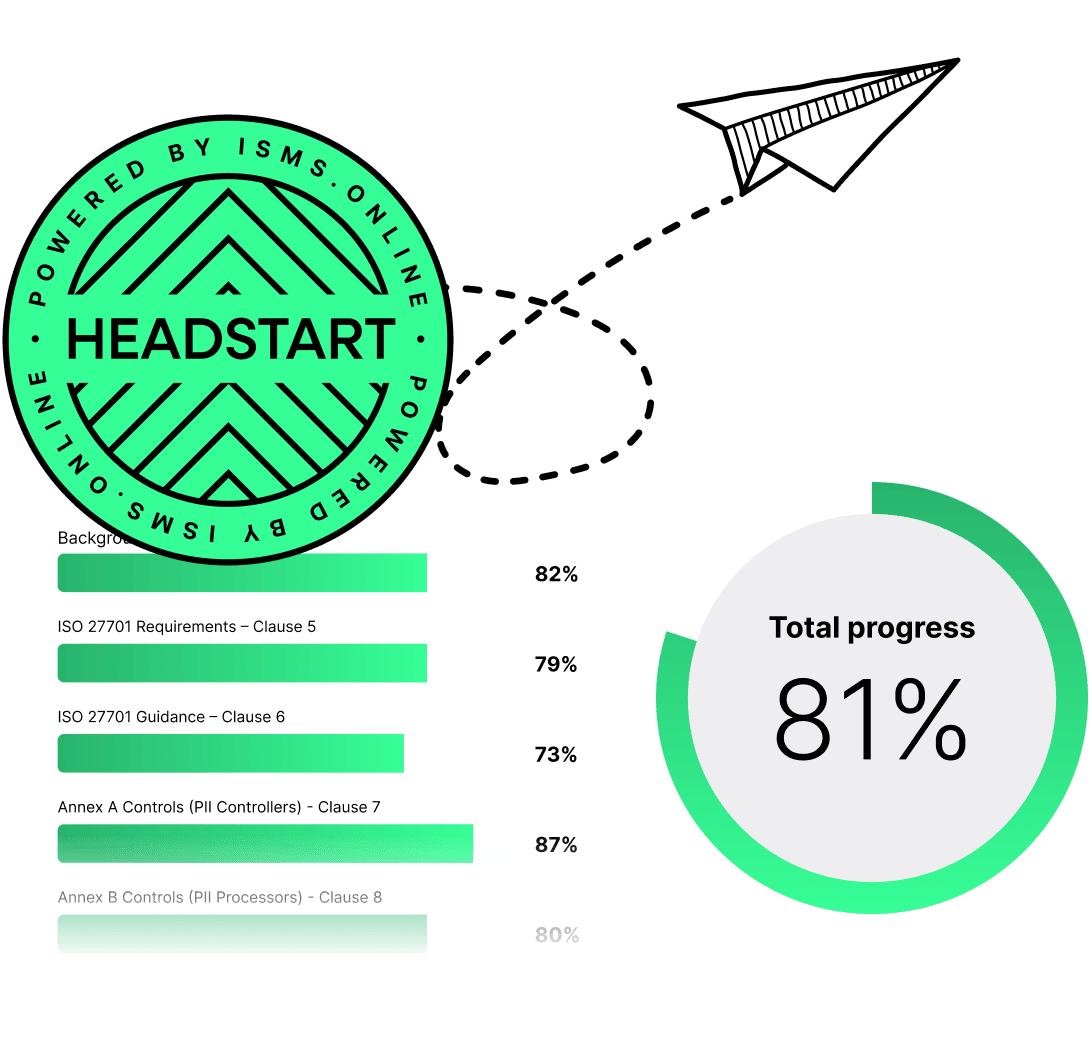
An 81% Headstart from day one
We’ve done the hard work for you, giving you an 81% Headstart from the moment you log on. All you have to do is fill in the blanks.
How to Develop a Statement of Applicability
Creating a Statement of Applicability (SoA) is essential for aligning your organisation’s security measures with the ISO 27001 standard. This document bridges risk assessment and control implementation, ensuring all identified risks are addressed with appropriate measures.
Steps to Create an SoA
-
Identify Relevant Controls: Start by selecting from 114 controls across 14 categories, based on a thorough risk assessment. This selection should align with your organisation’s specific security needs and objectives.
-
Justify Control Selection: Each chosen control must be justified, demonstrating its relevance to your organisation’s risk profile and strategic goals. This step ensures that the SoA is tailored to your unique security framework.
-
Document Implementation Status: Clearly document the implementation status of each control. This transparency aids in compliance and enhances accountability and audit readiness.
The Role of Technology
Technology plays a crucial role in streamlining the SoA creation process. Automated tools can assist in identifying relevant controls, tracking their implementation, and ensuring regular updates to reflect changes in the security environment. This integration not only accelerates the process but also enhances accuracy and efficiency.
Regular Updates and Compliance
Regular updates to the SoA are crucial to maintain compliance with ISO 27001. As the security environment evolves, so too should your organisation’s controls and strategies. This proactive approach ensures that your security measures remain robust and effective.
Overcoming Challenges in Developing the Statement of Applicability
Navigating the Complexities of the SoA
Creating a Statement of Applicability (SoA) within the ISO 27001:2022 framework requires a nuanced approach to risk assessment and control alignment. Organisations often face hurdles in identifying relevant controls and ensuring thorough documentation.
Streamlining the SoA Process
Organisations can enhance the SoA development process by:
-
Embracing Automation: Manual processes can be cumbersome. Automation tools, such as those offered by ISMS.online, improve efficiency and accuracy, simplifying control selection and documentation.
-
Aligning with Business Goals: Controls must resonate with business objectives to be effective. This alignment demands a comprehensive understanding of your organisation’s risk profile and strategic aims.
-
Ensuring Detailed Documentation: Comprehensive documentation is vital for audit readiness and compliance, offering transparency and accountability (ISO 27001:2022 Clause 5.5).
The Advantage of ISMS.online
Our platform, ISMS.online, addresses SoA challenges by seamlessly integrating control selection with business objectives, ensuring compliance and audit readiness. Our tools facilitate seamless documentation, enhancing your organisation’s security posture.
The Backbone of Documentation
Documentation serves as the backbone of the SoA, providing a clear record of control implementation and justification. It supports continuous improvement by highlighting areas needing enhancement, thereby strengthening your organisation’s security framework.
By integrating technology and aligning controls with business objectives, organisations can effectively navigate the complexities of developing a Statement of Applicability. Embrace ISMS.online to streamline your compliance journey and fortify your information security practices.

Free yourself from a mountain of spreadsheets
Embed, expand and scale your compliance, without the mess. IO gives you the resilience and confidence to grow securely.
How Does the SoA Align with Business Goals?
Aligning the Statement of Applicability (SoA) with your business objectives is not just a compliance exercise; it’s a strategic move that can enhance both security and business growth. By ensuring that selected controls align with ISO 27001:2022 and support your organisation’s risk management strategies, the SoA becomes a dynamic tool for continuous improvement.
Why Alignment Matters
When the SoA aligns with business goals, it becomes a powerful framework for managing risks and adapting to changing business needs. This alignment is essential for maintaining a robust Information Security Management System (ISMS) and ensuring compliance with ISO 27001:2022 (Clause 6.1).
Strategies for Effective Alignment
-
Integrate Business Goals: Understand your organisation’s strategic objectives to ensure the SoA reflects the broader business context and supports key initiatives.
-
Engage Stakeholders: Collaborate with stakeholders to identify critical business processes and risks, ensuring the SoA addresses real-world challenges.
-
Continuous Review: Regularly update the SoA to reflect changes in business goals and the risk environment, maintaining its relevance and effectiveness.
Benefits of Strategic Alignment
-
Enhanced Relevance: An aligned SoA ensures that controls are practical and applicable to your organisation’s unique context.
-
Improved Risk Management: By aligning with business goals, the SoA supports a proactive approach to risk management, addressing potential threats before they become issues.
-
Strategic Value: An aligned SoA contributes to strategic objectives, providing a framework for continuous improvement and adaptation to evolving business needs (ISO 27001:2022 Clause 6.1).
Transforming the SoA into a Strategic Tool
When aligned with business objectives, the SoA transforms from a static document into a dynamic tool that drives organisational success. It ensures that security measures are not only compliant but also strategically valuable, supporting both risk management and business growth.
Our platform, ISMS.online, offers tools that streamline this alignment process, ensuring your SoA is not only compliant but also strategically aligned with your business goals. Discover how we can enhance your security posture today.
What Advantages Does a Well-Developed SoA Offer?
A meticulously crafted Statement of Applicability (SoA) is foundational to strengthening an organisation’s information security framework. It serves as a linchpin for effective risk management, compliance, and resilience, aligning seamlessly with the ISO 27001:2022 standard.
Key Benefits of a Well-Crafted SoA
-
Enhanced Risk Management: The SoA provides a structured framework that aligns security controls with identified risks, ensuring comprehensive threat mitigation. This alignment enhances risk management by offering a clear overview of the organisation’s security framework (ISO 27001:2022 Clause 6.1).
-
Improved Compliance: By documenting and justifying the selection of security controls, organisations demonstrate their commitment to meeting regulatory requirements and industry standards. This transparency facilitates audit readiness and builds trust with stakeholders and regulatory bodies (ISO 27001:2022 Clause 9.2).
-
Increased Organisational Resilience: A robust SoA contributes to organisational resilience by establishing a comprehensive security framework that adapts to evolving threats and business needs. This adaptability ensures the organisation remains agile and responsive, capable of withstanding disruptions and maintaining operational continuity.
Role in Risk Management
By linking controls to identified risks, the SoA enables organisations to prioritise and implement effective security measures. This proactive approach reduces vulnerabilities and strengthens the organisation’s ability to respond to emerging threats, safeguarding critical assets and maintaining business continuity.
Impact on Compliance
Compliance with the ISO 27001 standard is significantly improved through a well-developed SoA. By aligning security controls with organisational objectives, the SoA not only facilitates compliance but also supports continuous improvement and audit readiness. This alignment ensures that the organisation remains agile and responsive to evolving security challenges.
Contribution to Resilience
A well-developed SoA is instrumental in enhancing risk management, improving compliance, and increasing organisational resilience. Its strategic role in information security management empowers organisations to navigate the complexities of the ISO 27001:2022 standard with confidence and clarity.

Manage all your compliance, all in one place
ISMS.online supports over 100 standards and regulations, giving you a single platform for all your compliance needs.
How Does the SoA Integrate with Other Standards?
Integrating the Statement of Applicability (SoA) with frameworks like GDPR and HIPAA is crucial for achieving comprehensive compliance. This alignment ensures that security controls are consistent across various standards, enhancing the overall security posture and reducing complexity. By aligning with multiple frameworks, your organisation can streamline risk management processes and efficiently meet all regulatory requirements.
Benefits of Integration
- Uniform Application: Consistent security measures across frameworks simplify compliance management.
- Robust Risk Management: Aligning the SoA with other standards enhances the identification and mitigation of risks, leading to a more resilient security framework.
- Operational Efficiency: Consolidating compliance efforts minimises redundancy, allowing for strategic resource allocation.
Strategies for Seamless Integration
- Unified Compliance Strategy: Develop a comprehensive approach that incorporates multiple frameworks, ensuring consistency and alignment.
- Cross-Departmental Collaboration: Engage stakeholders from various departments to ensure the SoA addresses diverse organisational needs and aligns with business objectives.
- Continuous Monitoring: Regularly update the SoA to reflect changes in regulatory requirements and the risk environment, maintaining its relevance and effectiveness.
Enhancing SoA Effectiveness
Integrating the SoA with other frameworks significantly boosts its effectiveness. By aligning security controls with multiple standards, your organisation can ensure comprehensive and adaptable information security measures. This alignment not only supports compliance but also strengthens your ability to respond to emerging threats and maintain operational continuity.
Further Reading
What Role Does Technology Play in SoA Management?
Transforming SoA Management with Technology
Incorporating technology into the management of the Statement of Applicability (SoA) revolutionises how organisations handle compliance and risk management. By automating processes, technology enhances both accuracy and efficiency, crucial for maintaining a dynamic and responsive Information Security Management System (ISMS) (ISO 27001:2022 Clause 6.1).
Benefits of Automation Tools
Automation tools streamline SoA management by offering:
- Precision: Automation minimises human error, ensuring security controls are implemented accurately.
- Efficiency: Automating repetitive tasks allows organisations to allocate resources more effectively, focusing on strategic initiatives.
- Continuous Updates: Automation supports regular updates, keeping the SoA current and aligned with evolving security requirements.
Support from ISMS.online
Our platform, ISMS.online, provides comprehensive resources to simplify compliance processes. By integrating automation tools, we enhance the efficiency of SoA management, ensuring your organisation remains compliant with the ISO 27001:2022 standard. Our tools facilitate seamless documentation and control selection, empowering you to maintain a robust security posture.
Impact on Accuracy and Efficiency
Integrating technology into SoA management ensures organisations can swiftly respond to changes in the security environment. By enhancing accuracy and efficiency, technology supports a proactive approach to risk management, safeguarding your organisation’s vital assets and maintaining business continuity.
Embrace the power of technology with ISMS.online to streamline your compliance journey and fortify your information security practices. Discover how our platform can transform your SoA management today.
How Does the SoA Support Continuous Improvement?
Facilitating Continuous Improvement
The Statement of Applicability (SoA) plays a crucial role in driving continuous improvement within an organisation’s Information Security Management System (ISMS). By establishing a structured framework for regular reviews and updates, the SoA ensures that security controls remain relevant and effective in managing evolving risks. This proactive approach not only enhances your organisation’s security posture but also bolsters its resilience by adapting to changes in the security environment.
Importance of Regular Reviews
Regular reviews of the SoA are vital for maintaining its effectiveness. These reviews allow your organisation to assess the relevance of existing controls, identify areas for improvement, and ensure alignment with current risk management strategies. By continuously evaluating the SoA, you can proactively address emerging threats and vulnerabilities, safeguarding critical assets and maintaining compliance with the ISO 27001:2022 standard (Clause 9.3).
Strategies for Ensuring Improvement
To ensure continuous improvement, your organisation should implement a systematic approach to reviewing and updating the SoA. This includes:
- Scheduled Reviews: Establish a regular review schedule to assess the effectiveness of controls and identify areas for enhancement.
- Stakeholder Engagement: Involve key stakeholders in the review process to ensure that the SoA aligns with organisational objectives and addresses real-world challenges.
- Technology Integration: Utilise automation tools to streamline the review process, ensuring accuracy and efficiency in updating the SoA.
Impact on SoA Effectiveness
Continuous improvement significantly enhances the effectiveness of the SoA. By regularly updating controls and strategies, your organisation can maintain a robust security framework that adapts to changing threats and business needs. This proactive approach not only supports compliance but also strengthens your ability to respond to emerging risks, ensuring long-term resilience and operational continuity.
Building on these insights, the next section will explore the role of technology in managing the SoA, highlighting tools and strategies that enhance compliance and security.
What Future Trends Impact ISO 27001?
Emphasising Integration and Automation
The trajectory of ISO 27001 is increasingly defined by its integration with other standards and the adoption of automation. As organisations pursue comprehensive compliance, aligning ISO 27001 with frameworks such as GDPR and HIPAA becomes indispensable. This alignment not only streamlines compliance efforts but also fortifies the overall security posture by ensuring consistent application of security measures across diverse standards.
Automation is reshaping this landscape, offering tools that enhance precision and efficiency in managing information security. By automating routine tasks, organisations can allocate resources more strategically, focusing on initiatives that drive business growth. Automation also facilitates continuous updates, ensuring that security controls remain current and aligned with evolving threats.
Continuous Improvement and Security Management
Continuous improvement is central to ISO 27001’s evolution, addressing the dynamic nature of security challenges. Organisations must adopt a proactive stance, regularly reviewing and updating their security measures to stay ahead of emerging threats. This involves not only technological advancements but also a cultural shift towards prioritising security at every organisational level.
Preparing for Future Trends
To navigate these trends, organisations should focus on:
-
Integration: Develop a unified compliance strategy that incorporates multiple standards, ensuring consistency and alignment.
-
Automation: Leverage technology to streamline processes, enhance precision, and maintain up-to-date security controls.
-
Continuous Improvement: Establish a framework for regular review and updates, engaging stakeholders to ensure alignment with business objectives.
By embracing these trends, organisations can maintain effective security management, safeguarding their assets and ensuring compliance with the ISO 27001:2022 standard. This proactive approach not only enhances resilience but also positions organisations to thrive in an increasingly complex security environment.
How Can ISMS.online Support ISO 27001 Compliance?
Navigating ISO 27001 compliance is complex, but ISMS.online offers a streamlined solution. Our platform simplifies compliance, boosts efficiency, and supports continuous improvement, making it an invaluable asset for organisations aiming to strengthen their information security posture.
Streamlining Compliance Processes
ISMS.online provides a comprehensive suite of automated processes and templates that simplify the compliance journey. With pre-built frameworks and expert guidance, we help your organisation navigate ISO 27001’s intricacies with ease. This approach reduces time and effort, ensuring all necessary steps are covered and enhancing audit readiness.
Tailored Resources for Compliance
Our platform equips you with resources tailored to support your compliance needs. From detailed templates to expert insights, ISMS.online provides the tools necessary to implement and maintain an effective Information Security Management System (ISMS). These resources align with your organisation’s unique requirements, ensuring a customised approach to compliance.
Boosting Efficiency in Compliance
Efficiency is at the heart of ISMS.online’s offerings. By automating routine tasks and providing real-time updates, our platform allows your team to focus on strategic initiatives rather than administrative details. This efficiency accelerates the compliance process and frees up valuable resources for other critical areas of your business.
Supporting Continuous Improvement
Continuous improvement is a cornerstone of effective compliance management. ISMS.online supports this by offering tools that facilitate regular reviews and updates, ensuring your security measures remain aligned with evolving threats and regulatory changes. This proactive approach helps maintain compliance and enhances your organisation’s resilience.
Discover how ISMS.online can transform your compliance journey and fortify your information security practices. Our platform supports you every step of the way, ensuring your organisation not only meets but exceeds the requirements of the ISO 27001 standard.
Discover How ISMS.online Can Transform Your Compliance Journey
Why ISMS.online Stands Out
Navigating ISO 27001 compliance can be complex, but ISMS.online simplifies the process with a robust suite of tools and resources. Our platform is designed to streamline compliance management, enhance efficiency, and support continuous improvement.
- Comprehensive Tools: We offer pre-built frameworks and templates, significantly reducing the time and effort required for compliance.
- Expert Guidance: Gain insights and support from industry experts, ensuring your organisation meets ISO 27001 standards with confidence.
- Efficiency and Automation: Automate routine tasks, allowing your team to focus on strategic initiatives and enhancing overall efficiency.
Explore Our Compliance Tools
ISMS.online equips you with the resources needed to implement and maintain an effective Information Security Management System (ISMS). Our tools are tailored to align with your organisation’s unique requirements, ensuring a customised approach to compliance.
Enhance Your Information Security Management
With ISMS.online, you gain access to a wealth of resources designed to support your compliance needs. From detailed templates to expert insights, our platform empowers you to maintain a robust security posture and stay ahead of evolving threats.
Discover how ISMS.online can transform your compliance journey. Schedule a personalised demo today to explore our solutions and enhance your information security management.
Book a demoFrequently Asked Questions
What is the Statement of Applicability in ISO 27001?
Bridging Risk and Control
The Statement of Applicability (SoA) is a cornerstone of the ISO 27001 framework, serving as the critical link between risk assessment and the implementation of security controls. It meticulously documents the specific controls chosen to mitigate identified risks, thereby enhancing transparency and accountability within the organisation. This document acts as a reference point for stakeholders, ensuring that security measures are both comprehensive and aligned with organisational objectives.
Integral Role in Risk Management
In the realm of risk management, the SoA is indispensable. It ensures that all identified risks are addressed with appropriate measures, fortifying the organisation’s security posture and minimising vulnerabilities. This alignment is crucial for maintaining a robust Information Security Management System (ISMS) as outlined in ISO 27001:2022 Clause 6.1.
Ensuring Compliance
Compliance with the ISO 27001 standard hinges on the effective implementation of the SoA. By aligning security controls with organisational objectives, the SoA not only facilitates compliance but also supports continuous improvement and audit readiness. This alignment ensures that the organisation remains agile and responsive to evolving security challenges, as emphasised in Clause 9.
Preparing for Audits
The SoA is instrumental in audit preparation, offering a comprehensive overview of the controls in place and their effectiveness. This document is a critical tool for auditors, enabling them to assess the organisation’s compliance with the ISO 27001 standard and identify areas for improvement, as specified in Clause 9.2.
In essence, the Statement of Applicability is vital for effective risk management, compliance, and audit readiness. By providing a structured approach to information security, the SoA empowers organisations to navigate the complexities of ISO 27001 with confidence and clarity.
How is the Statement of Applicability Developed?
Creating a Statement of Applicability (SoA) is a meticulous process that aligns your organisation’s security measures with the ISO 27001:2022 standard. This document serves as a bridge between risk assessment and control implementation, ensuring all identified risks are addressed with appropriate measures.
Steps to Create an SoA
-
Identify Applicable Controls: Conduct a comprehensive risk assessment to determine which of the 114 controls across 14 categories are applicable to your organisation. This selection should align with your specific security needs and objectives.
-
Justify Control Selection: Each chosen control must be justified, highlighting its relevance to your organisation’s risk profile and strategic goals. This step ensures that the SoA is tailored to your unique security framework.
-
Document Implementation Status: Clearly document the implementation status of each control. This transparency aids in compliance and enhances accountability and audit readiness (ISO 27001:2022 Clause 5.5).
Role of Technology
Technology plays a significant role in streamlining the SoA creation process. Automated tools can assist in identifying relevant controls, tracking their implementation, and ensuring regular updates to reflect changes in the security environment. This integration not only accelerates the process but also enhances accuracy and efficiency.
Documentation Requirements
Comprehensive documentation is crucial for audit readiness and compliance. It provides a clear record of control implementation and justification, supporting continuous improvement by highlighting areas needing enhancement.
By embracing technology and aligning controls with business objectives, organisations can effectively navigate the complexities of developing a Statement of Applicability. This strategic approach ensures that your SoA remains a dynamic and effective tool in your information security arsenal.
Why is the Statement of Applicability Important for Compliance?
Ensuring ISO 27001 Compliance
The Statement of Applicability (SoA) is integral to ISO 27001 compliance, meticulously detailing the security controls selected to mitigate identified risks. This document aligns with regulatory standards, enhancing transparency and accountability, and serves as a vital reference for stakeholders (ISO 27001:2022 Clause 6.1).
Supporting Audit Readiness
Audit readiness hinges on the SoA, which provides auditors with a comprehensive overview of controls, their implementation status, and effectiveness. This documentation not only demonstrates compliance with ISO 27001 but also identifies improvement areas, ensuring agility and responsiveness to security challenges.
Enhancing Risk Management
In risk management, the SoA is indispensable, ensuring all identified risks are addressed with appropriate measures. By linking controls to specific risks, it provides a structured framework for prioritising and implementing security measures, safeguarding critical assets and maintaining business continuity.
Alignment with Organisational Objectives
Aligning the SoA with organisational objectives maximises its effectiveness. This alignment ensures selected controls comply with ISO 27001 and strategically support risk management and business growth. By integrating business objectives, the SoA becomes a dynamic tool for enhancing security and compliance, contributing to organisational success.
Overcoming Challenges in Developing the Statement of Applicability
Navigating the Complexities of the SoA
Crafting a Statement of Applicability (SoA) within the ISO 27001 framework involves navigating a labyrinth of challenges. Organisations often face difficulties in pinpointing relevant controls, ensuring meticulous documentation, and aligning these controls with overarching business objectives. These hurdles necessitate strategic approaches to streamline the process.
Strategies for Effective SoA Development
To enhance the SoA development process, consider the following strategies:
-
Embrace Automation: Implementing automation tools, such as those offered by ISMS.online, can significantly boost efficiency and accuracy. These tools simplify the selection and documentation of controls, ensuring a seamless process.
-
Align with Strategic Goals: It’s crucial to ensure that controls resonate with your organisation’s strategic objectives. This alignment requires a deep understanding of your risk profile and business aims.
-
Prioritise Comprehensive Documentation: Detailed documentation is vital for audit readiness and compliance, providing transparency and accountability (ISO 27001:2022 Clause 5.5).
The Backbone of Documentation
Documentation serves as the backbone of the SoA, offering a transparent record of control implementation and justification. It supports continuous improvement by highlighting areas needing enhancement, thereby fortifying your organisation’s security framework.
The Role of ISMS.online
Our platform, ISMS.online, addresses SoA challenges by seamlessly integrating control selection with business objectives, ensuring compliance and audit readiness. Our tools facilitate seamless documentation, enhancing your organisation’s security posture.
By embracing technology and aligning controls with business objectives, organisations can effectively navigate the complexities of developing a Statement of Applicability. Embrace ISMS.online to streamline your compliance journey and fortify your information security practices.
Aligning the SoA with Business Objectives
The Strategic Importance of Alignment
Aligning the Statement of Applicability (SoA) with your business objectives is not just a compliance exercise; it’s a strategic imperative. This alignment ensures that selected controls not only meet the ISO 27001:2022 standard but also bolster risk management and drive business growth. By integrating business objectives, the SoA becomes a dynamic tool for enhancing security and compliance.
Strategies for Effective Alignment
-
Integrate Strategic Goals: Delve into your organisation’s strategic objectives to ensure the SoA reflects the broader business context and supports key initiatives.
-
Engage Stakeholders: Collaborate with stakeholders to pinpoint critical business processes and risks, ensuring the SoA addresses real-world challenges.
-
Continuous Review: Regularly update the SoA to mirror changes in business goals and the risk environment, maintaining its relevance and effectiveness.
Benefits of Strategic Alignment
-
Enhanced Relevance: An aligned SoA ensures that controls are practical and applicable to your organisation’s unique context.
-
Proactive Risk Management: By aligning with business goals, the SoA supports a proactive approach to risk management, addressing potential threats before they become issues.
-
Strategic Value: An aligned SoA contributes to strategic objectives, providing a framework for continuous improvement and adaptation to evolving business needs (ISO 27001:2022 Clause 6.1).
Transforming the SoA into a Strategic Tool
Alignment with business objectives transforms the SoA from a static document into a dynamic tool that drives organisational success. It ensures that security measures are not only compliant but also strategically valuable, supporting both risk management and business growth.
How Can ISMS.online Support ISO 27001 Compliance?
Streamlining Compliance with ISMS.online
Navigating ISO 27001 compliance can be intricate, but ISMS.online simplifies the process with a robust suite of tools. Our platform offers automated solutions and pre-built frameworks, significantly reducing the time and effort required for compliance. This ensures your organisation remains audit-ready and aligned with ISO 27001 standards.
Comprehensive Resources for Compliance
ISMS.online equips you with a wealth of resources tailored to support your compliance needs:
- Detailed Templates: Access comprehensive templates that guide you through each step of the compliance process.
- Expert Insights: Benefit from industry insights that help you implement and maintain an effective Information Security Management System (ISMS).
These resources align with your organisation’s unique requirements, ensuring a customised approach to compliance.
Boosting Efficiency in Compliance
Efficiency is at the heart of ISMS.online’s offerings. By automating routine tasks and providing real-time updates, our platform allows your team to focus on strategic initiatives rather than administrative details. This efficiency accelerates the compliance process and frees up valuable resources for other critical areas of your business.
Supporting Continuous Improvement
Continuous improvement is a cornerstone of effective compliance management. ISMS.online supports this by offering tools that facilitate regular reviews and updates, ensuring that your security measures remain aligned with evolving threats and regulatory changes. This proactive approach helps maintain compliance and enhances your organisation’s resilience.
Discover how ISMS.online can transform your compliance journey and fortify your information security practices. Our platform is here to support you every step of the way, ensuring that your organisation not only meets but exceeds the requirements of the ISO 27001 standard.






