





































MSPs and the new data leakage reality
Data leakage is now a primary business risk for managed service providers because your tools and workflows concentrate privileged access across many clients. Independent supply‑chain security analysis increasingly highlights how MSP toolchains centralise high‑privilege access and can turn a single compromise into multi‑customer impact, especially where one platform spans many tenants (example industry discussion). It is no longer just an end‑user mistake inside a client network; it is a structural risk created by the way you deliver services. When you aggregate privileged access across many customers, your own tools, habits and shortcuts become powerful exfiltration routes, so one weak process or shortcut can expose multiple organisations at once. Treating these internal routes as first‑class risks is essential if you want to stay trusted, insurable and able to explain your decisions after an incident.
In practice, that means your remote monitoring, ticketing, remote access and cloud platforms are often stitched together in ways that are hard to map and even harder to explain to auditors, regulators or boards after an incident. As you have grown, improvised integrations and “temporary” workarounds may have become permanent parts of your stack. This information is general in nature and is not legal or regulatory advice; you should always seek specialist guidance for decisions that carry legal or contractual consequences.
Attackers love the hidden paths your teams treat as harmless conveniences.
Why MSP data leakage risk is different now
MSP data leakage risk is different because you sit at the centre of many tenants, tools and third parties, so one error can affect dozens of environments at once. Attackers increasingly treat service providers as high‑value hubs, and customers, insurers and regulators now expect you to assume you will be targeted in this way. Industry breach investigations, including widely cited annual reports on data breaches and supply‑chain incidents, frequently document attacks that begin with service providers or other intermediaries, reinforcing the expectation that you will be treated as a prime route into many downstream organisations (for example, large breach reports on supply‑chain attacks).
For years you have been trusted to “just make IT work”, plugging gaps and improvising integrations. That flexibility helped you scale, but it also spread sensitive data across tools and tenants in ways few people can see end‑to‑end. Think of remote consoles that reach into many customers, documentation spaces that mix clients and regions and chat channels that include internal staff, contractors and vendor contacts.
A majority of organisations in the 2025 ISMS.online State of Information Security survey reported being impacted by at least one third-party or vendor-related security incident in the past year.
High‑profile breaches involving service providers have changed how this picture is interpreted. Those same breach reports highlight notable incidents where attackers moved through MSPs and IT service providers to reach many customers at once, which has made boards and regulators far more sensitive to this exposure. Many stakeholders now assume that attackers will go after service providers first because compromise in one place can unlock many environments. Even if you have not yet had a serious incident, expectations around how you protect and evidence data handling are rising sharply.
As work has moved away from a clear perimeter, the risk has intensified. Engineers work remotely, collaborate in chat, share files through cloud storage and live inside client SaaS platforms all day. Focusing only on firewalls and email gateways misses the real exfiltration routes: identities, APIs, remote sessions and shared workspaces that cut across tenants.
Human and organisational factors you cannot ignore
Human and organisational behaviour often undermines sound technical designs, especially when engineers are busy, tired or under commercial pressure. People reach for shortcuts that feel harmless when policies are abstract, tools are clumsy or no one explains why discipline matters.
Only about one in five organisations in the 2025 ISMS.online State of Information Security survey said they experienced no data loss in the past year.
If you look honestly at your current stack and ways of working, you will probably see:
- A handful of broad god‑level consoles that reach into many tenants at once.
- Ticketing systems full of screenshots, logs, extracts and sometimes even credentials.
- Engineers hopping between clients using shared admin accounts and remote tools.
- Documentation and collaboration platforms quietly accumulating highly sensitive data.
Contractors and offshore teams may have wide access with limited oversight. Offboarding can lag, leaving accounts active longer than intended. Under pressure, people paste secrets into tickets or chat, email files to personal inboxes so they can work at home or drop a database dump into an unsanctioned cloud folder just for now.
Regulators and large customers are increasingly alive to this reality. Data protection law often treats you as a processor with clear obligations to implement appropriate technical and organisational measures and to prove you have done so. Legal commentary on managed service providers under regimes such as GDPR regularly underlines that processors are expected not only to implement suitable controls but also to be able to demonstrate them when challenged (for example, analysis of MSP data protection obligations). Many cyber insurers also say they examine your controls and incident history before offering cover or favourable terms. As the service provider, you will be judged on how convincingly you can describe and evidence these measures.
Against this backdrop, ISO 27001:2022 Annex A.8.12 gives a name and direction to a problem that has existed for years: in practice, you are expected to apply data leakage prevention measures to systems, networks and any other devices that process, store or transmit sensitive information wherever that is proportionate to the risk. Practical guidance on A.8.12 often frames the control in exactly this way, focusing on wherever sensitive information flows rather than a single technology layer (example practitioner guidance). For an MSP, that spans shared admin consoles, multi‑tenant SaaS, service desks and everyday shortcuts your teams use to close tickets. The challenge is real, but so is the opportunity: if you get this right, you can reduce exfiltration risk, reassure demanding customers and stand out from less disciplined competitors.
Book a demoWhat ISO 27001:2022 Annex A.8.12 really requires
ISO 27001:2022 Annex A.8.12 is the technological control titled “Data leakage prevention”. Commentary on the 2022 revision of ISO 27001 describes A.8.12 as one of the Annex A technological controls specifically focused on preventing unauthorised disclosure or exfiltration of sensitive information across systems and networks, rather than being a general policy requirement (for example, detailed control analyses). It expects you to prevent unauthorised or accidental disclosure or exfiltration of sensitive information wherever it is handled in your environment. For an MSP, that includes both your internal systems and the shared tools you use to serve clients. In plain language, the control asks you to understand which data is sensitive, where it lives and moves and which reasonable measures you will use to stop it leaking. It does not mandate particular products, but it does expect a clear, risk‑based rationale you can explain and evidence that stands up to auditor and customer scrutiny.
Core obligations under A.8.12
The core obligation under A.8.12 is to know what you are protecting, where it flows and how you are stopping it from leaving inappropriately. The emphasis is on proportionate, risk‑based measures rather than blanket rules that block legitimate work but still overlook important routes.
The standard does not tell you to buy a specific data loss prevention tool. Instead, it expects you to:
- Define what counts as “sensitive information” in your MSP context.
- Understand where that information is stored, processed and transmitted.
- Select preventive and detective measures that match the risks you have identified.
- Keep enough evidence to show that these measures exist and operate in practice.
For a managed service provider, those obligations go far beyond internal finance and HR systems. They extend into service delivery tools such as remote monitoring and management platforms, professional service automation systems, ticketing and chat, remote access gateways, backup and recovery platforms and any customer SaaS or cloud environments you administer under contract.
A.8.12 sits alongside other technological controls rather than replacing them. Overviews of the Annex A technological control set emphasise that A.8.12 complements related areas such as access control, logging, monitoring and secure configuration, rather than standing alone (example overview of technological controls). Effective data leakage prevention depends on access control and identity management so you know who can reach which data, asset management and classification so sensitive information is identified clearly, logging and monitoring so unusual data movement is visible and secure configuration so default settings do not expose data unintentionally.
Thinking in this structured way makes it easier to explain your approach and to maintain it as your services evolve. It also helps you answer difficult questions from auditors, customers and insurers without scrambling for ad‑hoc justifications.
Preventive, detective and corrective measures
A practical way to interpret A.8.12 is to group your controls into preventive, detective and corrective measures, then apply those lenses to each exfiltration route you care about. This keeps your efforts balanced and avoids relying on a single technology layer.
Preventive measures are controls that stop or constrain risky transfers in the first place. Examples include policies that prevent copying restricted data to removable media, rules that block certain files being emailed outside approved domains or configurations that stop mass exports from admin consoles without additional approvals.
Detective measures help you spot suspicious data movement when it does happen. You might monitor for unusual volumes of exports from shared consoles, repeated attempts to send regulated data to personal cloud storage or abnormal access patterns from certain locations or accounts. The aim is to turn unexpected movement into an investigated event, not a silent leak.
Corrective measures cover what you do when a potential leak is detected. That means having clear processes to triage alerts, investigate incidents, contain impact and adjust controls or training to reduce the chance of recurrence. Without this, even good detection quickly devolves into noise.
You are not expected to apply the same intensity of controls everywhere. The standard continues to follow a risk‑based philosophy. Exporting anonymised logs from a test tenant into an internal analytics platform is not the same as moving a production customer database to an engineer’s laptop. Your engineers should have a clear, sanctioned path for exporting data for analysis so they are not tempted to email database dumps to personal inboxes.
To make this work in an MSP, you need to thread A.8.12 through your existing risk treatment approach. That means ensuring risk assessments explicitly consider data leakage scenarios in your delivery tools and client environments, linking chosen measures to those risks in your treatment plan and assigning clear ownership for each measure.
When you come to audit, you will be expected to explain how you applied this logic. Being able to show a chain from “this data and process are important” through “we chose these controls” to “here is evidence they operate” is the difference between a persuasive narrative and an uncomfortable discussion.
ISO 27001 made easy
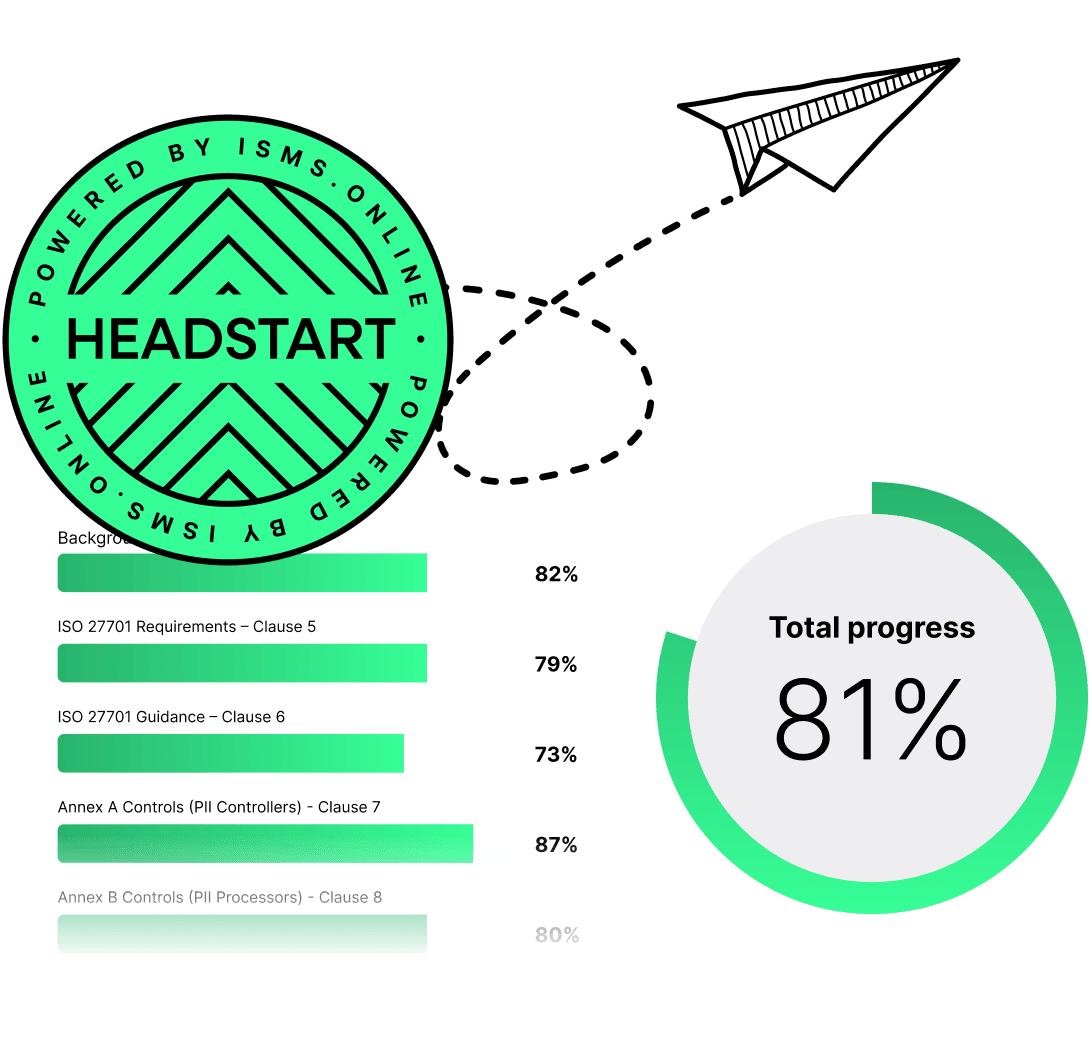
An 81% Headstart from day one
We’ve done the hard work for you, giving you an 81% Headstart from the moment you log on. All you have to do is fill in the blanks.
Where MSP exfiltration actually happens across tools and teams
Most MSP data leakage happens through everyday work inside your own tools and collaboration channels, not through exotic exploits. Once you recognise that Annex A.8.12 reaches into your delivery stack, you can stop guessing and focus on the real paths where data leaves your control by looking at where sensitive data actually flows in your day‑to‑day operations. When you do that honestly, you usually find exfiltration risk in familiar places: remote management platforms, ticketing systems, collaboration tools, backup platforms and third‑party integrations you rarely discuss in risk workshops. Mapping those flows is the foundation for practical controls.
Common exfiltration routes in your toolchain
The most common MSP data exfiltration routes are your remote management consoles, ticketing systems, collaboration tools, troubleshooting exports and backup platforms. These are the systems that move large amounts of client data quietly, and small configuration choices or habits decide whether that movement is controlled or dangerously loose.
Centralised remote management is one of the highest‑risk areas. Remote monitoring and management platforms, cloud management consoles and similar tools often hold powerful credentials or agent access into many client environments. If an account on such a console is compromised, or if engineers can export configurations and databases freely, an attacker or malicious insider can syphon off large amounts of data quietly.
Ticketing systems and collaboration tools are another major route. Engineers routinely attach screenshots, log files, database extracts and documents to tickets to explain issues or record fixes. They paste passwords or API keys into comments. Tickets may be sent to customers by email or synchronised with external systems. Without clear rules and safeguards, sensitive material ends up in places where it was never meant to be and can easily be forwarded or downloaded.
Troubleshooting and diagnostics often push data into uncontrolled spaces. When dealing with performance problems or complex bugs, staff may export data sets, take full configuration backups or copy log bundles to local machines for analysis. Those files can then be left on laptops, synced to personal cloud storage or stored on unsecured internal shares. None of this behaviour is malicious; it is what people do when they lack safer, sanctioned patterns.
Everyday collaboration amplifies the issue. Engineers share information in chat, copying error messages, configuration snippets or small data samples into channels that include people from multiple clients or third parties. Documentation tools accumulate “how‑to” pages that embed live credentials or reuse screenshots from production systems. Over time, these working stores become sprawling and opaque, full of sensitive fragments no one remembers to clean up.
Backup and disaster recovery platforms deserve special attention. They often hold the richest data, including full system images, databases and file stores. Backup security best‑practice material consistently warns that these systems contain complete copies of production workloads and so are prime targets for attackers and insiders if access and monitoring are weak (for example, backup security guidance). If access to these platforms is broad, or if off‑site seed drives and media are not closely controlled, they can become ideal channels for exfiltration that bypass front‑door DLP controls.
Third‑party integrations and APIs should not be overlooked. Many MSPs feed ticket, asset and performance data into reporting, billing, analytics or customer portals that sit outside the core security team’s focus. Data can move automatically into systems with weaker access controls, looser logging or different jurisdictions, creating blind spots in your leakage prevention picture.
Mapping paths to controls in a simple way
You can make Annex A.8.12 manageable by taking each major exfiltration path and assigning a small set of proportionate controls, rather than trying to deploy heavy DLP everywhere at once. This keeps your effort focused on the routes that matter most and makes your storey easier to explain to engineers and auditors.
Once you have named the main exfiltration paths, you can start mapping proportionate controls to each one instead of relying on vague reassurance. The aim is not to introduce heavy DLP in every corner, but to be deliberate about where you act first and why.
A short comparison of exfiltration paths and control focus areas can clarify where to act first.
| Exfiltration path | Typical leakage example | Helpful control focus |
|---|---|---|
| Remote management consoles | Bulk export of tenant configs or inventories | Least privilege, export restrictions |
| Ticketing & collaboration | Screenshots and logs with hidden personal data | Content rules, redaction, access scopes |
| Troubleshooting exports | Local copies of databases and log bundles | Approved workflows, secure storage |
| Backup platforms | Uncontrolled restore or export of backups | Strong access control, detailed logging |
| Third‑party integrations | Data fed into weakly governed external tools | Data‑flow mapping, contract requirements |
By walking through realistic scenarios in each area, you move away from abstract fears and towards a concrete list of exfiltration paths. That list then becomes the backbone of your A.8.12 response: you can decide where to tighten identity and access, where to apply technical DLP controls and where to change processes or training.
Once you can name where data really moves, the next question is how your shared platforms and tenant design either contain or amplify that risk. That is where a multi‑tenant view of A.8.12 becomes essential.
Reframing A.8.12 for multi‑tenant MSP operations
Reframing Annex A.8.12 for multi‑tenant MSP operations means treating it as a design lens for your shared platforms, not just a checkbox. You need to decide explicitly how tenants are separated, how access scales and how cross‑tenant risks are governed and evidenced so you can defend your model when customers and auditors ask hard questions. Traditional guidance on data leakage prevention often assumes a single organisation running a single environment, but as an MSP you operate many environments and frequently share tools across them, so you need to reinterpret A.8.12 through that multi‑tenant lens.
The control is most useful when it shapes how you design and govern your shared platforms, not when it is bolted on as an afterthought. That means being explicit about how tenants are separated, how access is granted and how cross‑tenant risks are handled and evidenced.
Designing a multi‑tenant model you can defend
A defensible multi‑tenant model starts with a clear, documented view of which controls are global and which are tenant‑specific, and why you made those choices. When you can show how roles, boundaries and monitoring follow from that design, it becomes easier to convince customers and auditors that your architecture supports Annex A.8.12 rather than undermining it.
The starting point is your multi‑tenant architecture. You need a clear view of which controls are global and which are tenant‑specific, and why. That clarity will help you both reduce risk and explain your approach to customers.
Useful questions include:
- Do you run one shared remote management platform with separate client groups, or separate platforms per segment?
- Are your ticketing queues and documentation spaces segregated by customer, or do staff see everything by default?
- Where are the natural boundaries between regions, sectors or regulatory regimes, and how do tools reflect those lines?
Making these decisions explicit allows you to design roles, access scopes and monitoring practices that support them. For example, you can decide that default roles are scoped to small groups of clients, with temporary elevation processes for broader access, rather than granting broad “global” access as standard.
Least‑privilege and segregation of duties carry even more weight in this context. A single compromised account in a global admin role can become an exfiltration super‑route. Thoughtful role design, access reviews and privileged access monitoring are therefore critical elements of your A.8.12 storey.
Clarifying responsibilities, scope and governance
Clarifying responsibilities, scope and governance is about making sure contracts, internal definitions and day‑to‑day practices all agree on who protects which data where. If your technical design assumes one boundary but your agreements imply another, Annex A.8.12 will be difficult to demonstrate in a consistent, defensible way.
Around 41% of organisations in the 2025 ISMS.online State of Information Security survey said that managing third-party risk and tracking supplier compliance is a top challenge.
In many services, data flows between your organisation, your clients and one or more cloud providers. A.8.12 expects you to implement measures where you control the systems, networks or devices in question and to understand where responsibility lies elsewhere. Ambiguity here is a common source of dangerous gaps.
Contracts, data processing agreements and internal scope definitions should reflect who is responsible for which aspects of leakage prevention. For example, you might commit to protecting data within your service tools and remote access channels, while your client remains responsible for controls inside their own SaaS tenant. Wherever you draw the lines, they must be documented and consistent with how you actually operate.
Governance needs to match the technical design. Regular forums that bring together security, operations and account owners can review cross‑tenant risks, approve DLP exceptions, look at high‑risk clients and make decisions about changes to architecture. Recording these discussions creates useful evidence and reinforces a shared understanding of risk.
This design and governance picture should be documented in language that maps back to A.8.12 and related controls. Your Statement of Applicability can explain how the control is applied in the context of your multi‑tenant architecture. Network diagrams, data‑flow maps and role descriptions should reflect the boundaries and responsibilities you have defined. Operational playbooks should embed these assumptions, so staff are not left guessing.
Reframing A.8.12 in this way turns it from an abstract requirement into a lens for designing and running your MSP. Rather than sprinkling DLP tools on top of existing practices, you use the control to shape how those practices work across tenants.
A simple four‑step cross‑tenant DLP planning checklist
Step 1 – Map shared platforms and spans
List the shared platforms you use, which clients or regions they span and how they interconnect. This gives you a concrete view of where cross‑tenant risk concentrates.
Step 2 – Define tenant boundaries, roles and escalation paths
Decide which roles see which tenants by default, how elevation works and where regional or sector boundaries apply. Document these decisions clearly so everyone understands the model.
Step 3 – Align contracts and data processing agreements
Update or confirm contracts and data processing agreements so responsibilities for data leakage prevention match your technical and operational boundaries. This reduces gaps and misunderstandings.
Step 4 – Set up cross‑tenant risk and exception reviews
Establish regular sessions where security, operations and account owners review cross‑tenant risks, approve exceptions and record decisions. These meetings quickly become valuable evidence for Annex A.8.12.

Free yourself from a mountain of spreadsheets
Embed, expand and scale your compliance, without the mess. IO gives you the resilience and confidence to grow securely.
Building a layered technical DLP stack for MSPs
A layered technical DLP stack for an MSP combines classification, channel‑specific controls and operational integration so you can focus on real exfiltration paths rather than chasing every possible leak. A sustainable MSP data leakage prevention strategy is almost always layered, with controls aligned to realistic exfiltration paths rather than a single “silver bullet” product. ISO 27001:2022 Annex A.8.12 fits best when each layer reinforces the others, is tuned to your service mix and risk appetite and allows you to tune controls for different clients without drowning your teams in alerts or blocking useful work.
The right layers for you depend on your services, client expectations and risk appetite, but most MSPs benefit from combining classification, channel controls and operational integration. That approach allows you to respond to alerts and incidents without overwhelming your teams.
Policy and classification as the foundation
Policy and classification are the foundation of technical DLP because they tell your tools which data deserves the most protection and how staff are expected to handle it. At the policy layer, you need a small, consistent set of data classifications and handling rules that apply across your MSP and, where possible, across your client base. Labels such as “Public”, “Internal”, “Confidential” and “Restricted” can then be mapped into different tools so that technical controls can act on them in a coherent way.
It helps to define, for each class:
- Where it may be stored and processed.
- Which channels are permitted for sending or sharing it.
- Which roles are normally allowed to access or move it.
- Any special requirements, such as encryption or approval before export.
This classification model should be shared with clients and embedded into your onboarding and solution design processes. When clients and internal teams speak the same classification language, DLP rules are easier to explain and tune, and engineers are less likely to fall back on improvised, risky patterns.
Channel‑layer controls and operational integration
Channel‑layer controls and operational integration turn your classification and risk decisions into real‑world safeguards on email, web, cloud, endpoints, networks and backups. The goal is to apply the right mix per channel and client, then wire alerts into your security operations so they lead to action rather than frustration.
Once classification is in place, you can decide which technical measures make sense on each channel. Common building blocks include:
- Email and web controls that prevent obvious leaks, such as regulated personal data sent to external domains or uploads of sensitive files to unsanctioned sites.
- Cloud‑aware tools that discover and control use of cloud applications, apply sharing restrictions and scan data at rest in productivity suites and storage services.
- Endpoint protections on laptops and workstations that limit copying to removable media, control exports from admin tools or alert on suspicious file movements.
- Network‑side inspection at key traffic points where it still adds value, particularly for legacy on‑premise workloads or private connections.
- Backup and archive safeguards, with strong access controls and logging on backup platforms and restrictions on exporting or mounting backup data outside controlled processes.
For each exfiltration path you identified earlier, ask which combination of these layers is proportionate. A low‑risk internal wiki may only need access control and basic logging, while remote access gateways into high‑value tenants may justify more intensive monitoring and blocking.
Integration with your security operations is just as important as coverage. Alerts that no one sees or understands do not improve security. Data leakage events and DLP tool alerts should feed into your monitoring and response processes, with clear playbooks describing triage, investigation, containment and communication. Your technical and operations teams should recognise their roles in those playbooks, rather than discovering them for the first time during an incident.
Because you operate many tenants, automation and standard patterns can keep the stack consistent. Configuration templates for common client types – for example, regulated versus non‑regulated or small versus large – can define baseline rules that you adjust during onboarding. That avoids reinventing controls for each customer while still respecting individual needs.
Measuring what matters helps you demonstrate that Annex A.8.12 is working in practice. You might track the number of blocked attempts by channel, false positive ratios, time to tune policies after deployment and any impacts on service quality, such as ticket delays caused by controls. These metrics help you adjust controls before frustration or gaps accumulate and give you evidence when customers or auditors ask what you have achieved.
Procedural, legal and governance controls around A.8.12
Procedural, legal and governance controls around A.8.12 turn technical safeguards into something people can follow, test and defend under scrutiny. Policies, procedures, contracts and training shape day‑to‑day decisions just as much as tools, and they often provide the clearest evidence that you take data leakage prevention seriously. Technical measures alone cannot deliver what Annex A.8.12 expects, because the control also relies on these less visible elements that determine whether your tools are used safely or work against you in everyday work across your MSP.
Strong data handling habits are built one clear expectation and one small decision at a time.
Classification, handling rules and day‑to‑day procedures
Classification, handling rules and day‑to‑day procedures make your intentions about data protection concrete for engineers, account managers and support staff. Instead of relying on vague “be careful” messages, you give people specific instructions that match typical workflows and tools. A clear, simple data classification and handling policy is a good starting point, and it should describe:
- The information classes you use and what they mean.
- How each class may be stored, transmitted and shared.
- Which tools are approved for different types of data.
- Who is allowed to access and move which information.
From there, you can develop standard operating procedures for common MSP workflows: onboarding and offboarding clients, granting and removing access, handling tickets that contain sensitive information, performing remote support, exporting data for analysis and dealing with third‑party requests. These procedures should tell engineers what to do in practical terms, not just repeat policy language.
Role‑specific training then makes the policy real. A support engineer needs to know, for example, how to handle screenshots or log files that contain personal data, when it is acceptable to export information and which tools are off‑limits for certain classes of data. Short, focused training delivered during onboarding and refreshed regularly is usually more effective than long, generic annual sessions.
Contracts, legal alignment and incident readiness
Contracts, legal alignment and incident readiness ensure that what you promise about data leakage prevention matches what you actually do and that you are prepared for uncomfortable days. They also give you a structured way to coordinate with clients and regulators when something goes wrong. Your contractual documents should match how you handle and protect client data in practice, so master service agreements, data processing agreements and service level agreements can describe logging and monitoring practices, use of subprocessors, locations of processing, notification timelines for incidents and expectations around cooperation when a data leak occurs.
Consistency between what you promise and what you actually do is critical for trust and for defending your position if something goes wrong. Customers and regulators will expect to see that your Annex A.8.12 controls support these contractual and legal commitments, not contradict them.
In the 2025 ISMS.online State of Information Security survey, only around 29% of organisations reported receiving no fines for data-protection failures in the past year.
You should plan for the day a data leakage event is suspected. Incident response playbooks that cover different scenarios – such as an accidental email mis‑send, misuse of an admin account, breach of a shared console or loss of an engineer’s laptop – help reduce panic and confusion. They assign responsibilities for technical investigation, internal communication, customer updates and regulatory notifications where applicable.
Privacy notices and records of processing activities need to reflect your services accurately. They should describe how you access and process client data, which tools you use and where that data may reside. For customers with their own regulatory obligations, such transparency will often be a contractual requirement.
Internal audit and compliance functions can then test whether reality matches the policies and contracts. Periodic audits of how tickets are handled, how remote sessions are recorded, how backups are accessed and how third‑party integrations are managed provide feedback. Findings from these audits should feed back into training, process design and, where necessary, technical controls.
Taken together, these procedural and governance elements turn A.8.12 into something that lives in how your MSP operates rather than a control that appears only in your Statement of Applicability.

Manage all your compliance, all in one place
ISMS.online supports over 100 standards and regulations, giving you a single platform for all your compliance needs.
A practical cross‑tenant MSP DLP and evidence framework
A practical cross‑tenant MSP DLP and evidence framework gives you a reusable way to join up risks, controls and proof across many clients. Instead of rebuilding annex mappings for every audit or questionnaire, you work from patterns that scale, show continuous readiness and reduce pressure from both customers and internal leadership. Even with a good design and solid operations, you still have to show clients, auditors and sometimes regulators that your data leakage prevention measures work, and for an MSP building this storey from scratch for every assessment quickly becomes exhausting and slows growth.
Linking risks, controls and evidence at scale
Linking risks, controls and evidence at scale means treating Annex A.8.12 as a repeatable pattern rather than a one‑off project. For each client or segment, you want to reuse the same logic: which leakage risks matter, which control set you apply and which artefacts prove that set is real and operating. At its core, a cross‑tenant DLP and evidence framework links four elements:
Almost all organisations in the 2025 ISMS.online State of Information Security survey listed achieving or maintaining security certifications such as ISO 27001 or SOC 2 as a priority.
- The data leakage risks you have identified in your MSP.
- The statements you make about how you meet A.8.12 and related controls.
- The technical and procedural measures you have implemented.
- The evidence artefacts that show those measures exist and operate.
You can then instantiate this framework for each client or segment instead of designing a new approach each time. For example, you might define standard patterns for “small non‑regulated client”, “mid‑market client with personal data” and “high‑risk regulated client”, each with a baseline set of DLP measures and evidence expectations. Onboarding a new customer becomes a matter of selecting and tailoring the appropriate pattern.
Configuration baselines form part of this picture. Capturing and versioning key settings for remote management, ticketing, remote access, backup, email security, SaaS access and other relevant tools helps you show that controls are consistently applied and that changes are deliberate. Aligning these baselines with your change management process ensures deviations are reviewed and documented rather than introduced quietly.
An organised evidence library is equally important. Instead of scrambling to gather screenshots, logs and reports for each audit or customer questionnaire, you can store them in a structure that mirrors your control framework: by control, by client and by period. Typical artefacts include policies and procedures, screenshots of DLP and access configurations, logs and reports from relevant tools, incident records and minutes from governance meetings.
A centralised ISMS platform such as ISMS.online can make this kind of control‑to‑evidence mapping more manageable. Vendor guidance on implementing control A.8.12 within such platforms shows how linking risks, controls and evidence in one place can simplify Annex A alignment and reduce duplicated effort across clients (for example, ISMS.online commentary on control 8.12). By keeping risks, controls and artefacts in one environment, you reduce duplication, speed up responses to customers and give internal leaders a clearer view of how Annex A.8.12 is applied across your MSP.
Segmenting clients and using platforms to keep pace
Segmenting clients and using platforms to keep pace lets you match control depth and evidence effort to risk without reinventing your approach every time. It also supports a more honest conversation with customers about what they can expect and why different segments receive different levels of attention. Different clients will justify different control depth, so a simple way to express this is to define a small number of segments, each with a standard control and evidence pattern.
The 2025 ISMS.online State of Information Security survey indicates that customers increasingly expect suppliers to align to formal frameworks such as ISO 27001, ISO 27701, GDPR and SOC 2.
For example, you might define:
- Foundational clients – smaller or non‑regulated customers with standard DLP measures on core tools and simple evidence expectations.
- Data‑rich clients – organisations processing significant personal or confidential data, with stronger controls, broader monitoring and more regular evidence reviews.
- Regulated clients – entities in sectors such as finance or healthcare, with the most stringent controls, detailed evidence libraries and higher‑touch governance.
A concise mapping of client segments to control and evidence expectations helps your teams apply Annex A.8.12 consistently and explain those differences to customers clearly.
ISMS.online can support this style of framework. By providing a single environment for risks, controls, policies and evidence, it allows you to trace how data leakage prevention is designed and operated across your MSP and your client base. You can define reusable templates for different client types, link them to Annex A.8.12 and related controls and keep evidence aligned without juggling many disconnected repositories.
Platforms that support this way of working help you move from reactive evidence gathering to continuous readiness. When a customer, auditor or insurer asks how you prevent data leakage across MSP teams and tools, you can answer with a structure that already reflects your day‑to‑day reality rather than a rushed reconstruction.
Book a Demo With ISMS.online Today
ISMS.online helps you turn Annex A.8.12 into a practical, auditable data leakage prevention framework that fits the way your MSP actually works. By unifying risks, controls and evidence in one place, it supports the multi‑tenant reality you manage every day and the identity you want to project as a demonstrably secure service provider.
You can map exfiltration risks across tools and teams, document how you have interpreted A.8.12 in that context and link each risk to specific technical and procedural controls. As your engineers work, the records and approvals they create can be tied back to those controls, so much of the evidence you need for audits and customer reviews is generated as a natural by‑product of operations rather than a last‑minute scramble.
Because the platform supports reusable templates and patterns, you can codify your preferred approach once and then adapt it for each client or segment. That supports consistent quality, reduces the cost of growth and helps you keep pace with new requirements such as additional standards or regulatory expectations that touch data leakage prevention.
If you want to see how this approach could work in your MSP, you can arrange a short walkthrough with the ISMS.online team and test it on one or two higher‑risk clients before a wider rollout. That kind of pilot allows you to validate fit and adoption and compare its reporting and dashboard capabilities with your current ways of answering questions about Annex A.8.12 and related controls.
Choosing an approach like this does not remove the need for thoughtful design, trade‑offs or training. It does, however, give you a clear backbone for showing that you understand where data can leak, that you have taken proportionate steps to prevent it across your MSP teams and tools and that you can demonstrate that fact whenever customers, auditors or regulators ask you to prove it.
Choose ISMS.online when you want to operate as a demonstrably secure MSP that can explain, control and evidence data leakage prevention across every team and tool you use to serve your customers, without turning every audit or questionnaire into a painful reinvention of the same storey.
Frequently Asked Questions
What does ISO 27001:2022 Annex A.8.12 “Data leakage prevention” really mean for an MSP day to day?
Annex A.8.12 expects your MSP to actively stop sensitive data escaping through the very tools and workflows you run client services on.
In practice, that means you stop treating “data leakage prevention” as a product and start treating it as a disciplined way of working across RMM, ticketing, backups, remote access and cloud admin.
What exactly is Annex A.8.12 asking you to do?
For an MSP, A.8.12 lands as four concrete expectations:
- Know what really matters:
Identify the information that would seriously hurt you or your customers if it leaked: regulated personal data, credentials, system logs with customer identifiers, financial and contractual records, designs and IP.
- Know where it can escape in your world:
Trace how that information actually moves today, not on a whiteboard:
- RMM and cloud consoles with export and impersonation features
- Ticketing and PSA tools full of screenshots, logs and attachments
- Chat channels used for “quick fixes” that include sensitive detail
- Backup, DR and test environments with full images and databases
- Integrations that push data into reporting or documentation platforms
- Put proportionate safeguards on those routes:
Tighten access, limit exports, apply content checks where they are easy, and ensure unusual transfers are logged, reviewed and tied into incident response.
- Prove safeguards exist and still work:
Maintain current evidence: configurations, screenshots, access reviews, alerts, incident records and internal audits that show controls are real, not just written.
Instead of saying “we have DLP,” you want a short, traceable storey:
- “Here is the data that matters most.”
- “Here are the realistic ways it could leave our control.”
- “Here are the safeguards on each route.”
- “Here is live evidence those safeguards are operating.”
An Information Security Management System (ISMS) like ISMS.online helps you capture that once as part of your ISMS and reuse it whenever a customer, auditor or regulator asks, rather than rebuilding the explanation from scratch.
How does Annex A.8.12 change how you look at your MSP stack?
A.8.12 doesn’t demand a rip‑and‑replace of your platforms. It asks you to view them through an exfiltration lens:
- RMM and admin consoles that can export inventories, software lists or full images in a few clicks
- Ticketing, PSA and collaboration tools that collect logs, configs and screenshots, often with credentials or personal data mixed in
- Remote access and screen‑sharing that can expose more than intended to the wrong screen or recording
- Backup and DR tools whose restore and export options can move entire datasets with one action
- Client SaaS and cloud tenants where your admins have almost the same power as internal staff
Under A.8.12 you treat these as data exit doors and make conscious decisions about:
- Who can use high‑impact features
- What volumes and types of data they can move
- Where that data is allowed to go
- How you will spot abnormal use or abuse
ISMS.online lets you record those decisions in a structured way – linking risks, controls, owners and evidence – so your “this is how we prevent leakage” storey is consistent across services, regions and client segments.
How does A.8.12 fit inside a wider ISMS or Annex L integrated management system?
Data leakage prevention is one control in a broader system. It only works if it connects to the rest of your management approach:
- Asset and information classification: so engineers recognise which records are safe in tickets and which need tighter handling.
- Access control and identity management: so powerful export and impersonation functions are reserved, reviewed and revoked on time.
- Logging, monitoring and incident response: so abnormal movement of sensitive data is visible and triggers action, not just alerts.
- Secure configuration and change control: so “temporary tweaks” in admin portals don’t quietly widen access or expose more data.
- Supplier and sub‑processor management: so your main SaaS, cloud and tooling vendors meet the same expectations you claim in your own policies.
If you operate an Annex L integrated management system (for example, ISO 27001 alongside ISO 9001, ISO 20000‑1 or ISO 27701), A.8.12 is exactly where security, service quality and privacy objectives converge. Preventing accidental leakage improves customer satisfaction and regulatory trust as much as it improves your security posture.
ISMS.online helps you define Annex A.8.12 once inside your ISMS, then show how it supports multiple standards and management system clauses, instead of juggling different versions of the same storey in unconnected documents.
Where does data exfiltration really happen across MSP tools and teams?
Most MSP data leakage starts with normal work done in a hurry, not with a zero‑day exploit. The risk lives in the way people actually use tools: exporting a tenant to a laptop “just for now,” dropping a screenshot in the wrong chat, or pushing logs into a reporting tool that nobody treats as sensitive.
Which MSP workflows usually create the highest data leakage risk?
If you follow a typical alert, change or incident all the way through, the same weak spots keep appearing:
- Admin consoles and RMM tools:
Powerful exports of tenants, devices, software lists and configurations, often available to more people than necessary and rarely logged in a way anyone reviews.
- Ticketing, PSA and collaboration platforms:
Tickets and chats filled with logs, screenshots and configs that sometimes include API keys, passwords, personal data or client identifiers.
- Engineer troubleshooting habits:
Data copied to individual laptops or unapproved cloud storage “for analysis,” with local working folders left intact long after the work is complete.
- Backup, DR and test environments:
Full images and databases restored or exported into environments with weaker controls, then reused for development, training or demonstrations.
- Integrations and APIs:
Streams of operational, billing, asset or performance data quietly pushed into analytics, documentation or reporting tools that sit outside your main security catalogue.
Mapping a handful of real “alert to fix” journeys and marking every hop where customer data moves gives you a far more accurate view of your exfiltration risk than a static network diagram ever will.
ISMS.online lets you turn those journeys into living risk entries: you link each route to the tools involved, the data classes at risk, and the controls and evidence that manage that risk. That means when someone asks “Where, exactly, could our data leave your control?”, you have a documented, MSP‑specific answer instead of an improvised one.
How can you decide quickly which exfiltration routes to tackle first?
You don’t need a complex scoring engine to get started. A simple three‑question triage works well:
-
How much could move in one action?
Is it a single log file, or a full tenant export or database image? -
How sensitive is it?
Are you dealing with regulated personal data, credentials, financial records or largely technical metadata? -
How easy is it to misuse without being spotted?
Is the route behind strong authentication, approvals and logging, or is it available “to anyone who knows where to click”?
Routes that come out high on all three – shared consoles, backup and DR platforms are common examples – deserve priority. Ticketing and collaboration tools often come next because they quietly accumulate sensitive fragments over time.
In ISMS.online you can turn these top routes into visible risks: assign owners, set treatments, and attach specific evidence such as configuration baselines, export logs and internal test results. That gives you a concrete, reviewable scope for Annex A.8.12 and a way to show that your focus is grounded in real MSP practice, not generic advice.
How can an MSP design a practical, multi‑tenant data leakage prevention strategy?
A realistic DLP approach for a multi‑tenant MSP starts with clear design choices about how you work, then layers technology to support those choices. If you skip the design conversation, you end up paying for tools that engineers quietly work around.
Which design decisions should you settle before buying or tuning DLP technology?
The MSPs that get the most value from Annex A.8.12 usually align on a few core patterns:
- Tenant and admin model:
Decide where you will use per‑tenant accounts, when shared admin accounts are acceptable, and how you separate duties in RMM, backup, identity and cloud portals. Record who can see which client data, through which roles.
- A small, shared data classification scheme:
Agree on simple labels – for example public / internal / confidential / highly confidential – and make sure those words appear consistently in policies, ticket templates and, where possible, in the tools themselves.
- Handling rules tied directly to classification:
For each label, define where data may be stored, which channels it may be shared through, and what is off‑limits. Focus on the everyday: tickets, chat, remote access, documentation, backups and analytics.
- Guardrails for high‑impact actions:
Put approvals, logging and, where appropriate, limits around bulk exports, impersonation, mass script execution, full restore to non‑production, and anything that bridges tenants.
- Monitoring joined up with incident response:
Ensure that the events from your guardrails – blocked exports, unusual transfers, override requests – end up in your logging and incident playbooks, rather than in an isolated console nobody checks.
Once these design decisions are clear, you can express them as controls, responsibilities and records inside your ISMS. ISMS.online holds that spine together: classification, risks, controls, procedures and evidence are kept in one place so updating your MSP design flows naturally into your Annex A.8.12 posture.
How do you keep DLP controls from slowing engineers and hurting SLAs?
Well‑intentioned controls that feel like a brake pedal are quickly bypassed. The goal is to support the way good engineers already want to work, and only introduce real friction when a high‑risk action is attempted.
Practical ways to avoid slowing tickets include:
- Letting routine, low‑risk actions go through with a short on‑screen reminder rather than a full block.
- Providing a sanctioned analysis workspace – for example, a secure virtual environment with time‑boxed access – where engineers can handle sensitive data under better controls and know it will be cleaned up afterwards.
- Using approvals and just‑in‑time elevation for the few truly sensitive actions, rather than locking them entirely.
You can de‑risk changes by first running new rules in monitor‑only mode to understand how often they would fire and under what circumstances, then gradually switching to enforcement with service delivery sign‑off.
ISMS.online helps you show that this tuning is deliberate rather than accidental. You can tie each Annex A.8.12 control to service objectives and internal audits, so when a customer or auditor asks “How do you balance leakage prevention with response times?”, you can show a clear link between risk, rule, testing and outcome.
Which technical controls usually give MSPs the most value under Annex A.8.12?
The controls that move the needle are the ones that intersect directly with your mapped leak paths and are simple to explain. Often they are capabilities you already own but haven’t applied with an Annex A.8.12 mindset.
Where are the most effective early technology wins?
Across many MSPs, four areas repeatedly deliver strong returns:
- Strengthening shared consoles and admin portals:
- Remove dormant or generic accounts and align roles to real responsibilities.
- Enforce strong, phishing‑resistant authentication for all privileged access.
- Restrict who can run exports, impersonation and cross‑tenant actions.
- Log those activities in a way that someone actually reviews.
- Switching on built‑in safeguards in email and collaboration:
- Use native DLP and sensitivity labels to flag card data, national IDs or medical terms.
- Apply additional prompts or verification for messages leaving your organisation with risky content.
- Set sane defaults for link sharing and external access to shared documents.
- Hardening engineer endpoints:
- Apply sensible limits to copying onto removable media.
- Watch for unusual file movements from RMM and admin tools.
- Protect and periodically clean local caches created by support and remote access tools.
- Improving visibility in cloud and SaaS environments:
- Use cloud access security and SaaS posture tools to spot unsanctioned apps, overshared folders and risky third‑party connectors within client tenants.
For every control you consider, ask two blunt questions:
- “Which of our mapped leak paths does this actually address?”
- “How will we show, six months from now, that it is still configured and working?”
ISMS.online is designed to make those answers easier to maintain: you can link each control to specific Annex A.8.12 risks and attach live artefacts – such as configuration baselines, event summaries, access reviews and internal test results – in one place.
When is a full enterprise DLP stack justified for particular clients?
Deploying a full DLP stack – monitoring endpoints, email, web and multiple cloud apps – can be valuable, but it should follow from client‑specific risk, not vendor pressure. It tends to make sense when a client:
- Processes large volumes of regulated personal data (healthcare, finance, education, public sector).
- Handles payment card data or regulated financial records at scale.
- Holds high‑value IP, trade secrets or safety‑critical designs.
- Operates highly distributed teams or complex supply chains.
For smaller or less regulated customers, you can often satisfy Annex A.8.12’s intent using:
- Robust identity and access controls on key platforms.
- Native DLP and sharing safeguards in productivity suites and endpoints.
- Clear, enforced handling rules and targeted awareness.
- Logging, review and improvement loops.
The key is to document a segmentation model inside your ISMS: which types of client get which depth of control and why. Recording that model and its rationale in ISMS.online makes it straightforward to explain to an auditor why Client A has a full DLP suite while Client B relies on lighter, but still structured, safeguards.
Which procedural and contractual steps make Annex A.8.12 stronger than just buying tools?
Technology enforces boundaries; procedures, training and contracts show that people know what the boundaries are and that customers know what you’ll do. Annex A.8.12 is far more convincing when those elements align.
Which internal procedures have the biggest impact on data leakage prevention?
For most MSPs, four procedural areas stand out:
- Readable, aligned policies:
Keep policies short, specific and written in the same language engineers use. Tie guidance about logs, screenshots, exports and backups directly to your agreed classification labels.
- Standard operating procedures around access and handling:
Define exactly how you onboard and offboard staff with access to shared consoles, elevate and revoke privileges, handle sensitive tickets and approve or deny bulk exports or non‑standard data movements.
- Scenario‑based training and refreshers:
Use short, realistic scenarios that mirror MSP life: the misdirected email with a VPN config file, the admin export left on a desktop, the “temporary” copy of a production database used for testing.
- Internal audits and checks that look at behaviour:
Regularly sample tickets, exports, local working folders and logs to confirm that day‑to‑day behaviour matches your A.8.12 expectations, and translate findings into updated controls or guidance.
ISMS.online lets you connect the dots between Annex A.8.12 policies, SOPs, training and internal audits, so you can show not just what you meant to happen, but what you have checked and improved in response to real behaviour.
How should contracts and governance reflect your Annex A.8.12 posture?
Your customer‑facing documents should mirror what your ISMS actually does:
- Master service agreements and data processing terms: should clearly state what data you access, in which systems, for which purposes, and what you commit to do in terms of protection, logging, subcontractors and incident notification.
- Records of processing and privacy notices: should align with the data flows you have mapped across your MSP tooling – including backup, DR and analytics paths – rather than generic categories that ignore real exfiltration routes.
- Governance artefacts: – risk registers, management review records, board or steering‑group packs – should show that data leakage risks have been discussed, prioritised and treated consistently with your Annex A.8.12 approach.
Capturing these links inside ISMS.online reduces the chance you promise one level of protection on paper and deliver another in practice, and it makes coordinated updates far easier when regulations, services or tooling change.
How can an MSP prove Annex A.8.12 is working to auditors and clients without a last‑minute scramble?
To persuade auditors and demanding customers that Annex A.8.12 is genuinely effective, you need more than tool names and high‑level statements. You need a repeatable way to walk from risk, to control, to live evidence in a calm, predictable way.
What does credible, reusable evidence for Annex A.8.12 look like?
A simple pattern that works well in MSP environments is to maintain, for each significant exfiltration risk, a short, structured record that covers:
- How you interpret Annex A.8.12 for that scenario.
- The technical and procedural measures you have put in place.
- The named owner responsible for oversight.
- The specific artefacts that show those measures are implemented and operating.
Typical artefacts you can reuse across audits and client reviews include:
- Configuration exports or screenshots from RMM, backup, remote access and cloud consoles that show restricted roles, export limits and logging.
- Periodic access review reports for privileged accounts and high‑impact features.
- Summaries or dashboards of blocked or warned sharing attempts in email, collaboration, endpoint and cloud platforms.
- Incident and near‑miss records that cover misdirected data, misuse of export features or attempts to bypass controls.
- Training attendance and assessment results for engineers and admins with elevated access.
- Notes and actions from management reviews or internal audits that specifically mention Annex A.8.12.
When you structure this catalogue by risk, control and client segment, you can respond succinctly when someone asks “What stops an engineer exporting all data for Tenant X?” or “Show how you detect unusual use of backup exports.”
ISMS.online is built to be that evidence hub. You link risks, Annex A.8.12 controls and evidence once, then update artefacts as part of normal operations, rather than assembling everything in a rush every time an external review appears.
How can ISMS.online turn Annex A.8.12 into a repeatable MSP advantage?
Handled well, Annex A.8.12 becomes a pattern you can apply across your MSP business, not just a clause to satisfy once per audit cycle.
With ISMS.online you can:
- Model your typical data flows and exfiltration routes as part of your ISMS structure.
- Attach specific controls to the RMM, backup, ticketing, remote access and cloud workflows that carry those routes.
- Reuse those control sets across client segments, adjusting depth based on inherent risk and regulation, without losing consistency.
- Keep risks, controls, tasks, owners and evidence joined up, so changes in one place update the full storey.
- Show, in a few clicks, how you prevent, detect and learn from leakage attempts – and how those measures align with Annex A.8.12 and other relevant controls.
If you start by mapping Annex A.8.12 thoroughly for your own organisation and a small group of higher‑risk clients inside ISMS.online, you will quickly see how much easier it becomes to handle tough customer and auditor questions with confidence. That level of assurance is often what distinguishes an MSP that merely “has ISO 27001” from one your customers instinctively trust with their most sensitive information.






