





































RMM as a powerful enabler and a concentrated point of risk
Remote monitoring and management tools give your MSP enormous leverage because they centralise control of many customer environments in a few consoles. That same centralisation creates concentrated risk: one misused RMM, remote access or backup account can push scripts, change policies and harvest credentials across dozens of organisations at once. Treating these tools as a distinct, high‑impact risk category is essential if you want to protect your managed services and maintain customer trust.
Remote monitoring and management platforms built your business model by letting a small team look after many customers efficiently. The same features that let you patch, support and monitor at scale now attract organised criminal groups, insurers and regulators, because a compromise in one place can quickly affect dozens of organisations. Recent incidents show that when MSP tooling is abused, a local account breach rapidly becomes a multi‑customer, multi‑stakeholder crisis. Joint advisories from national cyber agencies on securing MSPs and their customers, such as CISA’s guidance on protecting RMM and related infrastructure, describe real‑world cases where a single compromised account or tool led to widespread supply‑chain impact.
When one tool can see everything, its failure mode is never small.
For years, many MSPs relied on senior engineers holding broad, persistent access into customer environments. That approach felt acceptable when attacks were less automated and formal assurance demands were low. Today you face a very different environment: cyber insurance questionnaires increasingly probe your privileged access model, larger customers often ask for detailed answers about RMM and backup controls, and threat actors specifically target MSP consoles to maximise their return.
Your RMM, remote access gateways and backup consoles do not just sit alongside other business systems; they sit above them. They often have their own communications channels, patch cycles and identity models. If you do not treat those tools as a distinct risk category, you are effectively leaving the keys to all your customer environments in a place where a single mistake or successful phishing email can unlock everything at once.
This information is general in nature and is not legal, regulatory or insurance advice; for specific decisions you should consult appropriately qualified professionals.
Why RMM and similar tools sit in the blast radius
RMM, remote access and backup tools sit in the blast radius because they are built to act quickly and deeply across many systems. A single console can execute commands, deploy software and change security settings for thousands of endpoints in minutes. That speed and reach make your service efficient, but they also mean a compromised operator account can bypass many other controls and turn into a large‑scale incident almost immediately.
Unlike a standard line‑of‑business system, which touches one function and one dataset, your RMM agents and consoles can reach almost everything. They can:
- execute arbitrary commands or scripts on thousands of endpoints
- deploy and remove software at scale
- change security settings, including those of endpoint protection tools
- access or delete backups, sometimes across many customers
Because these tools operate with high privileges and often use their own communications channels, they can bypass many of the controls you implement elsewhere. When attackers gain access, they inherit that ability to bypass. That is why standards and regulators treat them as a distinct risk category and why customers increasingly ask direct questions about how you configure and govern them. Joint national cyber security guidance aimed at MSPs and RMM platforms, including multi‑agency advisories from CISA and international partners, explicitly singles out these tools as high‑impact supply‑chain risks.
How RMM compromise becomes a supply‑chain incident
An RMM compromise becomes a supply‑chain incident because the tool already has trusted, high‑privilege reach into many customer systems. From an attacker’s point of view, one RMM operator account is worth far more than a single endpoint. Once inside, they can use the console’s trusted channel to push malware, weaken defences and create new backdoors across many organisations at the same time.
Once an attacker lands in a console that already has trusted connectivity to hundreds or thousands of machines, they can:
- push ransomware installers or data exfiltration tools as “updates”
- disable security products before launching their main payload
- create new, persistent remote access channels that survive password resets
Most organisations in the 2025 ISMS.online State of Information Security survey say they have already been impacted by at least one third‑party security incident in the past year.
To each affected customer, the breach looks like a trusted MSP action that suddenly went bad. Because the same tool is used across many tenants, the impact is amplified and quickly attracts attention from regulators, insurers and, in some cases, the media. Coverage of high‑impact, multi‑party cyber incidents in claims and insurance reporting, including analysis of MSP‑related events in publications like Insurance Journal, reinforces how quickly failures in shared tooling can escalate into widely reported, multi‑stakeholder crises.
Why leadership, not just IT, owns this risk
Leadership owns privileged tooling risk because a single mistake can damage your entire customer base, brand and contracts. One misuse of RMM, backup or cloud consoles can trigger penalties, regulator interest and public incident reporting. When senior decision‑makers see the realistic worst case and which tools could create it, they are far more willing to fund the controls and cultural changes these platforms require. Industry analyses of managed service provider cyber risk, such as BSIs discussion of MSP cyber threats, emphasise that these business‑wide consequences belong squarely in the remit of senior leadership and governance.
Given that a single compromise can affect many customers at once, privileged tooling risk is not just an IT hygiene issue. It is a strategic business risk that belongs on the same agenda as financial resilience and legal exposure. Senior leaders need to understand:
- what the realistic worst case looks like in financial and reputational terms
- which platforms in your stack could plausibly get you there
- what control framework you use to keep that scenario unlikely and contained
When you redesign how RMM and other privileged utilities are governed, you are not signalling distrust in your engineers. You are acknowledging that people make mistakes, attackers are persistent, and your control system should be robust enough to catch and contain problems early. Treating this as a board‑level risk also makes it easier to secure the budget, time and cross‑team cooperation needed to fix it properly.
Book a demoWhat ISO 27001:2022 A.8.18 really requires
ISO 27001:2022 treats powerful utility programmes as a special risk and requires you to identify them, strictly control who can use them and monitor their activity. The supporting ISO 27002:2022 guidance for Annex A.8.18, published in the official ISO catalogue, describes the need to restrict and oversee utility programmes that can override normal system and application controls. Annex A.8.18 states that utility programmes capable of overriding system and application controls must be restricted and tightly controlled. Independent ISO 27002 explainers, such as public Annex A summaries, echo this language and highlight the expectation that organisations define and implement specific safeguards for such tools. For MSPs, that means treating RMM, PSA administration, remote access, backup consoles and cloud portals as privileged utilities rather than ordinary applications. You need clear rules describing how these platforms are configured and used, plus evidence in day‑to‑day operations and audits that those rules are actually followed.
ISO 27001 is deliberately high level, so it does not list every tool type an MSP uses. Instead it focuses on capabilities. Any programme that can bypass normal controls, operate with elevated privileges or change many systems at once falls within its scope. That is why simply having an acceptable use policy is not enough; you need specific measures around these powerful utilities and clear evidence that those measures are working.
The one‑sentence control, translated into day‑to‑day duties
In plain language, A.8.18 requires you to know which tools can bypass controls, restrict their use to the right people and review what they do. In practice that means maintaining an inventory of privileged utilities, formally approving which ones are in scope, tightly controlling access, defining how they are used and monitoring logs. If you can explain each of those elements clearly, you are already close to what auditors expect for this control. The wording of the control is short, but it carries a lot of expectation, and in operational language it usually means you should:
- identify and inventory all utilities that can bypass normal controls or operate at elevated privilege
- formally approve which of those tools you will use and in what circumstances
- limit access to a small, vetted group of users or roles
- enforce strong authentication for those users, typically including multi‑factor authentication
- define procedures or runbooks for their use, including approvals where high‑risk actions are involved
- log and monitor activity, and review that activity periodically
Auditors will not expect you to quote the control text; they will expect to see that these ideas are present in your policies, standards and working practices. They will also expect your privileged tools to be configured in ways that make abuse less likely and easier to detect.
How A.8.18 links to the rest of Annex A
A.8.18 is tightly connected to access control, logging and change management requirements elsewhere in Annex A. It does not stand alone. It complements other technological and access controls such as:
- access control clauses that expect you to define who can access what
- logging and monitoring controls that expect you to record and review events
- change management controls that expect you to manage changes in a structured way
Privileged utilities cross all three areas. When you harden your RMM platform, for example, you are simultaneously:
- applying access control principles (who can use it, and in what role)
- ensuring logging and monitoring (what actions they take, and from where)
- bringing high‑impact actions under change control (which scripts, what approvals, what rollback options)
Understanding A.8.18 in this wider context helps you design a coherent approach rather than a one‑off patch. It also means that improvements you make for A.8.18 often strengthen your posture against several other controls at the same time. Practitioner‑oriented Annex A commentaries, including independent ISO 27002 guides, also present A.8.18 alongside access control, logging and change management measures, reinforcing how closely these areas are linked.
What auditors actually expect to see for A.8.18
Auditors want to see that you can explain which utilities are privileged, how you control them and where the evidence lives. During an ISO 27001 audit, you will usually be asked to explain how you meet A.8.18 and to show evidence. Expect questions along the lines of:
- which tools in your scope count as privileged utilities
- how access to those tools is managed and reviewed
- how you ensure that powerful features, such as remote shell or mass deployment, are only used by appropriate roles
- what monitoring and logging you have in place
- how incidents or suspected misuse involving these tools are handled
Auditors will want to see written policies or standards, but they will also want to see that your tool configuration, logs and day‑to‑day practices match what is written. If your documentation says that only named accounts with multi‑factor authentication can use RMM remote control, but they see shared accounts and weak authentication in the console, they will treat that as a gap. Being able to produce a small set of clear examples that show the whole chain from policy to tool configuration to logs will make those conversations far easier. Implementation guides for the 2022 revision of ISO 27001, such as practical summaries aimed at implementers, note that auditors focus on whether these controls operate in practice, not on your ability to recite clause text.
ISO 27001 made easy
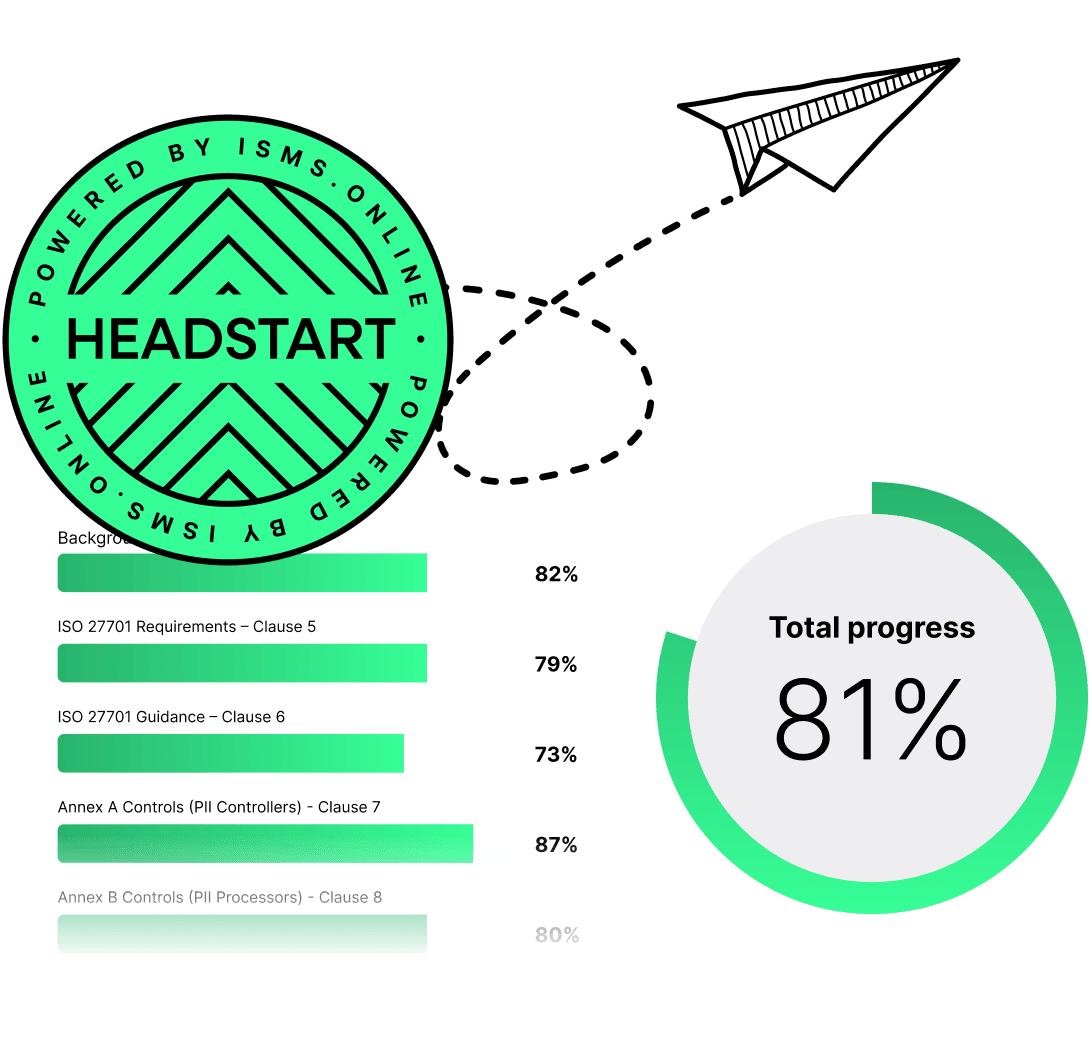
An 81% Headstart from day one
We’ve done the hard work for you, giving you an 81% Headstart from the moment you log on. All you have to do is fill in the blanks.
Defining ‘privileged utility programmes’ in MSP environments
You implement A.8.18 effectively only when everyone agrees which tools count as privileged utilities in your MSP. To implement the control properly, you first need to answer a deceptively simple question: what exactly counts as a privileged utility programme in your environment. For an MSP, that list is much broader than just operating system tools on an internal server. It includes any platform that can bypass normal business logic, change security settings at scale or act across many customer environments. You cannot control what you have not identified, so building a clear, shared definition and list is the starting point for everything that follows.
Typical privileged utilities in an MSP tool stack
Typical privileged utilities in an MSP tool stack are the platforms your staff can use to bypass normal checks and make wide‑ranging changes. That usually includes RMM agents and consoles, PSA administration interfaces, backup and disaster recovery platforms, hypervisor and storage consoles, cloud management portals and powerful remote shells or scripting tools. If your engineers can drive a tool to make large‑scale changes, it probably belongs in your privileged utility list. In a managed service provider context, privileged utilities typically include:
- RMM platforms and their agent‑based capabilities
- administration interfaces for your professional services automation tool, especially where they can trigger actions in other systems
- backup and disaster recovery consoles that can delete, alter or restore large volumes of data
- hypervisor and storage management consoles that can power systems on or off, or snapshot and roll back environments
- cloud management portals and command‑line tools that administer customer infrastructure and identities
- powerful scripting environments and remote shells used for remediation across many endpoints
These tools may belong to you, your customers or third parties, but if your staff can drive them, they fall within the spirit of A.8.18. Drawing that line clearly helps engineers understand why these tools are treated differently from everyday software.
Using risk‑based tiers so scope stays manageable
Risk‑based tiers let you focus your strictest controls on the tools that could hurt the most, while still managing everything else. Not every tool with administrative options needs the same level of control. A tiering model helps you stay practical while still taking A.8.18 seriously and gives you a clear way to explain your approach to auditors and customers.
For example, you might define:
- Tier 1: tools or consoles that can affect many customers or entire environments in a single action, such as your primary RMM, backup or cloud administration portals
- Tier 2: tools that can significantly affect one customer’s environment at a time, such as a single‑tenant firewall console
- Tier 3: tools that provide powerful functions on individual hosts but do not readily scale, such as local diagnostic utilities
Tier 1 utilities attract the strongest access restrictions, monitoring and approvals. Tier 2 and Tier 3 are still controlled, but you might allow more flexibility in how quickly engineers can access them, especially during incidents, provided you retain sufficient evidence of what was done. This keeps the scope manageable while still aligning with the intent of the standard.
Assigning owners for every privileged utility
Every privileged utility needs a named owner so configuration, access and monitoring do not quietly drift over time. Once you know what is in scope and how critical each item is, someone needs to be accountable for keeping it under control. That ownership gives auditors a clear point of contact and gives engineers clarity on who decides what.
For each privileged utility, it helps to record:
- who owns the relationship with the vendor and approves changes to the tool
- who administers access and keeps role definitions up to date
- who is responsible for reviewing logs and following up on anomalies
This ownership mapping should live inside your information security management system so it survives staff changes and can be referenced easily in audits and management reviews. In an ISMS platform such as ISMS.online you can register each tool, its owner and related risks and controls in one place, so the picture remains accurate over time. Without clear owners, privileged utilities tend to accumulate exceptions, shared accounts and unreviewed logs that quietly increase your risk.
Mapping A.8.18 onto RMM, PSA and remote access workflows
A.8.18 only really comes to life when it shapes how you use privileged tools in tickets, changes and incidents. Knowing which tools are privileged is important, but the control is really tested in the way you use those tools during normal work, changes and incidents. For MSPs, that means embedding control into everyday workflows rather than relying on people to remember abstract rules. When you map your incident response and change processes through the lens of A.8.18, you can decide where access should be automatic, where it should require explicit elevation and where an additional approver or enhanced monitoring is justified. To show real control, you need RMM, PSA and remote access workflows that make high‑risk actions visible, justified and logged by default. Embedding decisions about privileged utility use into tickets and change records helps engineers work quickly while giving you clear evidence that these tools are governed as the standard expects.
If you only tighten console settings but leave your workflows unchanged, engineers will naturally find shortcuts when under pressure. By designing your service desk, change management and incident processes to include privileged utility decisions as standard steps, you make it much easier for people to do the right thing without constant reminders.
Incident and change workflows through an A.8.18 lens
Looking at your incident and change workflows through an A.8.18 lens means spotting where privileged tools are used and tightening those steps. You do not have to slow everything down, but you should distinguish between low‑risk diagnostics and high‑impact actions such as mass script deployment. By deciding where extra approvals, documentation or monitoring are needed, you make powerful tools predictable and defensible instead of ad hoc and opaque.
Take a typical RMM‑driven response to an endpoint alert. A support engineer:
- receives an alert in the RMM or PSA
- opens a remote session or command shell
- runs a set of diagnostics or scripts
- deploys a fix, which might include software changes or registry edits
From an A.8.18 perspective, the most sensitive steps are those that alter configuration or run arbitrary command sequences at scale. You might decide that:
- connecting interactively to an endpoint under a named, authenticated account is permitted for certain roles without extra approvals
- running pre‑approved diagnostic scripts is also permitted, provided the scripts are version‑controlled and cannot be edited on the fly
- deploying new or modified scripts, or running ad‑hoc commands across many machines, requires either a change record or someone else to approve the action in advance
The aim is not to burden every action with a committee, but to ensure that high‑impact use of privileged utilities is predictable, justified and visible.
Normal, elevated and emergency access paths
Defining clear “normal, elevated and emergency” access paths helps engineers act quickly without losing control of privileged tools. Engineers work under time pressure, especially on‑call. A useful design pattern is to define three modes of access that fit how you already work.
Normal access
Normal access covers routine tasks under roles with limited privilege. In this mode, engineers handle day‑to‑day monitoring, low‑risk changes and basic troubleshooting using pre‑defined roles that do not allow high‑impact actions such as mass deployment or policy changes.
Elevated access
Elevated access covers planned, high‑impact work using just‑in‑time privileges tied to tickets or change records. Engineers request elevated rights for a specific purpose and for a limited time, and the system logs who approved the change, when access was granted and what actions were taken while privileges were higher.
Emergency access
Emergency access covers urgent situations where the priority is to stabilise systems quickly, with stronger review afterwards. You might allow temporary overrides of normal approval paths during a major outage, but require engineers to reference an incident record and submit the actions taken for post‑incident review within an agreed window.
For each mode, you can specify which roles may use it, which tools and features are available and what additional confirmation or monitoring is required. This keeps your response fast without leaving high‑privilege utilities permanently wide open.
Making approvals part of the ticket, not an extra hoop
Approvals for privileged utility use work best when they live inside your PSA workflows rather than in separate, manual processes. If approvals for privileged utility use live in a separate system from your tickets and changes, they will quickly be seen as an extra hoop and are more likely to be bypassed. Mapping A.8.18 into your PSA means:
- defining workflows where high‑risk RMM actions cannot be triggered until a ticket reaches an approved state
- linking script libraries and bulk actions to change records, so reviewers can see exactly what will happen
- capturing who approved what, and why, in a way that is easy to retrieve later
When approvals are embedded in the system where work is already managed, engineers experience less friction and you gain much clearer evidence that privileged utilities are not being used ad hoc. This evidence directly supports your A.8.18 storey when auditors or customers ask how you keep powerful tools under control.

Free yourself from a mountain of spreadsheets
Embed, expand and scale your compliance, without the mess. IO gives you the resilience and confidence to grow securely.
A technical hardening blueprint for privileged MSP tooling
A technical hardening blueprint for privileged MSP tooling turns A.8.18 from a policy statement into concrete, repeatable configuration. Governance and workflow changes will not protect you if the tools themselves are poorly configured. The control expects more than an acceptable‑use policy; it expects that privileged utilities are not only restricted in who can use them, but are also configured in a way that reduces misuse and makes activity observable. For MSPs, building a simple, product‑agnostic hardening standard for RMM, PSA administration, backup consoles and remote access gateways helps you enforce a minimum baseline everywhere, even where different products are involved, and makes it easier to show auditors that your configuration supports, rather than undermines, your governance.
Baseline controls every privileged tool should meet
Every privileged tool in your stack should meet a minimum baseline for authentication, exposure, configuration, logging and recovery. At a minimum you need strong, multi‑factor authentication, named roles based on least privilege, restricted management access, hardened default settings, centralised audit logging and reliable configuration backups. Writing this down as a short, product‑agnostic standard lets you apply A.8.18 consistently, even as you add or change tools.
Although individual products vary, every privileged utility should meet some basic conditions:
- strong authentication: multi‑factor authentication for all administrative access, ideally using single sign‑on tied to your identity provider
- named accounts and roles: no shared “admin” accounts, and clear role definitions that support least privilege
- restricted network exposure: management interfaces reachable only from defined networks or through secure jump hosts or VPNs
- hardened configuration: unnecessary features disabled, default credentials removed and secure defaults selected wherever available
- comprehensive logging: detailed audit logs for authentication, configuration changes and privileged actions, forwarded to a central log platform
- resilient configuration backup: secure, versioned backups of tool configuration so that you can recover or roll back after a compromise
Writing this baseline down as a short, technology‑agnostic standard means you can apply it consistently as you adopt or change tools. It also gives you a simple checklist you can show to auditors and customers to demonstrate how you interpret A.8.18 in practical terms.
Example: before‑and‑after hardening of an RMM platform
A “before and after” picture of RMM hardening makes the idea of tighter control tangible for engineers and leaders. Even if your specific product uses different terminology, a simple comparison shows what “tightly controlled” really means and why it matters for A.8.18 and customer assurance.
Before and after hardening of an RMM deployment:
| Aspect | Legacy deployment | Hardened deployment |
|---|---|---|
| Authentication | Password only, mixed strength | Single sign‑on with multi‑factor authentication |
| Accounts and roles | Shared admin account for all senior engineers | Named accounts with role‑based access and least privilege |
| Network exposure | Console accessible from the general internet | Console restricted to management network and VPN |
| Script execution | Ad‑hoc scripts editable in production | Version‑controlled scripts with approval for changes |
| Logging | Local logs kept by default settings only | Logs forwarded centrally and retained to an agreed period |
| Configuration backup | Informal backups taken occasionally | Automated, encrypted configuration backups with testing |
Even if your deployment starts from a different baseline, this kind of comparison makes it clear what “tightly controlled” looks like in everyday terms. You can use a similar pattern for backup consoles, cloud portals and other Tier 1 tools to drive consistent expectations. Security baselines such as the CIS Controls and their cloud companion guidance also use comparative “before/after” examples to help teams visualise what a hardened, well‑governed configuration should look like.
Keeping configuration hardening aligned with vendor change
Configuration hardening needs to be a recurring habit because vendors continually change features, defaults and integration patterns. If you treat hardening as a one‑off project, your posture will drift over time. To keep A.8.18 implementation healthy, you need a simple rhythm for revisiting privileged tools and checking that they still meet your standard.
Vendors regularly add features, change configuration options and deprecate old settings. To stay aligned you can:
- include main privileged utilities in your asset and risk registers, so they appear in periodic reviews
- subscribe to vendor security advisories and review whether changes affect your hardening baseline
- build simple configuration checklists that engineers can run through after upgrades or new deployments
- record key settings in your ISMS, so an external auditor can see both the standard and how you apply it
This approach requires some discipline but does not need to be heavy‑weight. The aim is to make it hard for configuration to quietly slip back into risky territory without anyone noticing.
Hardened tools are not a one‑time milestone; they are a habit you renew.
RBAC, just‑in‑time access and session recording that satisfy auditors
Role‑based access control, just‑in‑time elevation and session recording turn privileged utility control from a policy into something auditors and customers can trust. Even well‑hardened tools become dangerous if too many people hold broad, permanent privileges. ISO 27001 and related guidance emphasise the principle of least privilege and expect you to demonstrate that you apply it in practice. National cyber security guidance, such as the UK NCSC’s privilege management recommendations, similarly stresses tight control of powerful accounts and clear evidence of how they are used. For MSPs, that usually means designing clear roles for RMM, PSA and backup consoles, reducing standing high‑privilege access, using just‑in‑time elevation for risky tasks and recording or closely monitoring the most sensitive sessions. If only defined roles can use powerful features, extra rights are granted temporarily and high‑risk sessions are observable, you reduce the chance of quiet misuse and gain clear, repeatable answers when customers and auditors ask who can access their environments and under what conditions.
Role models and elevation patterns also give you a way to respond constructively when customers query who can access their environments. Instead of vague “only senior engineers can” statements, you can describe specific roles, elevation paths and monitoring measures that apply across all customers.
Designing roles that reflect real work
Roles satisfy A.8.18 best when they mirror how your engineers actually deliver services, not an idealised organisation chart. Role‑based access control is only effective if the roles match how your teams actually operate. Start by identifying the real tasks people perform, then group the minimum tool permissions needed for those tasks into roles for support, specialists and platform administrators. When roles align with day‑to‑day work, engineers can see what they are allowed to do and auditors can trace access back to a clear business purpose.
A common pattern for MSP tooling might include:
- support roles that can see alerts, review information and run low‑risk diagnostics
- specialist roles that can perform more advanced changes in their area, such as network or backup administration
- platform administration roles that configure the tools themselves, such as RMM settings, script libraries and integration with identity providers
When defining roles, focus on:
- what tasks each role needs to complete
- which tools and actions are genuinely required to complete those tasks
- what could go wrong if the role is misused
Engineers should not have to guess whether they are allowed to perform a given action; the role model should make it obvious. Auditors should be able to see a clear link between “job function” and “tool capability” without finding unexplained exceptions.
Implementing just‑in‑time elevation without killing SLAs
Just‑in‑time elevation gives engineers temporary extra rights linked to tickets or changes, then automatically removes them after the work is done. That means powerful permissions are only present when needed and are always attached to a clear business purpose. For MSPs, this is one of the most effective ways to shrink your attack surface without slowing service.
In an MSP setting, just‑in‑time access can be implemented by:
- requiring engineers to raise or link to a ticket or change record when elevated rights are needed
- using your identity provider or privileged access tools to grant a higher‑privilege role for a defined period only
- ensuring the elevated session is logged in more detail, including who approved the elevation and why
To keep service levels healthy, you can:
- pre‑define common elevation scenarios, such as planned patching windows or regular maintenance tasks, with standard approval paths
- allow rapid approvals during incidents, with a requirement for post‑incident review rather than heavy up‑front debate
- monitor how long elevated roles stay active and adjust time limits based on real usage patterns
The goal is to shrink the window in which powerful utilities can be used without turning every action into a bureaucratic exercise. When you can show auditors and customers that high‑risk powers are only present when needed and are always tied to a ticket and approver, you significantly strengthen your A.8.18 storey.
Knowing when and how to record sessions
Recording the riskiest sessions gives you strong evidence and powerful forensic tools if something goes wrong. Session recording can feel intrusive if not handled carefully, but it is one of the strongest ways to demonstrate control over privileged utilities and to investigate suspected misuse. Rather than recording everything, you can take a risk‑based approach and focus on activity with the highest potential impact.
For example, you might decide to record or capture detailed activity logs for:
- actions performed under the highest‑privilege roles
- cross‑tenant operations, such as mass software deployments or global configuration changes
- emergency interventions where usual approvals could not be obtained in advance
When introducing recording you should:
- be transparent with staff about what is captured, why and how it will be used
- ensure recordings and logs are stored securely and access is restricted
- include review of recorded sessions in your monitoring processes for privileged utilities
In an audit, being able to show that high‑risk activity is observable and that you have used that visibility to learn and improve carries significant weight. It also reassures customers that you take the power of your tools seriously and do not rely solely on trust.

Manage all your compliance, all in one place
ISMS.online supports over 100 standards and regulations, giving you a single platform for all your compliance needs.
Turning privileged tooling logs into A.8.18 evidence and customer assurance
Turning privileged tooling logs into structured evidence allows you to prove A.8.18 in practice rather than just describe it on paper. The control is not only about designing good controls; it is also about being able to show that those controls exist and are operating. That matters not just for your ISO 27001 auditor but also for customer security teams and insurers who want reassurance that your privileged utilities are under real control. Instead of treating logs as a forensic afterthought, you can decide what to collect, how to summarise it and how to present it to auditors and customers. A small, well‑maintained evidence pack built from real log data can transform your storey from “trust us” into a concrete demonstration of control.
If you leave logs scattered across tools and only pull them when something goes wrong, you miss the opportunity to show consistent, proactive oversight. Treating privileged tooling logs as part of your core evidence set for A.8.18 changes the conversation with auditors and customers from “trust us” to “let us show you”.
The minimum evidence pack for A.8.18
A focused evidence pack for A.8.18 is more persuasive than dumping raw log exports on an auditor. Aim to combine policy documents, an inventory of privileged utilities with owners and risk levels, role definitions and example access approvals with a handful of log excerpts. If those samples clearly show who did what, when and under which control, you will answer most of the questions auditors and customers are likely to ask.
In the 2025 ISMS.online survey, around 41% of organisations named managing third‑party risk and tracking supplier compliance as one of their top information‑security challenges.
A practical A.8.18 evidence set for an MSP usually includes:
- a clear policy or standard describing how privileged utilities are defined and controlled
- an inventory of those utilities, with ownership and risk level
- role definitions and access rules for RMM, PSA administration, backup consoles and similar tools
- records of access approvals or just‑in‑time elevation for high‑risk actions
- representative logs or reports showing how those tools have been used over a period, including who did what and when
You do not need to drown auditors in raw data. A handful of carefully chosen examples that match your documented process are far more persuasive than an unstructured export of everything. Over time you can expand this pack, but even a basic set like this, kept up to date, goes a long way.
Making logs readable for leaders and customers
Summaries and trends from privileged tooling logs help leaders and customers see that you control powerful access, not just react to misuse. Raw logs are written for machines and specialists. To support management reviews and customer due diligence, you will likely need to create human‑readable summaries that show how your controls work over time.
That might involve:
- monthly or quarterly reports listing key metrics, such as how many people hold each privileged role, how many elevations occurred and how many unusual events were detected and resolved
- short narratives describing how a sample of privileged actions flowed from ticket, to approval, to tool, to completion
- simple visualisations or tables that show trends in privileged access usage, such as reductions in shared accounts or increasing adoption of just‑in‑time patterns
When leadership can quickly see that privileged utilities are being used in a controlled way, discussions about further investment and improvement become easier. Customers will also find it easier to trust you when you can explain your oversight in plain language backed by real data.
Using strong evidence as a sales and assurance asset
Strong A.8.18 evidence can differentiate you from competitors by showing customers exactly how you govern your most powerful tools. Customers increasingly see MSPs as part of their own risk surface. Independent assessments of managed service provider risk, such as SecurityScorecard’s analysis of MSP security risks, explicitly describe MSPs as components of their customers’ attack surface, reinforcing this trend. When you can demonstrate mature control over privileged utilities, you differentiate yourself from competitors who rely on vague assurances and generic policy documents. Vendors that provide ISO 27001 monitoring and logging tooling, for example in guides on using monitoring data to support certification and tenders, also highlight how clear, well‑structured evidence can strengthen your position in security questionnaires and sales conversations.
According to the 2025 ISMS.online survey, customers increasingly expect their suppliers to align with formal security and privacy frameworks such as ISO 27001, ISO 27701, GDPR, Cyber Essentials, SOC 2 and emerging AI standards.
You can:
- answer security questionnaires faster and with more confidence by drawing on your existing evidence pack
- bring anonymised examples of privileged access reports into sales or renewal conversations to show how you protect customer environments
- respond to due diligence requests by sharing structured descriptions of your A.8.18 implementation, rather than scrambling to assemble screenshots
Over time, this transparency builds trust and can be a deciding factor when larger or more regulated customers select service providers. Privileged utility control stops being an awkward topic and becomes a proof point you can lean on. When this evidence is mapped and maintained inside a structured ISMS, preparing it for different audiences becomes a routine task rather than a fire drill.
Book a Demo With ISMS.online Today
ISMS.online helps you turn your privileged tooling controls, risks and evidence into a single, coherent A.8.18 storey that is easy to explain to auditors and customers. Instead of chasing screenshots and spreadsheets, you can document tools, owners, policies and logs in one environment that supports reviews, audits and continuous improvement. A short, exploratory demo can help you see how your current practices map onto ISO 27001 and whether a central platform is the right fit for your organisation.
See your A.8.18 storey in one place
Seeing your A.8.18 storey in one place makes conversations with auditors and customers far easier. When you can show which tools are privileged, who owns them, which risks and controls they link to and what evidence proves this, you move away from improvised explanations. A structured ISMS view also helps you spot gaps earlier, because the relationships between tools, risks and controls are visible rather than hidden in email threads.
With ISMS.online you can define what counts as a privileged utility, record who owns each tool, link it to specific risks and controls and attach the policies, procedures and evidence that show how it is governed. When an auditor or customer asks how you meet A.8.18, you can walk through that structure instead of hunting through folders, spreadsheets and console screenshots. That same structure also supports related controls on access management, logging and monitoring, so your efforts compound rather than fragment.
Despite the pressure, almost all respondents in the 2025 ISMS.online survey list achieving or maintaining security certifications such as ISO 27001 or SOC 2 as a top priority.
Start small with one critical tool
Starting with your highest‑risk tool lets you build momentum without overwhelming your team. A practical first step is to pick your primary RMM platform and model its A.8.18 storey in ISMS.online. That means:
- adding it to your privileged utilities inventory
- recording the roles that can access it and how those roles are approved and reviewed
- linking relevant scripts, playbooks and procedures
- attaching representative logs or reports as evidence
Once you see the value of having that picture in one place, you can bring in PSA administration, backup consoles and cloud portals at a pace that fits your capacity. You keep control over the pace of change while steadily reducing the chance that a privileged tool falls through the cracks.
Grow from A.8.18 into a full Annex A programme
Privileged utilities are a natural starting point because the risk is so visible, but Annex A covers many other areas that matter to MSPs, from incident management to supplier security. ISMS.online includes pre‑built frameworks and workflows that you can adapt to your context, so the same environment that houses your A.8.18 work can gradually become the home for your whole information security management system. That way, every improvement you make to privileged tooling hardening also strengthens your overall compliance posture and the trust your customers place in you.
Two‑thirds of organisations in the 2025 ISMS.online State of Information Security survey say the speed and volume of regulatory change are making compliance harder to sustain.
If you want to move from scattered controls and ad‑hoc evidence to a structured, living ISMS that shows exactly how you protect and govern your most powerful tools, ISMS.online is designed to support you. Choose ISMS.online when you want your MSP to show clear, credible control over privileged utilities, and when you value faster audits, stronger customer assurance and a single, joined‑up storey about how you manage risk. If you would like to see how your current practices map to the standard, a short demo can help you decide whether a central platform like ISMS.online is the right next step for your organisation.
Book a demoFrequently Asked Questions
How does ISO 27001:2022 A.8.18 actually change what you do every day as an MSP?
ISO 27001:2022 A.8.18 turns your most powerful MSP tools into governed assets with clear ownership, access rules and evidence, instead of “whatever the engineers happen to use to get things done.” Practically, it forces you to be able to show, in a simple, repeatable way, what each privileged tool is, who can use it, how it is used, and how that use is monitored.
What does A.8.18 look like in real MSP workflows?
In a typical managed service provider, strong A.8.18 alignment shows up as:
- A small, maintained register of powerful tools:
A concise list of RMMs, PSA admin areas, BDR consoles, hypervisors, cloud and identity portals, with owners, locations and risk categories.
- A business‑level definition of “privileged utility”:
Something engineers can recognise instantly, such as: “Any console or tool that can bypass normal approvals or make changes across many devices, tenants or services in one action.”
- Named, role‑based access only:
No shared “admin” accounts, MFA enforced everywhere, and clear separation between day‑to‑day roles and rare “break‑glass” rights.
- Approvals tied to tickets and changes:
High‑impact actions – global scripts, tenant‑wide policy edits, disabling backups – are always linked to a ticket or change record with an explicit decision.
- Traceable examples on demand:
If an auditor or customer points to a recent change, you can walk them from the policy, to the ticket, to the console log, in a couple of clicks.
When you can move smoothly from policy wording to tool inventory to access design to a real log entry, you are no longer arguing over interpretations of A.8.18. You are simply showing that privileged utilities are understood, controlled and monitored. ISMS.online helps you keep that storey in one place – policies, registers, roles, risks and reviews – so you do not have to rebuild it from scratch every time someone checks how you run your stack.
What should count as a “privileged utility programme” in a modern MSP, beyond old‑school admin tools?
A “privileged utility programme” is any tool that lets you bypass normal checks or act with unusually broad effect, even if it does not look like a traditional system utility. In an MSP that usually means management planes and automation engines, not just command‑line tools on individual servers.
Which MSP tools normally fall under A.8.18, and how do you avoid an unmanageable list?
Most service providers end up treating the following as in scope for A.8.18:
- RMM platforms and automation engines:
Anything that can script, deploy or reconfigure across many endpoints or tenants.
- PSA administration and integration hubs:
Areas that can trigger changes in other systems or alter how tickets, approvals or notifications behave.
- Backup and DR consoles:
Interfaces that can delete backups, adjust retention, modify schedules or change encryption settings.
- Hypervisor and network management tools:
Management planes for virtualisation, firewalls, switches and SD‑WAN that can alter core infrastructure in one move.
- Cloud and identity portals:
Azure, Microsoft 365, AWS, Google Cloud, Okta, Entra ID and similar, where tenant‑wide and cross‑tenant changes are made.
- Shared shells and multi‑tenant scripting hosts:
Jump servers, bastion hosts or script runners that give engineers broad reach across estates.
To keep this under control, many MSPs adopt a tiered model that they can explain in a single slide:
| Tier | Scope of impact | Typical examples |
|---|---|---|
| 1 | Multi‑tenant / multi‑customer / core infra | RMM consoles, hypervisors, cloud and identity |
| 2 | Single‑tenant but high impact | Customer firewalls, backup consoles, PSA admin |
| 3 | Local or narrow scope but still sensitive | Server admin tools, jump hosts, key management |
You apply the tightest access, logging and approval rules to Tier 1, solid control to Tier 2, and proportionate safeguards to Tier 3. Recording those tiers, owners and justifications inside your ISMS means engineers understand why some tools feel “heavier” to use, and auditors see that your definition of privileged utilities is thought through rather than arbitrary.
How can you embed A.8.18 into RMM, PSA and remote access workflows without slowing engineers or missing SLAs?
A.8.18 lands well when privileged‑tool decisions sit naturally inside the tickets, changes and incident flows your teams already live in. When it is treated as a separate checklist, it tends to get ignored until an audit is on the calendar.
What access modes keep privileged tooling safe but still practical?
A model that works for many MSPs is to define three access modes and wire them through your existing systems:
- Normal mode:
Everyday diagnostics and low‑risk work under constrained roles and pre‑approved playbooks – no extra approvals required. People can get things done for a single user or device without bumping into process.
- Elevated mode:
Planned, higher‑impact activities – global policy rollouts, large software pushes, firewall changes – where rights are raised just in time from a ticket or change record and then dropped back automatically.
- Emergency mode:
Urgent actions during an incident where you deliberately trade some process for speed, under a tight group of trusted staff, then compensate with fuller logging, review and tidy‑up once the emergency has passed.
Once you sketch a few common flows – for example, onboarding a new customer, responding to a critical alert or deploying a major update – it becomes clear where privileged utilities sit. Those steps are where you:
- Require a valid ticket or change.
- Present specific elevated roles instead of permanent admin.
- Turn on enhanced logging or, for the very highest‑risk paths, session recording.
Engineers still move quickly because approvals and access are part of the systems they already use, not separate portals and spreadsheets. At the same time, every significant use of a privileged utility leaves a trace that is easy to explain. ISMS.online supports this pattern by storing the procedures, role models and review schedules behind those flows, so your documentation and your tooling do not drift apart over time.
What hardening baseline should you set for privileged tools before you call your A.8.18 controls credible?
If your RMM, backup consoles and cloud portals are only lightly protected, no auditor will be convinced by a neat policy. Before A.8.18 feels robust, you need a minimum technical standard that applies across your privileged utilities.
Which technical controls give you the biggest reduction in risk quickly?
For each privileged tool you should be able to show, without hunting, that:
- Multi‑factor authentication is enforced for all admin access:
Ideally through your central identity provider, with conditional access policies or IP restrictions to reduce exposure.
- Named, role‑based accounts are used for real work:
Shared “admin” logins are switched off, and rights are grouped into roles that reflect real responsibilities rather than vague “super user” labels.
- Management planes are shielded from the open internet:
Access is limited to management networks, VPNs or jump hosts, with clear separation between user access paths and admin paths.
- Configuration is hardened and kept under change control:
Defaults are removed, unused services disabled, vendor recommendations applied, and any significant settings changes are aligned with change records.
- Admin, configuration and authentication logs are centralised:
Events flow to a log platform or SIEM, with agreed retention and an understanding of who looks at them and when.
- Configuration backups exist, are encrypted and are tested:
You can restore or roll back console and core infrastructure settings quickly if you suffer a mistake or compromise.
For many MSPs this is a tight, time‑boxed uplift project rather than a huge programme: pick your Tier 1 tools, close the gaps against a short hardening checklist, then flow that baseline into Tier 2 and Tier 3 gradually. Documenting the target state, owners and check frequency in ISMS.online turns one‑off improvements into a live standard you can show to customers and auditors whenever they ask how your privileged utilities are protected.
How do RBAC, just‑in‑time elevation and session monitoring prove that A.8.18 is working without smothering your teams?
Role‑based access control, temporary elevation and targeted session monitoring give you a way to limit who can use privileged utilities, under what conditions, and with what level of scrutiny, without turning day‑to‑day support into a constant series of access requests.
How can you design an access model engineers will respect rather than try to route around?
A practical, accepted model usually has a few common traits:
- Roles line up with real jobs, not abstract labels:
You separate roles for service desk, escalation engineers, platform specialists and tenant administrators, and you map those roles consistently into your RMM, PSA, backup and cloud portals.
- Very few always‑on high‑privilege accounts:
Permanent “super admin” roles are restricted to a small number of platform owners, with stronger controls and more frequent reviews.
- Elevation is time‑bound and tied to work, not people:
Engineers request extra rights in the context of a ticket or change, gain what they need for that task or for a defined window, then automatically drop back to their normal level.
- Extra monitoring on the genuinely risky paths:
Cross‑tenant edits, mass automation and emergency break‑glass scenarios have richer logs, alerts or recordings so that you can examine what happened with confidence afterwards.
Routine activities – fixing an issue for a single user, making a simple configuration change under an agreed playbook – sit within lower‑privilege roles and do not require special handling. This keeps response times sharp while still demonstrating to customers and auditors that high‑risk functions on privileged tools are both constrained and visible. ISMS.online helps you hold the underlying access design, risk reasoning and review evidence so that your model is not just “something we think works” but something you can show and defend.
What evidence should you have at hand to show customers and auditors that A.8.18 is genuinely under control?
Auditors, cyber‑insurers and larger customers want to see that your approach to privileged utilities is intentional, consistent and demonstrable, not something written the night before an assessment. The goal is a compact set of artefacts that paints a full picture without drowning anyone in raw log exports.
Which lean evidence set tells a clear and convincing A.8.18 storey?
You should be able to produce, quickly and calmly:
- A short policy definition and inventory for privileged utilities:
A page that defines what “privileged utility” means in your organisation, and a supporting register listing tools, owners, locations and risk tiers.
- Role descriptions and access rules for key platforms:
Simple role narratives and access matrices for RMM, PSA admin areas, backup consoles, hypervisors, cloud and identity portals.
- A handful of worked examples of elevated access:
Recent tickets or change records showing a request, approval, time‑bound elevation in a tool, and matching entries in the tool’s logs.
- Usage and review records for privileged features:
Periodic reports or extracts summarising how often high‑impact features are used, by whom, and the outcome of any investigations or tuning.
- Review notes or meeting minutes for periodic checks:
Evidence that you regularly review the inventory, roles and activity, adjust where needed, and record those decisions.
Keeping this material together in your ISMS, rather than spread across email threads and individual laptops, means you can treat external questioning as a routine activity rather than a scramble. ISMS.online is designed to hold that definition, inventory, ownership, risk context and supporting evidence in one environment, so when someone asks how you meet ISO 27001:2022 A.8.18, you can respond with a calm, coherent picture instead of a rush to assemble one under pressure.






