





































Why traditional ISO 27001 projects break MSP service delivery
Traditional ISO 27001 projects break MSP service delivery when they sit outside your PSA, RMM and everyday workflows, creating parallel processes, extra meetings and ad‑hoc admin that turn security work into extra paperwork instead of better service. When policies, risks and controls live in office tools and shared drives rather than in your PSA, RMM or ITSM platforms, ISO work shows up as a second job for already stretched teams. Engineers feel pulled away from tickets, changes and projects just when demand is high, SLAs come under pressure, and the people you rely on most carry more stress rather than more confidence. To keep SLAs intact, you need an approach that lives inside your existing tools instead of beside them.
Security lands best when it feels like help, not homework.
For clarity: everything here is general information, not legal or certification advice. You should always take your own professional advice before making decisions.
The “document‑first” project that lives outside your tools
Document‑first ISO projects slow MSPs because they start in generic templates and folders, far from your PSA, RMM or ITSM tools. They usually live in documents and shared drives rather than in the systems your teams actually use to deliver services, so engineers experience them as paperwork from a different world that ignores how you really run tickets, changes and onboarding.
A consultant arrives, opens a folder of policies and starts asking for procedures and registers nobody has time to write. Most of that work happens in word‑processed documents and spreadsheets, saved in shared drives far from your PSA, RMM or ITSM platforms. Because the project runs in a different place from service delivery, engineers see it as extra work, not as part of getting customer outcomes right.
You may see a new change form that bears no relation to how your CAB really approves changes, or an incident template that does not match how your NOC logs major outages. That disconnect is why you often get more forms and workshops but very little improvement in how incidents, changes or onboarding actually run. Over time, the gap between “ISO paperwork” and “real work” grows, and people quietly route around the system.
Shadow processes that bypass your real workflows
Shadow ISO processes appear when templates do not fit how your NOC, SOC or service desk really works, and people quietly invent work‑arounds. Unofficial shortcuts in chat, undocumented firewall tweaks and side agreements about “exceptions” keep customers happy in the moment while leaving your ISMS behind.
On paper you look more controlled, but your actual risk and operational load increase. Engineers must remember two separate ways of doing the same job, so they naturally favour the one that unblocks a customer fastest, even if it leaves your ISMS behind. As the gap grows, what the ISO documents say and what your teams actually do drift further apart, leaving you exposed if something goes wrong and an auditor asks to see evidence.
Capacity drain on your most experienced engineers
Document‑heavy ISO projects often drain your most experienced engineers by turning them into default ISO people who spend hours in workshops instead of on complex customer work. Their calendars fill with gap‑analysis calls and document reviews, and their time for mentoring, design and incident response shrinks. Implementation guides from ISO 27001 consultants often describe the same pattern, with senior engineers diverted into workshops and document reviews instead of high‑value customer work.
While they are in those sessions, they are not closing complex tickets, mentoring juniors or leading out‑of‑hours incident response. Time‑tracking around a traditional ISO project often shows a noticeable drop in utilisation and throughput in exactly the teams you can least afford to slow down. In the 2025 ISMS.online survey, 42% of organisations said their biggest information-security challenge is a gap in the skills and capacity they need. Over time, those engineers can feel punished for their expertise, which hurts morale and, eventually, retention as they look for roles where they can focus on technical leadership rather than paperwork.
At a high level, most struggling MSP ISO projects share three patterns. Practitioner handbooks and case studies on ISO 27001 implementation often call out very similar themes when projects stall or fail:
- Document‑first projects: that live in office tools instead of PSA, RMM and ITSM workflows.
- Shadow processes: that compete with the way your NOC, SOC and service desk already work.
- Capacity drain: as your most experienced engineers disappear into ISO workshops.
You turn the corner when ISO 27001 stops being a side project and becomes a way to strengthen the service model you already run every day.
Book a demoThe larger shift: from paperwork‑first to service‑first security
MSPs can implement ISO 27001 without slowing delivery by treating the ISMS as a service‑first governance layer around tickets, changes and incidents, rather than a parallel bureaucracy. When ISO work is expressed as improvements to the way you already handle tickets, changes and incidents in your existing tools, SLAs stay intact and certification work feels like better operations, not extra work.
A service‑first approach treats the ISMS as a governance and evidence layer around existing services, not as a separate machine. The standard tells you what good management should look like; your ITIL and DevOps workflows are how you actually deliver that in real time. Put differently, your ISMS should describe and tune the way you already run tickets, changes and incidents, not invent a parallel universe of “ISO processes”. When the secure way of working is also the easiest way to get work done, adoption stops being a battle.
The right process makes the secure path the easiest path.
A modern ISMS platform such as ISMS.online can help you model that service‑first approach, because it is designed to sit over PSA, RMM and other operational tools rather than replace them. That means security management can become part of your delivery fabric instead of a separate stack of documents.
Why “security slows us down” is often a design problem, not a fact
“Security slows us down” is usually a design problem, not a hard rule of MSP life. When checks and approvals sit outside your real workflows, they become obstacles; when they sit inside them, they remove rework and surprises.
In many high‑performing technology teams, strong controls, automation and disciplined change management sit alongside faster delivery and quicker recovery from failures. Long‑running studies of DevOps and ITIL practices have shown that teams which embed testing, monitoring and change discipline into their pipelines can improve both speed and stability at the same time, rather than trading one for the other. When you embed security checks into pipelines, tickets and runbooks, you remove surprises and rework. You spend less time firefighting avoidable incidents and more time on planned work. For a 24/7 MSP, that can mean fewer night‑time incidents, smoother maintenance windows and more predictable engineer workloads, which matters to both service leaders and frontline staff.
Connecting ISO 27001 to regulatory and customer pressure
ISO 27001 gives you a common language to answer regulators and customers who now expect managed services to operate like part of a critical supply chain. When you bind the standard to your real services, you can meet those expectations without trying to behave like a bank.
For MSPs, ISO 27001 is increasingly part of meeting regulatory and customer expectations, not just winning a badge. New regulations such as NIS 2 treat managed service providers as part of the critical supply chain, which increases both scrutiny and expectation. EU materials on the NIS 2 Directive, for example, explicitly draw attention to managed service and other digital infrastructure providers as part of the wider ecosystem, with corresponding expectations on their security management and incident reporting.
The State of Information Security 2025 report shows that customers increasingly expect suppliers to align with formal frameworks such as ISO 27001, ISO 27701, GDPR or SOC 2 rather than relying on generic good practice claims.
Large customers, especially in regulated sectors, are now expected to prove that their suppliers run structured security management with clear risk decisions, documented controls and working incident processes. Guidance on supply‑chain and third‑party risk from regulators and industry bodies stresses that regulated organisations should be able to demonstrate how they govern security across key suppliers, which pushes those expectations directly onto MSPs. If you sit in a CISO or risk role, this is the lens regulators increasingly expect you to bring to your MSP supply chain.
ISO 27001 gives you a recognised way to show that you are doing this without forcing you to behave like a bank. Certification bodies and industry surveys report steady growth in ISO 27001 adoption as organisations use it to evidence information security management to regulators and major customers, not just to collect a logo. The standard asks you to understand your context, manage risk, define controls and keep improving. If you build your ISMS directly around your managed services and SLAs, you can answer regulators and customers in their language without importing unnecessary overhead.
Treating security as a value‑adding service, not a brake
When security becomes a visible, reliable part of your managed services, it turns from perceived brake into clear value. Customers see fewer surprises, clearer responsibilities and better reporting, not just higher invoices.
Treating security as a value‑adding service means baking it into your offers rather than presenting it as a necessary tax. When you design your ISMS as a service‑first system, you open the door to new commercial models, not just a compliance tick.
You can define premium service tiers that come with documented security controls, risk reviews and reporting. You can show prospects how your ISO certification and NIS 2 readiness reduce their own third‑party risk and simplify their audits. Internally, this reframing changes the conversation. Security becomes part of how you keep services available and data safe, not a brake on progress. That shift in storey is essential if you want engineers, account managers and the board to support the work it takes to get certified and stay certified.
A simple way to picture the shift is to compare the two approaches:
Aspect | Traditional document‑first ISO project | Service‑first ISMS for MSPs
—|—|—
Where work happens | Office documents and shared drives | PSA, RMM, ITSM and DevOps tools
How engineers see it | Extra admin beside real work | Part of doing the job properly
Effect on SLAs | Parallel processes and slowdowns | Fewer surprises and cleaner hand‑offs
Evidence collection | Manual exports and screenshots | Logs, tickets and reports by design
Commercial outcome | Certificate as a cost centre | Security as a value‑adding service layer
Once you decide to treat ISO 27001 as a service‑first framework, the question becomes how to design an ISMS that looks and feels like your MSP, not like a generic consulting project.
ISO 27001 made easy
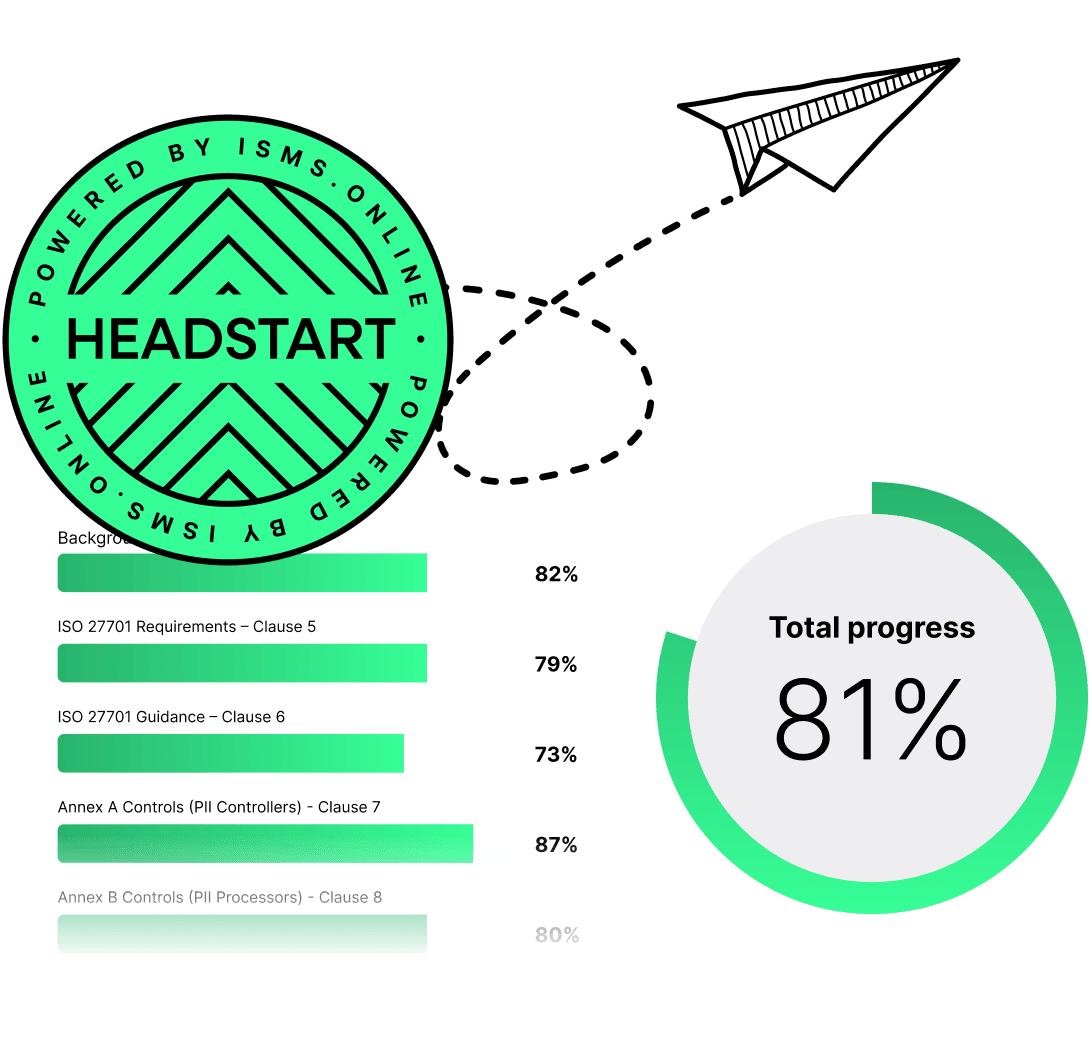
An 81% Headstart from day one
We’ve done the hard work for you, giving you an 81% Headstart from the moment you log on. All you have to do is fill in the blanks.
A service‑first ISMS framework for MSPs
A service‑first ISMS framework for MSPs starts by modelling your real services, customers and platforms, then using ISO 27001 to tighten how you protect them without derailing delivery. Your aim is to describe how you operate today, then improve it, instead of inventing a new “ISO way” on paper.
Instead of building a generic set of documents and trying to bolt them onto your MSP later, you use ISO 27001’s clauses to describe the operating model you already have and where it needs tightening. The goal is simple: one management system that explains how you protect information across all managed services, without forcing every team into the same shape on day one.
Scoping around services, not just legal entities
Scoping around your managed services instead of just your legal entity lets you focus effort where customers and regulators care most. Starting with “the whole company” sounds thorough, but it drags every internal workflow into the project at once and stalls progress, whereas starting with the services and platforms that carry the most risk, revenue and scrutiny lets you move faster and prove value sooner.
A service‑first approach asks which services and platforms matter most and scopes there first. You might begin with your managed cloud platform, SOC offering or the part of your business that handles the most sensitive data. You still consider dependencies and shared services, but you avoid paralysing internal teams that are not critical to early certification. Over time, you expand the scope once the core is stable and your approach has proved itself.
Lightweight governance that matches MSP tempo
Lightweight governance that matches your MSP’s tempo keeps leadership engaged without drowning everyone in meetings. ISO 27001 expects leadership, roles and reviews, but that does not mean you need a new committee for every topic or a fresh calendar of ISO‑branded calls; instead, you can tune the meetings and reviews you already run.
A service‑first ISMS uses structures you likely already have: management meetings, operational reviews, change boards and incident post‑mortems. You nominate an ISMS owner, establish a small steering group that meets on a realistic cadence and embed risk and control discussions into existing forums. Governance then becomes something you already do, supported by clearer agendas, better records and more consistent follow‑up rather than yet another meeting load on senior staff.
Modelling services, SLAs and customers inside the ISMS
Modelling your services, SLAs and customer segments inside the ISMS makes the system useful for day‑to‑day decisions rather than just audits. When people can see how a change or incident affects specific services and commitments, they understand why your controls matter and how their work contributes.
For each managed service, you record what information it processes, which platforms it depends on, what commitments you make and what could go wrong. That model then drives your risk assessment, your Statement of Applicability and your control priorities. Instead of a generic list of threats, you have concrete scenarios such as “remote access compromise on high‑value customer network” or “backup failure on shared cloud platform”, along with clear owners and planned responses. Engineers and service managers can see how their work contributes to risk reduction and customer outcomes, which makes engagement much easier.
With a service‑first framework in place, you can move into a practical sequence of steps that implements ISO 27001 without touching SLAs before you are ready.
Step 1: Start ISO 27001 without touching live services
You can make meaningful ISO 27001 progress in the first month without changing a single ticket queue or engineer rota by focusing on scope, governance and approach. That early, off‑the‑critical‑path work builds clarity and momentum while keeping day‑to‑day service delivery and SLAs safe.
Done well, this phase reassures your team that you are not about to dump a stack of new forms on them overnight and shows that you respect the realities of service delivery. You work mainly with a small group of leaders and key specialists, leaving service desks and on‑call teams free to keep customer promises.
Define scope, objectives and risk approach off the critical path
Defining scope, objectives and risk approach can happen mostly off the critical path, so it does not interfere with live support. You work mainly with leaders and a small core team, scheduling workshops around peak support windows so live services stay stable while you shape the ISMS.
Together you agree which services and locations are in scope, why you are seeking certification and what success looks like in terms of timeframe, customer impact and internal effort. You also choose and document your risk assessment method and your appetite for different kinds of risk, such as downtime, data loss or supplier failure. Workshops can be scheduled to avoid peak support windows and on‑call changeovers, so rotas stay stable while you lay the groundwork.
Run a document‑first gap analysis and create core artefacts
A light document‑first gap analysis helps you understand how close your existing practices are to ISO 27001 without locking you into the document‑driven approach you want to avoid. You compare the requirements of ISO 27001 with what you are already doing, using existing contracts, SLAs, process descriptions and policy documents to create a small set of core artefacts that later map into your live workflows without yet changing how engineers work.
You can often identify a large proportion of your current controls without speaking to every team. From this, you draught or refine a small set of core documents: an ISMS scope statement, an information security policy, a high‑level risk register and an asset register focused on the systems and data in scope. These artefacts set the stage for later mapping into ITIL and DevOps workflows but do not yet change how tickets move or how engineers use their tools.
Pilot the ISMS safely before going near high‑risk services
Piloting your ISMS on an internal or low‑risk service lets you test ideas at low impact. You can refine flows, templates and ownership based on real use before applying them to 24/7, high‑impact services, so key customers and SLAs are never your first experiment.
You can start with systems you use to deliver internal IT or a non‑critical managed service with simple SLAs. You use this pilot to test change approval flows, incident reviews and documentation habits, and to produce sample outputs ready for future audits. If something is clumsy, you adjust it before applying it to 24/7, high‑SLA services. This reduces the chance of surprises later and builds confidence that the system helps rather than hinders. It also lets you collect early lessons that feed into tooling choices, whether you later run the ISMS in ISMS.online or another platform.
Once you have a scoped, piloted ISMS design that lives mostly on leadership time, you are ready to weave ISO requirements directly into the workflows your teams already use every day.

Free yourself from a mountain of spreadsheets
Embed, expand and scale your compliance, without the mess. IO gives you the resilience and confidence to grow securely.
Step 2: Design your ISMS around ITIL and DevOps workflows
Designing your ISMS around ITIL and DevOps workflows means incidents, changes, releases and onboarding naturally produce ISO 27001 evidence as part of normal work. Instead of asking engineers for extra admin, you configure your PSA, ITSM and DevOps tools so “doing the job properly” automatically meets most ISO requirements.
Once you have clarity on scope and governance, you configure your tooling so that day‑to‑day work automatically generates most of the records you need. Instead of asking people to log activities in separate ISO documents, you tune your existing systems. This is where you protect SLAs and engineer time: the more the ISMS lives inside your tools, the less separate admin your teams feel.
Turning tickets into primary evidence rather than afterthoughts
Service desk tickets already hold rich data about who did what, when and why, and they are timestamped by default. With a few security‑aware fields and simple rules, you can turn them into primary ISO 27001 evidence instead of after‑the‑fact admin.
For example, you might extend incident and change records with fields such as:
- Security relevance: – does the work affect confidentiality, integrity or availability?
- Data sensitivity: – which customer data classification is involved?
- Change type: – standard, normal or emergency with clear criteria.
These small design tweaks mean that closing a ticket or change automatically records the details auditors and customers will later ask about. Engineers stay in familiar screens; you gain traceability and consistency without forcing them into a new system or spreadsheet. When customers ask how you manage incidents and changes, you can walk them through real tickets rather than static documents.
Integrating security checks into CI/CD and infrastructure management
Integrating security checks into CI/CD and infrastructure management lets you enforce controls without adding manual steps. When you use infrastructure as code and continuous delivery, you already have automated ways to enforce configuration baselines, run tests and record deployments, so pipelines become the natural place to prove that secure configurations and tests are running every time.
Rather than adding separate security sign‑off stages around these pipelines, you embed controls directly into them so that security becomes part of “done”. Examples include running vulnerability scans or configuration checks as part of the build, enforcing peer review on high‑risk code paths and recording approvals in the same tools you use for work tracking. For operations teams, this means fewer last‑minute security surprises, clearer evidence that each release followed an agreed process and a much easier storey to tell when customers ask how you protect their environments.
Using existing ceremonies as ISO 27001 governance events
Using existing ceremonies as ISO 27001 governance events keeps your calendar manageable. Change advisory boards, sprint reviews and incident post‑mortems can double as ISO governance if you tune them carefully, with clear agendas and records so CABs, stand‑ups and post‑mortems become both operational and ISO review points.
Instead of scheduling new ISO‑branded meetings, you extend the agendas of those you already have to cover risk decisions, control performance and improvement actions. You document key decisions and outcomes in a consistent way and link them back to your risk register and improvement plans. That satisfies the standard’s expectations for leadership, review and continual improvement while keeping teams focused on delivering services rather than attending extra meetings.
Once your tickets, pipelines and ceremonies are doing most of the evidence work, you can concentrate on the specific controls that most directly affect 24/7 response and customer trust.
Step 3: Focus on high‑leverage 24/7 controls that speed response
Focusing early on a small set of high‑leverage controls gives you operational wins that matter to customers and auditors. For a 24/7 MSP, the biggest gains usually come from logging, access and backup, because they shape how quickly you notice trouble, how often you cause your own incidents and how well you recover when things go wrong. MSP and security‑vendor guidance frequently highlights these three areas as core levers for detecting attacks, preventing misconfigurations and recovering quickly from outages or ransomware.
Not all controls carry equal weight; some directly determine how quickly you detect, contain and resolve incidents for customers with tight SLAs. Concentrating on those areas first gives you visible operational benefits and strong stories for customers and auditors. Think of this as tuning the parts of your ISMS that sit closest to the flashing alerts, paging systems and priority queues your teams already live in, rather than starting with abstract policies.
Logging, monitoring and on‑call design that shorten detection time
Logging, monitoring and on‑call design have an outsized impact on how quickly you detect and act on real incidents. ISO 27001 expects you to monitor systems and respond to events, but it does not tell you how many alerts to generate or how to staff your rota, so you decide how to design signals, triage and rotas so they work at MSP speed.
By centralising logs, correlating signals and tuning thresholds, you can reduce noise while spotting real problems sooner. You then integrate alerts with your on‑call tooling and PSA so that high‑priority events quickly become well‑routed incidents with clear ownership. Well‑designed monitoring and triage reduce mean time to detect and mean time to resolve in ways your customers and auditors both value. They also make your engineers’ lives easier by cutting needless alerts.
Access control and change management that support agility
Access control and change management are often the difference between rare, well‑managed incidents and a steady stream of self‑inflicted outages. Shared admin accounts, unclear joiner and leaver processes and informal configuration changes are common sources of incidents in MSP environments, whereas named accounts, clear joiner and leaver processes and well‑defined standard changes let you move fast without leaving gaps.
You can move towards named accounts, just‑in‑time elevation and secure remote access while tightening change management around sensitive systems. At the same time, you keep speed by defining pre‑approved standard changes with clear criteria and runbooks. Low‑risk, routine work flows quickly with minimal human review, while higher‑risk changes get the scrutiny they deserve. This balance of rigour and agility is exactly what many customers expect from a mature MSP.
Backup, recovery and drills that are realistic and sustainable
Backup and recovery practices determine whether a serious incident becomes a short interruption or a painful, reputation‑damaging episode. ISO 27001 expects you to plan and test recovery, but the frequency and style of those tests should reflect your services, your customers and your capacity, so that drills are realistic and sustainable rather than exhausting for your teams.
Only about one in five organisations in the 2025 ISMS.online survey said they experienced no data loss in the previous year.
You can schedule regular, realistic drills that involve restoring key systems or data for representative customers, measuring time and quality and capturing lessons learned. If you design those drills carefully, they help you refine runbooks, reveal gaps and demonstrate resilience to customers without consuming every spare engineering hour. Over time, these exercises become a source of confidence rather than a dreaded chore.
Across most MSPs, three control clusters tend to deliver the biggest real‑world impact:
- Logging, monitoring and on‑call design: – fewer missed signals and faster, better‑routed incidents.
- Access control and change management: – fewer avoidable outages without slowing standard work.
- Backup, recovery and realistic drills: – quicker, more reliable restores when customers are under pressure.
Once those high‑leverage controls are working at MSP speed, you can safely invest in automating evidence and rolling the ISMS out across more services and regions.

Manage all your compliance, all in one place
ISMS.online supports over 100 standards and regulations, giving you a single platform for all your compliance needs.
Step 4 & roadmap: automate evidence, protect engineer time, and land quick wins
Automating evidence and centralising your ISMS protects engineer time and makes audits more predictable. When tools generate most of the proof, people can focus on exceptions, improvements and customer work instead of compiling screenshots and status reports, and you can sequence rollout in a way that keeps SLAs safe while you build confidence through early, visible wins rather than big‑bang changes.
After you have aligned workflows and tuned key controls, you reduce the manual effort of proving that everything actually happens. Automation and good tooling can remove much of the repetitive collection and filing work that would otherwise drag on engineers and managers. At the same time, you can sequence rollout in a way that keeps SLAs safe and builds confidence through early, visible wins rather than big‑bang changes.
Let tools, not people, collect most of your evidence
Your existing systems can become your main sources of ISO 27001 evidence if you design them that way. RMM, PSA, SIEM, identity, backup and HR platforms already produce logs and reports that show what happened and when, so scheduled reports, dashboards and exports from those tools can do the heavy lifting while engineers only handle exceptions. Industry analyses of security operations and managed services note that organisations increasingly lean on these existing logs and dashboards as primary evidence for audits and assessments, instead of asking engineers to build separate reports by hand.
About two-thirds of organisations in the 2025 ISMS.online survey said the speed and volume of regulatory change are making compliance significantly harder to sustain.
Instead of asking people to screenshot or export data into spreadsheets, you set up scheduled reports, dashboards and integrations that feed evidence into a central system. Typical high‑value feeds include:
- Backup reports: – daily backup status and periodic restore test results.
- Patch and configuration summaries: – compliance outcomes from RMM or configuration tools.
- Access and authentication logs: – key events from identity and application platforms.
- Security event summaries: – correlated alerts and trends from monitoring or SIEM.
- Training and policy records: – completions and acknowledgements from HR or learning tools.
Engineers then focus on handling exceptions rather than compiling audit packs, which protects their time and attention for higher‑value work. For MSP leaders, this also means less last‑minute scrambling before external assessments or major customer reviews.
Centralise policies, risks, controls and records in one ISMS platform
Centralising policies, risks, controls and records in one ISMS platform gives you the single source of truth that ISO 27001 expects. Keeping everything in shared drives and email threads almost guarantees version confusion, missing evidence and last‑minute panic before audits; with one platform, you know where each policy, risk and control lives and who owns it.
A dedicated ISMS platform such as ISMS.online lets you manage policy lifecycles, risk registers, control ownership and evidence in one place. You can assign clear owners, define review dates, attach records directly to controls and see at a glance where you are on track and where attention is needed. That single view makes internal audits and external assessments much easier to plan and execute and reduces the stress of customer questionnaires.
Plan a phased rollout that matches risk and customer importance
Planning a phased rollout that matches risk and customer importance helps you grow your ISMS without overwhelming teams. Rather than flipping every service and region into the ISMS at once, you build a roadmap based on risk, revenue and regulatory exposure so you start where risk and scrutiny are highest, then extend to lower‑risk services once your approach has proved itself.
High‑impact services and key customers may move into the fully managed ISMS first, while lower‑risk areas follow once lessons have been learned. At each phase you are clear about which controls are in place, which are in progress and which are out of scope for now. That transparency helps you manage internal expectations and gives customers a credible storey about how you are improving over time.
Use early wins to build internal and external confidence
Early wins show that your service‑first ISMS makes life better rather than worse for engineers and customers. Visible improvements in one team or service, such as automating evidence for a single major customer or rolling out a standardised change workflow for high‑risk platforms, help sceptical colleagues accept the next phase of change and give customers something concrete to point to.
These wins might also include completing a well‑run internal audit that highlights genuine improvements rather than just gaps. As those wins accumulate, sceptical engineers see that the ISMS is reducing friction rather than adding it. Boards and customers see progress in concrete outputs, not just promises. That momentum is invaluable when you move into later stages such as surveillance audits, scope extensions or expansion into new frameworks beyond ISO 27001. An ISMS platform like ISMS.online can help you capture and show those wins clearly, without adding to the admin burden.
By this point you have moved from a document‑heavy project that lives beside your MSP into an automated, service‑first ISMS that runs at MSP speed and can grow with your portfolio.
Book a Demo With ISMS.online Today
ISMS.online helps you run a service‑first ISMS that supports ISO 27001 while protecting MSP service delivery and SLAs. It gives you one place to plan, run and evidence your information security management system so you can reassure customers and auditors without sacrificing responsiveness.
In the State of Information Security 2025 report, almost all organisations listed achieving or maintaining security certifications, such as ISO 27001 or SOC 2, as a top priority for the coming year.
Instead of juggling spreadsheets, shared drives and email trails, you can log in to see how your ISMS is performing, which actions are due and where evidence is already in place. That clarity is especially valuable when you are preparing for an external audit or responding to a demanding customer questionnaire at short notice.
A short demo is usually enough to show your leadership team, service delivery leads and security owners how an ISMS platform can sit over your existing PSA, RMM, monitoring, identity and HR tools. You can explore practical examples of how workflows, controls and evidence are managed, and ask detailed questions about how your current processes would map into the system.
During that conversation, you can also sketch a realistic nine‑to‑twelve‑month roadmap to certification that takes into account your current maturity, existing documentation, customer commitments and regulatory pressures. Seeing that plan on screen often turns ISO 27001 from an abstract concern into a concrete, manageable programme that respects MSP realities.
If you want ISO 27001 to support growth, protect SLAs and strengthen your customer storey rather than slow you down, it is worth investing an hour to see how ISMS.online can help. Choosing ISMS.online means treating security as a service‑first capability that fits the way your MSP already works, not as a bolt‑on project that drags against delivery.
Frequently Asked Questions
How can an MSP start ISO 27001 without disrupting existing SLAs?
You start ISO 27001 by treating the first phase as design work for a small core team, not a live‑operations change.
What can you safely tackle in the first 4–6 weeks?
Those first weeks are about decisions, not new forms or extra approvals. Keep the circle tight-an owner or director, a service lead, and someone who understands contracts and SLAs-and meet outside peak hours.
Use that window to lock in three anchors:
- Why now?: Tie ISO 27001 to specific triggers: stalled enterprise deals, security questionnaires you’re scrambling to answer, cyber‑insurance demands, or NIS‑style expectations from critical customers.
- What’s in scope?: Start with a service‑led slice of your business: for example, “Managed Microsoft 365 and endpoint services from our UK data centre”, not “the whole company”.
- When do we need to land this?: Work back from renewals, key customer reviews or board dates, so the ISMS protects revenue instead of colliding with it.
From there, you can build foundations that don’t touch tickets or rotas:
- A one‑page ISMS scope statement in plain MSP language.
- A concise information security policy that reuses terms from your runbooks and SLAs.
- A first‑cut asset and risk register focused on your managed services and internal tools.
You can also run a paper‑only gap analysis: compare ISO 27001 clauses and Annex A against contracts, onboarding checklists, DR plans and incident playbooks you already use. Most MSPs find they’re doing more of the right things than they thought; ISO 27001 mainly asks you to connect those practices and show how they’re managed.
If you capture scope, policies, assets, risks and actions in ISMS.online from day one, you centralise the ISMS without touching production workflows. Engineers stay in PSA, RMM and DevOps tools; they only see specific tasks once you’ve decided exactly where ISO 27001 should change the way work flows.
What practical first steps keep disruption low?
- Confirm leadership sponsorship so decisions stick when delivery gets busy.
- Define a narrow, named scope tied to live revenue and recognisable services.
- Pick a simple risk method (likelihood × impact with clear examples) that fits MSP life.
- Run a focused document‑led gap analysis using contracts and runbooks, not blank templates.
- Draught your information security policy, asset register and risk register around actual services and tooling.
- Configure these foundations in ISMS.online, assigning owners and dates without changing queues, ticket types or rotas yet, so you can move towards certification without putting SLAs at risk.
How do you design ISO 27001 around ITIL and DevOps so tickets still move quickly?
You keep tickets moving by letting ITIL and DevOps handle most ISO 27001 evidence, instead of inventing a parallel “ISO process”.
How can your ITIL processes carry most ISO 27001 evidence?
Start by mapping ISO 27001 themes straight onto the flows you already run:
- Incident/problem: how you detect, escalate, resolve and learn from outages.
- Change/release: how you approve, test, deploy and roll back changes.
- Request/access: how you onboard, move and offboard people, and manage privilege.
- Configuration: how you keep a reliable view of customer and internal services.
Often you only need light adjustments:
- Add a few structured fields (for example, “security impact”, “data sensitivity”, “change category”) to relevant ticket types.
- Use standard/normal/emergency change models and give engineers clear runbooks for standard changes.
- Always link tickets to the affected service or configuration item, so you can prove impact and traceability when auditors or customers ask.
On the DevOps side, you already have strong ISO 27001 evidence if you use modern pipelines:
- Automated tests, security scans and policy gates built into CI/CD.
- Approvals and change history: captured in pull requests and pipeline logs.
- A living record of authorised configurations in your infrastructure‑as‑code.
Rather than adding extra ceremonies, use meetings you already rely on:
- CABs, service reviews and on‑call reviews double as formal control reviews when you record decisions, owners and follow‑ups.
- Sprint reviews and retrospectives capture improvement actions that you can map directly to risks and controls.
With ISMS.online holding your policies, risks, Statement of Applicability and control mappings, and your PSA/RMM/CI/CD tools holding tickets and logs, the ISMS acts as a governance lens over existing operations. Engineers stay in the tools they know; ISO 27001 lives in how you configure and interpret those tools, not in a separate queue of “ISO tickets”.
What does this look like day to day for engineers?
- Incidents, problems and changes feel familiar; they just have a small number of extra fields that make security and risk visible.
- Standard changes: follow pre‑defined, low‑friction patterns, while high‑risk changes follow a clearer approval path.
- CI/CD pipelines automatically run checks and log approvals, producing evidence without extra work.
- CABs and retrospectives explicitly capture risk and control decisions, which you link to risks and controls in ISMS.online.
- When audits or large customers ask, you largely export and signpost what already exists, because ISMS.online is joined up with tickets, logs and pipelines rather than asking engineers to maintain two separate versions of the truth.
Which ISO 27001 controls matter most for 24/7 MSPs, and how do you keep response times fast?
For a 24/7 MSP, the controls that protect response times are clustered around monitoring, access, change, incidents and recovery.
Where should a 24/7 MSP focus first without adding friction?
Five areas usually move the needle fastest:
-
Logging and monitoring
Pull logs from PSA, RMM, firewalls, identity platforms and key customer systems into a central view. Tune alerts so they highlight events that threaten SLAs or security, and integrate with your paging stack. That mix improves detection and reduces noise, which is critical for tired engineers on night shifts. -
Access control
Eliminate shared accounts in favour of named users with strong authentication, and introduce time‑bound or task‑bound elevation for admin access. A consistent joiner/mover/leaver process keeps customer estates and internal services safe while minimising delays during routine work. -
Change management
Use risk‑based change models: standard changes flow quickly under documented runbooks; higher‑risk work gets deliberate review and, where necessary, out‑of‑hours scheduling. You keep momentum on safe work and apply brakes only where outages would really hurt. -
Incident management and on‑call
Clear severity definitions, escalation paths and short on‑call playbooks reduce confusion at 03:00. Brief, repeatable handovers between shifts keep response quality consistent and make it easier to show customers and auditors how you cover the full 24‑hour cycle. -
Backup and recovery
Regular restore tests for representative customer platforms give you realistic recovery times and highlight brittle paths long before a live incident. Those tests often expose misaligned expectations in SLAs that you can correct before a crisis.
In ISMS.online, you can map each of these clusters to specific risks, controls, owners and evidence. That makes it clear-internally and to your customers-that your ISO 27001 implementation is built for a 24/7 MSP, not copied from an office‑hours enterprise.
How can these controls actually improve speed?
- Focused monitoring reduces false positives and sends critical alerts to the right people first time.
- Well‑designed standard change models cut out unnecessary approvals and opinion‑based debates about low‑risk work.
- Clear on‑call and escalation rules mean less time deciding what to do and more time actually restoring service.
- Practised restore steps and realistic RTO expectations reduce trial‑and‑error during incidents, keeping SLAs intact.
- Because ISMS.online keeps risks, controls and evidence for these areas in one place, you spend less time preparing for audits and customer reviews, and more time improving the service patterns that keep response times sharp.
How can MSPs automate ISO 27001 evidence and policy management so engineers can focus on customers?
You keep engineers focused on customers by letting your operational tools generate most of the evidence, and using an ISMS to organise and schedule that evidence and the associated reviews.
Which systems already hold most of your ISO 27001 proof?
For most MSPs, the ISMS proof is already flowing; it just isn’t labelled as such:
- RMM and backup platforms: show patch status, health checks, backup success and restore tests.
- PSA or ITSM tools: track incidents, problems, changes, approvals and request history.
- Identity and MFA platforms: log sign‑ins, failures, privilege changes and conditional access decisions.
- Logging or SIEM tools: consolidate security events across your infrastructure and key customer environments.
- HR or training systems: record onboarding, awareness training and policy acknowledgements.
Instead of building big evidence packs by hand every time an auditor visits or a customer asks for reassurance, you can:
- Configure scheduled exports or dashboards in those systems, aligned to specific controls.
- Store or reference those outputs in ISMS.online, clearly mapped to risks and control objectives.
- Use ISMS.online’s owners, frequencies and reminders so reviews and updates happen on a predictable cadence, not only when someone has time.
Your policies, risk register and Statement of Applicability live alongside this evidence, with version history and approvals for each change. When an auditor asks “how do you know this still works?”, you can point to both the control design and the recent reports or tickets that prove it.
Engineers stay in PSA, RMM, logging and DevOps tools; they’re contributing evidence just by doing their jobs. You mainly need their attention when you’re adjusting a control, writing a new runbook or investigating a pattern in the data.
What are high‑value automation opportunities for MSPs?
- Backup and restore reports: schedule concise summaries from your backup platform and attach them to the relevant controls and risks in ISMS.online.
- Patch and configuration baselines: export from RMM at sensible intervals and tie them to change management and asset records.
- Access and authentication logs: regularly export key reports from identity or logging tools to show how privileged access and MFA are enforced.
- Incident and change analytics: create filtered reports for security‑relevant tickets (for example, P1 security incidents, failed changes) and link them to risk entries and improvement actions.
- Policy and training records: synchronise acknowledgements and course completions from HR or learning systems, so you can see which teams are up to date at a glance.
- Review workflows: in ISMS.online for policy reviews, risk workshops, internal audits and management reviews, with email reminders or task lists so these checkpoints happen even when everyone is buried in customer work.
Done this way, ISO 27001 shifts from a once‑a‑year scramble to a background rhythm. The platform does the chasing; your engineers do the work once and you reuse the evidence many times.
What common mistakes make ISO 27001 slow MSP service delivery, and how do you avoid them?
ISO 27001 slows MSP service delivery when it’s dropped on top of your operation as extra bureaucracy instead of being used to refine how you already work.
Which patterns usually create unnecessary friction?
A few patterns crop up repeatedly:
- Running ISO 27001 in a separate universe: -with documents and trackers on shared drives-while the real work lives in PSA, RMM, CI/CD and chat. That forces engineers to duplicate updates and makes the “ISO version” the first thing dropped when things get busy.
- Copying enterprise controls wholesale: , especially from banks or large corporates, and applying them to a smaller MSP. The risk profile is different but the approvals and forms land exactly the same, so queues grow, morale drops and “ISO” becomes a dirty word.
- Scoping too widely from day one: , pulling every function and site into the ISMS before you’ve shown any value on your core services.
- Treating the standard as a checklist: rather than a chance to reduce rework, noisy alerts, escalations and fire‑fighting.
Avoiding these starts with honest scoping and design choices:
- Build your ISMS inside PSA, RMM, identity and DevOps tooling where engineers already live.
- Adopt ISO 27001 controls in a way that reflects MSP realities: lean approvals where risk is low, stronger guardrails where customer impact is high.
- Use existing ceremonies-stand‑ups, CABs, service reviews, post‑incident reviews-as the main places you talk about risk, controls and improvements, then mirror those decisions in ISMS.online.
That way, when auditors or customers ask “how does ISO 27001 work here?”, you can walk them through your live workflows rather than a parallel, paper‑only system nobody truly uses.
What should you do differently to keep ISO 27001 lightweight and useful?
- Start with a short, service‑led scope based on where security and revenue risk is highest.
- Define controls and records within your existing tool stack, adding only the extra fields and checks that genuinely change decisions.
- Treat regular meetings as governance points, capturing clear outputs-actions, risk changes, control tweaks-and reflecting them in ISMS.online.
- Use templates as guides, not rules: adapt wording, roles and workflows so they match your MSP’s size, culture and SLA structure.
- Capture small improvements continuously-one runbook refined here, one alert tuned there-and update ISMS.online alongside those changes so your ISO 27001 implementation grows with the business rather than freezing an outdated way of working.
How can ISO 27001 help standardise MSP operations across clients while keeping flexibility and speed?
ISO 27001 gives you a structured way to standardise how you deliver services across customers, while still allowing documented exceptions where customers genuinely need something different.
How does ISO 27001 support consistency across customers?
A practical move is to define standard service patterns and treat them as your “golden paths”:
- For each major service line-managed endpoint, managed network, managed cloud, managed backup-you describe once:
- Which assets are in scope.
- How onboarding and offboarding work.
- Who can approve what, and how access is granted or revoked.
- What your monitoring and alerting baselines look like.
- How often backups run and what restore targets you commit to.
- Which changes are standard, which need review, and how you handle emergencies.
You then implement those patterns as ticket templates, automation policies, monitoring profiles and runbooks in PSA, RMM and DevOps tools. New customers get the standard pattern by default; engineers don’t reinvent process for each onboarding.
Where a customer needs a variation-unusual access, atypical retention, bespoke checks-you handle it as a managed exception with a short risk assessment, named approvals and a review date. That keeps ISO 27001 happy (because you’ve considered the risk and decided deliberately) and stops exceptions multiplying silently over time.
This approach:
- Shrinks “tribal knowledge”-fewer unwritten rules and fewer surprises when someone leaves.
- Makes it easier to add engineers or locations because “how we do things here” is clearly visible.
- Improves handovers between teams and shifts, because everyone is working from the same patterns unless an exception is clearly documented.
In ISMS.online, you keep one set of policies, risks, control mappings and service definitions. Individual tickets, deployments, monitoring reports and automation logs reference those patterns, giving you a consistent storey across your customer base even as each client has its own nuance.
How does this balance standardisation with agility for a growing MSP?
- Shared service templates and control sets define “normal” delivery, so you can scale onboarding and support without re‑designing the wheel each time.
- Customer‑specific needs are handled as exceptions with owners and review dates, so they don’t erode your standards quietly.
- New engineers ramp faster because the patterns, risks and playbooks are visible in both your tools and ISMS.online, rather than depending on one experienced colleague to explain everything.
- You preserve agility by keeping standard and low‑risk work lightweight and watching metrics like change failure rate, incident volume and SLA performance. If a process starts to slow you down with no clear benefit, it’s easy to spot and tune.
- As you add new regions or services, you can clone and adapt existing patterns in ISMS.online and your operational tools, so you get repeatable, auditable growth instead of a tangle of one‑off approaches.
When you use ISO 27001 this way, it stops being “just a certificate” and becomes the backbone for how you scale MSP operations with consistency, speed and credibility in front of both auditors and customers.






