





































From “Expensive Badge” to Sales and Risk Lever
ISO 27001 is worth it for managed service providers that sell into security‑conscious markets when you treat it as a living management system, not just a certificate. Treated this way, it opens doors in sales, strengthens risk management and improves governance so the effort and cost pay back in the medium term. If you only chase the badge, it drains time and budget without changing outcomes. The information here is general and does not constitute legal, financial or regulatory advice and you should take professional advice before making decisions.
Strong security decisions start with choosing the right level of formality.
If you run co‑managed IT or fully outsourced services for organisations with 50–1,000 users, you are probably seeing longer security questionnaires, stricter supplier checks and more stories about MSP‑related breaches. Recent MSP‑focused security and compliance research reports the same pattern, with more detailed questionnaires, tighter oversight of third‑party providers and rising anxiety about supply‑chain breaches among buyers who depend on outsourced IT services.
Around four in ten organisations in the State of Information Security 2025 report regard third-party risk and supplier-compliance tracking as a top security challenge.
At the same time, you may have heard about ISO projects that consumed months of effort and left little behind except a certificate and a dusty policy folder. That gap between perceived effort and visible benefit is why ISO 27001 often sits in the “one day” bucket for MSPs.
The heart of the issue is how you think about the standard. If you see ISO 27001 as a tick‑box list of security controls, it will feel like bureaucracy. If you see it as a way to formalise how your MSP decides what to protect, how to protect it, who is accountable and how you prove what you do, it starts to look more like an operating system for security. For an MSP with a Microsoft 365‑centred stack, remote monitoring and management tools and cloud backup platforms, that operating system cuts across every service you deliver.
When you treat ISO 27001 as an information security management system (ISMS) rather than a badge, it changes the tone of security conversations. Internally, teams stop arguing about one‑off tool choices and instead work inside a shared risk framework. Externally, customers and prospects see more than a logo on your website: they see structured answers, clear policies and evidence that your controls are monitored and reviewed. The same certificate can therefore be a shallow marketing asset or the outward sign of deep operational discipline.
Why ISO 27001 often sits in the “one day” bucket
ISO 27001 often ends up in the “one day” bucket when you feel growing pressure from buyers but cannot clearly see how the standard will pay back for your specific customer base and growth plans. That uncertainty makes it easy to defer the work whenever delivery or sales pressures rise.
Many MSPs recognise the ISO 27001 name, feel they should “probably do it”, and then defer it whenever delivery or sales pressures rise. You may be answering security questionnaires that take days, losing tenders that mention “formal security certifications”, or relying on “trust us, we follow best practice” in board‑level conversations. Against that, you may know peers who have spent heavily on consultants, written hundreds of pages of policies and ended up with a certificate that does not change day‑to‑day behaviour.
This pattern is especially common in smaller providers where the same people own sales, service and security. When those leaders picture ISO 27001, they see late nights writing documents, engineers sitting in workshops instead of solving tickets and a nervous first audit. Without a clear link to new revenue, reduced risk or future exit value, it is rational to keep pushing the project back.
Why buyers increasingly care about ISO 27001
Buyers increasingly care about ISO 27001 because it gives them a recognised, efficient way to judge whether a supplier manages information security in a disciplined way, rather than relying on promises and tool lists. That, in turn, reduces their perceived third‑party risk and simplifies governance.
For many of your customers, ISO 27001 is not an academic standard; it is a practical philtre. Procurement and risk teams use it to narrow longlists of potential MSPs into shortlists of credible candidates. Security teams recognise that compromises of monitoring tools, identity platforms and backup systems can cascade across many customers, so they favour partners who can show an independently audited management system rather than only a list of tools.
Almost all respondents in the 2025 ISMS.online survey list achieving or maintaining security certifications such as ISO 27001 or SOC 2 as a top priority.
In some tenders, ISO 27001 appears as a hard gate: “Are you certified to ISO 27001 or equivalent?” Market and RFP analyses in government and other security‑sensitive sectors show these kinds of criteria appearing explicitly in eligibility questions and scoring models, particularly where suppliers handle sensitive data or critical services. In others, it influences scoring even when not explicitly mandatory. If you serve finance, healthcare, public‑sector bodies or larger SaaS providers, you are likely already seeing language that implicitly favours certified suppliers. Even mid‑market organisations with strong data‑protection obligations often prefer suppliers who can hand over an audit report and certificate rather than a bundle of self‑written answers.
That does not mean every MSP needs ISO 27001 today. A local provider focused on micro‑businesses may see such requirements less often in the short term, especially where customers have lighter regulatory obligations, though expectations can still rise as those businesses plug into larger ecosystems. But as more buyers formalise their own governance, ISO 27001 becomes an easy shorthand for “this MSP is at least managing security in a structured way”. If you are trying to move from small local clients into more demanding mid‑market or regulated accounts, that shorthand matters.
What ISO 27001 actually proves (and what it does not)
ISO 27001 does not prove you are breach‑proof; it shows that you manage information security in a systematic, auditable way and can explain why you made particular choices. That distinction is crucial when you talk about risk with customers, insurers and regulators.
What ISO 27001 demonstrates is that you identify information‑security risks, choose controls based on those risks, monitor how those controls perform, and review and improve the system over time. For an MSP, that means you can point to risk registers, change records, supplier assessments, internal audits and management reviews, not just a list of products deployed.
This becomes especially important after an incident. Customers, regulators and insurers increasingly ask How did you manage this risk? rather than Which firewall did you buy? An MSP that can show audited policies, risk assessments linked to controls, structured incident records and documented corrective actions is in a stronger position than one that relies on verbal assurances about best practice.
At the same time, certification alone is not enough. If your leadership treats ISO 27001 as a one‑off project, delegates everything to an over‑stretched engineer and never reads the outputs, the management system will wither. In that scenario, a certificate may give a false sense of security and widen the gap between paperwork and reality. ISO 27001 only delivers meaningful benefit when senior people own the ISMS and expect it to influence decisions.
Book a demoWhat ISO 27001 Really Changes Inside an MSP
ISO 27001 changes your MSP by turning scattered security practices into one auditable system that shapes decisions, ownership and evidence. Instead of relying on habits and individual judgement, you work inside a defined information security management system with scope, objectives, risks and records you can show to others.
For a typical MSP, that means moving from informal agreements and isolated tools towards a defined ISMS with scope, objectives, risk treatment plans and clear records. Instead of relying on “we all know how we do things here”, you create a shared map of how security is managed across service delivery, internal IT, suppliers and people. That map then anchors audits, customer assurance packs and internal improvement work.
Coherent security only emerges when people, processes and tools move in step.
Turning scattered controls into a coherent ISMS
Turning scattered controls into a coherent ISMS means putting management and evidence above individual tools so that you can explain and improve what you do, not just point to product names. Many MSPs already have strong technical components; what is usually missing is the glue that holds them together.
Most MSPs have a familiar stack: central identity for staff and customers, endpoint protection, patching, backup, monitoring, remote access tools and service‑desk workflows. What is often missing is a formal definition of scope (“these services, platforms and sites are in”), documented security objectives and a risk assessment that explains which threats you are prioritising and why.
ISO 27001 addresses that gap. You define the scope of your ISMS, agree business‑relevant objectives and identify risks across your own environment and the services you deliver. You then choose controls from Annex A or equivalent frameworks and record your decisions in a statement of applicability. For an MSP, those decisions span service‑desk procedures, change management, incident response, access control, backup, supplier management and HR practices.
To make the transformation concrete, it helps to compare “before” and “after” for a few typical areas. This comparison shows how ISO 27001 changes the way you make and evidence decisions, not just which tools you use.
Before and after ISO 27001 often differs most in how decisions are made and evidenced, rather than which tools you own.
| Aspect | Before ISO 27001 | After ISO 27001 |
|---|---|---|
| Change control | Informal approvals in email or chat | Defined process with logged approvals and rollback plan |
| Incident response | Ad‑hoc reactions led by whoever is on shift | Documented playbooks, roles and post‑incident reviews |
| Supplier oversight | Contracts stored in folders, little review | Risk‑based assessments and scheduled reviews |
| Audit evidence | Scattered tickets and documents | Linked policies, records and reports in one ISMS |
By bringing these elements together, you reduce the risk of gaps that only surface during audits or incidents and make it much easier to show customers that security is embedded in how you operate.
Clarifying roles, responsibilities and evidence
Clarifying roles, responsibilities and evidence means deciding who truly owns key parts of security and how decisions are recorded so you can show accountability rather than implying it. ISO 27001 pushes you to make this explicit.
In many MSPs, accountability is diffuse. The unofficial answer to “Who approves risk?” or “Who signs off supplier changes?” is “whoever has time that week”. That works until a serious incident or audit raises questions about why decisions were made and who authorised them. At that point, lack of clarity becomes a risk in its own right.
Under ISO 27001, you designate an ISMS owner and define roles for risk management, incident management, change control, supplier oversight and privacy. In a smaller MSP these might be responsibilities rather than full‑time positions, but they are visible, documented and communicated. People know when they are acting as risk owners or approvers rather than simply doing “extra work”.
Evidence is the other half of the equation. Informal “best practice” often lives in people’s heads or in scattered documents and service‑desk tickets. ISO 27001 expects you to show how you decided on controls, how you monitor them and how you respond when they fail. That might involve linking policies directly to workflow steps in your ticketing system, maintaining structured risk logs or recording incident timelines and lessons learned in a consistent format.
This discipline pays off during customer due‑diligence exercises and audits. Instead of scrambling to reconstruct what happened six months ago, you can retrieve a risk entry, change record or incident review and show exactly how a decision was made and what changed afterwards.
Avoiding the trap of “paper compliance”
Avoiding the trap of “paper compliance” matters because ISO 27001 only improves resilience when your ISMS reflects how you actually work, not an idealised process written for the audit. A tidy binder that bears no relation to daily practice can be worse than no framework at all.
There is a genuine risk that, in the race to “get certified”, you end up with generic, copy‑and‑paste policies that do not match your service model. That might get you through an initial audit if the auditor is not familiar with MSP operations, but problems tend to surface later. Surveillance audits dig deeper, and customers compare your stated policies with what they see in day‑to‑day interactions or during their own reviews.
If your engineers are following undocumented work‑arounds while your ISMS describes a different process, your management system is effectively broken. In the worst case, that inconsistency can create legal or contractual exposure if a customer or regulator accuses you of failing to follow your own policies.
Designing ISO 27001 around your real MSP processes is therefore essential. A practical approach is to start with what you already do well, document it, then identify gaps and prioritise improvements. That feels less glamorous than reinventing everything, but it creates an ISMS that people recognise and are willing to own, rather than a binder that lives on a shelf.
ISO 27001 made easy
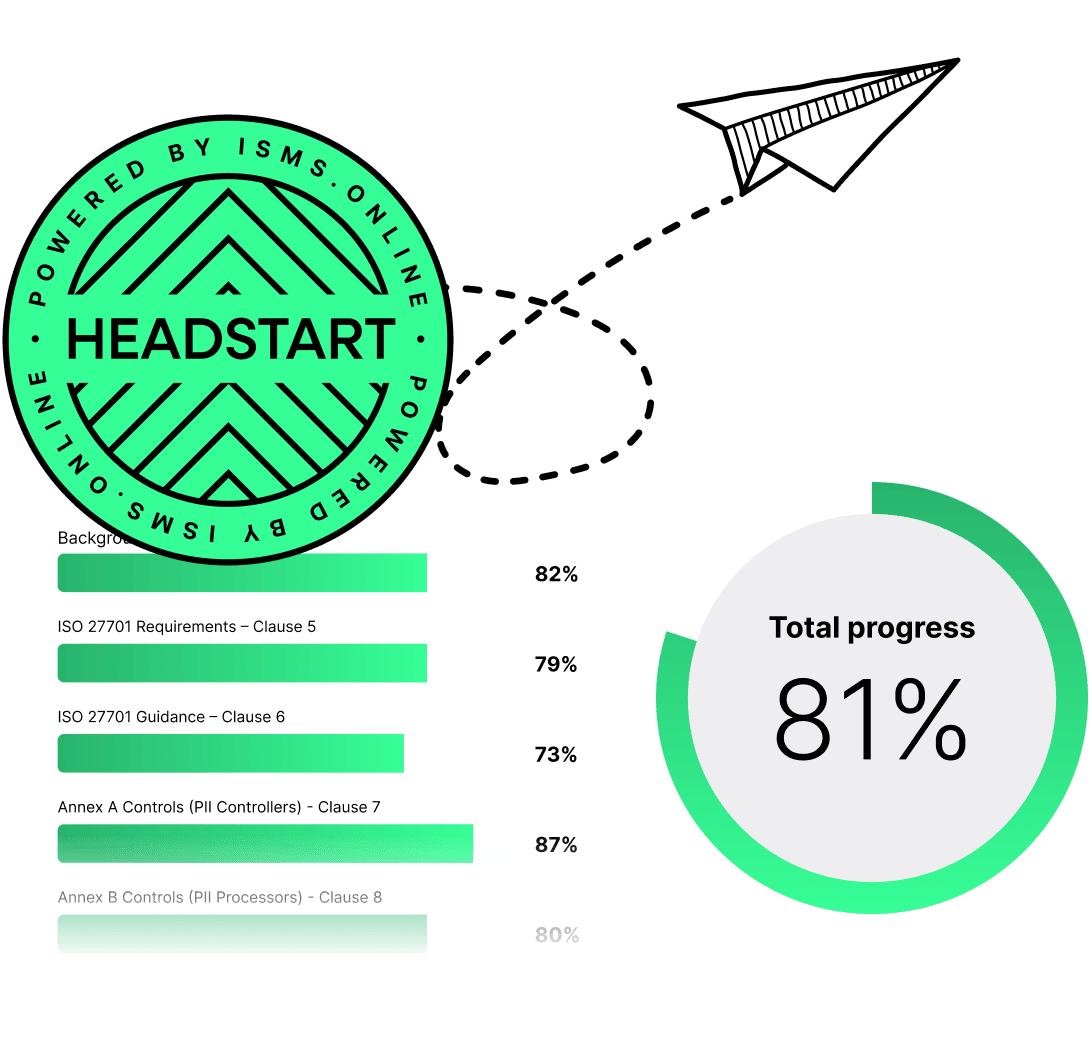
An 81% Headstart from day one
We’ve done the hard work for you, giving you an 81% Headstart from the moment you log on. All you have to do is fill in the blanks.
Revenue and Pipeline Effects: RFP Access, Win Rate and Deal Quality
ISO 27001 can be worth it for MSPs when it clearly changes your revenue profile by opening restricted tenders, smoothing security reviews and helping you curate a more profitable, healthier client base. The standard becomes a commercial tool when you align certification with your go‑to‑market strategy instead of treating it as a compliance side project, and it is financially worthwhile when these shifts deliver more value than the cost of certification over several years.
At a high level, ISO 27001 influences revenue in three ways: it gives you access to tenders and frameworks you currently cannot enter, it makes you easier to buy from in competitive deals and it supports a healthier, more profitable client portfolio. If you are a mid‑market‑focused MSP losing deals on “security reassurance”, this is where the standard starts to act like a sales tool rather than a cost centre.
Three ways ISO 27001 affects revenue
For MSPs, ISO 27001 typically drives revenue through access, conversion and selectivity – opening doors, reducing friction and supporting better client choices. Knowing which of these levers matters most to you helps you judge whether the investment is commercially attractive.
- Access: – lets you enter tenders and frameworks that explicitly require certification.
- Conversion: – reduces security friction in late‑stage sales conversations.
- Selectivity: – supports saying no to misaligned, high‑risk, low‑margin clients.
For a small local MSP with mostly micro‑business clients, access may matter least and selectivity may matter most: certification helps you gently repel problematic prospects. For a regional MSP targeting co‑managed IT in finance or public‑sector organisations, access and conversion often dominate, because a growing share of the pipeline is now gated by formal assurance requirements.
After you are clear on which lever you care about most, you can tie ISO 27001 to specific commercial goals such as entering a new vertical, improving win rates or refining your customer mix.
Gaining access to restricted tenders and frameworks
ISO 27001 gives you access to restricted tenders and frameworks by removing formal security gates that would otherwise exclude you, even if you are technically capable. This can materially expand the set of opportunities your sales team can pursue.
Many enterprise and public‑sector buyers now treat recognised security certifications as a basic condition of entry. Sometimes this is a simple yes/no philtre: “Are you certified to ISO 27001 or equivalent?” In other cases, it is part of a scoring model or a prerequisite for joining a preferred‑supplier framework. If you work with hospitals, financial institutions, critical infrastructure or large SaaS companies, you may already be seeing these gates.
The commercial impact is straightforward. Without ISO 27001, you may never hear about some of the opportunities where you would be a strong technical fit. With it, you at least get invited to compete. For MSPs trying to move from local, relationship‑driven work into more formal mid‑market or enterprise deals, that shift in the “addressable RFP universe” is often the single biggest revenue argument for certification.
You can probably think of recent examples where you were informally told “we needed ISO 27001” or saw language that implicitly excluded you. If those lost opportunities are starting to feel frequent or painful, ISO 27001 is moving from optional marketing asset to strategic gate‑opener.
Reducing friction and improving perceived maturity
ISO 27001 reduces friction and improves perceived maturity by giving buyers a clear, structured picture of how you manage security, so they feel safer closing out internal reviews and selecting you. This often makes the difference in close competitive deals.
Even when ISO 27001 is not a hard requirement, security and risk teams feel more confident when your responses sit within an audited management system. Procurement people like being able to attach a recognised certificate and scope statement to their records rather than documenting a long, subjective assessment. Legal and privacy teams see that you have thought deliberately about access, retention, incident reporting and supplier risk.
Internally, this can save a lot of time. Instead of rebuilding security responses for each tender from scratch, you can maintain a standard assurance pack: your certificate, scope statement, summary of key controls and high‑level process descriptions. Your sales, technical and security teams still need to customise answers, but they start from a solid base rather than a blank page.
Perception matters as much as process. Buyers drawing up shortlists use small signals to decide who feels “enterprise‑ready” and who feels risky. An ISO 27001 certificate, combined with coherent security messaging and responsive engagement, can nudge borderline decisions in your favour, especially when price and feature sets are similar.
Shaping a healthier client portfolio
ISO 27001 helps you shape a healthier client portfolio by giving you a clear security baseline you can stand behind when qualifying prospects and managing existing relationships. Over time, that baseline supports better margins and fewer high‑risk exceptions.
Certification allows you to define a clear security baseline and to use that baseline as part of your qualification process. It becomes easier to decline prospects who insist on cutting corners, resisting basic controls or demanding high‑risk customisations for low fees. You can point to your ISMS and explain that certain practices are non‑negotiable.
Over time, this tends to change the mix of clients you serve. You may say no to some short‑term deals, but you gain customers who value structured assurance, respect your boundaries and are more likely to be stable, long‑term partners. That can lead to better average margins, fewer fire‑fights and a stronger storey when you talk to insurers or potential investors about your risk posture.
If you are an MSP owner thinking about future exit value, a portfolio of customers who appreciate and align with your security posture is often worth more than a larger book full of risky or hard‑to‑serve accounts.
Cost and Effort: Three‑Year TCO and Delivery Models
ISO 27001 is worth it for MSPs only if the three‑year total cost of ownership is justified by revenue, risk and governance benefits in your particular context. Treating it as a multi‑year investment, rather than a one‑off project, gives you a clearer picture of value. The figures you consider should be adapted with professional financial and legal advice rather than taken as universal rules.
At a high level, the cost of ISO 27001 for MSPs has three components: external fees (primarily certification‑body audits and any consultants you use), internal time (leadership, technical and operational staff) and tools or platforms that support the ISMS. The mix between those components depends heavily on your chosen delivery model and starting maturity.
Strong governance grows from many small, consistent decisions.
What small and mid‑size MSPs typically spend
Small and mid‑size MSPs typically see ISO 27001 cost settle at a meaningful five‑figure sum in the first year once you combine external audit fees, internal effort, external support and any ISMS tools. Larger, more complex environments can push that number higher.
A small MSP with up to around fifty staff and one or two main locations will usually see total first‑year spend reach a significant five‑figure sum once audit fees, external help, internal effort and any ISMS tools are combined. For larger MSPs with several offices, multiple data centres or complex service portfolios, total spend can rise substantially, especially if you are starting from a low level of formal documentation. Cost‑breakdown guides from certification bodies and consultants for small and mid‑size organisations often describe first‑year ISO 27001 programmes landing in this sort of five‑figure range once you combine audit days, internal effort and external support, particularly where scoping and documentation need substantial work.
Certification‑body fees for the initial Stage 1 and Stage 2 audits are only one part of this. They are typically calculated on staff numbers and complexity and priced per audit day. On their own, they may sit in the low thousands or tens of thousands of pounds. Public pricing examples for ISO 27001 audit‑day rates show how fees scale from the low thousands into the tens of thousands as headcount and scope increase, which is why most budgeting guidance emphasises organisation size and complexity as key drivers of external cost. The larger share of cost often comes from preparation: carrying out gap assessments, writing and updating policies and procedures, delivering staff training, implementing or tightening controls and creating the evidence your auditor will expect to see.
You also need to think beyond year one. Over the full three‑year cycle, you will pay for annual surveillance audits and a recertification audit at the end. These follow‑up audits are usually lighter than the initial certification exercise but still require external fees and internal preparation time. Standard ISO 27001 certification timelines are built around this pattern of certification, surveillance and recertification, so it is sensible to plan for recurring external review rather than a one‑off event.
Internal time and the choice of delivery model
Internal time and the choice of delivery model matter as much as external costs because ISO 27001 requires sustained involvement from leadership and engineers rather than a purely outsourced effort. The way you structure the work has a direct impact on disruption and morale.
For a small MSP, ISO work can easily amount to several person‑weeks of effort in the first year, plus a few weeks per year thereafter to keep the ISMS running. For a mid‑size provider, the numbers scale with the number of teams involved. If you do not plan for this, ISO work tends to land on whoever is most conscientious and least able to say no, which can damage morale. Many implementation guides for small organisations assume several person‑weeks of internal effort to get to first certification, plus ongoing time to keep documents and records current, and those assumptions align with the experience of most MSPs that aim for more than “paper compliance”.
You have three broad delivery models:
| Model | Strengths | Risks and trade‑offs |
|---|---|---|
| Consultant‑led | Expertise, momentum, hand‑holding | Higher cash outlay, potential dependency |
| DIY (spreadsheets) | Low external spend, full control | High internal effort, mis‑alignment risk |
| ISMS platform | Structure, templates, shared workspace | Subscription cost, still needs engagement |
A consultant‑led model can be attractive if you want speed and lack internal experience. It often delivers quick wins but can leave you reliant on external people to interpret changes in the standard or advise on new frameworks. A DIY approach using generic documents and spreadsheets keeps external spend low but frequently results in higher internal effort and a bigger gap between documented processes and reality.
An ISMS platform, such as ISMS.online, sits between these extremes. It provides structured templates, workflows and evidence repositories tailored to ISO 27001, often with MSP‑appropriate content, while keeping ownership of the ISMS inside your organisation. The subscription is an extra line item, but it can reduce consultant days, simplify evidence gathering and make audits more predictable.
Viewing ISO 27001 as a multi‑year investment
Viewing ISO 27001 as a three‑ to five‑year investment helps you compare realistic costs and benefits across a full certification cycle, instead of focusing only on year‑one project spend. That longer horizon is where many of the commercial and resilience gains appear.
On the cost side, you add up external fees, internal time (ideally translated into approximate cost using day‑rates), any platform subscriptions and a realistic allowance for improvements you will need to make as your environment and regulations evolve. On the benefit side, you look at the deals you could not enter before, the win‑rate uplift you might reasonably expect in security‑sensitive accounts, the potential reduction in incident impact and the value of smoother responses to customer and regulatory scrutiny.
About two-thirds of organisations in the State of Information Security 2025 report say the speed and volume of regulatory change are making compliance harder to sustain.
You should also consider softer but important benefits, such as easier insurance renewals, more structured conversations with your board or investors and the option value of being able to move into more demanding markets later without starting from zero. None of these outcomes is automatic, and most only appear if you use the ISMS actively, not just for the audit. But when you lay them out against realistic costs, you can have a grounded discussion about whether ISO 27001 is a strategic investment for your MSP at this stage or a distraction from more urgent work.
Because ISO 27001 sits in a regulated and commercially sensitive space, it is wise to work with qualified financial, legal and security advisers when finalising your plan. They can help you interpret the standard against your specific contracts, risk appetite and growth strategy.

Free yourself from a mountain of spreadsheets
Embed, expand and scale your compliance, without the mess. IO gives you the resilience and confidence to grow securely.
Risk and Resilience: ISO 27001 vs Ad‑Hoc “Best Practice”
ISO 27001 changes your risk posture by turning informal “best practice” into a repeatable, auditable system for identifying, treating and reviewing information‑security risks. It does not eliminate risk, but it improves how you control it and how you explain your decisions when incidents occur.
Roughly 41% of respondents in the State of Information Security 2025 survey identified maintaining digital resilience as one of their main information-security challenges.
Risk is not abstract for an MSP. A single compromise of your monitoring platform, privileged access or backup infrastructure can cascade across dozens of customers. High‑profile supply‑chain attacks against MSP toolsets have shown how compromise of a central remote‑management platform can impact many downstream organisations in one move, which is why national cyber agencies now treat MSP security as a systemic risk and issue dedicated alerts to that effect. The practical difference between an ISO 27001‑driven MSP and one relying on informal controls lies in how systematically they identify and treat risks, how they prepare for supplier failures and how quickly they can trace what happened during an incident. For customers and insurers, that difference often matters more than the specific products you use.
Learning from supply‑chain incidents
Learning from supply‑chain incidents highlights why MSPs need structured governance as well as strong tools, because attackers exploit gaps in change control, monitoring and supplier oversight. ISO 27001 expects you to manage those areas deliberately, not leave them to chance.
A majority of organisations in the 2025 ISMS.online survey say they have already been impacted by at least one third-party or vendor-related security incident in the past year.
Supply‑chain incidents have shown how attackers can misuse MSPs and large outsourcers as stepping‑stones into downstream organisations. National cyber‑security agencies’ reporting on major supply‑chain ransomware campaigns documents how attackers used MSP software as a gateway into many dependent organisations, underlining this pattern and the importance of governing MSP tools as critical infrastructure rather than ordinary applications.
In several well‑publicised cases, weaknesses in change control, patching or monitoring turned a manageable vulnerability into a widespread outage. An update to a widely used tool behaved unexpectedly; credentials were mis‑used; monitoring alerts were missed or misinterpreted. In each case, the underlying issue was less “no security” and more “no structured way to govern security”.
A functioning ISMS does not guarantee you will avoid such issues, but it does mean you are more likely to have:
- Identified critical dependencies such as monitoring tools, cloud platforms and identity providers.
- Assessed those dependencies formally and recorded the associated risks.
- Implemented controls such as planned change approvals and stronger authentication.
- Prepared incident‑response scenarios and playbooks for supplier compromise.
Taken together, these preparations can limit the blast radius and speed recovery when an incident occurs. They also make it easier to work cooperatively with customers, regulators and insurers, because you can show that you had identified key risks, implemented sensible controls and were already monitoring them.
From “trust us” to traceable governance
Moving from “trust us” to traceable governance means replacing informal assurances with documented, testable practices that stand up under scrutiny. ISO 27001 gives you the structures to do that and prove it.
The phrase “we follow best practice” is common in MSP sales and security conversations, but it carries little weight if you cannot show how decisions are made, checked and improved over time. Many MSPs cannot easily produce a current risk register, a statement of applicability or an internal audit report. Their security practices may be good in substance but are undocumented and heavily person‑dependent.
ISO 27001 introduces disciplines such as:
- Documented risk assessments linked to controls you can show.
- Internal audits that test whether controls are working as intended.
- Management reviews where leadership sees security issues alongside other business metrics.
- Structured records of incidents, near misses and corrective actions.
These mechanisms do two things. First, they reduce the chance that important tasks simply do not happen when people are busy or roles change. Second, they give you a stronger storey when you need to demonstrate that you acted with reasonable care, whether to a regulator, a client’s leadership team or an insurance underwriter.
For MSPs aiming to be long‑term strategic partners rather than commodity suppliers, that kind of traceable governance is increasingly a baseline expectation rather than a nice‑to‑have. It also supports more informed discussions with advisers about risk transfer, insurance cover and contractual commitments, rather than leaving these to informal judgement.
When ISO 27001 Is Strategic Fit vs Overkill
ISO 27001 is a strategic fit for MSPs that serve security‑sensitive markets or plan to grow into them, and that want a stronger storey for regulators, insurers and investors. In simple terms, it tends to suit providers that already sell, or want to sell, into regulated or security‑sensitive markets, or that want to build a strong storey for future investors or acquirers, and it may be excessive for providers whose customers rarely demand formal assurance, are highly price‑sensitive and whose growth plans remain local and low‑risk.
Matching your assurance level to your customers’ expectations is the clearest way to judge whether ISO 27001 belongs in your strategy. The more your buyers are judged on security outcomes, the more they care about recognised standards.
If your growth strategy centres on larger mid‑market, enterprise, regulated or public‑sector clients, formal certification often moves from “nice to have” to “expected”. These organisations frequently have internal policies that require recognised standards for suppliers handling particular types of data or services. For them, ISO 27001 is a way to standardise vendor due diligence and satisfy their own auditors. Analyses of how enterprise and regulated‑sector customers think about cybersecurity show that they tend to look for recognisable frameworks and certifications as signals of maturity, not just lists of tools or informal assurances.
If most of your revenue still comes from micro‑businesses under around fifty seats, often in less regulated sectors, ISO 27001 may not yet be a commercial priority. Those customers may be more influenced by personal relationships, local reputation and responsiveness than by formal certificates. For them, visible basics such as robust backup, clear contracts and prompt communication when incidents occur can matter more than an ISMS scope statement.
You also need to consider your partner ecosystem. If you want to plug into major cloud providers, integrators or prime contractors in government programmes, you may find that ISO 27001 is effectively a requirement, even if your end customers never ask for it by name. In that case, certification becomes a ticket to participate in higher‑value channels rather than an optional extra.
Considering alternatives and “ISO‑ready” best practice
Considering alternatives and “ISO‑ready” best practice helps you raise your security maturity in a structured way, even if you are not ready to commit to certification now. This avoids an all‑or‑nothing view and keeps options open.
Between “no framework at all” and “fully certified ISO 27001”, there is a wide space of sensible alternatives. Many countries have baseline schemes that emphasise core controls such as patching, access control, secure configuration and malware protection. Control sets such as nationally recognised security baselines also focus on these fundamentals, providing a structured way to strengthen security while remaining compatible with an eventual ISO‑style management system if you choose to certify later. Other frameworks, such as recognised control sets, can also provide a solid technical foundation. You can align your internal policies and processes with ISO 27001 principles without going through the audit process immediately.
One practical approach is to build an “ISO‑ready” ISMS: you define scope, document risks, align controls and run internal audits in a way that would meet the standard, but you delay third‑party certification until demand or regulation makes the business case clear. This allows you to reap governance and operational benefits while spreading cost and avoiding audit deadlines.
However, it is important not to stay in this “almost there” state indefinitely. At some point, you will either need to commit to certification or consciously choose a lighter model that fits your long‑term market. Being explicit about that decision helps you avoid running a shadow ISO programme that never quite delivers its potential benefits.

Manage all your compliance, all in one place
ISMS.online supports over 100 standards and regulations, giving you a single platform for all your compliance needs.
Decision Framework: ISO Now, Later or Never
A clear decision framework helps you move from “we should probably do something about ISO 27001” to a realistic choice of “now”, “later” or “not in this strategy”. It turns a vague intention into a concrete plan you can act on and revisit.
In practice, this means scoring your MSP against a handful of factors: who you sell to now, who you want to sell to next, how often you lose deals on security grounds, the quality of your incident and governance history and your capacity to embed new ways of working. Once you see those factors side by side, the right timing usually becomes clearer.
Step 1 – Map your current and target customers
Map your current and target customers by listing your main customer segments today alongside the sectors you aim to reach next, focusing on how they judge supplier security and compliance.
Step 2 – Capture security‑related deal friction
Capture security‑related deal friction by noting recent deals you lost or delayed because of security concerns, missing certification or heavy due‑diligence effort.
Step 3 – Review incidents and governance gaps
Review incidents and governance gaps by summarising incidents, near misses or uncomfortable reviews that highlighted weaknesses in risk, change or supplier management.
Step 4 – Check capacity and appetite for change
Check capacity and appetite for change by assessing whether leaders and front‑line teams have time and willingness to adopt a more formal way of working over the next few years.
Key factors to weigh
You can start with five core dimensions; each tells you something different about whether ISO 27001 is a smart move now or a future option for your MSP.
- Customer and pipeline profile: – how much of your revenue and realistic pipeline comes from sectors that care about ISO 27001.
- Deal losses and delays: – how often you lose or slow deals because you lack certification or struggle with due diligence.
- Incident and near‑miss history: – whether recent events exposed gaps in governance, access, change control or supplier oversight.
- Risk appetite and exit plans: – how comfortable you and your investors are with current risk and future due diligence.
- Capacity and culture: – whether leaders and teams have bandwidth and appetite to adopt and sustain a formal ISMS.
Each factor can be roughly scored as low, medium or high priority. A pattern of “high” across the first four suggests ISO 27001 should at least be explored seriously in the next planning cycle, even if you choose to phase the work.
Mapping “Now, Later, Never” to typical MSP patterns
Mapping “Now, Later or Not this strategy” to typical MSP patterns keeps internal discussions focused and grounded in your reality. It helps you align leadership on which option fits your current trajectory.
Here is a concise way to map patterns to decisions:
| Recommendation | Typical MSP pattern | Trigger signals |
|---|---|---|
| ISO Now | Mid‑market or regional MSP, regulated sectors in pipeline | Repeated RFP losses or delays on security grounds |
| ISO Later | Growing MSP, mixed micro‑ and mid‑market customers | Occasional security‑driven losses, move up‑market planned |
| ISO Not This Strategy | Local MSP focused on micro‑businesses, low scrutiny | No clear demand, cost better spent on core services |
If you land in the “Now” category, it makes sense to plan a structured implementation with clear milestones over the next twelve to twenty‑four months. If you land in the “Later” group, document the specific triggers that would move you to “Now”: for example, a defined number of RFP losses, a strategic move into a regulated vertical or explicit pressure from insurers. If you sit firmly in the “Not this strategy” box, be equally clear about which frameworks and practices you will follow instead, so that your security storey is still coherent.
Whatever decision you make, remember that ISO 27001 touches legal, financial and operational risk. It is sensible to test your thinking with advisers who understand your contracts, sector and growth ambitions, rather than relying solely on internal assumptions.
Book a Demo With ISMS.online Today
ISMS.online helps MSPs turn ISO 27001 from a costly badge into a practical management system that supports sales growth, risk control and day‑to‑day governance. By centralising your policies, risks, controls, incidents and audits in one environment, it reduces manual effort, improves traceability and makes certification more manageable over the full three‑year cycle.
If you choose ISO 27001, or even an ISO‑aligned “ready” approach, you will need more than documents in shared folders. You will need an environment where risks, controls, incidents, audit findings and supplier reviews live together, can be assigned to owners and are easy to keep up to date. An ISMS platform such as ISMS.online gives you that backbone, tailored to information security and designed to support certifications like ISO 27001 without drowning your team in administration.
Why an ISMS platform matters for MSPs
An ISMS platform matters for MSPs because it turns ISO 27001 from a one‑off project into a sustainable practice that fits around busy service delivery. Instead of reinventing structure on top of your tools, you adopt a ready‑made framework that works the way auditors and customers expect.
Rather than juggling spreadsheets, shared folders and ad‑hoc tools, you centralise your ISMS in one place. Policies, risk assessments, statements of applicability, incident records and audit findings are linked to the people and processes that own them. Tasks and reviews can be scheduled, tracked and evidenced, so you can show that controls are not only designed but actually operated. When customers or auditors ask for proof, you know where to find it.
Over a three‑year cycle, this can mean fewer consulting days, smoother audits and less time spent hunting for documents across multiple systems. It also makes it easier to extend your management system to cover new frameworks or regulations, such as ISO 27701 or NIS 2, without starting again from a blank page.
What you can expect from an ISMS.online demo
A focused demonstration is often the fastest way to see whether ISO 27001, supported by an ISMS platform, is likely to pay off for your MSP. It gives you a concrete view of how the theory meets your reality and helps you test whether the investment feels proportional to your goals.
In a typical session, you can explore how your current maturity, customer mix and risk profile map to an ISO 27001‑aligned ISMS. You will see how policies, risks, controls, incidents and audits fit together, how staff engagement is tracked and how evidence packs for customers and auditors are assembled. You can also discuss different implementation paths, from small, focused scopes to broader integrated‑management‑system journeys.
If you are still unsure whether ISO 27001 is worth it now, later or not at all, using a demo to try on an ISMS can clarify the decision. You may conclude that certification is a near‑term priority, a medium‑term goal or a future option once your pipeline changes. Whatever you decide, building a structured backbone for security early tends to make every subsequent decision faster, cheaper and less disruptive.
Choosing ISMS.online when you want ISO 27001 to support growth rather than just pass audits gives you a purpose‑built environment for running your ISMS. If you want to understand whether that approach fits your MSP, a short, practical demonstration is an effective next step.
Book a demoFrequently Asked Questions
How does ISO 27001 actually change day‑to‑day life inside an MSP?
ISO 27001 changes day‑to‑day life in an MSP by turning “everyone doing their best” into one shared operating system for security, service and evidence. Instead of each engineer relying on habit, your organisation runs inside an information security management system (ISMS) where scope, risks, controls and records sit alongside normal work.
What will your engineers and service desk notice first?
Engineers and the service desk feel ISO 27001 when routine work stops being improvisation and starts following short, predictable patterns:
- Raising a change uses an agreed route with impact checks and rollback, rather than a quick chat and a hunch.
- Logging an incident prompts the right information, escalation path and follow‑up review, so you are not trying to remember what to capture during a stressful moment.
- Onboarding and offboarding users follow clear access patterns, so “just give them what they need” becomes a consistent control instead of guesswork.
- Supplier issues turn into tracked tickets with owners, impact and actions, instead of “we should look into that vendor one day”.
Because these patterns live in an ISMS rather than scattered documents, you can connect them to tools you already use – RMM, PSA, identity, backup – instead of asking teams to maintain separate “security admin”. A platform such as ISMS.online mirrors how MSPs already work, so policies, risks, incidents and audits sit in one place and feel like part of delivering service, not a parallel world of paperwork.
How do leadership meetings and reporting change in practice?
For leadership, the shift is from security as a feeling to security as something you can review and steer:
- Management meetings look at a current risk register, overdue actions and recent incidents in one view, instead of jumping between inboxes and spreadsheets.
- You can see exactly who owns each risk or control, what has changed since the last review and where decisions are still pending.
- When a customer, investor or acquirer asks “how do you manage security?”, you can show a living system of reviews, internal audits and improvements – not only a static policy file.
That movement from “we think we are covered” to “here is how we run security” makes it easier to win stronger customers, justify investment and answer hard questions after an incident. An ISMS platform like ISMS.online supports that by providing ready‑made views for management review, internal audit and external assurance, so you spend less time assembling evidence and more time acting on it.
What is a realistic three‑year cost of ISO 27001 for an MSP?
For most MSPs, ISO 27001 is a three‑year journey that blends external invoices with internal time and the tools you use to run your ISMS. Year one feels like the heaviest lift, but when you spread the spend across customer wins, renewals and avoided mistakes, the numbers usually look more manageable than they first appear.
How can you break ISO 27001 costs into clear, budgetable buckets?
A simple way to see the total is to separate it into three buckets:
- External spend: – certification body audits (Stage 1, Stage 2, annual surveillance, three‑year recertification) plus any external help you choose for gap analysis, project support or internal audit.
- Internal effort: – time your ISMS lead, managers and engineers spend on risk assessments, management reviews, internal audits, supplier checks and improving processes.
- ISMS tooling: – whether you stay with documents and spreadsheets or adopt an ISMS platform that structures, schedules and evidences everything for you.
In a typical small or mid‑size MSP, year one often lands in the low five‑figure range when you add internal time to external bills. Years two and three are usually lower because you are maintaining and improving the system rather than designing it from scratch. The real test is whether that investment helps you:
- Win contracts you could not access before.
- Renew customers who now expect formal security assurance.
- Avoid or mitigate incidents that would otherwise be expensive and difficult to explain.
Using a dedicated ISMS platform such as ISMS.online can help keep these costs under control by reducing your reliance on day‑rate consultants, cutting rework between audits and giving you reusable, accurate content for tenders and security questionnaires.
How do you stop ISO 27001 spend quietly increasing every year?
You keep costs in check by treating ISO 27001 as a repeatable system, not a one‑off project that has to be reinvented each audit cycle:
- Decide early which activities you will own in‑house and where external help genuinely adds value, so you are not outsourcing work that a well‑structured ISMS could handle.
- Use templates and linked work so that policies, risks and evidence update in one place instead of being copied into multiple versions on different drives.
- Treat each audit as a learning loop: write down what slowed you down, fix it in your ISMS and make the next cycle lighter for everyone involved.
If those improvements live in a platform like ISMS.online, you are not paying to rediscover the same lessons every three years. Your total cost of ownership stays predictable and easier to explain to your board, investors and key customers, while your team gains confidence that ISO 27001 is a manageable part of running the business, not a recurring fire drill.
How does ISO 27001 reduce real‑world risk for MSPs beyond “best practice”?
ISO 27001 reduces risk for MSPs by turning scattered “good security habits” into a managed, auditable system. It will not eliminate incidents, but it will make you far clearer about what you protect, how you protect it, and how you evidence that before and after something happens.
Where do MSPs usually see the most noticeable risk reduction?
Most MSPs see concrete improvements in four areas:
- Critical tools and supply chain: – RMM, PSA, backup, identity and other platforms are treated as high‑risk assets, with controls, monitoring, exit plans and testing defined before a vendor failure or compromise spreads across customers.
- Ownership and traceability: – every significant risk and control has a named owner and a recorded decision. When something breaks, you can show how you assessed and treated the risk instead of saying “we assumed we were covered”.
- Incidents and recovery: – responses move from improvised “all hands on deck” to tested playbooks, which matters when a single security event affects dozens of client environments.
- Legal, contractual and insurance footing: – when customers, regulators or insurers ask “what did you have in place?”, you can point to internal audits, management reviews and a risk‑based ISMS, not just a list of tools or an old slide deck.
If your current answer to “how do we manage risk?” is mainly tribal knowledge and scattered documents, ISO 27001 closes gaps that often only become visible in the middle of a serious incident, a tricky renewal or an insurance claim. Running that ISMS through a platform such as ISMS.online helps you keep risk treatment current as services, staff and threats change, instead of slipping back to informal habits a year after certification.
Does ISO 27001 still add value if you already run strong security controls?
Yes, because strong controls without structure are hard to sustain and even harder to demonstrate.
Many MSPs already enforce MFA, harden servers and maintain robust backup and monitoring, but struggle with:
- Consistency across customers and sites.
- Staff changes and loss of “how we do things here”.
- Proving what was in place when something goes wrong.
ISO 27001 does not replace the controls you are proud of; it wraps them in a repeatable cycle of planning, operation, monitoring and improvement. That cycle keeps good habits from drifting as you grow, and it gives larger customers, regulators and insurers more confidence that your security is systematic, not just the result of a few diligent individuals.
How does ISO 27001 influence revenue for MSPs that want to grow?
ISO 27001 influences revenue by deciding which customers take you seriously, how smoothly deals close and how healthy your client base looks over time. It often marks the difference between being seen as a helpful local provider and being trusted as a long‑term strategic partner.
Where should you expect ISO 27001 to show up in your numbers?
You are likely to see impact in three main areas:
- Access to tenders and frameworks: – many larger organisations, including public bodies and regulated firms, list ISO 27001 as a requirement or strong preference. Without it, you are never invited to bid. With it, your MSP reaches the shortlist and can defend its security posture in language their teams understand.
- Win rate and time to close: – when your sales team can present a certificate with clearly defined scope and a standardised “security pack” (covering controls, responsibilities and evidence samples), customer security and procurement reviews tend to move faster and with fewer surprises.
- Client mix and margins: – an ISO‑aligned baseline gives you the confidence to decline prospects that will not meet your security minimums or who resist your way of working. Over time that builds a client portfolio that is easier to support, more resilient during incidents and more attractive to acquirers.
The size of the revenue shift depends on your starting point. If you already win complex enterprise contracts and rarely face security objections, ISO 27001 may mainly strengthen renewals, pricing power and acquisition value. If you are currently locked out of buyers in finance, healthcare or the public sector because they require formal assurance, certification can be the step that moves you from “never considered” to “credible contender”.
To turn that into actual revenue, your sales and account teams need consistent, accurate security content. Using ISMS.online as your ISMS makes it much easier to pull up‑to‑date summaries, statements of applicability and evidence extracts into proposals and due‑diligence packs, so you are not re‑inventing the storey for every opportunity.
How can an MSP decide whether to start ISO 27001 now, later or not at all?
Choosing when to start ISO 27001 is a business decision as much as a security one. It usually comes down to who you serve, how much scrutiny you face and how ready you are to run security and compliance in a more structured way.
Which questions help you reach a confident “yes”, “not yet” or “no”?
A short, honest discussion around these questions can clarify your timing:
- Customer and pipeline expectations: – how often do existing or target customers ask about ISO 27001, SOC 2 or similar certifications during renewals, RFPs or due‑diligence?
- Deal friction today: – in the last 12–24 months, how many opportunities slowed or disappeared because you struggled to provide formal assurance or work through detailed security questionnaires?
- Incident and near‑miss pattern: – have change control, access management, outages or supplier failures created enough “close calls” that you would hesitate to show that record to a major customer or investor?
- Strategic plans: – are you planning to sell the business, raise capital or enter more regulated sectors where formal security assurance is standard?
- Capacity and culture: – do you have someone who can own an ISMS, and are your leaders ready to back changes to “how we do things” even when that feels slower at first?
If your answers point toward growing scrutiny, larger customers and a desire to reduce “people risk”, ISO 27001 belongs on your near‑term roadmap. If your MSP deliberately stays small, serves local clients with modest expectations and has no plans to change that, you might prioritise strengthening your security programme without pursuing certification yet – though it can still be smart to design your documentation and processes so you are “ISO‑ready” if circumstances change.
Whichever route you choose, writing down your reasoning, review date and triggers that would change your mind keeps the conversation from becoming purely emotional. Keeping that record inside an ISMS platform such as ISMS.online, alongside your risks, controls and existing policies, makes it easier to revisit the decision with fresh data rather than starting from scratch each time the topic resurfaces.
How does an ISMS platform like ISMS.online make ISO 27001 manageable for MSPs?
An ISMS platform like ISMS.online makes ISO 27001 manageable by giving you a single, structured home for everything the standard expects: policies, assets, risks, controls, incidents, audits and management reviews. Instead of wrestling with folders, shared drives and spreadsheets, your team works in an environment built around an information security management system.
What practical difference does a dedicated ISMS platform make day to day?
For an MSP, the value shows up in both ordinary tasks and high‑pressure situations:
- Everyday structure and ownership: – policies, risk assessments, statements of applicability, supplier checks, internal audits and improvement actions sit in one place with clear owners and due dates. The system reminds people when reviews are due so work does not quietly fall through the gaps.
- Evidence on demand for customers and auditors: – when a customer, auditor, cyber insurer or regulator asks for proof, you can export consistent, pre‑agreed views rather than hunting across email threads, ticket histories and spreadsheets.
- Growth across frameworks: – as you pick up privacy obligations (such as GDPR or ISO 27701) or sector‑specific requirements (like NIS 2 for critical services), you extend the same backbone instead of spinning up separate projects that each need their own documents and tracking.
- Lower fatigue and better adoption: – the closer your ISMS feels to how engineers, service desk staff and managers already think about work, the less it feels like extra admin. That alignment is what makes ISO 27001 supportable over multiple years, instead of something everyone dreads when audit season returns.
If you are weighing up whether ISO 27001 is right for your MSP, seeing your own services, tools and risks laid out inside an ISMS can be more useful than any generic checklist. A short guided look at ISMS.online with your real context plugged in can help you see how structured information security management would change life for your engineers, leadership team and customers – and whether now is the right moment for your organisation to commit to that change.






