





































The New Risk Reality for MSPs: Why ISO 27001 Has Become Non‑Negotiable
ISO 27001 has become non‑negotiable for MSPs because customers now see you as critical infrastructure, not a casual support vendor. You hold deep administrative access, operate shared tools across many tenants and appear in contracts as a core security dependency. A formal, risk‑based framework is now the minimum your best customers and their regulators expect, so you need a structured way to prove how you manage risk.
This information is general and does not constitute legal, regulatory or certification advice. Decisions that affect your obligations or risk exposure should be taken with qualified advisers.
Why customers now treat you as critical infrastructure
Customers now treat you as critical infrastructure because a weakness in your systems quickly becomes a weakness in theirs. When attackers compromise an MSP platform, they gain a shortcut into many downstream organisations, so risk and vendor teams now examine you as carefully as they examine their own environments and often make you pass their most demanding security checks. Guidance from national cyber authorities, such as CISA’s insights on MSP and supply‑chain security, explicitly warns that compromise of a single provider can be used to pivot into multiple customer networks at once, reinforcing this view of MSPs as high‑impact targets.
Enterprise and mid‑market customers no longer see you as an optional IT helper. To them, you are:
Most organisations in the 2025 ISMS.online survey reported being impacted by at least one third‑party or vendor‑related security incident in the past year.
- The team that can log into almost everything.
- The operator of remote monitoring, management, backup and security tools that span many environments.
- A key dependency for uptime, change control and incident response.
When attackers compromise a single MSP toolset, they often gain a path into dozens of downstream organisations. Regulators and industry guidance have noticed this pattern and now talk about managed providers in the same breath as other supply‑chain and critical‑infrastructure risks. European threat‑landscape reports from agencies such as ENISA, for example, frame attacks on service providers and digital supply chains as systemic risks, placing MSPs alongside other critical dependencies in modern infrastructures.
From a business perspective that means:
- Security incidents at your level quickly become reputational events for multiple customers at once.
- Vendor‑risk teams treat your security posture as a gating factor for new deals and renewals.
- You are expected to operate under a formal, risk‑based framework such as ISO 27001 rather than an informal collection of policies.
ISO 27001 aligns neatly with this reality because it is not just a list of technical controls; it is a management system for understanding context, assessing risk, selecting controls, checking that they work and improving over time.
ISO 27001:2022 in 60 Seconds – What It Really Demands from an MSP
ISO 27001:2022 expects you to run information security as a repeatable management system rather than a series of ad‑hoc projects. For an MSP, that system must cover your shared platforms, your own staff and the ways you touch customer environments, with consistent evidence that it operates as intended over time. You are expected to understand your context, assess risks, select controls and keep checking that everything still works.
Almost all organisations in the 2025 ISMS.online survey listed achieving or maintaining security certifications, such as ISO 27001 or SOC 2, as a top priority.
Strong MSP security comes from disciplined, auditable use of tools, not constant new purchases.
The management system clauses in plain language
The management system clauses in ISO 27001 define how you organise, run and improve security, and they apply just as much to MSPs as to in‑house IT teams. If you get these clauses right, your 27‑control checklist will have context, ownership and a built‑in improvement cycle, not just a list of tasks that nobody owns. In the official ISO/IEC 27001:2022 text, clauses 4 through 10 set out these core requirements for an information security management system (ISMS), covering context, leadership, planning, support, operation, performance evaluation and improvement.
The standard is built around a set of clauses (numbered 4 to 10) that describe what an effective Information Security Management System (ISMS) must do. In MSP‑friendly terms, they require you to:
- Understand your context and interested parties
You need to know who relies on you (customers, regulators, partners), what they expect, and which services, locations and systems are in scope. For an MSP, this means explicitly including things like your RMM, PSA, backup platforms, security tooling, data centres and SOC/NOC operations.
- Set leadership, policy and roles
Senior management must show commitment, approve an information security policy and assign clear responsibilities. Someone has to own the ISMS, someone has to manage risk, and operational leaders must be accountable for specific controls.
- Plan based on risk and objectives
You must define how you will identify, analyse and treat risks, decide what “acceptable” looks like and set measurable security objectives. This is where you decide how you will work out which controls matter most for your services.
- Provide resources, competence and awareness
People need training; tools need funding; documentation must be maintained. In an MSP, that often means teaching engineers how their everyday actions fulfil ISO 27001 controls and why that matters for customers and auditors.
- Operate the ISMS
You run the processes you have planned: risk assessments, control implementation, change management, incident handling and related activities that show the system is alive rather than theoretical.
- Monitor, review and improve
You measure how well things are working, conduct internal audits, hold management reviews and fix non‑conformities. Continuous improvement is not optional; it is built into the standard and becomes part of your normal cadence.
If you think of ISO 27001 as “just Annex A”, you miss this bigger picture. The checklist you build later has to sit inside this management system, not float as a standalone to‑do list.
Annex A: the control library you draw from
Annex A is a catalogue of reference controls that you select from based on your risk picture, rather than a mandatory checklist you must exhaustively apply. For MSPs, the art lies in choosing the most relevant controls and adapting them to multi‑tenant, high‑privilege service delivery that spans many customers.
Annex A of ISO 27001:2022 is a structured library of 93 reference controls grouped into four themes:
- Organisational (for example policies, roles, supplier management).
- People (screening, training, responsibilities).
- Physical (secure areas, equipment protection).
- Technological (access control, logging, backups, secure configuration).
This four‑group structure and the total of 93 controls are reflected in official control catalogues and mappings published by recognised bodies, which present Annex A:2022 in organisational, people, physical and technological categories to make its coverage easier to navigate and align with other frameworks.
About two‑thirds of organisations in the 2025 ISMS.online survey said the speed and volume of regulatory change are making compliance harder to sustain.
You are not required to implement every control, but you must:
- Consider which are relevant to your risks.
- Decide whether to implement, modify or justify non‑implementation.
- Record those decisions in a Statement of Applicability (SoA).
Certification bodies and implementation guidance consistently emphasise that Annex A is a catalogue to choose from, and that your SoA is where you document which controls you have selected, how you apply them and why any controls are omitted or tailored, rather than attempting to apply all of them indiscriminately.
This is important for MSPs, because your risk picture is different from a typical single‑organisation business. You rely heavily on cloud platforms, remote access, automation and shared tooling. You may manage dozens or hundreds of customer environments with similar patterns of risk and common weaknesses.
A generic ISO 27001 checklist assumes a single internal network and office. An MSP‑specific checklist must interpret Annex A through the lens of multi‑tenancy, privileged access, shared responsibility and service‑level commitments. That is why reducing 93 reference controls to a focused set of 27 MSP‑critical ones can be so powerful, provided you do it in a risk‑based, defensible way.
ISO 27001 made easy
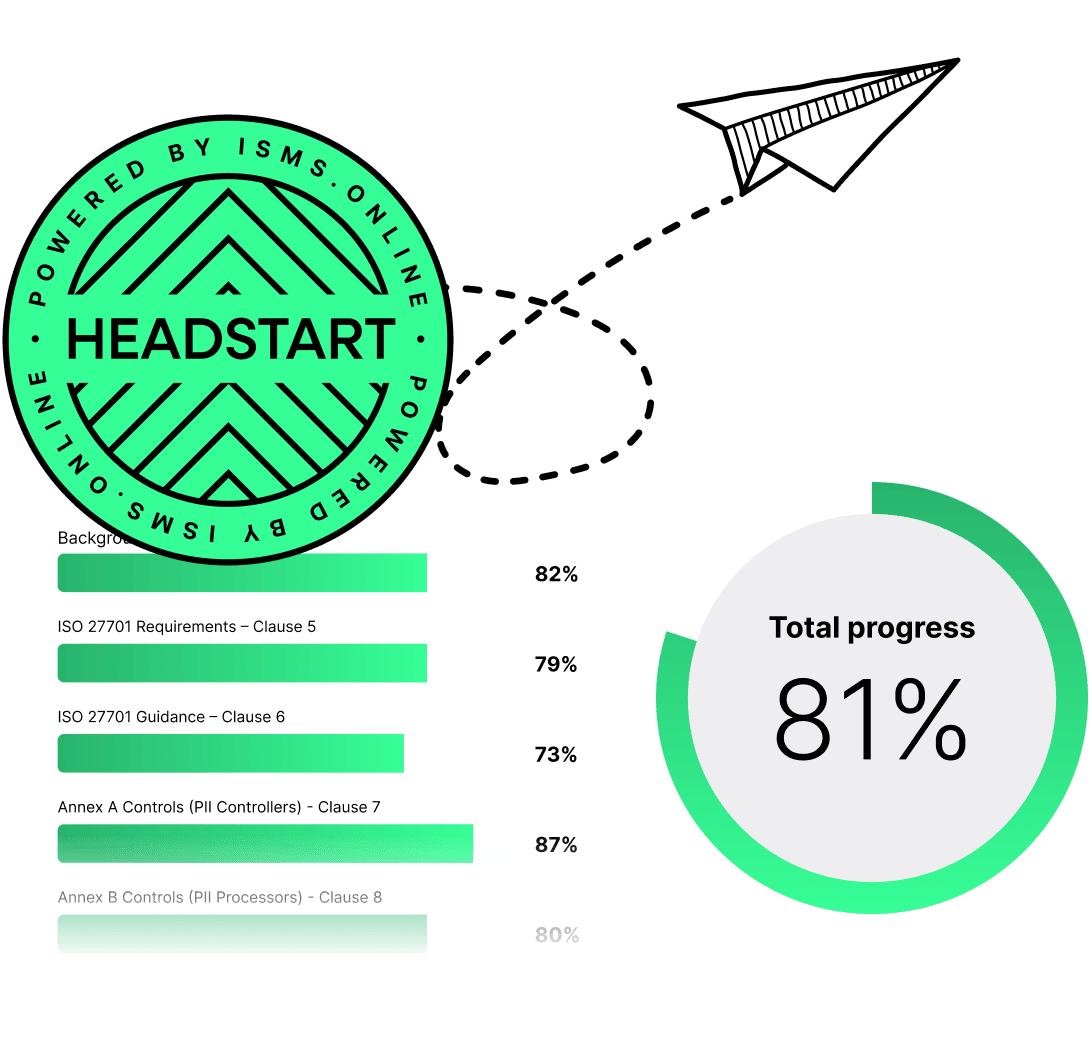
An 81% Headstart from day one
We’ve done the hard work for you, giving you an 81% Headstart from the moment you log on. All you have to do is fill in the blanks.
From 93 Annex A Controls to 27 MSP‑Critical Ones
You reduce 93 Annex A controls to 27 MSP‑critical ones by focusing on the risks that matter most to your services, not by cutting corners. You create a baseline that directly addresses your high‑impact threats while still fitting inside the ISO 27001 risk‑based approach. That baseline then becomes the backbone of your ISMS and a concrete storey you can tell auditors and customers.
A smaller, well‑chosen control set is more powerful than a long list nobody executes consistently.
Start from your risk picture, not from the list
You get a meaningful 27‑control baseline by starting from your actual risks and services rather than from the Annex A index. When you map controls to clearly described threats and obligations, your checklist becomes defensible to auditors and persuasive to customers, because you can show why each control exists. The 27000‑series standards underpinning ISO 27001 place risk assessment and treatment at the heart of the methodology, with Annex A controls referenced afterwards as potential measures to address identified risks.
The temptation with Annex A is to start at the top and work down, ticking boxes. ISO 27001 actually expects the opposite:
Around 41% of organisations in the 2025 ISMS.online survey said that managing third‑party risk and tracking supplier compliance is a top security challenge.
- Identify your information security risks first.
- Decide how to treat those risks.
- Use Annex A as a catalogue of possible measures.
For an MSP, high‑priority risks usually cluster around:
- Compromise of remote management tools or privileged accounts.
- Inadequate monitoring and logging of high‑risk actions.
- Failed or untested backups for platforms and customer systems.
- Weak change and configuration management in client environments.
- Poorly managed suppliers and cloud services.
- Unclear or inconsistent incident response and communication.
Once you have articulated these risks in a register, you can scan Annex A for controls that genuinely address them. That gives you a long list of candidates. Only then do you narrow down to a 27‑control baseline that will form the backbone of your checklist.
The key is traceability: for each “essential” control you should be able to point to a specific, significant risk that it mitigates.
Clustering controls into MSP capability areas
Clustering controls into capability areas that match how your MSP works makes your 27‑control list easier to operate and explain. Each cluster links clearly to real tools and processes, so engineers and auditors can see how controls play out in everyday work and how they connect to your services.
Rather than picking 27 controls at random, it helps to group them into capability areas that mirror how your MSP works. For example:
- Identity and access management.
- Endpoint and device security.
- Logging, monitoring and threat detection.
- Backup and recovery.
- Change and configuration management.
- Supplier and cloud security.
- Incident management and business continuity.
- Governance and documentation.
Within each cluster, you select a small number of Annex A controls that:
- Are directly relevant to MSP operations.
- Have clear owners and technical levers.
- Are likely to feature in audits and customer questions.
A balanced 27‑control baseline might look like this:
| Capability area | Approximate number of controls | Typical MSP services touched |
|---|---|---|
| Identity and access management | 5 | Remote admin, IAM, SSO, privileged ops |
| Endpoint and device security | 3 | Managed endpoint, MDM, hardening |
| Logging, monitoring and threat detection | 4 | SOC/MDR, SIEM, monitoring |
| Backup and recovery | 3 | Managed backup, DRaaS |
| Change and configuration management | 3 | Change control, infrastructure as code |
| Supplier and cloud security | 3 | Hosting, cloud management, SaaS broking |
Beyond these foundational areas, you will usually reserve additional controls for:
- Incident management and business continuity.
- Governance, policy and documentation.
You can treat these final clusters as the “glue” that connects the more technical controls into a coherent service.
To make the 27‑control concept more concrete, here is how typical Annex A‑style controls might appear in MSP operations:
- Identity and access management – enforce multi‑factor authentication and least privilege on RMM, PSA and cloud admin accounts, with short, scheduled access reviews.
- Endpoint and device security – maintain hardened build templates plus automated patching policies for managed servers, workstations and mobile devices.
- Logging, monitoring and threat detection – centralise logs from RMM, firewalls and key customer systems into a monitored SIEM or equivalent.
- Backup and recovery – run scheduled, monitored backups for critical MSP and client systems with documented, regular restore tests.
- Change and configuration management – route high‑risk changes in customer environments through a documented approval and testing process, ideally integrated with your ITSM tool.
- Supplier and cloud security – perform and record security due diligence on critical cloud, data centre and security vendors, including clear shared‑responsibility agreements.
- Incident management and business continuity – maintain and exercise playbooks for major incidents that involve both your platforms and client environments.
- Governance and documentation – maintain an approved security policy, a Statement of Applicability and a current risk register that all point back to these controls.
The numbers are not magic; they are a way to enforce breadth. Your actual selection will depend on your services, contracts and risk appetite. What matters is that you can explain why these 27 are “essential” for you, and show how you will expand coverage over time.
Many MSPs then find it helpful to sanity‑check their shortlist with an external auditor, consultant or peer MSP. That feedback makes it easier to defend your choices when certification and customer reviews arrive.
The 27 Essential ISO 27001 Controls MSPs Must Operationalise
Your 27 essential controls only deliver value when they are consistently executed, monitored and improved, not just listed in a document. For MSPs, that means translating each control into clear responsibilities, practical checks and obvious links to the tools your teams already use. In practice, you weave these controls into platforms such as your PSA, RMM, backup, security and identity tools so they run as part of everyday work.
Examples of what your 27‑control baseline might cover
A practical 27‑control baseline for MSPs will usually cover a small number of well‑chosen controls in each capability area, each tied to real tasks in your platforms. Instead of abstract control names, you describe concrete behaviours, such as how you manage admin access to RMM tools or how you test restores from your backup system and record the results.
The exact contents of your baseline will vary, but a pragmatic MSP‑focused set will often include controls such as:
Identity and access management
- A policy that defines how admin accounts are created, approved, changed and removed.
- Strong authentication on all remote and privileged access paths, including RMM, PSA and cloud consoles.
- Role‑based access models for shared platforms and customer tenants.
- Short, regular access reviews and recertification for privileged accounts.
- Focused controls around password management and session time‑outs where applicable.
Endpoint and device security
- Baseline configuration standards for servers, workstations and mobile devices.
- Endpoint protection and detection tooling deployed and monitored.
- Simple processes for secure build, patching and decommissioning of devices.
Logging, monitoring and threat detection
- Defined logging requirements for key platforms and customer environments.
- Centralised collection and retention of security‑relevant events.
- Clear alerting thresholds and response procedures for high‑risk activities.
- Regular review of alerts, with escalation paths into incident management.
Backup and recovery
- A documented backup and retention policy covering both MSP and client systems in scope.
- Verified, regular backup jobs with monitoring for failures.
- Routine restore tests with recorded results and lessons learned.
Change and configuration management
- A documented change management process with risk categorisation.
- Approval and testing requirements for high‑risk changes.
- Standard configuration baselines for major technologies, with deviations recorded and justified.
Supplier and cloud security
- Criteria and due‑diligence checks for onboarding critical suppliers and cloud services.
- Ongoing review of supplier performance and security posture.
- Clear definition of shared responsibilities between you, your suppliers and your customers.
Incident management and continuity
- Defined incident categories, severity levels and response steps.
- Processes for notifying affected customers within agreed timeframes.
- Root‑cause analysis and corrective actions after significant incidents.
- Business continuity and disaster recovery plans tested at agreed intervals.
Governance and documentation
- An information security policy approved by leadership and communicated to staff.
- A Statement of Applicability that records which controls are in scope and why.
- A risk register that ties real‑world risks to the 27 controls and their evidence.
For each of these areas, your checklist will include specific tasks: for example, “Run and document monthly admin access review for RMM platform” rather than simply “Access control implemented”.
Using the 27‑control list as a practical checklist
You turn a conceptual 27‑control baseline into a live checklist by assigning people, frequencies and evidence to each control. That way, your engineers know exactly what to do, how often to do it and how to prove it has been done when customers or auditors ask for details.
Once you have defined your baseline, you can turn it into a working checklist by:
- Assigning a named owner to each control.
- Defining the frequency of key activities (for example monthly, quarterly, annually).
- Specifying the exact evidence you expect to see when the activity is complete.
- Linking each control to relevant policies, procedures and runbooks.
- Building tasks or recurring tickets in your PSA, ITSM or ISMS platform.
At this point, a dedicated ISMS platform such as ISMS.online can make a tangible difference. Instead of juggling spreadsheets and shared drives, you can manage your 27‑control baseline, risk register, policies, audits and improvement actions in one place, with clear ownership and reminders that reduce missed tasks and last‑minute scrambles.
If you want the checklist to survive beyond the initial project, treat it as the front‑end of your ISMS: the visible set of controls and tasks that demonstrate how you are meeting the broader ISO 27001 requirements.

Free yourself from a mountain of spreadsheets
Embed, expand and scale your compliance, without the mess. IO gives you the resilience and confidence to grow securely.
Evidence and Audit Readiness: Proving Your 27 Controls Work
You prove your 27 controls work by deciding up front what evidence will show each one operating, then storing that proof where auditors and customers can find it quickly. The aim is to move from “we did the task” to “we can clearly demonstrate that the control operates as intended over time”, with minimal extra administration for your team.
Design your evidence set up front
Designing your evidence set up front ensures that every control on your checklist has a clear, efficient way to prove it is working. That planning allows you to automate evidence where possible and avoid last‑minute hunts for screenshots or logs when audits and customer reviews appear and your team is already busy.
For each of your 27 controls, you should decide in advance:
- What counts as good evidence.
- Where that evidence will be stored.
- How long it will be retained.
- Who is responsible for producing and reviewing it.
Evidence might include:
- Policies and procedures approved by appropriate leaders.
- Configuration exports or screenshots from tools showing settings.
- Tickets, change records or maintenance logs.
- Training records and acknowledgement logs.
- Minutes of meetings, internal audit reports and management review outputs.
- Incident reports and post‑incident reviews.
Designing this “evidence model” early has several advantages:
- It makes internal audits much easier because auditors can follow a clear trail.
- It reduces last‑minute scrambles to find screenshots or logs.
- It allows you to automate evidence collection where tools support it.
- It ensures that evidence quality is consistent across clients and services.
In an MSP context, you also need to think about per‑client evidence. You have to decide where you store proof that a particular control is operating for a particular customer and how you retrieve it during a client audit or contract review without causing delays.
Simple, repeatable routines make complex security commitments feel manageable.
Make your risk and control register your single source of truth
Using a single risk and control register as your backbone means everyone works from the same picture of risks, controls and evidence. It is the map that links your 27‑control checklist to the broader ISO 27001 management system in a way auditors and customers can follow without confusion.
Behind your checklist there should be a structured risk and control register that shows:
- Each identified risk, with likelihood and impact.
- The controls (from your 27 baseline and beyond) that mitigate that risk.
- The evidence that those controls operate.
- The current status (implemented, partially implemented, planned).
- Any outstanding actions or improvements.
This register is the backbone of your ISMS. It ties together:
- Risks that matter to your business and customers.
- Controls you have chosen to address them.
- Evidence you can show to auditors and clients.
- Improvement work you are planning.
A well‑maintained register supports:
- Internal audits, where you can choose a sample of risks and trace the controls and evidence.
- Management reviews, where leadership can see risk trends, control coverage and residual exposure.
- External audits, where auditors can see your reasoning and test your controls accordingly.
- Customer due‑diligence, where you can answer “how do you manage this risk?” with a clear narrative and supporting records.
An ISMS platform can help by providing a single place where risks, controls, evidence and audits live together, rather than being scattered across spreadsheets and ticketing systems. That centralisation reduces rework and makes each future audit easier to prepare for.
Making the Checklist Operational: Policies, Playbooks and Tooling
You make your ISO 27001 MSP checklist operational by turning it from a static document into part of how teams plan work, run tools and collect evidence every day. The focus is on turning controls into simple, repeatable tasks and embedding them in the platforms your engineers already use, so compliance looks like good service delivery rather than extra paperwork or side projects.
A checklist that lives only in a PDF is almost as risky as having no checklist at all. The real value comes when your 27 controls are embedded into how your teams work every day and can be seen in the way they use your tools.
Turn controls into recurring tasks and runbooks
Turning controls into recurring tasks and runbooks ensures that engineers know exactly what to do, when to do it and how to capture evidence as they work. That clarity reduces friction and makes it far more likely that your 27‑control baseline will be executed consistently rather than drifting over time.
Each control in your baseline should translate into one or more recurring tasks with:
- A clear owner.
- A defined frequency.
- Step‑by‑step instructions (a runbook).
- Criteria for completion and quality.
In the 2025 ISMS.online survey, about 42% of organisations named the information‑security skills gap as their top challenge.
For example:
- “Review all privileged accounts in remote management tools monthly; disable unused accounts; record outcome in change log.”
- “Test restores from backup platforms for at least one client per service tier every quarter; record results, issues and follow‑up actions.”
- “Review supplier security reports annually; log any concerns and mitigation actions.”
These tasks can then be:
- Created as recurring tickets in your PSA or ITSM.
- Linked to knowledge base articles or SOPs.
- Monitored in dashboards for on‑time completion.
Engineers should know exactly what is expected, how to do it and how to capture evidence as they go. That reduces friction and increases consistency. It also makes everyday work easier: instead of compiling backup test results from several consoles by hand, for example, you can run one standard report and attach it to a recurring ticket or control record.
Embed ISO 27001 into your tools and processes
Embedding ISO 27001 into tools and processes you already use is the fastest way to make the checklist feel like part of normal work rather than an extra project. When ISO‑related tasks show up in your PSA, RMM and identity platform, compliance starts to feel like service quality instead of separate paperwork that nobody wants to own.
Rather than running ISO 27001 as a parallel project, you can embed its requirements into tools you already use:
- PSA / ITSM
Use queues, workflows and SLAs to manage control‑related tasks. Tag tickets that relate to ISO activities so you can report on them later.
- Remote monitoring and management
Configure alerts and automation around events that touch your 27 controls, such as disabled antivirus, failed backups or unenrolled devices. Where possible, have critical alerts automatically create tickets that map to specific controls.
- Identity and access management
Integrate your IAM solution with your control tasks. Use workflows for joiners, movers and leavers, scheduled access reviews and enforcement of multi‑factor authentication on high‑risk paths.
- Documentation and knowledge management
Store policies, procedures and runbooks where engineers actually look for guidance. Make it easy to find “how to perform the monthly admin access review” rather than burying it in a long policy.
- ISMS platform
Use an ISMS platform to connect policies, controls, risks, audits and improvements. This creates an auditable history and reduces the risk of gaps when staff change roles or customers ask for deeper evidence.
A useful mindset shift is to treat ISO 27001 as the operating system for how you deliver secure services, not as a special project for the compliance team. When your checklist tasks show up in the same place as other work, and when evidence is captured automatically where possible, the burden on your teams drops dramatically.
You may also find it helpful to adopt a pre‑built MSP template in an ISMS platform so you are not starting from scratch. By adapting an existing ISO 27001 structure that already reflects MSP realities, you can reach audit readiness more quickly and spend more time refining controls that differentiate your services.

Manage all your compliance, all in one place
ISMS.online supports over 100 standards and regulations, giving you a single platform for all your compliance needs.
Turning ISO 27001 Into a Client‑Facing MSP Offering
You can turn your ISO 27001 baseline and 27‑control checklist into a client‑facing offering by packaging controls into clear service tiers and describing outcomes in customer language. When you do that, security becomes a visible commercial asset rather than a silent cost, and your investment in certification directly supports sales, renewals and pricing.
Once you have a credible ISO 27001 baseline and a working 27‑control checklist, you can do more than satisfy auditors; you can use it to strengthen your commercial position and make your services harder to commoditise.
Deciding what is standard versus premium
Deciding which controls are standard and which are premium allows you to design service tiers that are transparent, defensible and profitable. Customers see what they are getting, your teams know what to deliver and you can invest more confidently in higher‑end security capabilities because you know how they are packaged.
First, you need to decide which controls are “non‑negotiable” across all clients and which are optional or premium. For example:
- Standard across all services
You might insist that all customers on managed services have centralised logging, enforced multi‑factor authentication, protected backups and defined incident notification processes.
- Premium or add‑on
You may offer enhanced monitoring, twenty‑four‑seven SOC, more frequent access reviews, detailed risk workshops or executive‑level security reporting as paid upgrades.
Making these distinctions explicit has several benefits:
- Sales and account teams know what they can promise.
- Delivery teams know what to implement for each service tier.
- Customers understand what they are getting and what sits beyond the base package.
- You can price, staff and invest in security capabilities more deliberately.
Your 27‑control checklist can help here by showing which controls must always be implemented and which can be scaled up with additional effort or tooling.
Translating controls into outcomes your clients care about
Translating your 27 controls into client outcomes helps you move conversations away from acronyms and control IDs and towards risk reduction, resilience and regulatory support. This makes security easier to sell and easier for non‑technical stakeholders to value.
Customers rarely ask for specific control references; they ask about outcomes:
- Will you help us reduce the likelihood and impact of incidents?
- Will you support our own certifications and audits?
- Will you help us meet regulatory expectations?
- Will we have fewer surprises and shorter recovery times?
You can use your 27‑control baseline to build this storey. For example:
- Identity and access controls → reduced chance of unauthorised access, easier investigations, better alignment with internal policies.
- Logging and monitoring → faster detection of attacks, evidence for investigations, support for your customer’s own monitoring requirements.
- Backup and recovery → confidence that data and systems can be restored, tested recovery time objectives and better resilience against ransomware.
- Supplier and cloud controls → assurance that you vet and manage the services you rely on, which reduces supply‑chain risk for customers.
- Incident management and continuity → clarity on who does what during an incident, how customers are informed and how lessons are learned.
You can reflect this narrative in:
- Sales decks and proposals.
- Security schedules and annexes in contracts.
- Vendor security questionnaires and due‑diligence packs.
- Quarterly business review agendas.
By connecting your checklist to tangible business results, you make security part of your value proposition, not just a line item in the cost column.
Practical next steps for your MSP
When you see how ISO 27001 and a 27‑control baseline fit your services, a few concrete actions will move you from theory to practice without overwhelming your team. By starting small and focusing on the most important risks, you prove value quickly and create momentum for broader change.
Suggested starting actions
- Identify your top ten MSP‑specific risks, focusing on shared tools and privileged access.
- Draught an initial 27‑control baseline by clustering Annex A controls into MSP capability areas.
- Choose one or two evidence types for each of your top five controls and agree where they will live.
- Turn those top five controls into recurring tasks with owners and simple runbooks in your PSA or ISMS platform.
- Pick one upcoming audit, renewal or key customer review as the first milestone to test and refine your checklist.
These steps give you a manageable starting point: you start small, prove value in one concrete context, then expand coverage once your approach has been tested and stakeholders have seen the benefits.
Book a Demo With ISMS.online Today
ISMS.online helps you turn your ISO 27001 MSP checklist into a living management system that reduces audit effort, cuts rework and clarifies your security storey for customers. Instead of managing controls, risks and evidence in scattered spreadsheets and folders, you can work from a single, structured environment designed specifically for information security.
When a dedicated ISMS platform makes sense
A dedicated ISMS platform can be particularly valuable when your customer base, frameworks and audits start to outgrow manual methods. At that point, centralising your ISO 27001 work tends to be less about convenience and more about avoiding errors, delays and missed opportunities that damage trust or slow sales. It can be especially helpful when:
- You are preparing for ISO 27001 certification or surveillance audits.
- Enterprise customers are sending deeper and more frequent security questionnaires.
- Your team is spending too much time hunting for evidence or recreating the same answers.
- You want to reuse one control set across multiple frameworks (for example ISO 27001, SOC 2, NIST CSF).
With ISMS.online you can:
- Import or create your 27‑control MSP baseline and map it to Annex A and your risk register.
- Assign ownership, due dates and workflows for each control and related tasks.
- Store policies, procedures, tickets, logs and other evidence in context.
- Run internal audits and track findings, actions and improvements over time.
- Generate reports that help both auditors and customers understand your security posture.
This reduces uncertainty inside your team and improves confidence outside it.
What a phased rollout could look like
Rolling out ISMS.online in phases lets you prove value quickly on a real deadline and then expand to other services and frameworks once stakeholders have seen the benefits. You avoid a big‑bang project and instead build confidence in stages while learning how the platform fits your way of working.
You do not need to move everything at once. A practical adoption path might be:
-
Pilot with a core service or business unit
Start by modelling the ISMS for your most important or riskiest service line (for example managed infrastructure or SOC). Bring in existing policies, risks and controls, and set up your 27‑control checklist in ISMS.online. -
Prove the value on a real deadline
Use an upcoming external audit, major client security review or contract renewal as the first milestone. Drive the pilot work towards that date so stakeholders see immediate benefits in reduced preparation effort and clearer narratives. -
Extend to other services and frameworks
Once the pilot is proven, gradually expand the ISMS model to other managed services and, if needed, to related frameworks such as SOC 2. Reuse controls and evidence wherever possible instead of duplicating effort. -
Embed into business‑as‑usual
Over time, make sure that risk reviews, internal audits, management reviews and improvement actions all run through the platform. The 27‑control checklist then becomes part of how you run the business, not just a certification project.
If you want fewer audit surprises, shorter sales cycles with enterprise customers and a more confident storey about how you protect the systems you manage, ISMS.online is a natural partner. Booking a demo lets you see how your 27 essential controls, your risk register and your real‑world operations can live together in one secure, audit‑ready place, and gives you a clearer path from todays risks to a more resilient, trusted MSP practice.
Book a demoFrequently Asked Questions
How should an MSP define an ISO 27001 checklist so it genuinely fits a multi‑tenant service model?
An MSP‑specific ISO 27001 checklist should start from how you actually deliver shared services across tenants and then express the standard as clear, repeatable checks that run through your common tools and client estates.
How do you ground the checklist in the way your MSP really works?
Begin by mapping the platforms and patterns that genuinely drive your risk and revenue, such as:
- remote monitoring and management (RMM)
- PSA / ITSM systems
- backup and DR platforms
- endpoint, email and web security tooling
- cloud administration for Microsoft 365, Azure, AWS and other core services
For each, ask yourself:
- where do we hold, process or see customer data?
- where could one misconfiguration or compromise impact many customers at once?
Your checklist should then be organised around these answers rather than internal departments. That means headings like “RMM and privileged access,” “Backup and DR platform operation,” or “Cloud administration across tenants,” not “IT,” “Operations,” or “Security.”
Anchoring the checklist in this way makes it much easier for engineers to recognise where they fit and to see ISO 27001 as an operational guide for managed services rather than an abstract compliance requirement.
How do you bake multi‑tenant realities into each control?
A workable MSP checklist accepts three uncomfortable truths:
- you hold privileged access into many independent tenants
- a small set of shared platforms represent concentration points for risk
- you answer simultaneously to your own auditor and to multiple customer assurance teams
Controls such as access reviews, backup tests and change approvals therefore need to scale across estates, not just inside your own network. For each control, be explicit about:
- what you do centrally in shared systems (for example, global admin‑access review for RMM and PSA)
- what you do per‑client or per‑tier (for example, restore tests for all “Gold” backup customers each quarter)
- how you keep the approach consistent as you add and retire tenants
Thinking this way forces you to design the checklist as a multi‑tenant system rather than as something that happens once a year for your internal environment only.
Why is managing the checklist in an ISMS or Annex L‑style IMS so important?
When the checklist lives inside an Information Security Management System (ISMS) or an Annex L‑aligned Integrated Management System (IMS), you can:
- link each item to the Annex A control it supports and the risk it mitigates
- assign owners, cadences and escalation thresholds
- attach tickets, logs and reports as live evidence rather than hunting them down later
- generate auditor‑ready and customer‑friendly summaries from the same underlying data
If you are still relying on spreadsheets, shared folders and unwritten “tribal knowledge,” moving the checklist into a structured ISMS is often the point at which “we think our services are secure” becomes “we can show exactly how we keep every tenant safe.” If you want that shift without building everything from scratch, adopting a platform such as ISMS.online lets you anchor the checklist directly into how your MSP already works and grow into additional standards over time.
How can an MSP reduce Annex A’s 93 controls to a focused baseline without weakening assurance?
You reduce Annex A to a meaningful MSP baseline by starting from real multi‑tenant failure scenarios, grouping related controls into a few capability areas, and then selecting the smallest set you can run consistently across clients without leaving obvious gaps.
Bring together people who know your platform and customer mix and walk through specific bad‑day examples, such as:
- compromise of your RMM or PSA accounts with broad admin access
- a misconfigured rollout that weakens firewall rules for many sites at once
- silent backup failures affecting a shared backup tier
- a critical SaaS provider outage that halts your service to every tenant
- an engineer leaving with residual access to multiple client environments
For each scenario, capture:
- how many customers could be affected (the blast radius)
- which tools and services are involved
- what the financial, contractual and reputational impacts would be
Once you have this list, map each scenario to the Annex A controls that genuinely change the outcome. This immediately narrows your attention to the parts of Annex A that matter most in an MSP context.
Group your chosen controls into a handful of MSP‑relevant capability clusters, for example:
- identity and privileged access across MSP tools and tenants
- endpoint and server protection
- logging, alerting and on‑call escalation
- backup, restore and continuity
- change and configuration management
- supplier and cloud platform security
- incident response and learning
- governance, policy and training
Within each cluster, only include controls you are prepared to:
- give to a named owner who understands what is required
- schedule with a realistic cadence
- support with consistent evidence across the customer base
You still evaluate all 93 controls in your Statement of Applicability, but your operational baseline focuses on the 20–30 controls where failure would create unacceptable blast radius. Over time, as your ISMS or integrated IMS matures, you can add additional controls without redesigning your approach.
How do you explain this focused baseline to auditors and enterprise customers?
Auditors and serious buyers are rarely opposed to focus; they dislike arbitrary choices. Inside your ISMS, document:
- the scenarios you considered and how they relate to your services
- which baseline controls mitigate each scenario and why
- which Annex A controls are currently treated as lower priority, and how their risks are otherwise managed
- your roadmap for expanding coverage as your capability grows
When this logic shows up consistently in your risk register, Statement of Applicability and improvement plan, conversations tend to move away from “why didn’t you implement everything at once?” towards “this is a structured way to build a secure MSP over time.” Using a platform like ISMS.online makes this easier because it already supports risk–control–evidence linkage and multi‑framework growth, so you can present your baseline as part of a long‑term integrated management approach rather than a one‑off shortcut.
How do you turn a concise ISO 27001 control set into a runbook engineers will actually follow?
You turn a lean control set into something engineers use by expressing each control as specific actions in familiar tools, assigning clear owners and cadences, and wiring those actions into your PSA, RMM and cloud platforms so they appear as normal work rather than “extra compliance.”
How do you translate each control into engineer‑friendly work?
For every selected control, write down four concrete answers in language your teams already use:
- What exactly happens?:
For example: “Once a month, export the list of admin accounts from RMM, PSA and major cloud consoles, then review for leavers or unused access.”
- Who owns it?:
For example: “Service Desk Manager” for RMM and PSA, “Cloud Lead” for Azure and Microsoft 365.
- How often does it run?:
Weekly, monthly, quarterly, or after specific events such as onboarding a new client or introducing a new platform.
- What counts as proof?:
Closed tickets with attached reports, signed‑off change records, restore logs, or short review notes.
This turns clause language like “review of user access rights” into something that looks like a standard, schedulable task in your tools.
How do you keep runbooks consistent across many tenants?
For recurring activities such as patching, backup testing or access reviews, design short, reusable runbooks that describe:
- which customers or service tiers are in scope (for example “all tenants on the Gold backup service”)
- the exact clicks or commands in the relevant RMM, backup or cloud tools
- how to capture evidence as you go (ticket tags, exports, screenshots, saved reports)
- where that evidence is stored and how it is linked back to the control
You can then reuse these runbooks across clients with minimal change, often just substituting the tenant name or group. Over time, this becomes your MSP operations playbook rather than a static project binder no‑one opens.
How do you integrate the runbook into your ISMS or Annex L‑style IMS?
To stop the runbook drifting away from your ISMS, bind it directly into the same system:
- create recurring PSA or ITSM tickets that reference the relevant ISMS control or risk ID
- embed control tasks in service onboarding, offboarding and change workflows
- feed completion results and exceptions back into your risk register and improvement log
A dedicated ISMS or integrated management system makes this far easier than scattered documents. ISMS.online, for example, lets you link risks, controls and improvement actions so your runbooks, tickets and evidence all point to the same place. That sort of linkage is precisely what gives auditors and larger customers confidence that “ISO 27001” and “how we run services” are the same thing, not parallel worlds.
What forms of evidence carry the most weight for an MSP’s ISO 27001 controls?
For a managed service provider, the most convincing evidence draws a straight line from intent to behaviour: concise policies that state what you commit to, runbooks that show how work is done through MSP tools, and records that prove those runbooks are executed consistently across tenants.
How should you structure top‑level policies and supporting procedures?
Keep top‑level documents focused on three things:
- what you commit to in each domain (access control, change, backup, incident, supplier, continuity)
- who is accountable and how decisions are escalated
- which tools and processes you use to discharge those responsibilities
Align this language with ISO 27001 requirements and, where relevant, with other frameworks you either hold or plan to pursue, such as ISO 22301 for continuity or SOC 2 for service trust. That alignment is much easier if you are using an Annex L‑style integrated management approach, because you can write once and reuse across standards rather than maintaining separate policy sets.
Which operational records tend to satisfy auditors and demanding customers?
Under those policies and procedures, focus on records that demonstrate controls in motion across time and tenants, for example:
- access‑review tickets and output files from RMM, PSA and cloud consoles
- backup and restore reports for each service tier, including routine test restores
- change records that show approvals, risk assessments, implementation notes and rollbacks where needed
- incident tickets with timelines, root‑cause analysis and corrective actions
- supplier reviews, contract notes and evidence that you monitor their security and continuity position
- internal audit schedules and findings, with remediation and follow‑up tracked
Auditors are usually more persuaded by a coherent sample covering a defined period than by a last‑minute “document dump.” A good rule of thumb is to choose a representative window (for example, the last quarter) and show how the same pattern appears across multiple customers and services.
How do you keep risk, control and evidence linked without getting lost?
Traceability becomes much easier if you maintain a central view in an ISMS or Annex L‑aligned IMS that lets you:
- record MSP‑specific risks (for example “Compromise of RMM tooling across tenants”)
- specify which controls and runbooks mitigate each one
- link to the policies, procedures and evidence that show those mitigations in practice
When that view is kept current, you can answer audits, vendor assessments and cyber‑insurance questionnaires by navigating from risk to proof rather than from folder to folder. ISMS.online and similar platforms are built for exactly this style of traceability, which is why many MSPs adopt them once questionnaires and audits become a regular part of doing business.
How does an ISO 27001 MSP checklist improve responses to client security questionnaires and RFPs?
A structured ISO 27001 MSP checklist turns security questionnaires and RFPs from bespoke writing tasks into repeatable mapping exercises, where you draw from a known library of controls, services and evidence instead of starting from scratch each time.
How can you build a reusable bridge between common questions and your control set?
Collect a cross‑section of actual questionnaires, RFP security sections and procurement portals, then:
- cluster questions into themes such as identity and access, monitoring and logging, backup and continuity, supplier oversight and incident handling
- map each theme to specific ISO 27001 controls and runbooks in your ISMS
- decide which standard artefacts you are comfortable sharing, for example policy excerpts, anonymised reports or illustrative tickets
This becomes your question‑to‑control index. When a new form arrives, you can identify which clusters it touches, pull the relevant control descriptions and evidence references, and then adjust the wording to match the customer’s language and sector. Over time, this can cut response times significantly and make your answers more consistent.
How do you explain your checklist in language non‑technical stakeholders will value?
Most procurement teams and business buyers care less about clause numbers than about outcomes. Translate your internal ISO 27001 mappings into a client‑facing view that:
- explains control groups in outcome language (“how we protect your admin access,” “how we prove backups work,” “how we respond to suspicious activity”)
- ties each group to the managed services they are buying
- clarifies which responsibilities sit with you and which remain with them
You can then reuse this view across proposals, vendor risk portals, onboarding packs and quarterly business reviews. It reassures customers that your ISO 27001 work is directly reflected in how you operate, not just in how you answer forms.
How do you measure whether this structure is helping you win and keep business?
Track a small set of commercial and operational indicators, such as:
- average turnaround time for security questionnaires before and after introducing the question‑to‑control index
- frequency and depth of follow‑up questions from prospects and existing customers
- win rate in opportunities where security posture is formally scored
- feedback from sales and account managers on whether security conversations feel easier
If your control set, risks and evidence all live together in an ISMS platform, generating updated response packs or tailored summaries often becomes a matter of filtering and exporting. Tools like ISMS.online are built to support this, so improving your questionnaire process can also be a practical proof to your own teams that ISO 27001 makes life easier rather than harder.
When should an MSP replace spreadsheet‑based ISMS documents with a dedicated ISMS or IMS?
You should move from spreadsheets and scattered documents to a dedicated ISMS or Annex L‑integrated management system once the effort and risk of coordinating audits, frameworks and customer expectations via manual files starts to exceed any savings from “just using Excel.”
What are the clearest signs that spreadsheets are now limiting your programme?
Typical warning signs include:
- every audit, customer review or renewal triggers days of searching across shared drives, email and ticket histories
- no one can quickly state who owns each control, when it last ran, or what the outcome was
- adding a new standard such as SOC 2, NIS 2 or ISO 22301 means copying the same content into yet another workbook
- significant changes, such as staff departures, new core tools or major customers, are not automatically reflected in your risk view or control set
At that point, the risk of missed tasks, inconsistent evidence and knowledge trapped in a few people becomes a strategic issue, not just an operational nuisance – especially for an MSP selling security as a service.
How does adopting a dedicated ISMS or IMS change day‑to‑day life?
A suitable platform allows you to:
- hold risks, controls, policies, audits and improvements as linked records instead of static files
- assign clear owners, due dates and statuses to each control and assurance activity
- reuse your ISO 27001 baseline across other frameworks without duplicating effort
- generate evidence packs and status dashboards for auditors, customers and leaders from the same underlying dataset
If you choose an Annex L‑aligned integrated management system, you can manage quality, security, continuity and other standards together. One change – for example, adding a new core SaaS tool – can then trigger the right updates across all relevant frameworks rather than relying on someone to remember every spreadsheet tab.
Why does this shift matter more as you target larger and more regulated customers?
Bigger and more regulated organisations increasingly expect their MSPs to demonstrate that:
- security and compliance are run as ongoing programmes, not scramble‑mode events
- evidence is consistent over time and across services and tenants
- controls evolve as the MSP’s own technology stack and customer mix change
A dedicated ISMS built for service providers makes it far easier to show that level of maturity. If you want to be seen as a partner who manages security with the same discipline as your customers do internally, moving beyond spreadsheets to a structured ISMS or integrated IMS is often the visible step that shifts perception. Platforms like ISMS.online exist to make that move practical: you can start with ISO 27001, plug in additional standards as needed, and give both auditors and customers a single place to see how you keep their environments safe.






