















Why Your Registry Readiness is Now a Strategic Boardroom Imperative
If you’re responsible for compliance or risk management in a modern enterprise, the Registry of Entities under Implementing Regulation EU 2024-2690 (NIS 2) isn’t just a legal footnote-it’s emerging as the visible backbone of organisational trust and resilience. Once a background admin file, the registry is now a board-level risk and credibility asset. Its accuracy and timeliness are watched as both a sign and a test of your operational discipline, risk posture, and market readiness.
Boards, auditors, and regulators now expect real-time, centralised registry management. Missed deadlines, flawed details, or opaque ownership structures are immediately flagged-not just internally, but also via regulators or sector-wide risk signals, disrupting procurement, investor trust, and even your ability to operate legally in critical sectors (ENISA, ΣR). A healthy registry is more than “admin hygiene”; it’s your keystone for audit resilience and a measurable board asset. Smart organisations know: When the rules shift, visibility becomes your best insurance-not your biggest fear.
Registry as an Operational and Boardroom Signal
Modern registries arent just files for inspections; theyre the live nerve endings of your operational perimeter. Regulatory reviews, deal accelerators, and even director confidence now hinge on up-to-date registry health. Any lapse finds its way to procurement delays, audit remarks, and company-wide reputational drag (NIS2 Resource, ΣO).
The result? Boardroom credibility is won or lost as quickly as you surface or stumble over your registry data.
Book a demoEliminating Hidden Friction: Why Legacy Registry Habits Are a Liability
Many organisations, even well-resourced ones, rely on brittle, semi-manual processes-think spreadsheet-based tracking, siloed handovers, and long email chains. Under NIS 2, these invisible routines have mutated from mere headaches into existential risk factors.
Manual entry and patchwork workflows kill compliance readiness. More than 90% of registry errors and near-misses stem from disconnected updates and a lack of single-owner attestation (Punters Southall Law, ΣR). Each unsynchronized update, delayed email, or ambiguous owner introduces delay and risk compounding. “Who’s updating the registry?” too often yields silence or finger-pointing.
Timeliness and Accuracy: The Non-Negotiables
Timely, complete updates are now a legal necessity. Under NIS 2, late or flawed registry data becomes a direct enforcement trigger-expect notices, fines, or even suspension of market permissions (NIS2Compliant.org, ΣA). In a multi-jurisdiction world, delays in one office ripple out into multinational correction frenzies. Regular, disciplined registry maintenance now sits alongside financial close procedures and risk reporting as a “critical infrastructure” board function.
Every time the registry isn’t ready, opportunity walks out the door-and risk walks in.
Commercial, Legal, and Insurance Fallout
Failing to keep registry details in line isn’t just a compliance foot fault; it blocks insurance, delays deals, and raises red flags in supply chain vetting (ECSORG, ΣA). Most damaging, persistent errors diminish boardroom trust, slow stakeholder approvals, and frame the business as a laggard rather than a leader.

Master NIS 2 without spreadsheet chaos
Centralise risk, incidents, suppliers, and evidence in one clean platform.
What a Real-Time, Automated Registry Actually Looks Like
Leading organisations are rebuilding with live registry controls-automated, organisation-wide systems that transform the registry from a periodic headache into a persistent source of strength and audit-ready evidence.
The Compliance Engine: Automation and Proactive Control
Registry automation means that every data change flows instantly through attestation, backup assignment, timestamping, and completeness checking. It’s not just a “register” but a compliance engine that talks directly to compliance logs, dashboards, and risk registers (EC Europa, ΣA). Reminders chase incomplete updates; backups cover gaps before they grow; minimal manual steps mean maximal reliability.
The real test: Does your compliance process reveal risk instantly, or bury it until audit day?
The Integrative Power of Registry-as-Fabric
Automated registry controls are the connective tissue for compliance: linking HR, IT, privacy, and even sectoral or legal systems (MDPI, ΣO). Through API-driven integrations, data flows accurately and securely, privacy and cross-border rules are enforced at entry, and every transaction is logged for audit or investigation.
Agile by Design: Managing Sector and National Variants
While ENISA establishes baseline requirements, your registry needs to flex for sectoral and national variations (ENISA, ΣX). Agile teams rehearse registry update scenarios-new business units, international obligations, mergers-so that no surprise triggers a compliance breakdown.
Automated Registry Workflow Example
- Trigger: New legal entity onboarded.
- Automation: Platform notifies assigned owner, escalates if ignored, and logs backup assignment.
- Attestation: Owner and backup confirm accuracy; system tests for dual role conflict.
- Audit trail: Every step, from notification to confirmation, is logged and mapped to Statement of Applicability or SoA.
The New Discipline: Article 27 Registry Requirements Explained
Article 27 mandates a richer, more proactive registry discipline-for good reason. A registry record is now the legal, operational, and security DNA of every entity.
What Data Must Be Collected-and Why Each Field Matters
The regulation spells out granular requirements: legal name, sector, representation and backup, contact details, service inventory, and, crucially for high-risk entities, cloud and network topology (NIS2 Directive.com, ΣG). Each detail underpins visibility, auditability, and regulatory defence.
Miss a contact or an owner? That one gap can unravel your audit chain, risk tracing, or even contractual renewal.
Attestation, Escalation, and Timeframes
Every entity record must have a named owner and a backup-each attesting, on a rolling 3-month cycle, to the accuracy and completeness of details (NIS2 Resources, ΣX). Systems must escalate failures or gaps, and demonstrate-to regulators and auditors alike-who dropped the ball and when action was taken.
The Price of Delay
The legal window for updating the registry is three months; exceed it, and you expose the company to warnings, fines, or operational exclusions (NIS2Konform.de, ΣA). Secure, automated reminders and escalation paths are not convenience features-they’re frontline controls for safeguarding your reputation and revenue.
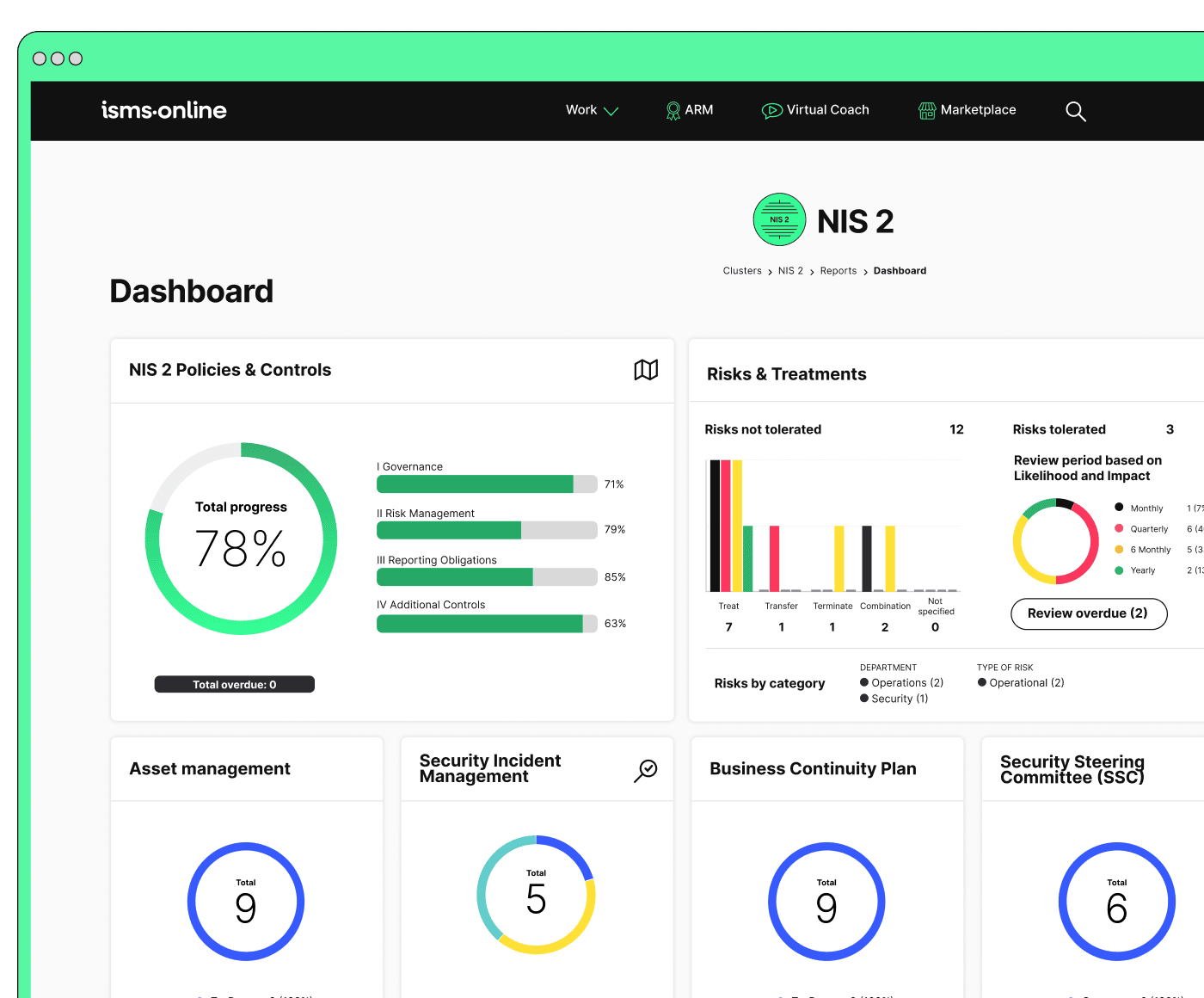
Be NIS 2-ready from day one
Launch with a proven workspace and templates – just tailor, assign, and go.
Fusing Registry Compliance with ISO 27001: Operations and Evidence-Ready Proof
Registry management under NIS 2 isn’t just law-it’s the living execution of ISO 27001. When registry operations are tightly mapped to ISMS controls, they evolve from burden to board asset, powering both compliance and operational readiness.
Registry Workflow as a Continuous Control
Each registry event-from entity addition to contact change-is mapped instantly to asset inventory, legal, and control documentation. These are operationalised via ISO 27001 Annex A controls. Action triggers (new entities, asset onboarding) automatically route to SoA updates and create risk entries (EU Publications, ΣR). Every change is substantiated by an artefact, a timestamp, and an actioned log (NIS2Compliant.org, ΣA).
In compliance, ‘if it isn’t logged, it didn’t happen.’ The registry closes that loop.
ISO 27001 Registry Bridge Table (Sample)
| Expectation | Operationalisation | ISO 27001 / Annex A Reference |
|---|---|---|
| Accurate entity updates | Automated, timestamped, responsibility mapped | A.5.9, A.5.13, A.8.9 |
| Owner/backup assignment | Attestation records, backup logs, escalation path | A.5.2, A.5.4, A.6.1 |
| Risk/process change mapped | SoA trigger, risk register link | 6.1.3, A.5.12, A.8.5 |
| Exportable audit fields | Logs, automated export, audit review | A.5.29, A.8.13, A.8.15, A.8.16 |
| Audited regular review | Registry logs, evidence in internal audit cycle | 9.2, 9.3, 10.2 |
Traceability Mini-Table
| Trigger | Risk Update | Control/SoA Link | Evidence Logged |
|---|---|---|---|
| Entity created | Entity risk | A.5.9, SoA | Registry, attestation |
| Contact changed | Contact risk | A.5.2, A.5.13 | Log entry, review flag |
| Asset onboarded | Asset risk | A.8.9 | Asset file, SoA evidence |
| Owner updated | Governance | A.5.2 | Board minutes, attestation |
| Compliance alert | Compliance | A.5.4, A.5.15 | Incident log, response trace |
Closing the Feedback Loop
Every registry movement must result in an evidence artefact. Regular review and audit simulation aren’t “best practise”-they are now the required norm.
Protecting Data, Audit Trails, and Cross-Border Integrity
Registry management is increasingly synonymous with data protection and audit integrity. GDPR, cross-border compliance, and regulator reviews are inseparable from your Article 27 controls.
Access Restriction, Oversight, and Logging
Access aligns to the principle of least privilege-only named, authorised personnel manage registry data (EDPB, ΣA). Each access, change, or external request must generate a tamper-proof log. Scenario-planned reviews help you answer: “Who accessed what, when, and why?”
Responding to External & Third-Party Requests
Authorities and third parties require immediate, logged responses, with clear escalation and visibility for legal and audit teams (Privacy International, ΣG). Integrated templates streamline answers without blind spots.
Secure Transfers and Cross-Border Data Rules
Exports must be encrypted, controlled, and tracked through data processor agreements (IAPP, ΣR). Additional sector or national requirements must be documented and reviewed, rather than left to chance (NIS2Info, ΣO). Any registry export error is a potential headline event.
Your registry record doesn’t travel alone-it carries your audit integrity and cross-border resilience.
Sector Ripple Effects
A registry failure at one entity can trigger sector-wide regulatory sweeps. Leading organisations run simulations, reinforce evidence closure, and demonstrate sector reliability with pride.
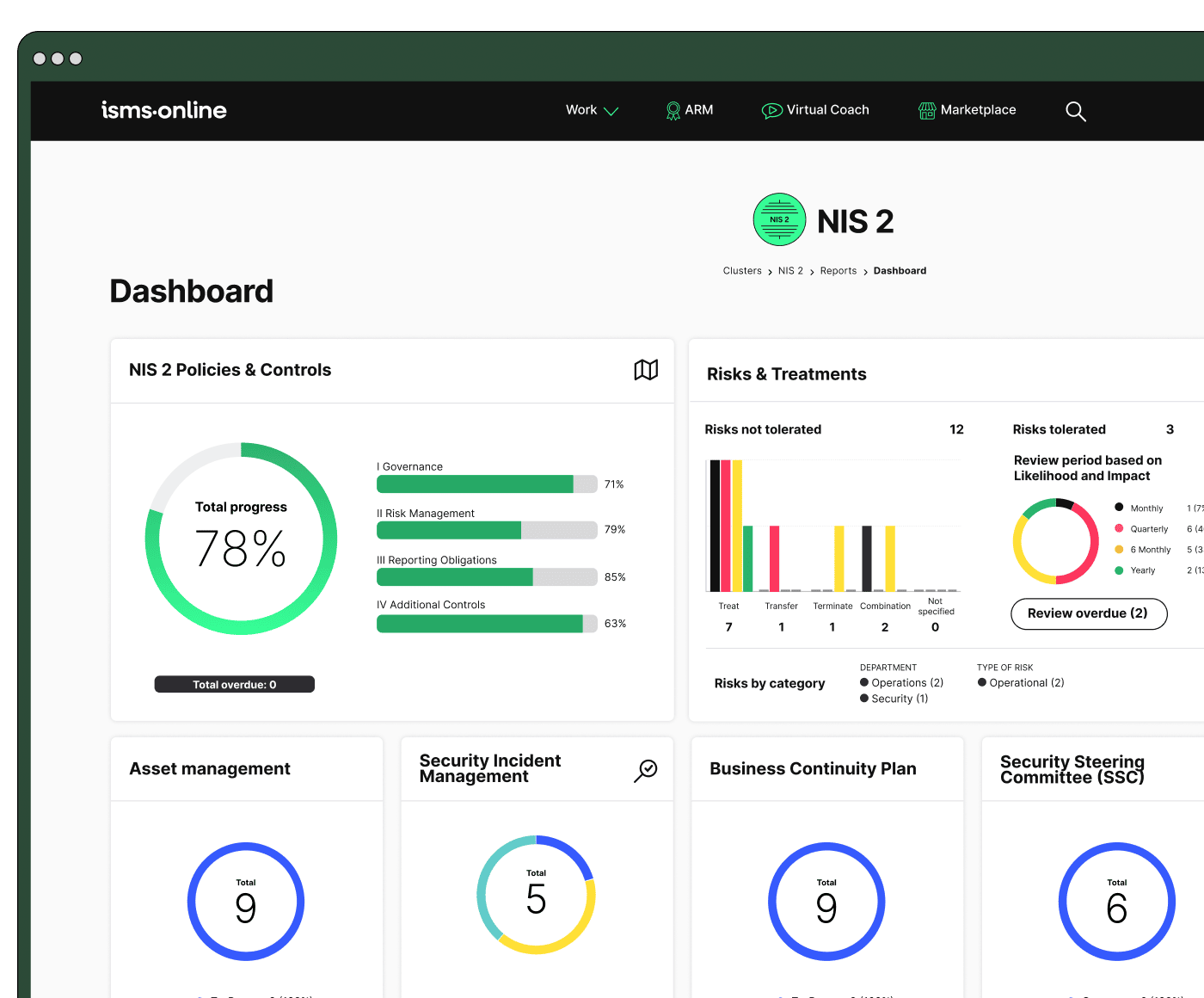
All your NIS 2, all in one place
From Articles 20–23 to audit plans – run and prove compliance, end-to-end.
Blueprint for a Unified, Auditable, Resilient Registry
What does operational excellence look like in practise? Five interconnected pillars convert registry compliance from a back-office worry into a source of board assurance and competitive readiness.
Five Pillars of a Modern Registry
- Automation: Systematic prompts, timed reminders, and escalation remove drift and ambiguity.
- Audit-Ready Logs: Every event is logged, filterable, exportable, and demonstrable (EC Europa, ΣR).
- System Integration: Registry becomes the nucleus of ISMS-linking HR, IT, and compliance domains (ECSORG, ΣO).
- Attestation and Responsibility: Owner and backup accountabilities are front and centre; failures prompt instant alerts.
- Resilience Feedback Loop: Dashboards and audit exports merge real-time and historic evidence so errors are detected and remediation is instant (arxiv.org, ΣX).
Registry-SOA Integration: The Nerve Centre for Audit and Response
Every registry action automatically links to your Statement of Applicability and risk register. “Tabletop audits” become rehearsal and evidence closure exercises for the real world (NIS2Info, ΣG). Real-time dashboards keep leadership aligned with operational truth.
Real-Time Error Response
Missed a deadline? Incomplete field? Your CISO, legal, and board are notified instantly; historic records feed audit trail simulations (arxiv.org, ΣX). Maturity means turning errors into feedback-never hiding them.
Reliability is earned by being error-transparent-and learning faster than your risks.
Registry Readiness, Proof, and Peer Validation
Registry competence isn’t claimed; it’s evidenced, benchmarked, and externally validated.
Live Monitoring as Board Assurance
Dashboards draw directly from registry event logs-attestations, time stamps, and completeness scores (EU Publications, ΣA). Leading teams run monthly completeness checks and irregular “red team” reviews to uncover buried gaps before the auditor (or regulator) does.
Peer and Regulator Endorsements
Reliable, audit-evidenced registry maintenance not only calms auditors-it breeds peer trust and gives regulators grounds for public attestation (Punters Southall Law, ΣG). Testimonies and certifications become currency in risk-sensitive markets.
Operational and Boardroom Value
Enterprises with strong registry routines see lower fines, faster procurement, better board relations, and recognisable resilience edge (Privacy International, ΣX). Excellence turns registry maintenance into a valued, cross-departmental discipline.
Operational credibility is built in the registry, measured at audit, and recognised among peers.
Trust Board, Audit, and Regulatory Confidence with ISMS.online
Is your registry a living risk asset, or an operational blind spot? With ISMS.online, you unify, automate, and evidence every action across security, compliance, and data protection. The result? Full-spectrum assurance for your board, auditors, regulators, and every business stakeholder in your value chain.
Move from passive compliance to active resilience:
- Book a diagnostic review: and expose hidden registry risks before they become audit findings.
- Download your NIS 2–ISO 27001 registry workflow map: -trace every update from event to logged evidence.
- Request a registry audit simulation: -see exactly how registry changes propagate to controls and SoA in real time.
- Turn evidence into actionable insights: with continuous, board-ready performance dashboards.
Your registry is no longer a back-office function-it's your operational passport. With ISMS.online, readiness is not just proof. It’s market leadership.
Frequently Asked Questions
How does moving to an EU-wide registry transform both risk management and board credibility for your organisation?
Switching to an EU-wide entity registry isn’t just a compliance update-it’s a fundamental shift that positions your organisation as trustworthy, resilient, and audit-ready in the eyes of regulators, enterprise buyers, and your own board. Under NIS 2 Article 27, pan-European registry harmonisation removes national silos and mandates regular, attested updates, turning previously tedious admin into a core governance function that leaders must own publicly. Every update now leaves a digital audit trail; instead of late-night manual scrambles or scattered spreadsheets, your registry becomes a provable system of record-reassuring directors, reducing liability risks, and providing a robust proof-point in every board pack, procurement review, or regulatory query.
Board-level trust isn’t earned in a crisis; it’s built daily through discipline-modern registry operations make that discipline visible.
With NIS 2 enforcement, organisations lacking accurate, unified registry records risk more than fines: procurement exclusion, supply chain suspension, and public credibility loss now hang in the balance. Real-time attestation is a visible badge of discipline and reliability, letting your directors convincingly answer “Are we ready?”-not just hope you are.
Key differences from old models:
- No more national or departmental patchwork: one EU registry approach, confirmed by digital attestation
- Board executives must personally review and sign off, expanding explicit accountability
- “Audit day” isn’t a fire drill-evidence is continuous, tracked, and instantly retrievable
- Failing to comply? Sanctions, procurement blocks, and board scrutiny follow swiftly
Reference:
- ENISA: NIS2 Article 27 compliance
Why do old-school reporting habits using spreadsheets and email actually create hidden risk and legal exposure?
Holding your compliance records together with ad-hoc spreadsheets and email updates nearly guarantees invisible failures-risk that stays hidden until audit time or a regulator comes knocking. Each hand-off, missed update, or unclear responsibility becomes a cascading problem: who’s accountable for the registry this quarter? Whose version is the “right” one? When insurance, legal, or board questions arise, organisations relying on fragmented reporting nearly always discover evidence gaps or misplaced information, making it easy for auditors to escalate issues and for insurers to reject claims.
Delayed, manual updates don’t just create more work-they quietly erode both legal defensibility and operational trust across every critical process.
What are the real consequences?
- Siloed teams: Legal, IT, and privacy operate with their own truth, making cross-functional fixes harder
- Ownership gaps: No single point of attestation leads to unclear lines of defence
- Operational stalls: Delay in updating the registry creates lags everywhere from vendor approval to breach response
- Conditional market access: Insurance, supply chain, and even digital service contracts may now require registry hygiene evidence
Reference:
- Punters Southall Law: NIS 2 risks
- EE Times: EU NIS2 Security
How does real-time, automated registry management directly enhance both compliance and resilience?
Automation transforms your registry from a static checkbox into a living compliance nerve centre. Under Article 27, every event-new hire, executive exit, network asset update-can trigger an automatic API-driven update, logging source, time, attestor, and evidence links without manual lag. Integrated systems (HR, IT, legal) feed data through a single compliance pipeline. Automated reminders, escalating alerts, and consent workflows ensure every field’s accuracy is checked continuously, while privacy and GDPR evaluations run underneath every significant change.
| Registry Action | Integrated API Source | Control/Check | Alert Trigger |
|---|---|---|---|
| New critical contact | HR onboarding log | Role verification | Director’s inbox ping |
| System/network update | IT asset inventory | GDPR check | Privacy DPO alert |
| Executive departure | Board portal | Attestation update | Board log/SoA entry |
| Service location change | Facilities/IT workflow | Country mapping | EU registry dashboard |
A live registry is audit insurance-proving resilience and closing the loop before non-compliance takes root.
By making audit logs, attestation intervals, and scheduled exports automatic, you ensure reviews are ready for both board and regulators-protecting the business before issues escalate.
Reference:
- MDPI: Compliance Automation
- arXiv: Real-Time Registry Alerts
What exactly does Article 27 require-and who should own each step to stay audit-ready?
Compliance is exhaustive: you must register the legal name, official address, nation/Member State, sector, named attestors (with backups), and critical technical endpoints-each using ENISA’s sector schemas. Updates are demanded at least quarterly or on any change, with explicit ownership and documentation for every field. Avoid the “shared inbox” trap; assign clear control owners (e.g., General Counsel for legal name/address, Board Secretary for attestors, IT for endpoints) and map each field to your ISMS SoA or registry evidence log. Make quarterly reviews part of your management rhythm-not a compliance afterthought.
| Registry Field | Process Owner | Update Frequency | Linked ISO Control | Evidence Log |
|---|---|---|---|---|
| Legal name/address | Legal/Admin | Annual/Quarterly | 5.8, 5.9 | Board log |
| Attestor/backups | Board Secretary | Quarterly/on change | 5.2, 5.15, 7.4 | SoA/Registry |
| Network/service assets | IT/Security | Quarterly/on change | 8.1, 8.31, 8.32 | Asset register |
| Member State | Legal | Annual/on change | 5.9, 7.4 | Registry/SoA |
If a registry update isn’t mapped, named, and logged, it’s a risk-assign every field and close the loop.
Reference:
- NIS2 Article 27, ECSO tracker
How does registry reporting link directly to ISO 27001 auditing, and how do you build a provable bridge between the two?
ISO 27001 and NIS 2 now both demand auditable, up-to-date registry records. Every registry change-new staff, asset entry, or control update-should map to a risk update, a revised SoA entry, and a timestamped log in your evidence pack. For every regulatory request, you need to present not just a spreadsheet, but an evidence trail: mapping registry events to the responsible control, listing the attestor, cross-referencing board approval, and showing the change rationale. In short, compliance isn’t about assembling documentation when an auditor arrives-it’s about maintaining a seamless story of continuous care.
| ISO 27001 Need | Registry Evidence/Maturity | Annex A Reference |
|---|---|---|
| Clear field responsibility | Named attestor in registry | 5.2, 5.15, 5.18 |
| Update proof (timeliness, accuracy) | Timestamped log, change reason | 7.4, 8.1, 8.7 |
| Asset–registry cross-link | Asset inventory tied to registry ID | 5.9, 8.25, 8.31 |
| Secure data access | RBAC, audit trail, evidence export | 8.2, 8.5, 8.9 |
Case Example:
- Trigger: Board member exit
- Registry update: Attestor roles, asset registry, SoA, control handover
- Linked controls: 5.8, 5.18
- Evidence: Registry change log, board approval, export for audit
Reference:
- EU Gazette: Registry Alignment
How do registry data protection and international audits intersect-and what makes a registry “live ready” for scrutiny?
NIS 2 raises the bar for privacy and audit trail enforcement: only named, authorised personnel are permitted to update or export registry records, with every event timed, tracked, and tied to role-based controls. Cross-border registry events or exports are now GDPR-governed: every data transfer must be justified in logs, encrypted, and available for compliance review. If anomalies pop up-like a sudden staff departure or a mass update-alerts trigger, privacy reviews run instantly, and escalation reaches the right internal owner (DPO, CISO, or board) before minor issues turn into headlines.
| Event Trigger | Required Control | Evidence Generated | Escalation Owner |
|---|---|---|---|
| Cross-border update | GDPR audit (encryption) | Export log, permission | DPO/Legal |
| Bulk record change | Change mgmt + board review | Change log, board sign | Governance/Board |
| Access request | RBAC, timestamped log | Export log, review | IT/Board |
| Error/breach | Alert + privacy check | Incident log, RCA | CISO/SecOps |
Future-proofed registries go further: automated completeness checks, dashboard benchmarking for peer comparison, and regular board/NIS2 simulation drills. Live leadership is proven by proactive evidence-not scrambling during regulatory events.
Reference:
- EDPB: Data Protection Registry
- IAPP: GDPR Trends
What marks out a leadership-class, future-proof registry-and how do you prove ongoing readiness to regulators and peers?
Today’s registry leaders automate, benchmark, and simulate: every update, export, or request is mapped, evidence-logged, and tested against internal cycles and peer norms. Live dashboards track your update lag, completeness scores, and sector ranking, offering the board a forward-looking compliance “trust score.” Early detection beats late correction-monthly registry audits and peer benchmarking let you show regulators and customers your hygiene is evidence-backed and market-leading. Compliance is no longer just defensive; it’s the proof point for sector leadership.
A transparent, test-ready registry isn’t just audit defence-it’s your active trust signal to partners and the regulator, every day.
Where should compliance leaders start?
- Audit registry workflows monthly; fix lags before audits do
- Download Article 27/ISO 27001 “field mapping” checklists to clarify ownership and traceability
- Run scenario simulations-ahead of attestation events, not after
- Benchmark your update cycles against sector leaders and regulators
- Automate registry and completeness alerts to build certainty, not scramble
A living, verifiable registry is now the mark of trusted organisations-make trust the visible legacy of your board leadership.
Further reading:
- NIS2 Info: Registry Guide
- ECSO: Benchmarking