





































Why Voluntary Cyber Incident Reporting Sets Your Organisation Apart
No longer just a tick-box on the compliance checklist, voluntary cyber incident notification is now an emblem of operational maturity. Under Article 30 of the NIS 2 Regulation, organisations that disclose near-misses, emerging threats, or suspicious activity are broadcasting something significant: they choose partnership over passive risk, and resilience over silence.
Industry-leading teams no longer wait for breaches or third-party allegations before acting. Instead, they leverage Article 30 notifications to actively align with national CSIRTs and ENISA-moving from reactive compliance to sector-first intelligence. Every well-timed notification signals to customers, boards, and suppliers that the business opts for transparency rather than concealment or delay. In today’s environment, concealment is its own risk: auditors and supply chain partners rate openness as a proxy for trust, and the market increasingly recognises that those who share information are paving the way for the sector as a whole.
The legal foundation is reassuring. Article 30 shields voluntary reporters from penalties and publicity-creating a safe harbour where honest reporting accelerates sector resilience instead of inviting regulatory risk. Notifications are anonymised, aggregated, and returned to industry as actionable guidance, not ammunition for enforcement.
Proactive reporting earns a seat at the sector leadership table, while silence leaves you to navigate blind.
When trust, procurement, or insurance premiums are at stake, the best-prepared organisations are those who make voluntary notification a core business habit.
How Article 30 Transforms Disclosure from Legal Risk to Strategic Partnership
For years, incident reporting felt like an act of self-harm-risking fines, audits, or regulatory scrutiny. NIS 2 and its Article 30 provisions have redrawn these lines. Now, notifications “voluntarily and in good faith” are protected by explicit legal safeguards: Member States and EU authorities cannot turn voluntary reports into regulatory triggers.
The effect is real: each voluntary disclosure is read as a badge of operational strength-not just by authorities, but also by insurance panels, procurement teams, and industry partners. Organisations positioned as open, responsive, and data-driven often find themselves at the front of onboarding queues, or under favourable review by insurers and customers.
The shield is twofold: voluntary notifications are handled with strict confidentiality, and their existence can’t be used to justify investigations or fines. Instead, these reports give your business priority access to CSIRT advice, advanced sector warnings from ENISA, or tailored regulatory feedback.
Boards and privacy teams gain, not just protection but reputational lift. For DPOs and CISOs, voluntary reporting offers a rare duality-regulatory engagement coupled with zero penalty risk. It’s a step change: being the first to disclose is now a mark of strategic intelligence, not a source of legal anxiety.
Sharing intelligence positions your team at the centre of resilience-and out of the penalty spotlight.

Master NIS 2 without spreadsheet chaos
Centralise risk, incidents, suppliers, and evidence in one clean platform.
What Business Value Does Voluntary NIS 2 Reporting Really Deliver?
Article 30 turns compliance investment into measurable business leverage. For teams used to “firefighting” through incidents in isolation, it offers a structural way to convert every near-miss into faster recovery, stronger supply chain relationships, and lower insurance premiums.
Proven benefits include:
- Real-time access to sector incident intelligence:
- Priority intervention from national CSIRTs and ENISA:
- Procurement advantage-faster due diligence and contract approval:
- Enhanced risk profiles for insurance and board review:
Recent sector studies highlight the difference: companies logging regular voluntary notifications saw their mean time to detect and contain incidents drop by 50% compared to those who remained silent. In regulated tenders, nearly half of contract-winning providers cited voluntary notification as a trust driver.
Embedding Article 30 workflows into your ISMS is the audit-proof way to demonstrate mature monitoring and agility-qualities underwritten by both auditors and boards.
ISO 27001 Operational Bridge
| Expectation | Operationalisation | ISO 27001/Annex A Ref |
|---|---|---|
| Report incidents, near-misses | Timely Article 30 submission; workflow in your ISMS | A5.25 (Event Assessment) |
| Maintain traceability | Store notifications; log in Statement of Applicability | A8.15–A8.17 (Logging/Mont.) |
| Protect sensitive info | Secure, encrypted logs; control audit access | A5.13 (Labelling), A7.10 |
| Avoid punitive exposure | Rely on legal safe harbour of Article 30 | Art.30, GDPR Art.34 |
This bridge ensures that every voluntary submission supports both regulatory and ISO 27001 compliance, forming a traceable evidence trail for future audits.
How Article 30 Protects and Rewards Responsible Organisations
Common fears that disclosure will expose you to inspection or penalty are directly addressed-Article 30 is built for protection. Member State authorities, backed by national laws in places like Germany, France, and Ireland, are legally bound to offer confidentiality, constructive feedback, and sector intelligence to each voluntary reporter.
Each voluntary notification strengthens your business’s shield-and the sector’s.
This confidential framework is not theoretical: voluntary reporters gain early invitations to “lessons learned” industry briefings, enhanced cyber insurance terms, and syndicated guidance on new threats. More than that, each submission is anonymised, pooled, and used to construct the next round of ENISA sector advisories-turning individual incident reports into a shared sector immune system.
On an operational level, notification logs become a valuable resource for board reviews, supplier questionnaires, and cross-industry collaborations. In effect, reporting transforms from a private administrative dialogue into a passport for influence, insight, and preferred access.
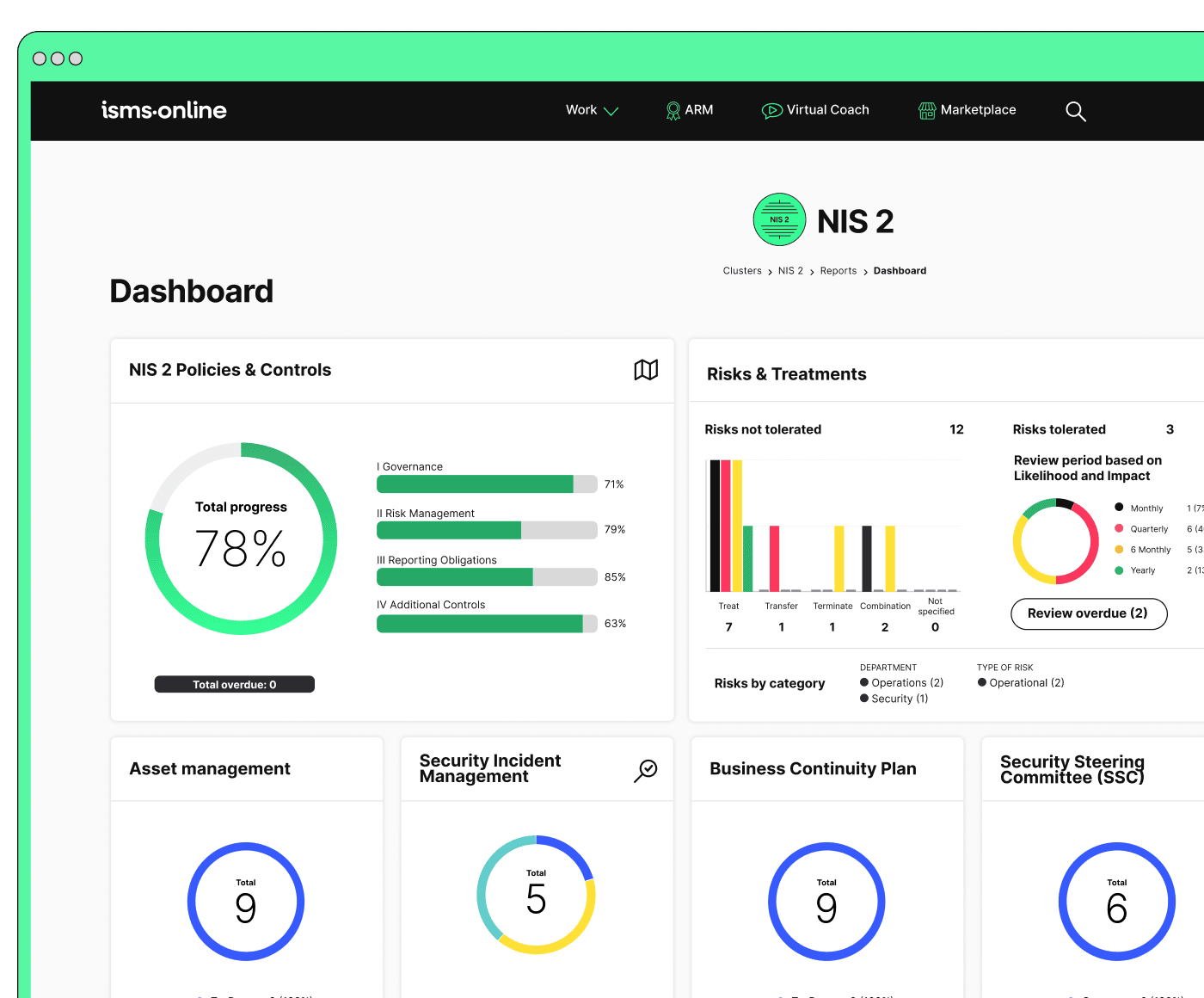
Be NIS 2-ready from day one
Launch with a proven workspace and templates – just tailor, assign, and go.
How Is Voluntarily Reported Data Used-and Who Benefits?
When a voluntary notification is submitted, the process does not end at data intake. Each report is anonymised, aggregated with sector data, and processed for cross-sector trend detection.
These pooled analyses allow ENISA and national authorities to issue tailored early warning advisories, scenario checklists, and trend-specific mitigation advice-delivered first to participating notifiers, then to the sector at large.
You win twice: direct feedback for your business, and leadership status as a sector shaper.
Recent ENISA reporting demonstrates that organisations who voluntarily notify see new threat vectors detected up to 20% faster than the sector average-reducing cost, harm, and escalation risk. This culture of intelligence sharing drives a positive spiral: the more incidents logged, the richer the sector playbook, the quicker the response to the next threat.
Designing Seamless, Secure, and Audit-Proof Reporting Flows
Modern reporting is now pragmatic. Forward-thinking teams automate their notification pipeline-whether through the ENISA CISP portal, their national CSIRT, or directly via their ISMS.online environment.
Key automation supports:
- Timestamps and digital signatures to verify chain-of-custody.
- Automated audit archiving and linked policy compliance alerts.
- Secure cloud-based, encrypted data storage, mapped directly to relevant controls.
- Granular exception and access monitoring to ensure operational and legal compliance.
When audit season or board review arrives, every incident has a traceable, standards-mapped record. This not only proves compliance to auditors but also reassures procurement and insurance assessors.
Suggested Notification Flow
mermaid

flowchart LR

 A[Incident Discovered] --> B[Notify via ISMS.online/ENISA/CSIRT]

 B --> C{Anonymisation & Trend Analysis}

 C --> D[ENISA/CSIRT Aggregate Pool]

 D --> E1[Return Advisories to Notifiers]

 D --> E2[Management/Audit Dashboard]

 E1 --> F[Sector Early Alert]

 E2 --> G[Auto-Update SoA & Risk Register]
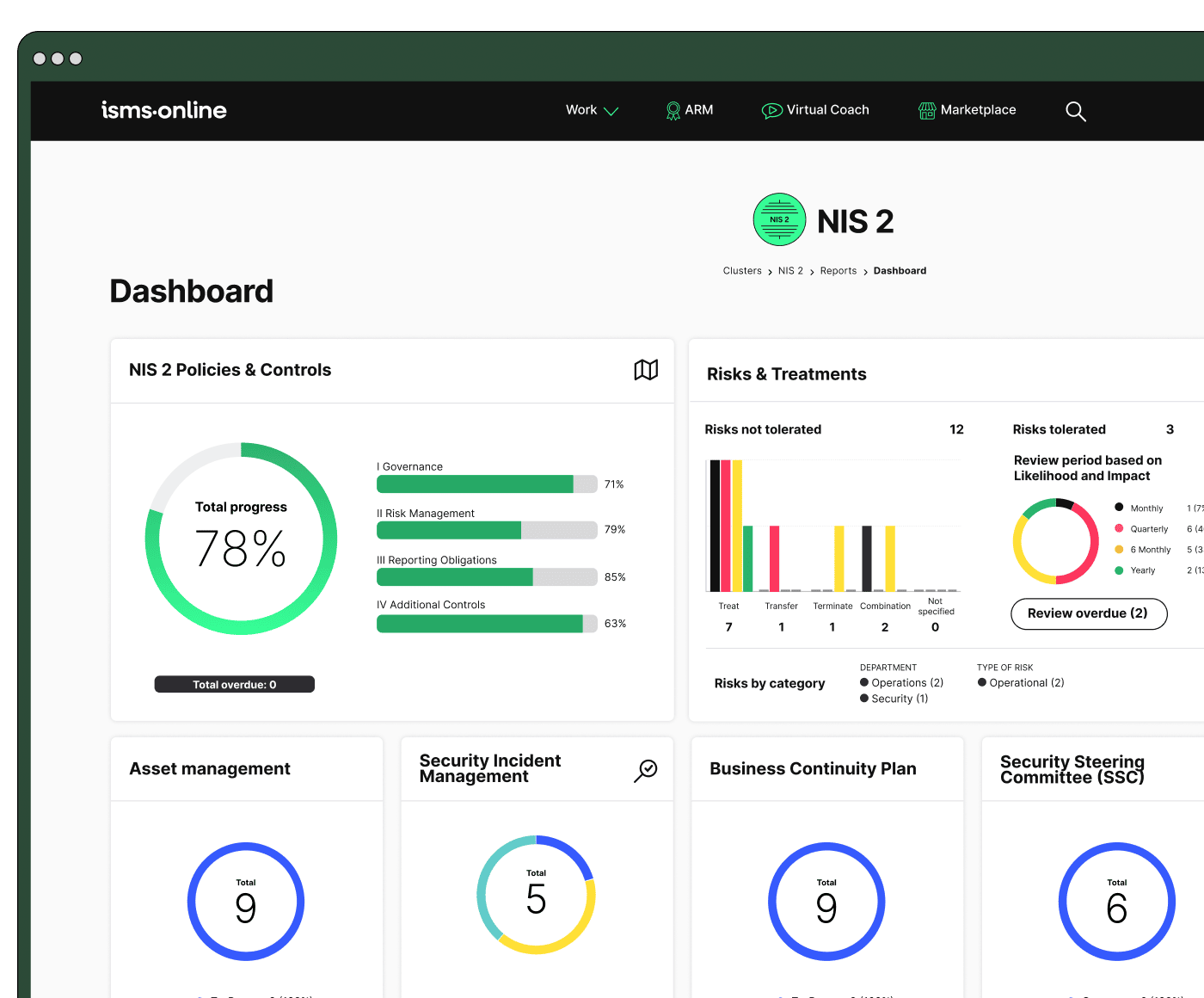
All your NIS 2, all in one place
From Articles 20–23 to audit plans – run and prove compliance, end-to-end.
How Does Article 30 Reporting Strengthen ISO 27001 Evidence and Internal Traceability?
Article 30 notification is not just about compliance defensibility; it materially enhances the operational accuracy and traceability of your entire ISMS. Every reported event is mapped directly to your Statement of Applicability (SoA), risk register, policy pack engagement, and management reviews.
Traceability Mini-Table
| Trigger | Risk Update | Control/SoA Link | Responsible Persona | Evidence Logged |
|---|---|---|---|---|
| Supply chain phishing near-miss | 3rd party risk reviewed ↑ | A5.19, A8.15 | IT / Supplier Manager | Article 30 notification log |
| Pen-test simulation uncovered risk | Process improvement logged | A8.29, A8.31 | Security Team | Simulation report in ISMS |
| Customer (external) incident alert | Customer handling updated | A5.14, A8.3 | DPO, Privacy Counsel | Notification + audit log |
Every submission provides a clear evidence chain, aligns with policy control, and strengthens both audit defensibility and board trust.
Incidents voluntarily reported are assets-a record of leadership, not of failure.
Overcoming Reluctance: Shifting from Reporting Hesitancy to Resilient Routine
Fear has been the persistent adversary of reporting: organisations worry about regulatory backlash, reputational bruising, or process overhead. Article 30 reframes this: voluntary notifications now cultivate resilience, attract regulatory respect, and insulate from audit whiplash or procurement scrutiny.
Recent data underscores the power of policy clarity-where national or C-suite leadership proactively reassures teams that voluntary reporting is rewarded, not penalised, notification rates and sector resilience soar. In Germany and Ireland, voluntary notifications have surged as onboarding and training reinforce safe harbour understanding (williamfry.com; enisa.europa.eu). Transparency is now a sign-internally and externally-of operational confidence and sector stewardship.
Each proactive notification transforms a point of hesitancy into a proof-point of maturity for boards, auditors, and supply chain partners.
Notifying is no longer paperwork-it is an essential business habit. In resilient cultures, audits become events, supply chain presentations are underpinned by real evidence, and even minor incidents are transformed into sector learning.
How ISMS.online Embeds Article 30 Resilience-From Policy to Practise
The distance from anxious compliance to sector leadership is bridged by a single, well-timed notification.
ISMS.online hardwires Article 30 readiness into every aspect of your information security culture. From policy document structure to automated notification workflows, to audit-proof artefact chains and management reviews, every voluntary report is mapped, logged, and surfaced where it counts (isms.online).
Every team member-whether CISO, DPO, IT practitioner, or supplier manager-receives automated prompts to bring forward not only incidents but near-misses, failed simulations, or third-party alerts. With every notification, SoA, risk registers, and compliance dashboards are instantly updated-providing audit, insurance, and procurement teams with evidence before they even ask.
For practitioners and boardroom leaders, this turns every voluntary Article 30 report into a statement of operational integrity and industry leadership. The move from compliance anxiety to resilience proof is simple: make notification a default, not an afterthought.
Begin today: adopt a posture of openness, embed reporting in your ISMS.online routine, and watch as every team member-across compliance, privacy, IT, and audit-moves from anxious to assured as you lead your sector in resilience.
Frequently Asked Questions
What kinds of incidents and information can your organisation voluntarily report under NIS 2 Article 30, and who is eligible to submit?
Under Article 30 of the NIS 2 Regulation (EU 2024/2690), any organisation-not just “essential” or “important” entities-can voluntarily report a wide range of cyber-security incidents, threats, or intelligence to authorities. This includes actual cyberattacks (like ransomware, data breaches, phishing or DDoS); failed or attempted attacks detected early; significant technical vulnerabilities (even if patched before exploitation); suspicious activity picked up by your team, suppliers, or sector partners; and “near-miss” events that could have caused harm but were contained. The intent is to foster sector-wide resilience through shared learning, capturing emerging threats and operational lessons that might not rise to the threshold for mandatory notification.
Turning close calls into shared intelligence-for the benefit of your sector-builds early warning systems that benefit everyone.
Examples of eligible reports
- Attempted phishing campaigns that nearly succeeded but were intercepted
- Malware discovered and isolated before causing damage
- Supply chain or vendor security alerts (even if remediated in time)
- Vulnerabilities found in critical systems before external exploitation
- Trends or tactics flagged by trusted sector groups, industry peers, or clients
In practise, any cyber-security information that could help others in your sector prevent or respond more effectively may be shared-without the legal burden carried by mandatory notifications.
How does Article 30 protect the confidentiality and legal standing of voluntary submissions?
Voluntary notifications under Article 30 benefit from strict confidentiality and legal safeguards. National authorities and CSIRTs are required to treat all voluntary reports with the same security and discretion as statutory reports (Articles 23/24): strictly limited access, GDPR-compliant processing, and robust technical protections (encryption and audit-logging). Critically, authorities cannot use your voluntary notification as grounds for enforcement, investigation, fines, or for imposing new compliance requirements. Anonymization or aggregation is standard for any wider sharing of your data, like alerting other organisations or sector bodies.
- Confidentiality: Only authorised personnel review and act on your report
- Legal immunity: Submissions cannot be used to impose fines, trigger new audits, or expand your duties
- Controlled disclosure: Identifying details are removed before information is published or shared externally
- Evidence management: You keep a record of submission, and can withdraw/minimise details unless it upgrades to mandatory territory
Without legal and procedural trust, voluntary information sharing would wither. NIS 2 consciously walls off good faith reports from future enforcement.
What business and operational benefits do organisations gain from voluntarily reporting incidents?
Proactive, voluntary notifications under NIS 2 boost organisational resilience and market credibility. You often receive prioritised support and threat intelligence from national CSIRTs, including actionable mitigation advice or advance notice of related hazards. Maintaining a clear notification log bolsters your audit trail for ISO 27001 compliance and can support insurance assessments, procurement due diligence, and regulator relationships. Commercially, organisations seen as “open” about incidents command greater trust-especially among large buyers and global partners. Sharing near-misses and close calls also improves the depth and relevance of sector advisories that will benefit your own organisation in future.
Organisations with living evidence logs-not just headline incident records-enjoy higher trust from both market and regulatory stakeholders.
Value Example Table
| Action | Direct Benefit | Strategic Advantage |
|---|---|---|
| Voluntary notification | Faster CSIRT/authority help | Stronger audit/commercial posture |
| Incident log | Internal process clarity | Enhanced insurer/partner trust |
| Sharing near-misses | Targeted sector alerts | Better procurement scoring |
How does voluntary reporting differ from mandatory notification, and what legal risks are involved?
Voluntary notifications are supplementary and never a substitute for mandatory reporting. If you are an “essential” or “important” entity under NIS 2 and experience a substantial incident, you remain compelled to notify under Articles 23/24 (with penalties for failing to do so). Article 30 is designed for scenarios below that threshold: close calls, sector-relevant intelligence, or early-stage threats. Crucially, submitting a voluntary report imposes no new legal duties-it cannot be repurposed as evidence for penalties, cause further investigation, or generate additional compliance obligations. The two channels are strictly separated to encourage learning without fear of reprisals.
| Factor | Mandatory (Arts 23/24) | Voluntary (Art 30) |
|---|---|---|
| Who must report? | “Essential/Important” | Any organisation |
| Trigger? | Substantial incident | Any meaningful event |
| Penalty for missing | Yes | None |
| Use in enforcement? | Yes (can trigger) | No (strictly walled) |
By cleanly dividing statutory and voluntary reporting, Article 30 ensures your efforts to support sector security never rebound as new risk.
What are the recommended platforms and workflows for securely submitting a voluntary notification?
National CSIRTs and ENISA recommend using secure, official portals for all notifications. Typically, this means national CSIRT web portals, ENISA’s CISP (Cyber-Security Information Sharing Platform) for cross-border or sectoral events, or encrypted email/SFTP workflows named in official policy. These platforms provide digital receipts, end-to-end encryption, and full audit trails-satisfying both GDPR and ISO audit requirements. Best practise: embed reporting in your ISMS workflow by connecting incident detection → internal review → notification assembly → submission → evidence logging. This not only strengthens compliance audits and insurance reviews, but also enables automated responses and future learning.
Secure Workflow Summary
- Incident detected: Log in your ISMS or tracker; collect evidence.
- Internal review: Decide with management/policies if notification brings value.
- Prepare report: Assemble evidence, references, and supporting data.
- Submission: Secure portal or encrypted email/SFTP to CSIRT/ENISA.
- Log receipt: File digital submission receipt in ISMS, link to controls, SoA, and risk register.
A traceable, secure workflow transforms notifications from burden to lasting audit and trust assets.
How do voluntary notifications strengthen ISO 27001 evidence and what documentation should you maintain?
Every voluntary notification can serve as robust audit evidence under ISO 27001 (and Annex L IMS frameworks)-showing genuine, practical operation of incident management, continual improvement, and sector engagement. Auditors look for more than just headline events; they value evidence of process maturity through “living logs.” Map each report to controls such as A5.25 (“Assessment of security events”), A8.15 (“Logging”), and A8.16 (“Monitoring”). Key documentation includes: incident trigger, internal risk register update, mapped control(s), notification submission ID, and all evidence (receipts, logs, chain of custody). This approach not only proves compliance but also differentiates your organisation as a proactive, learning-led operator.
| Trigger | Risk Register Update | Control/SoA Link | Evidence Logged |
|---|---|---|---|
| Phishing near-miss | Add/Update risk | A5.25, A8.7, A8.16 | Log file, notification |
| Supply chain alert | New supplier risk | A5.19, A5.21, A8.15, SoA | Notification, incident log |
ISO 27001 / Annex A Quick Bridge
| Expectation | Evidence | ISO 27001 / Annex A ref. |
|---|---|---|
| All security incidents logged | Incident/risk registers | A5.25, A8.15, A8.16, SoA |
| Lessons aggregated sectorwide | Near-miss/supplier alerts | A5.7, A8.15, A8.16, SoA |
| Evidence traceable | Digital receipts, chain logs | SoA, A8.10 Deletion, A8.12 Data leak prevention |
A mature voluntary reporting process places your organisation ahead-proving you don’t just meet the letter of compliance, but actively contribute to sector-wide cyber resilience.






