





































How Does Article 36 Transform Penalty Risk and Elevate the Realities of Compliance Leadership?
Regulation EU 2024‑2690, crystallised in Article 36, has launched a new operational climate: cyber penalties are now routine, scaled instruments-not rare, symbolic threats. For every compliance, security, or privacy leader with skin in the game, this recalibrates risk. Suddenly, boardrooms debate not just “if” but “when” enforcement will test their operational muscle. Essential entities face up to €10 million or 2% of global turnover; important entities up to €7 million or 1.4%, with thresholds set to climb alongside public expectations (NIS 2 Article 34; GT Law).
When every euro risk is visible, compliance is your reputation’s frontline not a back-office role.
This has recast penalties as an operational certainty, not an exotic outlier. Article 36 integrates fine structures into daily routines-incident notification, breach logs, management reviews, supply chain onboarding-and enforces regulator expectations for evidence-backed, proportionate, and dissuasive outcomes. For boards, the threat is not the “big penalty” itself, but the erosion of defensible proof: a missed notification deadline or insufficient supply chain record-keeping could open the door to real, headline fines (Mondaq; EE Times). Organisations that treat compliance like a living, continuous discipline-backed by real-time audit logs and central dashboards-convert penalty avoidance into competitive, even reputational, advantage (PwC).
ISO 27001/Annex A Compliance Bridge:
| Expectation | Operationalisation | ISO 27001 / Annex A Reference |
|---|---|---|
| Timely breach notification & complete records | Log incidents, maintain audit logs | A.5.24, A.8.15, A.8.16 |
| Prove control design & enforcement | Policy/SoA tracking, evidentiary review | A.5.1, A.5.36, A.8.33 |
| Board accountability | Management review, C-level presentations | Clause 9.3, A.5.4, A.5.35 |
| Supply chain due diligence | Vendor risk mapping, onboarding checklist | A.5.19, A.5.21, A.5.22 |
For compliance leaders, this is the new minimum: “What can you prove-on demand, in public, and across regulators?” If you can’t, you are exposed.
How Do Cross‑Regulation Penalties and Regulator Interactions Create a New Compliance Reality?
Article 36 doesn’t exist in isolation. Modern penalty risk exists on a mesh of regulations–GDPR, Digital Operational Resilience Act (DORA), sector statutes-where breaches and authority reviews almost always spill across compliance borders. Today, one incident regularly triggers multiple investigations, overlapping deadlines, and pooled liabilities (NYU Compliance; EuroLawHub).
Don’t build firewalls between teams-regulators won’t. Penalty exposure is a team sport.
What amplifies risk isn’t the complexity of the rules-it’s the failure to harmonise documentation, ownership, and notification. If incident records, logs, or breach notifications are inconsistent across regulation requirements, regulators escalate and may “duplicate” penalties instead of consolidating them (Deloitte). The singular operational defence? An untangled, timestamped, and role-specific audit trail, ready to stand up to scrutiny by multiple authorities on tight deadlines.
Compliance Risk Reaction Table:
| Trigger | Risk Update | Control/SoA Link | Evidence Logged |
|---|---|---|---|
| Data breach | Notification deadline | A.5.24, A.5.25 | Incident log, breach report |
| Vendor supply failure | Third-party check | A.5.19, A.5.21 | Vendor audit, onboarding check |
| Management oversight | Review cycle miss | A.5.4, Clause 9.3 | Mgmt review, board minutes |
| Regulatory inquiry | Disclosure deadline | A.5.36, A.5.35 | C-level signoff, dated reply |
Silent organisational risks: Few teams are ready for the “who owns what, when” test-especially when key personnel are away, or vendors racing to remediate introduce lag. This is where living documentation and role assignment shift from compliance myth to survival strategy.

Master NIS 2 without spreadsheet chaos
Centralise risk, incidents, suppliers, and evidence in one clean platform.
What Criteria Turn Penalties from Possible to Probable-And How Do Fines Get Calculated?
Fines under Article 36 are applied by a structured calculus, not a coin toss-severity, intent, recurrence, and promptness weigh as heavily as the dollar value of the breach (DLA Piper). Notably, the personal accountability of management is now explicit: failure to document decisions, review logs, or complete board appraisals can lead to personal public exposure-sometimes even named findings (DataGuidance).
Penalties vary by Member State, but trends show most push for rapid escalation in high-severity or repeat scenarios. Pre-emptive warning letters are falling out of vogue; operational failures like outdated logs or incomplete incident records increase both the penalty’s scale and its public profile (Cuatrecasas).
Regulators want to see a trail, not a patchwork-what you provide after penalties is rarely enough to overturn them.
For practitioners, living compliance means internal “mock enforcement reviews”-testing whether your logs, notifications, and management documents would stand up to regulatory calculation if tomorrow you were the example case.
Proof-layer CTA: Prove readiness with pre-mapped notification chains, role attributions on logs, and board-signed review cycles. If you can’t rehearse it, you can’t defend it.
Who Enforces and Coordinates-And How Does the New Regulatory Mesh Raise the Bar for Boards?
The NIS 2 regime, through Article 36, has architected a multi-layered enforcement mesh. Compliance is policed not only by national supervisors but through crisis mechanisms like CyCLONe and technical incident response via CSIRTs. Modern enforcement is a coordinated, multinational, multi-channel effort-with CSIRTs evidence flows and CyCLONe committee reviews now part of the “normal” enforcement process (EE Times; KPMG).
Case in Point: Pan-EU Hospital Breach.
A ransomware freeze in a Spanish hospital triggers instant CSIRT notification, local supervisor oversight, and-when cross-border impact appears-EU-level CyCLONe activation. Each regulator (national and pan-EU) receives concurrent incident logs; technical teams collect shared forensics; penalty records become both public and vendor-audited. Every procedural gap, from missing logs to notification errors, propagates through the procurement chain and Board-level risk reviews.
Penalty exposure is now a public, shared, and future-facing metric -insurance, procurement, and board renewals all benchmark your compliance history.
Sidebar – Key Enforcement Bodies:
- CyCLONe: Cyber Crisis Liaison Organisation Network-coordinates Member State response, documentation sharing, and penalty synchronisation.
- CSIRT: Computer Security Incident Response Team-technical evidence collection, live triage, and direct regulatory interface.
For boards, documentation is no longer “just for IT”-it is a contract with future partners and regulators.
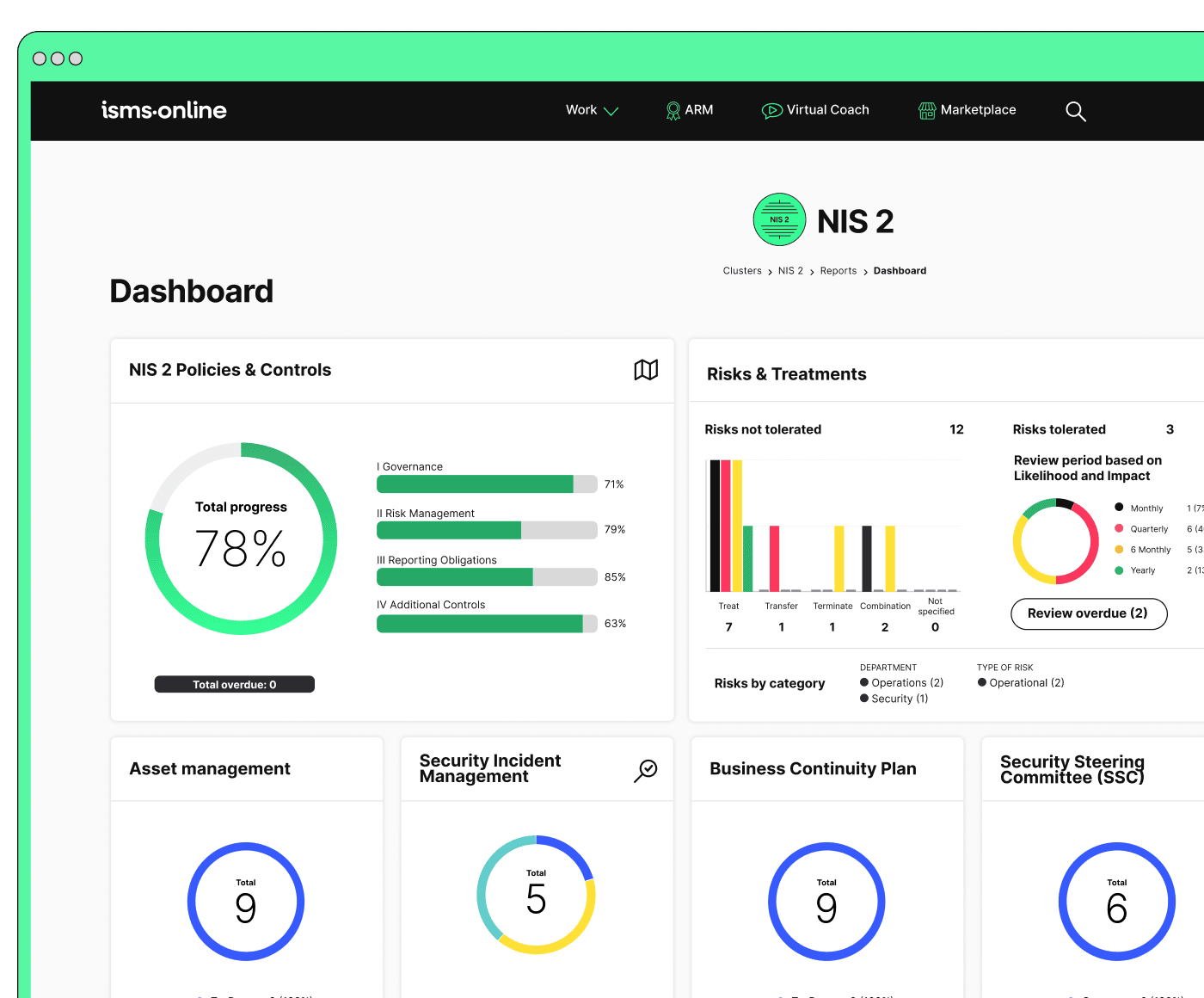
Be NIS 2-ready from day one
Launch with a proven workspace and templates – just tailor, assign, and go.
How Does Penalty Communication and Disclosure Actually Play Out-And Where Do Organisations Slip?
For too many organisations, penalty notification is treated as a formality-“file it, forget it.” Article 36, and NIS 2 globally, refute this: notification templates, deadline choreography, and documented evidence-sharing are mandatory and public (Cyber Defence IO). Failing to notify partners, regulators, or supply chain peers with the correct content, within defined hours, triggers reputational, financial, and legal escalation, including inclusion in public penalty registries (NIS2 Directive; Cyber Elites).
- Scenario: An energy provider’s 24-hour breach notification to the regulator is (barely) on time, but two critical suppliers are skipped, discovered the breach from news wires, and immediately withhold payments, activate their own authorities, and amplify audit risk. The organisation faces not only initial NIS 2 fines, but a string of partner-driven penalties and public disclosure obligations-a reputational “scar” that procurement teams now surface for years.
Compliance success increasingly means every team member knows-before the crisis-whose job is what, and what to say, to whom, and when.
Internal “notification trees” and escalation scripts are not nice-to-haves-they are lifelines, tested in cross-functional drills, and reviewed as part of board and risk committee cycles.
What Is the Real Journey After a Penalty? Appeals, Escalation, and New Board Risk Registers
Once penalties are imposed, a new cycle begins: administrative appeals, national court reviews, and (for cross-borders) CJEU oversight (Eur-Lex). Appeal deadlines are short-sometimes 10–60 days for internal or national reviews, with further months (or years) for cross-border and sector-specific delays.
Your documentation trail is your armour. Weak logs mean settle; strong logs allow you to contest-and to set precedent for your sector.
Board-level risk registers now include penalty appeal timelines, documentation rehearsals, and redress scenario simulations. If your sector (financial, health, tech) faces intermediaries (regulators, sector bodies), expect delays or extra scrutiny. Firms without systemized remediation records often settle early; robust, timestamped evidence enables strategic escalation (Law360).
Appeals Quick Guide Table:
| Sector | Typical Admin Appeal Window | Cross-Border Final Decision Latency |
|---|---|---|
| Financial Services | 15–30 days | 6–9 months |
| Health | 20–40 days | 6 months |
| Utilities / Tech | 10–60 days | 5–8 months |
Annual audit cycles are now subordinate to living appeals readiness. The best-prepared boards treat every review as a drill for tomorrow’s regulatory scrutiny.
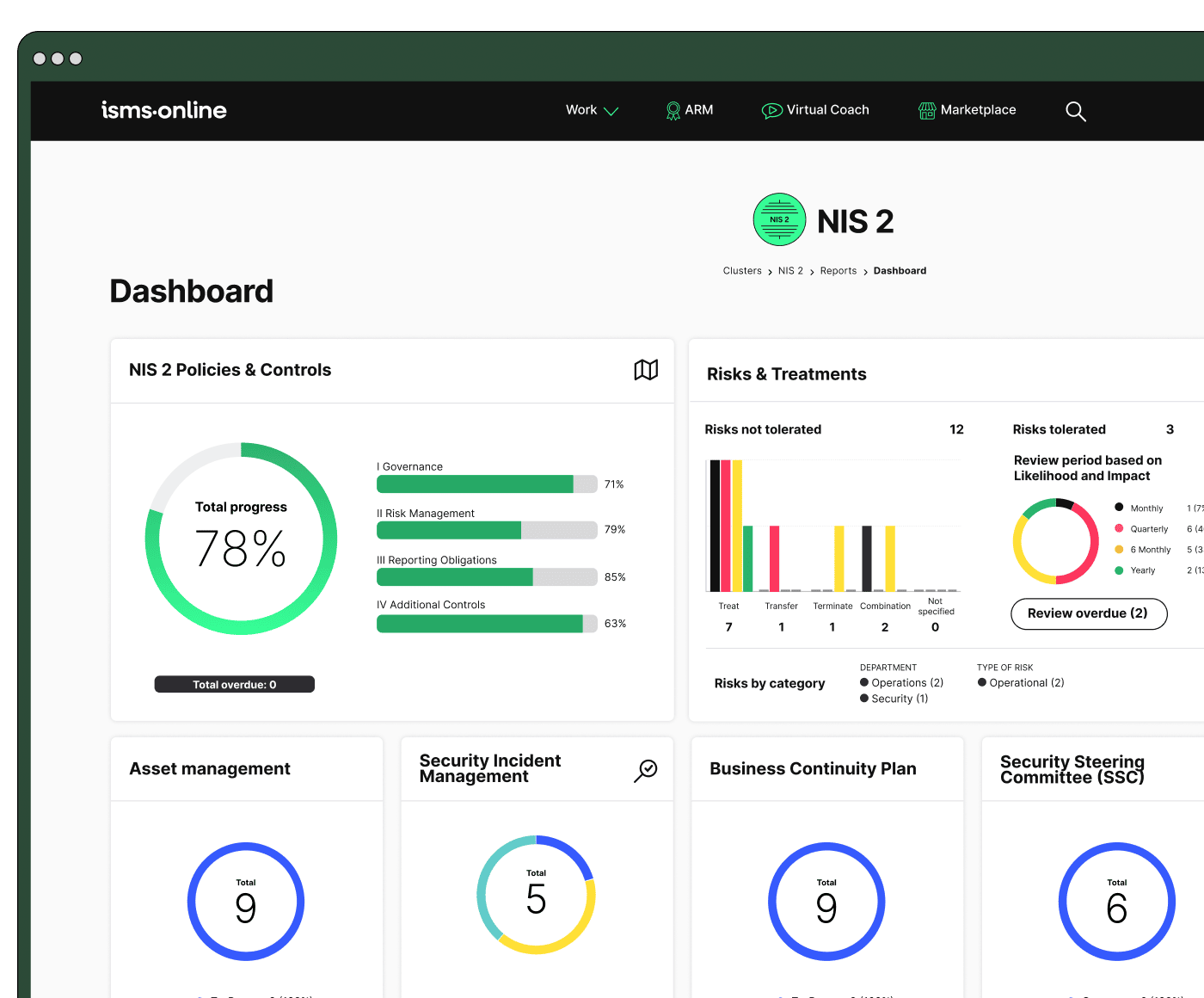
All your NIS 2, all in one place
From Articles 20–23 to audit plans – run and prove compliance, end-to-end.
Are You Strategically Ready for Sector Complexity, Supply Chain Threats, and Real-Time Audit Triggers?
Today, your penalty risk is not static-it shifts with sector, supply chain, and live audit benchmarks. Healthcare, finance, and energy sectors are scrutinised for every incident; SaaS and digital platform firms are whiplashed by mid-cycle guidance changes and peers’ penalty headlines (Eversheds Sutherland). Penalty history is a published data point: public procurement reviews and insurance underwriters now score your historical exposure (Faddom).
Board-level risk is a real-time feedback loop-annual audits aren’t enough. Your next penalty could be one missed log, one failed supplier drill.
Sample Board Compliance Timeline Table
| Trigger Event | Deadline | Evidence Required | Board Review Focus |
|---|---|---|---|
| Critical incident | 24h/72h | Incident log, notification | Timeliness, accuracy |
| Regulator inquiry | 5–15 days | Detailed response, sign-off | Transparency, completeness |
| Supply chain breach | Varies | 3rd-party coordination logs | Shared exposure, response |
| Penalty/appeal window | 15–60 days | All remediation logs | Case-law relevance, timing |
Boards and CISOs should integrate peer benchmarking, map supply chain penalty triggers, and ensure that every stakeholder is practised in live evidence generation. Compliance maturity is measured in real-time visibility, not static, after-the-fact reporting.
Transform Your Penalty Readiness: Unified Evidence, Live Compliance, and ISMS.online as Your Strategic Platform
Penalty risk under NIS 2 is a living force-ready or not, it is shaping procurement, investor confidence, and board resilience. ISMS.online is architected to ensure you aren’t caught on the back foot:
- Unified Evidence: Your risk register, Statement of Applicability, incident logs, and supply chain interactions are joined in a single, always-audit-ready platform.
- Live Audit Trail: Gaps are automatically flagged, notification chains are mapped and owner-attributed, and every action is timestamped.
- Control Mapping: DORA, GDPR, NIS 2, and ISO 27001 are mapped to operational controls so appeals, audits, and reviews have real evidence, not scattered artefacts.
- Actionable Resilience: Drill, review, and board-report in the same place you remediate; feed live data to future-proof your compliance story.
Your penalty readiness is not what you claim, but what you can prove-in real time, across every team, for every regulator.
Whether you drive the compliance loop as a startup leader, seasoned CISO, privacy DPO, or IT practitioner, your organisation’s penalty resilience is now a reputational currency. When audit day-or enforcement day-arrives, your evidence is either ready or is the next risk surface.
Ready to see where your penalty risk really stands? Explore how ISMS.online delivers unified resilience, outpaces regulatory change, and gives peace of mind on the front line of compliance.
Frequently Asked Questions
What penalties and enforcement mechanisms does Article 36 of Regulation EU 2024–2690 (NIS 2) introduce-and what sets them apart from prior EU cyber regimes?
Article 36 of Regulation EU 2024–2690 arms European cyber authorities with the most sweeping penalties in EU history-fusing record financial fines, public exposure, and direct management accountability. Essential entities can be fined up to €10 million or 2% of global revenue (whichever is higher); important entities face up to €7 million or 1.4%. But fines are just the tip. National authorities can now impose corrective orders, trigger mandatory remediation, launch unannounced audits, revoke certifications, and “name and shame” organisations in public registries and media. Leadership can’t hide behind paperwork: Article 36 empowers regulators to suspend or remove managers and board members for negligence, repeat failures, or superficial compliance. For every enforcement action, penalties must be “effective, proportionate, and dissuasive”-setting a European benchmark for both regulatory muscle and personal liability.
Reputation and leadership careers can hinge as much on public naming as on the size of the fine.
Enforcement Actions at a Glance
| Mechanism | Essential Entities | Important Entities | Board/Management Exposure |
|---|---|---|---|
| Fines | €10m or 2% turnover | €7m or 1.4% turnover | Personal liability for neglect |
| Corrective orders | Remediation mandates | Remediation mandates | Suspension/removal for inaction |
| Audits | Unannounced, repeatable | Unannounced, repeatable | Review of board/exec conduct |
| Certification impacts | Suspension/revocation | Suspension/revocation | Censure, removal for failures |
| Public disclosure | Registry, media, sector | Registry, media, sector | Name and role published |
Key distinction: Article 36 “names names” when breaches are serious, creating lasting reputational and market damage. Board and management risk is now personal, not just corporate. (Regulation text, EU 2024–2690 Art. 36)
How do overlapping frameworks like NIS 2, GDPR, and DORA multiply the risk and complexity of penalties in practise?
Modern cyber incidents rarely trigger a single regime-NIS 2, GDPR, and DORA can all activate at once, creating a ‘penalty stack’ for the same event. Each framework has distinct deadlines (DORA in 24h, NIS 2 and GDPR in 72h), notification formats, and supervisory chains. Regulatory authorities coordinate at EU and national levels: evidence is shared, investigations run in parallel, and penalties can combine-not offset. A single data leak, ransomware infection, or critical outage can thus trigger public notices, financial fines from several authorities, and scrutiny of board/management conduct. Organisations that manage compliance as an integrated loop-mapping every incident to each relevant statute-minimise these risks, while siloed teams or legacy workflows routinely fall into the “double jeopardy” trap.
Fragmented compliance is no longer a paperwork problem-it’s a live risk for both organisations and individual leaders.
Framework Penalty Convergence Table
| Incident Type | NIS 2 | GDPR | DORA | Typical Exposure |
|---|---|---|---|---|
| Data Leak | 72h notice | 72h notice | 24h sectoral | Multiple fines, public registry, board review |
| Ransomware | Must report | GDPR if PII | DORA for FI | Sector & privacy fines, sector escalation |
| Service Outage | Report | GDPR if PII | DORA | Sector alert, operational & reputational risk |
See NYU Compliance Enforcement, 2024 for cross-framework triggers.
What specific factors influence penalty decisions under Article 36, and how can boards proactively reduce regulatory exposure?
Penalties are not one-size-fits-all-regulators calibrate sanctions based on intent, recurrence, impact, management involvement, and recovery efforts. Factors include: Was the breach due to gross negligence? Did the organisation repeat past mistakes or ignore required fixes? Did leaders act swiftly, document fully, and notify correctly? Organisations that show real, rehearsed compliance (role-mapped notifications, auditable logs, response war-gaming) tend to see reduced penalties. National styles still matter: while Article 36 sets the ceiling, local authorities may focus on different risk profiles or remediation standards. Managing for the “minimum necessary” is no longer a safe bet; proactive, transparent leadership is the best defence.
Leadership Penalty Mitigation Table
| Action | Risk if Omitted | Board/Management Impact |
|---|---|---|
| Assign notification roles | Missed deadlines, higher fine | Board censure, personal risk |
| Log every incident step | No proof, penalty maximised | Escalation, loss of appeal |
| Sector crisis drills | First error revealed too late | Suspension or removal possible |
| Localise compliance plans | Gaps in cross-border cases | Extended enforcement, audit |
In penalty management, what you can’t prove you did, you pay for at the highest level.
(DLA Piper NIS 2 Series, 2024)
How are NIS 2 penalties, notifications, and reputational impacts communicated to organisations and the public?
Enforcement is now as much about public credibility as financial deterrence. Notifications flow from regulator portals-missed or messy submissions increase fines and delay the appeals window. For major incidents or repeat offences, public disclosure is mandated: organisations (including named managers) appear in press releases, registries, and may even be subject to government board-level reporting. Lose control of your incident narrative, and you risk contract jeopardy, sector “ringfencing,” or even share price contraction. Pre-built rapid-response communication templates, reviewed with legal and PR, should be ready for use at any hour-because reaction time sets the tone for both regulator and market response.
The real cost of a breach is reputational-a slow or silent notification hands the story to others.
Notification Risk Path Table
| Communication Path | Main Recipients | Consequence When Missed |
|---|---|---|
| Regulator Portal | National regulator | No appeal, higher sanction |
| Supply Chain | Critical vendors/clients | Loss of trust, contract penalty |
| Public Disclosure | Sector, press, public registry | Brand, share price, long shadow |
(See: Cyber-Defence.io Incident Response Guide, 2024)
After a penalty, what are the appeals pathways and what evidence matters most?
Appealing NIS 2 sanctions is possible-but only with complete, timestamped, audit-ready evidence. Appeals begin with national administrative review (10–60 days), progress to judicial review (months), and, if cross-border or multi-framework, can reach the EU Court of Justice (CJEU). Each level expects “living” documentation: incident logs, notification receipts, board decisions, and evidence of corrective action. Patchy, contradictory, or missing evidence means rapid escalation and lower chance of redress. Cross-border incidents can require synchronisation of logs, risk treatment actions, and notifications across all frameworks-data gaps between silos almost always doom appeals.
Appeals Path Table
| Level | Time Window | Critical Evidence | Risk if Incomplete |
|---|---|---|---|
| Admin review | 10–60 days | Audit logs, notifications, board minutes | Appeal denied |
| Judicial review | Months–year | Cross-framework records, contracts | Penalty upheld |
| CJEU (EU) | Varies | All prior, harmonised evidence | Final loss |
(See: Regulation EU 2022L2555)
How do sector and supply chain specifics transform the real-world probability and impact of regulator penalties?
Certain sectors-energy, health, finance, digital infra-face maximum scrutiny and automatic penalty “multipliers.” Under Article 36, regulatory action can cascade across a supply chain; an unaddressed supplier weakness can pull penalties for every interconnected firm. Contractual reviews, board reporting on vendor risk, and supply chain drills are no longer best practise-they’re minimum viable defence. The weakest external partner becomes the starting point for sector-wide fines and multi-party reputational damage.
Penalty cascade rewrites the board agenda: joint cyber drills and live vendor checks aren’t optional-they’re survival.
Sector & Supply Chain Checklist
- Biannual vendor risk/contract reviews with explicit cyber clauses.
- Third-party incident simulation that spans clients, partners, and board.
- Monitoring sector registries for emerging penalty trends.
(Sources: Eversheds Sutherland NIS 2 Feature, Faddom EU NIS 2 Best Practises,
How does ISMS.online continuously support penalty resilience and fast, auditable compliance across multiple regulators and frameworks?
ISMS.online provides a unified compliance engine-linking NIS 2, GDPR, DORA, and ISO 27001 controls within a single platform-so every action, owner, notification, and board decision is tied to auditable timelines. All evidence, policies, and submissions are instantly accessible and mapped to the relevant law, framework, and responsible party. Sector and supply chain exposures are flagged by dashboard, with live board reporting and role-bound Policy Packs. When the next incident hits, your team responds with rehearsed, regulator-ready notifications; your logs and evidence are already aligned to withstand national audits, cross-border demands, and public scrutiny. As regulatory standards tighten, your compliance system moves in sync, keeping you ahead of “naming and shaming” risks and reducing the gap from detection to defence.
Move from firefighting to audit-ready resilience-ensure every compliance gap is covered and every penalty risk flagged with ISMS.online’s unified compliance solution.






