





































Why Do Cross-Border Gaps Still Undermine Cyber Crisis Response?
When digital attacks erupt across borders, the weaknesses aren’t theoretical-they’re where silence turns to disaster. Even organisations running tight in-house incident drills find themselves exposed the moment a threat lands in a partner’s network or a supplier’s operations in another jurisdiction. Suddenly, it isn’t just about malware or firewalls; it’s about who is supposed to speak, act, and take ownership-especially when every minute counts.
When systems freeze and emails break, your customer is already asking, What’s the holdup?
Recent figures drive home the point. ENISA reports a doubling in significant, multi-country cyber incidents in the EU since NIS 2’s adoption. Yet, outdated response manuals remain narrowly local. Too many chains of command still dead-end at national borders. When the heat rises, teams freeze not from lack of will, but because their map stops at the edge. Roles blur, protocols fumble, hours are lost clarifying who-not how-should lead, while customers, partners, and regulators wait.
Friction at the Borders: Where Responsibility Blurs
The shortcomings have already cost real business. In the 2023 Denmark–Poland ransomware crisis, mutual hesitation over who should act led to three days of delay, leaving service outages and data integrity questions fester, as regulatory definitions and handover protocols were debated (digital-strategy.ec.europa.eu; europarl.europa.eu). And thats not unique: more than one in four EU-wide incidents stall for over 24 hours, simply due to unclear or missing responsibility at national handover points.
If any asset, third-party, or customer in your ecosystem sits outside your home country, a broken chain of response is an existential risk. In todays Europe, waiting for legal clarity is risk, not prudence. Customers will not accept the system is down as an alibi for a leadership void when they are the ones feeling the impact.
Book a demoWhy Does ‘Mutual Assistance’ Now Sit at the Core of EU Cyber Law?
In the world of regulation, mutual assistance is no longer a handshake between good neighbours-it’s now European law. Regulation EU 2024/2690 crystallises this transformation: more than 60% of critical EU cyber events last year spanned at least two countries. The borderless nature of modern attacks left the Commission and ENISA with little choice: cross-border aid is now legally mandated, not a best-effort.
Why Can’t States “Sit Out” a Crisis Anymore?
Article 37’s logic is implacable. Whether it’s a DDoS flood in the Baltics, a data breach in Spain affecting UK suppliers, or ransomware moving along a French-German value chain-national boundaries no longer decide who acts. Now, every EU Member State must, upon request through its Single Point of Contact (SPOC), respond and act within the regulation’s clarity.
Non-participation isn’t an option. Delays, shrugs, or slow-walk “acknowledgements” are now compliance failures, not diplomatic quirks. The regulation’s triggers are clear: vital service, citizen safety, or market stability. Upon being called, every State is now legally and operationally bound to add force-not drag its feet.
Mutual aid shifted from best effort to must do-with oversight and enforcement if you stall.
Refusals-or failures to engage-require step-by-step justification, with full documentation, and are open to audit by ENISA or the Commission (nis-2-directive.com; nis2-info.eu). This is a wholesale pivot: mutual assistance is now a right and a duty-never a formality or professional favour.
A process flow from “Incident Detected” → SPOC Notification → Assistance Request → Official Assessment & Action → Documented Outcome will clarify handovers and logging.

Master NIS 2 without spreadsheet chaos
Centralise risk, incidents, suppliers, and evidence in one clean platform.
What Are the Operational Rules for Requesting or Refusing Support?
Clarity is law. Under Article 37, any assistance request-or refusal-must flow through traceable, officially documented, and justified channels. Gone are the days when a phone call or email chain sufficed; now, every stage must leave a digital, timestamped footprint for later audit. Failure to track, prove, or justify is itself a compliance exposure.
Step-by-Step: How a Request Flows Under Article 37
- Initiation: Only the designated SPOC or Competent Authority in each State can formally request or answer calls for assistance. Unofficial routes and “off-the-record” handles are forbidden.
- Substantiation: The request must clearly set out the cross-border impact (“here’s where the propagation is seen”), the urgency, and any supporting evidence.
- Logging: From the first request to the last response, every action must be recorded-digitally, with timestamps and responsible names. If your record isn’t complete, your audit will fail.
- Review & Response: The recipient must formally assess, respond, and-if declining-justify, citing precise legal or operational clauses. No “just because” explanations; only structured references to EU or national law.
Audit nightmares start with unlogged, undocumented refusals.
Sloppy documentation has closed businesses and triggered fines-verbal explanations or lost emails no longer pass muster. Formal refusals must also be escalated and recorded for ENISA or Commission oversight (enisa.europa.eu; digital-strategy.ec.europa.eu; edpb.europa.eu).
Who Has to Act-and What Happens if No One is Assigned?
ENISA’s latest audit data draws a harsh line: nearly three in four failed cross-border responses arise from missing or outdated SPOC designations. An unbroken chain of official assignment is non-negotiable-if a SPOC is out-of-date, aid requests simply vanish. That’s no loophole; it’s a regulatory pit.
Integration is Non-Negotiable
- SPOCs (Single Points of Contact): Must be proactive. They shepherd all inbound and outbound mutual assistance, ensuring every request, escalation, or refusal is logged and escalated when triggers are unclear.
- Competent Authorities: These are the arbiters-overseeing NIS 2 execution, resolving interpretive conflicts, and owning the enforceability record for every step. Only they can grant or refuse support.
- CSIRTs (Cyber Security Incident Response Teams): Underpin technical triage and response, as codified in ISO 27001 A.5.24. Inclusion is mandatory from first notification, not retroactively.
When IT and Legal Duties Collide
Role ambiguity-where IT expects Legal to own the incident (or vice versa)-is itself a breach. The nominated SPOC is required to break deadlock, escalating immediately if boundaries blur instead of clarifying over days. The law bars “wait and see”; escalation is not optional.
A clear RACI matrix that visually maps each role’s escalation path can prevent orphaned requests.
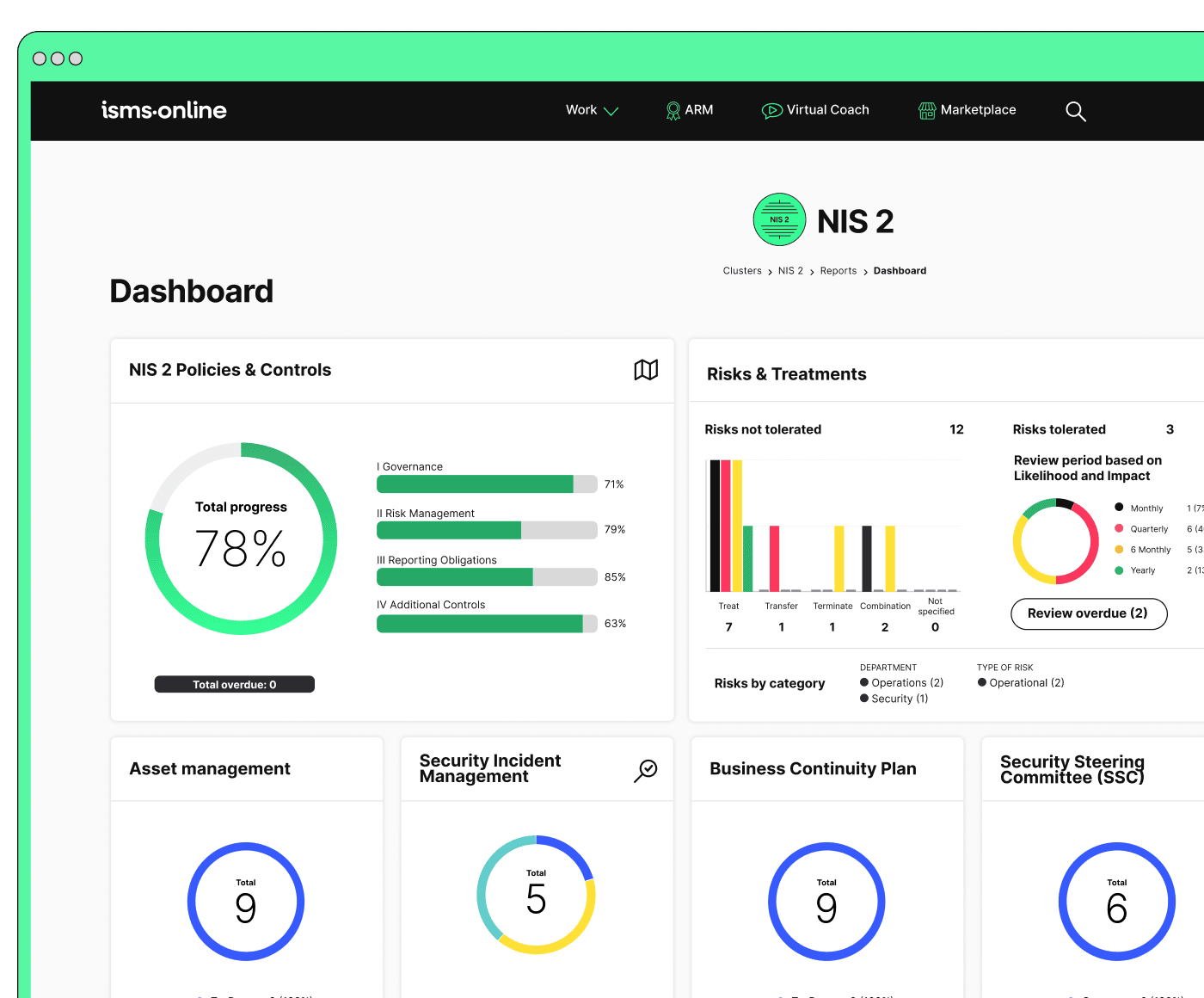
Be NIS 2-ready from day one
Launch with a proven workspace and templates – just tailor, assign, and go.
What Friction Still Blocks Cross-Border Assistance?
Delays most often stack up at legal, privacy, and process boundaries.
| Friction Source | Delay Mechanism | Audit/Operational Ripple |
|---|---|---|
| Data Protection | Redaction, DPIA review, unclear basis | Weeks of delay, evidence withheld |
| Legal Conflicts | National/EU law disputes | Escalation to governance, response stalls |
| Cultural/Linguistic | Mismatched forms, translation needs | Evidence misunderstood or timed-out |
Data protection remains a major bottleneck: if the legal basis for data sharing, redaction, or DPIA outcome is hazy, incidents can languish for two weeks or more-as in an EDPB-cited cross-border case where uncertainty over a DPIA redaction led to a 15-day standstill. If the law, sectoral regulation, or legal intervention blocks timely transmission, written notification and procedural escalation-per Article 37-are required.
Every minute lost to translation or redaction is a customer lost to doubt.
Best practise: adopt ENISA harmonised templates, standard DPIA forms, and pre-reviewed documentation chains. Organisations who pre-load templates consistently shave days off pan-EU incident handoffs.
How Do Documentation and Audit Trails Actually Work Under Article 37?
The gold standard in compliance is not simply to act, but to prove you acted-digitally, in real time, and in a way that can survive scrutiny. Manual logs, email trails, and unintegrated notes are direct audit vulnerabilities.
Key Documentation Steps
| Trigger | Risk update | Control / SoA link | Evidence logged |
|---|---|---|---|
| Assistance request sent | Cross-border risk activated | ISO 27001 A.5.24 / A.8.13 | Digital log, timestamps, recipient |
| Refusal issued | Mutual aid flagged as not met | ISO 27001 A.5.36 / SoA review | Rationale, legal justification, ENISA notified |
| Consultation initiated | Legal/cultural friction flagged | NIS 2, Art. 37 / ISO 27001 alignment | SPOC/CSIRT notes, process logs |
Every request or refusal is both a live action and a future proof-point. Every digital log, policy update, and SoA linkage becomes part of your audit shield. If any request or response is unrecorded or ambiguous, you face audit failure and possible regulatory penalty (isms.online). Automating linkages across controls and evidence is now mission-critical.
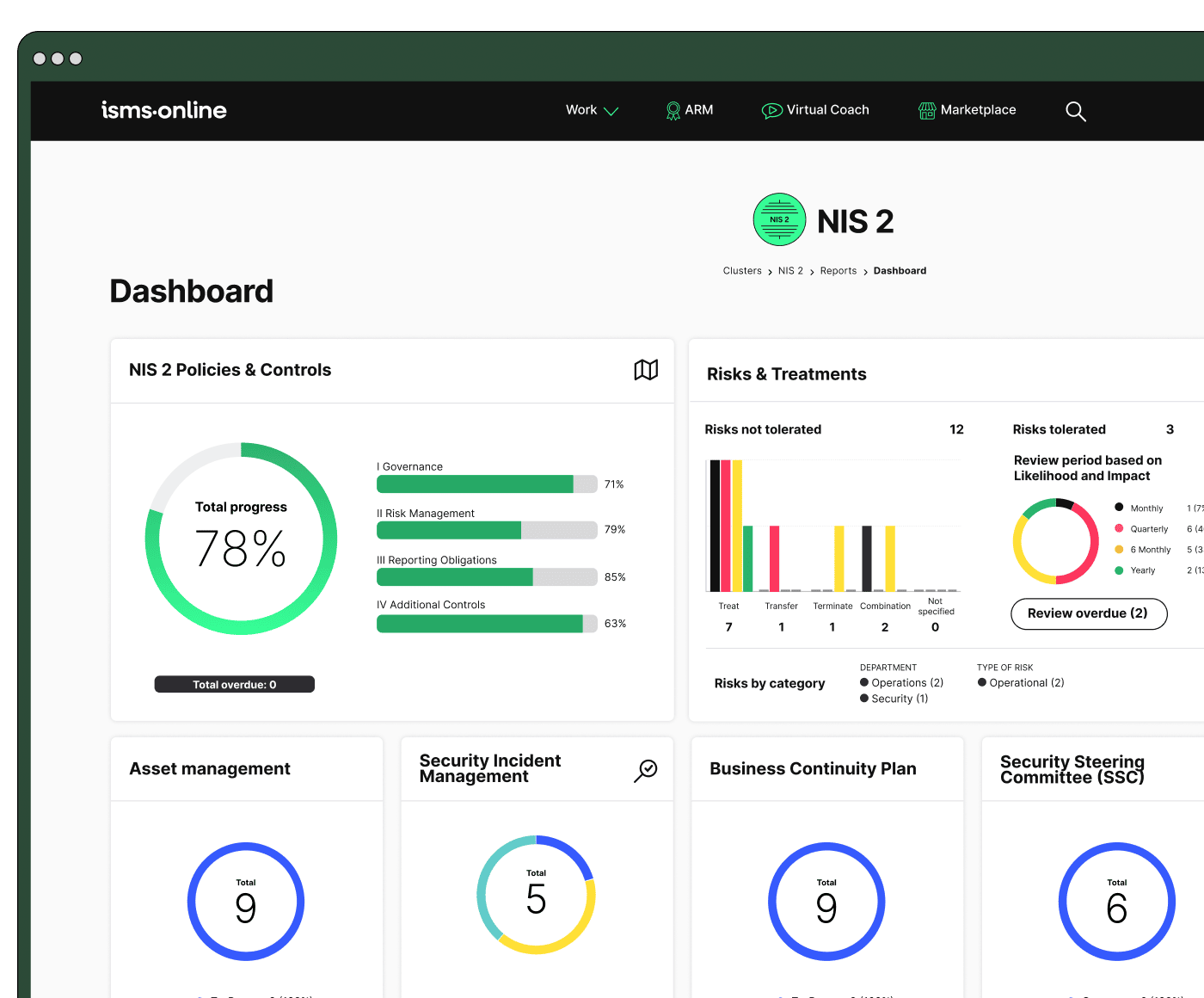
All your NIS 2, all in one place
From Articles 20–23 to audit plans – run and prove compliance, end-to-end.
ISO 27001 Controls & SoA Mapped to NIS 2 Mutual Assistance: The Audit Bridge
Article 37 demands your audit artefacts connect seamlessly to ISO 27001. This direct mapping turns what used to be paperwork into operational resilience.
| Expectation (NIS 2 / Art. 37) | Operationalisation | ISO 27001 / Annex A Reference |
|---|---|---|
| Log all requests/refusals | Digital workflows, timestamping, audit logs | A.5.24, A.5.36, A.8.13 |
| Collaborate SPOC/CSIRT | Dashboarded chains, formal handoff docs | A.5.24, A.7.10 |
| Safeguard privacy/PII | DPIA, redaction logs, legal review | A.5.34, A.6.3, GDPR Art. 30 |
| Audit readiness | Mapped logs, SoA crosswalk, live playbooks | A.5.36, A.8.33, NIS 2 Art. 37 |
For teams using ISMS.online or similar platforms, audit passes become systematic-not luck. The platform’s policy, control, and evidence linkage eliminates manual lag and permanently closes the operational–audit gap.
Take the Next Step: Make Cross-Border Resilience Second Nature with ISMS.online
Europe’s cyber regulation has made one message clear: cross-border readiness is now a non-negotiable standard. Regulation EU 2024/2690, Article 37, mandates not just reactive cooperation, but proactive, fully documented, and audit-ready response practises that cross every national line.
The path forward is now digital-first and systematic. Build live SPOC and CSIRT registers. Embed automated, workflow-driven refusal logs. Test your escalation playbooks before crisis hits. Make mutual assistance a daily operational muscle, not a “break glass” emergency hack.
- Request a resilience review: Our experts will stress-test your SPOC processes, escalation chains, and refusal evidence against Article 37.
- Download our mutual assistance checklist: Cross-map every workflow against NIS 2 and ISO 27001 for audit confidence.
- See how it works: Guided demos reveal how real-time digital audit trails and mapped evidence ensure you never miss a handover, and always pass inspection.
When every second counts, clarity and coordination win. Make resilience your asset, not your afterthought.
Start Now with ISMS.online-become the leader in cross-border compliance, not the headline for its absence.
Frequently Asked Questions
What is the true intent of Article 37 mutual assistance in Regulation EU 2024/2690 and the NIS 2 Directive?
Article 37’s core purpose is to transform mutual assistance from “optional cooperation” into a binding, audit-ready responsibility for every EU Member State: when a cyber incident, investigation, or compliance risk crosses borders, authorities must coordinate-at speed and with traceable evidence-to support each other, not just in spirit but through formally logged actions. It closes the door on patchwork, informal fixes, and replaces them with a legal web of digital requests, responses, and escalations that are fully exportable for audit by ENISA or the European Commission.
In cross-border cyber-security, collaboration isn’t optional-it’s the backbone of legal resilience.
For organisations, this means cross-border readiness: if a mutual assistance request arrives, you’ll need to show not just your internal policies but living evidence-timestamped logs, signed decisions, refusals mapped to legal grounds, all flowing through a digital workflow. Siloed or local-only approaches are instantly exposed: the new standard is a Europe-wide mesh of compliance where every touchpoint can be demonstrated and shared on demand. ISMS.online, for instance, enables this with workflows designed to produce real-time, audit-ready exports mapped to each legal requirement (Regulation (EU) 2024/2690).
How are mutual assistance requests formally made-and what documentation is demanded at each stage?
A Member State must submit its request via its designated Single Point of Contact (SPOC) to the relevant authority in the target country, using a digital, traceable workflow. Every request must include:
- A detailed description of the cyber incident, compliance concern, or investigation that justifies support;
- A clear list of actions, information, or cooperation needed;
- Supporting evidence (risk logs, impact statements, prior steps taken, legal context);
- The precise legal grounds for urgency or escalation.
A request, its receipt, and every subsequent response or refusal are each recorded by timestamped digital logs-not informal emails or calls. For joint investigations, all relevant authorities must sign off formally, and every handover must leave an audit trail. If a request is refused, a detailed written justification-citing the legal basis, proportionality analysis, and risk assessment-must be provided and preserved. This digital documentation forms the official record for both national audit bodies and supranational oversight (see.
Mutual Assistance Documentation Table
| Step | Required Documentation | Legal Anchor |
|---|---|---|
| Request | Incident/compliance report, legal rationale | Art. 37(1), Reg. 2690 Art. 37 |
| Receipt | Timestamped acknowledgment/log | Art. 37(3), Reg. 2690 Art. 37 |
| Response | Action/evidence, digital log | Art. 37(4), Reg. 2690 Art. 37 |
| Refusal | Written justification, escalation/correspondence | Art. 37(5)-(6), Reg. 2690 Art. 37 |
| Joint action | Signed agreement, registry updates, SoA mapping | Art. 37(2)-(3), Reg. 2690 Art. 37 |
What must national authorities do when a mutual assistance request lands-and what triggers an audit failure?
Upon receipt, authorities are required to:
- Issue immediate, timestamped digital acknowledgement;
- Assess the request’s scope, legality, and proportionality (can it be fulfilled without undermining national resilience?);
- Engage and coordinate with relevant units (CSIRT, data protection, legal, regulatory, or operational leadership);
- Reply with either documented support or, if impossible, a formal refusal with full legal reasoning;
- Consult with the requesting party to clarify or negotiate the response-if disagreement persists, escalate to ENISA/the Commission.
Every step, including informal calls or undocumented handoffs, must be logged. Delays, omissions, and refusals without substantiated grounds risk audit failure and can trigger Commission investigation or penalties.
In the new regime, procedural breakdown isn’t just inefficiency-it’s actionable non-compliance.
When and how can authorities refuse mutual assistance, and how is that refusal documented?
Refusal is tightly controlled: it is only permitted where the request is either outside legal competence, imposes disproportionate burden, or creates a confirmed national/public security risk. Each refusal must be:
- Accompanied by a written, timestamped rationale explaining the grounds, referencing applicable laws, risk assessments, and/or operational impact analyses;
- Formally communicated back to the requesting SPOC, with full consultation;
- Logged in the entity’s digital audit workflow, preserved for external review;
- Escalated to ENISA/the Commission if consensus on the refusal cannot be reached.
Failure to evidence any of these steps constitutes a breach in itself. Vague refusals (“too busy,” “out of scope,” etc.), missing logs, or delayed responses leave authorities-and by extension, regulated entities-open to investigation, remediation orders, and significant fines (up to €10m or 2% of global turnover).
How do privacy, GDPR, and cultural differences complicate mutual assistance-and what mechanisms address them?
Cross-border requests often encounter friction due to GDPR, national privacy laws, and differing operational cultures. Contentious points include:
- Need for DPIA or PII redaction before logs or evidence can be transferred;
- Inconsistent definitions of “significant incident,” urgency, or lawful basis;
- Language/terminology mismatches, delaying or muddling communications;
- Jurisdictional ambiguity over which authority has the lead, especially with multi-state or cloud-based incidents.
Proactive tools and best practises for overcoming these barriers include:
- Standardising mutually accepted request and evidence templates based on ENISA and EDPB guidance;
- Pre-preparing DPIAs and redaction protocols for likely scenarios;
- Logging every delay, translation hiccup, or legal review in an exportable, timestamped workflow;
- Escalating unresolved privacy or jurisdictional issues rapidly (and documenting every step for audit).
Silence or ambiguity in these circumstances is itself reportable as non-compliance, so anticipate and document every cross-border negotiation (see EDPB guidance on GDPR and incident response).
What does “audit-ready” mutual assistance look like-and how does ISO 27001 operationalise this standard?
“Audit-ready” means every request, action, refusal, and escalation can be independently verified, exported, and mapped directly to both legal and ISMS controls. ISO 27001 operationalises this by requiring:
- Live, digital logs: of all mutual assistance events, referenced in the Statement of Applicability (SoA):
- A.5.24 (Contact with authorities)
- A.5.36 (Compliance)
- A.8.13 (Logging and monitoring)
- A.7.10 (Confidentiality agreements)
- A.5.34 (Privacy/PII protection)
- Auto-exportable evidence: for every event and handoff;
- SPOC/CSIRT registry management: (A.5.24, A.7.10);
- DPIA/PII redaction records: (A.5.34, A.6.3);
- Escalation, refusal, and mediation events: (A.5.36, A.8.33).
Bridge Table: Article 37 Mutual Assistance in Practise
| Expectation | Operationalisation (ISMS/Workflow) | ISO 27001 / Annex A Ref. | Sample Evidence |
|---|---|---|---|
| Full event traceability | Digital workflow: auto-logged requests, refusals, exports | A.5.24, A.8.13, A.5.36 | Event log, SoA cross-reference |
| CSIRT/SPOC register | Live registry, routine update, export for audit | A.5.24, A.7.10 | Directory snapshot, audit timestamp |
| DPIA/PII compliance | Redaction protocols, DPIA templates, confirmation logs | A.5.34, A.6.3 | DPIA log, redacted evidence |
| Escalation/mediation log | Event tracking in exportable system | A.5.36, A.8.33 | Escalation record, mediation summary |
Platforms like ISMS.online make this seamless by natively embedding control mapping, auto-logging, approvals, export, and audit workflows.
What happens if mutual assistance breaks down-and what’s the penalty for getting it wrong?
If an assistance request is mishandled-whether by neglect, delay, unjustified refusal, or poor documentation-the process is escalated:
- Consultation and mediation must be attempted, and logs of all negotiations kept;
- The case is filed with ENISA and the Commission, including full evidence of attempts, reasons, and impact assessments;
- Joint action or formal investigation can be triggered, and persistent failure attracts regulatory enforcement and substantial fines (up to €10m or 2% of turnover for “essential” entities as per NIS 2 and Regulation 2024/2690);
- Every handoff, refusal, and escalation must be proved in audit, and may be made public during high-impact incidents.
The key insight: your “shield” against legal or reputational risk is your documentation and automation-no more plausible deniability or “lost email” excuses in the era of digital compliance.
Where do most organisations stumble-and how do you secure, automate, and audit-proof your cross-border compliance?
Common pitfalls are:
- Out-of-date or incomplete SPOC/CSIRT registries,
- Manual logs and spreadsheet/email records lacking chain of custody,
- Delays or gaps in DPIA and privacy documentation,
- Unclear delegation or fragmentation in operational roles,
- Chaotic escalation, refusal, or non-standard responses.
Resilience and audit-readiness are built by:
- Implementing a digital registry for SPOC/CSIRT, with on-demand export;
- Automating mutual assistance workflows-every request, handoff, escalation captured and mapped to SoA;
- Running quarterly drills for refusals and escalations (with event logs);
- Standardising templates for ENISA/GDPR-aligned requests, DPIA flows, and audit responses;
- Ensuring every process step is mapped to ISO 27001/Annex A references and exportable on demand.
Platforms like ISMS.online eliminate the admin drag by weaving these requirements directly into daily controls, making compliance and resilience routine-not an afterthought or heroics in crisis.
Secure your mutual assistance chain-become audit-ready by default
Today, cyber assurance is a chain only as strong as its weakest digital link. By digitising, automating, and mapping your mutual assistance processes-request to escalation-you build a shield that holds up not just to audits but to real-world crises. Proof and performance now go hand in hand: what you can demonstrate-live, exportable, mapped-is what you will be trusted for by auditors, partners, and your board.
Compliance isn’t paperwork; it’s the muscle memory of audited action.
Discover how ISMS.online transforms your Article 37 mutual assistance-request, refusal, and escalation-into a living, auditable defence.






