





































Why Are NIS 2 Enforcement Cases Inevitable-and Who’s in the Firing Line?
EU organisations now sit under a cyber-security spotlight that’s not softened by “best effort” claims or the hope of regulatory grace periods. With the NIS 2 Directive, operational resilience is no longer a voluntary standard-it’s a board-level, contract-critical accountability enforced by national authorities and the European Commission. The consequences are tangible, with missed transposition deadlines across over half of EU member states electrifying regulatory action-including infringement cases and warning rounds that name and expose both organisations and their leadership. For the first time, board members, C-level executives, and key managers risk being listed in public penalty records for process missteps or careless response oversight.
With designation deadlines missed across half the EU, enforcement pressure is rising-delay now means risk everywhere.
But the crosshairs are broad. “Essential” and “important” entities-such as providers in cloud services, critical healthcare, utilities, financial platforms, transport hubs, and their supply chain partners-are all within immediate regulatory reach. Even agile SMEs and technology vendors that once saw cyber compliance as a “big company problem” now sit as potential audit “teaching examples” if their digital contracts, supplier status, or network linkages touch the regulated map. The line between direct and indirect exposure is erasing. If your operations connect, contract, or supply-with any in-scope entity-your NIS 2 risk is present and persistent.
Firms no longer face distant, theoretical enforcement. Instead, they must act with the urgency of knowing that regulators will reward readiness and punish lag, not just in one corner of the organisation but across networks, contracts, and leadership accountability.
Where Are the Hotspots-and Why Geography Is Only Part of Your Risk?
Enforcement pressure is most acute in “hotspot” countries where NIS 2 legislation is incomplete or enforcement capacity is being quickly scaled. As of 2025, ENISA flags Germany, Spain, Belgium, and Hungary as early targets, given their lagging alignment with EU cyber policy and high volumes of cross-border digital services. Companies with branch offices, operational assets, or key vendors in these nations stand exposed to the first and most public regulatory actions.
Enforcement risk moves with your business-cross-border means cross-exposure.
However, enforcement risk isn’t held in check by national borders. The NIS 2 Directive specifically empowers regulators to extend audits and penalties beyond a single transgressing vendor or affiliate to any interconnected unit-parent companies, foreign subsidiaries, and upstream suppliers. A gap in one Belgian vendor’s records can “radiate” into German, Irish, or pan-European operations, especially if digital processes, assets, or contracts are linked.
The emerging pattern is stylized as “audit radiation.” A single compliance gap in a regional provider triggers not just immediate regulatory action, but an expanding circle of scrutiny across the organisation. Compounding this, regulators increasingly examine how cyber security (NIS 2) and data privacy (GDPR) controls interlock-so a NIS 2 audit often triggers privacy process scrutiny as well. Risk is no longer contained to where your headquarters sits; it travels wherever your business contracts, suppliers, and digital processes touch.

Master NIS 2 without spreadsheet chaos
Centralise risk, incidents, suppliers, and evidence in one clean platform.
Which Sectors Are Enforcement Magnets-And What Patterns Are Already Clear?
Enforcement isn’t randomly scattered across the economy. Instead, regulatory attention clusters with laser focus on sectors regarded as vital to the EU’s operational stability and digital sovereignty: digital infrastructure, health care, telecoms, energy, and key finance ecosystems. Ancillary suppliers within these verticals-cloud hosts, supply network software providers, managed service partners-are magnets for both direct audits and collateral enforcement.
Audit heatmaps reveal that critical infrastructure and digital supply networks face the earliest, toughest scrutiny.
2025 NIS 2 Enforcement Hot Sectors
| Sector | Top Audit Area | Common Gap |
|---|---|---|
| Digital Infra | Asset & supply mapping | Siloed records |
| Healthcare | Training, incident logs | Staff churn |
| Telecom | Vendor, X-border controls | Patchy due diligence |
| Energy/Finance | SoA-to-policy linkage | Doc-action gap |
The first wave of penalties hits when operational evidence doesn’t match documented control intent. ENISA’s 2025 review reveals that more than 60% of early enforcement is caused by incomplete supplier and asset records, or disconnected SoA-to-policy evidence. In NIS 2’s eyes, size doesn’t guarantee safety; operational clarity does. Even “minor” suppliers get selected if they cannot rapidly map controls, supply evidence, and prove their data protection accountability in real-time.
For digital infrastructure, health, and network service sectors, speed of response to audits-alongside real, living evidence-is the new form of insurance against investigation, reputational damage, and regulatory fines.
How Do Silent Failures (Not Incidents) Trigger Fines and Audits?
Contrary to many expectations, the early era of NIS 2 enforcement is not dominated by high-drama breaches or newsworthy hacking stories. Instead, over 70% of fines and regulatory actions so far have started with what regulators label “silent failures”-latent process gaps that accumulate behind the scenes: missed reporting deadlines, incomplete or outdated supplier registries, static Statement of Applicability (SoA) documents that don’t reflect on-the-ground security practises, or absent audit trails for staff training.
Audit risk is now built on silent failures-most often, reporting lapses or unmapped controls, not technical breaches.
Top Audit-Triggering Gaps
- Missed reporting windows (24/72 hours for incidents).
- Unmapped remote/cloud assets; shadow IT proliferates.
- Supplier traceability missing; onboarding gaps.
- SoA documents that exist but don’t reflect daily practise.
- Staff training not matched by logs or evidence.
ISO 27001 Evidence Bridge
| Expectation | How it’s Proven Live | ISO 27001 Ref |
|---|---|---|
| Incident response | 24/72h log, owner assigned | A5.25, A5.26 |
| Asset/supplier reg | Live registry | A5.9, A5.21 |
| SoA = live ops | Doc-to-practise mapping | A6.1, A8.8, A8.9 |
| Training trace | Audit logs, drills | A7.2, SoA 6.1.3 |
| Supplier docs | Onboarding evid, periodic review | A5.19–A5.21 |
Paper compliance invites headlines; only mapped, verified operational controls withstand audits.
By treating security proof as a compliance artefact rather than a living discipline, organisations amplify risk. Inspectors disregard claims unsupported by live, centralised evidence-making a robust, real-time ISMS table stakes for regulatory survival.
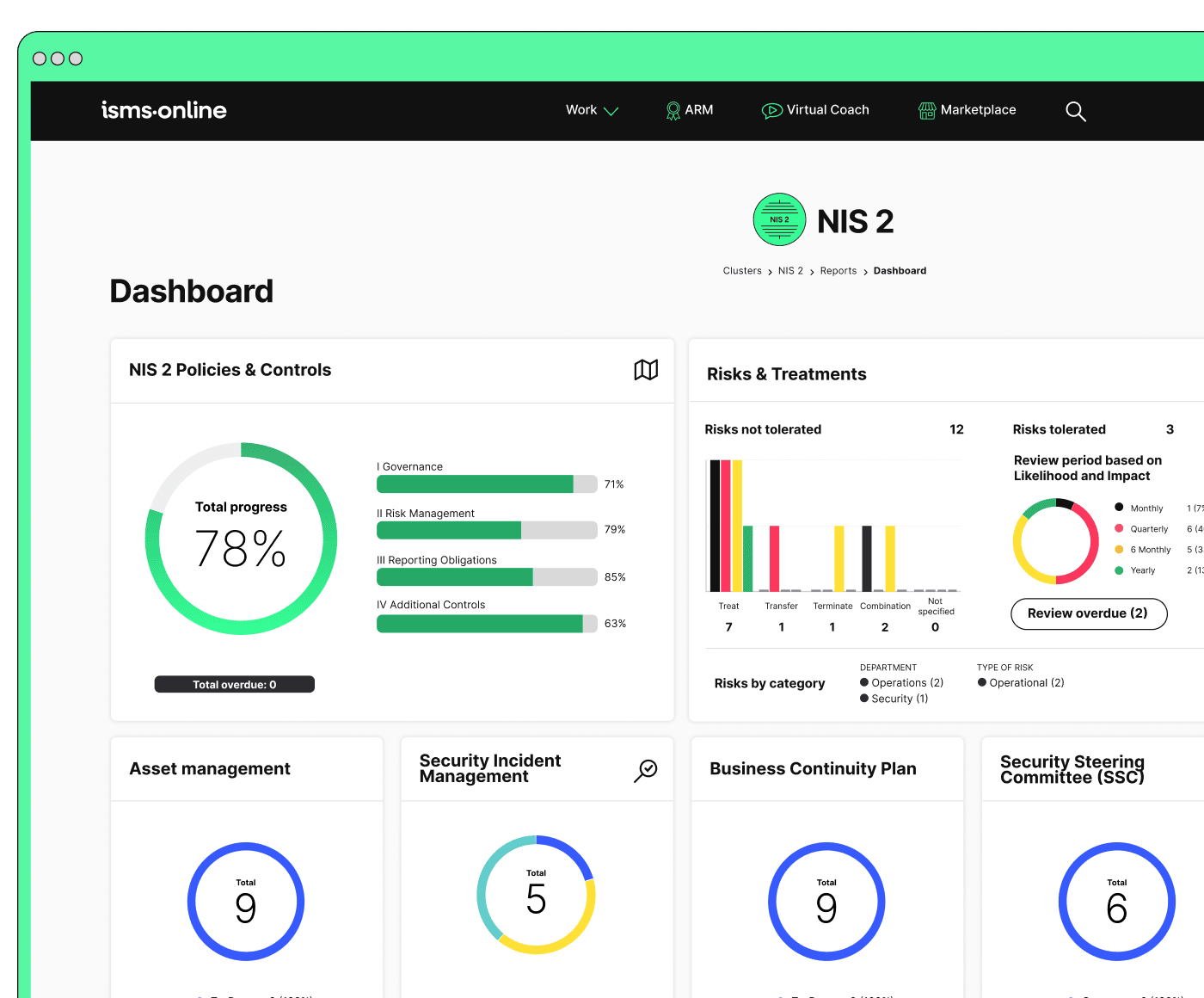
Be NIS 2-ready from day one
Launch with a proven workspace and templates – just tailor, assign, and go.
What Do Early Enforcement Actions Teach Us-and Where Do Firms Get Hurt?
Scrutiny is shifting away from technical mishaps and zero-days toward the management’s accountability fabric. Enforcement decisions now zoom in on the evidence loop between board oversight, operational controls, and responsive documentation. Gaps between policy and action, missing sign-offs, or disconnects between SoA tables and employee behaviour are the true accelerants of fines.
Your audit readiness is only as strong as your evidence loop-board oversight and incident reporting now drive both fines and lost deals.
Corporates feel this not merely in the wallet-though multi-million euro penalties are real-but in public reputational fallout. As the European Commission and national agencies begin “naming and shaming” responsible executives, managers become personally accountable in regulatory reports. The blast radius is significant: named entities face not only media scrutiny but contract loss and partner attrition. With more than half of enforcement cases tied to management’s failure to reconcile their SoA and “living evidence,” board-level discipline is now just as important as technical controls.
Organisations that avoid the embarrassment cycle share a trait: they treat audit readiness as an always-on function, maintained by dashboards and automation, not performed in panic or only just before an audit arrives.
Who-and What-Really Triggers Audits?
Surprisingly, regulatory audits often begin not with high-profile breaches but from inside: whistleblowers, unhappy suppliers, or even diligent clients completing onboarding or due diligence. NIS 2’s architecture deliberately widens the field-granting compliance reporting rights to partners and staff, not just regulators. Sector agencies, digital authorities, and ENISA itself act on anomaly detection, sector intelligence, or even routine cross-checks to prompt targeted review.
Whistleblowers and system gaps-not hackers-are the drivers of early fines.
Audit loops commonly start with the seemingly trivial: a supplier requesting fresh SoA evidence, a staff member raising a training record concern, or a buyer requiring due diligence confirmation. Each event is a moment to “close the loop” proactively; inaction or unpreparedness escalates the matter to external, public scrutiny-and once in motion, regulatory escalation is hard to stop.
Discipline now means treating every day as a possible audit day. Audit resilience comes from foreseeing these internal triggers and ensuring traceability and readiness are always within reach.
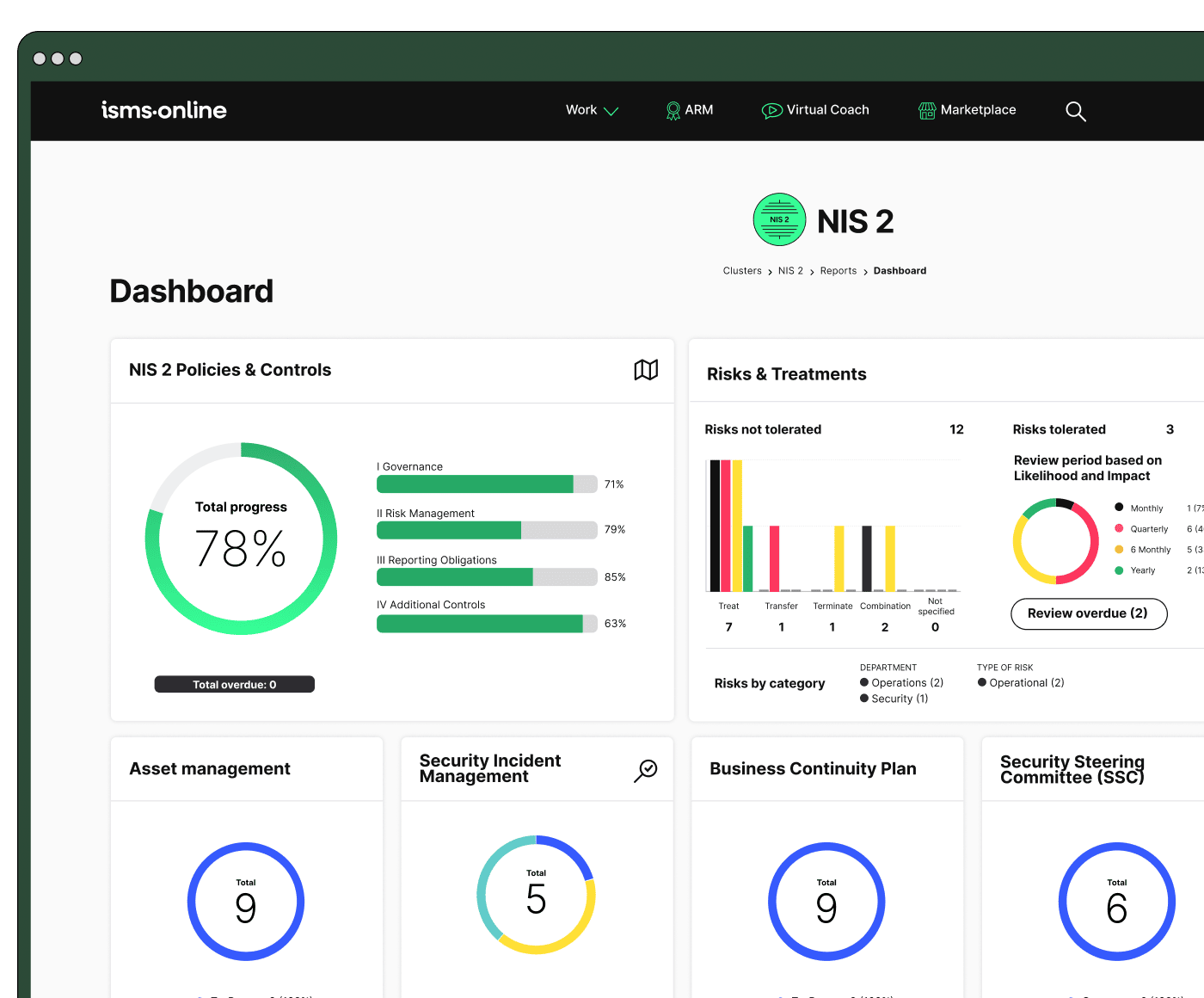
All your NIS 2, all in one place
From Articles 20–23 to audit plans – run and prove compliance, end-to-end.
Why Is Operational Discipline Now the Barrier Between Survival and Costly Enforcement?
Audit teams are shifting how they prove compliance. “Live sampling” is rapidly overtaking static certificates, annual reviews, or spreadsheet-based evidence. The expectation is that organisations can surface, on demand, true operational evidence: up-to-date asset lists, live supplier registry, digitally traceable onboarding, real-time staff training logs, and automated incident workflows. Platforms that support living dashboards-like ISMS.online-now compress the stress of audit closure by 40% or more, transforming audits from a firefighting moment into a manageable routine.
Regulators see through static paperwork; lived evidence and real-time mapping define new audit success.
Audit Traceability Table
| Trigger | Risk Signal | Control Link | Evidence Example |
|---|---|---|---|
| Late alert | Supervisor review | SoA A5.25, A5.26 | Incident log, email |
| Asset gap | IT registry sweep | SoA A5.9, A8.9 | Patch log, inventory |
| Supplier gap | Onboarding audit | SoA A5.21, A5.20 | Doc, file check |
| SoA drift | Review warning | SoA 6.1.3 | Updated SoA, log |
| Missed drill | Training review | SoA A7.2 | Drill/training log |
Organisations that invest in operational discipline-documenting, automating, and evidencing their controls-build a muscle that insulates them not just from audit drama, but also from business disruption and competitive loss. With regulators empowered to probe live workflows and cross-examine evidence across departments and partners at any time, every week becomes “audit week.”
How Do You Avoid Being the Headline? Make Audit Readiness a Daily, Not Annual, Discipline
Future leaders set themselves apart not just through compliant paperwork but by habitual readiness-treating compliance as a daily discipline rather than an annual panic. Those who lead the way log incidents as they occur, keep evidence dashboards synced with operations, and systematically map controls to real-world activity (isms.online). This proactive operational posture is why their supply chain partners and buyers trust them with contracts, and why auditors move through reviews without friction.
Audit-proven organisations turn evidence into supply chain trust-the rest become case studies for what not to do.
ISMS.online bridges the discipline gap by:
- Automating control mapping: Mapping every new regulatory requirement, supplier demand, or incident alert directly to live logs and central evidence trails.
- Centralising audit data: Bringing board oversight, incident management, and staff training together in dashboards that are never siloed or out of date.
- Surfacing real-time signals: Exposing issues before auditors or external triggers find them, with live error and gap warnings.
- Cutting audit cycles: Compressing both time and expense needed to close audits, all while demonstrating business resilience and trustworthiness (isms.online).
In today’s EU compliance landscape, the choice is simple: either build a track record as an audit-proven outlier-or become a headline for what not to do. Organisations that close the readiness gap don’t just avoid fines; they win sustainable supply chain and customer trust.
Audit preparedness isn’t an event-it’s your organisation’s most valuable operational reflex. Make it a habit, and lead your industry into the next phase of trust, resilience, and growth.
Frequently Asked Questions
Where will the first major NIS 2 enforcement actions emerge, and why are Germany and Spain in the spotlight?
The first landmark NIS 2 enforcement actions are expected to unfold in Germany and Spain due to their high-profile delays in transposing the directive and the ensuing infringement proceedings launched by the European Commission, Cinco Días,. The spotlight has shifted from education to accountability: Brussels and national supervisors feel public and political pressure to demonstrate regulatory seriousness with visible audits, publicised investigations, and potentially hefty fines. These first cases are less about companies’ technical unpreparedness and more about legal process-the lag in passing NIS 2 into national law forces authorities to act or risk further scrutiny from European institutions.
Early fines rarely target only the unprepared-they land where legislative deadlines, media attention, and regulatory resolve collide.
Visual: Enforcement Risk Decision Table
| Input Factor | Output Risk Level |
|---|---|
| Country: Germany/Spain | Very High |
| Transposition Delay | High |
| Designation Confirmed | Highest if “yes” |
| Supply Chain Exposure | Risk increases further |
Practical takeaway: If your operations or supply contracts anchor in Germany or Spain, expect an early compliance check-demonstration of compliance here isn’t optional; it’s the Commission’s testbed for pan-EU enforcement.
Which sectors and organisational types are most at risk of being early NIS 2 targets?
The initial enforcement wave will centre on digital infrastructure (IXPs, DNS, TLDs, cloud), essential utilities (energy, water), healthcare providers, ICT managed service suppliers, and digital logistics. ENISA and national authorities have flagged these sectors as “systemic” and “interconnected,” hence, highest risk for chain-reaction cyber incidents,. Beyond that, entities designated as “essential” (telecoms, energy, hospitals) are the highest priority, but “important” entities-such as MSPs, SaaS vendors, data centres, and courier services-are directly in the remit too. Auditors and supervisors aren’t just analysing sector risk; they’re targeting organisations with known gaps from the NIS 1 regime: outdated asset registers, incomplete onboarding logs, and legacy SoA-to-operations documentation.
| Sector / Entity Type | Regulator Hotspot | Typical Weak Point |
|---|---|---|
| Digital Infrastructure | Asset mapping | Untracked cloud/IXPs, shadow IT |
| Healthcare/Energy | Incident/training | Incomplete onboarding, legacy records |
| ICT Services/MSP | Supply onboarding | Gaps in contract compliance logs |
| Logistics/Postal | Vendor vetting | Outdated supply chain documentation |
Many early NIS 2 targets aren’t caught by technical cyber incidents, but by a paper trail: missing, misaligned, or out-of-date evidence.
What specific triggers are most likely to provoke early NIS 2 enforcement actions?
The likeliest triggers for headline enforcement cases are process failures, not technical breaches. Regulators and auditors focus increasingly on “silent signals”: incidents with missed or late 24/72-hour reports, outdated or incomplete asset inventories, mismatched Statements of Applicability (SoA) versus reality, missing staff or vendor training logs, or supply chain onboarding that relies on “tick box” evidence. Whistleblower complaints and sector peer alerts can rapidly escalate attention-particularly where repeated documentation gaps, conflicting entity lists, or evidence requests go ignored,. Any cross-border supply chain event can quickly ripple into an official investigation under NIS 2’s extended accountability regime.
| Trigger Point | Risk Amplifier | ISO 27001 / SoA Link | What Auditors Need |
|---|---|---|---|
| Missed 24/72hr notification | Supply chain lag | A5.25, A5.26 | Timestamped incident log |
| Old asset/supply register | Shadow IT, outsourcing | A5.9, A8.9, A5.19–21, A8.8 | Verified register export |
| Onboarding documentation gap | Incomplete supplier | A5.19–A5.21, Annex A8.8 | Contract review logs |
| SoA-to-ops drift | High turnover | 6.1.3, A7.2 | SoA traceability map |
Summary: If your compliance team can’t produce up-to-date registers, onboarding evidence, or training logs on demand, you’re at front-line risk-often before technical audit findings.
Which national supervisory authorities are poised to act first, and how do they telegraph their intent?
Germany’s BSI, Spain’s INCIBE (Ministry of Economic Affairs), Belgium’s CCB, and Italy’s ACN are all positioned for the first visible enforcement moves,. Regulators signal their intent through public moves: publishing formalised audit programmes and sector priorities online, expanding enforcement budgets or hiring, and issuing official sectoral guides that zero in on NIS 2 obligations and deadlines. Entities that receive explicit designation letters, or whose designations are published in government registries, should expect focused scrutiny-late registrants especially so.
| Jurisdiction | Supervisor | Regulatory Posture | Probability of Early Action |
|---|---|---|---|
| Germany | BSI | Direct EC scrutiny | Very High |
| Spain | INCIBE | Direct EC scrutiny | Very High |
| Belgium | CCB | Proactive, resourced | High |
| Italy | ACN | Proactive, resourced | High |
Regulatory intent is made visible by the resources, audit schedules, and public communications rising in these countries-stay alert to what’s published on their sites.
How do process triggers-whistleblowers, missed deadlines, or audit requests-accelerate NIS 2 enforcement?
Process triggers now catalyse enforcement as much as security incidents:
- European Commission infringement proceedings: for missed transposition dates result in public pressure and immediate follow-up enforcement.
- Delayed or incorrect entity designations: trigger spot audits and government warnings to update registries.
- Whistleblower/civil society complaints: -especially about onboarding, staff training, or asset tracking-create an obligation for the supervisor to act, rapidly so if the gaps are repeated or ignored.
- Mass CSIRT alerts: or sector security warnings often unmask documentation drifts, shifting a review to a full-scale audit.
A missing file or incomplete onboarding log can now draw the same level of scrutiny once reserved for major breaches.
Traceability Example Table
| Trigger | Immediate Risk Update | SoA/Annex Reference | Evidence Needed |
|---|---|---|---|
| Missed alert | Incident log/process fix | A5.25, A5.26 | Alert, dated register |
| Vendor complaint | Review onboarding/audits | A5.19–21 | Contract review file |
| Asset gap | Re-inventory/log signoff | A5.9, A8.9 | Export, staff signoff |
| Training lapse | Assign policy refresh | A8.7, A7.2 | Completion record |
What actually distinguishes audit-proven organisations-and how does ISMS.online give you an edge?
Audit-proven organisations are those that keep every SoA claim and policy mapped to fresh, central evidence-at all times, not just audit season. They automate incident logging, keep asset/vendor/training registers up to date, and can respond instantly to any regulator request for proof. This living discipline enables a team to surface dashboards and evidence that transform compliance reputation from “scrambling to catch up” to “setting the sector standard.” ISMS.online operationalizes this by linking SoA claims directly to live evidence, automating asset and onboarding registers, and logging training completion in real time ((https://www.isms.online/nis-2-implementation-case-study?utm_source=openai)). Teams using ISMS.online compress audit cycles, defend risk posture when regulators knock, and can confidently say, “Audit readiness is our default state.”
Audit resilience is not about surviving the scramble-it’s about having the proof ready, any day, every day.
ISO 27001 Expectation–Operations Table
| Regulator’s Expectation | Operationalization | ISO/Annex Ref |
|---|---|---|
| 24/72h incident reporting | Live logs, workflow alerts | A5.25, A5.26 |
| Up-to-date registers | Continuous inventory, staff review | A5.9, A8.9, A5.19–21 |
| SoA mapping | Live dashboard evidence | 6.1.3, A7.2 |
| Training | Policy Packs, completion tracking | A7.2, A8.7, A5.19/20/21 |
Ready to make audit discipline your hallmark-not your scramble? ISMS.online empowers your team to build a reputation for reliability under the most demanding NIS 2 scrutiny, with dashboards, mapped registers, and living evidence that keep you a step ahead of enforcement and one step closer to sector leadership.






