





































Who Will Redefine NIS 2 Enforcement, and Why Can’t You Wait to Find Out?
NIS 2 has reset the European expectations for what digital trust, operational rigour, and supply chain resilience truly mean. Compliance leaders and boards across the EU know the rules are no longer theoretical: the first country to enforce hard will dictate the de facto standards for everybody else, rippling through procurement, vendor onboarding, and board risk calculations overnight. If you’re responsible for proving your organisation’s readiness-whether as an operations manager scrambling to meet a deal deadline, a CISO with a seat at the board, or the legal officer lining up evidence for a regulator-you’re not just watching Brussels. You’re watching Paris, Berlin, Helsinki, and the handful of capitals poised to move first.
A single high-profile enforcement action, whether in Berlin or Paris, can instantly raise expectations for every company with an EU footprint-no matter how lenient your local regulator was last quarter.
Even before the first headline NIS 2 penalty, cross-functional leaders are aligning on a new reality: waiting is now a liability. Boards expect their teams to model readiness on the toughest market, not just the home jurisdiction. In this climate, only those who anticipate and prepare will earn the trust to win and keep critical revenue.
Why Germany’s BSI Is Favourite to Set the Tone (and What That Means for You)
Among the vanguard enforcing NIS 2, Germany’s BSI is emerging as the archetype for maximum rigour, process discipline, and operational reach. It isn’t alone-France’s ANSSI, Finland’s NCSC, the Netherlands’ NCSC-NL, and Hungary’s MIT are muscling up enforcement protocols. But BSI’s DNA is built on sectoral depth (KRITIS), a culture of documentation, and the authority to call for documentation, evidence, and board accountability on demand.
The German Approach: Relentless, Not Reassuring
Expectations in Germany have shifted from annual “tick-box” exercises to agile, ongoing regulatory engagement. BSI’s go-to methods include:
- Random, rapid audits: Not just scheduled check-ins, but surprise “snap reviews” following incident fatigue or market rumours.
- Board-level accountability: CISOs can expect live calls, not just email requests; boards are now required to sign off on responsibility for compliance and incident efficacy.
- Sector-focused escalation: Miss a deadline or a detail and your organisation may trigger a sector-wide sweep, pulling suppliers and core systems into follow-up reviews.
- No “try hard” defence: “We tried” is no longer protection. Evidence knows only yes or no-especially in critical infrastructure, SaaS, and healthcare.
With German fines capping at €10 million or 2% of turnover for essentials, and an enforcement approach that prioritises proof over promises, boardroom risk calculus is being redrawn. What you did last year is less relevant than how fast you can show your System of Applicability (SoA), evidence trails, and recovery plans-today.
The signal from BSI isn’t just regulatory-it's behavioural. If you’re not ready for a snap audit tomorrow, you’re not compliant today.

Master NIS 2 without spreadsheet chaos
Centralise risk, incidents, suppliers, and evidence in one clean platform.
What Are Other Key Players Doing-And How Do They Shape Your Reality?
If Germany is the relentless anchor, France (ANSSI), Finland, the Netherlands, and Hungary are firing up their own tools, each adding distinct mechanisms every compliance leader must benchmark.
France: Suspension As The New Stick
Powered by ANSSI’s integration of NIS 2, DORA, and RCE, France has redefined the audit process into a multi-agency game. Here’s how it looks in practise:
- Operational suspensions: ANSSI can (and does) order service halts, especially in health and public infrastructure sectors, meaning regulatory pain isn’t theoretical-it’s revenue-losing in real time.
- Parallel audits with CNIL/ARCEP: Expect multi-framework, multi-issue evidence calls; privacy, security, and telecom controls all reviewed in lockstep.
- Board member accountability: Individuals, not just companies, are named in reports and penalty orders.
- Message to business: “Compliance is the entry ticket to the digital economy.” *(ANSSI, 2024)*
Finland, Netherlands, Hungary: Speed, Publicity, and Audit Cadence
- Finland’s NCSC: Short grace periods-the fastest administrative orders in the game. Miss a deadline, face a public consequence the same week.
- Netherlands: “Trust but verify”-sectoral advisories become public, and non-compliance leads to brand-damaging escalations.
- Hungary: Mandatory, bi-annual external audits-routine, not rare, increasing your organisation’s odds of regulatory review.
Every procurement conversation now quietly benchmarks to the strictest peer market. If a supplier there gets flagged, your buyers will expect you to show equivalent controls and logs.
How Are Early Incidents and Audit Patterns Already Redrawing “Good Enough”?
October 2024 marked a watershed as incidents landed in public view. With each new enforcement case-especially those linked to disruption in critical infrastructure, healthcare, or cloud-the notion of “minimal” compliance steadily vanishes.
What Does Early Enforcement Look Like?
- Germany: Snap audits, focused on organisations with GDPR records and incomplete SoA links; minor supplier mishaps lead to forced reviews and even audits at the board level.
- France: Pulls operational suspensions in sectors like healthcare; pre-signed board attestations are now common, enabling regulators to cite and sanction board members.
- Netherlands/Hungary/Finland: Name-and-shame releases, frequency of audit, and supplier involvement create an environment where regulatory signals move faster than law changes.
A single high-profile case (especially cross-border) is enough to raise the bar for everyone-regardless of local regulator mood. Decelerated procurement, multi-quarter revenue holds, and public sector “pause” status become the new language of operational risk.
It’s rarely the amount of the fine that stings. It’s the recursive pattern of mandated audits, public warnings, and procurement hold that saps trust-and value-from your business.
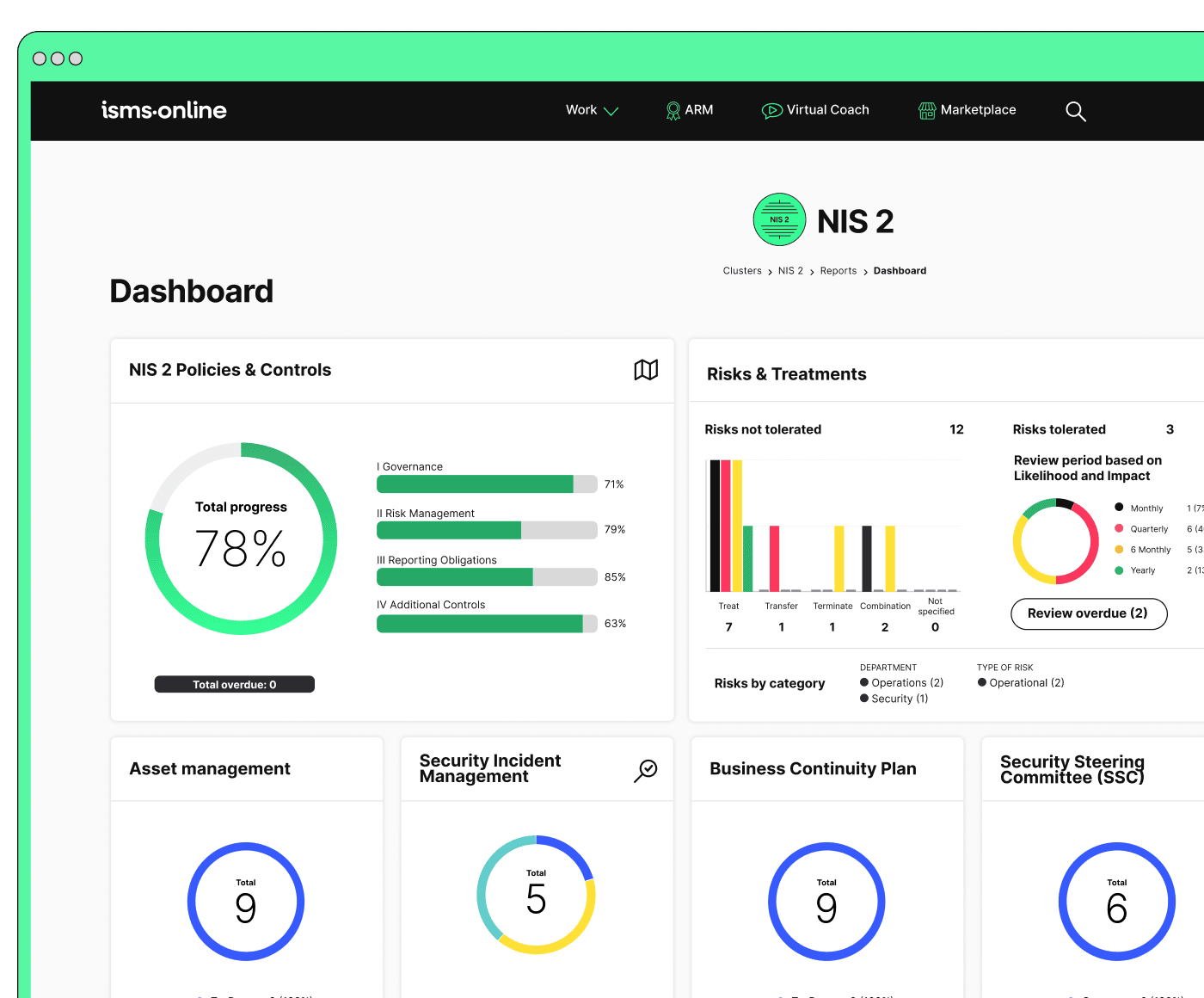
Be NIS 2-ready from day one
Launch with a proven workspace and templates – just tailor, assign, and go.
Which Agencies Should Be On Every CISO’s Radar-and What Triggers Their Moves?
While each national regulator has different statutory powers, some are far more likely to hit first and hardest.
Top Enforcers and Why They Matter
| Agency | Trigger Style | Operational Levers | Why It Matters |
|---|---|---|---|
| **BSI (DE)** | Random audits, incidents | Board scrutiny, sector probes | Will audit based on GDPR history, infra events. |
| **ANSSI (FR)** | Operational events, sector | Suspension, multi-board inquiry | Delays mean sudden exclusion from key markets. |
| **MIT (HU)** | Set audit cadence | Recurring, mandated reviews | Bi-annual reviews multiply risk of being next. |
| **NCSC (FI)** | Deadline lapses, incidents | Fast administrative order | Missed deadlines = instant public warnings. |
| **ENISA/EC** | Cross-border sector events | Peer country advisories | Rapidly exports standards across borders. |
First-mover events: Cross-sector incidents (cloud, energy, health), repeat GDPR offenders, missed reporting windows-any of which can lock your board into a recurring cycle of review, penalty, and public calls for remediation.
How Does Enforcement Intensity Vary-and What’s the Real Risk in Each Market?
A nation’s legal fine max is only one piece of the puzzle. What concerns most leaders is the cascade effect: what triggers a first audit, how often follow-ups occur, and how soon non-compliance becomes public.
Enforcement Comparison Table
| Country | Max Penalty | Trigger Points | Enforcement Mode | Real-World Risk |
|---|---|---|---|---|
| **Germany** | €10M or 2% turnover | Snap audit, GDPR history | Recurring, sector-wide | Board-level intervention after incident |
| **France** | €10M or 2% turnover | Multi-agency (health) | Operational suspension | Revenue freeze, cross-framework audits |
| **Finland** | €10M or 2% turnover | Deadlines, admin orders | Immediate action, public | Rapid trust and market loss |
| **Hungary** | €10M or 2% turnover | Routine audit cycle | Scheduled, documented | Costly audit repeat, compliance fatigue |
| **Netherlands** | €10M or 2% turnover | Guidance ignored | Public advisories | Brand risk from name-and-shame |
The continent’s strictest standard is now the effective bar for all. Boards must map their risk calculations to this maximum-waiting for leniency locally is dangerous.
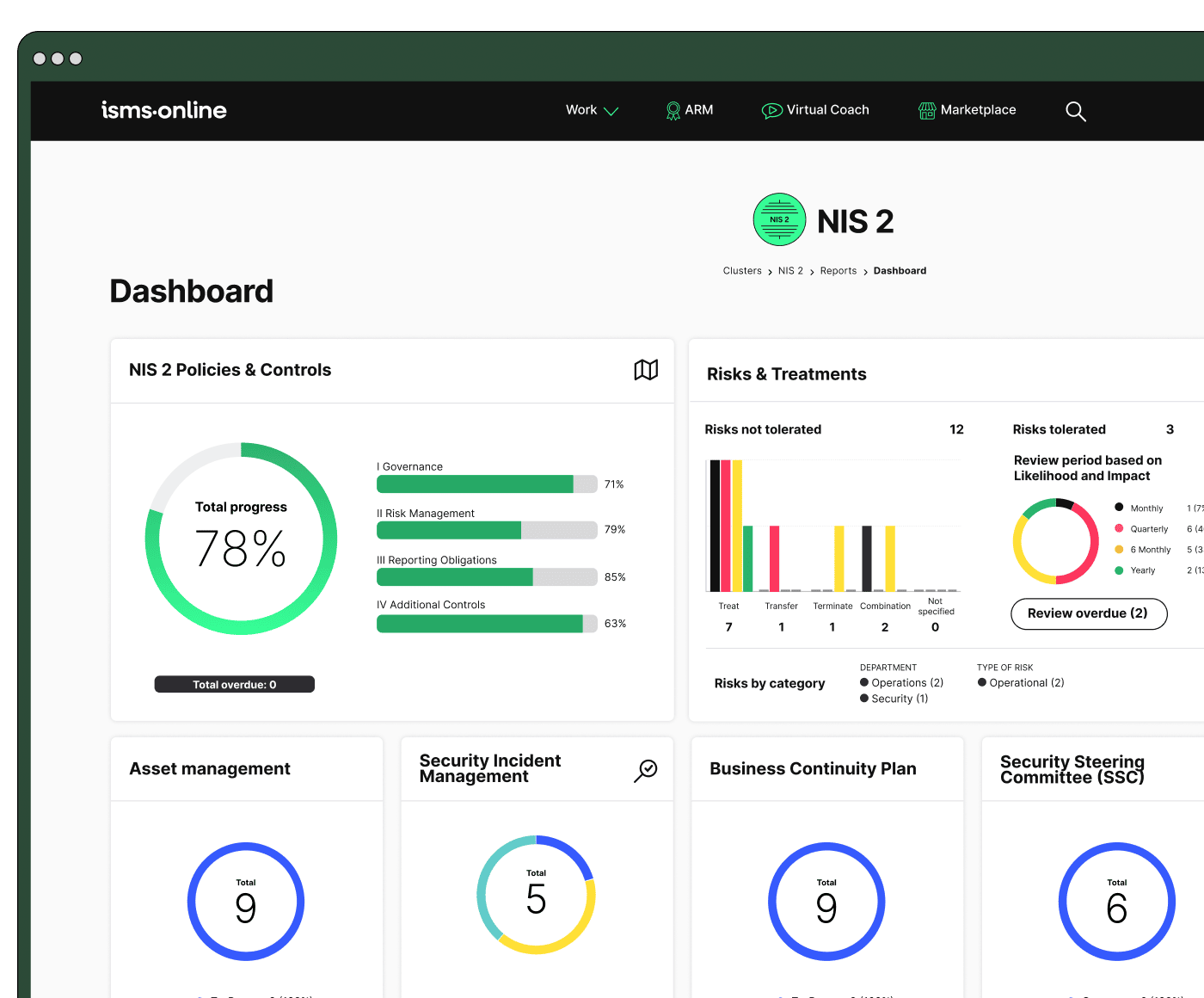
All your NIS 2, all in one place
From Articles 20–23 to audit plans – run and prove compliance, end-to-end.
How Will NIS 2 Realities Map to ISO 27001 and Board/Controls Practise?
If you run an ISMS aligned to ISO 27001, here’s how your operational reality shifts as enforcement tightens:
Table: Regulatory Expectation to ISO 27001 Mapping
| Regulatory Expectation | Operationalisation | ISO 27001 (2022) / Annex A |
|---|---|---|
| Incident reporting ≤24h | Automated, logged reports | A.5.24, A.5.25, A.5.26 |
| Recurring compliance | Quarterly/bi-annual reviews and external audits | A.5.35, A.8.34 |
| Board accountability | Training, sign-offs, role logs | Clause 5, A.5.4 |
| Harsh fines/orders | Fines, suspensions, procurement holds | A.5.36, A.8.35 |
Traceability Example:
| Trigger | Risk Update | Control/SoA Link | Audit Evidence |
|---|---|---|---|
| Missed deadline | Board log, risk score | A.5.36 | Board notes, audit log |
| Failed random audit | Mandated remediation | A.5.35, A.8.34 | Audit report, SoA evidence |
| Security incident | Crisis management | A.5.24, A.5.25 | Incident logs, response |
| Repeat offence | Escalating fines | A.5.36 | Sanction letter |
The operational pain for CISOs and compliance teams is not theoretical: when evidence isn’t fresh, controls aren’t mapped, or incident reporting confidence is lacking, even a minor oversight can cascade into full-scope reviews and months of follow-up.
How Can You Avoid Being the Headline-and Win Instead?
Winning in this new regime isn’t about surviving an audit, but about making trust a continuous operational asset. Skills, systems, and supplier assurance are now your strongest signals, not your last line of defence.
Proactive Steps for Compliance Leaders
- Pre-map your SoA: -align every control, risk, and supplier link ahead of time, updating at least quarterly and after every new enforcement case.
- Run regular dry-run audits: -make internal and external review cycles routine, and never leave compliance to ad hoc windows.
- Practise incident drills: -assign roles, log training, and rehearse communications for both the board and response teams.
- Push compliance into your supply chain: -ensure every vendor, SaaS, and partner has mapped evidence on hand, not just verbal assurances.
- Nominate a crisis communications and regulatory liaison: -the moment isn’t the time to decide who speaks for your company during an investigation.
Readiness is the antidote to stress and the lever for influence: be the team that never pauses a deal, never apologises for a gap, never lets compliance become a post-mortem exercise.
Practical CISO/Board Checklist
- Align incident response with the *strictest regional deadline*, not just national.
- Log training for every responsible party-board included.
- Refresh SoA, risk, and control logs every quarter.
- Sync EY, ENISA, and Commission advisories for cross-border learnings.
- Test response speed and completeness with live simulated audits and drills.
Why Moving Early Isn’t Just Defensive-It’s Your Growth Lever Now
Organisations that treat NIS 2 enforcement as an early benchmark-not a late hurdle-realise enormous strategic advantages:
- Faster procurement approvals: Buyers, especially in regulated sectors, now expect NIS 2-level evidence before shortlisting.
- Lowered revenue at risk: When your supply chain or procurement partners face turbulence, you keep business moving by matching their readiness.
- Cultural credibility: Staff, execs, and partners trust the organisation that tests compliance as a living part of governance-not a dormant folder.
- Board confidence: Proactive reporting, mapped risks, and training logs mean the conversation is about growth-never apology after a penalty.
Waiting to see who blinks first-BSI, ANSSI, or any other authority-is simply no longer a safe position.
Inaction is now a reputational risk. Your organisation’s trust capital is built in anticipation, not apology.
Leadership Actions for Every EU-Footprint Business Right Now
If you own compliance, security, risk, or operational delivery, align to the new regime on your own terms-not under duress:
- Treat the continent’s toughest enforcer as your starting bar: Don’t localise your standards; regionalize them upward.
- Rebuild your policy, SoA, and control maps quarterly, not annually: If needed, invest in ISMS platforms that automate update cycles and surface supplier compliance gaps.
- Push best practises through the entire vendor chain: Require mapped evidence and train staff across jurisdictions-lax suppliers are now everyone’s risk.
- Make crisis comms and reporting a practised, live routine: Appoint leads ahead of time, document who is responsible, and rehearse media responses.
- Monitor for every regulatory and peer-market enforcement pulse: When headlines break, treat them as readiness drills and update your own practises before your regulator-or your customer-asks for proof.
Identity-Driven Call to Action
Your market value is now inseparable from your reputation for readiness. In this new reality, earn the role of standard-setter-not passive follower-so your story is shaped by confidence and trust, not apology and remediation. Build the edge now and keep your company off the wrong side of tomorrow’s headline.
Frequently Asked Questions
Which EU country is most likely to enforce NIS 2 most rigorously-and what does it mean for compliance leaders?
Germany stands as the bellwether for NIS 2 enforcement in the EU, driven by its Federal Office for Information Security (BSI) and a culture of uncompromising regulatory scrutiny. Multinationals increasingly model their compliance playbooks on German expectations, as BSI’s model influences procurement, audit, and internal board accountability far beyond the country’s borders.
Germany’s approach makes “fresh evidence” and persistent audit-readiness the norm-not just an annual hurdle. ISMS and board routines aligned to BSI’s standards give your organisation a competitive buffer: German-proofed compliance can insulate your supply chain, procurement, and M&A strategy, even where national enforcement elsewhere is softer or slower.
What distinguishes German NIS 2 enforcement?
- Live supervision: BSI’s audit model is active, uninfluenced by reporting cycles, with board-level sign-off on every critical risk domain. Random “KRITIS” inspections force quarterly, operational evidence-far above the European minimum standard.
- Board accountability: Directors are directly responsible for compliance gaps and can be subject to immediate interrogation.
- Continental trust marker: When Germany raises the bar on what counts as “sufficient,” auditors and buyers in Paris, Amsterdam, and Dublin quickly expect the same.
Raising your bar to BSI standards isn’t just insurance. It’s a signal to every procurement team and regulator watching the NIS 2 landscape.
Key action: If your compliance is Berlin-ready, you’re less at risk of becoming a continental test case-or the softest link in a pan-EU supply chain.
What enforcement signals are emerging from Germany, France, the Netherlands, and beyond?
Regulatory signals in 2024 are unmistakably tough: Germany’s BSI, France’s ANSSI, and the Netherlands’ NCSC have each escalated enforcement-from surprise sector-wide audits to coordinated public advisories.
What should compliance leaders track right now?
- BSI (Germany): Random sector audits with relentless focus on live evidence and board engagement; early penalties creating a domino effect.
- ANSSI (France): Aggressive use of operational suspensions in telecom and health, multi-agency audits, and public censure-making even “big names” visible examples.
- NCSC-NL (Netherlands): Industry advisories triggering procurement holdbacks and elevated supplier scrutiny.
- Hungary & Finland: Rapid, repeating audit cycles and a low threshold for publicising failures.
Last month’s Berlin enforcement becomes next quarter’s procurement interview in Milan, regardless of your registered office.
Implication: Your competitive edge depends on identifying these enforcement waves early-using them to harden ISMS routines before direct intervention hits your organisation or sector.
Which agencies have the strongest powers-and what’s the real risk for boards?
BSI (Germany) and ANSSI (France) wield the most far-reaching NIS 2 enforcement tools: from snap audits and direct board calls to the power (in France) to freeze operations or publish censure that impacts entire sectors.
Enforcement levers by country
| Country/Regulator | Early Enforcement Moves | Unique Powers |
|---|---|---|
| Germany / BSI | Snap audits, sector warnings | Board interrogation, rolling evidence resets |
| France / ANSSI | Multi-agency “raids” | Operational suspension, real-time public censure |
| Hungary / MIT | Frequent audits | Public naming of company or key staff |
| Finland / NCSC | Accelerated timelines | Supplier chain advisories, instant headline risk |
Expect these tools to define the “real risk stack”: it’s not just fines-your board’s exposure, supplier status, and even operational continuity may depend on avoiding headline status in Berlin, Paris, or Amsterdam.
How do enforcement styles and commercial risks differ across top EU regulators?
By design, NIS 2 allows for up to €10M or 2% turnover fines across essential entities-but in practise, the most damaging risks are operational and reputational.
Comparative Enforcement Matrix
| Country | Fine Cap | Audit Pattern | Top Risk |
|---|---|---|---|
| Germany (BSI) | €10M/2% | Persistently recurring audits | Board scrutiny, sector resets |
| France (ANSSI) | €10M/2% | Operation suspensions, censure | Operational freezing, PR fallout |
| Netherlands | €10M/2% | Procurement-driven enforcement | Brand/pipeline disruptions |
| Hungary/Finland | €10M/2% | Frequent, documented audits | Headline exposure, supply chain fatigue |
Takeaway: Audit fatigue and the supplier chain “red flag” risk are much faster-acting threats than monetary penalties alone. Your resilience to regulatory waves-not technical fixes-becomes the main competitive differentiator.
What is required of your ISO 27001 ISMS and board to meet the new NIS 2 enforcement baseline?
No more annual, “paper ISMS”. Continuous ISMS operation, live incident protocols, and quarterly evidence refreshes are now the German and French baseline. Boards must not only sign off, but prove fluency under audit.
NIS 2 → ISO 27001:2022 Bridge Table
| NIS 2 Compliance Trigger | ISO 27001:2022 Reference | Required ISMS Operation |
|---|---|---|
| ≤24h Incident reporting | A.5.24–5.26 | Live notification chains, owner logs |
| Quarterly evidence reviews | Clause 9, A.5.35, 8.34 | Management review cycles, SoA refresh |
| Board-level accountability | Clause 5, A.5.4 | Board training, signed evidence minutes |
| Evidence “freshness” | A.5.36, 8.35 | Ongoing evidence/programme update/logging |
Traceability: Trigger→Update→Control→Evidence
| Trigger | Risk / ISMS Update | Control Ref. | Evidence Example |
|---|---|---|---|
| BSI audit call | Refresh incident chain | A.5.24 | Live incident log, new SoA |
| ANSSI sector alert | Board/SoA review | Clause 9 | Signed minutes, updated SoA |
| Supplier request | Update supplier log | A.5.36 | Contract addendum, audit file |
Action: Run internal reviews at “German” cadence. Let your board packs stand up to a Berlin-level audit-whether or not your local authority calls. This readiness isn’t overkill; it’s a reputational shield that can tip deals, audits, and M&A to your side.
How can compliance teams turn strict NIS 2 enforcement into an operational advantage?
Teams thriving in this environment treat leading German/French enforcement as their baseline. They automate evidence refreshes, require live controls from suppliers, and assign clear ownership of regulatory response cycles.
Resilience Checklist for “Berlin-Ready” Compliance
- *Align audit cadence to Germany or France, not just your home rulebook.*
- *Refresh Statement of Applicability and supplier evidence quarterly.*
- *Mandate contractually that suppliers match your audit schedule and log updates.*
- *Assign a legal/operational lead for instant regulator communications and scenario drills.*
- *Monitor audit/enforcement alerts-especially those from Germany, France, Benelux, Nordics, and Central Europe.*
Compliance leadership is anticipation. Calm, drill-ready teams build trust long before a regulator calls.
Ready for your next audit or supplier review? If you can prove NIS 2 readiness at the German or French threshold, you can position your business as a resilient, trustworthy partner-outpacing peers and winning access to markets, even as rules and risks evolve continent-wide.






