





































Can Self-Disclosure Under NIS 2 Really Help You? Why Leniency Is Strategic, Not Just Symbolic
Too many organisations approach NIS 2 leniency as a loophole, not an asset. In reality, voluntary self-disclosure is a visible marker of corporate maturity: it says you know your risks-and you’re not hiding from them. Regulators under NIS 2 aren’t simply tallying who confesses or who waits to be caught; they’re tracking which companies act decisively, document transparency, and embed compliance into daily workflows. Your proactive move doesn’t wave away obligations, but it can transform a tense regulatory standoff into a partnership. The right approach gives you a rare opportunity: flip the script from “under scrutiny” to “setting the bar,” all before the formal investigation even begins.
Self-disclosure isn’t about avoiding trouble; it’s about proving you manage risk before it manages you.
Let’s be clear-leniency isn’t a blank cheque. Regulators read intent in your timing, your evidence chain, and whether your board is truly steering the response. Omit details, deliver a late “mea culpa,” or rely on ad-hoc IT notes, and leniency evaporates. Authorities, especially under NIS 2, now document your entire notification and resolution trail in their own records-meaning every delay, gap, or board-level absence becomes not just a mark against you, but a test of your company’s broader risk posture.
What does this mean in practise? Start with a documented process: as soon as you spot a major cyber or operational weakness, the notification moves to preparation, your management board spots the step, signs off, and only then does the clock to the regulator start. Each phase generates a distinct, timestamped artefact-your proof in a later audit or regulatory review. By the time an authority receives your disclosure, they see not just an admission, but a trail of maturity.
Late is dangerous. NIS 2 enshrines strict timelines-start to end. If you miss them, only independently confirmed “no-fault” events (think a platform-wide outage or force majeure) justify lateness; “process confusion” will almost always worsen outcomes.
Closing the loop: Document everything. Your frontline (IT or operations) must feed into privacy, legal, and, crucially, the board. The real test: evidence of board review and approval, on time, with follow-up to verify implemented controls, logged and ready for scrutiny.
ISO 27001 Bridge Table: Leniency Expectations
| Leniency Expectation | Operationalisation | ISO 27001 / Annex A Reference |
|---|---|---|
| Disclosure does not increase liability | Notify NCA via documented process | A.5.24, A.5.25, A.5.26 |
| Good faith is recognised as mitigating | Log prompt reporting, board sign-off | 5.3, 5.36, A.5.20, 9.3.2f |
| Sector-specific nuance is critical | Apply overlays, evidence logs | 6.1.3, A.5.21 |
Do Regulators Really Cut Fines If You Own Your Mistakes? The Evidence for Sanction Reduction
The reality is encouraging-provided your company acts, not reacts. Under Article 34 of NIS 2, regulators are instructed to treat honest, prompt, and detailed self-disclosures as a mitigating factor. That means a company that owns its weaknesses early-not simply when everything is on fire-will, in most cases, see fines scaled down, investigation scope reduced, and, frequently, future regulatory monitoring replaced with guidance, not enforcement.
You can’t audit your way out of a bad culture-only continuous evidence earns regulatory trust.
Boards are now in the direct firing line: Article 20 demands that management bodies oversee both risk reduction and regulatory notifications. This kills the “IT-only” response-compliance must be board-owned, visible in both approvals and minutes. ENISA guidance further recommends staged notification: “prompt preliminary” alerts for initial disclosure, with evidence-rich updates in follow-up submissions.
Fail to evidence a process (e.g., “missing stakeholder assignment”, “patch delayed for review”, silence from legal), and leniency dissolves. Regulators increasingly see such excuses as process red flags-often elevating the incident to a full review.
Traceability: Turning Risk into Documented Control
| Trigger | Risk Update | Control / SoA Link | Evidence Logged |
|---|---|---|---|
| Incident detected | Alert created | A.5.24, 8.16 | ISMS incident log, NCA alert filed |
| Board looped in | Sign-off minuted | 5.3, 9.3.2f, A.5.36 | Signed minutes, approval timestamp |
| Mitigation (patch etc.) | Status updated | A.8.8, A.8.31 | Patch log, risk register update |
| NCA update | 24hr follow-up | A.5.27, A.5.35 | Notification email, closure doc |
When you can reconstruct this chain on demand-especially via a live compliance platform-you’re positioned not as “lucky,” but as a recognised leader, increasingly shielded from the worst regulator consequences.

Master NIS 2 without spreadsheet chaos
Centralise risk, incidents, suppliers, and evidence in one clean platform.
Is Regulator Leniency Consistent Across Sectors, or Are Some Treated More Harshly?
The short answer: It is not uniform. Regulatory leniency is shaped by a triad-sector, jurisdictional culture, and the perceived public impact of a failure. In finance, overlays like DORA demand rigorous, forensic evidence for every missed deadline; self-reports that lack depth or polish can become instant case studies for what not to do. In health, “lessons learned” mean little if patient safety or confidentiality are compromised; a well-documented error is still preferable to a perfunctory or incomplete trigger-but mistakes must leave an improvement trail or risk being seen as systemic failures.
A credible problem admitted is often forgiven-the problem hidden, never.
Authorities assess your response on three axes: your speed, your iterative updates (every “clock tick” leaves an artefact), and the completeness/quality of your evidence bundle. It’s not unusual for organisations that rehearse notifications, or engage NCAs sectorally before a real incident, to earn extended timelines or advisory-style responses on initial findings.
National culture also matters: Nordic and Northern European NCAs have a reputation for appreciating visible “lessons-learned” cycles-with improvement actions documented and reviewed, not just promised. By contrast, agencies in highly public-facing or critical infrastructure jurisdictions (utilities, telecoms) are legally constrained from offering leniency without full procedural evidence.
Impose a sector-specific notification timeline overlay: finance (shortest windows, most evidence), health (patient-first, privacy proof), utilities/digital infrastructure (continuous incident drill logs, board-reviewed improvement cycles). Map evidence logs to each regional authority’s stated preference.
What Evidence Actually Convinces Regulators You Deserve Leniency?
Intentions don’t earn exemptions-evidence does. Leniency is granted only to companies who can lay out, audit-style, a chain of control records: incident detection, policy triggers, board minutes, NCA proof-of-contact, remediation and improvement logs. What counts most? Timestamps, board sign-offs, and proof your learning reduced future recurrence.
Trust is won on the paper trail, not the promise.
Smart compliance teams use their ISMS (Information Security Management System) as an evidence factory: each incident runs from detection to notification, to board read-out, to closure, with each event spawning a documented artefact-from PDF sign-offs and log exports to automated reminders. These build a “story” for regulators: not “we made a mistake” but “here’s how we responded, learned, and improved.”
Provide digitally logged records of every board risk decision, change-control, and training event. Those who consistently demonstrate not only artefact creation-but a living improvement cycle-are often allowed to correct processes without further sanction.
Evidence Logging Table-From Occurrence to Oversight
| Evidence Step | Real Example | ISMS Artefact |
|---|---|---|
| Incident timeline | 16:03–21:00 | System log; NCA notification |
| Board approval | 16:20 / 17:00 | Signed minutes; platform upload |
| Remediation tracking | Patch applied/tested | Change mgmt log |
| Staff awareness | Policy Pack signed | Staff acknowledgement log |
Artefacts-clear, accessible, sector-anchored-are your most reliable shield in any inspection.
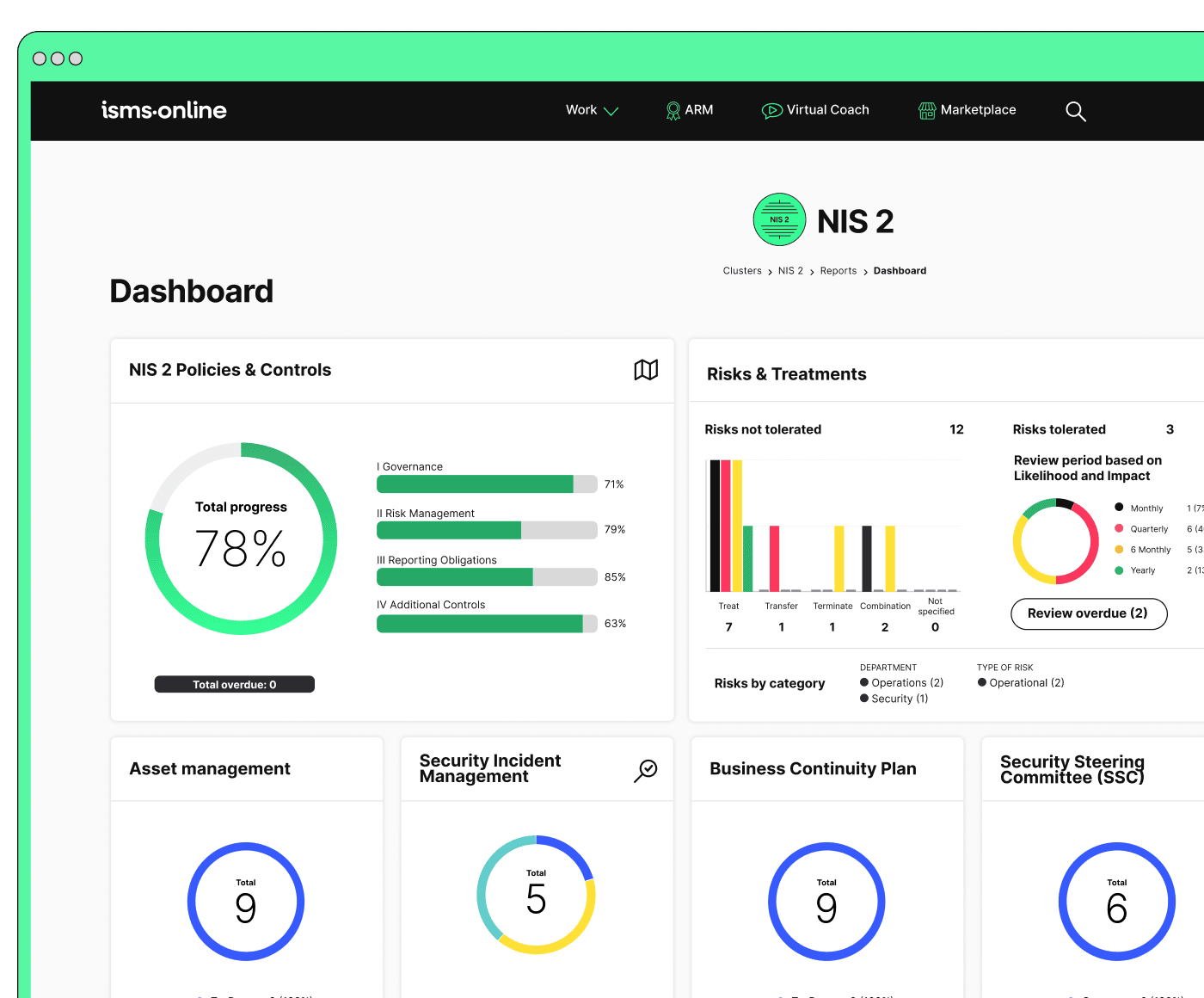
Be NIS 2-ready from day one
Launch with a proven workspace and templates – just tailor, assign, and go.
How Can You Avoid Cross-Border Fragmentation and Build Evidence Regulators Respect?
Pan-European compliance breaks down when your organisation tries to force one-size-fits-all evidence or fixed templates onto a jurisdiction with different requirements. If your ISMS doesn’t account for sector, country, and process overlays, you risk both audit findings and denial of regulatory leniency.
It isn’t the dashboard that protects you, but the localised evidence chain behind it.
To mitigate fragmentation:
- Choose a compliance platform: that tracks artefact submissions, deadlines, log retention, and escalation by *country and sector*.
- Keep local SMEs (legal/privacy/IT) in your notification chain: , feeding updates and jurisdictional nuances into the record.
- Store procedures as versioned live records-not static PDFs-so you always have the right process on hand if challenged: .
- Version-control every update, with audit-ready archives for each notification trail: .
Regional Evidence Chain Table
| Trigger | Risk | Control / SoA Link | Sample Evidence |
|---|---|---|---|
| Non-local template | Audit challenge | A.5.24, A.6.1 | New local version stored/logged |
| Missed clock window | Fine & scrutiny | 6.1.3, A.5.25 | Time log, board approval note |
| Risk register drift | Process failure | 5.36, 9.2, 9.3 | Register, consistency check |
| Legal doc omission | Denied leniency | A.5.26, A.7.13 | Traceability log, legal sign-off |
An up-to-date, locally enriched artefact chain is your “passport” for cross-border compliance.
Is Evidence-Driven Culture the Hidden Engine of Regulatory Resilience?
A compliance culture that logs, reviews, and shares audit artefacts-by default, not exception-creates a buffer for the regulator to see not just “what went wrong,” but how you continually get better. Under NIS 2, continuous trails-rather than sporadic paperwork-become the basis of leniency, trust, and long-term resilience (isms.online).
Real resilience is built on logged actions, not learned slogans.
Make the audit trail part of the routine: every detection opens a notification chain; board review, remediation, and improvement log flow follow seamlessly. With versioned records, recurring check-ins, and documentation of every action, you build a collaborative compliance culture-not just a compliance taskforce (isms.online).
Expect regulators to reward this “embeddedness” with increased trust, fewer ongoing checks, and-where justified-real flexibility in enforcement.
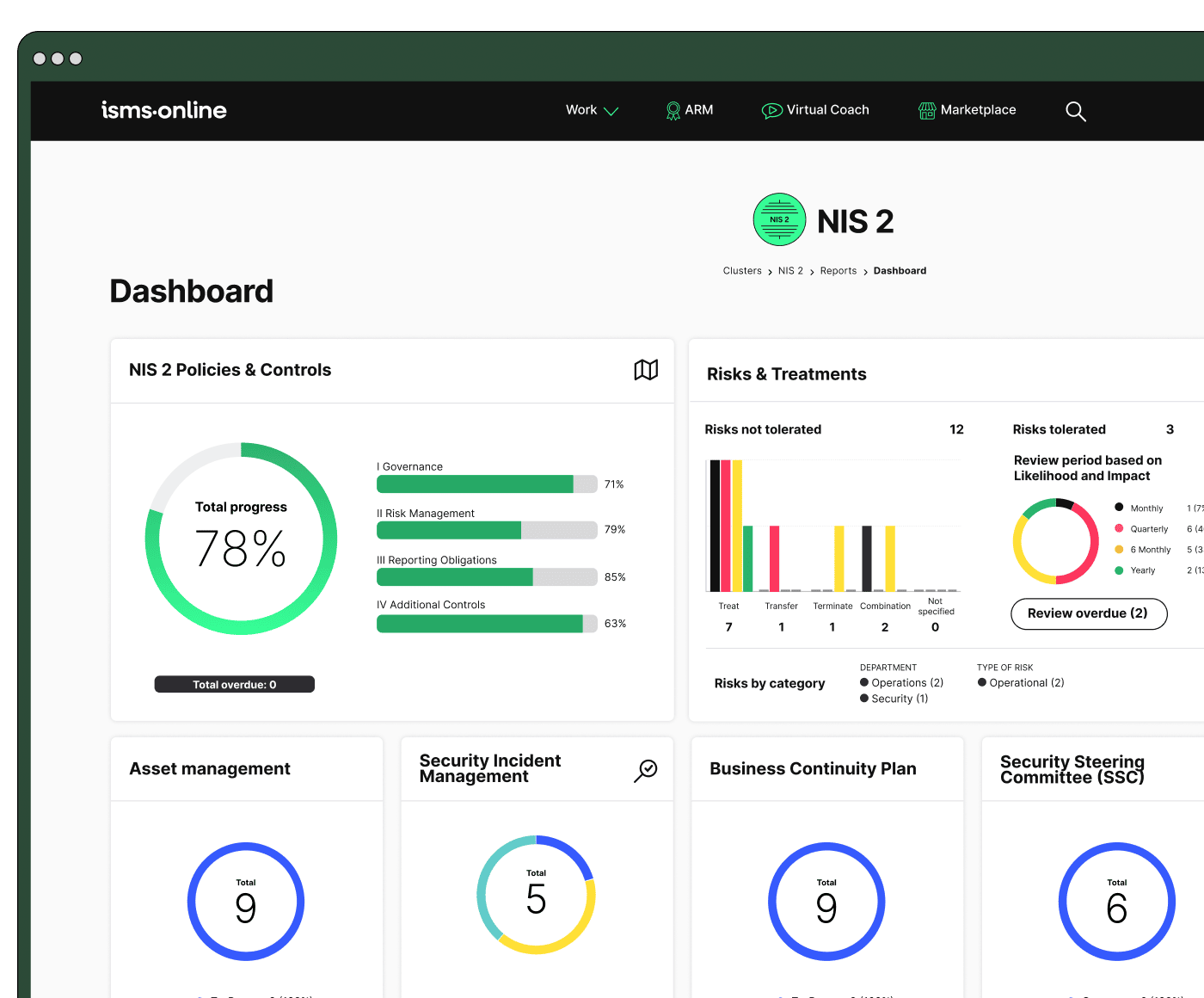
All your NIS 2, all in one place
From Articles 20–23 to audit plans – run and prove compliance, end-to-end.
What Micro-Actions Actually Deliver Regulatory Trust-Not Just Lower Fines?
Regulators don’t look for fireworks; they look for a never-broken chain of artefacts linking every incident, notification, board review, and fix. These micro-actions reveal live, company-wide compliance discipline-even outside of formal incident timelines:
Evidence is not built in a day-it accrues with each signed log, every staff notification, each routine test.
The Micro-Actions Checklist That Wins Trust
- Log every incident in real time: detection, notification, board acknowledgment, and corrective action-all within the ISMS.
- Automate regulatory notification timers: deadline-aware reminders for NCA reporting and artefact submission.
- Connect board approvals to action artefacts: signed minutes trigger updates through IT, privacy, and risk registers.
- Log after-action reviews: every incident ends in a “lessons learned” cycle and tangible improvement steps.
- Embed sectoral drills and local overlays: rehearse both general and sector-specific notifications with regulatory contacts.
Micro-Action Table
| Action Step | NIS2/ISO Reference | Example Evidence |
|---|---|---|
| Incident detected | A.5.24, 8.15 | Real-time log, staff alert |
| Regulatory timer set | 6.1.3, A.5.25 | Timer alarm, email record |
| Board approval logged | 5.3, 9.3.2f, A.5.36 | Signed minutes, decision item |
| Remediation traced | A.8.8, A.8.31, 8.32 | Patch log, action register |
| Improvement cycle run | A.5.27, 9.2, 10 | Checklist, training record |
The magic is in the routine. As you connect each department’s work-turning what used to be isolated actions into a closed, traceable loop of cause, action, and review-the regulator’s view of your company shifts from “risk centre” to “trust anchor.”
Don’t Let Regulatory Leniency Be a Gamble-Build Your Defence With Evidence
There’s no room for a “let’s hope” strategy in compliance. NIS 2 has changed the game-regulator forgiveness is built on documented micro-actions, cross-border evidence, and board-level clarity, not last-minute firefighting or paperwork rushes. Trust, leniency, and ultimately your future revenue all flow from the proof you log today-not the luck you hope for tomorrow.
The chains you build now are the only safety net when scrutiny comes.
Start concrete: run a board-level compliance gap analysis, simulate a sector-specific incident, and get every step-from detection to improvement-into your ISMS, where it’s logged, versioned, and readable in minutes for both regulators and your own resilience audit.
When you capture every compliance action, task, and improvement in ISMS.online, you don’t just reduce the size of the stick regulators carry-you add substance to your board’s trust and your customers’ confidence. Build a culture based on artefacts, not assurances, and your next regulatory visit can serve as a benchmark-not a threat.
The power to turn honest self-disclosure into resilience capital is now in your hands. Now is the moment to move: let your next micro-action begin the trust chain regulators are already measuring.
Frequently Asked Questions
What Does Regulatory Leniency Actually Mean When You Self-Disclose Under NIS 2?
Regulatory leniency in the NIS 2 era isn’t a waiver-it’s a behavioural credit earned through speed, transparency, and rigour when your organisation self-reports a cyber incident or vulnerability. The Directive’s Article 23 and Article 32 clarify that prompt notification should not increase your liability, but authorities retain full discretion over penalty size and escalation. This means honest, detailed, and timely reporting won’t guarantee immunity, but it will separate your organisation from those who hesitate, minimise or conceal facts. ENISA and national regulators signal that transparency, especially within the legal 24/72-hour window, tends to shift oversight from punitive to remedial: expect a compliance dialogue, not an automatic fine.
The organisations who practise no-blame, evidence-backed reporting are those who build regulatory trust-and often avoid headline-making sanctions.
Across sectors, authorities look for companies who notify promptly, supply documented remediation evidence, and show board engagement. These factors are the core elements that encourage guidance rather than enforcement. However, repeat failings, missed windows, or vague “work in progress” messages without evidence rapidly erode patience. Leniency, then, is not an entitlement-it’s a byproduct of tangible, recurring proof that your team treats cyber-security with executive, cross-team commitment.
When do authorities show leniency?
- Honest disclosure within the 24/72-hour window:
- Evidence of board review and policy update:
- Remediation logs-not just intention, but action:
- Clear, versioned communications confirming follow-ups:
Does Voluntary Self-Disclosure Lower Enforcement, or Just Prevent Harsher Penalties?
Timely, voluntary self-disclosure doesn’t erase liability, but it’s the clearest path to reduced penalties, regulatory coaching, or even deferred action under NIS 2. Article 34-mirrored in national best practises-says severity will often scale with your level of collaboration. Documentation matters: a timeline of incident events, board sign-offs, and remedial steps-maintained in your ISMS-is persuasive evidence of good faith.
Silent boards, late updates, blame-shifting, or retrofitting your narrative post-incident are all seen as signalling risk, not diligence. Regulators routinely note, in enforcement case studies, that phased but honest updates (“here’s what we know, here’s our follow-up plan”) are welcomed and may turn an event into a learning partnership rather than a penalty trigger. Even so, these leniencies have limits: chronic non-compliance, missing control evidence, or lack of executive backing restore the regulator’s power to escalate.
Regulatory patience is not indefinite-each report, and each follow-up, is a new occasion to reinforce or lose trust.
Three moves that favour regulatory leniency:
- Staged, timestamped disclosures-admitting unknowns but promising regular, evidenced updates
- Evidence of board involvement (minutes, approvals, action logs)
- Actionable remediation logs (fixes, training, policy change proofs)
Are All Entities and Sectors Treated the Same by Regulators?
Not at all-sector, entity status (“essential” versus “important”), and local regulator attitude fundamentally influence how leniency is applied under NIS 2. Healthcare and finance, particularly under regimes like DORA or where potential for harm is high, face stricter scrutiny, lower patience for “learning in public,” and less flexibility if a breach exposes ongoing process gaps. Digital infrastructure or public administration in some jurisdictions, particularly in Northern and Western Europe, report more collaborative oversight, especially if organisations have proven routines for regular disclosure rehearsal and improvement cycles.
A regulator’s leniency threshold isn’t fixed; it rises or falls with every documented act of preparation, notification, and quality improvement in your ISMS.
Country-by-country guides (Ireland, Germany, Sweden) and sector notifications reveal that authorities explicitly reward proactive organisations who regularly rehearse notification, keep their contact lists current, and audit their own compliance exercises. The organisations who treat reporting as a muscle, not a last-resort, repeatedly see “support ladders” rather than penalty triggers-particularly if they operate under multiple frameworks (NIS 2, DORA, ISO 27001, GDPR).
Regulator Tolerance Triggers (by sector/entity):
| Sector/Entity | Regulator Stance | Main Leniency Areas |
|---|---|---|
| Healthcare (essential) | Strict, risk-driven | Board evidence, remediation logs |
| Financial (DORA) | Exceptionally strict | Rapid self-report, repeat rehearsals |
| Digital Infrastructure | Variable, sometimes open | ISMS routines, improvement cycles |
| Public Administration | Variable | Executive review, improvement logs |
What Evidence and Behaviours Most Consistently Earn a Lenient Regulatory Response?
Based on ENISA guidance, regulator case studies, and recent audits, the following behaviours and artefacts form the backbone of “earned” regulatory support:
- Comprehensive, timestamped incident and remediation logs: These help authorities reconstruct timelines and intent (not just outcome).
- Action proof: Patch notes, process changes, staff retraining, and policy updates that bridge the gap from incident to improvement.
- Transparent admission: “We are investigating X. Here is what we know, here is next steps,” followed by documentary evidence, not just promises.
- Board sign-off/oversight: Board minutes, action approvals, and regular management reviews underscore seriousness and organisational priority.
Organisations who log and rehearse disclosure, embed improvement cycles in their ISMS, and link every notification to a corrective action see demonstrable flexibility. Those who treat the process as one-off or defensive-fearing “audit theatre” over real learning-face the sharp end of enforcement.
Regulators respond to living, routinely-tested evidence-not tick box checklists submitted after the fact.
ISO 27001 / Annex A Evidence Table
| Expectation | ISMS Operationalisation | ISO 27001 Ref |
|---|---|---|
| Timely notification | Incident logged in 24/72 hours | Cl. 6, A.5.24 |
| Board oversight | Minutes, approvals, review evidence | Cl. 5.3, 9.3 |
| Remediation & improvement | Patch, training, updated controls | A.8.8, 8.9, 5.7 |
| Traceability | Version-controlled platform logs | A.5.36, 7.5 |
How Can International or Cross-Border Organisations Avoid Regulatory Fragmentation and Harmonise Disclosure?
For organisations spanning countries or regulated by overlapping frameworks, fragmentation is a systemic risk. Out-of-date notification templates, country-specific reporting clocks, and inconsistent board sign-off are common audit failures-exposed rapidly during incident or regulatory review. ENISA, ISACA, and compliance authorities recommend a playbook approach:
- Map incident and notification workflows at the platform level: (not just in policy): Each country/sector’s rules and contact points are pre-configured.
- Maintain a single, versioned ISMS evidence log linking risk updates, internal audits, incident rehearsals, and board approvals.:
- Rehearse both escalation and follow-up: Post-incident review isn’t just for learning, but to document traceable improvement.
Reliance on high-level dashboards or point-in-time spreadsheets isn’t enough; an adaptable, audit-ready ISMS platform is now a regulatory expectation-demonstrating “resilience in routine” across all markets.
Traceability Table: Trigger → Risk Update → Control/Annex A → Evidence Type
| Trigger | Risk Update | Control / SoA | Evidence Type |
|---|---|---|---|
| Supplier breach | Supply chain risk | A.5.19, A.5.20 | Audit log, vendor questionnaire |
| Phishing attack | Cyber risk growth | A.5.24, A.8.8 | Training record, incident log |
| New regulation | Compliance risk | Cl. 6, A.5.36 | Policy update, comms log |
Why Does a Unified ISMS Platform Make Regulatory Leniency More Likely?
A unified ISMS platform brings together evidence logging, reporting, board oversight, and improvement cycles in a way that is both efficient for your teams and persuasive to regulators. This isn’t about ticking boxes for one audit-it’s about demonstrating a sustainable “living shield” that authorities recognise as proof of your readiness and resilience.
Platforms like ISMS.online act as a single source of truth: incident logs, risk updates, training drills, remedial actions, executive sign-offs, and policy improvements-all timestamped, versioned, and ready to submit. For regulators, that’s not just compliance-it’s partnership.
When your ISMS becomes your living audit trail, leniency shifts from hope to a rational expectation: resilience, evidenced in real time, earns regulatory trust.
If you’re preparing for NIS 2 or already dealing with multi-sector pressure, align your reporting engine, practise regular incident reviews, and log every action from boardroom to engineering hand-over. Teams who operationalise compliance as an evidence loop-never as a scramble-become reference points for trust among regulators, customers, and the market at large.
Ready to turn your compliance routines into boardroom recognition and regulatory support? It starts with your ISMS, and it accelerates with every logged, rehearsed, and substantiated disclosure event.






