





































How Does NIS 2 Change Business Continuity Expectations (and Why Can’t You Rely on Just Having a “Plan”)?
Today, every regulated business must treat business continuity and disaster recovery (BC/DR) as an ongoing, living obligation-not a static document or one-off exercise. The NIS 2 Directive transforms expectations across Europe: auditors and regulators now demand proof that BC/DR plans actually function under duress. This is a decisive break from the days of “plan-on-paper” mentality. Ownership, testing, and real-time evidence all matter more than ever. The new mandate: demonstrate you can execute your plan, not just recite it.
Regulators now ask, ‘Show me resilience-not paperwork.’ Actions, not intentions, become the standard.
Under NIS 2 (especially Article 21), business continuity must be recorded, tested, and iteratively improved-spanning every department and supply chain. Having a BC/DR document is not enough. Your business is expected to provide logs-timestamped, signed off, and showing regular reviews with evidence of lessons learned. This cycle is the evidence of genuine operational resilience.
Why Are Fragmented Continuity Plans a Silent Threat for NIS 2 Readiness?
Fragmented BC/DR is the most common point of failure-not because people lack intent, but because disconnected systems and siloed responsibilities create hidden, compounding risks. In most audits, the real disasters aren’t the obvious ones; they stem from uncoordinated recovery segments, missing handovers, or untested vendors.
Continuity is only as solid as its weakest unlinked segment-the risk is always where you think, ‘Someone else has it covered.’
What goes wrong?
- Unlogged or orphaned updates: when team members change, roles may not be reassigned, and responsibility vanishes.
- Outdated contacts and response chains: key contacts may have left, leaving gaps in crisis communication.
- Functionally split plans: IT may test, but HR, procurement, or operations remain untested or incorrectly assume coverage.
- Supply chain blind spots: if vendor and SaaS dependencies are left off the main register, a cloud outage or logistics hiccup can bring all recovery to a halt.
Fragmentation is more than inefficiency; it’s a governance risk. Regulators and insurance underwriters increasingly cite disconnected BC/DR as a key factor in fines or uninsurability.
The Deadline and Evidence Trap
NIS 2 and ISO 27001 now require regular, auditable evidence-not only of plan existence, but of review, test, and ownership, with frequency mapped to sector, contract, or national law. Anything unlogged is now an explicit finding; “forgotten” is no longer a defence, especially for SME leaders and boards.
Universal Inclusion: All Org Areas
Legal, HR, customer service, cloud/SaaS, and supply chain are all required in the BC/DR scope. Omission in any segment likely means the entire plan unravels in crisis-compromising compliance and recovery alike.
Practitioner Checklist: BC/DR Evidence Readiness
- Last test/review per area: When? Whose sign-off?
- Role register: Are all segments assigned, with backups recorded?
- Incident lesson tracking: Can every lesson be linked to a log and an updated process?
- Supplier and facilities: All critical dependencies tested and archived?
If your recovery evidence can’t be traced, it doesn’t exist when it matters.
Traceability Table
| Trigger | Risk Update | Control / SoA Link | Evidence Logged |
|---|---|---|---|
| Ransomware | Plan review & update log | A.5.29 | Drill log, change register |
| SaaS Outage | Supplier comms & test log | A.5.21 | Contract update, test log |
| CxO Departure | Role/contact handover | A.5.2, 7.2 | Handover, owner update log |
| Audit Nonconform | Remediation, log update | 10.1 | Change & effectiveness log |
Fragmented continuity breeds “unknown unknowns.” True resilience is a map you can navigate-under pressure-because it is up-to-date, comprehensible, and test-proven.

Master NIS 2 without spreadsheet chaos
Centralise risk, incidents, suppliers, and evidence in one clean platform.
How Can You Navigate Overlapping NIS 2, National, and Sectoral Rules Without Getting Lost?
Regulation isn’t static-and NIS 2 is merely the entry point. National overlays and sectoral standards (especially in banking, health, or energy) often raise the bar. It’s here that leaders and practitioners frequently fail, missing stricter rules or treating all requirements as equal.
The real audit test is: ‘Show clause-mapped evidence for each requirement-everywhere you’re accountable.’ Compliance is just a starting point.
Mapping Without Confusion
- EU directives set a minimum; national law may reduce review cycles, demand board sign-off, or require extra tests.
- Sectors like health and finance often attach further data, reporting, or scenario playbook expectations.
- No mapping system? You may overlook the strictest requirement-and face audit findings, not just compliance confusion.
Where Mistakes Compound
- Controls are logged in a platform, but legal or sector updates get missed or are unclear.
- Policy or clause registers fall out of sync with scheduled reviews.
- Multi-country or cross-sector operations suffer worst from “mapping drift” where rules are assumed covered but not cross-checked.
Optimising with ISMS.online
- Import templates pre-mapped to NIS 2, ISO 27001/22301, sector overlays, and national rules.
- Assign evidence capture tasks mapped to both board and team owners.
- Set dashboards to flag overlaps, gaps, overdue reviews, and mapping drift.
Tip: “Start every review and test by asking: ‘What’s the strictest rule I must prove today?’ Then, check when you last logged to that requirement.”
Companies using a living mapping system not only pass audits-they build board trust and gain operational clarity.
Are Your Testing & Review Practises Ready for “Living” Audits (or Stuck in “Best Effort” Mode?)
Old compliance mindsets equate audit with effort-thick files, scheduled drills, annual reports. NIS 2 and sector practise now demand audit as evidence impact. Timestamped, owner-attributed, lessons-mapped cycles are the gold standard-annual, quarterly, or triggered by real incidents.
Every review that’s only on paper-not signed, not logged, not mapped to a lesson-risks becoming audit fuel and reputational risk.
Key Shifts Under “Living Audit”
- Scheduled reviews (cyclical and event-driven).
- Immediate closure (not just planning) of improvement actions.
- Log chains that show who did what, when, and why-reference to both policy clause and operational improvement.
- Traceable ownership with sign-off, and dashboard visibility.
Faint or incomplete test logs signal operational risk. Modern audits hunt for “the last incomplete cycle”-where improvement or lessons were lost. Teams with automated logging (not manual patchwork) show the highest resilience and lowest regulatory findings.
Continual Improvement Workflow
- Test/drill completed-owner logs time, event, and finding.
- Lessons documented-linked to updated plan segment.
- Change signed off and new version published.
- Follow-up test auto-scheduled and assigned for traceability.
Audit logs are no longer best practise-they are the minimum requirement.
Practitioner’s Tip: Automate reminders and audit exports. Manual reminders are brittle and quickly fall out of sync as regulatory pace accelerates.
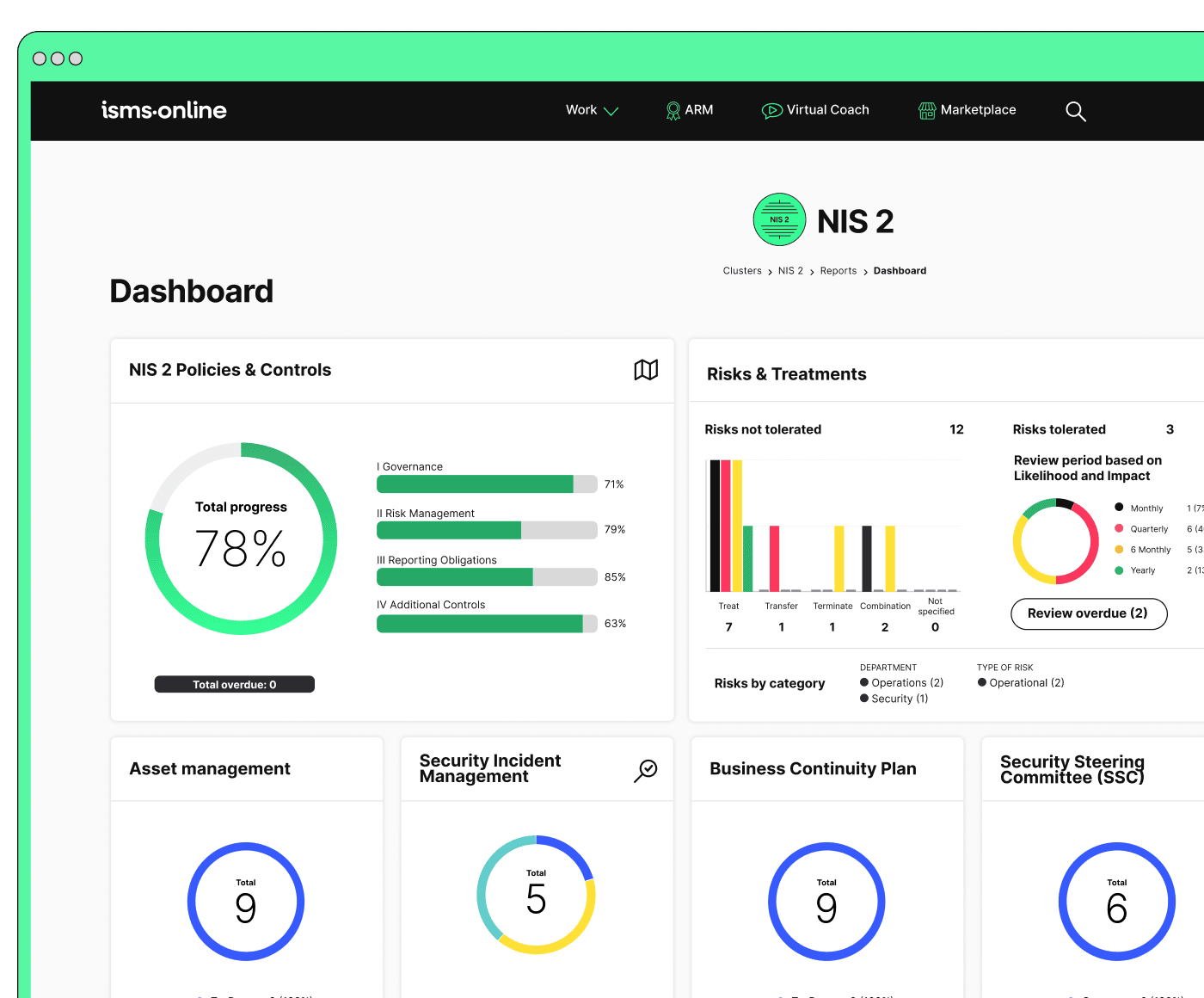
Be NIS 2-ready from day one
Launch with a proven workspace and templates – just tailor, assign, and go.
How Do You Map NIS 2 and ISO 27001 BC/DR Clauses Into Actionable, Audit-Ready Evidence?
All regulatory, contractual, and sector standards hinge on traceability. Regulators, auditors, and customers ask: does your BC/DR programme create a visible bridge between action (test, update, lesson) and policy (clause, control, contract)?
Audit anxiety vanishes when evidence is mapped, logged, and owner-attributed-by clause, by event, by person.
Clause-Linked Actions Made Tangible
- Every BC/DR action, update, or improvement ties to a tracked clause-so nonconformity triggers not just a fix, but proof.
- Events are mapped bi-directionally: what requirement prompted this action? Did the lesson cycle close?
- Reports are auto-generated-with clear event/policy linkages. No data stitching or “grey area” claims in audit panic (iso.org, enisa.europa.eu).
Audit-Ready Traceability Matrix
| Action Type | NIS 2 / ISO 27001 Ref | Required Evidence |
|---|---|---|
| Plan Update | Art.21, A.5.29–30, 7.5 | Plan version, sign-off, owner log |
| Test/Drill | Art.21, 9.3, 10.1 | Dated test, result, lesson, owner |
| Incident/Lesson | Art.23, 10.1, 8.3 | Closed improvement log, remap |
| Supplier Review | A.5.19–21 | Active supplier list, logs, proof |
| Board Report | 9.3 | Dashboard, minutes, decisions |
Always ask: do your last three drills/test logs each link to a clause, owner, date, and outcome? If not, your next audit could surface a gap.
Automated, clause-mapped evidence is modern audit insurance-and a sign of operational maturity.
Have You Closed the Gaps in Your Supplier and Cloud BC/DR – Or Are You Waiting for a Regulator to Find Them?
In 2024, most actual compliance disasters are “exogenous”: SaaS outages, logistics failures, or untested partners. NIS 2 and ISO 27001 put supplier, cloud, and service dependencies into scope for BC/DR, with explicit requirements for registry, contract, role, and testing.
BC/DR is only as resilient as your weakest SaaS, neglected supplier, or orphaned vendor contract.
Supplier Registry & Evidence Imperatives
- Maintain an up-to-date registry of all suppliers, ranked by criticality.
- Upload current contracts with DR clauses, map vendor test cycles, and ensure contact logs are validated and current.
- Conduct and minute joint tests with key suppliers or SaaS vendors. Drills should log lessons for both parties.
- Cloud/SaaS dependencies must be catalogued, tested, and ownership clarified-annual at minimum, quarterly in high-impact chains.
Supplier Resilience Table
| Supplier | Contract/Clause | Evidence | Frequency |
|---|---|---|---|
| Cloud SaaS | Joint DR clause | Test log; contract upload | Quarterly/Annual |
| Mission Critical | Escalation; notice | Plan, test; sign-off | Annual/On-change |
| Logistics | Alt supply resilience | Playbook; test log | Annual/Trigger Event |
| MSP/IT Vendor | DR contract clause | Contact; contract; test log | Annual/On-Update |
Every new supplier or app triggers a BC/DR registry and testing update, not just paperwork. Regulatory findings most often cite supply chain blind spots.
Third-party resilience is now an operational, regulatory, and reputational issue.
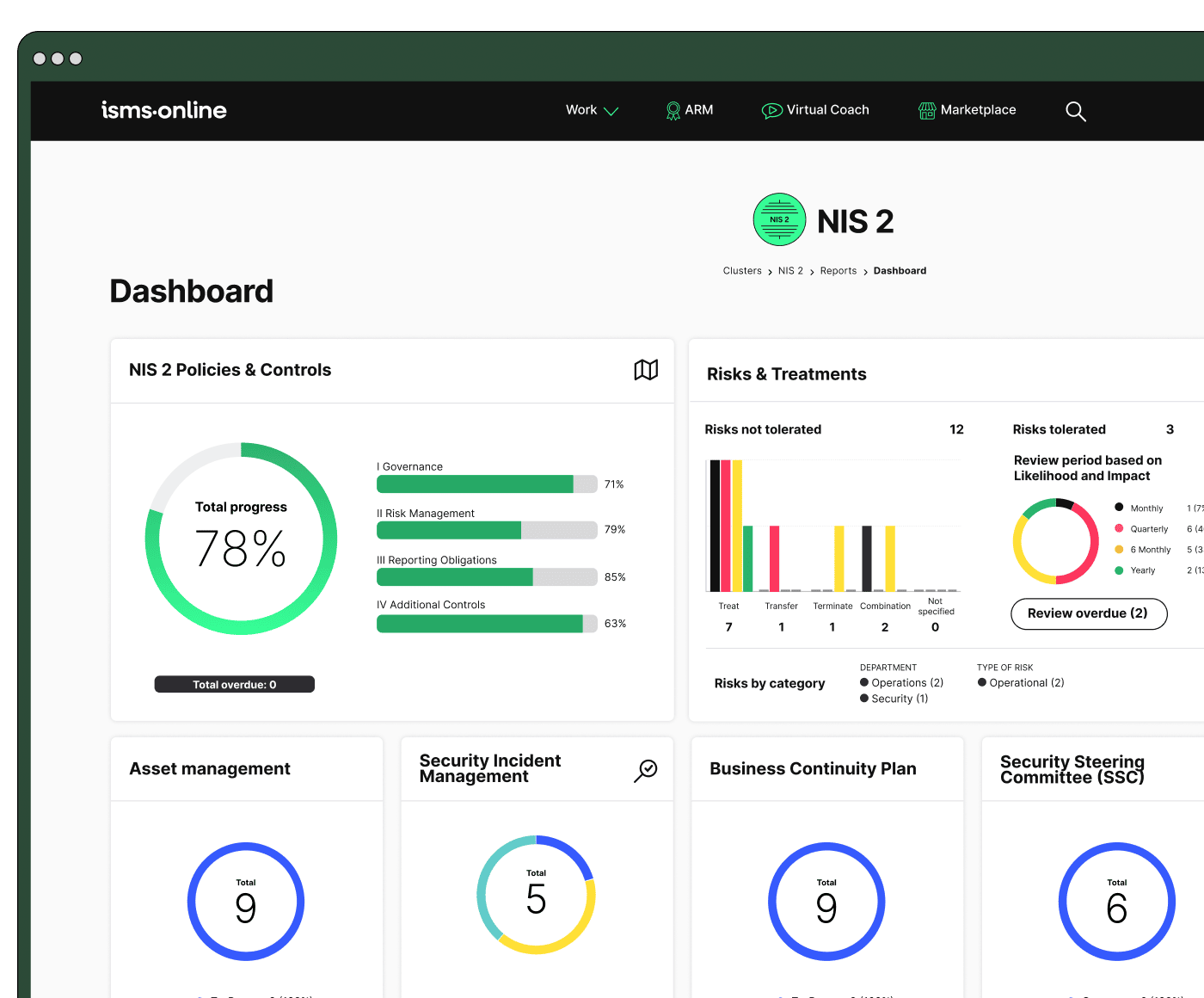
All your NIS 2, all in one place
From Articles 20–23 to audit plans – run and prove compliance, end-to-end.
Are Your Feedback Loops and Evidence Cycles “Closed”-Or Just Going in Circles?
No BC/DR regimen is complete unless it proves that events lead to lessons, lessons result in real changes, and those changes are tested, logged, and ready for the next cycle. This “closed loop” builds not just compliance, but trust – for the board, the regulator, and the business ecosystem.
If every incident doesn’t lead to a logged lesson and retest, your loop is open-and trust erodes.
Requirements for Closed-Loop Evidence
- Every event triggers a lesson, logged with timestamp and owner.
- Improvements are mapped to both the triggering event and the relevant clause.
- Plan/process change is signed off, new version archived.
- The follow-up test is scheduled, assigned, completed-with closure logged.
Boards, risk committees, and regulators expect evidence of improvement cycles, not just compliance hygiene. NIS 2 and ISO 27001 both require these cycles to be traceable, transparent, and exportable any time.
Board & Management Trust Essentials
- Every improvement, lesson, action, plan change, and test is traceable from start to signed closure.
- Export-ready dashboards, audit trails, and timestamped logs are maintained and reviewed.
- Negative findings are acknowledged-“happy path” only reports now trigger further audit scrutiny.
Quick Trust Checklist
- Every incident feedback triggers a logged lesson and improvement process.
- Lessons and improvements are documented to sign-off and retest.
- Every step-without gaps-is logged and ready for inspection or export.
In short: “Show your working, show your logging, and show your learning at all levels.”
How Can ISMS.online Turn BC/DR Compliance Into Board-Level Resilience-Starting This Week?
Compliance has historically been a box-ticking exercise. NIS 2, ISO 27001, and sector laws redefine it as a lived, daily discipline-and the difference between business as usual and disaster when disruption happens. ISMS.online is engineered for this new reality; it transforms policy into evidence, evidence into improvement, and improvement into trust.
For Compliance Kickstarters
- Out-of-the-box workflows mapped to ISO 27001, NIS 2, and relevant overlays.
- Automated scheduling, reminder, and owner assignment-no more missed sign-offs.
- Versioned, export-ready dashboards and evidence logs for board reviews and audits.
In under a week, you can initiate a BC/DR workflow, upload test logs, and have a board-ready audit file-without compliance stress.
For CISOs and Security Leaders
- Unified visibility across all BC/DR plans, tests, and reviews-by site, team, or supplier.
- Dashboard tracking for performance, improvement, and test closure. Board questions become opportunities for leadership, not traps.
For IT/Security Practitioners
- Drag-and-drop evidence, instant log generation, and seamless handover from test to retest.
- Clear accountability paths make audit prep routine, not rushed.
For Privacy Officers & Sector Specialists
- Cross-standard mapping ensures privacy, supplier, and new AI governance risks are embedded, not bolted on.
- Automate engagement, acknowledgement, and audit readiness to stay ahead of all regulatory cycles.
In a hyperconnected, regulated world, BC/DR is the heartbeat of business resilience. With ISMS.online, living compliance becomes living confidence.
Schedule a BC/DR Evidence Workflow With ISMS.online Today
Resilience is measured by actions, not intentions. Outdated documents and manual reminders have been replaced by living systems of record-evidence, lessons, logs, and ownership flow naturally from today’s requirements. With ISMS.online, your BC/DR regime becomes board-level assurance and competitive edge. Automate, unify, track, and prove your strength.
Start your BC/DR evidence workflow now. Resilience begins with your fastest fix, not your best documentation.
Frequently Asked Questions
How does BC/DR compliance under NIS 2 and ISO 27001 redefine the break from “tick-box” continuity?
BC/DR compliance under NIS 2 and ISO 27001:2022 completely disrupts the old “tick-box” approach by demanding live operational proof, continuous improvement, and personal accountability-turning static plans into adaptive, auditable systems. Where a binder, a template, or an annual tabletop once lulled auditors (and boards) into a false sense of readiness, today you’re expected to show at any moment: who actually owns your resilience, when each test was performed, what was learned, how plans changed, and who signed off those changes-mapped to regulatory, contractual, and board requirements. These new expectations make compliance a living process, not a policy artefact. NIS 2 (Article 21, Guidance 4.1) and ISO 27001:2022’s controls (A.5.29, A.5.30, A.8.13, A.8.14) drive this ongoing loop, with every BC/DR outcome traceable and exportable at the click of a button (see.
Auditors now expect to see not just the plan, but the last test, the lessons, the improvements-and the digital footsteps of everyone involved.
Table: From Legacy Checklist to Operational Evidence
| Expectation | Modern Practise | ISO 27001 / NIS 2 Reference |
|---|---|---|
| “We have a BC/DR plan” | Owner-attributed, digital, versioned plan | A.5.29, NIS 2 Art. 21 |
| “We test once a year” | Full/event-based tests, logged and review-verified | A.8.14, Guidance 4.1 |
| “Lessons are recorded” | Direct linkage between review, plan update, and retest | 10.1, 5.27 |
| “We pass audits” | Audit trails, exportable board/regulator reports | 7.5, 9.3, 5.4 |
Traceability Mini-Table
| Trigger | Risk Update | Control/Annex Link | Logged Evidence |
|---|---|---|---|
| Ransomware | Post-incident review | A.10.1 | Timed test log, signed plan change |
| Supply chain | Contract update | A.5.29, 8.14 | New evidence, sign-off, versioned audit trail |
How does automating evidence and improvement cycles actually change daily work for compliance and IT teams?
Automation turns BC/DR compliance from a time-sink and stress multiplier into structured, invisible momentum-saving time, closing gaps, and surfacing risks before they become findings. Instead of manual checklists, reminders, or lost emails, a platform such as ISMS.online continuously schedules, nudges, and logs every action: who tests, who reviews, what was learned, how plans evolved. The platform ensures every lesson triggers a follow-up-a gap flagged, a retest planned, overdue actions escalated. Drills and incidents are never just meeting minutes-they auto-increment plan maturity, tie to your Statement of Applicability, and create instantly exportable, audit- and board-ready evidence (ISMS.online BC/DR Overview).
You move from fire-fighting and last-minute scrambles to knowing every test, fix, and sign-off is already tracked and mapped to the right requirement.
Visual: Automated BC/DR Workflow
- Systemised test scheduling → Owner alert/assignment → Test performed, outcome logged
- Lessons logged → Automatic improvement task created → Plan versioned, approval tracked, retest date set
- Evidence exportable instantly for any stakeholder
This automation not only means more peace of mind, but fewer repeat findings, easier cross-team handovers, and the ability to prove-in real time-how resilient your continuity actually is.
What are the audit pitfalls in BC/DR today, and how does a platform neutralise them?
Modern BC/DR audits under NIS 2 and ISO 27001 zero in on three chronic weak spots: (1) unlogged or outdated tests/reviews, (2) ambiguous or broken ownership as staff change, and (3) weak or incomplete supplier/cloud evidence, especially for ICT or SaaS dependencies. Auditors demand a “map”-not just of plans, but of every test, lesson, improvement, and signature, with clear lines of responsibility. A fragmented spreadsheet, an unsigned drill, or an untested supplier now triggers major findings, and for critical suppliers, can invite regulator penalties (ENISA SCS, 2023).
A dedicated platform automatically closes these gaps by:
| Audit Pitfall | Platform Fix |
|---|---|
| Unlogged tests/reviews | Scheduled, logged, and versioned tasks for every required action |
| Weak owner handover | Named assignments with auto-escalation chains |
| Supplier/cloud gaps | Centralised registry, scheduled joint drills, mapped contract logs |
| Overdue action | Alerting, dashboard cues, evidence workflow automatically flagged |
Resilience is no longer documented in a binder-it’s tracked by timestamped, versioned, and mapped digital evidence.
How can a platform simplify overlapping NIS 2, national, and sectoral BC/DR rules without doubling the workload?
As rules multiply, real-world compliance means satisfying the highest frequency and most detailed evidence demands across all relevant overlays-NIS 2, sectoral, contractual, and national. A true resilience platform supports clause-mapping, overlays sign-off and notification cycles, and ensures one well-evidenced action fills multiple compliance buckets at once. You align every plan/test/review to the highest-demanding schedule, assigning proof to every requirement-making it clear at a glance how any scheduled test or review is mapped to all required laws and standards (DataGuard, 2024).
Table: Overlap Mapping Snapshot
| Requirement Level | Example Frequency | Platform Mapping Action |
|---|---|---|
| NIS 2 baseline | Annual full test | Calendar/scheduler log |
| National (e.g. DE) | Quarterly review | Extra date/notification mapping |
| Sectoral (e.g. Health) | Joint supply drill | Workflow/approval, escalation log |
| Contractual | SLA-driven, ad hoc | Triggered evidence export |
A robust BC/DR platform lets you evidence once, answer many-ending “spreadsheet spaghetti” and missed sign-offs as rules evolve.
What new supplier, cloud, or third-party evidence is mandatory-and how do you prove joint drills?
Both NIS 2 and ISO 27001:2022 demand an up-to-date, risk-ranked registry of all essential ICT/cloud providers-with explicit owner assignments, documented test logs, mapped contracts, and scheduled/driven joint drills. Inactive, unknown, or untested links draw auditor penalties and put the entire continuity chain at risk (ENISA SCS, 2023). Immediate, platform-triggered reminders and joint test evidence make supplier engagement routine-not heroic. You must be able to demonstrate evidence for:
| Evidence Type | Platform Example |
|---|---|
| Supplier registry | Live list: risk, assignment, contract, status |
| Joint drill/test | Signed, timestamped log with improvement trace |
| Owner assignment | Tracked handover record, dashboard status |
| Contract mapping | Versioned doc linking to live SoA and plan |
| Escalation plan | Mapped notification chain, workflow logs |
The resilience of your supply chain is the sum of its tested, tracked proofs-not just promises in a contract. Evidence wins audits.
What defines a “living system” for BC/DR, and how is improvement now a tracked, auditable loop?
A living BC/DR system is defined by owner-linked, change-tracked, and clause-mapped logs that capture every test, incident review, lesson, improvement action, and next scheduled retest-each with a timestamp, signature, and audit/export function. Closed-loop evidence means every incident or lesson directly triggers a plan change and a new review, all recorded without manual reminders. Management reviews are scheduled, overdue steps flagged, and every finding is mapped to the corrective outcome-shrinking audit time, speeding insurance and customer certifications, and shifting your posture from “best effort” to continuous resilience (ENISA, 2023).
Table: End-to-End Resilience Loop
| Event | Log/Evidence | Clause/Ref |
|---|---|---|
| Incident | Entry, review, assignment | A.5.26, 5.27, 10.1 |
| Lesson | Tracked improvement | 10.1 |
| Plan update | Version, sign-off, link | 7.5, 9.3 |
| Next test | Auto-scheduled, attributed | 9.3 |
| Export | Auditor/board bundle | 5.4, 9.3 |
Closed-loop evidence means that every lesson has a digital thread to improvement and retest-ending compliance-by-intent, and proving continuous resilience.
You don’t have time for compliance theatre. Smart BC/DR is about living confidence: the audit trail is already ready, evidence is mapped to every duty, and your supply chain stands up to scrutiny-so your resilience is visible to boards, customers, and regulators alike. Take advantage of platforms that align with NIS 2 and ISO 27001:2022 and turn every test, lesson, and improvement into compliance capital for your business.






