





































Is “State-of-the-Art” Cryptography in 2024 a Moving Target-Or Your Next Audit’s Weakest Link?
Long gone are the days when a generic policy or bare-minimum “we encrypt!” script would satisfy procurement, your board, or a regulator test. In 2024, the definition of “state-of-the-art” cryptography is not a marketing boast-it’s a measurable, verifiable benchmark, scrutinised by auditors and business partners under new, sharper spotlights from NIS 2, procurement contracts, and hyper-aware customers. “Good enough” encryption-outdated, document-only, or scattershot across systems-now creates more risk than it manages.
Every unreviewed cypher or forgotten key is a shortcut from confidence to catastrophe.
Modern cryptography practises must be built on robustly vetted, widely accepted algorithms-AES-256, ECC with adequate key sizes, RSA-3072, modern hash functions like SHA-2, and the consistent use of TLS 1.3 or better (ENISA guidelines). What elevates your controls to the required standard is not just the technical choice, but your process: Do you track assets-to-crypto mapping, schedule algorithm reviews, log key rotations, and immediately deprecate the legacy (DES, SHA-1, SSL3, etc.)? All these must harmonise with GDPR, PCI DSS, NIS 2, and whatever framework emerges next.
Boards, regulators and customers now expect you to log and evidence every keystroke: from data at rest, through secure data transfer (TLS 1.3, S/MIME), to how and where cryptographic keys are generated, stored, accessed, rotated, and destroyed. The era where “security by obscurity” or opaque vendor claims sufficed is over. Only reviewable, living, auditable operational controls stand up at the point of maximum scrutiny-whether from a client bid, regulator investigation, or post-incident review.
State-of-the-art cryptography, then, is a management posture: you display your resilience and trust not just by your intent, but by your ability to evidence every critical step.
How Do You Build Real Audit Trails for Cryptography-Not Just Policies?
Having a cryptography policy is no longer nearly sufficient when NIS 2, ISO 27001, and GDPR-insistent customers examine your readiness. True compliance-and operational comfort-requires evidence you can trace: policy → control → asset → log → responsible owner. If you can’t demonstrate this chain live within your ISMS or compliance workflow, expect auditors to cut deeper until a gap emerges.
Auditors won’t settle for intention-they require a record they can follow from requirement to real-world delivery.
Here’s an example of an operation-ready ISO 27001 bridging table showing this traceability:
| Expectation | Operationalisation | ISO 27001 / Annex A |
|---|---|---|
| All data requiring confidentiality is encrypted | Asset-to-policy mapping, explicit control deployment | Annex A 8.10, 8.24, 5.12 |
| Key management is regularly reviewed | Automated key inventory, annual crypto review cycles | 6.1, 8.5, 9.1, A.5.14 |
| Named owners for crypto policy and controls | Owner list, formal approvals (SoA), responsibility audit log | A.5.2, A.5.18, A.8.5 |
| Audit-ready evidence for every step | Exportable logs, tracked staff training, supplier contracts | 7.2, A.5.35, A.7.10 |
A best-in-class ISMS (such as ISMS.online) automates this-from the policy doc, through to control adoption, asset/key inventory, owner mapping, and evidence logging. Reliance on messy spreadsheets, ad hoc emails, or out-of-date procedural docs not only slows audits but exposes gaps to board and regulator alike.
Increasingly, auditors request real-time walk-throughs-“Show me the asset, show me the key, show me the person responsible, produce the evidence log.” If any link is missing or stale, you are no longer in compliance, and your risk climbs.
Today, traceability is what separates security teams that panic at audit from those who pass while fielding business as usual.

Master NIS 2 without spreadsheet chaos
Centralise risk, incidents, suppliers, and evidence in one clean platform.
What Makes or Breaks Your Key Management-And How Can You Prove It?
No algorithm, however robust, can survive sloppy or opaque key management. Breaches and audit failures in 2024 almost always stem from flawed or ill-tracked cryptographic key lifecycles. Your risk profile-across regulatory frameworks-depends not on tool logos, but on whether every cryptographic key is accounted for, with evidence of its creation, storage, use, rotation, and destruction (ENISA Key Management Guidance).
Keys are like passports-you must track their issuance, every use, every expiry, and every destruction; the ‘missing’ ones are what cause security incidents and regulatory fines.
Audit-ready key management demands:
- Evidence for each key’s entire lifecycle (who, when, where, how).
- Software or hardware-based key storage with inventory and version control.
- Automated logs for every distribution or access event.
- Formal ownership mapping (not left to “whoever’s still here”).
- Periodic reviews and destruction records, not just statements.
Here is a traceability mini-table that brings this to life:
| Trigger | Risk Update | Control/SoA Link | Evidence Logged |
|---|---|---|---|
| New backup target | Asset confidentiality | A.8.24, A.8.10 | Asset-onboarding contract, key creation register |
| Expired certificate | Potential key expiry | A.8.5, A.8.24 | Key rotation log, incident response register |
| Departed admin | Orphaned credentials | A.5.18, A.8.31 | Access removal log, owner reassignment approval |
Use your ISMS to schedule and automatically log periodic reviews, and ensure versioned records survive staff turnover and supplier shifts. Spreadsheet inventories or manual “on request” registers are at risk of being incomplete or unsynchronized-leading to future incidents and audit failures. A living, integrated record within your ISMS eliminates these gaps.
Can You Actually Evidence Cloud and Supplier Crypto Controls-Or Are You Operating Blind?
The reality for most organisations-especially post-NIS 2-is that a sizable share of cryptographic risk is now “off-premises.” CSPs (Cloud Service Providers), SaaS platforms, MSPs, or outsourced partners must be able to prove-not just assert-compliance with your required crypto controls.
You can’t audit what you can’t see. If your supplier’s encryption claims aren’t backed by logs and contract clauses, you own the headline risk.
Distinguish between contractual and technical evidence:
- Contractual: Service agreements detailing crypto requirements, key lifecycle mandates, rotation, access, and right of audit (BYOK/CMK clauses). Must be visible in your ISMS and reviewed at every renewal.
- Technical: Logs showing key creation, access, rotation, and destruction tied to your assets. For SMAs (Service Managed Assets), these logs or attestation packs should be uploaded into your ISMS, and supplier performance reviewed at least annually.
A quick mapping in your ISMS helps audit trail integrity:
| Supplier Event | Risk Register Update | Contract / SoA | Evidence in ISMS |
|---|---|---|---|
| New SaaS contract | Cloud confidential data | Contract/A.8.24 | Agreement scan, key log |
| Outsourced rotation | Crypto lifecycle risk | A.8.5, A.8.24 | Supplier log, owner sign-off |
By actively managing these links in your ISMS, you not only fulfil regulatory expectation (NIS 2, GDPR, etc.) but hold suppliers accountable-and plug critical blind spots before they become exposure. If you can’t retrieve the logs or contractual clause at short notice, your business is exposed.
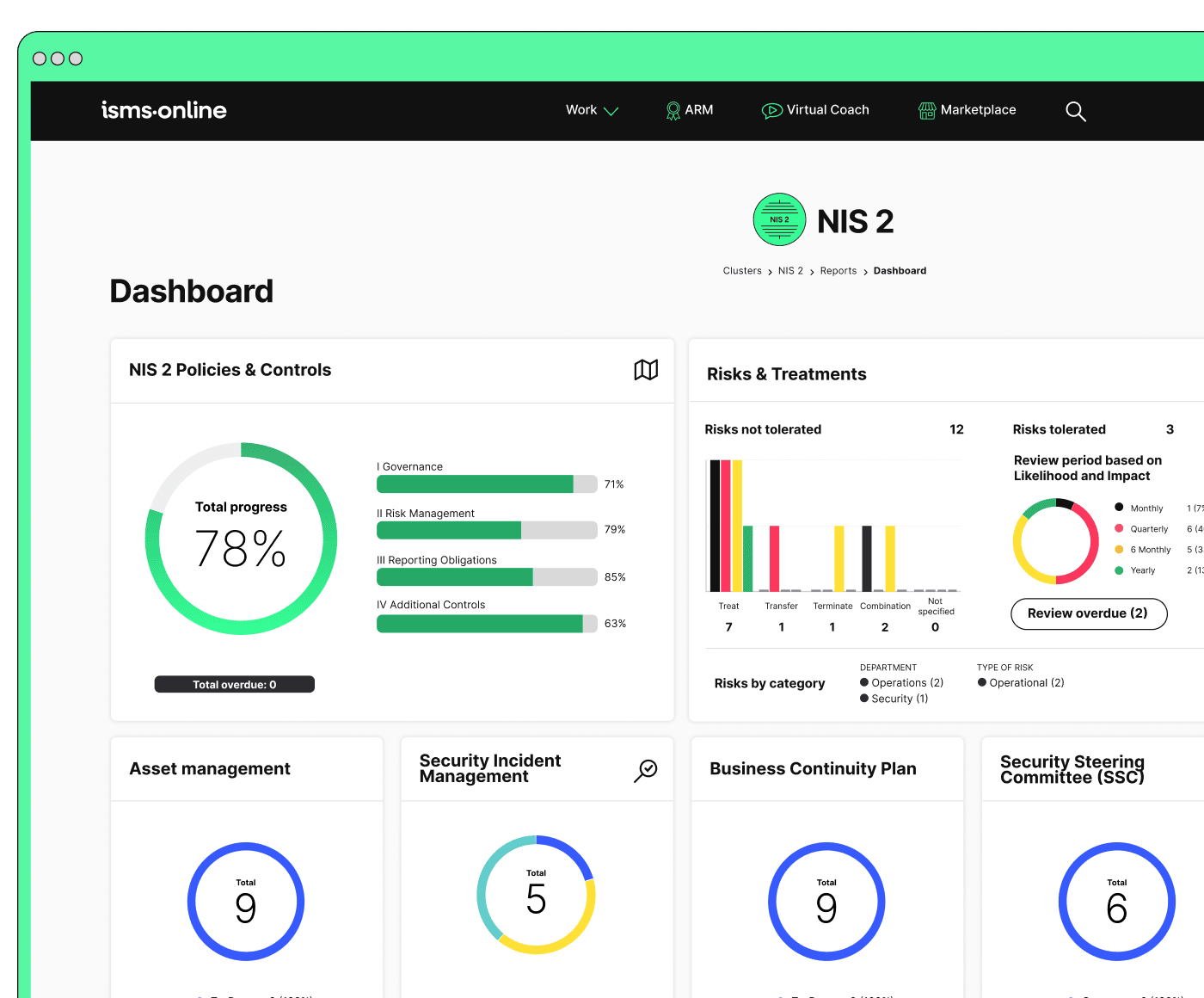
Be NIS 2-ready from day one
Launch with a proven workspace and templates – just tailor, assign, and go.
Are You Crypto-Agile-Or Setting Up for Next Year’s Nonconformity?
Major European and global regulators (NIS 2, ENISA, NIST, etc.) now expect a continuous posture of “crypto-agility.” This means you can not only select the right algorithms today, but can track, review, and shift them as the threat landscape evolves-especially with quantum risks now entering audit questionnaires (ENISA Quantum-Safe Cryptography 2024).
Crypto agility is not just future-proofing; it’s an operational discipline-where every outdated algorithm becomes a prompt, not a problem.
To be “quantum-ready”:
- Inventory every algorithm in use-identify which assets or workflows are quantum-vulnerable.
- Document a crypto-agility roadmap-aligned to NIST/ENISA updates.
- Map ownership for migration-who owns testing, validation, workflow swap.
- Simulate migrations and log decisions-even if adoption is two years away, show review cycles, test logs, and change controls.
- Version, log, and report-automate all steps in your ISMS, demonstrate to auditors that crypto agility is routine, not a box-tick.
Organisations that start this process before they’re forced to will face fewer regulator queries, lower cost of change, and greater trust from customers and investors. Those who fail, or whose ISMS cannot evidence agility, will accumulate legacy debt-and scrutiny.
Will Your Audit Trail Stand Up-When Pressure Peaks?
Many compliance strategies falter not on intent but on the inability to produce up-to-date, complete, and living evidence on demand. Audit resilience depends on chain-linked, versioned, and owner-signed evidence for every cryptographic claim-especially when NIS 2/ISO 27001 audits, or investigations, run at “moving window” pace.
Audit resilience is measured not at year-end, but at the speed of a regulator’s request.
Key elements for audit resilience:
- Automated evidence logs: -every policy update, control, asset, key, training, supplier contract, and incident is traceable to source, date, and owner.
- Exportability: -auditor packs are one click away, with legacy and current views.
- Versioning and sign-off: -all changes carry owner approvals, and all assets map back to living ISMS evidence.
- Role-based access: -auditor views versus management views versus contributor logs.
- Incident-to-evidence workflow: -every incident triggers an auditable risk update, mapped control, and log entry.
The following table demonstrates the principle:
| Trigger | Risk Update | Control / SoA Link | Evidence Logged |
|---|---|---|---|
| New supplier onboard | Confidentiality risk | A.8.24, 8.10 | Supplier contract, key inventory, key logs |
| Key rotation overdue | Breach risk | A.8.5, A.8.24 | Rotation event, sign-off, policy register |
| Key compromise event | Key lifecycle escalation | A.8.31, A.7.10 | Incident register, owner response, audit pack |
Strong ISMS platforms (like ISMS.online) have “audit at your fingertips”-role-based dashboards showing completeness, timeliness, and version progression.
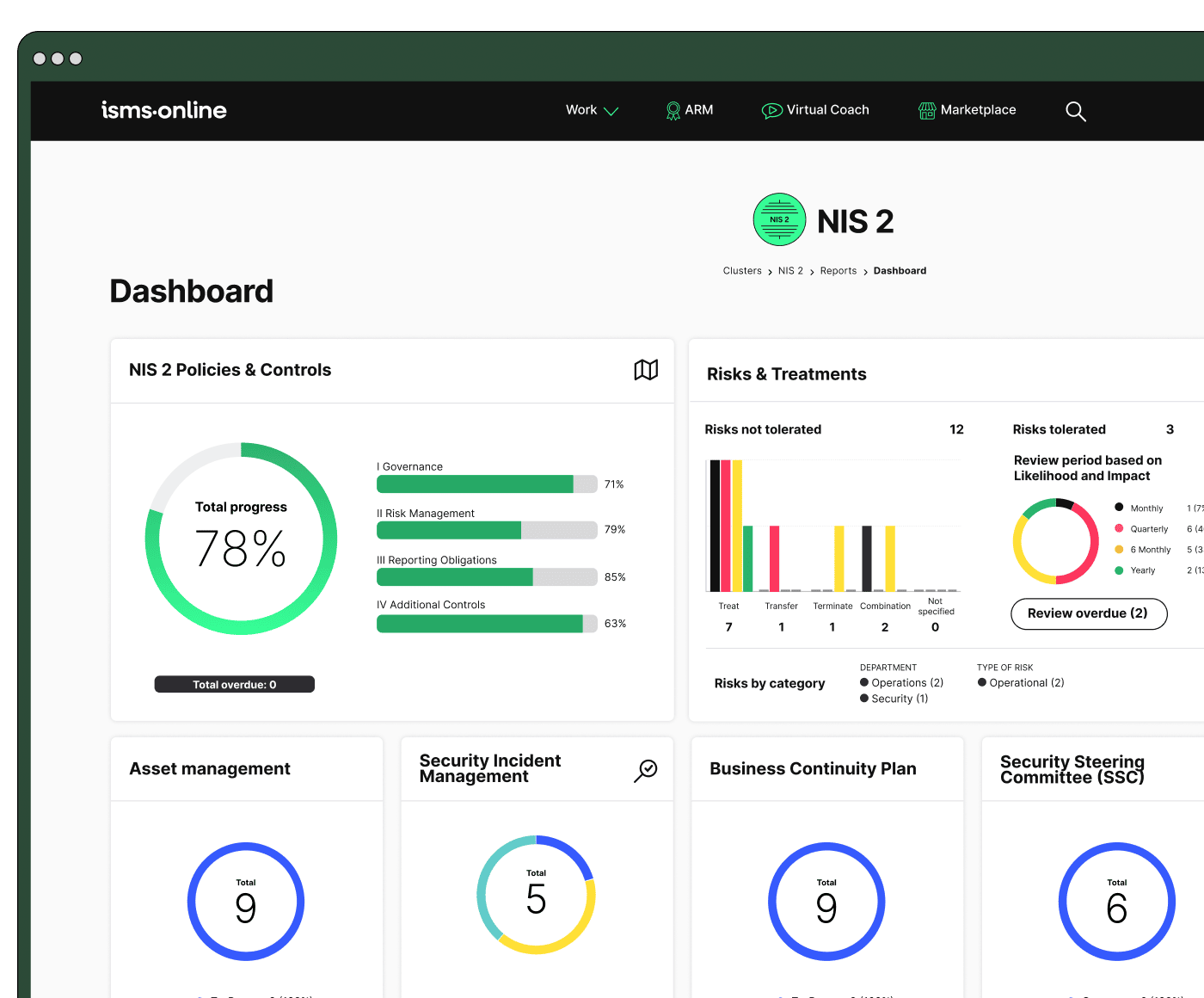
All your NIS 2, all in one place
From Articles 20–23 to audit plans – run and prove compliance, end-to-end.
Is Your Team-And Supplier Base-Trained to Be Your First Line of Crypto Defence?
No cryptographic policy survives a team (or third-party supplier) that isn’t actively engaged, trained, and regularly tested. Audit-winning teams maintain current, role-specific, and evidence-backed training regimes-mirrored across supply chains.
Compliance is owned not just by the CISO, but by every hands-on admin, vendor, and business stakeholder who manages or approves cryptographic assets.
Four essentials for training:
- Role-driven, versioned learning assignments-aligned to every staff member and supplier with access to cryptographic operations.
- Scenario-based drills-“live” recovery simulations, key compromise exercises, scheduled and logged.
- Supplier training and attestation-proof uploaded into your ISMS.
- Audit-ready, mapped registers-completion, incident participation, and refresher dates tied to team and supplier records.
KPIs that matter most to practitioners include:
| KPI | Target Benchmark | Evidence Required |
|---|---|---|
| Quarterly training (%) | ≥ 95% (all privileged) | Logs, sign-offs |
| Annual drill participation | 2+ per year (per role) | Drill/event completion logs |
| Supplier training tracking | 100% on onboarding/change | Supplier docs/attestations |
| Response test readiness | 100% tested, quarterly | Drill logs, incident records |
Missing or outdated training records signal systemic risk to auditors and regulators, regardless of technical controls.
Make Cryptography Your Leadership Signal-Not a Bottleneck
Don’t just “clear” the compliance bar-raise it to a level where your organisation stands as the reference point for maturity, board trust, and market credibility.
Leading teams and CISOs operate cryptography as a living, operational discipline:
- Mapped, plain-language policies: -ready for your auditors and board.
- Live asset-to-key inventory: -owners, status, controls, and logs all discoverable.
- One-click export packs: -ready for internal, supplier, or regulatory review.
- Role-based evidence dashboards: -every task, approval, and exception tracked.
Platforms like ISMS.online fold these essentials into a natural workflow, letting you operationalise cryptography as a competitive advantage: continually compliant, breach-resilient, and poised for the next audit-not scrambling at the last minute.
When resilience and audit readiness are baked in, trust flows to you-customers and auditors alike will know you can prove every claim, every day.
Schedule a session to see how ISMS.online makes continuous cryptography resilience practical-from mapping assets, contracts, and suppliers, to automating logs and training, to prepping for quantum readiness. Don’t let cryptography become your next bottleneck; make it your leadership hallmark.
Frequently Asked Questions
What makes “state-of-the-art” cryptography under NIS 2 a whole-business obligation-not merely a technical box-tick?
State-of-the-art cryptography under NIS 2 means your organisation can prove, at any moment, which assets are encrypted, by what exact methods, and who owns the risk and ongoing review-not just that you use “approved” algorithms. The NIS 2 Directive, especially Articles 20 and 21, expects this to be actively governed across business lines: the board, legal, and operations are all accountable alongside IT. ENISA’s latest guidance reinforces that state-of-the-art is defined by up-to-date controls, traceable ownership, and a live ability to export evidence to auditors, not by static policies or spreadsheets.
For the board, this makes cryptography a governance issue-with personal accountability in the event of a regulatory breach. Legal teams must evidence GDPR compliance, international data transfers, and incident reporting, relying on unbroken audit trails and assigned owners. Every operational function is required to know who’s responsible, how to escalate if exposure is detected, and what methods protect sensitive information. IT provides the technical foundations, but the obligation is shared at every tier.
The shift to state-of-the-art cryptography means the entire organisation stands behind encryption, not just the IT desk-risk is distributed, but so is control.
Table: Business Roles in State-of-the-Art Crypto
| Role | Key Responsibilities | Accountability Scope |
|---|---|---|
| Board | Oversee, review, demand evidence | Compliance proof, risk sign-off |
| Legal | Translate law to technical controls | GDPR, contracts, data transfers |
| Operations | Ensure process and staff aware/engaged | Escalation, reporting, training |
| IT | Run controls, log events, export evidence | Technical execution, lifecycle review |
How do ISO 27001:2022 and NIS 2 translate to evidence auditors and regulators actually demand?
Modern requirements turn cryptography controls into a continuous audit lifecycle. ISO 27001:2022 (A.8.24, A.8.25) and NIS 2 Art 21 expect not mere policies, but operational proof at each stage:
- Signed and board-reviewed policies: -not just IT-generated, but formally owned, reviewed, and re-signed (typically annually or at each major change).
- Asset–key–owner mapping: -for every protected data system, showing what method secures it, who owns the key, and when it was last reviewed.
- Automated, real-time activity logs: -not after-the-fact notes or ad hoc spreadsheets, but system logs covering key creation, access, rotation, destruction, and any failed or suspicious actions.
- Review and remediation trails: -evidence that owners and the board actively monitor and update controls based on periodic schedules and incident response drills.
- Traceability: -a seamless walk, on demand, from any relevant clause (NIS 2, contract, GDPR) to the specific control, owner, asset, and supporting log entries.
Auditors now ask, Show live records-from policy to person to asset-with time-stamped events and assigned review dates. Static documents no longer suffice.
Table: Compliance Proof Demanded Under ISO 27001 & NIS 2
| Requirement | What’s Practised | Evidence Auditors Seek |
|---|---|---|
| Policy | Board-reviewed, refreshed | Signed docs/SoA; tracked review cycles |
| Owner Mapping | Name, role per asset/key | Inventory screens; role assignments, logs |
| Logging | Automated event records | ISMS/GRC exports; key lifecycle logs |
| Reviewing | Scheduled, remedial review | Review logs, dashboard screenshots, export |
What does a compliant key management lifecycle look like, and where do organisations typically miss the mark?
A NIS 2/ISO 27001-compliant key management lifecycle means you can show, for every key and asset: how the key was generated, who used it (and when), how it’s rotated, how it’s stored, and when-plus how-it’s reliably destroyed.
- Generation: Keys are produced using standardised, documented, tamper-resistant procedures by authorised personnel, with logs and owner assignation.
- Use: Each key’s usage is limited to those with permissions, and every access is logged. Revoked or changed access is shown in audit trails, especially after staff or supplier changes.
- Storage: Keys live in approved hardware security modules (HSMs) or vaults. No storing on desktops/code. Access logs and integrity/availability reviews are routine.
- Rotation: There’s an enforced, logged schedule for renewing/replacing keys-plus logs for manual (“triggered”) changes after compromise or staff transitions.
- Destruction: Keys are removed by process, not guesswork: destroyed both digitally and physically, with proof, logs, and often dual sign-off.
The most common failure points? Orphaned or reused keys after cloud migrations or departures; undocumented “legacy” keys; and a lack of routine reviews, with roles or schedules drifting as the business changes. Automated ISMS (such as ISMS.online) surface these weak points, flag overdue actions, and make audits routine rather than fire drills.
Table: NIS 2 / ISO 27001 Key Management Lifecycle
| Phase | Required Action | Key Evidence (for audit) |
|---|---|---|
| Generation | Secure, documented | Keygen logs, owner assignment |
| Use | Permitted & tracked | Access logs, permission roles |
| Storage | Vaulted, reviewed | HSM/vault logs, config reviews |
| Rotation | Scheduled, evidenced | Rotation logs/alerts, admin proof |
| Destruction | Tracked, logged, signed | Deletion logs, witness sign-off |
How do you keep cryptographic control and visibility when keys and data move to SaaS and public clouds?
Outsourcing data or keys never outsources responsibility. Under NIS 2, all organisations are still accountable for crypto controls, audit chains, and regulatory review, regardless of SaaS/cloud vendor status. To keep that control:
- Require contracts with Customer Managed Keys (BYOK/CMK), audit log access, and data residency: as essentials.
- Demand evidence: -audit logs, last rotation dates, role assignments-from vendors, and keep them in your ISMS (not just vendor portals).
- Regularly review and log findings for every supplier’s crypto claims, risks, and handoffs.:
- Map every SaaS/Cloud asset and key on your register: -who controls/key stores/rotates; when it was last checked/tested.
- Assign staff to own supplier reviews, update records after changeovers, and trigger escalation for any irregularity.:
Regulators don’t accept “we assumed it was encrypted”-you need a chain of logs, contract clauses, owner reviews, and evidence crossing between your team and suppliers.
Table: Supplier Control Register
| Supplier | Key Custody | Last Rotation | Audit Log On File | Residency | Contract Clause |
|---|---|---|---|---|---|
| CloudX | BYOK (CMK) | 2024-04-20 | PDF attached | EU-only | Yes |
| SaaS Y | Vendor-only | 2023-12-15 | Not provided | Global | No |
What is crypto-agility, and why must every organisation now plan for a quantum cryptography overhaul?
Crypto-agility is your organisation’s living capacity to identify all places cryptography is used, establish migration plans and owners, and rapidly shift away from ageing algorithms (like RSA/ECC) to quantum-safe alternatives as threats or standards change. While post-quantum cryptography (PQC) is not yet widely in use, ENISA, NIST, and NIS 2 all require boards and CISOs to treat quantum risk as real, rising, and needing active plans now.
- Run annual quantum-readiness reviews: Show each asset’s cryptographic algorithm, assign a migration owner, and export your plan for auditor/board review.
- Simulate migration exercises (“dry runs”): Test swapping algorithms/tooling, log outcomes-even before PQC is deployed.
- Log “quantum risk” per data/process: Focus on long-lived assets or cross-border transfers.
- Keep crypto-agility dashboards up to date, tracking quantum migration plans, last reviews, and board-facing actions.:
This moves quantum cryptography off the “future” list and into current compliance, risk, and board agendas.
Table: Crypto-Agility Dashboard Fields
| Asset | Algorithm | Quantum Risk | Migration Owner | Last Review | PQC Plan |
|---|---|---|---|---|---|
| HR Archive | AES/RSA | High | Security Lead | 2024-03-10 | Drafted, untested |
| API Z | TLS 1.3 | Medium | CTO | 2024-02-05 | Tested, ready |
How should you structure and deliver “audit-ready” cryptography evidence? What does perfect audit preparation look like?
Audit-ready cryptographic evidence is defined by its linkage, readability, and traceability for anyone at any time-auditor, regulator, or board. A top-tier ISMS (such as ISMS.online) should let you instantly export an “evidence pack” connecting:
- Signed and versioned policies: -with review dates, board or management sign-off, and change history.
- A live inventory: mapping every asset to its encryption key, named owner, and review/rotation/remediation cycle.
- Logs of lifecycle events: -native, non-editable records of key creation, rotation, use, and destruction, all actor-attributed and time-stamped.
- Training and drill participation logs: for anyone with cryptography duties.
- Supplier contracts and attestations: -highlighting BYOK/CMK clauses, last review, residency/sovereignty controls.
- Cross-links to controls, risks, SoA, and contracts: for end-to-end traceability.
A robust ISMS surfaces overdue reviews, flags missing links, and can output both board-level and technical evidence seamlessly.
Table: Cryptographic Audit-Ready Evidence Map
| Folder | Contents | Linked Entities |
|---|---|---|
| Policies & SoA | Signed docs, review records, sign-off sheets | Asset-key inventory |
| Key Inventory | Asset-to-key maps, owner assignments, history | Risk register |
| Lifecycle Logs | All create/use/rotate/destroy events | Owner, asset |
| Training Records | Staff completions, incident drills | Staff, roles |
| Supplier Contracts | BYOK/CMK proof, reviews, residency, SLA excerpt | Asset, credentials, board |
When ready to eliminate cryptographic guesswork, ISMS.online gives you mapped encryption, traceable owners, and audit-ready evidence-primed for whatever comes next in the cryptography and regulatory landscape, from NIS 2 board reviews to quantum risk.






