





































Why Are Termination and Change Controls Central to NIS 2 Compliance and ISO 27001 Resilience?
Every shift in your organisation-whether a departure, role change, or supplier rotation-creates a narrow window where risk spikes, oversight falters, and compliance can be tested. These moments, once delegated to HR or left as checkboxes downstream, are now direct board-level accountabilities under NIS 2 and ISO 27001. Today, even the simplest offboarding mistake or change without documentation can trigger not only a data breach, but also a regulator’s call for personal liability (ENISA, 2023, CJEU Judgement C-601/15).
It isn’t the leaver who causes the breach-it’s the ghost they leave behind.
A single missing deactivation, uncollected badge, or lost device can-and frequently does-turn routine personnel changes into compliance fire drills. Whether that risk fuels an external incident or the sudden discovery of dormant admin access, NIS 2 and ISO 27001:2022 now demand more than process: they demand sealing every exposure, logging every action, and producing ironclad evidence on demand.
The updated accountability model means you can no longer treat offboarding or access change as a back-office afterthought. Any process gap is traceable to executive oversight-and the expectation from auditors and regulators is a living, exportable audit trail with clear accountability for each event.
Key takeaways:
- Every offboarding or access change is a potential compliance exposure-prove closure, or explain it to the regulator.
- Evidence and logging requirements are not “nice-to-haves”-they’re explicit, actionable obligations, tiered from operational teams up to the board.
You can turn these compliance requirements from a source of stress into proof-points for resilience and audit readiness, but only with a joined-up, proactive process.
What Are the Most Overlooked Offboarding and Change Risks That Sabotage Compliance?
It’s tempting to aim every cyber investment at technical exploits or perimeter threats, but post-change breaches almost always originate with process breakdowns-not technical wizardry (CISA Alert, 2022).
Dormant Accounts: The Digital Skeleton Key
Accounts left open for staff or suppliers-especially privileged or administrator logins-become free entry points for internal and external threat actors. When offboarding relies on memory or manual checks, “ghost” accounts multiply, increasing risk over time and often remaining untouched until a breach throws them into the spotlight.
Asset Recovery: A Blind Spot in Remote Work
The hybrid and distributed work model means laptops, mobiles, tokens, and physical credentials are scattered. Failure to collect or retire assets turns them into lingering liabilities. Each device outside your visible control could house sensitive data or act as a launchpad for attackers.
Supplier & Contractor Offboarding: Hidden Friction Zones
Supplier exits often fall between contract management and IT oversight. Many companies focus on employee processes and overlook rigorous deactivation and data handover protocols for suppliers and third-parties-even though contract and data access often persist well after work is complete (ENISA Supply Chain Security Guidance).
Unassigned Ownership: “No One’s Problem” Becomes an Incident
When access and asset recovery aren’t assigned to clear roles-or if a process is assumed to be “somewhere in HR or IT”-gaps multiply. With NIS 2, ambiguity isn’t just a cultural risk; it’s a compliance failure.
The longer an account lingers, the more clues it leaves for a breach waiting to happen.
Late discovery is the rule, not the exception. Combine forgotten accounts with unrecovered assets and you’ve created a roadmap for both external attackers and internal mistakes. With GDPR and growing cross-border privacy laws, a missed termination can cascade into reportable breaches and costly regulatory penalties (EDPB Guidelines).
Anticipate the risk, automate ownership, and close the door the first time.

Master NIS 2 without spreadsheet chaos
Centralise risk, incidents, suppliers, and evidence in one clean platform.
How Does NIS 2 Article 10.3 Align with ISO 27001-and What’s the Impact on Your Organisation?
NIS 2 Article 10.3 raises the bar from “X HR task, Y IT change” to joined-up, traceable governance. This means offboarding, onboarding, and role changes-all across employees, suppliers, and partners-must be mapped to controls, evidence, and continuous review (ENISA NIS 2 Implementation, ISO 27001:2022).
ISO 27001:2022 enforces this as an auditable choreography between HR, IT, legal, procurement, and the board. The controls that matter most:
- A.5.11 (Return of Assets): Catalogue and track every asset, from laptops to badges, with checklists and signed returns.
- A.5.18 (Access Rights Review): Automated or managed access reviews-every change triggers a review and leaves a log.
- A.6.5 (Responsibilities After Termination): Evidence persists; leavers must sign, and the organisation must archive proof-NDAs count.
- A.8.2 (Privileged Access Rights): Higher standard for admin and privileged users-faster deactivation, stronger review.
Quick Reference Table for ISO 27001 & NIS 2 Alignment:
| **Expectation** | **How It’s Met in Practise** | **ISO 27001 Control Ref** |
|---|---|---|
| Asset handback (all staff) | Live checklists, log + countersign | A.5.11 |
| Rapid account change | Automated deactivation, log proofs | A.5.18, A.8.2 |
| NDA/conduct obligations | Signed exits, stored evidence | A.6.5 |
| Supplier closure | Offboarding process = employee | A.5.11, A.5.18 |
A robust ISMS, whether orchestrated via platform or policy, must support this end-to-end: triggers, tracking, and traceable outcomes. This stops compliance becoming an afterthought and transforms it into a repeatable business strength.
An audit pass isn’t a one-off; it’s the guarantee that every asset, every access, every agreement, every time, is locked down with evidence.
Supplier exits must receive the same rigour as employees: asset revocation, data closure, contract sign-off, access termination. Don’t improvise-standardise and automate.
What Does Regulator-Ready Offboarding and Change Look Like in Practise?
It’s all about orchestration-not fire drills or post-hoc evidence gathering. Modern JML (Joiner–Mover–Leaver) pipelines, supported by NIS 2 and ISO 27001, demand processes that are trigger-driven, cross-functional, and deeply logged. Action starts the moment a change is anticipated-not after an account is forgotten.
When audit day arrives, can you provide the proof, or only the promise?
How JML Runs in a Compliant Organisation:
- Trigger event defined: Exit, transfer, or supplier completion logged as soon as notified-never backdated.
- Sequencing, not siloing: Asset returns, account revocation, and legal checks are parallel tasks allocated to the right owner, not hidden in a manual handover.
- Accountability logged: Each step is timestamped, countersigned where needed, and closed in sequence.
- Exception awareness: Every deviation-a missing device, delayed account removal-triggers escalation, with sign-off or risk acceptance required. “Unknowns” are counted, not obscured.
- Unified archive: Proof lives in a single compliance backbone; no hunting across drives, emails, or external systems.
Real-World Log Example (Ready for Regulator Review):
| **Event** | **Actor** | **Timestamp** | **Action** | **Evidence** |
|---|---|---|---|---|
| Resignation received | HR | 2024-06-05 | JML trigger to IT, security, procurement | Ticket #A0124, email log |
| Badge collected | Facilities | 2024-06-10 | Badge disabled, signed by leaver + manager | Signed form, system log |
| Account closed | IT | 2024-06-10 | Google/O365 & Okta de-provisioned, admin review | Automated deactivation |
| NDA reminder sent | HR | 2024-06-12 | Legal sign-off, NDA archived | NDA PDF, ack. receipt |
| Asset missing | IT | 2024-06-14 | Exception triggered, exec risk acceptance | Exception log, email |
Every step is provable, exportable, and ready for review within minutes-not hours.
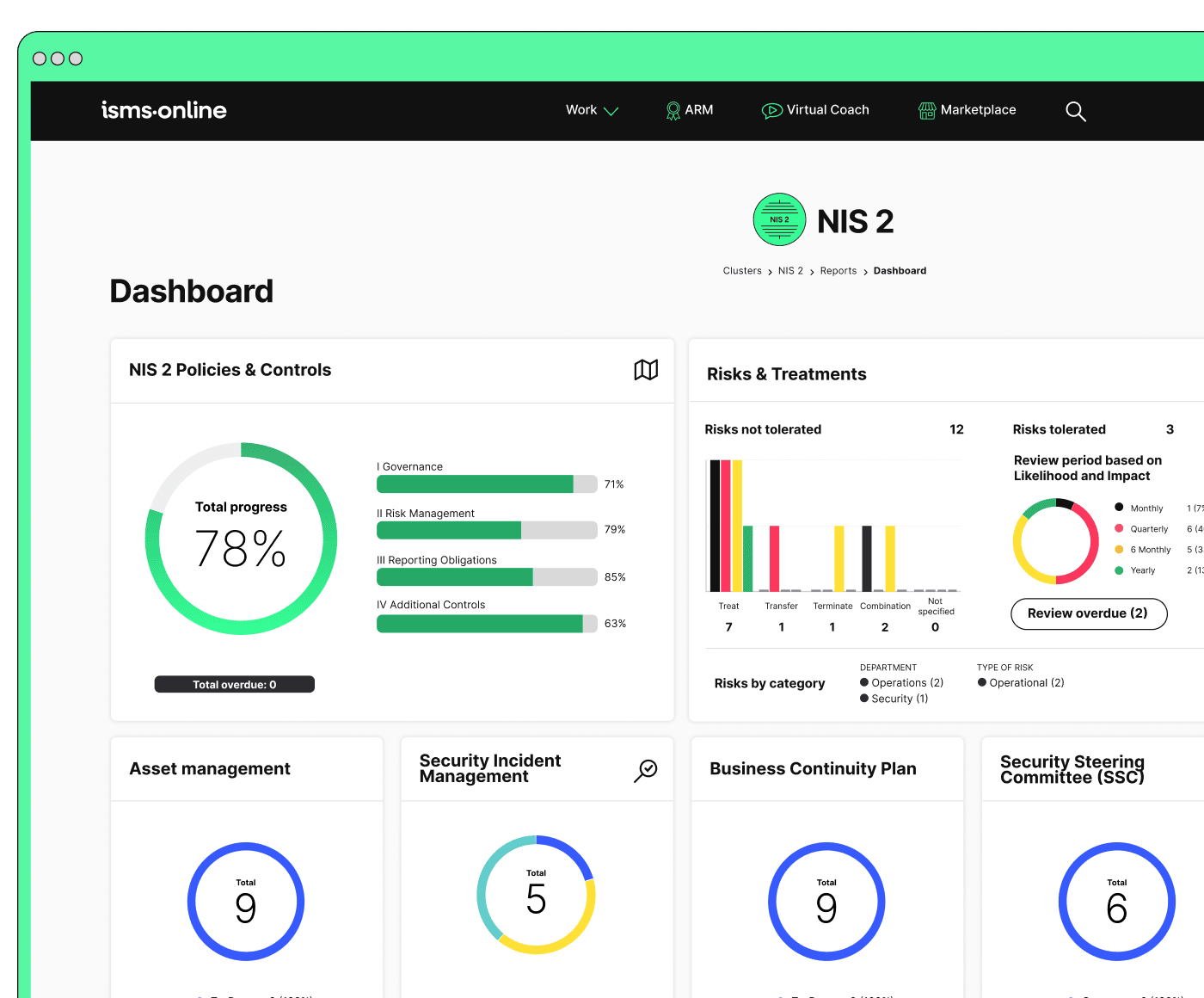
Be NIS 2-ready from day one
Launch with a proven workspace and templates – just tailor, assign, and go.
How Does ISMS.online Create a Closed-Loop, Automation-Driven JML Process?
Manual tracking falls short. ISMS.online reclaims control-turning every JML event into a cross-department, automated, auditable closed loop (ISMS.online Access Control Management).
With ISMS.online, JML is not a checklist; it is a live system where every step, owner, sign-off, and exception is logged and export-ready.
Key Features for Audit and Regulator Trust:
- Automated workflows: Staff and supplier changes automatically spin up pre-defined tasks for HR, IT, legal, and procurement. Risk of “forgotten” handovers drops.
- Live API integrations: Synchronise changes from HR/IT/master data (Azure AD, Okta) in real time. Accounts deactivate instantly; permissions don’t linger (JumpCloud Guide).
- Asset management: Unique asset assignment and auditing-progress visible on dashboards. End-of-life devices, keys, or credentials flagged and tracked until resolved (ISMS.online Asset Management).
- Escalation paths: If delays, losses, or questions arise, automated workflows prompt escalations and log all actions-giving management a real-time pulse.
- Executive dashboards: CISO and board can monitor live closure/completion rates, overdue sign-offs, and trend exceptions across quarters or audits (ESG Validation Report 2023).
Dashboards don’t just show off closing tasks-they expose open exposures, highlight exceptions, and ensure nothing is left to drift.
The ISMS.online environment replaces manual logs with live evidence. Roles and responsibilities are explicit-no “someone else’s problem” drift.
What Does Real Traceability Look Like? (Mini-Tables to Satisfy Any Auditor)
For compliance teams and auditors, traceability is everything. The ability to reconstruct every step, actor, exception, and outcome differentiates a resilient ISMS from a fragile one.
Sample Traceability Table:
| **Trigger Event** | **Risk Update** | **Mapped Control / Reference** | **Evidence Output** |
|---|---|---|---|
| Leaver exit | Dormant privilege risk | A.5.18/A.8.2 / NIS 2 Art. 10.3 | Deactivation log, asset checklist |
| Supplier departure | Orphaned data/systems access | A.5.11/A.5.18 / NIS 2 | Contract sign-off, offboarding ticket |
| Role change | Over-privileged entitlements | A.5.18/A.8.2 / NIS 2 | Access review approval, SoA log |
| Exception escalation | Missing asset/unresolved account | Exception/management acceptance policy | Exception report, risk log |
Each event links to controls (for SoA mapping), risk update, and hard evidence (time/date/user). If the process fails, the incident is logged for improvement and audit discussion.
Best-practise logs don’t hope you remember; they ensure you never have to.
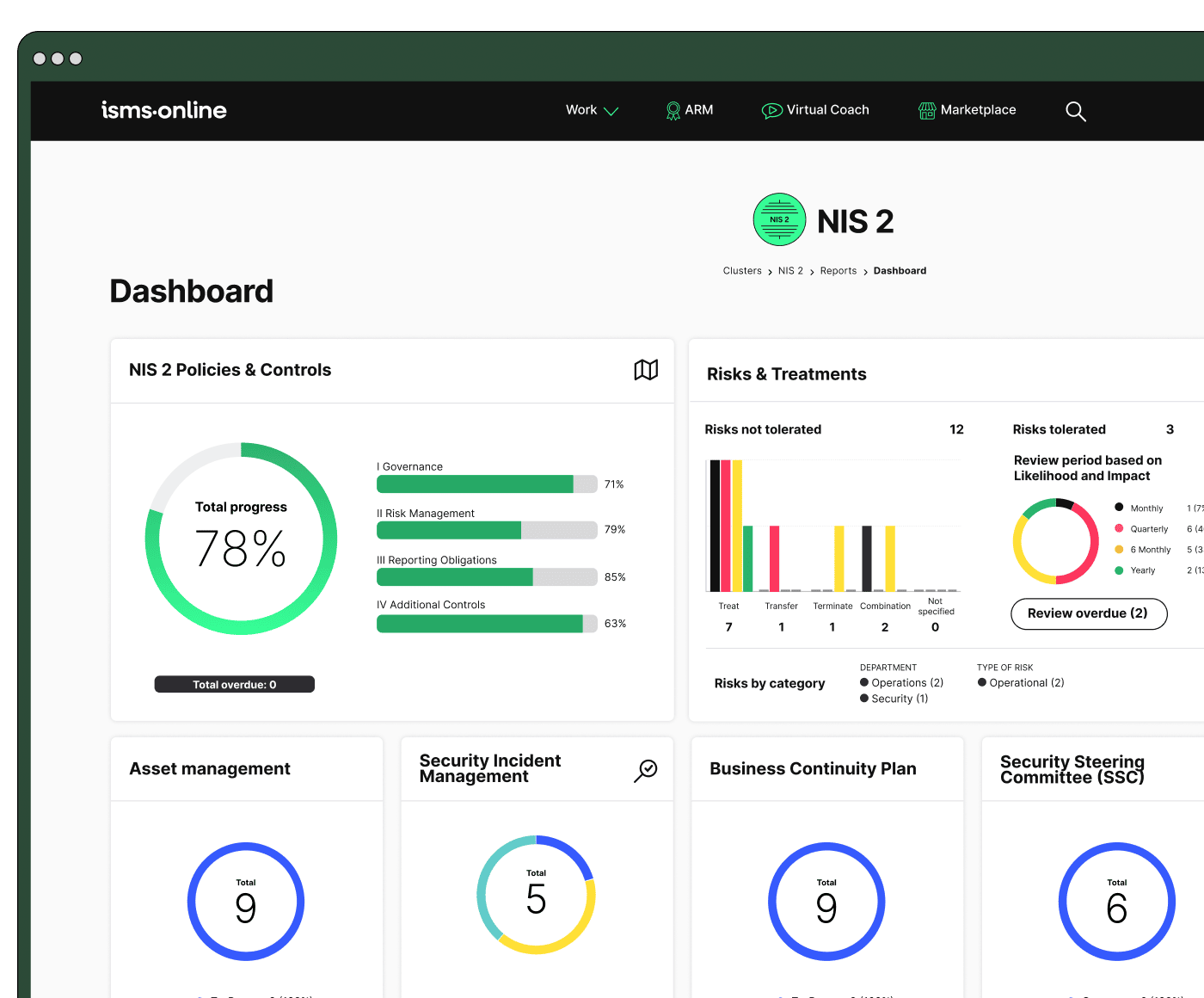
All your NIS 2, all in one place
From Articles 20–23 to audit plans – run and prove compliance, end-to-end.
How Do You Keep Your Offboarding-and Your Evidence-Ahead of Regulator Scrutiny?
Static policies are not enough. NIS 2 and ISO 27001:2022 pivot compliance to continuous, review-driven improvement-with clear escalation and KPIs visible to the board (ENISA Implementation Guide, 2023). To avoid drift, attrition, or staff fatigue, bring accountability to the surface:
Quarterly and event-driven review cycles
All JML actions and exceptions undergo scheduled review-by control owner as well as internal audit. High-value and privileged roles get extra scrutiny, and process exceptions are highlighted in advance of audits.
Automated escalation-and responsive oversight
ISMS.online’s reminder engine chases overdue actions, instantly pushes exceptions to management, and sends lagging items to dashboards. This converts risk into visibility and accountability, before exposure becomes a headline.
Ownership mapping-responsibility for every task
When a step is missed, the platform captures every attempt to close the gap. Root causes and follow-up are documented, supporting both real-time correction and learning loops for future improvement.
Incident-driven learning cycles
Failures to recover assets, close accounts, or enforce NDA compliance enter your risk register, escalating to policy review and SoA updates. Each incident is feedback for the broader system-not a “tick” but a living process.
Board-level performance and KPIs
Leadership regularly reviews critical numbers: open offboarding actions, exception frequency, completion rates, and recurring problem accounts. These aren’t just “managerial hygiene”-they become evidence in external audits and regulatory reviews (Demo Days ISMS Audit Guide).
Prove resilience with your dashboard, not just your policy file.
Audit logs and exception registers support reporting, root cause analysis, and measurable improvement.
How Do You Make Audit-Ready, Real-Time Compliance a Reality?
Seeing compliance in action takes the guesswork-and the anxiety-out of the equation. ISMS.online’s JML flows deliver:
Live risk dashboards-see exposures before they become incidents
Monitor asset returns, access closures, and exceptions in real time. Gaps become visible, actionable, and classified by criticality.
Pre-built logs and templates-test audit readiness before external review
Run dry audits with our downloadable templates, logs, and checklists. Identify and remediate bottlenecks or gaps with your own team-in your own flows.
Automated workflows-remove manual failure points
Assign, progress, sign, and log every action from the moment of change. Every actor-HR, IT, board, supplier-stays in the loop; ownership is always clear.
Peer learning and benchmarking-how others gained resilience
Case Example:
A SaaS company faced recurring last-minute offboarding chaos. After integrating ISMS.online’s dashboards and workflows, their audit-prep time dropped by 50%, and issue closure rates on leaver tasks rose from 70% to 98%.
Now, every offboarding, every asset, every NDA, every time, is tracked and provable-no more panic.
Ready to inspect
For any audit, regulator, or board request, export all logs and evidence in a few clicks-with references to mapped controls and events included.
Protect Every Departure, Promotion, and Supplier Cycle-Make Compliance Proof, Not Hope
Don’t leave compliance to chance or memory. Every joiner, mover, and leaver action is a potential exposure until closed and logged. With ISMS.online, you turn routine changes into living audit records: automated, reviewable, export-ready.
Empower your team today:
Convert every personnel and supplier transition into a competitive advantage. With audit-grade processes and dashboards, resilience is no longer aspiration-it’s operational fact. Take the next step and see your compliance proof in action.
Frequently Asked Questions
What are the most common compliance failures during staff or supplier departures, and why do they present critical risks at the board level?
The most frequent compliance breakdowns during offboarding arise from simple, recurring oversights: access rights remain active after a staff member or supplier departs; issued devices or confidential materials are not recovered; and no one can prove when or by whom closure steps were completed. Many organisations still rely on memory, disconnected spreadsheets, or untracked handover notes rather than closed-loop processes. Modern frameworks like NIS 2 and ISO 27001:2022 have ended the era where these lapses were a mere technical nuisance-they are now direct board liabilities. Unrevoked accounts or lost assets can trigger audit failures, data breaches, or regulator interventions that name board members for lacking effective oversight. Under NIS 2, leadership must show evidence that all joiner, mover, and leaver events are robustly managed, signed-off, and tracked-across both internal staff and external suppliers.
Every unclosed account after a departure remains a silent risk-until the board can prove it’s locked down.
Why “business as usual” has changed
- NIS 2 Article 20 and 10.3: Mandate that board-level leadership takes responsibility for all security transitions, not just the technical teams.
- ISO 27001:2022 audits: Auditors require board verification that offboarding controls are consistently followed and evidenced; intention or “best effort” no longer suffices.
- Both staff and supplier transitions are equally covered-grey areas on third-party exits are closed.
How do ISO 27001:2022 Annex A and NIS 2 Article 10.3 reinforce controls for offboarding and role change?
ISO 27001:2022 Annex A and NIS 2 have grown tightly interconnected, both requiring rigorously documented controls for every transition-whether for staff or suppliers. ISO 27001:2022 Annex A controls such as:
- A.5.11 (Return of assets): Mandates complete recovery or formal disposal of company-issued assets (laptops, security cards, paper files).
- A.5.18 (Access Rights): Requires timely revocation of all digital and physical access for leavers.
- A.6.5 (Responsibilities after termination): Assigns accountability for any open issues or delayed asset returns after a contract ends.
- A.8.2 (Privileged Access Rights): Mandates a review and reset of all privileged access-not just basic accounts-upon role change or offboarding.
NIS 2 Article 10.3 turns these technical measures into explicit legal expectations, requiring organisations to provide evidence of closure for every account, asset, and contract-often across multiple departments and system boundaries. Both frameworks now expect end-to-end workflows where every step (notification, access removal, asset collection, exception) is logged, timestamped, and linked to responsible parties. Roles in HR, IT, facilities, and supply chain are all involved in the compliance chain.
Joined-up compliance: Key mapping table
| Trigger | NIS 2 Legal Expectation | ISO 27001:2022 Control | Typical Evidence |
|---|---|---|---|
| Staff departure | Immediate access removal, assets returned | A.5.18, A.5.11 | Task log, asset checklist, approval trail |
| Role change | Privilege and asset re-assessment | A.8.2, A.6.5 | Before/after access log, review summary |
| Supplier end | Bidirectional closure (all accounts/assets) | A.5.11, A.6.5 | Destruction cert., signed contract closure |
What evidence do auditors and regulators now demand for compliant offboarding?
Evidence is the new gold standard: living system logs, signed closure trails, and proactive reporting are replacing static checklists and best-intent policies. Auditors and regulators now look for:
- End-to-end event logs: Proving the sequence from offboarding trigger (notice received) to confirmed account closure and device return.
- Multi-party digital signoffs: Not just HR or IT but supply chain managers, facility coordinators, and external partners must log and timestamp their actions.
- Exception handling: Any non-recovered asset or delayed closure requires a logged incident, assigned action, evidence of remediation, and root cause tracking.
- Third-party closure proof: Disabling supplier accounts, confirming data erasure/destruction, and contract sign-off must all be supported by official documents, evidence files, or signed email threads.
Centralised compliance platforms like ISMS.online let organisations consolidate this evidence in one location, link each event to its responsible party, and surface exceptions automatically-so the answer to every audit request is ready and trustworthy.
Modern compliance is about showing your receipts, not just your intentions.
How does ISMS.online automate and evidence bulletproof offboarding and JML compliance?
ISMS.online transforms every offboarding or role-change event into a closed, auditable loop-assigning, tracking, and evidencing every required control for NIS 2 and ISO 27001:2022. Here’s what organisations gain:
- Task orchestration: As soon as a leaver or supplier exit is logged, workflow tasks are automatically assigned to HR, IT, and all relevant teams. Each gets notified with deadlines and escalation triggers.
- Integrated event logs and dashboards: Every access removal, asset return, and privilege review is automatically timestamped, system-logged, and linked back to the transition event.
- APIs and integrations: Tight connections with Azure AD, Okta, and core HR/supplier management systems ensure that digital account status matches log records, closing system “blind spots.”
- Exception and feedback management: If an asset is missing or a step is delayed, ISMS.online flags the issue, logs an incident, and prompts management for remediation (improving the process rather than letting compliance drift).
- Supplier offboarding: Contract closure, data destruction certificates, and dual-systems access reviews are required steps, and all are captured in the workflow.
Board-level dashboards offer real-time status, showing trends, overdue items, exception spikes, and positive closure rates to support management reviews and audits. This shifts compliance from a once-a-year scramble to an always-on culture of control.
Traceability workflow table
| Offboarding Trigger | Risk/Action | Annex A Control(s) | Evidence Captured |
|---|---|---|---|
| HR logs leaver | Open risk: leaver | A.5.18, A.5.11 | Assigned tasks, notifications sent |
| IT removes access | Risk reduction | A.8.2 | Account closed, log timestamped |
| Device not returned | Exception, escalate | A.6.5 | Incident log, management review note |
| Supplier contract end | Data/account closed | A.5.11, contract notes | Destruction cert., signed off email |
What makes supplier and third-party offboarding especially high-risk, and what proves robust closure to regulators?
Supplier offboarding amplifies compliance risk: Unlike staff departures, supplier exits frequently span legal, operational, and jurisdictional boundaries.
- Double-sided account and asset closure: Both your organisation and the supplier must show that all access was suspended, and assets returned or destroyed, with clear documentation.
- Contract and SLA finalisation: Closing out supplier relationships requires legal approval-contracts must be updated or terminated, with evidence linked to policy controls and risk registers.
- Cross-jurisdictional compliance: Global suppliers may require particular formats for evidence, special data deletion procedures, or multi-party signoff to meet regional regulations.
- Documentation essentials: Every step of the supplier’s disengagement-contract receipt, asset checklist, privilege log, deletion / destruction cert-is captured, assigned an owner, and logged for audit review.
ISMS.online helps compliance teams move beyond ad hoc emails or shared drives-everything is stored, linked, and accessible until a regulator or board chair asks for proof.
| Third-Party Offboarding Step | Unique Requirement | Example Evidence |
|---|---|---|
| Contract termination | Signed counterpart closure | Legal doc, scanned signature, email |
| Cloud/data access ended | Supplier deletion cert | PDF certificate, email confirmation |
| Device return | Receipt, chain-of-custody | Check-in form/photo, log time |
How does continuous traceability and scheduled review prevent “silent failure” and compliance drift?
A strong compliance posture isn’t set-and-forget-it’s achieved by relentless traceability and continuous improvement:
- Live reminders and escalations: All offboarding actions-asset returns, account revocations, contract closures-are tracked with automatic due dates and escalations for non-completion.
- Scheduled reviews: Quarterly (or event-driven) reviews aggregate KPIs, overdue actions, and incident patterns in board-ready dashboards. These spot emerging gaps (or repeat failures) before auditors do.
- Exception-to-improvement loop: Missed or late closures aren’t merely patched-they trigger improvement actions linked to risk controls, policy changes, and process updates.
- Audit preparedness: Every process step and closure-success or exception-is logged, forming a continuous evidence base for both planned audits and urgent reviews after incidents.
The best audit result is when every step-and every fix-is already documented, live and accessible to your leadership.
How can you immediately test and prove your offboarding compliance strength?
- Simulate a real offboarding: Use ISMS.online to retrace a recent staff or supplier exit; verify digital and physical evidence for every required step. Can you prove-without gaps-each access removal, asset return, and contract closure?
- Export logs for audit simulation: Download transition logs; map them directly to ISO controls and NIS 2 requirements. Are exceptions tracked and visible? Is every step signed-off?
- Flag and remediate gaps: Any missing pieces-unsigned checklists, absent timestamps, or unclosed tickets-should be immediately assigned, managed to closure, and used to drive process refinement.
- Benchmark your rates: Check closure speed and exception frequency against sector averages (ISMS.online provides anonymized comparisons).
- Schedule a board-level review: Pull a summary dashboard to demonstrate closure rates, exception trends, and improvements-arming you for auditor or board questions in advance.
With a system like ISMS.online, you move your organisation from trust-by-intent to trust-by-proof-every leaver, supplier, or role change visibly managed, resilient, and ready.
ISO 27001:2022 – Offboarding Expectation Table
| Audit Expectation | Operational Action | ISO 27001 / Annex A Reference |
|---|---|---|
| All assets recovered or accounted for | Asset log and physical check | A.5.11 Return of assets |
| Every access and privilege revoked (including suppliers) | Live access log, privilege review log | A.5.18, A.8.2 |
| Role change triggers privilege/asset review | Pre- and post-change audit | A.6.5 (post-termination) |
| Supplier offboarding recertified and documented | Contract, data, device, account closure | A.5.11, A.6.5, documented in SoA |
Offboarding Traceability Mini-Table
| Trigger | Risk Update | Control / SoA link | Evidence logged |
|---|---|---|---|
| Offboard event logged | Open risk (access/asset) | Annex A 5.11, 5.18 | Task log, signed checklist |
| Access revoked | Risk closed (no access) | Annex A 8.2 | Account log, time stamp |
| Exception found | Remediation assigned | Annex A 6.5 | Incident, correction log |
| Supplier exit | Multi-party risk closed | Contract/Annex A 5.11 | Closure proof, scan, cert. |
Ready to close the loop on every exit? Bring offboarding and role transitions under firm, auditable control-secure compliance, swift evidence, and a board-level confidence culture.
→ See how ISMS.online can automate, evidence, and safeguard every transition, before your next audit or regulatory review. Compliance is proven-every step, every actor, every time.






