





































Is Your Cyber Awareness Programme Audit-Ready or Just “Tick-Box” Noise?
Cyber-Security audits in 2024 cut through facades with surgical precision. Completion certificates and generic training logs are now viewed as relics-no longer a layer of armour, only a fragile veneer. Auditors demand proof not just of “participation,” but of responsive, population-segmented, outcomes-driven learning that stretches beyond your office walls to partners, field teams, and suppliers. Fall short-fail to track who learned what, or when learning adapted after an incident-and you won’t just risk a delayed pass. You may jeopardise market trust, disrupt critical contracts, or expose your board to public reputation blows.
Completion logs alone never prove resilience; they only prove you checked a box. Improvement and adaptability are what modern audits demand.
Leading authorities like ENISA and ISACA are loud and clear: organisations locked into compliance “tick-box” checklists-where every user gets a generic annual module, and contractors or business units are brushed with the same broad category-are the first to attract regulator attention. Static logs and annual refresh dates look like evidence-until an auditor asks for field team engagement, a contractor training record, or population-level adaptation after a supply chain breach (ENISA 2024; ISACA 2024). That’s when the difference between “awareness for compliance” and “awareness as resilience capital” defines your outcome.
A module finished last year never proves you’re ready for what tomorrow’s audit covers.
NIS 2, DORA, and modern ISO 27001 standards do not measure checkboxes. They inspect your ability to prove, adapt, and demonstrate that every population in your ecosystem is learning at the speed of risk. With ISMS.online, boards win evidence-rich confidence, practitioners unmask gaps before auditors do, and even the busiest compliance “Kickstarter” sees the pathway to readiness in population-level dashboards-not hollow completion metrics.
What Makes Traditional Awareness Programmes a Liability Instead of an Asset?
Tick-box awareness-where the primary goal is to “see completion percentage reach 100%”-is the hidden risk on most audit registers. Compliance that looks “strong” but is really snow-thin, failing to shield your business when questions get sharper, is no longer a safety net. When training modules stop at the surface, real risk burrows deeper.
False confidence from generic training is the silent trigger for non-compliance.
Generic, all-hands approaches are designed for optics-not impact. They shower everyone, from payroll to supply chain, with the same content, regardless of how real-world threats map to specific roles. Managers at first feel safe in a sea of dashboards showing “100% complete,” but under audit, those numbers unravel under scrutiny. Gaps emerge, sometimes for your most critical populations: field teams, remote BUs, suppliers. And every gap is ammunition for a regulator, competitor, or insurance review.
How Generic Training Fails Audit and Business
- Surface-level metrics: Completion dashboards disguise the actual risk-knowledge transfer, behaviour change, or readiness for new threats go unmeasured. Your “100% complete” means little if phishing drills, supply chain testing, or role-specific simulations aren’t logged and mapped (Arxiv/SANS 2024).
- Missed functional risk: Everyone-executives, procurement, contractors-receives the same basic cyber slides. The content never speaks to sector-specific compliance demands, remote risks, or supply chain vulnerabilities.
- Blurred accountability: No detailed mapping by job function, risk exposure, or contractor group. Gaps circulate between HR, IT, and Compliance-no one “owns” the final evidence, and audit remediation becomes a crisis.
- Confused compliance: When “being compliant” means “we finished the module,” gaps perpetuate: a true incident, regulator advisory, or breach shows that learning isn’t translating into operational readiness. Compliance is feigned, not owned.
Completion isn’t resilience; engagement and adaptation are what the new audit model demands.
Modern frameworks frame it bluntly: NIS 2 demands role-based relevance and incident-driven update. ISO 27001:2022 (A.6.3, A.7.2) now requires up-to-date, evidence-matched cyber hygiene, tailored by role, with live proof across internal and external stakeholders (Advisera 2023). In this environment, your board wants more than optics; it wants resilience that stands in an audit, trusted by markets and regulators. If you want to reach that level, the next section outlines why moving to population-segmented, dynamic, and incident-responsive learning is the lever for reputational security.

Master NIS 2 without spreadsheet chaos
Centralise risk, incidents, suppliers, and evidence in one clean platform.
What Sets Role-Based and Incident-Driven Training Apart-And Why Does It Matter Now?
Role-adaptive, incident-responsive awareness is the new currency of audit resilience. Boards cannot afford to discover-during audit or after a breach-that only some staff, or a single partner cohort, ever received relevant training. Regulatory failure, contract exposure, and public trust hinge on the ability to segment, update, and prove cyber hygiene for every group, on demand.
Boards-and auditors-now expect evidence that your learning system adapts to each scenario, closing specific risk, not just pushing compliance paperwork.
Mechanics of a Resilient Awareness Programme
- Role mapping: Instead of “everyone gets the same,” learning cascades by department, function, and partner. Field workers get device security updates relevant for remote risks; procurement and supply chain get targeted fraud modules; new joiners receive focused onboarding before access.
- Incident-driven refresh: If a breach occurs-internally or among key partners-targeted population segments receive immediate learning nudges and proof logs update with time-stamped response.
- Adaptive cadence: Timelines for reminders adapt to risk, incident proximity, or regulatory updates. No more “once a year”; you prove readiness every quarter or after every relevant event.
- Accessibility as default: Every learning moment-mobile, office, field-must reach the right person, in their language, at their device, with logs to match; the platform must support multilingual content and field deployment.
- Population-segmented logs: Evidence traces not just “100% done” but “which population, when, after what event, and why.” Each dash on the board is audit-ready.
If you have not refreshed training after a breach or update, your evidence log can be used to challenge your resilience.
As practitioners and business leaders, you cannot afford to be surprised: every employee, field engineer, and supplier must be visible, each learning node logged, each exception closed. Visualise your evidence chain in the table below and test your own exposure:
| Practise | Operationalisation | Standard/Reference |
|---|---|---|
| Universal onboarding | Cyber hygiene for all entrants | ISO27001 A.6.3 (baseline), NIS 2 Art. 21 |
| Role escalation | Scenario modules by risk | ISO27001 A.7.2, A.8.7, NIS 2 |
| Incident-driven refreshers | Post-breach/advisory updates | NIS2 Art. 21, ISMS.online, SoA |
| Segmented logs by population | Grouped staff, partner records | ISO27001 A.6.3, SoA, dashboards |
| Visual coverage mapping | Board-level, mobile, real-time | ISMS.online platform, ENISA 2024 |
A dashboard that shows learning milestones per group becomes your audit-ready proof-point-no more hidden risks.
How Do You Structure, Test and Prove Learning for Real Resilience (Not Just Compliance)?
Building actual audit resilience means architecting learning in cycles-not just a once-a-year “tick,” but a stack: onboarding, periodic refreshers, micro-learning, post-incident remedies, and pulse-checks, all automatically divided by population group and time-stamped for traceability.
Anatomy of a Robust Cyber Hygiene Programme
1. Layered, Multi-Population Cycles
Learning hits every entry point:
- Onboarding for every employee, partner, contractor, or remote user.
- Regular refresh-annual for all, quarterly for high-risk, instant for breach-affected.
- Microlearning nudges boost recall in the flow of work-text or app-based.
- Remedial modules delivered to at-risk or failed simulation populations, with logs.
2. Visual Oversight and Real-Time Detection
A platform dashboard visualises:
- Not just “how many” learned, but *who* needs a reset/reminder, and *where*.
- Populations are visually flagged if gaps exist, instantly traceable for audit.
3. Automated Pulse-Checks and Remedials
Automated checks follow incidents or advisories, pinpointing and closing exceptions for specific groups-never the generic “staff” label.
4. Test Depth-Simulations and Drills
Auditor-grade desk-top drills, phishing simulations, and role-based tests reinforce learning. Outcomes-failures, remediation actions, feedback-are logged and trigger proof updates.
5. End-to-End Traceability
Every activity-planned or reactive-is logged: by staff, contractor, group, or BU, including sign-offs, feedback, and exception handling.
Resilience requires a log ready for audit: every planned and unplanned training, every remedial, traced by group and risk-no more invisible gaps.
Traceability Table: Event-to-Evidence Chain
| Trigger | Risk/Action Update | Standard/SoA Link | Evidence Type |
|---|---|---|---|
| Supplier breach | Elevates risk alert | ISO27001 A.6.3, A.7.2 | Supplier remedial assigned/logged |
| New policy or asset/owner | Raises role awareness | SoA A.5, A.6, NIS2 Art.21 | Policy sign-off, read receipt |
| Simulation failure | Flags segment/group | ISO27001 A.6.3, A.7.2 | Drill outcome, remediation logs |
| Regulator advisory | Forces refresh | NIS2, SoA, ISMS.online | Group logs for audit/proof |
This structure arms managers, compliance leads, and CISOs/CIOs with instant answers and bulletproof proof-auditor questions are met with living system logs, not scrambling for old certificates.
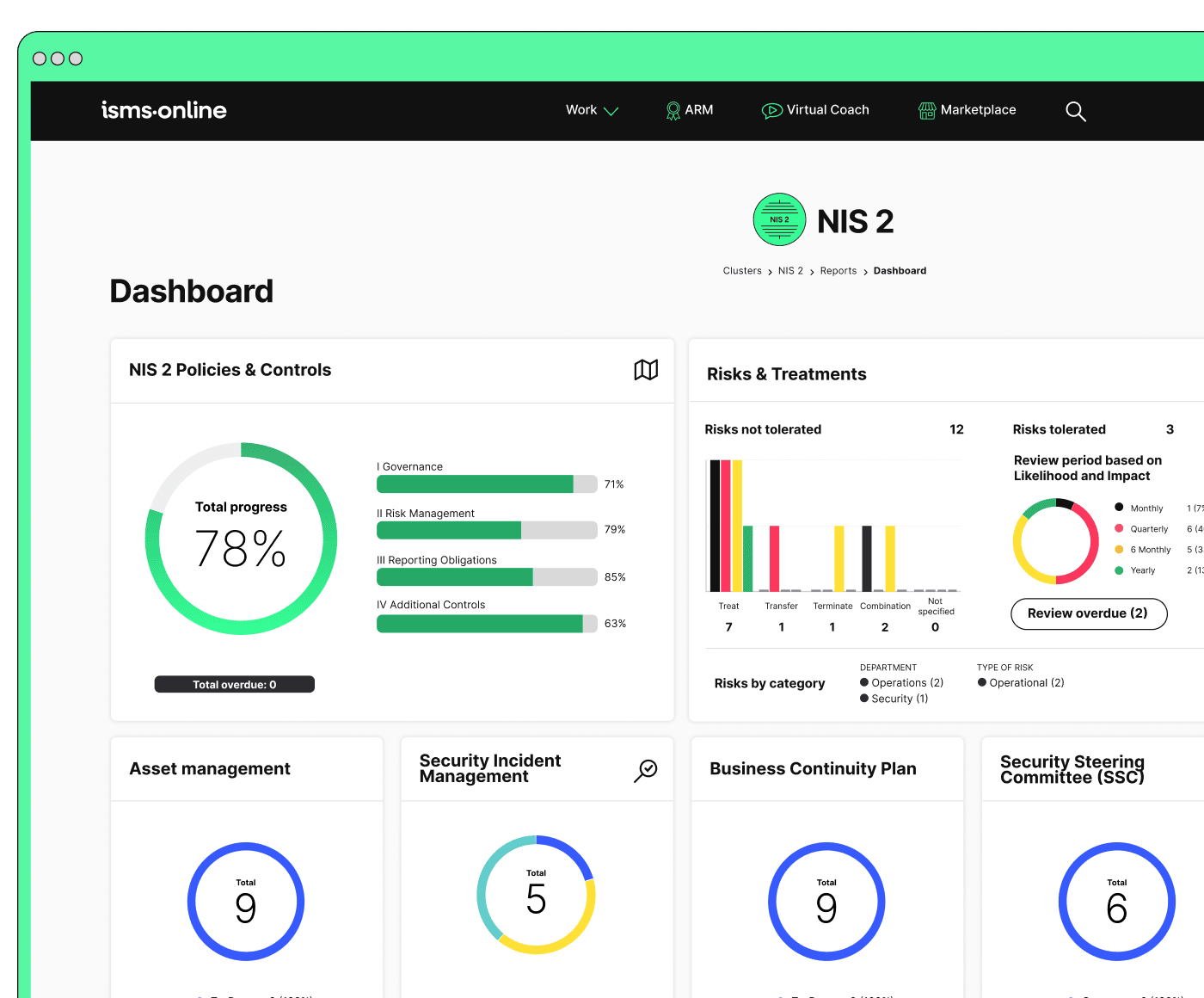
Be NIS 2-ready from day one
Launch with a proven workspace and templates – just tailor, assign, and go.
Can Automation Make You “Audit-Ready” by Default-or Does It Introduce New Risks?
Automation is a double-edged sword-it either cements audit readiness through segmentation, role-adaptivity, and real-time proof, or it quietly incubates risk by blending populations or dumbing down evidence trails.
Automation turns to audit risk when logs group field engineers with suppliers or HR-segmentation is mandatory for audit assurance.
Overcoming the Automation Failure Mode
1. Visual Log Segmentation
Automated platforms must tag and segregate logs by group-distinct lists for field staff, partners, contractors, and site or BU, not “everyone” in a catch-all.
2. Board-Grade Dashboards
Real-time dashboards visualise heatmaps of learning by group, allowing executive oversight and HR to flag overdues or coverage gaps proactively-months ahead of the audit.
3. Automated, Targeted Triggers and Remedials
Automation should mean immediate nudge and remedial cycles, not “end of quarter clean-up.” At-risk groups get timely corrective actions, and all actions are logged for proof.
4. Upchain Population Reporting
Evidence of every segment’s learning feeds up to management reviews and board risk dashboards, closing the loop with accountability, not blame.
If your system can’t map logs by group, role, and risk, your audit is at risk-segmentation is safeguard, not admin.
Practitioner tip: Adopt segmentation and role-adaptivity to lighten administrative burn, streamline reporting, and build a reputation for audit excellence.
How Can You Prove Real Coverage (Not Just “Staff Training” Clicks) Across Sector, Supply Chain and Distributed Teams?
Coverage is more than a global “staff” number. It’s whether you can account for every group-every region, contractor, field worker, BU, supply partner-in both training and post-incident remedials. Auditors will ask; so will boards.
Audit resilience means showing no group, team, or partner was missed-even at the edges.
Visual: Population Evidence Table-Audit Impact
| Group/Segment | Evidence Requirement | Audit If Omitted |
|---|---|---|
| HQ and regional employees | Signed logs, mobile-ready records | Audit fails for partial/inaccurate logs |
| Contractors/Suppliers | Segmented lessons, completion proofs | Control gap, risk of fines or warnings |
| Field/Remote Teams | Device and location-logged completions | Operational or process breach uncovered |
| Sector/Region BUs | BU-level reports, local cover proofs | Regulator sanctions, sector fines |
ISMS.online’s dashboards let you map evidence not only by “staff,” but by every key population, visualising who was covered, when, and after which event-a level of readiness that translates to board trust and auditor relief.
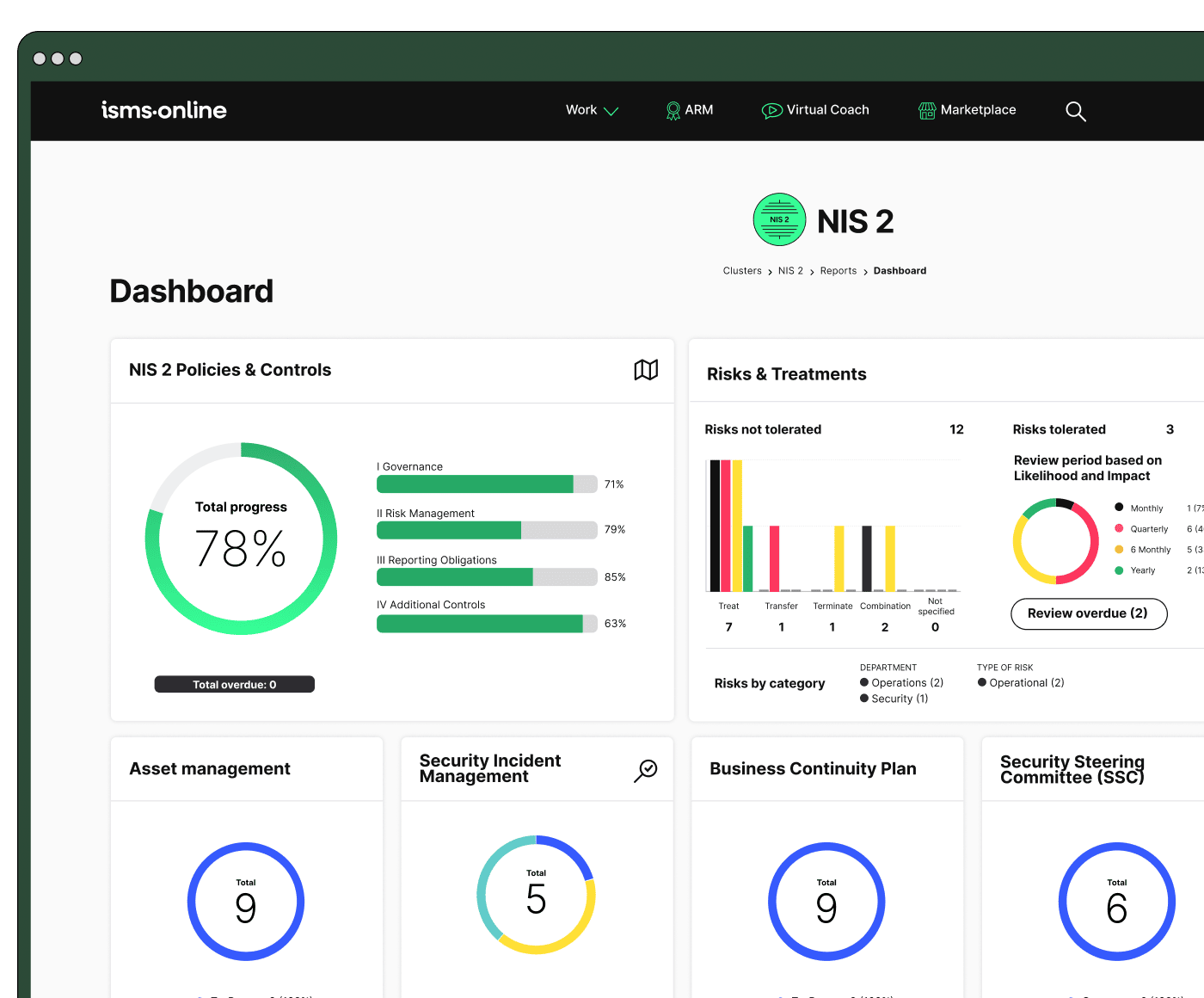
All your NIS 2, all in one place
From Articles 20–23 to audit plans – run and prove compliance, end-to-end.
How Do Modern Teams Show Oversight and Create Continuous Learning Feedback Loops?
Resilience is not “set and forget”-it is living oversight, adaptive review, leadership-recognised improvement, and real-time escalation when coverage falters.
Boards and regulators now expect learning impact proofs and evidence logs that tie to both incidents and feedback-every role, every partner, every cycle.
Building Continuous Audit-Grade Feedback
1. Real-Time Dashboards by Population
Segmented team, partner, and contractor compliance is tracked live, allowing managers to cue interventions before external audit or disruption.
2. Evidence of Feedback Integration
All staff, partner, and contractor feedback-including training confusion, post-breach queries, or access obstacles-are captured and drive fast module updates, with logs that prove adaptation.
3. Board and Management Review Tie-In
Management reviews-scheduled after each major event-sum up exceptions, trends, and unresolved loops, ensuring actionable insight, not just a compliance tick.
4. Proactive Trend Analysis
Platforms like ISMS.online alert for rising exceptions, overdue completions, or repeat failures, so you can escalate and remediate-before a finding becomes a headline.
The most audit-ready teams close the loop before auditors find the gap-feedback tied to adaptive learning is your core reputational asset.
This loop-powered feedback is the hallmark of mature cyber hygiene. It anchors control, owns risk, and signals leadership to both internal and regulator audiences.
The Path to Role-Based, Resilient, and Audit-Ready Awareness: Become Recognised with ISMS.online
Mature organisations do not settle for old compliance optics; they operationalise resilience by making audit-readiness a living and visible system. In 2024, that means adopting population-segmented, incident-adaptive, and leadership-streamlined learning with full traceability.
- Segmented population logs: ISMS.online moves beyond “staff” to log every group-remote, supplier, field, regional, or sectoral group-each with proof tied to training, remedials, and incident-triggered updates.
- Automated, targeted refreshers: Learning adapts, triggered instantly after breaches, advisories, or regulatory updates, logged to the affected group and visible on dashboards and audit trails.
- Leadership-upchain dashboards: Group-specific coverage, gaps, and improvement evidence are automatically packaged for management and board review, translating operational excellence into reputational capital.
- End-to-end feedback and review: Feedback and exceptions close the loop, proving not just activity, but impact-every quarter, or after every major event, ready for audit and board.
Compliance alone doesn’t build trust or reputation. But population-proven, incident-adapted learning does-making audit the moment you prove your business stands above the rest.
ISMS.online arms you with the infrastructure for this new audit reality-integrating population logs, dynamic triggers, and leadership-grade feedback loops. Whether you’re a Compliance Kickstarter, board-facing CISO, privacy lead, or stretched IT manager, this gives you not only readiness-but recognition.
This is not just your next training module; it’s your next audit win, your reputation safeguard, and your foundation for trust. Get your population-resilient dashboard, see upchain logging in action, or challenge your contractor coverage-let ISMS.online show your next audit can build, not break, your leadership.
Frequently Asked Questions
What does NIS 2 require your cyber awareness training to include for staff, suppliers, and contractors?
NIS 2 demands that your cyber awareness programme teaches every staff member, supplier, and contractor not just what to do, but why their actions protect the organisation. At minimum, your curriculum must cover strong authentication (passwords and multifactor authentication), social engineering and phishing, device/endpoint security, safe use of IT and cloud services, secure remote work practises, incident reporting, GDPR and privacy, supply chain threat recognition, and sector-specific risks.
Resilience isn’t built with a one-size-fits-all checklist-it’s built by making each role accountable for their real-world risks.
Key NIS 2 content mapped by audience
| Topic | All Staff | IT/Admins/Privileged | Suppliers/3rd Parties | Framework Reference |
|---|---|---|---|---|
| Strong authentication / MFA | ✓ | ✓ | ✓ | ISO 27001 A.6.3; NIS 2 |
| Phishing & social engineering | ✓ | ✓ | ✓ | ISO 27001 A.8.7; ENISA |
| Device/endpoint security | ✓ | ✓ | ✓ | ISO 27001 A.8.1, A.8.7 |
| Secure remote/cloud work | ✓ | ✓ | ✓ | A.5.23, A.8.21 |
| Incident reporting & escalation | ✓ | ✓ | ✓ | NIS 2 Art. 21, A.5.24 |
| GDPR/data privacy basics | ✓ | ✓ | ✓ | ISO 27001 A.5; GDPR |
| Supply chain & sectoral threats | ✓ | ✓ | ✓ | A.5.20–21; ENISA |
| Patch management, malware defence | – | ✓ | ✓ | A.8.8, A.8.31, NIS 2 |
- All third parties and contractors: must receive onboarding and periodic renewal training equivalent to staff, with logs to prove parity.
- Privileged or admin users: require extra coverage-patching, vulnerabilities, technical attack trends.
- Every “what” must be explained by “why it matters,”: using stories, recent threat examples, and scenario-driven assessments.
- All logs must segment completion by role, population, and geography: (for both internal and external audits).
See also: |
How often must NIS 2-aligned cyber awareness be delivered to avoid audit gaps?
NIS 2 requires you to provide cyber awareness training at onboarding-before any access to information is granted-then to every staff member and supplier at least once every year. Additionally, training must be repeated whenever there’s a major incident, regulatory update, or significant change to policies. For high-risk users (admins, privileged IT), more frequent “pulse” checks (quarterly or after any incident) are expected. Phishing simulations should run at least 2–4 times annually, with targeted remedials for anyone failing a test.
Suppliers and contractors must complete their own onboarding and annual training, with evidence presented at contract renewal or after any incident affecting their access.
Sample delivery matrix
| Group/Role | Onboarding | Annual | Post-Incident | Phishing Simulations | Extra Pulse Checks |
|---|---|---|---|---|---|
| All staff | ✓ | ✓ | ✓ | 2–4x per year | Management discretion |
| IT/Admins/Privileged | ✓ | ✓ | ✓ | Quarterly | Quarterly + after every breach |
| Suppliers/3rd party users | ✓ | ✓ | ✓ | If risk-applicable | At each renewal/onboarding |
- Set automatic reminders for all recurrences-auditors check for lags and missed cycles.
- Frequency should escalate after incidents and for roles with higher access or exposure to threats.
- Always log dates, roles, and completion for each cycle.
References: ISO 27001:2022 A.6.3,
What evidence does NIS 2 expect you to provide auditors for awareness compliance?
NIS 2 expects you to keep granular, exportable evidence for all populations for at least three years-including staff, suppliers, and contractors. You must be able to produce: assignment/completion logs (LMS or platform export), scenario quiz/simulation outcomes, signed acknowledgements, contract/training attestations for suppliers, curriculum histories (with dates of updates), and signed minutes from management reviews. Each record should be segmented by group, role, location, and trigger (onboarding, annual, incident-driven, renewal).
Audit-readiness means delivering awareness records by role, region, supplier, and event-on demand, not by IT fire drill.
NIS 2 evidence map
| Trigger or Event | Required Audit Evidence | Applies To |
|---|---|---|
| Onboarding access | Training completion, sign-off | All staff/suppliers |
| Annual/mandatory cycle | Logs, timestamped export | All groups |
| After incident/policy | Triggered assignments/logs | Affected units |
| Phishing simulation | Results & remedials | Everyone, if scoped |
| Supplier onboarding | Attestation in contract | Contractors/suppliers |
| Management review | Signed meeting minutes | CISO/Board/Executives |
Dashboards should offer instant export of segmented data with search/philtre by group, trigger event, or region.
Resources: |
How do you maintain cyber awareness engagement-and close training gaps-for hybrid, remote, and global teams?
To keep a hybrid and geographically spread workforce compliant and engaged, deliver microlearning modules that are mobile-friendly, accessible (WCAG-compliant), and available in multiple languages. Use adaptive reminders (triggered by status, region, and risk), with gamified challenges, scenario-based quizzes, and certified completion. Group dashboards for HR, IT, and supplier leads must segment engagement in real time by region, supplier, and business unit-so you close learning gaps before audits, not after findings.
Strong teams aren’t just aware-they’re measurable, accessible, and always visible to you before auditors arrive.
Best engagement practises
- Mobile- and accessibility-first content.
- Microlearning: short, scenario-driven modules.
- Real-time dashboards segmented by group, region, or contract.
- Automated reminders-escalate for overdue or post-incident cycles.
- Gamification: certifications, badges, recognition.
- Completion tracked by population and exportable by any segment.
- Pulse survey feedback to adapt learning to real user needs.
Explore: |
How should incidents or major regulatory changes be integrated into awareness to maintain NIS 2 compliance?
Every major cyber incident or regulatory/advice update must trigger a targeted new awareness cycle-especially for the affected population. Immediately:
- Map affected cohorts (location, role, third party).
- Analyse incident root causes-adapt or create new modules focused precisely on the actual breach scenario.
- Assign updates with instant notification to all impacted users and suppliers.
- Log completion and test/quiz results at the individual/group level.
- Document lessons-learned in management review minutes for audit evidence.
- Update dashboards to reflect new risk areas and tracking.
Every breach closes a learning gap when your content and evidence loop is instant, role-filled, and audit-ready.
For examples, see and.
Why are segmented dashboards and automated workflows essential to audit-proof NIS 2 compliance?
Without dashboards that allow segmentation by group, geography, third party, and risk profile-and automated workflows tracking each segment-you cannot pre-empt audit findings, identify gaps, or deliver rapid proof for regulators. Segmented, exportable evidence is demanded particularly for third parties/suppliers, high-risk roles, and regionally spread business units. Automation closes overdue tasks, triggers remedials, and logs every event, reducing the risk of breaches, regulator fines, or audit delays.
| Population | Essential Audit Log | What’s at Risk If Missing |
|---|---|---|
| HQ/Regional staff | Group/location logs | Partial logs, audit failure |
| Suppliers/Contractors | Onboarding/completion | Supply chain risk, contract fail |
| Remote/field/IT | Device/access logs | Data breach, lack of proof |
| Business units | Segment-specific logs | Sector/geo fines, audit repeat |
Automated, segmented evidence is your defence and reputation shield-if you can’t show exactly who’s covered and who isn’t, your audit may already be in doubt.
For audit-ready demonstration: (https://www.isms.online/features/iso-27001-policy-packs/) |
Final proof-of-readiness
ISMS.online transforms NIS 2 requirements into live readiness: real-time, population-segmented dashboards; audit-proof log trails by group, region, and contract; and incident-triggered learning so every person, supplier, and executive can prove they are protected, no matter where they log in. The new benchmark is evidence you can deliver before an auditor ever asks-and leadership that never gambles with resilience. If you want to deliver audit-true awareness, build from systems that never lose a log or leave a group behind.






