





































Is Your SaaS or Cloud Platform Now a Digital Provider Under NIS 2? The Compliance Line Has Moved
Your business-delivering SaaS, running an online marketplace, managing search or cloud platforms-is probably on a new regulatory front line. NIS 2, Europe’s sharpened cyber-security directive, closes the “large company only” gap and moves even mid-market SaaS, niche platforms, and digital service startups under the same compliance microscope as industry titans. It doesn’t matter where your headquarters are: if you serve EU users or process EU data, you are under the NIS 2 umbrella. What changed isn’t just the definition of a “digital provider,” but the level of live, real-time evidence you must supply at a moment’s notice.
The real risk for digital providers is now a surprise audit, not just external threat actors.
Unpreparedness isn’t a neutral position. With the new directive, onboarding a single EU client, launching a feature for European users, or even passively collecting EU data puts your business squarely in the compliance hot seat. Gone are the days of light-touch, checklist-based audits. Now, your contracts, supply chain, and operational controls must withstand board-level scrutiny.
Defining the Scope: Are You In or Out?
Legal boundaries used to be comfort zones: only essential sectors or huge platforms needed to invest in serious compliance infrastructure. With NIS 2, if any customer, partner, or transaction touches the European market-or you see EU web activity-you likely qualify as in-scope. Dont rely on legal minimums alone. Instead, audit your data flows, customer contracts, and onboarding processes quarterly or after each major deal. Digital provider compliance is no longer about guessing; proving is the new expectation.
Quick self-check: Did your product or team sign a new EU customer-or see a spike in.eu domains? Your obligations have escalated, and regulators expect you to prove awareness, not plead ignorance.
Book a demoDoes Being “Important” or “Essential” Truly Change Your NIS 2 Journey as a Digital Provider?
The NIS 2 directive draws distinctions between “essential” and “important” entities. Most digital providers-SaaS services, cloud compute, search engines, online marketplaces-land in the “important” bucket. Essential usually marks out sectors such as energy or health and ultra-large platforms. Here’s the operational reality: for 90% of controls, day-to-day obligations hardly differ. Both must show live evidence, ongoing risk management, audit trails, and board engagement.
Compliance isn’t a question of semicolons and legal labels. It’s lived out by how confidently you navigate the audit-essential or important.
What changes between categories is audit frequency and regulator immediacy. Essential entities may face more proactive audits; important entities will feel the same sharp teeth and penalties if they fall short. For all digital providers, evidence is king. Controls, board meeting minutes, and supply chain risk logs are not an annual event-they must be current and provable, on demand.
Audit-Severity Table: What’s Actually Different?
| Compliance Category | Audit Frequency | Response Time | Evidence Rigour |
|---|---|---|---|
| Essential | Annual or biannual | Proactive, 24hr | Live logs, continuous reviews |
| Important | Event-driven or random | Rapid, 24/72hr | Live logs, continuous reviews |
Even for a business classified as “important,” delays in reporting, missing logs, or supply chain gaps trigger immediate escalation to essential-level scrutiny. In other words: if you’re in digital provision, treat the compliance burden as universal.

Master NIS 2 without spreadsheet chaos
Centralise risk, incidents, suppliers, and evidence in one clean platform.
What Holds Your Digital Provider Status Together? Beyond NIS 1: Continuous, Board-Level Controls and Evidence
NIS 1 allowed “plausible” compliance-evidence pulled together after-the-fact, boundaries focused on self-declared controls. NIS 2 shatters that comfort. Now, regulators hunt for:
- Continuous live monitoring: not just static risk registers but dynamic, time-stamped operational evidence.
- Board accountability: directors and senior management are future targets for review-meeting minutes, approval flows, and sign-offs are all fair game.
- Supply chain integration: controls extend beyond your firewall to every critical SaaS, PaaS, and cloud provider you partner with.
The clock starts before the incident. Fix it after the regulator calls is no longer an option.
NIS 2 is more than a checklist-it’s a system of trust, resilience, and transparency. If your organisation still treats compliance as a year-end board presentation, you are vulnerable.
Bridge Table: From Expectation to Live Control
| Expectation | Operationalisation | ISO 27001 / Annex A Ref |
|---|---|---|
| Controls must be live | Quarterly log, SoA audit trail | A.5, A.6, A.8 |
| Incidents auto-logged | SIEM, IRP, escalation email | A.5.24, A.5.25 |
| Supplier review | Contracts, supplier audits | A.5.19–A.5.23 |
| Board reviews compliance | Regular minutes, sign-offs | 5.1, 9.3, 10.1 |
A single missing log or absent contract review can now escalate a routine audit to a full investigation, risking fines and even board-level accountability.
Why Is the Corporate Supply Chain Now a Compliance Time Bomb? Owning Third-Party Risk (and Its Audit Fallout)
NIS 2 brings the reality of modern digital business-where your risk lives not in isolation, but distributed across every supplier contract, cloud integration, and external system. Most serious security breaches originate outside your immediate control, yet the compliance responsibility lands on your desk.
When supply chain risk surfaces, even a perfect internal compliance record can get washed away by a supplier’s misstep.
If you do not have quarterly supplier contract reviews-encompassing live incident reporting, risk transfer clauses, and responsive change management-your audit trail is incomplete by default. The same applies for supply chain incident response: can your team track, escalate, and evidence risk up and down the chain, from regulator to smallest supplier?
Traceability Table: Linking Audit Signals
| Trigger | Risk Update | Control / SoA Link | Evidence Logged |
|---|---|---|---|
| Supplier breach | Update risk register | A.5.19, A.5.20 | Vendor notification, emails |
| SLA incident with provider | Rewrite contracts | A.5.21, A.5.22 | Updated contract, addendum |
| Policy update request | Confirm workflow | A.5.23, A.8.2 | Board minutes, approval log |
These are not annual tasks-they’re continuous points of compliance. A missed link in this chain now means missed compliance, not just missed optimization.
Action Steps
- Conduct supplier audits and risk reviews every quarter-not just at renewal.
- Update contracts in real time, not just in annual cycles.
- Link every external event (breach, delay, change) to controls and evidence in your ISMS.
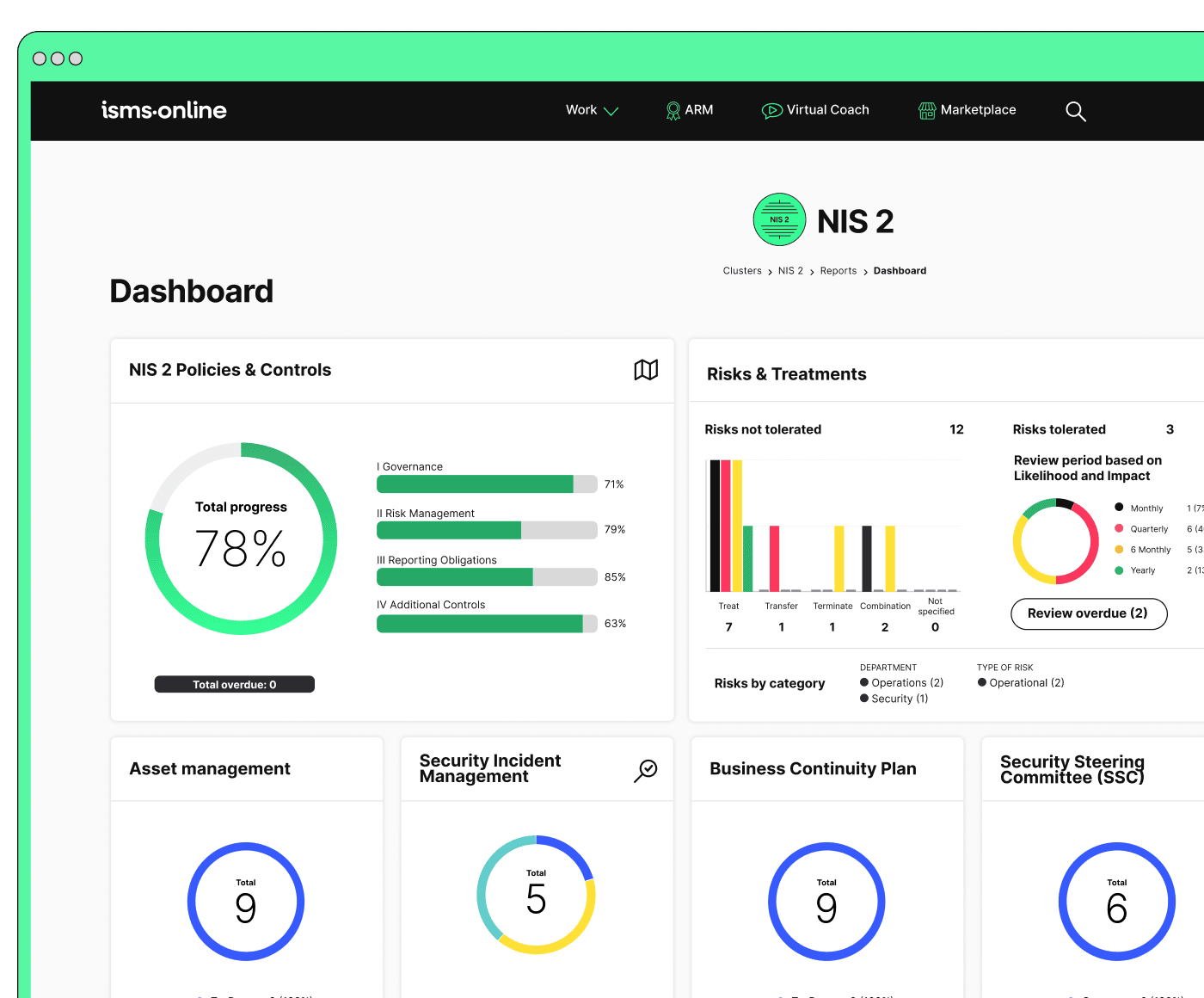
Be NIS 2-ready from day one
Launch with a proven workspace and templates – just tailor, assign, and go.
What’s Really at Stake for Digital Providers Who Miss NIS 2? Fines, Disclosure, and Market Access on the Block
The penalties for failing NIS 2 stretch far beyond GDPR’s headline fines of €20 million. For digital providers, fines can reach €7 million or 1.4% of global turnover per breach, and regulatory audits now carry teeth that cut directly into market share and, in some cases, bar entry to public tenders.
But the biggest cost isn’t always financial. The latent cost of public disclosure, customer churn, and lost enterprise deals will frequently outweigh the immediate penalty. Proactive, evidence-driven compliance isn’t just protection against regulators; it’s market currency with customers, partners, and the board.
The price of getting caught unprepared isn’t just a fine-it’s damaged trust, lost deals, and a reputation that’s hard to rebuild.
Cost-Impact Snapshot
| Impact Type | Realistic Example | Typical Loss |
|---|---|---|
| Direct fine | €7M or 1.4% turnover for missed incident report | Legal/financial |
| Disclosure loss | Disqualification from tender due to weak auditor finding | Market share |
| Deal risk | Lost SaaS deal due to outdated cloud contract | Future revenue |
To protect shareholder and customer trust, NIS 2 compliance needs to have a line on your product road map-miss it, and your company risks structural and reputational pain.
How Do Auditors Actually Judge NIS 2 Controls? Auditable Logs, Linked Evidence, and Board-Level Accountability
Auditors are no longer interested in static pdfs, annual compliance presentations, or the honour system. Live, versioned control registers, timestamped incident logs, escalations, and supplier communications are the new proof-points.
The real power of your ISMS is not just what’s written-but what’s linked, logged, and signed off in real-time.
Every evidence point is a possible investigation end-or a new beginning. The best-run compliance teams treat each risk update, contract review, or board approval as a live audit checkpoint rather than future clean-up work.
ISO 27001 Traceability Example
| Trigger | Risk Update | ISO Control / SoA | Evidence Logged |
|---|---|---|---|
| Patch lags | Update risk register | A.8.8, A.7.13 | Exception, sign-off document |
| Incident escalated | Add risk scenario | A.5.24, A.8.13 | Incident log, review minutes |
| New board member | Board approval refresh | 5.1, A.5.2 | Sign-off, onboarding doc |
If your teams can surface and submit these connections in minutes-across IT, GRC, operations, and the board-you are audit ready. If not, it’s time to automate and centralise reporting before your next investigation.
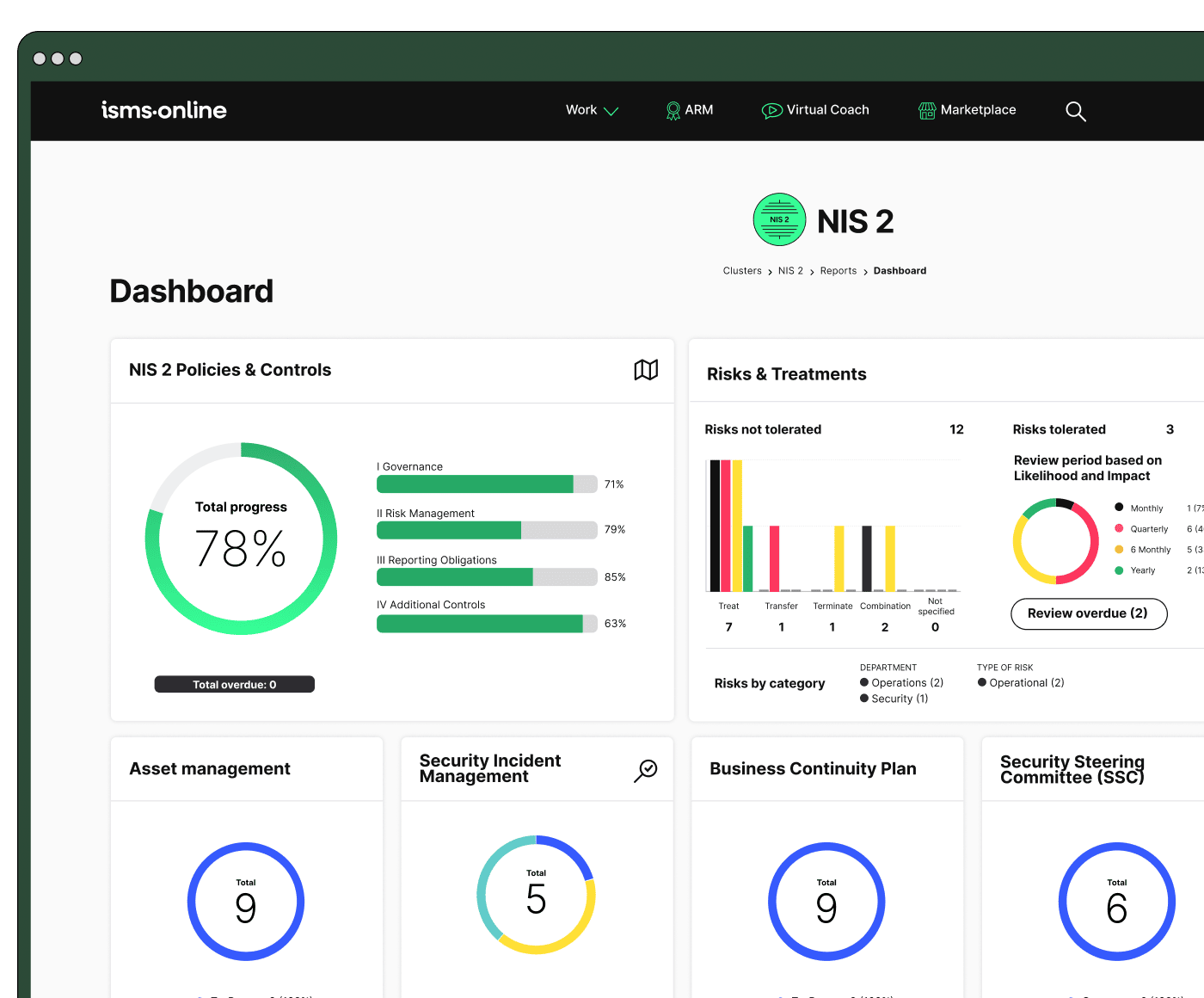
All your NIS 2, all in one place
From Articles 20–23 to audit plans – run and prove compliance, end-to-end.
Why 24/72-Hour Notification Windows Now Define the Digital Provider’s Resilience
NIS 2’s most visible change for digital providers is the urgency of reporting. After any qualifying incident, you have 24 hours to notify authorities, and a final, full report must follow within 72 hours. This timeline isn’t a guidance note-it’s a hard line. Tools, workflows, and platforms must be able to surface and prove incident detection, escalation, analysis, and corrective action, all within this window.
The clock starts at the first sign of trouble, not when the incident is contained.
Timeliness Table: Reporting as a Compliance Mandate
| Step | Policy Trigger | Evidence Required | Audit Proof |
|---|---|---|---|
| Detection | SIEM anomaly detected | Log file, timestamp, alert email | SIEM/monitoring logs |
| Notification | IRP activated | Regulator email, timestamped alerts | Regulator confirmation |
| Final Report | Root cause analysis done | Corrective action, closure docs | Regulator receipt |
A single missed or late step can escalate the level of audit applied, increase the size of the fine, or even upgrade your entity from “important” to “essential” obligations.
Practical Automation Steps
- Use SIEM, SOAR, and incident management tools that automatically capture timestamped records.
- Build workflows where every notification is auto-logged and acknowledged by designated authorities.
- Tighten root cause and closure reports; secure sign-off within 72 hours.
Timely, provable reporting is not just a technical requirement-it now defines your team’s operational trustworthiness.
What Does “Audit-Ready, Real-Time Control” Mean on Cloud, Crypto, and Interoperability?
NIS 2 brings modern architecture-encryption, cloud integrations, SaaS stacks-right to the compliance frontline. Cryptography and interoperability are now seen as live controls, not mere “IT concerns.” Every cloud key rotation, cypher update, and third-party protocol change can affect your audit profile. A single missed S3 bucket config, deprecated cypher, or outdated SaaS interface is audit gold for regulators.
Successful digital providers treat cryptography and cloud posture as board-level risks, not just identity management for IT.
Quarterly Controls: Moving to Proactive Audit
- Validate encryption protocols, key lengths, and provider-side controls every quarter.
- Automate documentation: signed export logs for key rotations, exceptions, and migrations.
- Track interoperability gaps actively with change logs and sign-off from both risk and IT leads.
Mini-Table: Crypto & Cloud Audit Snap
| Control Area | Audit Activity | Live Evidence |
|---|---|---|
| Key Update | Quarterly rotation, HSM/Cloud KMS log reviewed | Signed change log, test rec |
| SaaS Protocol | Integration tested, exception tracked | Signed exceptions, evidence |
| Interop | Quarterly vendor gap review | Risk team approval, minutes |
Building compliance into cloud and crypto doesn’t mean endless checklists-it means living documentation that is surfaced, signed, and auditable on demand.
How Do Living, Linked Platforms Transform NIS 2 Compliance Into a Source of Security and Reputation?
Compliance teams succeed when systems don’t just store evidence, but weave it live through every risk, incident, and operational step. Platforms that create linked, immutable audit logs, escalation trails, and automated reminders not only safeguard you in audits-they form the operational backbone that builds customer, board, and market trust.
Continuous compliance transforms you from a paper tiger into a practitioner recognised for operational excellence.
Annual “file and forget” won’t survive the next audit cycle. Your ISMS must become a “living loop” where every process-risk review, supplier change, incident detection-leads directly to logged evidence and automatic reporting, with non-compliance flagged before it hits the boardroom.
Platform Traceability Table
| Challenge | Automation/Linked Outcome | Organisational Gain |
|---|---|---|
| Disjointed evidence | Automated archive: SoA, risk, logs linked | Reduce missed evidence, fines |
| Siloed supplier reviews | Auto-reminders, escalation workflows | Quicker risk resolution |
| Patch delays | Exception triggers, sign-off and audit log | Reduce audit exposure |
| Missed approvals | Board/management sign-off workflows | Demonstrable governance |
What to Do Next
- Prioritise platforms that connect controls, evidence, and reporting in near real-time.
- Embed scheduled reminders-never rely on “to be reviewed” lists or manual recall.
- Create dashboards and workflows for every role: practitioner, board, audit, supply chain.
Practitioners set the pace of compliance. The teams that build continuous, automated evidence loops are the ones regulators, customers, and boards trust most.
The Future of NIS 2 Compliance: Stake Your Company’s Reputation on Linked Evidence, Proven Every Quarter
In the end, digital providers don’t win because they wrote the best policies. They win because they proved-again and again-that they operated, reviewed, and documented controls across teams in both real time and strategic time frames. Audit confidence must scale with business ambition.
Compliance is a living system. Your team’s reputation rides on your ability to prove security, resilience, and oversight any day, not just once a year.
NIS 2 sets a new bar, but your response defines your competitive edge. The path forward is to replace static files and siloed reviews with a living system of linked controls, supplier oversight, incident reporting, and board-level accountability-all mapped back to globally accepted reference frameworks like ISO 27001.
Practitioner’s final CTA:
Ready to make compliance a living advantage, not just a cost centre? ISMS.online provides digital providers with modules, automation, and live evidence mapping that keep your team-and reputation-ready for the next audit, opportunity, or challenge.
Frequently Asked Questions
Who is considered a “digital provider” under NIS 2, and what determines if our company is legally in-scope?
A “digital provider” under NIS 2 includes any organisation-regardless of size or headquarters location-that operates online marketplaces, search engines, or cloud computing services (including SaaS, PaaS, and IaaS) and makes these services available to users in the European Union, either directly or through partnerships, marketing, or infrastructure presence. If your technology can be accessed, purchased, or used by customers in the EU-even if your legal entity is outside the EU-you’re likely responsible for NIS 2 compliance for those EU-facing operations.
Annex II of NIS 2 specifies that both core digital platforms and single-function SaaS are “important entities.” What triggers obligations isn’t company size but whether your service is accessible to the EU market: a single.eu domain, targeted advertising, a customer in France signing up via your app, or a platform API exposed in EEA. Regulators (including ENISA and national bodies) increasingly cross-reference public DNS records, commercial registries, and marketplace footprints; if you’re marketing or supporting digital services in the EU, annual entity status self-review-and active tracking of new launches or service changes-is a must.
Every digital footprint in the EU is now a compliance trigger-routine we’re too small assumptions are obsolete.
Reference: clarifies which digital businesses and platforms are “important entities.” Review this mapping every policy year to avoid accidental non-compliance.
What are the operational security requirements for digital providers under NIS 2 in 2025, and what does an audit-ready checklist look like?
NIS 2 transforms “best effort” into enforceable, evidence-driven security. To pass a compliance audit, your digital organisation must maintain a current risk and threat register (with named control owners), deploy live incident and event monitoring (SIEM or equivalent), and run quarterly tests on backup, business continuity, and access controls. Automated patch management and rapid vulnerability response cycles are baseline, not bonuses.
You must enforce and evidence supplier (and sub-supplier) compliance-particularly for other SaaS, cloud platforms, payment processors, and critical tech vendors. Operating with anything less than TLS 1.3, AES-256, or real-time logging can lead to findings and fines, not just feedback.
Digital provider compliance essentials for 2025:
- Live risk register: linked to corrective actions, owner, and review dates
- Continuous SIEM (or equivalent): generating tamper-evident logs
- Quarterly evidence: tested backups, BC/DR processes, access reviews
- Supplier contract logs: mandates for breach notification, compliance data
- Cryptography baseline: TLS 1.3+/AES-256+, documented key management, quarterly protocol reviews
Table: Minimum NIS 2 baseline by provider type
| Provider Type | Example Control | ISO 27001/Annex A Ref |
|---|---|---|
| Cloud Platform | Tenant isolation, SIEM logs | A.8.7, A.5.23, A.5.24 |
| Online Marketplace | WAF, staff access tests | A.5.28, A.8.15, A.7.7 |
| Search Engine | DNSSEC/BGP, incident reports | A.8.20, A.5.26, A.5.25 |
Routine technical reviews and evidence logs are now the cause, not the result, of passing an audit.
What practical penalties and enforcement risks do digital providers face with NIS 2 non-compliance?
Penalties for NIS 2 violations are real and escalating: important digital entities can face fines up to €7 million or 1.4% of annual global turnover per incident. Enforcement is now standard-national authorities (Belgium’s CCB, Denmark’s CFCS, Italy’s ACN, and others) routinely conduct scheduled and surprise inspections, require time-stamped logs, and may demand root-cause records of patching, backup, and supplier vetting.
The four most common audit triggers for fines and corrective mandates are:
- Missed or delayed 24-hour incident notifications: (regulatory incident log gaps)
- Outdated cryptography: (such as continued TLS 1.2 use or ambiguous certificate management)
- Gaps in supplier assessment and contract evidence:
- Lack of quarterly review records for backup, access, or patching:
Beyond monetary penalties, repeat findings can result in publication in ENISA’s enforcement registry, public sector procurement bans, and declining trust from enterprise customers.
Visual reference: See the for current national inspection intensity and breakdowns by breach type.
How should incident detection and notification be automated and evidenced to meet NIS 2 requirements?
Meeting NIS 2’s 24/72-hour reporting mandates demands both technical automation and evidence readiness. Incident detection should be fully mapped to SIEM or equivalent monitoring systems, producing tamper-evident, timestamped logs in real time.
A compliant workflow includes:
- Step 1: Immediate automated capture and classification of any event (severity, impact).
- Step 2: Instant escalation using predefined playbooks; assigned owners trigger the response path.
- Step 3: Notification protocol launches: initial 24-hour notification (regulatory receipt logged), 72-hour countermeasure/root cause filing, and 1-month post-mortem (all with documented approvals).
- Step 4: Every action and notification-regulatory handoff, escalation, response-is chained with digital receipts for evidence reviews.
Digital providers operating across borders need multi-jurisdiction, multi-language notification templates, pre-agreed authority routes, and auditable escalation trees.
Key automation metrics: detection-to-escalation time, % notifications sent within deadline, jurisdictional reporting log times.
Diagram suggestion: Swimlane mapping from detection to closure, with evidence points at each compliance milestone.
Operational resilience is built by automating documentation, not just detection.
Further reference:
What does NIS 2 demand for SaaS supply chain security and live supplier oversight?
NIS 2 sets a higher bar for SaaS-to-SaaS and platform partnerships. Now, every digital provider must:
- Assess: all suppliers (including infrastructure, SaaS, PaaS, and processors) for NIS 2-aligned controls before onboarding and contract renewal.
- Enforce: breach notification, evidence-sharing, and risk disclosure terms in all contracts.
- Automate: supplier oversight using a live dashboard or platform that tracks onboarding, risk assessments, renewal cycles, and incident submissions.
- Log: ongoing technical controls-patch evidence, encryption, incident notifications-from each supplier on a rolling basis, not just annual static reviews.
Annual paper questionnaires are obsolete; live audit trails and automated evidence chains are now baseline. Both parties must be able to produce logs showing continual resilience-internal and external auditors expect nothing less.
Mini-table: Supply chain security-trigger-driven evidence
| Trigger | Risk Response | Control / SoA ref | Evidence logged |
|---|---|---|---|
| New SaaS onboard | Risk assessment | A.5.19, A.5.20 | SLA, onboarding logs, test scan logs |
| Annual contract review | Updated risk | A.5.21, A.5.22 | Review docs, renewal notices |
| Security alert | Supplier update | A.8.8, A.7.11 | SIEM/scan logs, incident docs |
Resource: ENISA Supply Chain Cyber-Security Practises
How are cryptography, cloud infrastructure, and digital interoperability tested for NIS 2 audits?
Auditors expect end-to-end evidence that cryptography, key management, and cloud/dataflow controls not only meet “state of the art” (TLS 1.3+, AES-256, EdDSA/ECC keys), but are reviewed, logged, and managed throughout their lifecycle. Key management system logs should show generation, rotation, expiration, and decommissioning, all time-stamped and reviewable.
Protocol upgrades and exceptions must be tracked, logged, and signed off by owners, with compensating controls for anything non-compliant. API integrations and inter-cloud dataflows need explicit encryption and access controls, not just at rest but in transit.
You must keep quarterly review records and leverage diagrams to map every data flow, contract link, and technical control to specific evidence points. Any exceptions must be risk-assessed, signed, and time-bound, with remediation schedules logged.
Security, scalability, and trust are proven through evidence-resilient platforms pass audits because their systems, people, and records are always ready.
Diagram: Lifecycle flow from cryptography policy → protocol deployment → live key management logs → quarterly audit review.
Ready to make NIS 2 compliance your competitive advantage? ISMS.online helps digital providers centralise and automate controls, supplier monitoring, incident management, and audit trails-making regulatory evidence easy, not elusive. (https://www.isms.online/nis-2-directive/) to see a sample audit map and unlock next-level resilience for your EU digital business.






